Why Your Oregon Christmas Cactus Might Be Wilting And How To Fix It
Seeing your Christmas cactus start to wilt can be frustrating, especially when you’ve been taking care of it and expecting those bright, cheerful blooms.
One day it looks fine, and the next it’s drooping, soft, or just not as lively as it used to be.
It’s easy to worry that something is seriously wrong.
The good news is that most Christmas cactus problems are fixable. These plants are pretty resilient, but they do have a few specific needs that can get overlooked, especially in Oregon’s changing indoor temperatures and seasonal light shifts.
Small things like watering habits, pot drainage, or where the plant is sitting in your home can make a big difference.
If you’ve been guessing at what’s causing the problem or trying random fixes without results, you’re definitely not alone. Many plant owners run into the same issues, even with years of experience.
Before giving up on your plant, it helps to understand what’s actually causing the wilting and what simple steps can bring it back to life.
Here’s why your Oregon Christmas cactus might be wilting and exactly how you can fix it.
1. Too Much Water In Cool Weather
When the days get shorter and cooler, your Christmas cactus slows down. It doesn’t need as much water as it did during the warmer months, but many of us keep watering on the same schedule.
This leads to soggy soil that sits wet for days, and before you know it, the roots start to rot.
Overwatering is especially easy to do in Oregon’s cool, cloudy fall and winter months. Without bright sun to help dry out the soil, that moisture lingers.
The plant’s segments start to look limp, soft, or even translucent at the edges.
Check the soil with your finger before you water. If the top inch or two feels damp, wait a few more days.
Your Christmas cactus would rather be a little dry than sitting in a swamp.
Once you cut back on watering, the plant usually perks up within a week or two. You’ll notice the segments firm up and regain their natural shape.
If the roots have rotted, you may need to trim away the mushy parts and repot in fresh, dry soil.
Adjusting your watering rhythm to match the season is one of the simplest fixes. Your plant will thank you with stronger growth and better blooms when the holidays roll around.
2. Not Enough Water During Dry Indoor Heating
Turn on the heater, and suddenly your home feels like the desert. Christmas cacti are tropical plants that appreciate consistent moisture, and when the air gets bone-dry from forced-air heating, they can wilt fast.
You might notice the segments looking thin, wrinkled, or slightly shriveled.
Oregon winters mean we’re running our heaters nonstop, which sucks moisture out of everything, including your plants. If you’re still watering on your summer schedule, it might not be enough anymore.
Your Oregon Garden Changes Every Week. Your Plan Should Too.
Gardening in Oregon changes quickly throughout the season. Every Friday you’ll receive a simple weekly plan showing exactly what to plant, prune, fertilize, harvest, and protect so you never miss the right timing.
The soil dries out faster than you expect.
Start checking your plant more often. When the top inch of soil feels dry, give it a good drink until water runs out the drainage hole.
Don’t just sprinkle a little on top, soak it thoroughly.
You should see improvement within a few days as the plant rehydrates. The segments will plump back up and regain their healthy green color.
If the wilting was severe, full recovery might take a couple of weeks.
Pairing regular watering with a humidity boost helps even more. Set the pot on a tray of pebbles and water, or mist the air around the plant occasionally.
Your Christmas cactus will handle the dry heat much better with a little extra attention.
3. Poor Drainage In Pots
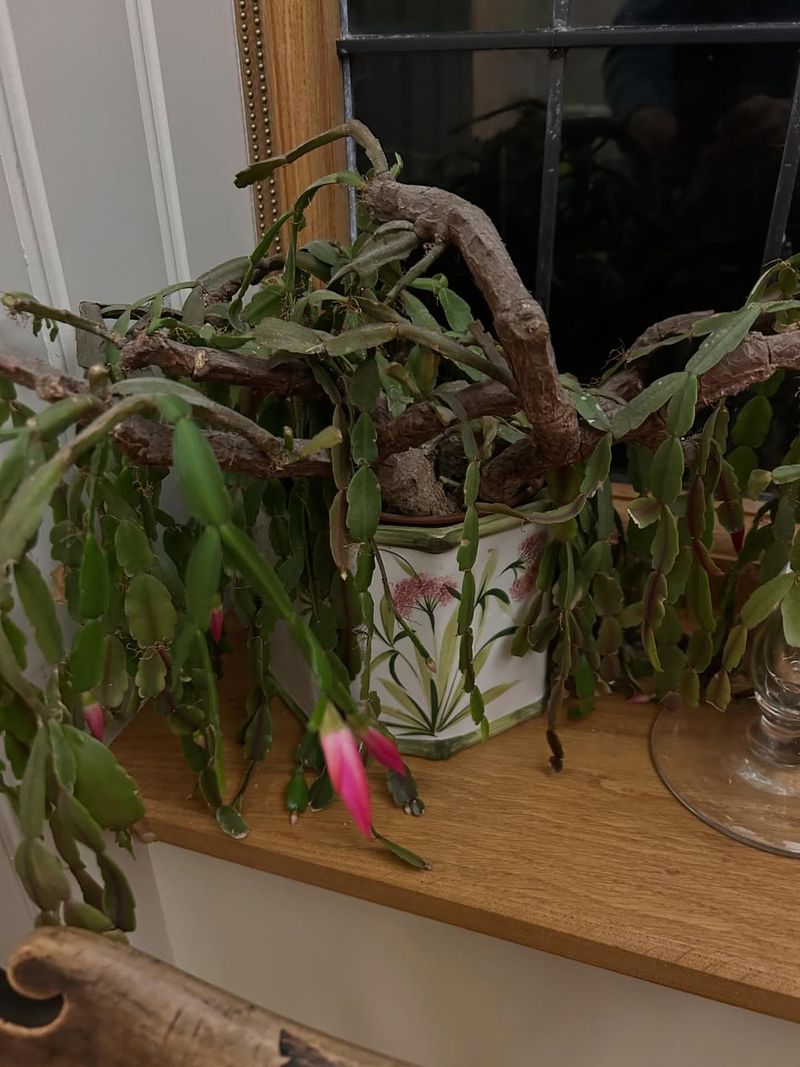
Drainage matters more than most people realize. If your Christmas cactus is sitting in a pot with no drainage hole, or the soil is heavy and clay-like, water can’t escape.
The roots sit in standing water, which leads to rot and wilting even if you’re not watering very often.
Sometimes the pot has a hole, but it’s blocked by compacted soil or a buildup of mineral deposits. Other times, the saucer under the pot fills with water and the plant just sits there soaking it up from the bottom.
Either way, the roots suffocate.
Check the bottom of your pot right now. If there’s no hole, it’s time to repot into something that drains properly.
If there is a hole, make sure it’s clear and that you’re emptying the saucer after watering.
Use a light, airy potting mix designed for cacti or succulents. These mixes contain perlite, sand, or bark that help water move through quickly.
Your plant’s roots need oxygen just as much as they need moisture.
Once you fix the drainage issue, you’ll see the plant start to recover within a week or two. The wilting will stop, and new growth will look healthier and more vibrant.
Good drainage is one of those small changes that makes a huge difference.
4. Sudden Temperature Changes
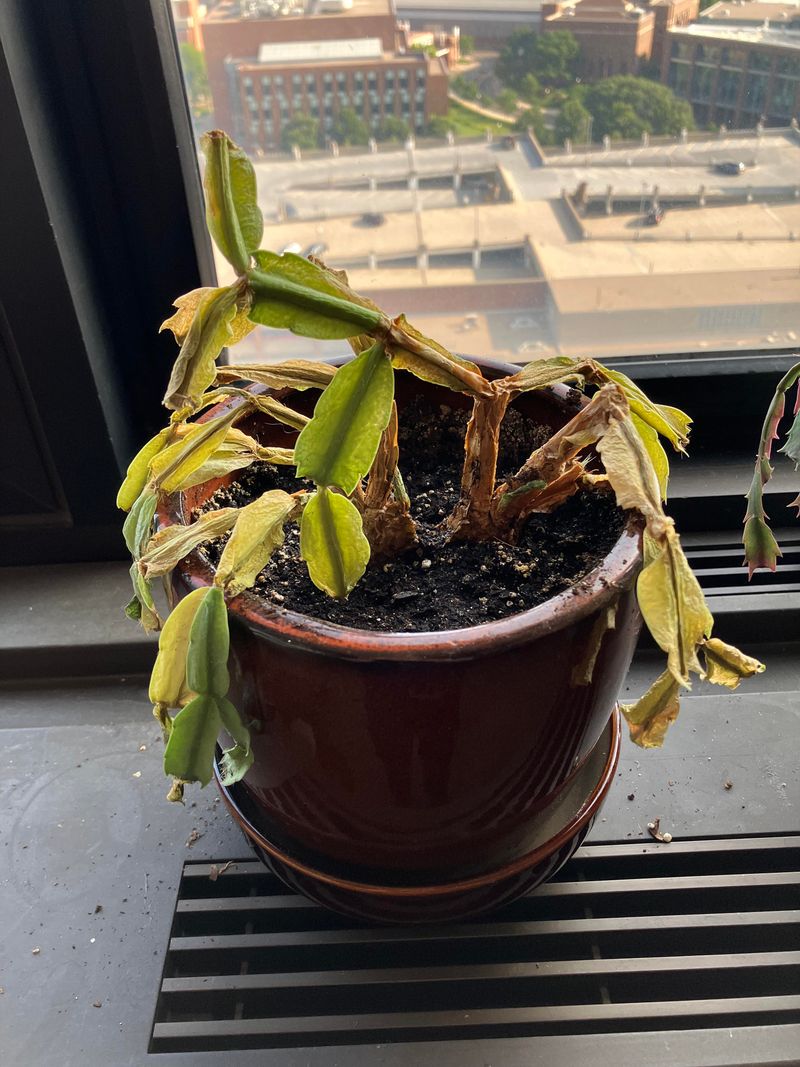
Christmas cacti hate surprises, especially when it comes to temperature. If your plant is sitting near a drafty window, a heating vent, or a door that opens to the cold outside, those sudden swings can stress it out fast.
The segments start to wilt, droop, or even drop off entirely.
In Oregon, we deal with chilly mornings and cozy heated rooms, and that contrast can be tough on tropical plants. A spot that feels fine during the day might be freezing at night when the heat kicks off.
Your plant notices.
Move your Christmas cactus to a more stable location. Avoid spots near exterior doors, drafty windows, or vents that blast hot or cold air.
A consistent room temperature between 60 and 70 degrees is ideal.
Once the plant is in a better spot, it should stabilize within a few days. You’ll notice it stops wilting and starts to look more relaxed.
If segments have already dropped, don’t worry, they won’t grow back, but new growth will come in healthy.
Think of your Christmas cactus like a houseguest who prefers a steady, comfortable environment. Give it that, and it’ll reward you with lush foliage and beautiful blooms when the season arrives.
5. Low Light During Oregon Winters
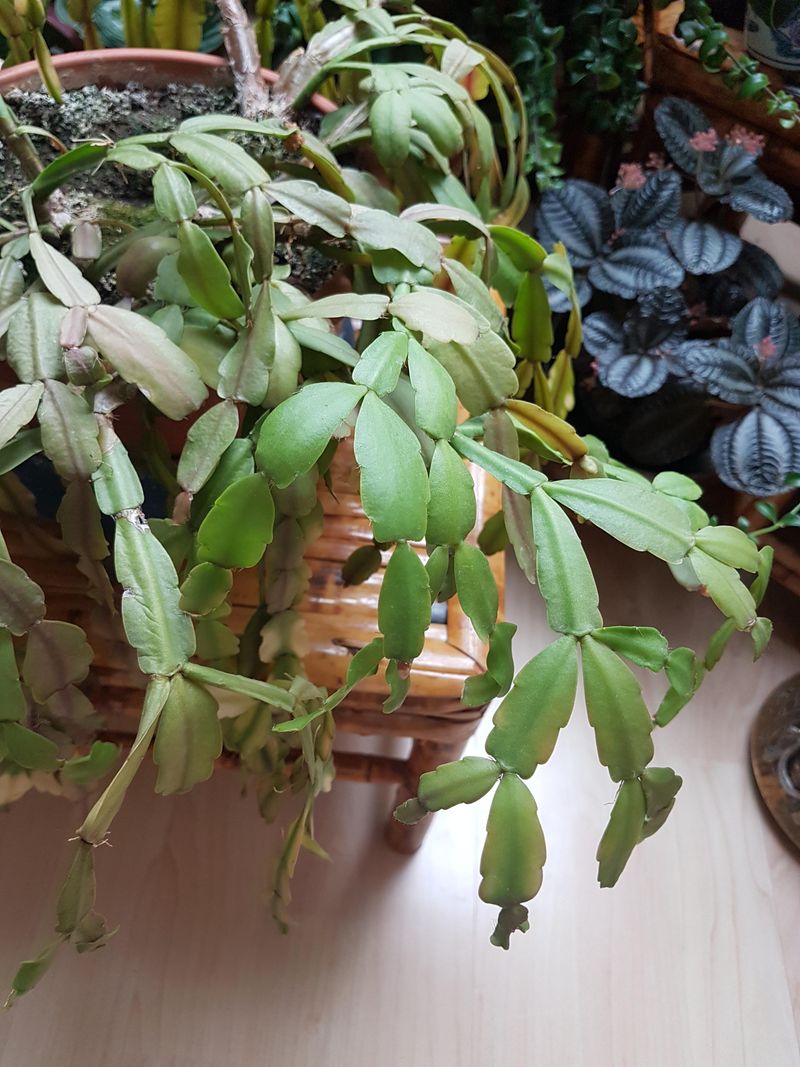
Our Oregon winters are famous for one thing: gray skies. Day after day of clouds means your Christmas cactus isn’t getting the bright, indirect light it needs to stay healthy.
Without enough light, the plant can’t photosynthesize properly, and it starts to look weak, pale, and wilted.
You might notice the segments losing their rich green color or stretching out awkwardly as they search for more light. The whole plant can start to droop, even if everything else seems fine.
It’s just not getting enough energy.
Move your plant closer to a window, ideally an east or west-facing one where it can catch some natural light during the day. If your home is especially dark, consider adding a small grow light.
Even a few hours of extra light can make a big difference.
Within a couple of weeks, you should see the plant perk up. The color will deepen, and new growth will look stronger and more upright.
If the plant has stretched out too much, you can prune it back lightly to encourage bushier growth.
Light is fuel for your Christmas cactus. During our long, dim winters, giving it a brighter spot is one of the kindest things you can do to keep it thriving.
6. Root Stress From Tight Containers
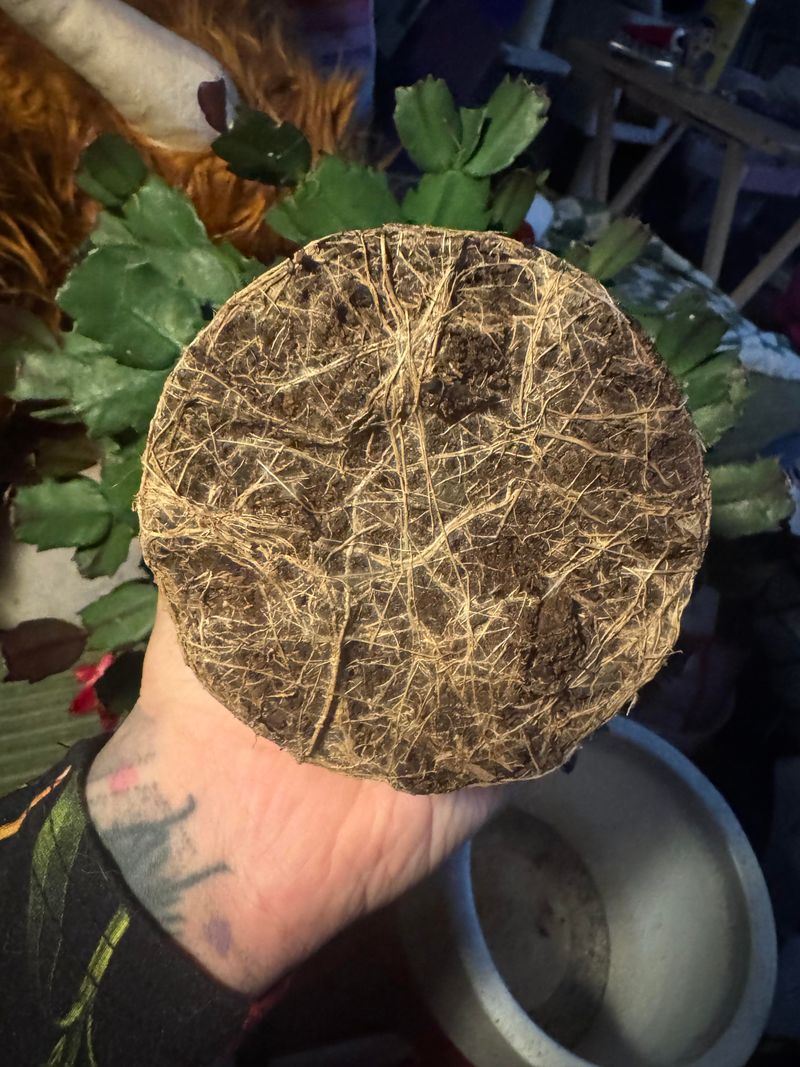
Christmas cacti can live in the same pot for years, but eventually, the roots run out of room. When the plant becomes rootbound, the roots circle around and around, unable to absorb water and nutrients efficiently.
This stress shows up as wilting, even when you’re watering regularly.
If you tip the plant out of its pot and see a dense tangle of roots with little soil left, it’s time to size up. A rootbound plant can’t support healthy growth, no matter how much care you give it.
Choose a pot that’s one or two inches larger in diameter. Gently loosen the roots before placing the plant in fresh potting mix.
Don’t go too big, Christmas cacti actually like being slightly snug, just not strangled.
After repotting, your plant might look a little shocked for a few days, but it will bounce back quickly. Within a week or two, you’ll see the wilting stop and new growth start to emerge.
The plant will look fuller and healthier overall.
Repotting every few years keeps your Christmas cactus happy and thriving. It’s a simple step that prevents a lot of frustration down the road, and it gives the plant room to grow into its full, beautiful potential.
7. Incorrect Soil Mix
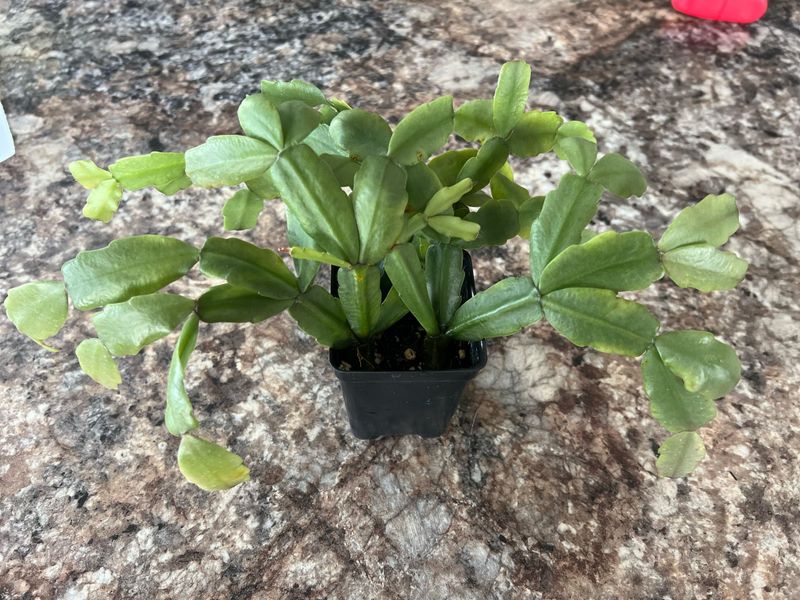
Not all potting soil is created equal. If your Christmas cactus is planted in heavy, moisture-retaining soil meant for garden plants or moisture-loving houseplants, it’s going to struggle.
That kind of soil holds water too long, which can lead to root rot and wilting.
Christmas cacti are epiphytes in the wild, meaning they grow on trees and prefer soil that drains quickly. They need a light, airy mix that lets water flow through while still holding a bit of moisture.
Regular potting soil just doesn’t cut it.
Switch to a cactus or succulent mix, or make your own by mixing regular potting soil with perlite, coarse sand, or orchid bark. The goal is to create a mix that drains fast but doesn’t dry out instantly.
After repotting into the right soil, your plant should start to recover within a week or two. The wilting will ease up, and the segments will firm up as the roots get the oxygen and moisture balance they need.
Using the right soil is one of those foundational care steps that sets your plant up for long-term success. It’s a small investment that pays off in healthier, more resilient growth and better blooms when the holidays come around.
8. Humidity Levels Being Too Low
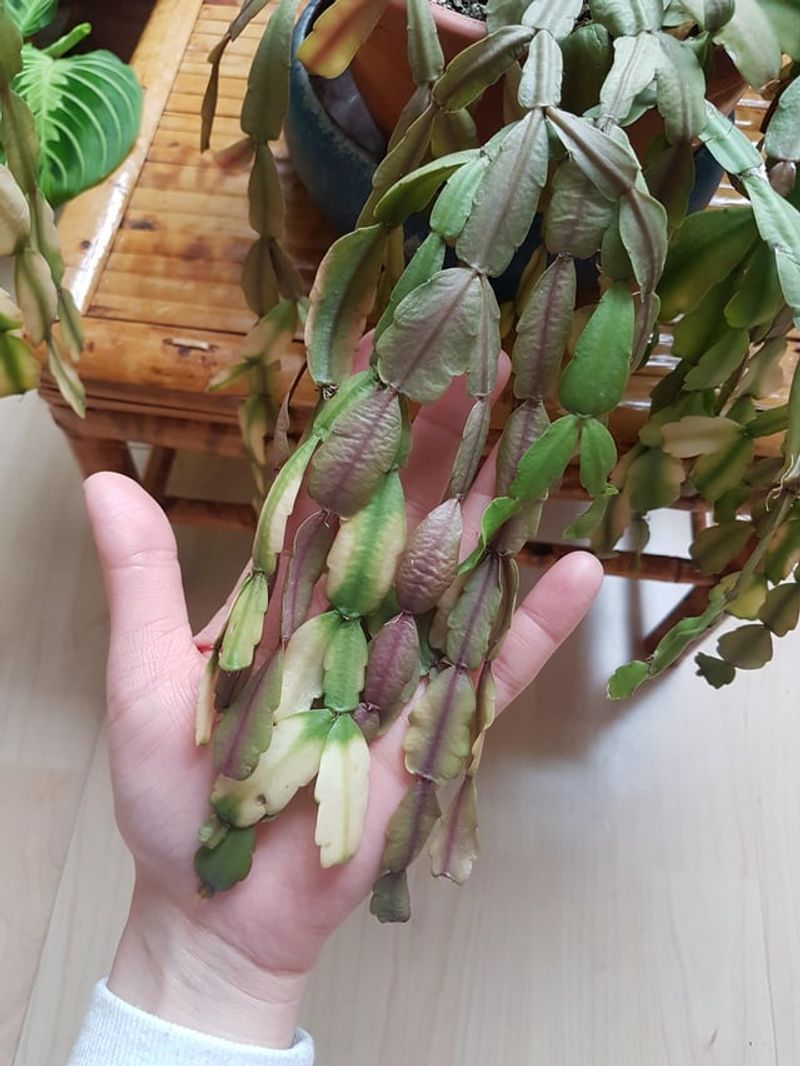
Christmas cacti come from humid, tropical environments, and they don’t love the bone-dry air that comes with indoor heating. When the humidity drops too low, the plant starts to lose moisture faster than it can take it in, and the segments begin to wilt, shrivel, or look dull.
Oregon homes in winter can feel like a desert inside, especially with forced-air heating running constantly. Even if you’re watering correctly, the air itself might be pulling moisture out of your plant faster than you realize.
Boost the humidity around your Christmas cactus by placing it on a tray filled with pebbles and water. As the water evaporates, it creates a little humid microclimate around the plant.
You can also group plants together or use a small humidifier nearby.
Within a few days of increasing humidity, you’ll notice the plant looking more hydrated and perky. The segments will plump up and regain their healthy sheen.
If the wilting was severe, full recovery might take a week or two.
Humidity is often overlooked, but it’s a game-changer for tropical houseplants like the Christmas cactus. A little extra moisture in the air goes a long way toward keeping your plant happy and thriving through the dry winter months.
9. Stress After Blooming
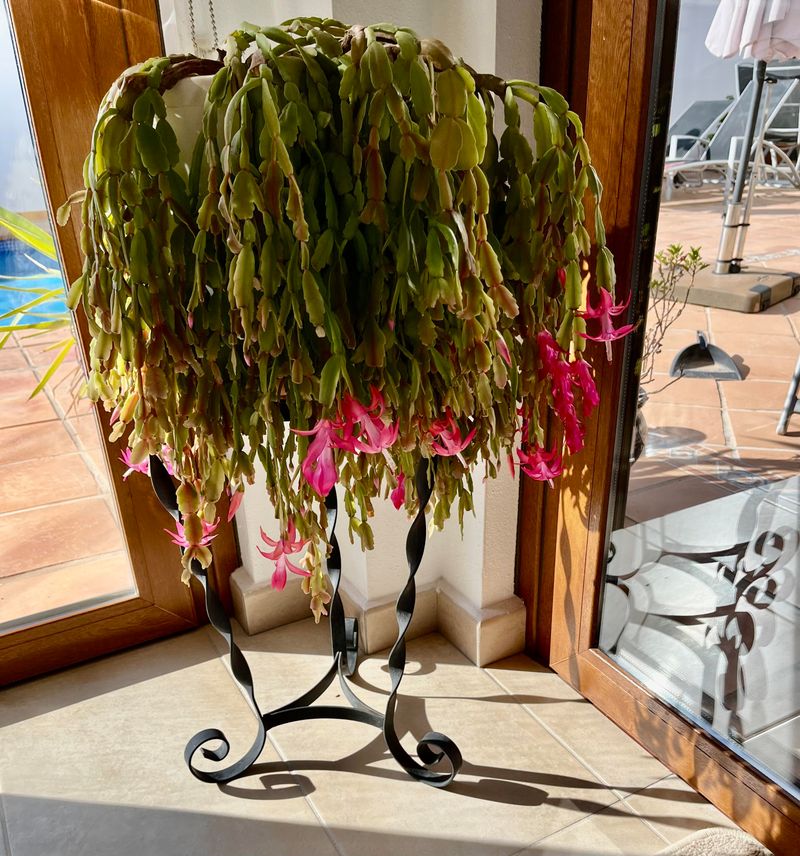
After your Christmas cactus puts on its stunning holiday show, it’s exhausted. Blooming takes a lot of energy, and once the flowers fade, the plant often goes through a rest period.
During this time, it might look a little wilted, droopy, or just plain tired.
This is totally normal and nothing to panic about. Your plant isn’t dying, it’s just recovering.
Think of it like a marathon runner needing a nap after crossing the finish line. The segments might soften slightly, and growth slows down for a few weeks.
Give your plant a break. Cut back slightly on watering, but don’t let it dry out completely.
Keep it in a comfortable spot with indirect light, and avoid fertilizing until you see new growth starting up again.
Within a few weeks, your Christmas cactus will start to perk back up. You’ll notice new segments forming at the tips, and the plant will regain its firm, healthy appearance.
This rest period is part of its natural cycle.
Understanding this pattern helps you avoid overreacting and making things worse. Your plant just needs a little patience and gentle care while it recharges for next year’s bloom.
Treat it kindly, and it’ll come back stronger than ever.