10 Fast-Growing Houseplants You Can Easily Maintain In California Homes
Some houseplants seem to grow right in front of your eyes, while others barely change no matter how much attention you give them.
That difference matters a lot in California homes, where light, heat, and indoor conditions can vary more than people expect.
Fast-growing plants are especially appealing because they make a space feel alive and rewarding without long waiting periods.
They respond quickly to care, which makes plant ownership feel less like a guessing game and more like progress you can see.
In many California homes, the right plants take advantage of steady light and mild temperatures instead of struggling against them.
The best options grow with confidence rather than constant demands, fitting naturally into everyday routines. Some thrive with simple watering habits, while others bounce back easily if conditions shift.
With the right choices, fast growth and easy care can go hand in hand, turning houseplants into something you actually enjoy keeping up with.
1. Pothos
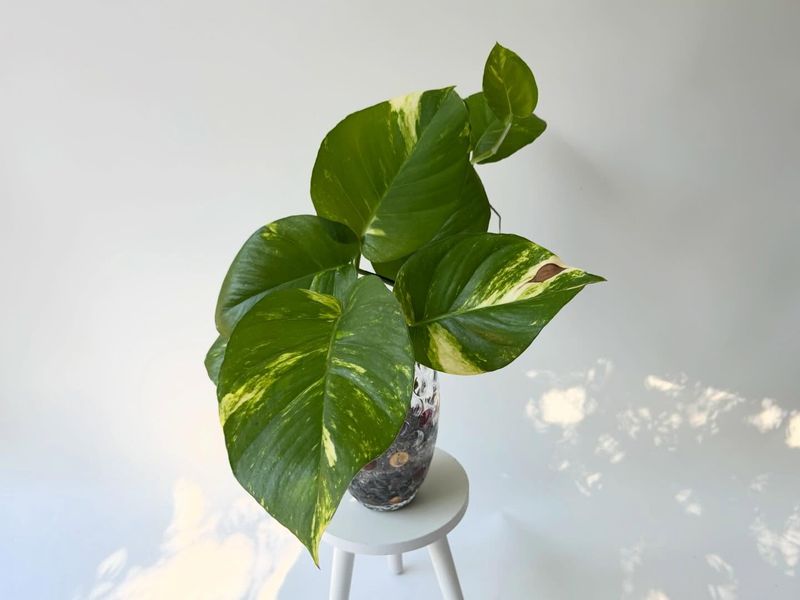
Trailing vines that cascade beautifully from shelves make this plant a favorite among Californians who appreciate low-maintenance greenery. Pothos adapts to nearly any light condition, from bright indirect sun to dimmer corners, which means you can place it almost anywhere in your home.
The heart-shaped leaves come in shades of green, golden yellow, or variegated patterns that add visual interest without requiring special care.
Watering becomes simple once you learn to check the soil with your finger. When the top inch feels dry, give it a thorough drink until water drains from the bottom.
California’s indoor climate suits pothos perfectly because it thrives in temperatures between 65 and 85 degrees, which most homes naturally maintain.
Growth happens fast when conditions are right, with vines extending several inches each month during active growing seasons. You can trim back long stems anytime to encourage bushier growth or propagate cuttings in water to create new plants.
Fertilizing once a month during spring and summer keeps leaves vibrant and healthy.
Brown leaf tips usually signal too much direct sun or inconsistent watering rather than serious problems. Moving the plant to a spot with filtered light often solves this issue quickly.
Pothos tolerates occasional neglect better than most houseplants, making it ideal for first-time plant parents.
Hanging baskets showcase the cascading nature beautifully, while placing pots on high surfaces lets vines trail downward naturally.
Some people train the stems along walls or around windows using small hooks for a living curtain effect.
The versatility of pothos means it fits any decorating style from modern to bohemian.
Air-purifying qualities add another benefit beyond aesthetics, as studies show pothos removes certain toxins from indoor air. While you shouldn’t rely on plants alone for air quality, having several around certainly doesn’t hurt.
California homeowners often place pothos in bathrooms where humidity levels stay higher.
2. Spider Plant
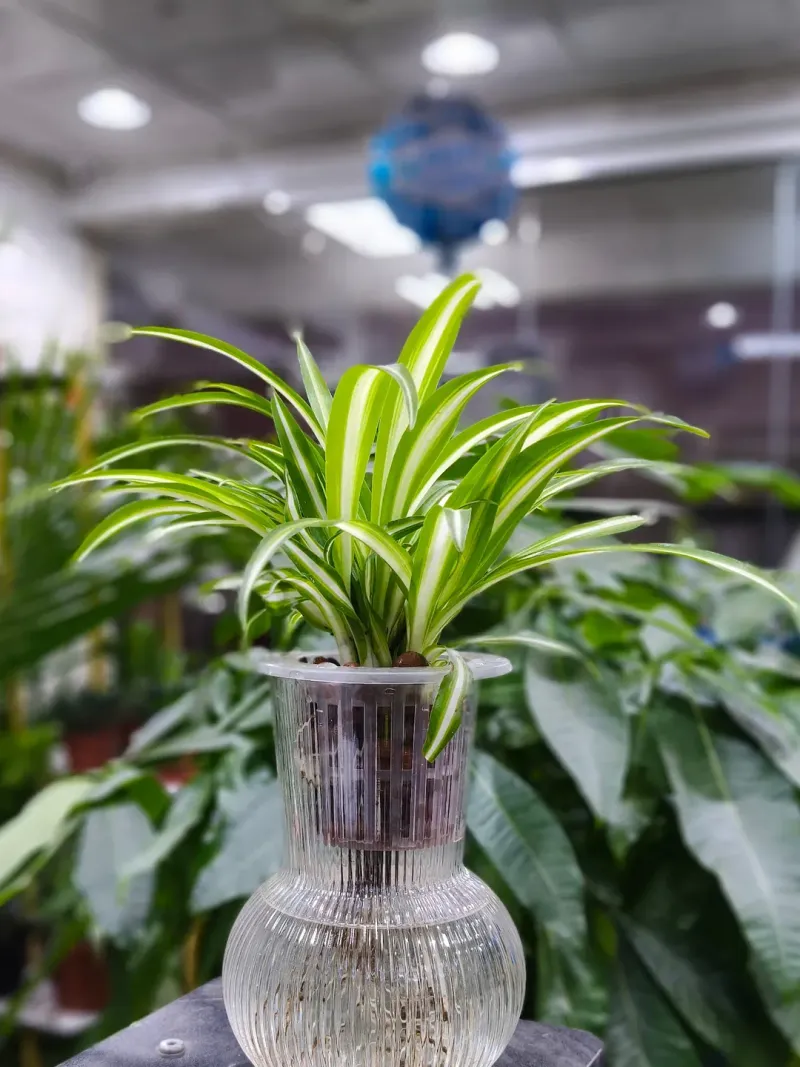
Arching leaves striped with white or cream create a fountain-like appearance that adds movement to any California room. Spider plants earn their name from the small plantlets that dangle from long stems, resembling spiders hanging on webs.
Your California Garden Changes Every Week. Your Plan Should Too.
Gardening in California changes quickly throughout the season. Every Friday you’ll receive a simple weekly plan showing exactly what to plant, prune, fertilize, harvest, and protect so you never miss the right timing.
These baby plants root easily in soil or water, giving you endless opportunities to expand your collection or share with friends.
Bright indirect light brings out the most vibrant leaf variegation, though these plants tolerate lower light surprisingly well. Direct afternoon sun can scorch the delicate foliage, so positioning near east-facing windows works perfectly in California homes.
The plant communicates its needs clearly through its appearance, making care straightforward for beginners.
Watering preferences lean toward consistent moisture without waterlogging the roots. Allowing the soil to dry slightly between waterings prevents root problems while keeping the plant happy.
California tap water sometimes contains fluoride that causes brown leaf tips, so using filtered or distilled water eliminates this cosmetic issue.
Temperature tolerance ranges widely, but spider plants prefer the comfortable 60 to 75-degree range found in most indoor spaces. Growth accelerates during warmer months when the plant produces new leaves and plantlets rapidly.
A single spider plant can generate dozens of babies throughout the growing season.
Fertilizing every two weeks during spring and summer supports vigorous growth and plantlet production. Dilute liquid fertilizer to half strength to avoid overwhelming the roots with nutrients.
Skipping fertilizer during fall and winter matches the plant’s natural slower growth cycle.
Brown tips occasionally develop from dry air, low humidity, or mineral buildup in soil. Trimming affected tips with clean scissors keeps the plant looking fresh without harming overall health.
Increasing humidity through misting or placing the pot on a pebble tray helps in drier California climates.
3. Heartleaf Philodendron
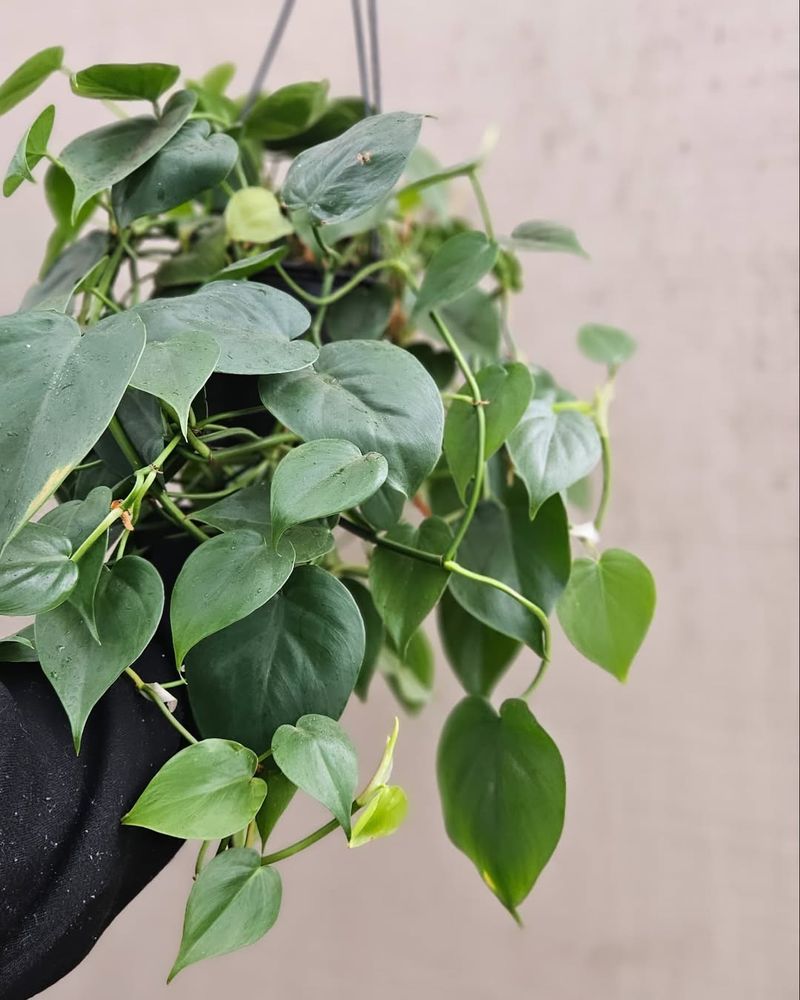
Glossy heart-shaped leaves emerge in bronze tones before maturing to deep green, creating a constantly changing display. Vining growth habits allow this philodendron to climb supports or trail gracefully from elevated positions throughout California homes.
The plant grows with remarkable speed when given proper conditions, sometimes adding several new leaves each week.
Adaptability to various light levels makes placement flexible, though bright indirect light produces the fastest growth and largest leaves. Too little light causes leggy stems with sparse foliage, while direct sun can fade the rich green coloring.
Finding the sweet spot usually takes just one or two adjustments in California’s naturally bright indoor environments.
Soil moisture preferences lean toward evenly moist but never soggy conditions. Sticking your finger an inch deep into the soil tells you when watering is needed.
California’s dry air means checking moisture levels twice weekly during warmer months prevents the plant from drying out completely.
Climbing supports like moss poles or trellises encourage the natural vining tendency and result in larger, more dramatic leaves. Without support, stems trail downward, creating a cascading effect perfect for hanging baskets or high shelves.
Either growth style works beautifully depending on your space and aesthetic preferences.
Fertilizing monthly during the growing season with balanced liquid fertilizer keeps foliage vibrant and promotes steady new growth. Diluting to half the recommended strength prevents fertilizer burn on tender roots.
Pausing fertilization during winter months respects the plant’s natural rest period.
Pruning long vines maintains the desired shape and encourages branching for fuller growth. Cut just above a leaf node using clean, sharp scissors, and the plant will send out new growth from that point.
Cuttings root easily in water or directly in moist soil, making propagation almost foolproof.
4. Snake Plant
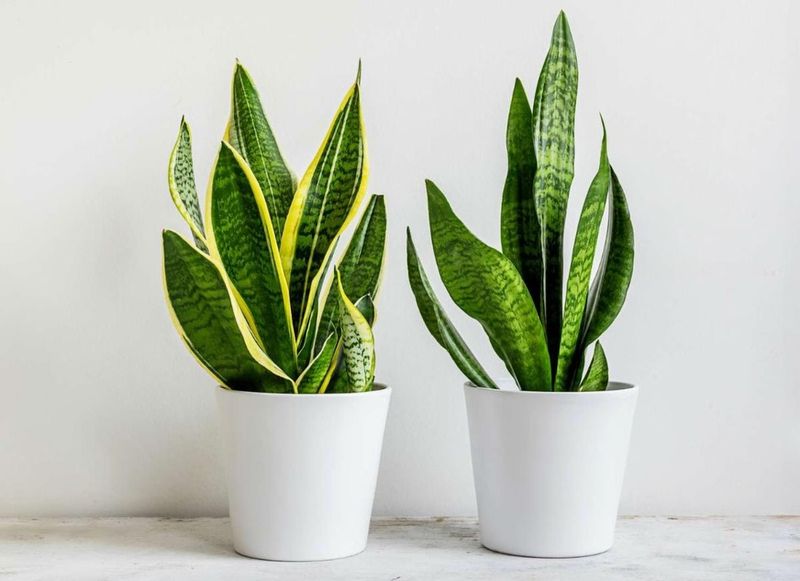
Architectural upright leaves with striking patterns bring sculptural beauty to California interiors without demanding constant attention. Snake plants tolerate neglect better than almost any other houseplant, making them perfect for busy lifestyles or frequent travelers.
The thick succulent-like foliage stores water efficiently, allowing the plant to survive weeks without watering.
Light flexibility ranges from low to bright indirect, though growth rates increase with more light exposure. Direct sun can bleach the distinctive banding patterns, while too little light slows growth to a crawl.
California’s abundant natural light means most rooms provide adequate conditions without special positioning.
Watering requirements stay minimal compared to most houseplants, with the soil needing to dry completely between waterings. Overwatering causes far more problems than underwatering, as soggy soil leads to root rot quickly.
During California’s cooler months, watering once a month often suffices for established plants.
Growth happens slowly but steadily, with new leaves emerging from the soil’s center rather than from existing foliage. Patience pays off as the plant gradually fills its container with additional shoots.
Mature snake plants eventually produce fragrant white flowers on long stalks, though blooming occurs sporadically.
Fertilizing remains optional, though feeding once or twice during spring and summer encourages faster growth. Use a diluted succulent fertilizer to avoid overwhelming the plant’s modest nutrient needs.
5. Peace Lily
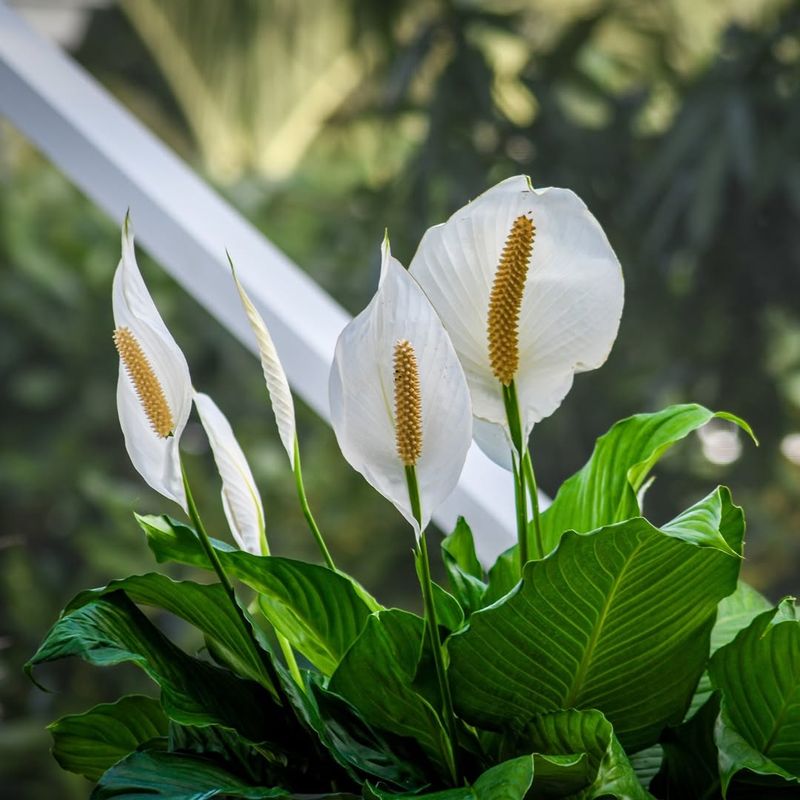
Elegant white blooms rise above glossy dark green foliage, creating a sophisticated look that enhances any California room. Peace lilies communicate their watering needs dramatically by drooping when thirsty, then perking up within hours after watering.
This clear signaling makes care intuitive even for complete beginners.
Low to medium light suits peace lilies perfectly, making them ideal for rooms without bright windows. Too much direct sun scorches the delicate leaves, while adequate indirect light encourages frequent blooming.
California homes with north or east-facing windows provide excellent conditions without risk of sun damage.
Consistent moisture keeps peace lilies happiest, though allowing slight drying between waterings prevents root problems. The dramatic droop signals watering time unmistakably, so you’ll never have to guess.
California’s indoor climate means checking soil moisture twice weekly during warmer months maintains proper hydration.
Blooming occurs naturally throughout the year when the plant receives adequate light and nutrients. White spathes last several weeks before gradually turning green and fading.
Removing spent blooms by cutting stems at the base encourages the plant to produce new flowers continuously.
Humidity appreciation means peace lilies thrive in naturally moist environments like bathrooms or near humidifiers. Misting foliage regularly or setting pots on water-filled pebble trays increases ambient moisture.
California’s drier air sometimes causes brown leaf tips, which improve with higher humidity levels.
Fertilizing every six to eight weeks during growing seasons supports robust foliage and plentiful blooms. Use a balanced liquid fertilizer diluted to half strength to avoid overwhelming the roots.
Overfertilizing causes brown leaf tips and reduces flowering despite seeming like it should help.
6. ZZ Plant
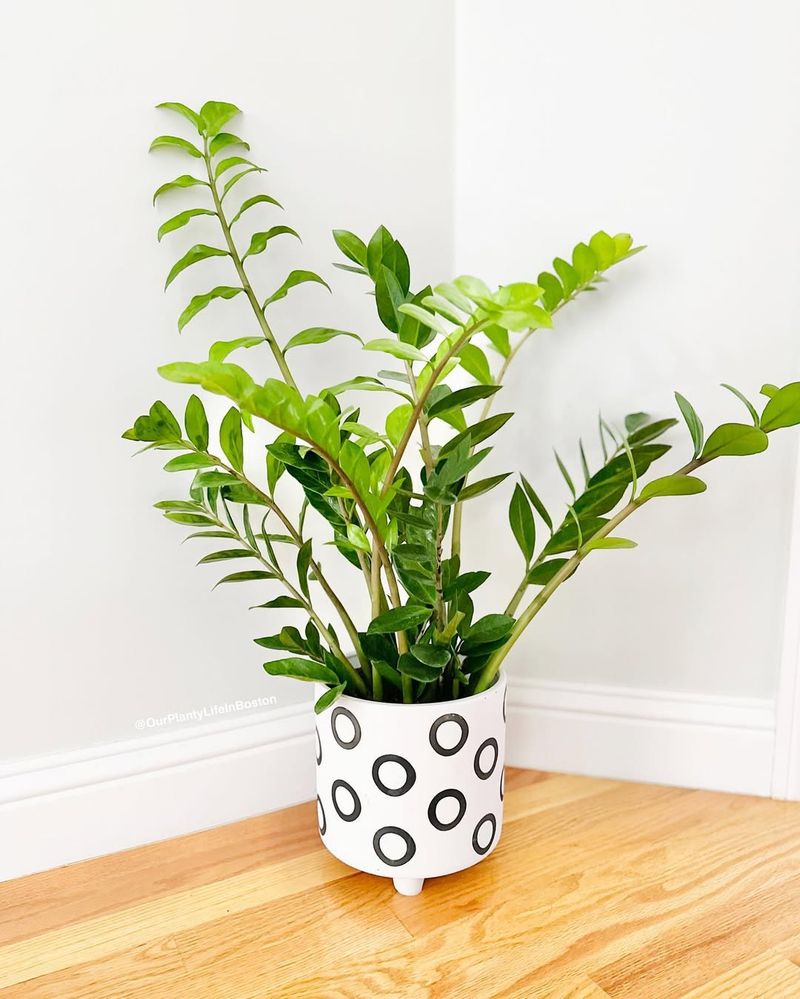
Waxy leaflets arranged along upright stems create a polished appearance that fits seamlessly into modern California interiors. ZZ plants tolerate extremely low light and irregular watering better than almost any houseplant, earning a reputation as nearly indestructible.
The thick rhizomes beneath the soil store water and nutrients, allowing the plant to survive prolonged neglect.
Light adaptability ranges from low to bright indirect, though growth rates vary significantly depending on exposure. Bright conditions produce faster growth and more shoots, while low light results in slower but steady development.
California homes provide adequate light in most locations without requiring special placement near windows.
Watering needs stay minimal, with the soil requiring complete drying between waterings to prevent rhizome rot. Overwatering represents the only real danger to ZZ plants, as they handle drought stress remarkably well.
During California’s cooler months, watering once every three to four weeks often provides sufficient moisture.
Growth emerges from underground rhizomes that send up new stems periodically rather than continuously. Each stem matures over several weeks, with leaflets unfurling gradually from base to tip.
Patience rewards you with a fuller plant as multiple stems develop over time.
Fertilizing remains optional, though feeding once during spring and once during summer encourages more vigorous growth. Use a diluted all-purpose fertilizer to provide gentle nutrition without overwhelming the modest needs.
Many California growers never fertilize their ZZ plants and still maintain healthy specimens.
Propagation through division or leaf cuttings works well, though new plants develop slowly. Separating rhizomes during repotting gives you established plants immediately, while leaf cuttings take months to form new rhizomes.
The slow pace requires patience but eventually produces new ZZ plants reliably.
7. Monstera Deliciosa
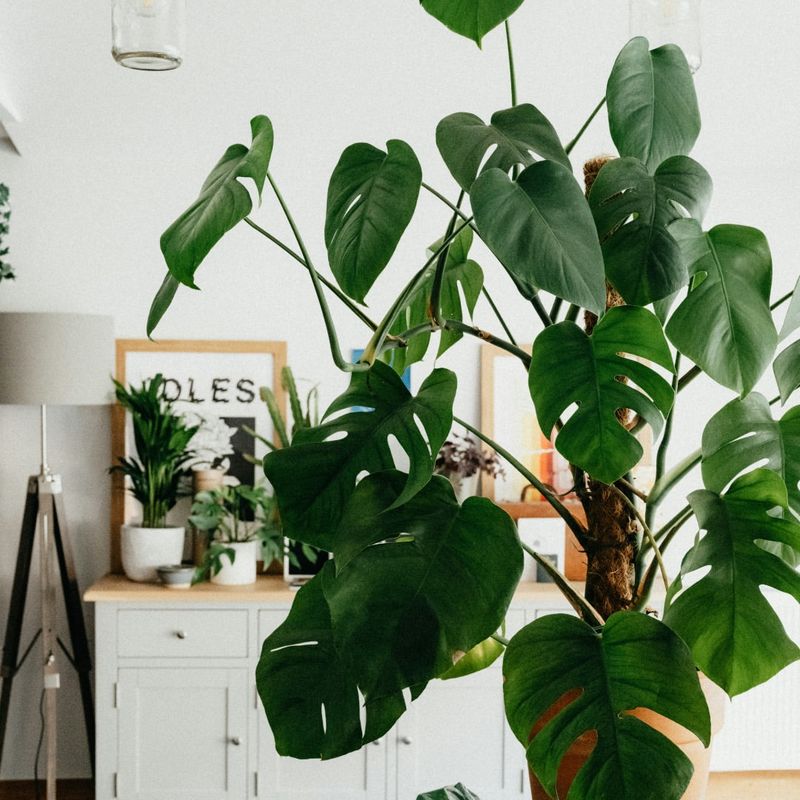
Dramatic split leaves with natural holes create an instantly recognizable tropical statement in California homes. Monstera plants grow rapidly when given adequate space and light, sometimes producing a new leaf every few weeks during peak growing season.
The fenestrations develop as leaves mature, with younger foliage emerging solid before splits appear.
Bright indirect light encourages the largest leaves and most dramatic fenestrations, though the plant tolerates medium light reasonably well. Direct sun burns the delicate foliage, while insufficient light produces smaller leaves without characteristic splits.
California’s abundant natural light means positioning near bright windows without direct exposure works perfectly.
Watering when the top two inches of soil feel dry maintains proper moisture levels without risking root rot. Monstera prefers consistent moisture during active growth but tolerates occasional drying between waterings.
California’s indoor climate means checking soil weekly during warmer months prevents the plant from staying too wet or too dry.
Climbing nature becomes apparent as the plant matures, with aerial roots emerging from stems seeking support. Providing a moss pole or wooden stake allows the plant to climb naturally and encourages larger leaf development.
Without support, monstera grows more horizontally with smaller leaves.
Fertilizing every two to four weeks during spring and summer fuels rapid growth and impressive leaf size. Use a balanced liquid fertilizer diluted to half strength to avoid overwhelming the roots.
Pausing fertilization during California’s cooler months respects the plant’s naturally slower winter growth.
8. Chinese Evergreen
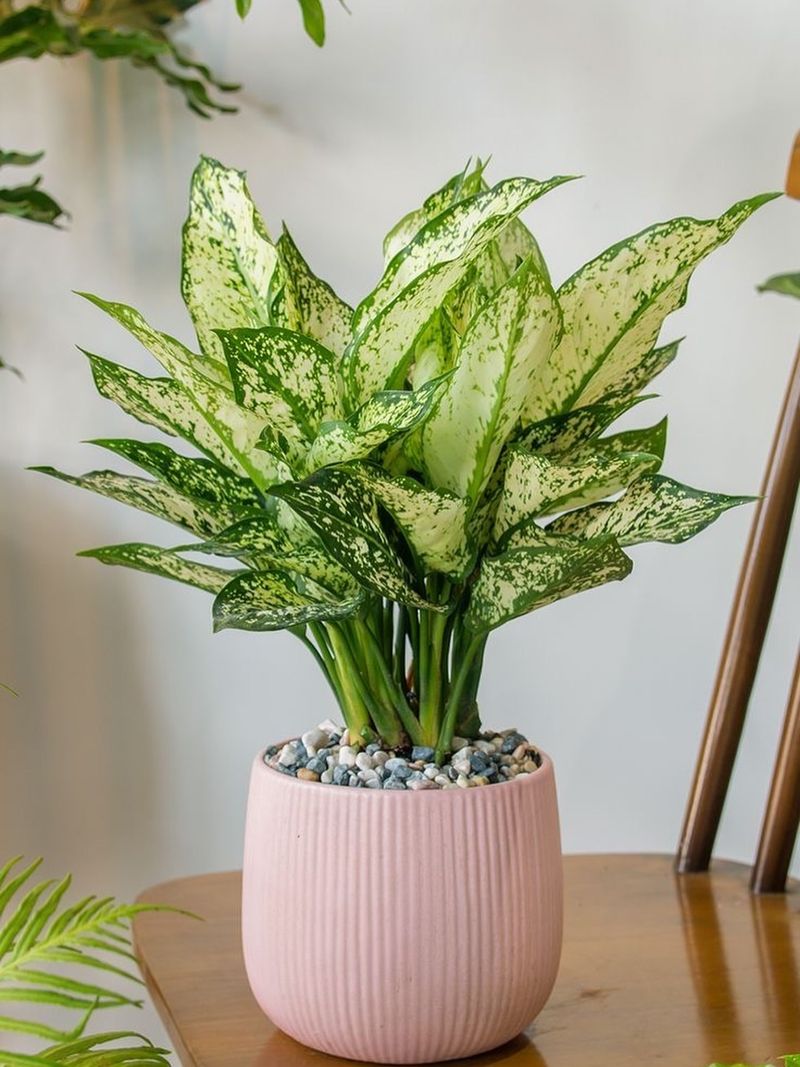
Patterned foliage in shades of green, silver, pink, or red provides color variety without requiring flowering. Chinese evergreens tolerate low light conditions better than most houseplants, making them perfect for California rooms without abundant natural light.
The slow to moderate growth rate means the plant maintains a manageable size for years without constant pruning.
Light preferences lean toward low to medium indirect, with variegated varieties requiring slightly more light to maintain their patterns. Too much direct sun fades the distinctive leaf markings, while extremely low light slows growth significantly.
California homes with north-facing windows or interior rooms provide ideal conditions naturally.
Watering when the top inch of soil feels dry prevents both overwatering and drought stress. Chinese evergreens prefer consistent moisture but tolerate occasional drying better than constant wetness.
California’s indoor climate means checking soil twice weekly during warmer months maintains proper hydration levels.
Temperature sensitivity means Chinese evergreens prefer warm conditions above 60 degrees consistently. Cold drafts from air conditioning or open windows can cause leaf damage, so positioning away from vents matters.
California’s mild climate makes maintaining appropriate temperatures easy year-round.
9. Dracaena
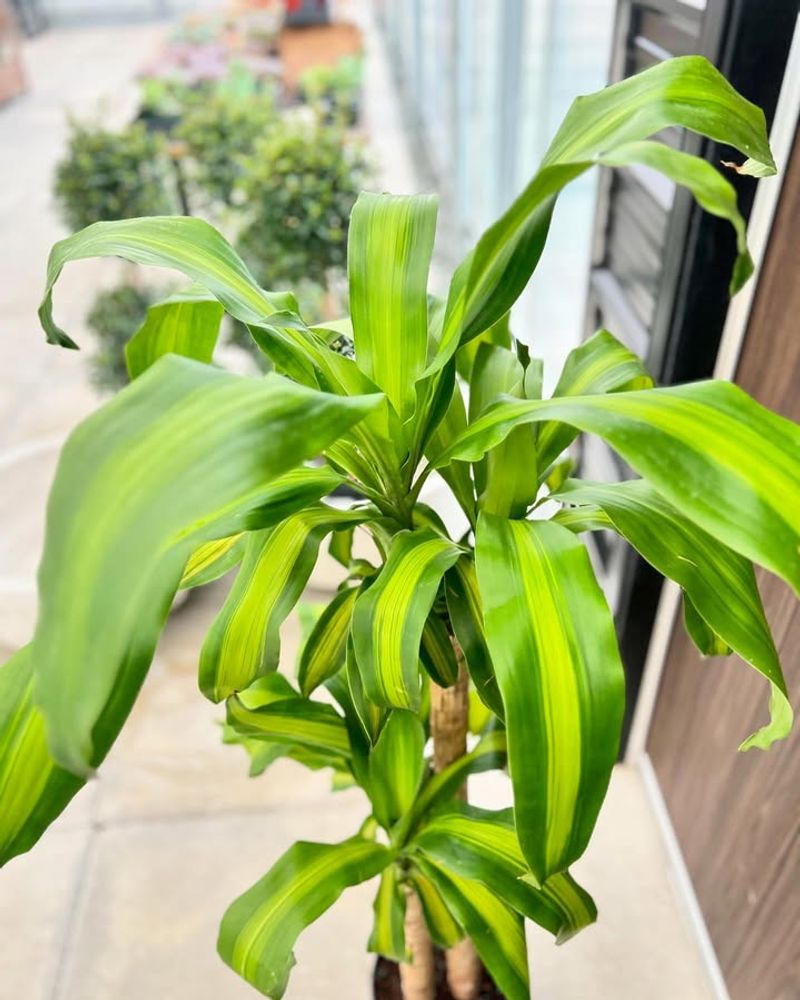
Sword-like leaves arranged in rosettes atop slender stems bring architectural drama to California interiors. Dracaena varieties range from compact tabletop sizes to floor-standing specimens reaching several feet tall.
The slow to moderate growth rate keeps plants manageable while still providing visible progress over time.
Light requirements vary by variety, though most dracaenas thrive in bright indirect light with tolerance for medium conditions. Variegated types need more light to maintain their stripes or edges, while solid green varieties adapt to lower light.
California’s naturally bright homes accommodate most dracaena types without special positioning.
Watering when the top two to three inches of soil feel dry prevents overwatering while maintaining adequate moisture. Dracaenas tolerate slight drying better than constantly wet conditions that lead to root rot.
California’s indoor climate means checking soil weekly during warmer months keeps watering on track.
Fluoride sensitivity causes brown leaf tips when tap water contains high levels of this chemical. Using filtered, distilled, or rainwater eliminates this cosmetic issue completely.
California municipalities vary in fluoride content, so water quality affects different homes differently.
Fertilizing every four to six weeks during spring and summer supports healthy foliage and steady growth. Use a balanced liquid fertilizer diluted to half strength to avoid overwhelming the roots.
Pausing fertilization during fall and winter matches the plant’s naturally slower growth cycle.
Pruning removes brown leaf tips or controls height by cutting stems to the desired length. New growth emerges below cuts, creating a bushier appearance over time.
Cuttings root in water or soil, though rooting times extend longer than faster-growing houseplants.
10. Rubber Plant
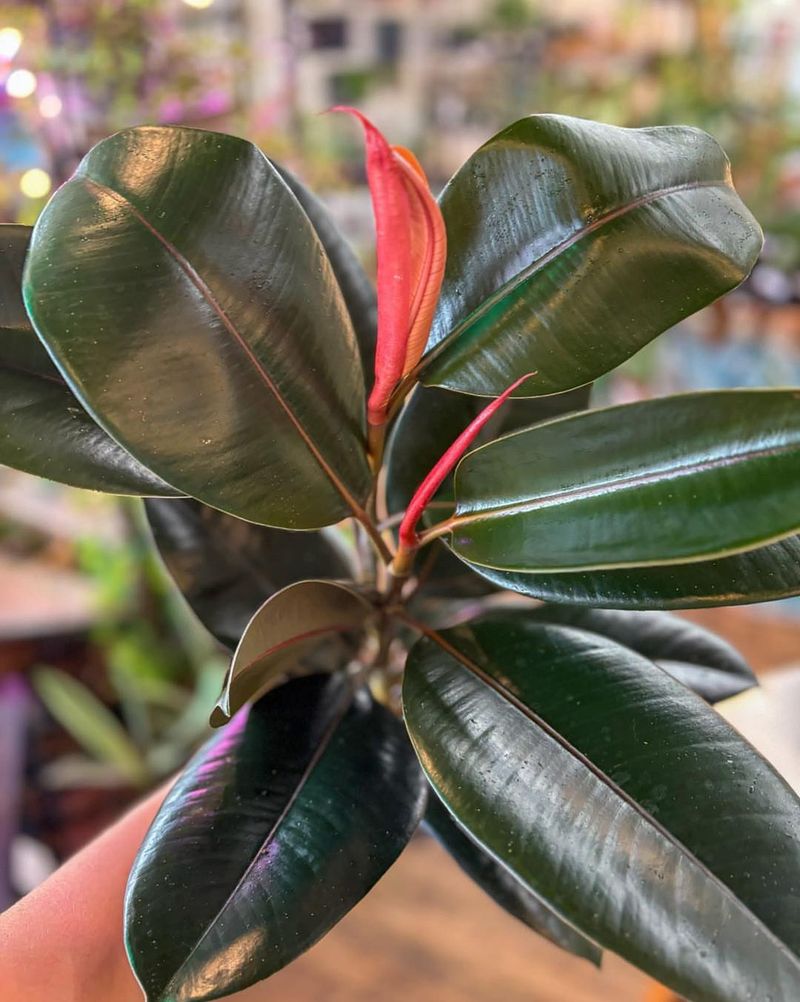
Large glossy leaves in deep green or burgundy tones make bold statements in California homes with adequate space. Rubber plants grow vigorously when conditions suit them, sometimes adding several inches of height each month during peak season.
The sturdy trunk and branches develop over time, creating a tree-like appearance indoors.
Bright indirect light produces the fastest growth and most vibrant leaf coloring, though the plant tolerates medium light reasonably well. Direct sun can scorch the large leaves, while insufficient light causes leggy growth with sparse foliage.
California’s abundant natural light means positioning near bright windows without direct exposure works ideally.
Watering when the top inch of soil feels dry maintains proper moisture without risking root rot. Rubber plants prefer consistent moisture during active growth but tolerate occasional drying between waterings.
California’s indoor climate means checking soil weekly during warmer months prevents overwatering or underwatering.
Leaf cleaning maintains the glossy appearance and improves photosynthesis efficiency by removing dust buildup. Wipe foliage monthly with a damp cloth or give the plant an outdoor rinse during warmer weather.
California’s dusty conditions make regular cleaning particularly beneficial for rubber plants.
Fertilizing every two to four weeks during spring and summer fuels rapid growth and large leaf development. Use a balanced liquid fertilizer diluted to half strength to provide adequate nutrition without overwhelming roots.
Pausing fertilization during California’s cooler months respects the plant’s naturally slower winter growth.