Grow These 10 Plants Around A Feeder To Attract Birds In Oregon
Adding a bird feeder is a great start, but the right plants around it can make your Oregon yard irresistible to birds. Certain shrubs, flowers, and trees provide food, shelter, and perches that keep birds coming back again and again.
I started by planting a few shrubs near my feeders and noticed more activity almost immediately. Birds were safer, more comfortable, and spent more time exploring the yard.
Over time, it created a lively, colorful space that felt alive all year.
Oregon’s climate, with its mild winters and wet soils, works well for many bird-friendly plants. Native options are especially effective because local birds know them and rely on them naturally.
These plants are easy to grow, provide food and cover, and make your yard a haven for feathered visitors.
1. Oregon Grape (Mahonia aquifolium)
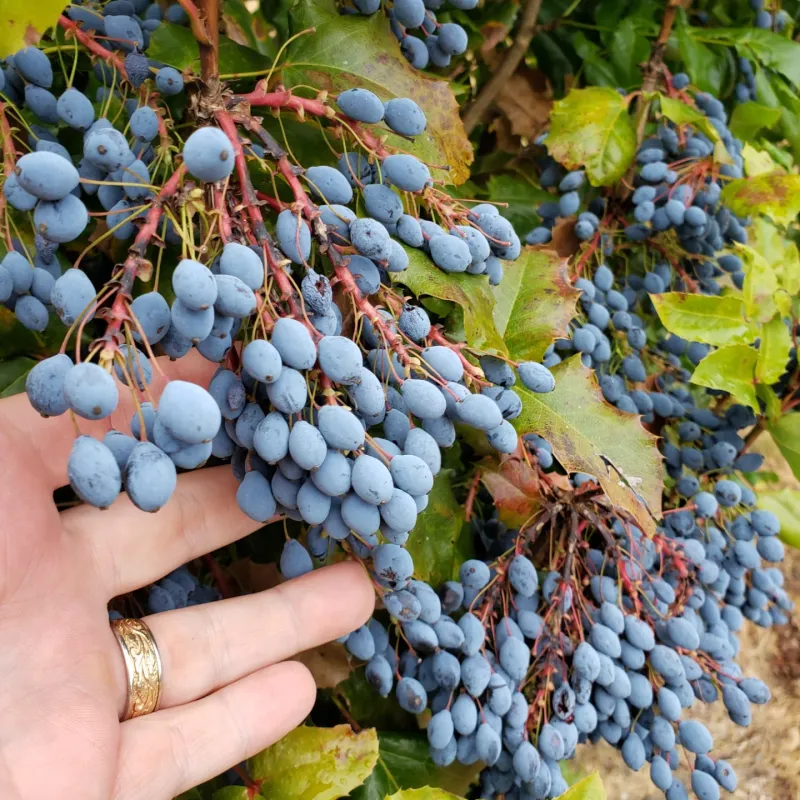
One spring morning, you might notice a robin perched near your feeder, eyeing the glossy blue berries on a nearby shrub. That’s the magic of Oregon grape at work.
This evergreen native thrives in shady spots and produces clusters of bright yellow flowers in early spring, followed by dark blue berries that birds adore.
Robins, waxwings, and towhees visit regularly to feast on the fruit, especially during late summer and fall. The dense foliage also provides excellent cover for smaller birds seeking refuge from hawks or harsh weather.
Oregon grape tolerates a range of soil types, from clay to loam, and handles dry shade remarkably well once established.
Plant it under taller trees or along the north side of your house where sunlight is limited. Its spiky, holly-like leaves add year-round structure to your garden, even in winter.
Pair it with your feeder by placing it a few feet away, creating a natural corridor where birds can hop between food sources.
You’ll appreciate how low-maintenance this shrub is. It rarely needs pruning and resists most pests.
The berries can be tart for human taste, but birds find them irresistible. Watching a flock of cedar waxwings strip the branches clean in autumn is a backyard spectacle you won’t forget.
2. Serviceberry (Amelanchier spp.)
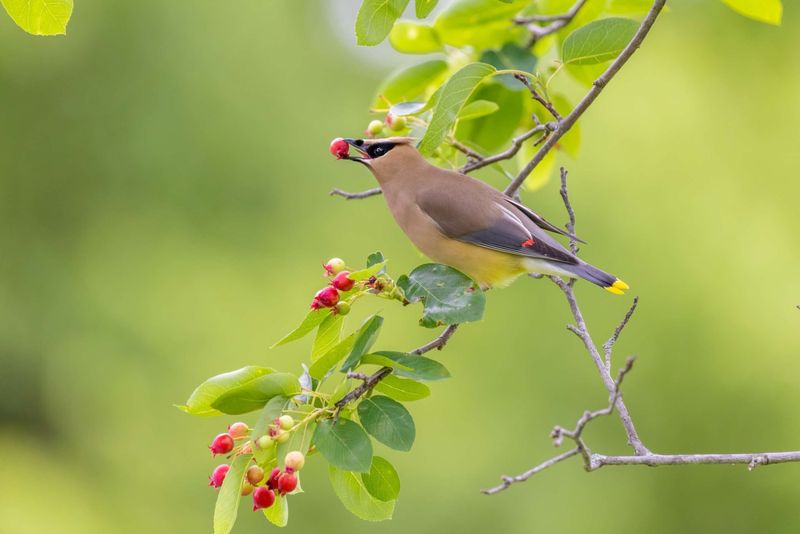
Few plants create as much excitement at a bird feeder as serviceberry when its fruit ripens in early summer. You’ll know the berries are ready when you see robins, waxwings, and tanagers competing for every last purple-red morsel.
This small tree or large shrub produces edible berries that taste like sweet blueberries, appealing to both humans and birds.
Serviceberry blooms in early spring with delicate white flowers that brighten the garden before most other plants wake up. The flowers attract early pollinators, and the berries follow quickly, usually ripening by June.
Plant it in full sun to part shade with well-draining soil, and it will reward you with reliable crops year after year.
The multi-season interest is hard to beat. Spring brings flowers, summer offers fruit, and fall foliage turns shades of orange and red.
Birds use the branching structure for perching and nesting, making it a hub of activity near your feeder. Position it where you can watch the berry harvest unfold from a window.
Your Oregon Garden Changes Every Week. Your Plan Should Too.
Gardening in Oregon changes quickly throughout the season. Every Friday you’ll receive a simple weekly plan showing exactly what to plant, prune, fertilize, harvest, and protect so you never miss the right timing.
Serviceberry tolerates Oregon’s summer dry spells once established and rarely suffers from serious pests. You might need to net a few branches if you want to save berries for yourself.
Otherwise, let the birds enjoy the bounty while you enjoy the show.
3. Red-Osier Dogwood (Cornus sericea)
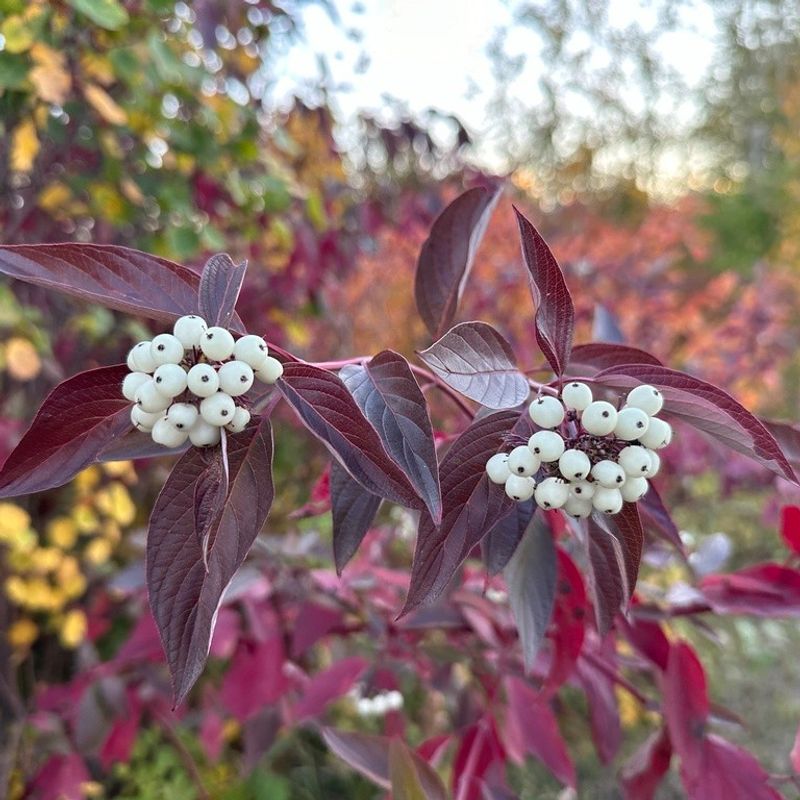
Birds don’t just visit this native shrub for the white berries that ripen in late summer. They also use its dense branching structure as shelter during storms and nesting season.
Chickadees, nuthatches, and sparrows dart between the stems, gleaning insects from the bark. The berries attract thrushes, waxwings, and even woodpeckers.
Red-osier dogwood loves wet soil, making it ideal for low-lying areas or near downspouts where other plants struggle. It spreads through underground runners, forming thickets that provide even more bird habitat over time.
Plant it in full sun to part shade, and watch it grow quickly into a multi-stemmed shrub reaching six to eight feet tall. The vibrant red bark becomes most intense on younger stems, so occasional pruning keeps the color fresh.
Position it behind or beside your feeder to create a layered landscape.
In spring, clusters of white flowers appear, drawing in pollinators before the berries develop. The fall foliage turns burgundy, adding seasonal interest.
This shrub handles Oregon’s wet winters beautifully and requires minimal care once established. Your backyard birds will thank you with year-round visits.
4. Elderberry (Sambucus spp.)
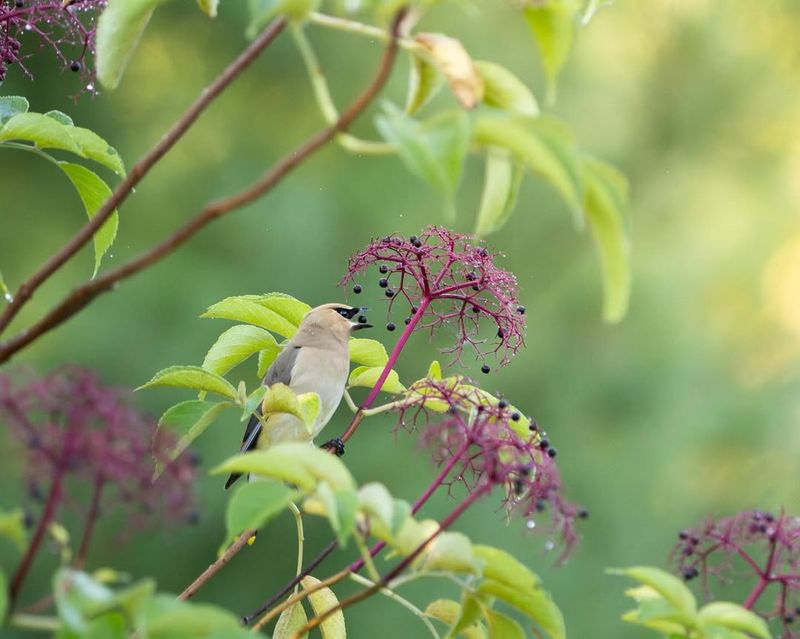
A cluster of dark purple berries dangling from arching branches is like a neon sign for hungry birds. Elderberry grows fast, sometimes reaching ten feet in a single season, and produces massive quantities of fruit that ripen in late summer.
Robins, thrushes, and waxwings descend on elderberry bushes in flocks, stripping the branches bare within days.
This native shrub thrives in moist soil and full sun, making it ideal for planting near ponds, rain gardens, or drainage areas. The creamy white flower clusters that appear in early summer attract pollinators and give way to the berry clusters birds crave.
Elderberry also provides dense cover for nesting birds, with its thick foliage offering protection from predators.
Plant it behind your feeder to create a natural backdrop that draws birds deeper into your yard. The shrub tolerates pruning well, so you can keep it at a manageable size or let it grow into a small tree.
Its fast growth makes it a quick solution for filling empty spaces in new landscapes.
Elderberries are edible for humans too, though they require cooking to be safe. You can harvest some for jams or syrups and leave the rest for the birds.
Watching a flock of robins feast on elderberries while you sip your morning coffee is a simple pleasure that never gets old.
5. Snowberry (Symphoricarpos albus)
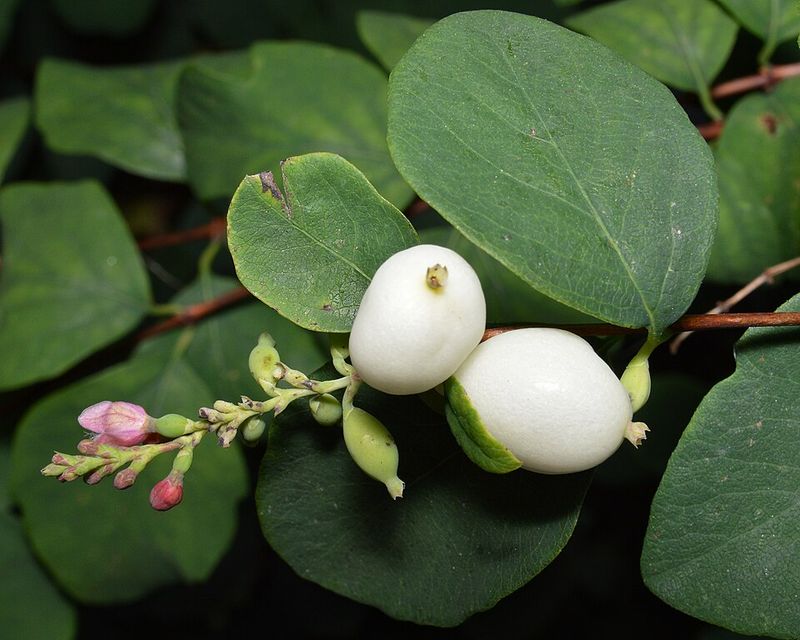
When you spot white berries glowing like tiny lanterns in late fall, you’ve found snowberry. This unassuming native shrub produces clusters of pale, puffy berries that cling to bare branches well into winter.
While humans find them bland, birds rely on them when other food sources have vanished.
Robins, thrushes, and quail visit snowberry thickets to nibble the fruit and seek shelter in the tangled branches. The plant thrives in part shade and tolerates dry conditions once established, making it perfect for planting under oak trees or along fence lines.
Its low, spreading habit creates ground-level cover that ground-feeding birds appreciate.
Snowberry adapts to various soil types, including rocky or sandy ground where other shrubs struggle. Plant it near your feeder to offer birds a place to rest between feeding sessions.
The small pink flowers that bloom in summer attract hummingbirds and native bees, adding bonus wildlife value.
This shrub spreads slowly through rhizomes, eventually forming a dense thicket if left unpruned. You can control its size by trimming back wayward stems in late winter.
Watching a covey of quail disappear into a snowberry patch is one of those quiet backyard moments that makes gardening for wildlife so rewarding.
6. Holly (Ilex spp.)
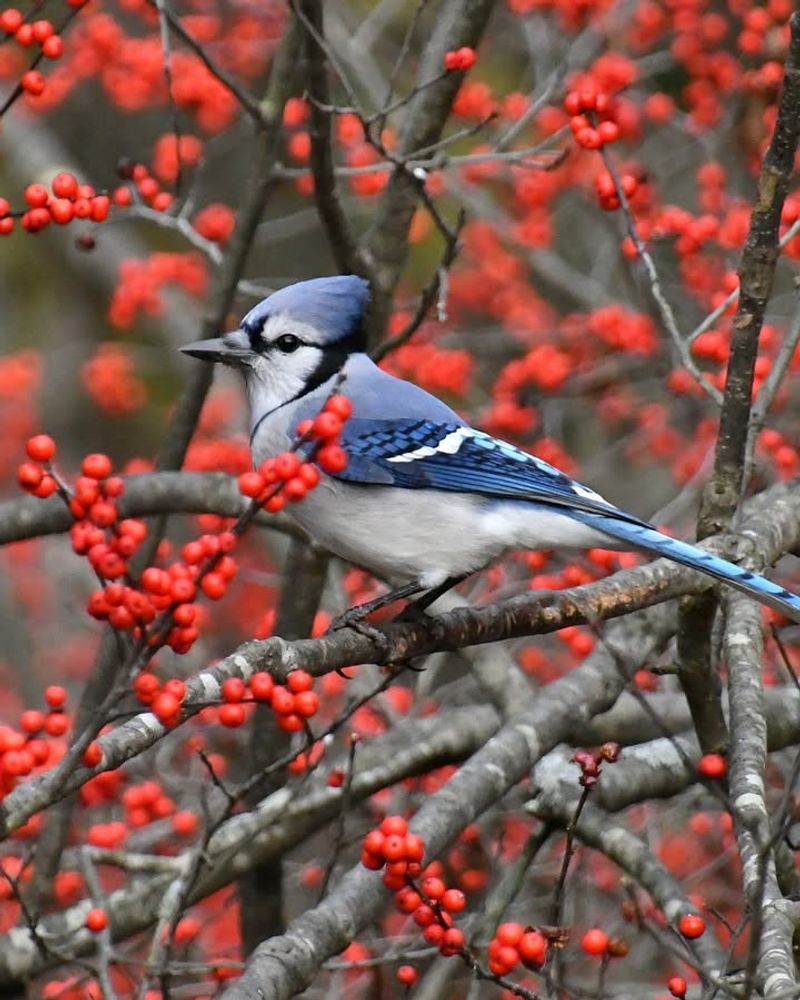
Bright red berries against glossy green leaves make holly a winter favorite for both gardeners and birds. When snow blankets the ground and food becomes scarce, robins and waxwings turn to holly berries for survival.
The fruit persists on the branches through the coldest months, offering a reliable food source when other plants have nothing left to give.
Holly prefers well-draining soil and part shade, though it tolerates full sun in cooler regions. The dense, evergreen foliage provides year-round shelter for small birds, and the spiky leaves deter cats and other predators.
Plant both male and female hollies to ensure berry production, as only female plants bear fruit.
Position holly near your feeder to create a protected zone where birds can retreat after eating. The shrub grows slowly but steadily, eventually forming a handsome hedge or specimen plant.
Its formal appearance works well in traditional landscapes, while the wildlife benefits appeal to nature lovers.
Prune holly lightly in late winter to maintain shape and encourage dense growth. The berries are toxic to humans but safe for birds, so there’s no need to worry about children or pets.
Watching a flock of cedar waxwings descend on a holly bush during a winter storm is a reminder of how valuable these plants are.
7. Salal (Gaultheria shallon)
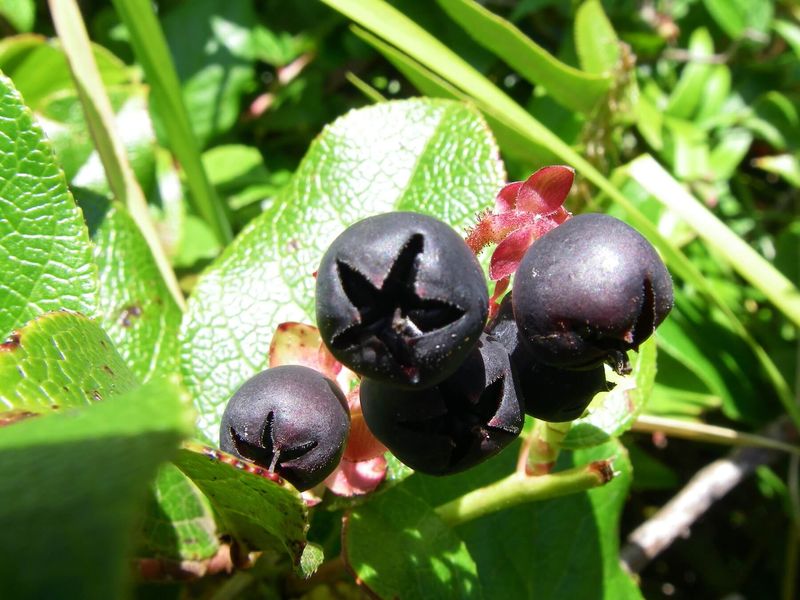
Low-growing and evergreen, salal forms a carpet of leathery leaves that birds use for ground cover and foraging. The dark purple berries ripen in late summer and persist into fall, offering food when many other plants have finished fruiting.
Thrushes, towhees, and quail scratch through salal patches, searching for berries and insects hiding in the leaf litter.
Salal thrives in shade and acidic soil, making it perfect for planting under conifers or in woodland gardens. It spreads slowly through rhizomes, eventually forming dense colonies that provide excellent habitat for ground-nesting birds.
The white or pink bell-shaped flowers that bloom in late spring attract bees and other pollinators before the berries develop.
Plant salal beneath your feeder to create a layered landscape that mimics natural forest understory. Birds will appreciate the cover and the extra food source.
Salal tolerates dry shade once established, a rare trait that makes it invaluable in challenging garden spots.
This native groundcover requires little maintenance beyond occasional watering during establishment. The berries are edible for humans and have a sweet, slightly bland flavor.
Indigenous peoples of the Pacific Northwest have used salal berries for food and medicine for thousands of years. Watching a towhee hop through a salal patch is like witnessing a piece of Oregon’s natural heritage in your own backyard.
8. Currant (Ribes sanguineum)
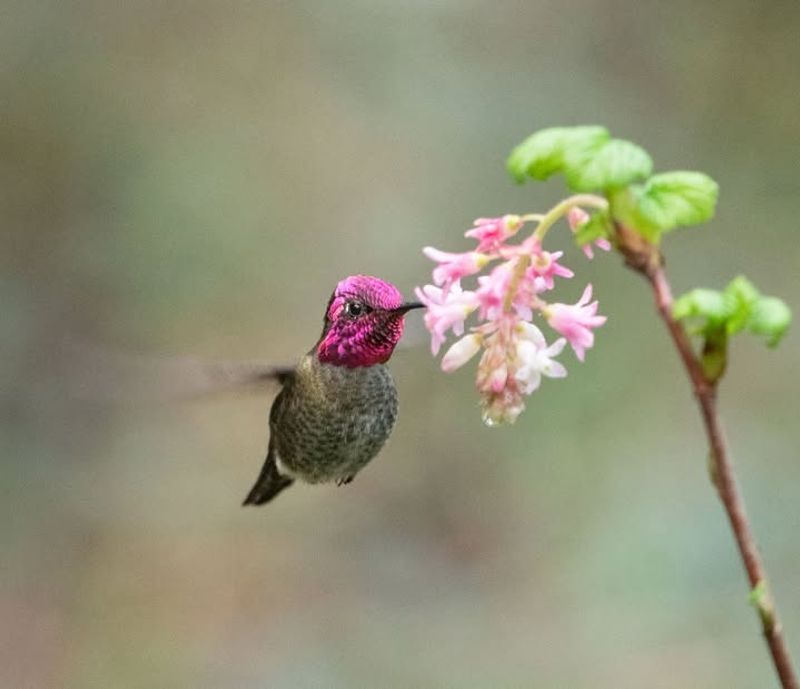
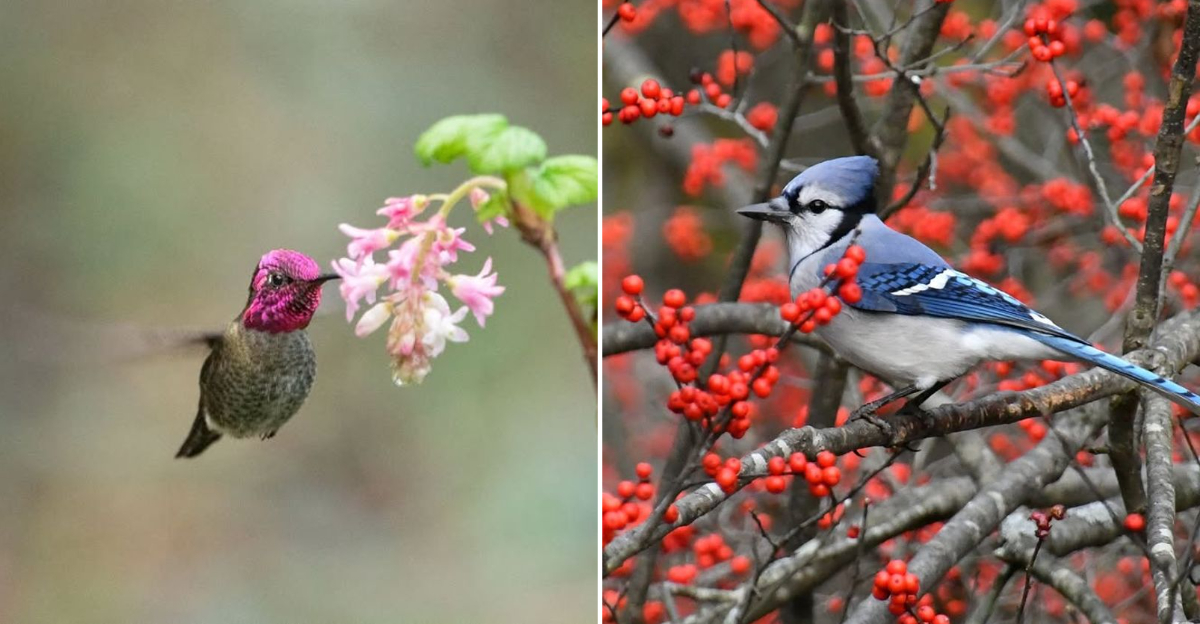
Cascades of pink flowers dripping from arching branches announce spring’s arrival, and hummingbirds notice immediately.
Red-flowering currant is one of the earliest bloomers in Oregon, often flowering in February or March when few other nectar sources are available.
Hummingbirds hover around the tubular blossoms, fueling up for migration or nesting season.
After the flowers fade, small blue-black berries develop, attracting robins, waxwings, and sparrows. The berries ripen in early summer and disappear quickly once birds discover them.
Red-flowering currant tolerates a range of conditions, from full sun to part shade, and adapts to dry or moist soil. Its fast growth and low maintenance make it a favorite for busy gardeners.
Plant it where you can enjoy the early blooms from indoors, and position it near your feeder to create a hummingbird corridor. The shrub grows four to eight feet tall and wide, forming a rounded shape that fits well in mixed borders or as a standalone specimen.
Its deciduous leaves turn yellow in fall before dropping.
Red-flowering currant is a Pacific Northwest native, so it thrives without extra water or fertilizer once established. Watching hummingbirds zip between the flowers and your feeder is a springtime ritual that never fails to delight.
This shrub proves that beauty and function can coexist perfectly in the garden.
9. Blueberry (Vaccinium spp.)
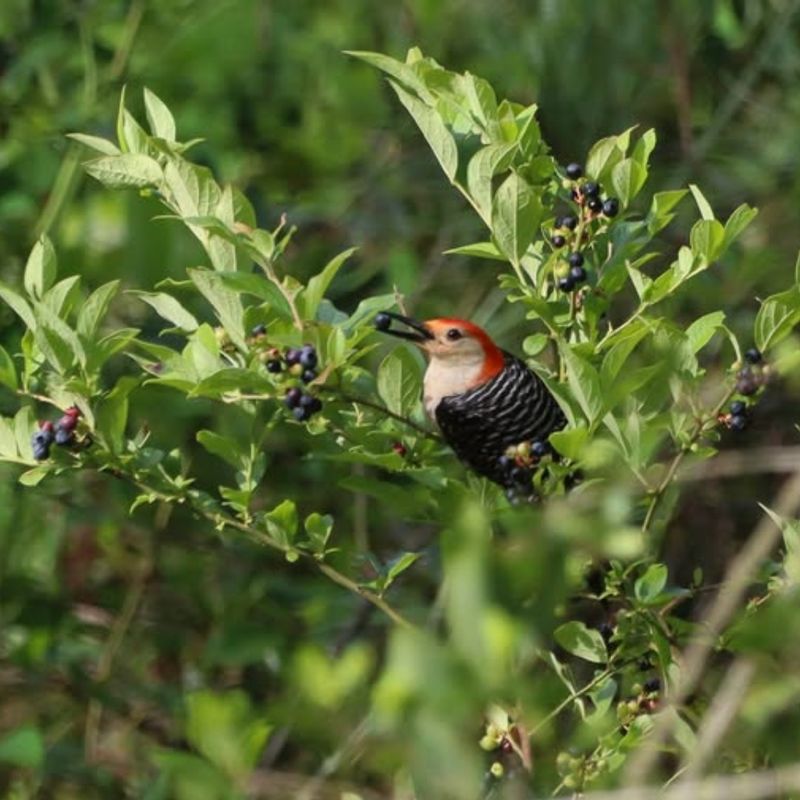
Ripe blueberries disappearing from the bush before you can pick them is a sure sign that birds have discovered your crop. Robins, jays, and waxwings consider blueberries a delicacy and will compete fiercely for every last fruit.
Planting blueberries near your feeder creates a dual food source that keeps birds visiting your yard all summer long.
Blueberries need acidic soil to thrive, so amend with peat moss or sulfur if your soil is neutral or alkaline. They prefer full sun and consistent moisture, especially during fruit development.
The white or pink spring flowers attract bees, and the berries ripen in waves from mid to late summer, providing weeks of food for both you and the birds.
Plant multiple varieties to extend the harvest season and increase pollination. Highbush blueberries work well in most Oregon gardens, while lowbush varieties suit smaller spaces or containers.
Position them where you can watch the berry harvest unfold, and consider netting a few bushes if you want to save some fruit for yourself.
Blueberry foliage turns brilliant red and orange in fall, adding seasonal color to your landscape. The shrubs are long-lived and productive, often fruiting for decades with proper care.
Sharing your blueberry harvest with backyard birds feels like a fair trade when you see how much joy they bring to your garden.
10. Camas Lily (Camassia quamash)
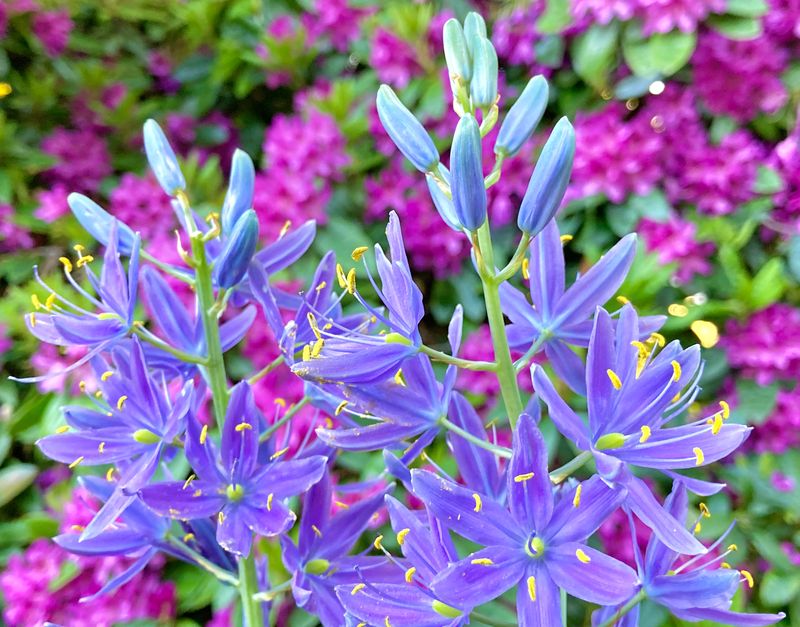
Tall spikes of blue flowers rising from grassy meadows signal camas lily season in late spring. While this native bulb doesn’t produce berries, it offers valuable nectar for hummingbirds and early-season pollinators.
The flowers create a visual beacon that draws birds to your yard, and the seed heads that follow provide food for finches and sparrows.
Camas lily thrives in wet meadows and seasonal wetlands, tolerating standing water in winter and spring before drying out in summer. Plant bulbs in fall in full sun to part shade, spacing them a few inches apart for a naturalized look.
The grass-like foliage emerges in early spring, followed by flower spikes that can reach two feet tall.
Position camas near your feeder to create a colorful foreground that enhances the overall landscape. The bulbs multiply over time, forming larger clumps that produce more flowers each year.
Camas works beautifully in rain gardens or low-lying areas where other plants struggle with seasonal moisture.
Indigenous peoples of the Pacific Northwest cultivated camas for its edible bulbs, and the plant remains culturally significant today.
Watching hummingbirds work their way up a camas flower spike is a springtime highlight that connects your garden to Oregon’s natural and cultural history.
This bulb proves that native plants offer beauty, wildlife value, and deep roots in the landscape.