This One Pruning Change Is Boosting Crape Myrtle Blooms In Georgia
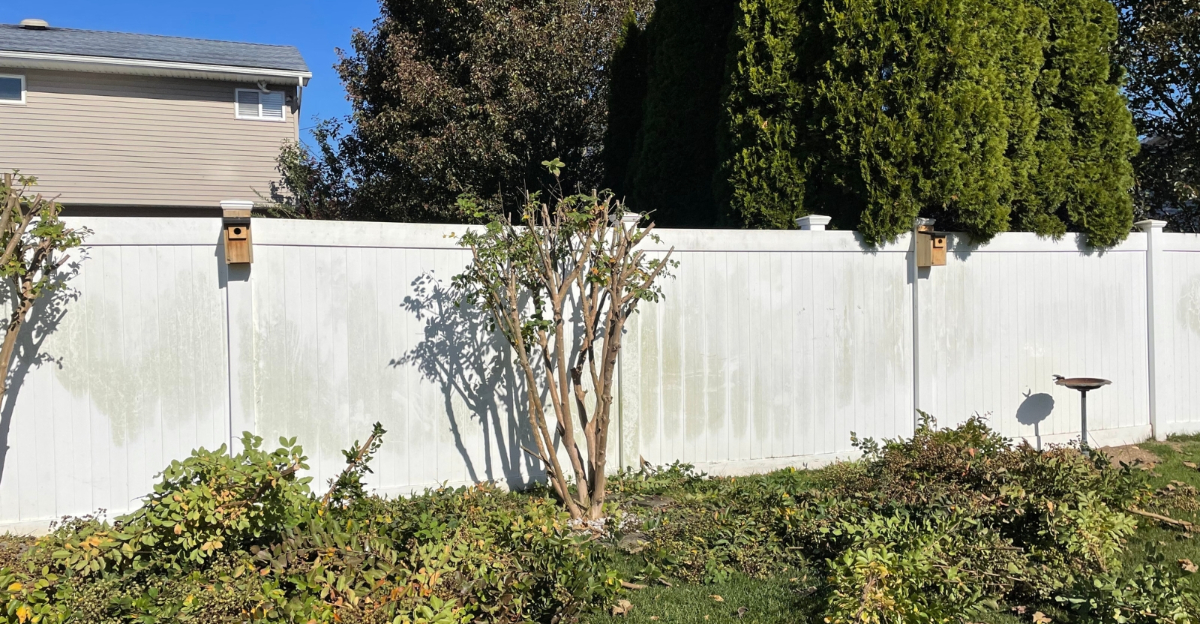
Late spring arrives in Georgia, and your crape myrtle is leafing out beautifully, yet something still feels a little off as you picture how it will look in full bloom.
That feeling usually comes from remembering past summers when flowers were lighter than expected, even though the tree itself seemed strong and well established.
Crape myrtles thrive in Georgia’s climate, but bloom performance often hinges on a single decision made well before flowers ever appear.
It’s easy to assume more fertilizer, more water, or more sun is the answer, especially when growth looks healthy on the surface. In reality, bloom issues tend to show up when energy is being sent in the wrong direction early in the season.
A small pruning adjustment can redirect that energy without stressing the tree or slowing growth. It’s subtle, but it changes how the tree responds once warm weather settles in.
Once that balance is right, flowering often improves on its own.
This explains why one simple pruning change can make such a noticeable difference in how Georgia crape myrtles bloom.
1. It Starts With Stopping Heavy Topping And Heading Cuts
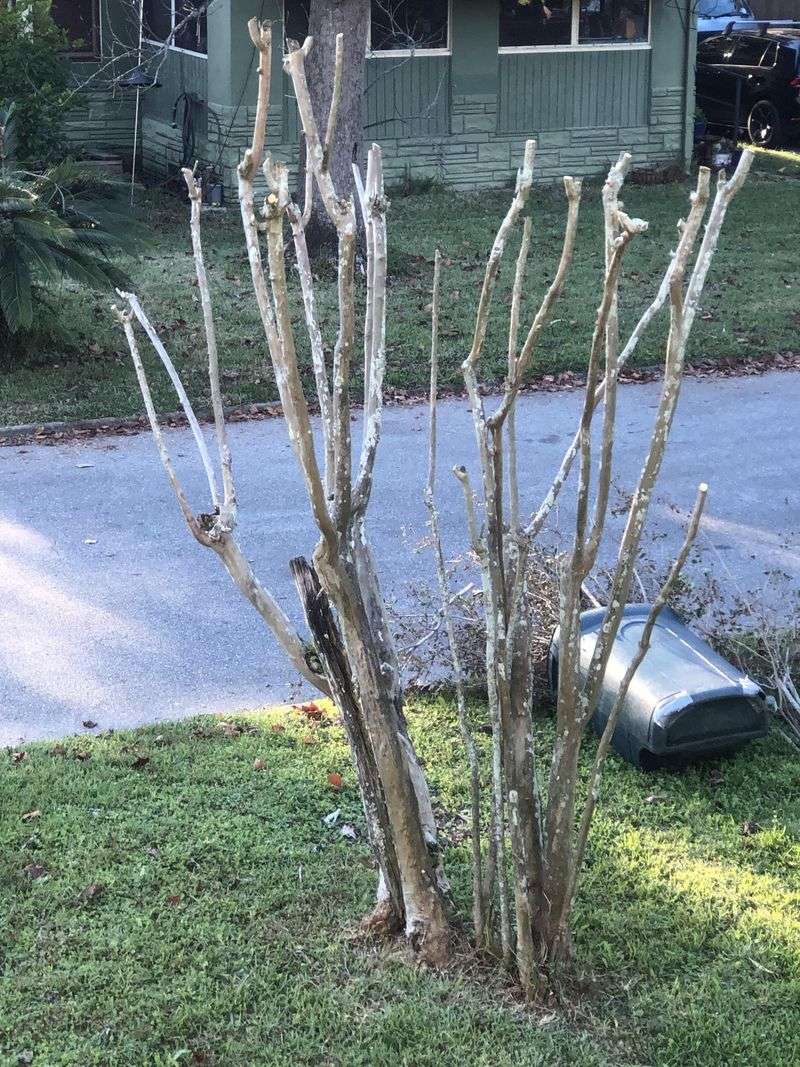
Many homeowners think chopping back crape myrtles each winter is necessary, but this practice actually works against you. Topping creates thick, stubby branches that sprout multiple weak shoots instead of strong flowering wood.
Your tree ends up looking more like a knobby stump than a graceful ornamental.
Georgia gardeners have long called this method “crape murder,” and the nickname fits perfectly. When you hack off the top of your tree, you force it to spend energy rebuilding structure instead of producing blooms.
The result is delayed flowering and fewer blossoms overall.
Breaking this habit means stepping back and letting your tree keep its natural form. Instead of cutting everything down to the same height, you focus on removing only what truly needs to go.
This approach respects the way crape myrtles naturally grow and flower.
Professional arborists across Georgia now recommend avoiding heading cuts altogether. These cuts slice through the middle of branches, leaving ugly stubs that invite pests and disease.
Your tree struggles to heal these wounds while also trying to bloom.
Switching to a gentler method doesn’t mean you stop pruning entirely. You simply stop the aggressive chopping that harms your tree.
This single change sets the foundation for everything else that improves bloom quality.
Crape myrtles bloom on new wood, which means they need healthy branch tips to produce flowers. Topping removes those productive tips and forces your tree to start over from scratch.
By leaving the canopy intact, you preserve the framework that supports abundant blooms.
Georgia’s warm climate already stresses trees during summer, and topping adds unnecessary strain. Your crape myrtle needs all its resources to handle heat and produce flowers.
Heavy cuts drain those resources before the growing season even begins.
Observing trees that haven’t been topped reveals their true beauty and flowering potential. Their graceful arching branches display blooms at multiple heights, creating a layered, natural look.
Your Georgia Garden Changes Every Week. Your Plan Should Too.
Gardening in Georgia changes quickly throughout the season. Every Friday you’ll receive a simple weekly plan showing exactly what to plant, prune, fertilize, harvest, and protect so you never miss the right timing.
This visual appeal is impossible to achieve when you cut everything back to stumps.
2. Selective Thinning Lets Light Reach Flowering Branches

Sunlight is the secret ingredient that powers your crape myrtle’s bloom production. When branches crowd together, they shade each other out and reduce the energy available for flowering.
Thinning opens up the canopy so light can penetrate deep into the tree.
Your goal is to remove entire branches back to their point of origin, not just shorten them. This technique, called thinning, creates space without leaving stubs.
Georgia landscapes benefit from this method because it maintains the tree’s natural silhouette while improving light distribution.
Focus on branches that grow inward or cross over others, as these create dense tangles that block light. By removing them completely, you allow air and sunshine to reach the remaining branches.
This improved exposure translates directly into more flower buds.
Each branch that receives adequate light can produce blooms along its entire length. When you thin selectively, you maximize the number of productive branches without overcrowding.
Your tree becomes more efficient at converting sunlight into spectacular summer color.
Georgia’s intense summer sun makes light management especially important for crape myrtles. Trees with open canopies handle heat better because air circulates freely, preventing moisture buildup.
This circulation also helps flowers dry quickly after rain, reducing fungal problems.
Thinning differs completely from topping because it respects the tree’s natural architecture. You work with the existing structure, removing only what interferes with light and airflow.
This approach keeps your crape myrtle looking elegant while boosting its flowering capacity.
Start at the center of the tree and work outward, identifying branches that contribute little to the overall shape. Removing these opens up the interior without changing the tree’s profile.
You maintain the graceful form while enhancing bloom potential.
Light reaching the inner branches stimulates dormant buds that might otherwise never flower. These hidden buds add extra blooms throughout the canopy, creating a fuller, more impressive display.
Georgia gardeners who adopt this method report noticeably heavier flowering within one season.
3. Fewer Cuts Help Direct Energy Into Blooms
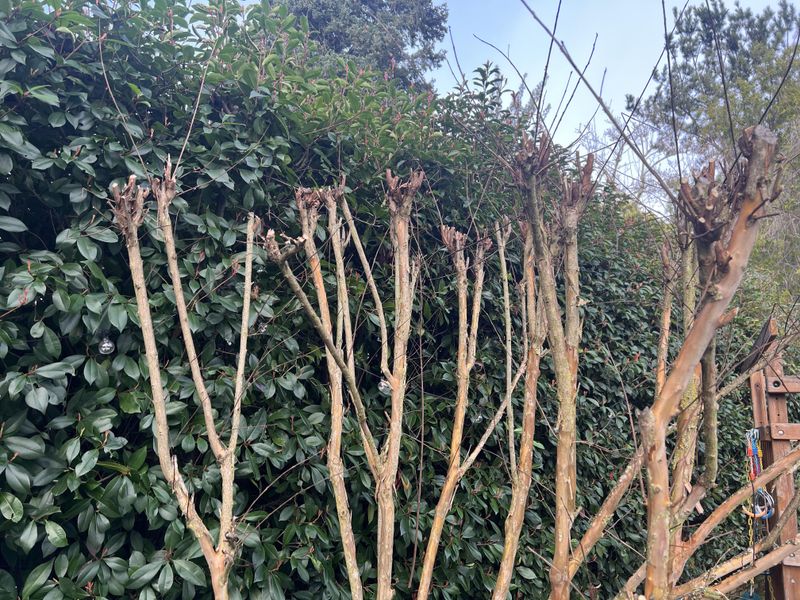
Every cut you make on your crape myrtle requires energy to heal, and that energy comes from the same pool used for flowering. Reducing the number of cuts means more resources go directly into bloom production.
Your tree doesn’t waste strength on repairing unnecessary wounds.
Think of pruning as a budget: your crape myrtle has only so much energy to spend each season. When you make dozens of cuts, you drain that budget before flowers even form.
Strategic, minimal pruning keeps the budget focused on what matters most.
Georgia’s growing season is long, which gives crape myrtles plenty of time to flower and set seed. However, excessive pruning at the start of the season delays bloom time and shortens the overall flowering period.
Your tree spends weeks recovering instead of blooming.
Limiting cuts to only essential branches allows your crape myrtle to transition smoothly into active growth. The tree doesn’t struggle to compartmentalize wounds while simultaneously pushing out new leaves and flower buds.
Everything happens more efficiently.
Professional pruners recommend the three-cut rule: only remove branches that are damaged, diseased, or disrupting the tree’s structure. This guideline naturally limits the number of cuts and keeps your focus on what truly benefits the tree.
Your crape myrtle stays healthier and blooms more reliably.
Each pruning wound is a potential entry point for pests and pathogens, especially in Georgia’s humid climate. Fewer cuts mean fewer vulnerabilities and a stronger tree overall.
Your crape myrtle can dedicate its immune response to normal growth instead of fighting off infections.
When you resist the urge to over-prune, you also preserve the tree’s stored energy reserves. Crape myrtles accumulate carbohydrates in their branches during the growing season, and these reserves fuel the next year’s bloom.
Cutting away healthy wood removes those valuable reserves.
Observing your tree throughout the year helps you identify which cuts are truly necessary. Most branches can stay exactly where they are, contributing to the tree’s health and flowering capacity.
Your restraint pays off in a more spectacular bloom display.
4. Maintaining Natural Shape Reduces Stress In Summer
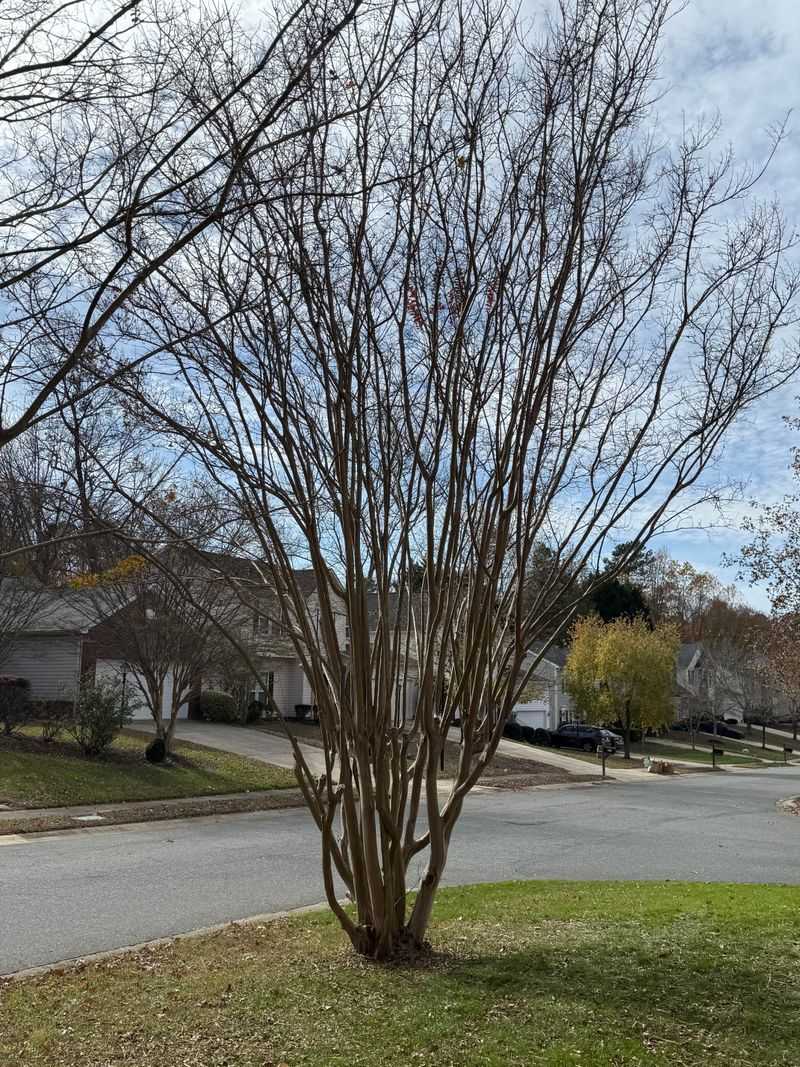
Crape myrtles evolved to grow with graceful, vase-shaped canopies that handle environmental stress efficiently. When you preserve this natural form through pruning, your tree stays stronger during Georgia’s challenging summer conditions.
Artificial shapes created by heavy cutting make trees work harder to survive.
Your crape myrtle’s natural architecture distributes weight evenly across the branch structure, preventing breakage during storms. Topped trees develop weak, crowded shoots that snap easily in wind or under the weight of heavy blooms.
Natural form means better structural integrity.
Summer heat puts enormous pressure on trees, and crape myrtles cope by transpiring water through their leaves. When the canopy maintains its natural shape, this cooling process works optimally.
Distorted shapes from aggressive pruning disrupt transpiration and increase heat stress.
Georgia landscapes experience intense afternoon sun that can scorch leaves and flowers. A naturally shaped crape myrtle positions its foliage to shade itself effectively, protecting inner branches and developing blooms.
This self-shading is impossible when the tree has been chopped into an unnatural form.
Stress shows up in your tree’s blooms: fewer flowers, faded colors, and shorter bloom periods all indicate a struggling plant. By maintaining natural shape, you minimize stress and maximize the tree’s ability to produce vibrant, long-lasting flowers.
Your landscape benefits from consistent, reliable color.
Pruning to preserve natural form also means respecting the tree’s mature size. Crape myrtles come in varieties ranging from dwarf to large, and each has its ideal shape.
Choosing the right variety for your space eliminates the need for constant reshaping.
When your tree doesn’t have to fight against unnatural pruning, it channels energy into defense against real threats like pests and disease. Georgia’s humid summers bring plenty of fungal challenges, and a well-shaped tree with good airflow resists these problems naturally.
Your maintenance workload decreases.
Natural shape also means your crape myrtle blooms more evenly across its entire canopy. Topped trees often produce flowers only at the tips of regrown shoots, leaving the lower canopy bare.
A naturally pruned tree displays blooms from top to bottom, creating a fuller visual impact.
5. Removing Only Crossing Or Weak Branches Improves Airflow
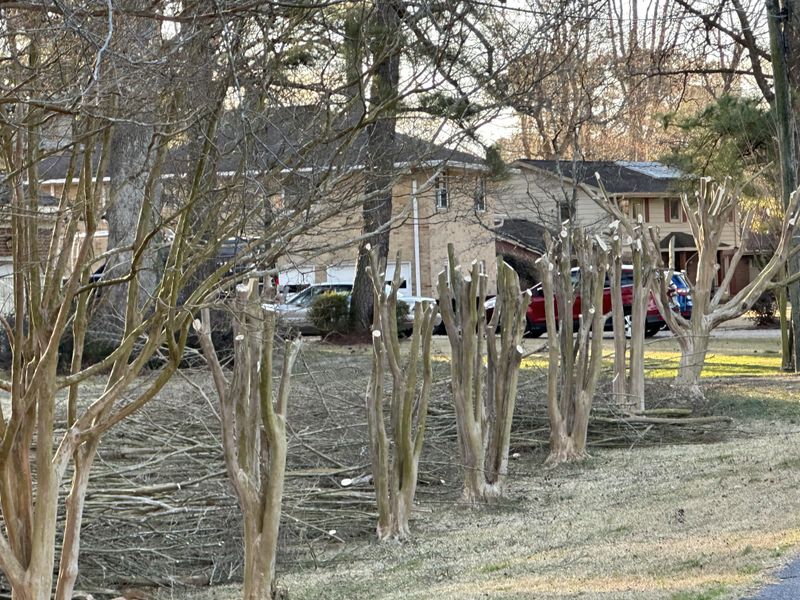
Good air circulation prevents the moisture buildup that leads to fungal diseases, and removing crossing branches is the fastest way to improve airflow. Branches that rub against each other create wounds that invite infection, so eliminating these problem areas protects your tree’s health.
Your crape myrtle stays cleaner and blooms more reliably.
Weak branches with narrow attachment angles are accidents waiting to happen. They split easily under the weight of flowers or during storms, creating large wounds that take months to heal.
Removing them while they’re small prevents bigger problems later.
Georgia’s summer humidity creates perfect conditions for powdery mildew, a common crape myrtle problem. Trees with congested canopies trap moisture and stay damp longer after rain, encouraging fungal growth.
Strategic removal of crossing branches keeps the canopy open and dry.
Focus on branches that grow toward the center of the tree, as these disrupt the natural vase shape and block airflow. Taking them out opens up the interior without changing the tree’s overall appearance.
Your pruning becomes nearly invisible but highly effective.
Airflow also helps pollinating insects reach flowers throughout the canopy, improving seed set and overall tree vigor. While you might not care about seeds, your crape myrtle’s health improves when it can complete its natural reproductive cycle.
Better airflow supports every aspect of tree function.
Weak branches often develop from old topping cuts, where multiple shoots emerge from a single point. These shoots compete for resources and never develop strong attachments.
Thinning them down to one or two strong leaders improves structure and bloom quality.
When you remove crossing branches, you also eliminate the rubbing that damages bark and exposes inner wood. Georgia’s heat and humidity make these wounds particularly problematic, as they’re slow to heal and prone to infection.
Prevention through smart pruning is far easier than treating problems later.
Improved airflow means your crape myrtle’s flowers dry quickly after rain, maintaining their appearance throughout the bloom period. Wet flowers that stay damp develop brown spots and drop prematurely, shortening your color display.
Better air circulation extends bloom time naturally.
6. Pruning At The Right Height Prevents Excess Leaf Growth
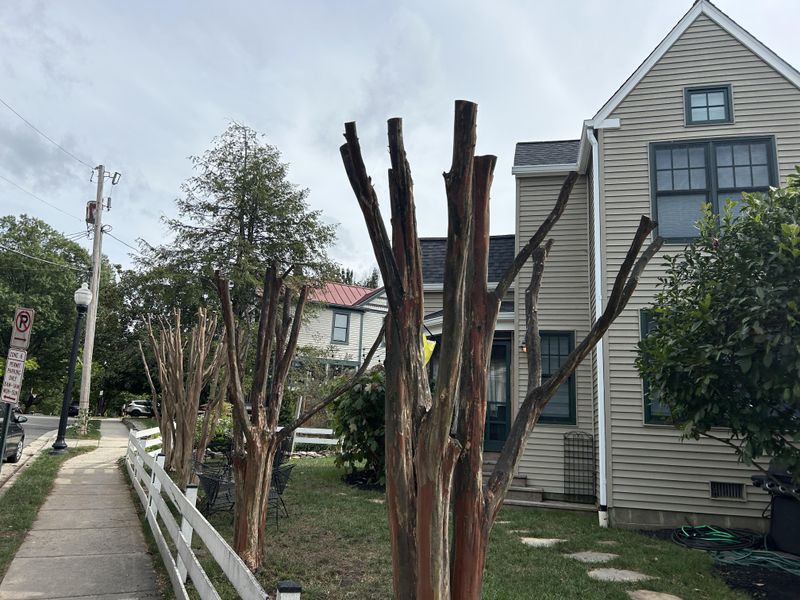
Where you make your cuts determines how your crape myrtle responds, and cutting at the wrong height triggers excessive leafy growth at the expense of flowers. Cuts made far from buds or branch junctions create long stubs that sprout water shoots—fast-growing, non-flowering stems that drain energy.
Your tree puts on green growth but fewer blooms.
The right height for any cut is just above a bud or back to a larger branch, leaving no stub behind. This positioning directs energy into productive growth rather than wasteful shoot production.
Georgia gardeners who master this technique see immediate improvements in bloom quality.
Water shoots that emerge from poorly placed cuts grow rapidly but rarely flower well. They sap resources from the rest of the tree, reducing overall bloom production.
By making clean cuts at proper heights, you prevent this unproductive growth entirely.
Crape myrtles have a natural growth pattern that alternates between vegetative and reproductive phases. Cuts at improper heights disrupt this rhythm, pushing the tree back into vegetative mode when it should be flowering.
Proper cut placement respects the tree’s natural cycle.
Stub cuts also take much longer to heal than properly placed cuts, leaving your tree vulnerable to pests and disease throughout the growing season. In Georgia’s climate, these wounds become entry points for borers and fungal infections.
Prevention through correct technique is essential.
When you cut just above a bud, you direct the tree’s energy into that bud, which develops into a flowering branch. Cutting several inches above the bud wastes the space in between and leaves excess wood that will need to be removed later.
Your pruning becomes more efficient when you get the height right the first time.
Excess leaf growth from improper cuts also shades out lower branches, reducing their flowering potential. Your tree develops a top-heavy appearance with most blooms concentrated at the tips of water shoots.
Proper cut placement maintains even bloom distribution throughout the canopy.
Professional arborists use the branch collar as their guide for cut placement—the slightly swollen area where a branch meets the trunk or larger branch. Cutting just outside this collar allows the tree to seal the wound quickly.
Georgia’s extended growing season helps trees heal faster when cuts are made correctly.
7. Proper Timing Keeps Bud Development On Track
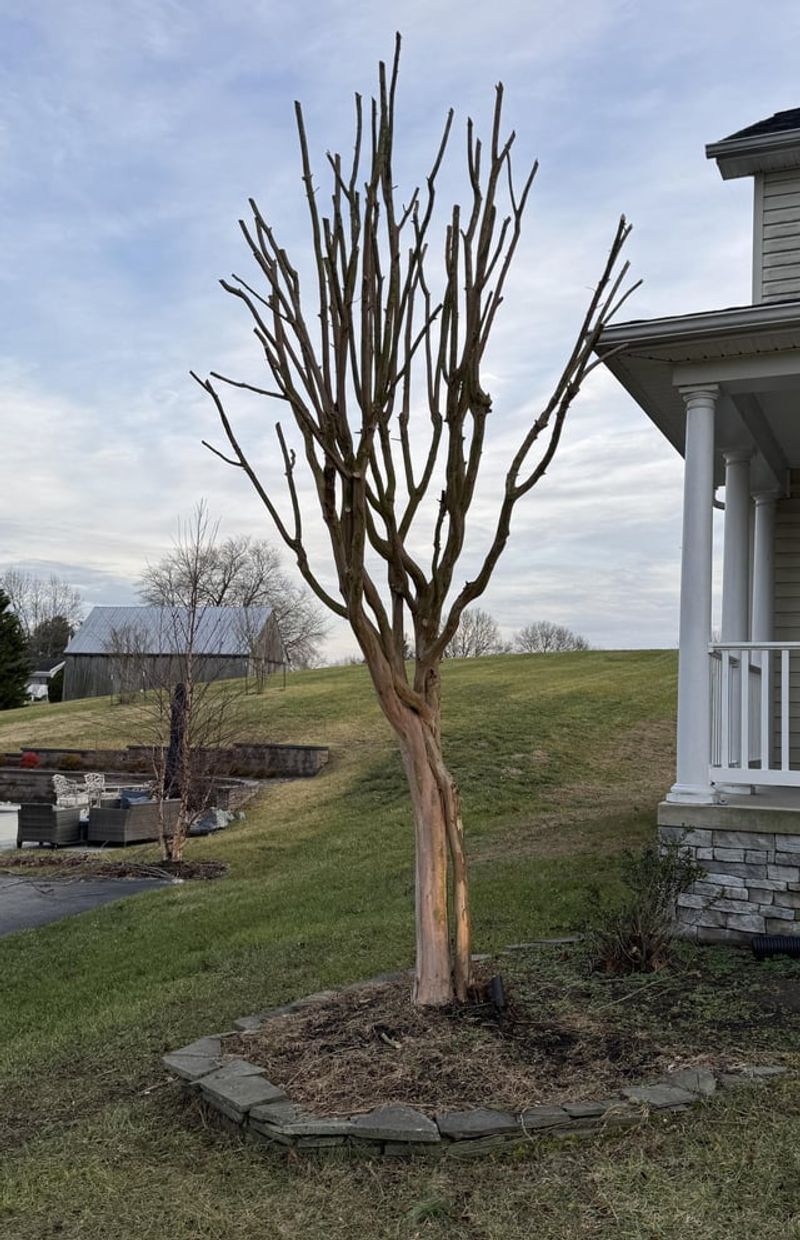
Late winter is the ideal pruning window for crape myrtles in Georgia, typically falling between mid-February and early March. Pruning during this dormant period allows you to see the tree’s structure clearly while avoiding interference with bud development.
Your tree transitions smoothly into spring growth without setbacks.
Pruning too early, during deep winter, exposes fresh cuts to potential freeze damage that can extend wounds and delay healing. Georgia occasionally experiences late cold snaps, and timing your pruning after the worst cold passes protects your tree.
Patience ensures better results.
Waiting too late, after buds begin to swell, removes developing flower buds and reduces your bloom display. You can see the difference in bud size by late March, and any pruning at that point cuts away potential flowers.
Early spring timing preserves maximum bloom potential.
Some gardeners prune in fall, thinking they’re getting ahead of the work, but this timing is actually harmful. Fall pruning stimulates new growth that doesn’t have time to harden off before winter, making your tree more vulnerable to cold damage.
Georgia winters are mild, but frost still occurs.
Summer pruning is sometimes necessary to remove storm damage or address disease, but routine structural pruning should always happen in late winter. Summer cuts disrupt active growth and can reduce bloom quality for the current season.
Save major pruning for the dormant period.
The dormant season also offers the advantage of easy disease and pest identification. Without leaves obscuring your view, you can spot problem areas that need attention.
Georgia’s relatively short dormant period makes efficient use of this window important.
Proper timing synchronizes your pruning with the tree’s natural growth cycle, allowing it to heal quickly as sap begins to flow in spring. Cuts made at the right time seal over within weeks, minimizing disease risk.
Your crape myrtle enters the growing season healthy and ready to bloom.
Weather patterns in Georgia vary from year to year, so watching your tree’s bud development is more reliable than following a strict calendar date. When you see buds beginning to plump but before they show color, you’re in the ideal pruning window.
This flexibility ensures consistent results regardless of seasonal variations.