The Most Aggressive Weeds Taking Over North Carolina Yards
Step into a North Carolina yard in late spring and you can almost hear it happening. Tiny weeds suddenly stretch taller, spread wider, and take over open space before you even finish your morning coffee.
It feels sneaky, frustrating, and oddly impressive at the same time. Some of these plants are not just annoying. They grow fast, crowd out grass and flowers, steal nutrients, and come back stronger if handled the wrong way.
Warm temperatures, regular rain, and long growing seasons give aggressive weeds the perfect playground.
That is why pulling one patch today can turn into a full yard battle by next month. The good news is that each problem weed leaves clear clues if you know what to watch for.
Once you can spot them early, control becomes much easier and far less stressful. If you want your lawn back without constant frustration, it starts right here.
1. Bermuda Grass (Cynodon Dactylon)
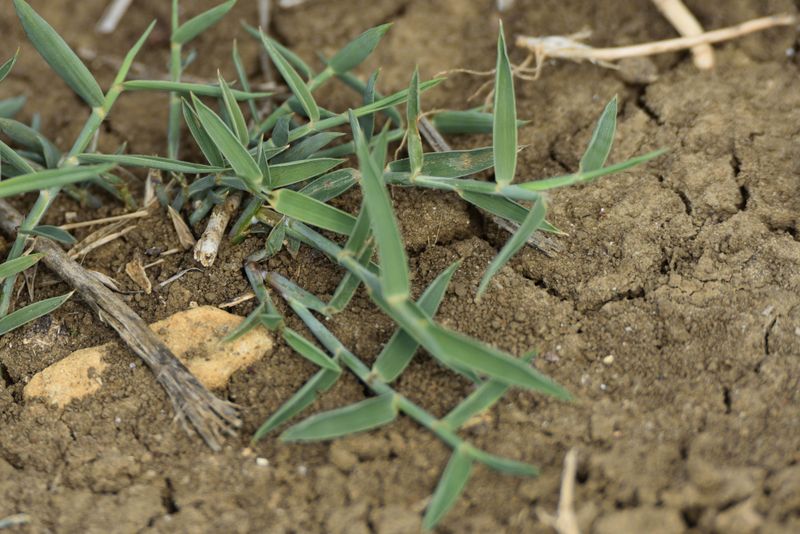
Bermuda grass might look harmless at first glance, but this warm-season invader transforms into a relentless opponent.
Its underground rhizomes and above-ground stolons create an intricate network that spreads faster than most homeowners can manage. Once established, this grass forms thick mats that suffocate desirable lawn species.
The plant thrives in North Carolina’s warm summers, growing vigorously from late spring through early fall. Its ability to regenerate from tiny root fragments makes removal particularly challenging.
Even small pieces left behind can spawn entirely new colonies within weeks. Managing this persistent weed requires consistent effort and strategic planning throughout the growing season.
Pre-emergent herbicides applied in early spring can prevent new growth from establishing. Hand-pulling works only if you remove every single root fragment from the soil.
For lawns already invaded, selective herbicides designed for Bermuda grass control offer the most effective solution. Multiple applications spaced several weeks apart typically yield the best results.
Maintaining a thick, healthy lawn through proper fertilization and watering helps prevent future invasions by leaving no room for this aggressive spreader to gain a foothold in your yard.
2. Crabgrass (Digitaria Spp.)
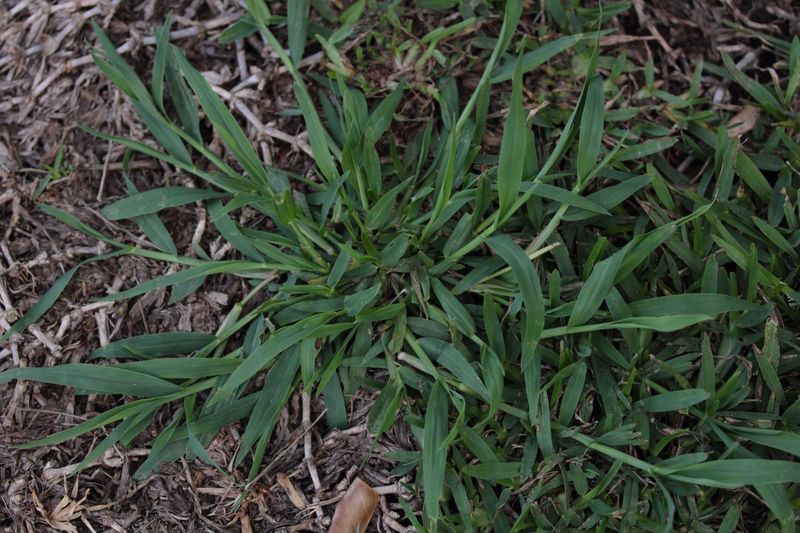
Crabgrass earns its notorious reputation by appearing seemingly everywhere once temperatures rise above 55 degrees.
This annual grass germinates in spring and quickly outpaces your carefully cultivated turf. Its wide, coarse blades spread outward in a distinctive star pattern that becomes impossible to ignore.
Each plant can produce thousands of seeds before the first frost arrives in fall. These seeds remain viable in soil for years, waiting patiently for the right conditions. Sunny, thin areas of your lawn provide perfect opportunities for this opportunistic invader to establish itself.
Prevention proves far easier than trying to eliminate established plants from your property.
Applying pre-emergent herbicides before soil temperatures reach 55 degrees creates a barrier against germination. Timing this application correctly makes all the difference between success and another summer of frustration.
Thick, healthy grass naturally crowds out crabgrass by shading the soil and preventing seed germination.
Mowing at the proper height for your grass type helps achieve this density. For existing infestations, post-emergent herbicides work best when plants are young and actively growing, though hand-pulling remains effective for small patches if you act quickly.
Your North Carolina Garden Changes Every Week. Your Plan Should Too.
Gardening in North Carolina changes quickly throughout the season. Every Friday you’ll receive a simple weekly plan showing exactly what to plant, prune, fertilize, harvest, and protect so you never miss the right timing.
3. Nutsedge (Yellow & Purple Sedge, Cyperus Spp.)
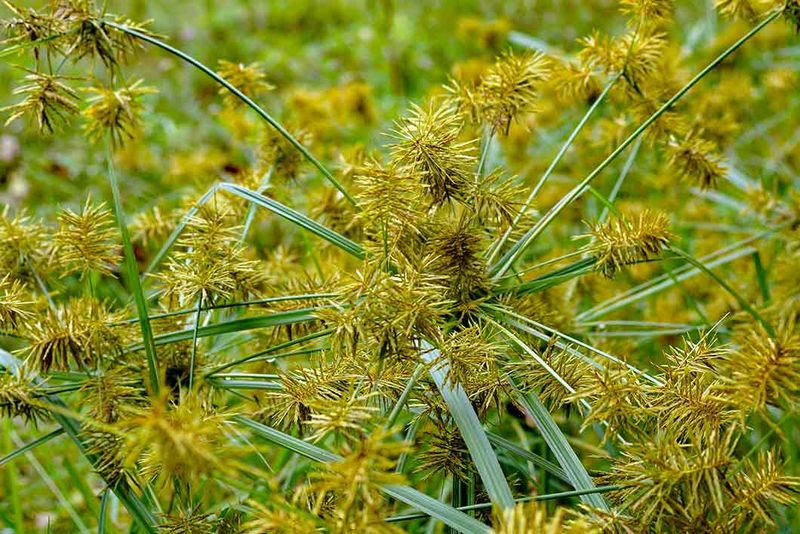
Nutsedge stands taller than surrounding grass, catching your eye with its distinctive yellow-green color and triangular stems.
Rolling the stem between your fingers reveals its unique three-sided shape, confirming this isn’t actually grass at all. This perennial sedge spreads through underground tubers called nutlets, making it exceptionally difficult to manage.
Moist areas of your lawn provide ideal conditions for nutsedge to flourish and multiply rapidly. Poor drainage, overwatering, or low spots that collect rainwater create perfect breeding grounds.
A single plant can produce hundreds of nutlets throughout the growing season. Pulling nutsedge by hand often makes the problem worse rather than better surprisingly.
The tubers break off easily and remain in the soil, where each one can generate new plants. This frustrating characteristic explains why manual removal rarely provides lasting results for homeowners.
Improving drainage addresses the root cause by making your lawn less hospitable to this moisture-loving invader. Selective herbicides formulated specifically for sedge control offer the most reliable solution for established infestations.
Multiple applications throughout the growing season gradually reduce populations by targeting both plants and developing tubers beneath the surface.
4. Chickweed (Stellaria Media)
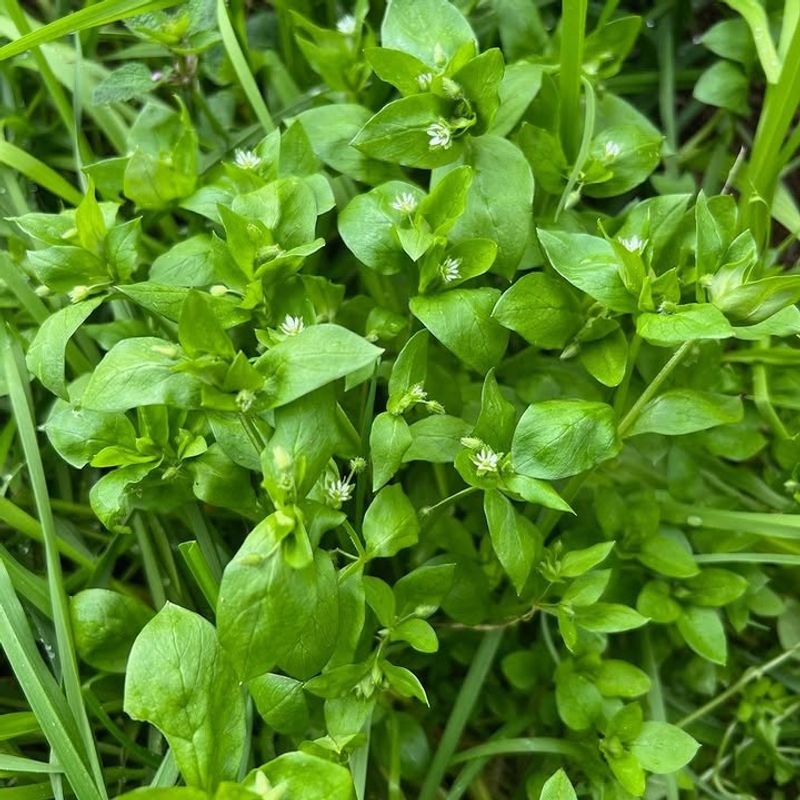
Chickweed emerges when temperatures drop, blanketing your lawn with delicate-looking but surprisingly tough mats. Its small white flowers might appear charming at first, but this winter annual spreads with remarkable speed.
The plant thrives in cool, moist conditions that dominate North Carolina’s fall through spring seasons.
Each stem roots at nodes where it touches the ground, creating an expanding network. This growth habit allows chickweed to cover large areas quickly once it establishes itself. The plant produces numerous seeds that germinate readily in disturbed or thin turf areas.
Cool-season lawns face particular challenges from this persistent invader that grows most actively when desired grasses slow down.
Chickweed takes advantage of dormant warm-season grasses, establishing dense colonies before spring arrives. Its shallow root system makes hand-pulling relatively easy when soil stays moist.
Pre-emergent herbicides applied in late summer prevent fall germination and reduce spring populations significantly. Post-emergent treatments work best on young plants before they begin flowering and setting seed.
Maintaining proper lawn thickness through overseeding thin areas helps prevent chickweed from finding openings to exploit throughout the cooler months of the year.
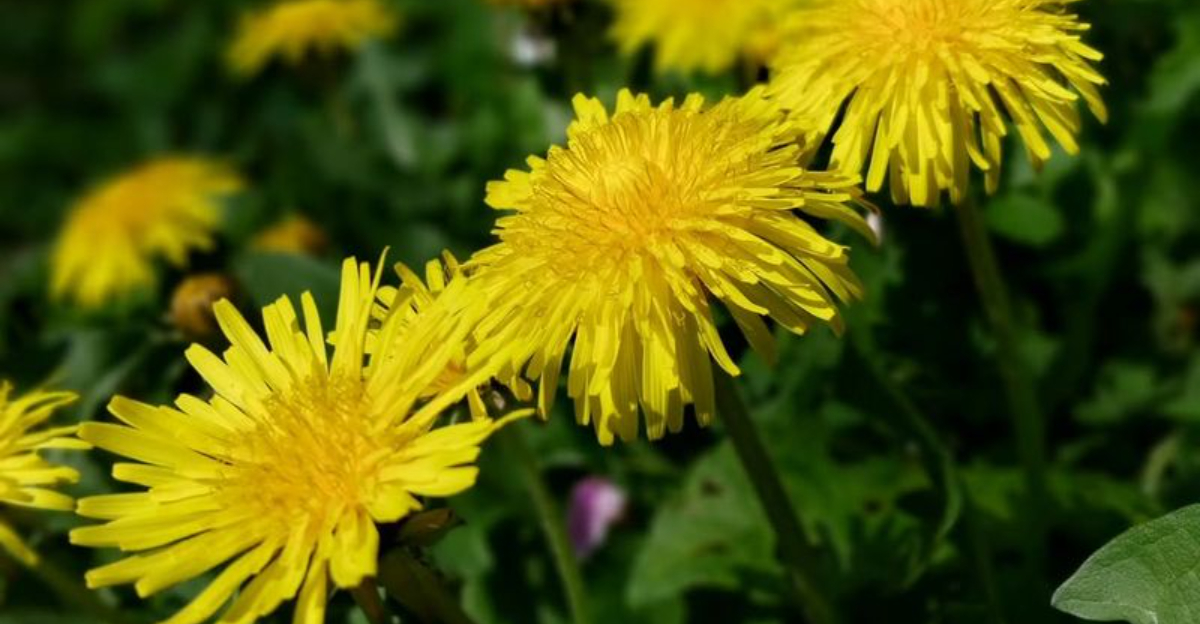
5. Dandelion (Taraxacum Officinale)
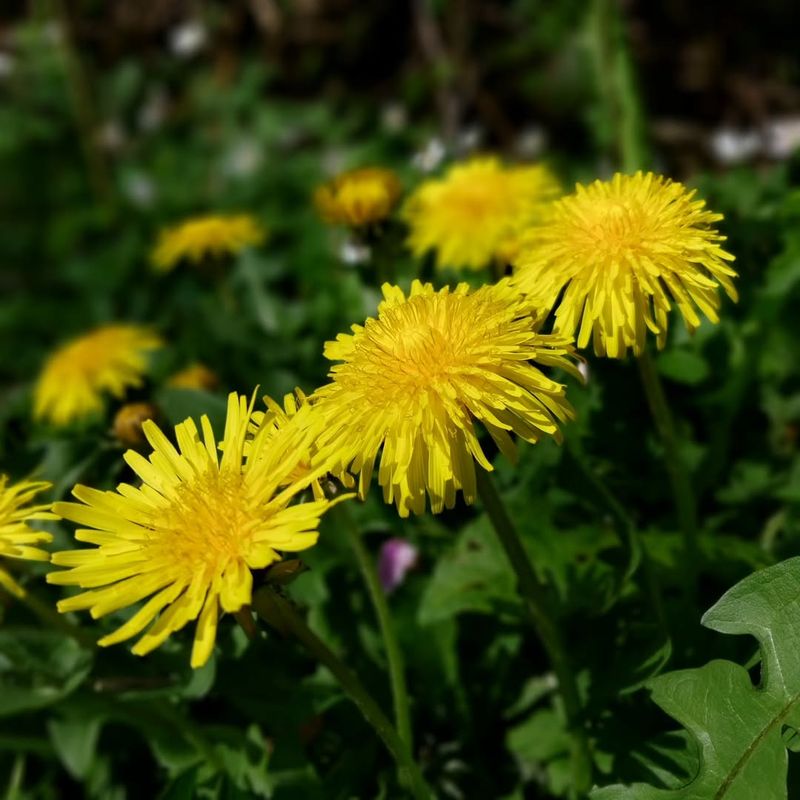
Those cheerful yellow flowers that children love to blow bring headaches to anyone trying to maintain a pristine lawn.
Dandelions produce deep taproots that can extend over ten inches into the soil. This extensive root system stores energy and allows the plant to regenerate even after the top growth is removed.
Each fluffy white seed head contains dozens of seeds equipped with tiny parachutes. Wind carries these seeds remarkable distances, spreading dandelions across entire neighborhoods quickly.
A single plant can produce thousands of seeds throughout its growing season. Breaking the taproot during removal attempts often backfires as any remaining root fragment can sprout new growth.
This regenerative ability makes dandelions particularly frustrating to manage through manual methods alone. Special weeding tools designed to extract the entire taproot improve success rates considerably.
Broadleaf herbicides effectively target dandelions without harming most grass species when applied correctly. Fall applications work especially well because the plant actively transports nutrients downward into roots during this period.
Spring treatments should occur before flowers develop to prevent seed production and further spread across your property and surrounding areas.
6. Japanese Honeysuckle (Lonicera Japonica)
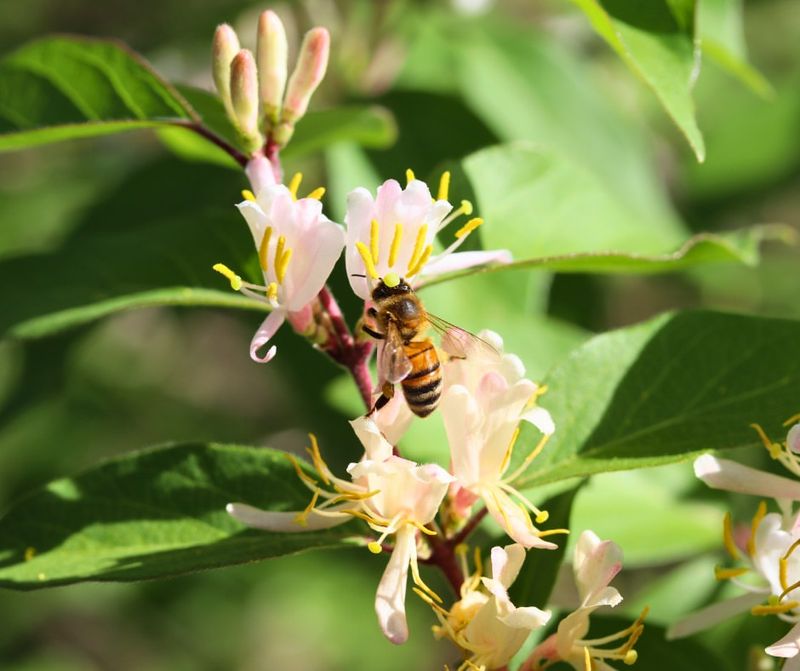
Sweet-smelling flowers can’t disguise the destructive nature of this aggressive climbing vine that engulfs everything in its path. Japanese honeysuckle wraps around shrubs, fences, and trees with alarming speed during growing season.
Its stems root wherever they touch the ground, creating new plants that expand the invasion. The vine’s rapid growth can completely smother ornamental plants and even small trees within a single season.
Dense foliage blocks sunlight from reaching plants beneath, weakening or eliminating them entirely. Birds spread seeds widely after consuming the small black berries that follow flowering.
Manual removal requires cutting vines at the base and carefully unwinding them from supporting plants. This tedious process must include removing all rooted stem sections to prevent regrowth. Monitoring treated areas regularly helps catch new shoots before they become established again.
Systemic herbicides applied to cut stems or foliage provide the most effective control for large infestations. Late summer through fall applications work best when the plant actively moves nutrients to roots.
Repeated treatments over multiple growing seasons may be necessary to completely eliminate established populations from your landscape and prevent future spread to neighboring properties.
7. Ground Ivy (Glechoma Hederacea)
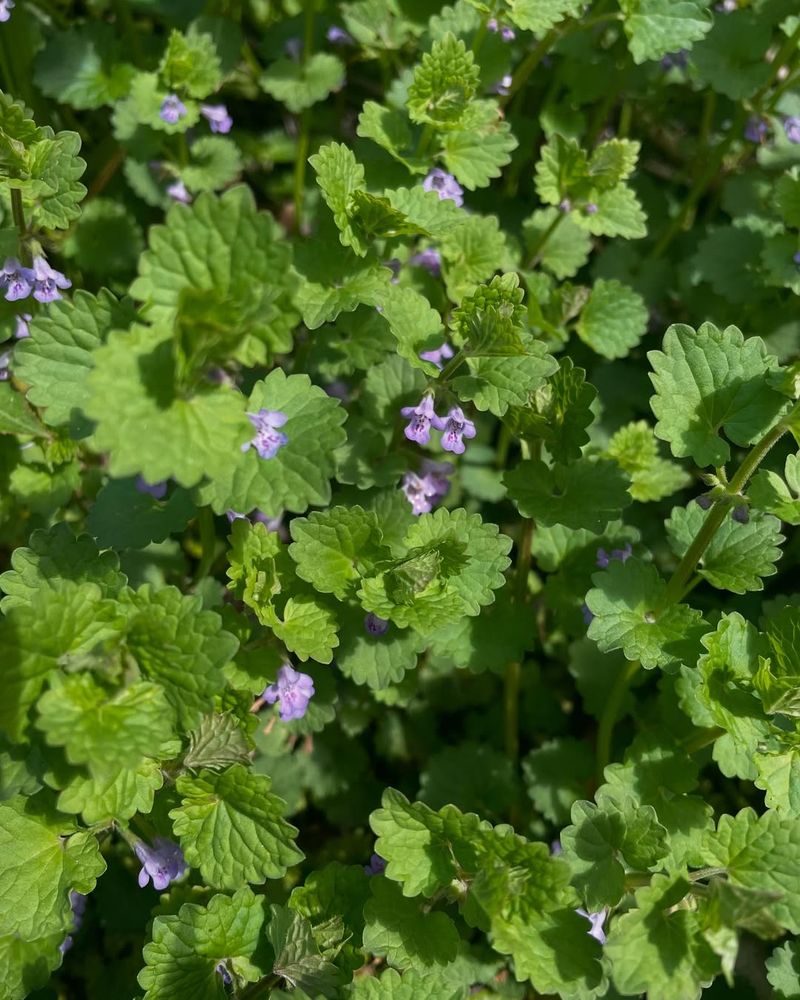
Ground ivy creeps silently through your lawn, earning its nickname creeping Charlie through persistent spreading behavior.
This perennial forms dense mats that choke out grass through aggressive stolon growth. Small purple flowers appear in spring, but the plant’s main impact comes from its year-round presence.
Shaded areas with moist soil provide ideal conditions for this invader to establish and spread rapidly. The plant tolerates a wide range of conditions, making it adaptable to various lawn environments.
Each node along the creeping stems can root and form new plants independently. Traditional broadleaf herbicides often fail to control ground ivy effectively, causing frustration for many homeowners.
The plant’s waxy leaf surface repels many common treatments, allowing it to survive applications. Its extensive root system helps it recover quickly from partial treatments or physical removal attempts.
Specialized herbicides containing triclopyr or combination products formulated specifically for ground ivy offer better results. Fall applications when the plant actively grows provide optimal control compared to spring treatments.
Improving lawn density through overseeding and proper cultural practices helps prevent reinfestation by eliminating the shaded, thin areas where ground ivy thrives most successfully in your yard.
8. Kudzu (Pueraria Montana Var. Lobata)
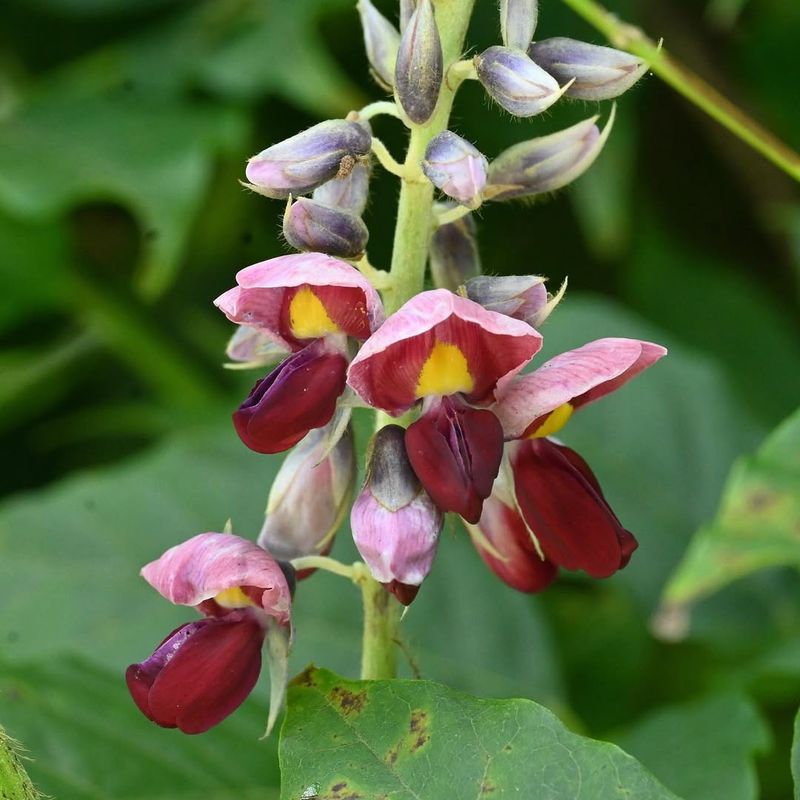
Kudzu grows so fast you can almost watch it move, earning its reputation as the vine that ate the South. This aggressive climber can grow up to a foot per day during peak summer conditions.
Its massive root system stores enormous amounts of energy, allowing rapid regrowth even after cutting. Entire trees disappear beneath kudzu’s smothering blanket of leaves within a single growing season.
The weight of the vine can topple trees and collapse structures if left unchecked. Roadside areas, abandoned properties, and forest edges face particular risk from this relentless invader.
Cutting vines provides only temporary relief as the plant quickly regenerates from its extensive root crown. The roots can weigh hundreds of pounds and extend deep into the soil.
Repeated cutting eventually exhausts the plant, but this requires consistent effort over multiple years. Systemic herbicides applied to foliage or cut stems offer the most practical control method for large infestations.
Late summer applications when the plant moves nutrients to roots provide optimal effectiveness. Combining herbicide treatments with regular mowing or cutting accelerates control by preventing photosynthesis and depleting root reserves over time in your landscape.
9. Morning Glory (Ipomoea Spp.)
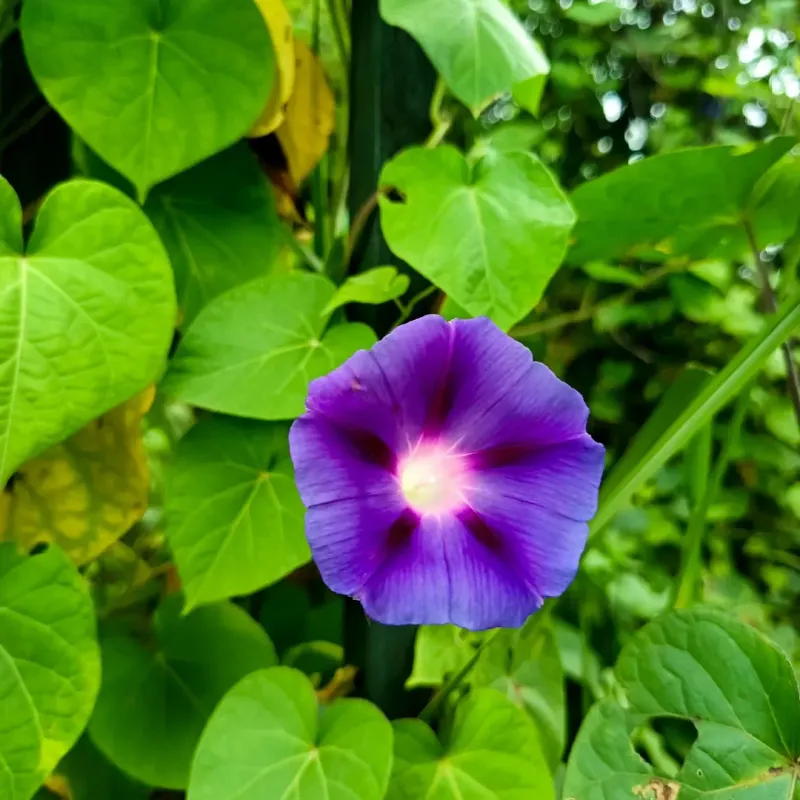
Beautiful trumpet-shaped flowers hide the aggressive nature of these fast-growing annual vines that twist through gardens.
Morning glory vines climb anything they encounter, wrapping tightly around plants and structures alike. Their rapid growth during summer months can smother vegetables, flowers, and ornamental plants before you realize the extent of invasion.
Seeds remain viable in soil for decades, creating a persistent seed bank that continues producing new plants. Each vine produces numerous seeds that drop near the parent plant or spread through garden activities.
The hard seed coat requires scarification for germination, which occurs naturally through weathering and soil activity.
Hand-pulling works well for small infestations if you act before the vines become extensively intertwined. Removing plants before they flower and set seed prevents future generations from establishing.
Regular monitoring throughout the growing season helps catch new seedlings when they’re easiest to manage.
Mulching garden beds heavily suppresses morning glory seedlings by blocking light needed for germination. Pre-emergent herbicides applied in early spring prevent seed germination in ornamental beds and along fence lines.
For established vines, careful application of post-emergent herbicides protects desirable plants while targeting the aggressive climbers effectively in your landscape.