3 Snakes Pennsylvanians Mistake For Harmless Ones (Plus 4 That Look Dangerous)
Have you ever seen a snake in your yard and thought, “That one looks harmless”? You’re not alone.
Many Pennsylvanians make quick assumptions based on color, size, or behavior, but snakes can be very misleading. Some dangerous species closely resemble harmless ones, while others look scary but pose no real threat at all.
This confusion can put people, pets, and even the snakes themselves at risk. Knowing how to tell the difference helps you stay safe and avoid unnecessary panic.
It also protects helpful snakes that control pests and support the local ecosystem. Whether you enjoy hiking, gardening, or simply spending time outdoors, understanding snake look-alikes is important.
Still, if you’re unsure whether a snake is venomous, it’s always best to maintain distance and contact local wildlife professionals.
1. Timber Rattlesnake
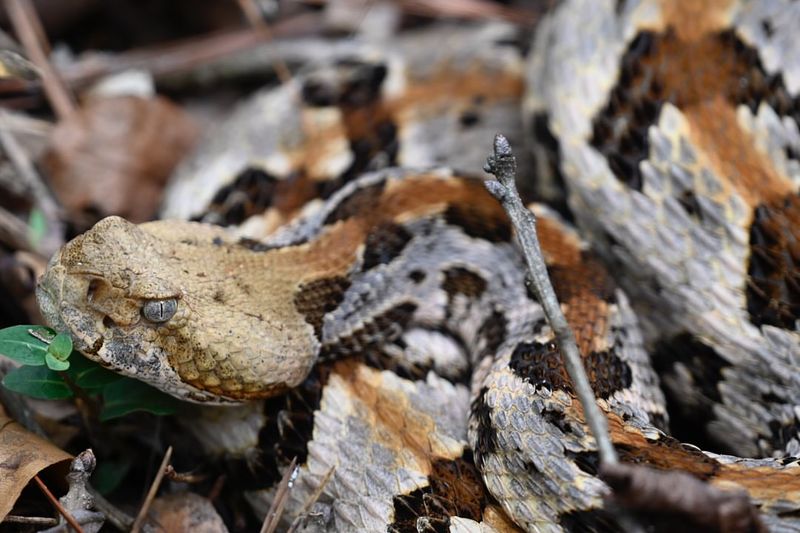
Timber rattlesnakes blend perfectly into Pennsylvania’s rocky hillsides and dense forests. Their brown or gray coloring with dark chevron bands makes them look surprisingly similar to common garter snakes or milk snakes from a distance.
Many hikers in Pennsylvania’s state forests walk right past them without noticing, while others spot them and assume they’re seeing a harmless species.
These venomous snakes prefer mountainous regions throughout Pennsylvania, especially in the northern and central counties. They often sun themselves on rocky outcrops or fallen logs.
When threatened, they usually remain motionless rather than rattling, which contributes to dangerous misidentification. People get too close before realizing what they’re dealing with.
The key difference lies in the head shape and body thickness. Timber rattlesnakes have triangular heads distinctly wider than their necks, while harmless snakes have narrow heads that blend smoothly into their bodies.
Their bodies appear thick and heavy compared to the slender build of most non-venomous Pennsylvania species. The rattle itself provides the clearest identification, though young rattlesnakes may only have a small button that’s hard to see.
Pennsylvania residents often confuse timber rattlesnakes with eastern milk snakes because both have banded patterns.
However, milk snakes display bright red, black, and white bands in a distinct pattern, while timber rattlesnakes show brown or gray backgrounds with darker brown or black chevrons.
The pattern difference becomes obvious once you know what to look for, but from several feet away in dim forest light, they can appear similar enough to cause confusion and potentially dangerous approaches.
2. Northern Copperhead
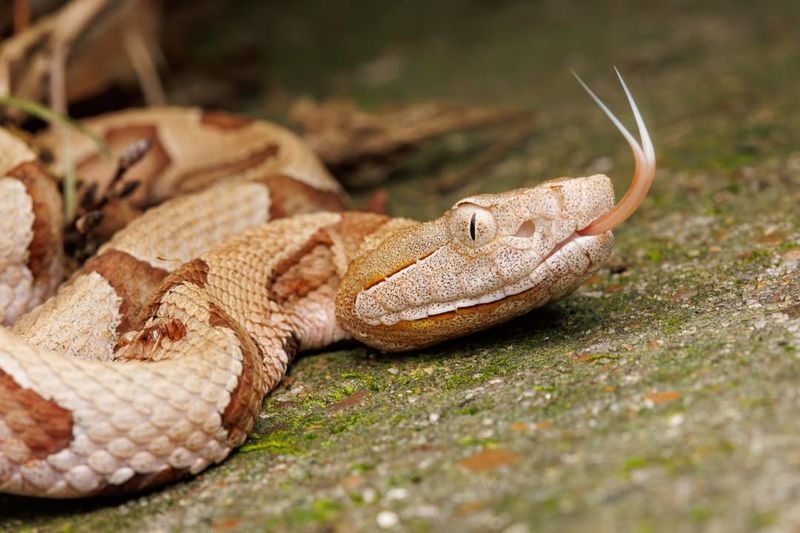
Copperheads cause more venomous snake bites in Pennsylvania than any other species. Their copper-colored heads and hourglass-shaped bands create beautiful camouflage among fallen leaves.
Residents frequently mistake them for eastern hognose snakes or juvenile black rat snakes, both of which are harmless. The confusion happens because all three species live in similar habitats and show brownish coloration.
These snakes thrive throughout Pennsylvania except in the highest mountain elevations. They prefer rocky, wooded hillsides near streams or old stone walls.
Suburban areas around Philadelphia, Pittsburgh, and other cities provide ideal habitat when developments border natural areas.
Copperheads often hide under wood piles, in garden mulch, or beneath stone steps, bringing them into close contact with unsuspecting homeowners.
Your Pennsylvania Garden Changes Every Week. Your Plan Should Too.
Gardening in Pennsylvania changes quickly throughout the season. Every Friday you’ll receive a simple weekly plan showing exactly what to plant, prune, fertilize, harvest, and protect so you never miss the right timing.
The hourglass pattern provides the best identification feature. Each hourglass band appears wider on the sides and narrower across the back, creating a distinctive shape unlike any harmless Pennsylvania snake.
Eastern hognose snakes show blockier, more irregular blotches rather than the clean hourglass design. Juvenile black rat snakes display rectangular blotches that don’t connect across the back like copperhead bands do.
Many Pennsylvania gardeners and hikers report nearly stepping on copperheads because they remain perfectly still when approached.
This freeze response differs from the defensive behavior of hognose snakes, which often flatten their heads and hiss dramatically.
The subtle difference in behavior combined with similar coloring leads to dangerous situations. Always watch where you place your hands and feet when working outdoors in Pennsylvania, especially in rocky or wooded areas where copperheads commonly hunt.
3. Eastern Massasauga Rattlesnake
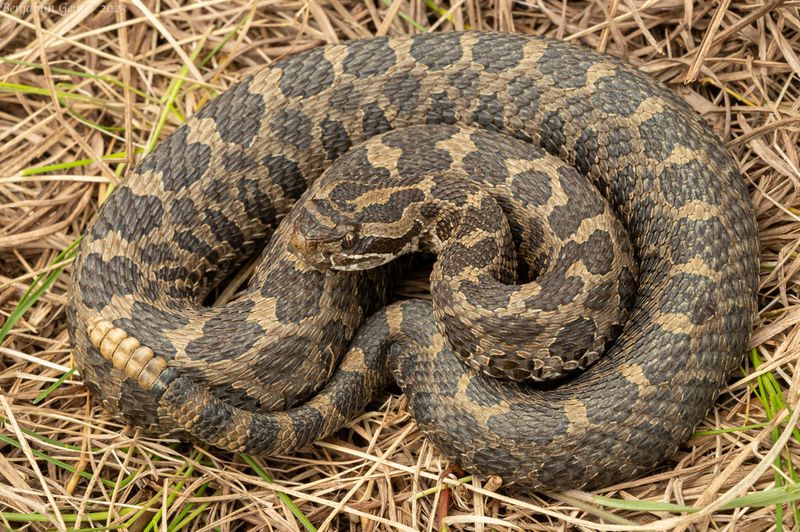
Pennsylvania’s only wetland rattlesnake faces extinction, with populations limited to a few western counties. The eastern massasauga’s gray body with dark brown or black blotches resembles several harmless water snakes that Pennsylvania residents encounter regularly.
This similarity causes people to handle or harass them, thinking they’re common northern water snakes. The massasauga’s small size adds to the confusion since most people expect rattlesnakes to be large.
These endangered snakes inhabit wet meadows, marshes, and bog edges in western Pennsylvania. Butler, Venango, Crawford, and Mercer counties hold the remaining populations.
They rarely exceed two feet in length, making them Pennsylvania’s smallest venomous snake. Their preference for wetlands means they share habitat with several non-venomous water snake species, increasing the chance of misidentification.
The rattle distinguishes massasaugas from water snakes, but it’s often tiny and difficult to spot. Young massasaugas may only have a small button at the tail tip.
Their heads show the characteristic triangular shape of venomous snakes, while water snakes have narrow heads. The body pattern also differs when examined closely.
Massasaugas display neat rows of rounded blotches, whereas water snakes show irregular crossbands that become less distinct toward the tail.
Behavior provides another clue for Pennsylvania residents trying to identify these snakes. Massasaugas typically freeze when approached, relying on camouflage for protection.
Water snakes usually flee quickly toward water or strike defensively if cornered. The massasauga’s calm demeanor paradoxically increases danger because people assume a motionless snake must be harmless.
Anyone encountering a small, blotched snake in Pennsylvania wetlands should maintain distance and assume it could be this rare, protected, venomous species.
4. Northern Water Snake
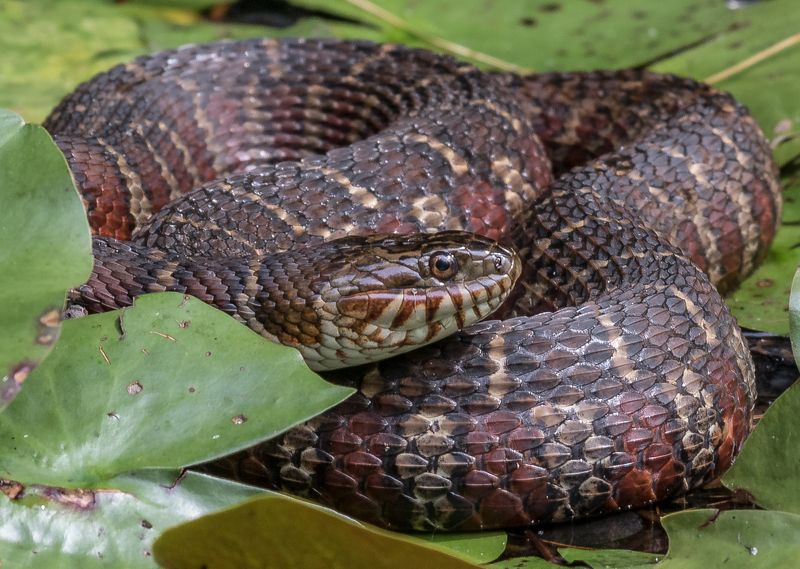
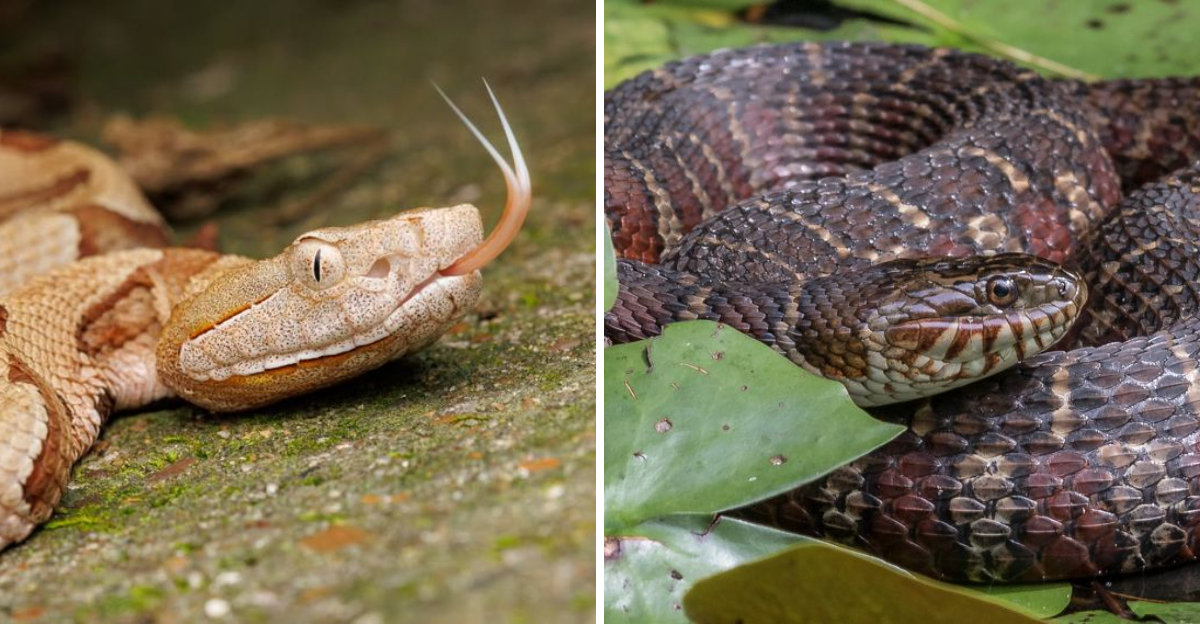
Walk along any Pennsylvania creek or lake and you’ll likely spot northern water snakes. People constantly confuse them with venomous cottonmouths, which don’t actually live in Pennsylvania.
This misidentification causes unnecessary panic and leads to the unnecessary destruction of beneficial snakes.
The confusion stems from the water snake’s defensive behavior and dark coloring, especially in older individuals whose patterns fade to nearly solid brown or black.
Northern water snakes inhabit virtually every body of water in Pennsylvania. Rivers, streams, ponds, lakes, and even drainage ditches provide suitable habitat.
They’re excellent swimmers and spend much of their time hunting fish, frogs, and crayfish. When surprised while basking on rocks or logs, they often flatten their bodies and strike repeatedly, which reinforces the mistaken cottonmouth identification.
Their aggressive defensive displays make them seem more dangerous than they actually are.
These non-venomous snakes can deliver painful bites and often refuse to release their grip. They have teeth designed for holding slippery prey, so their bites bleed considerably.
The combination of aggressive behavior and bloody bites convinces many Pennsylvania residents they’ve encountered something venomous. However, water snakes lack venom entirely.
Their bites may become infected if not cleaned properly, but they pose no serious medical threat.
The body shape helps distinguish water snakes from venomous species. Water snakes have narrow heads that blend smoothly into thick, heavy bodies.
Their eyes sit on the sides of their heads rather than on top. Younger water snakes show distinct reddish-brown crossbands that help with identification, but these fade with age.
Pennsylvania residents should remember that no venomous water snakes live in the state. Any snake encountered near water is almost certainly a harmless northern water snake, despite its intimidating behavior and appearance.
5. Eastern Hognose
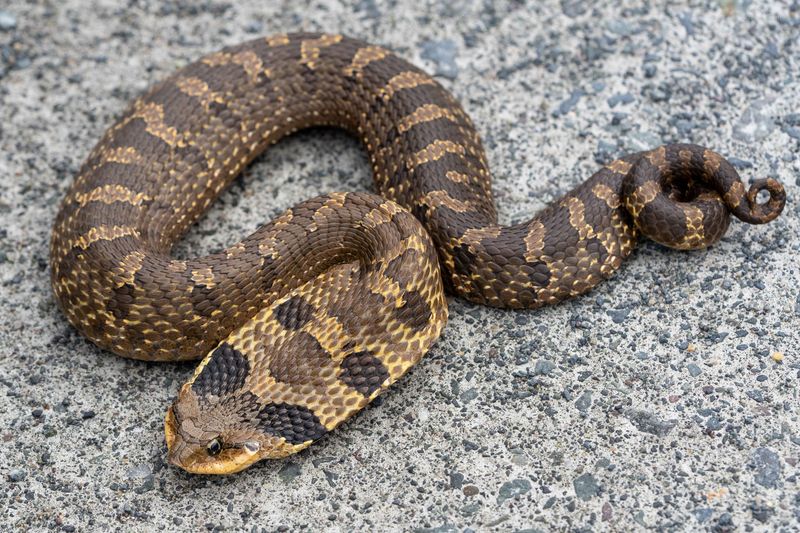
Few snakes put on a show like the eastern hognose. Pennsylvania residents often panic when they encounter one because its defensive behavior mimics venomous cobras.
The snake flattens its head and neck, hisses loudly, and strikes repeatedly with a closed mouth. This dramatic display convinces many people they’ve found a dangerous species.
Some even confuse hognose snakes with rattlesnakes due to their brown coloring and blotched patterns.
Hognose snakes prefer sandy or loose soil where they can burrow easily. They’re found throughout Pennsylvania but are most common in areas with well-drained soils.
Their diet consists almost entirely of toads, which they dig up using their distinctive upturned snouts.
The shovel-like nose gives them their name and provides the easiest identification feature. No venomous Pennsylvania snake has this unusual snout shape.
When the threatening display fails to scare away a perceived threat, hognose snakes switch tactics dramatically. They roll onto their backs, open their mouths, let their tongues hang out, and emit a foul-smelling musk.
This death-feigning behavior is so convincing that many people believe they’ve actually harmed or scared the snake.. If you flip the snake back onto its belly, it will immediately roll over again, breaking the illusion.
Despite their dramatic antics, eastern hognose snakes are harmless to humans. They possess mild venom used only for subduing toads, and their rear-facing fangs rarely break human skin.
Pennsylvania residents who understand this species’ theatrical nature can enjoy watching one of nature’s best actors perform.
The combination of the upturned snout, the elaborate defensive display, and the death-feigning behavior makes hognose snakes unmistakable once you know what you’re seeing. They deserve appreciation rather than fear.
6. Black Rat Snake
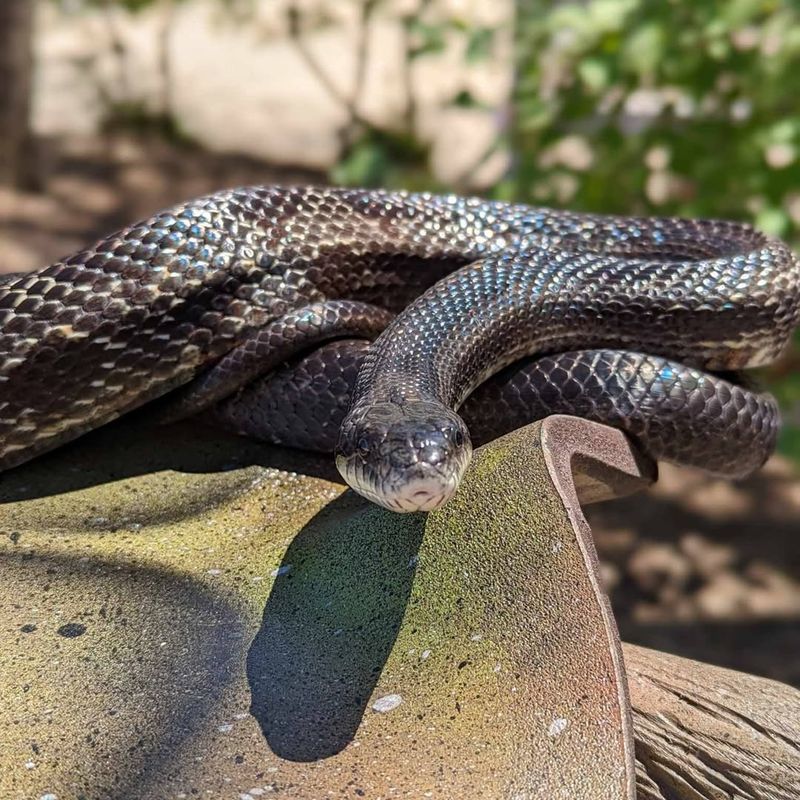
Pennsylvania’s longest snake often reaches six feet or more, creating instant alarm when people encounter one. Adult black rat snakes appear solid black with white chins, leading to confusion with several species.
Young rat snakes look completely different, displaying gray bodies with dark blotches that resemble copperheads or timber rattlesnakes.
This age-related pattern change causes identification problems for Pennsylvania residents who don’t realize they’re looking at the same species at different life stages.
These excellent climbers inhabit barns, old buildings, rock walls, and forested areas throughout Pennsylvania. They’re beneficial predators that control rodent populations around homes and farms.
Despite their value, many people destroy them out of fear. The snake’s size, dark coloring, and tendency to vibrate its tail in dry leaves creates a rattling sound that increases the mistaken rattlesnake identification.
They also release a foul-smelling musk when handled, which doesn’t help their reputation.
Juvenile black rat snakes present the biggest identification challenge in Pennsylvania. Their gray background with dark brown blotches looks remarkably similar to young copperheads.
The pattern placement differs slightly, with rat snake blotches appearing more rectangular and separated rather than forming the connected hourglass shapes of copperheads. The head shape provides the clearest distinction.
Rat snakes have narrow heads that blend smoothly into their necks, while copperheads show the distinctive triangular head of venomous snakes.
Adult black rat snakes are generally docile despite their intimidating size. When cornered, they may coil, vibrate their tails, and strike, but they usually try to escape first.
Their climbing ability is remarkable, and Pennsylvania residents often find them in trees, on roof rafters, or scaling vertical walls.
Understanding that these large, black snakes are harmless helpers rather than threats benefits both homeowners and the snakes themselves.
They deserve protection for their valuable rodent control services throughout Pennsylvania.
7. Eastern Milk Snake
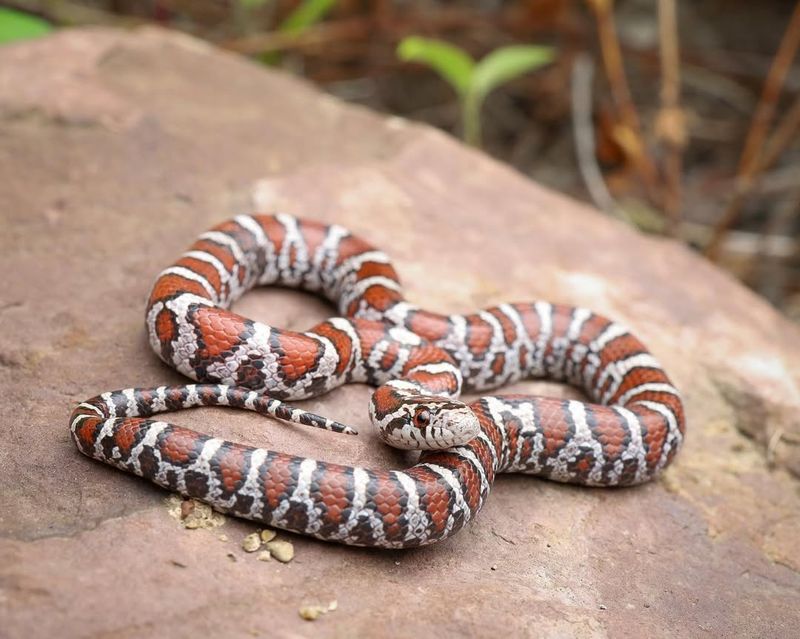
Bright bands of red, black, and white make eastern milk snakes among Pennsylvania’s most beautiful reptiles. Unfortunately, their colorful pattern causes confusion with venomous coral snakes, even though coral snakes don’t live anywhere near Pennsylvania.
The old rhyme “red touches yellow, friend of a fellow; red touches black, venom lack” doesn’t even apply here since milk snakes show red bands bordered by black, not yellow. Still, the myth persists and causes unnecessary fear.
Milk snakes thrive in various Pennsylvania habitats including forests, fields, rocky hillsides, and suburban areas. They often hide under rocks, logs, or debris during the day and hunt at night.
Barns and old buildings provide favorite shelter sites, which led to the folk belief that they drink milk from cows.
This myth gave them their common name, though they actually feed on small rodents, birds, and other snakes. Finding one in a barn should be considered good luck since they control pest populations.
The banded pattern varies considerably among Pennsylvania milk snakes. Some show bright, distinct bands while others display duller colors with less contrast.
Younger snakes typically have more vibrant patterns that fade somewhat with age. The bands encircle the entire body, unlike some similar species that show bands only on the back.
Their smooth, shiny scales and slender build help distinguish them from the heavier-bodied venomous snakes.
Pennsylvania residents sometimes confuse milk snakes with juvenile copperheads, especially when the milk snake’s pattern appears faded or dirty.
The band arrangement differs significantly, with milk snakes showing complete rings around the body while copperheads display hourglass-shaped bands that are wider on the sides.
Milk snakes are harmless and beneficial. They rarely bite even when handled, and their docile nature makes them popular among reptile enthusiasts.
Protecting these colorful constrictors benefits Pennsylvania ecosystems by controlling rodent and snake populations naturally.