Georgia Homeowner Shares Before-And-After Photos Showing A Dreary Front Yard Transformation
Front yard makeovers rarely happen in a single season. In this case, the change unfolded gradually, starting with a struggling lawn and ending in a space filled with structure, plant layers, and walkable paths.
The Georgia homeowner behind the project spent several years reshaping the yard, focusing on native plants and long-term design rather than quick fixes.
Once the results were shared online, the transformation quickly caught attention for how different the space looked from where it started.
1. The Front Yard Started As A Mostly Empty Lawn
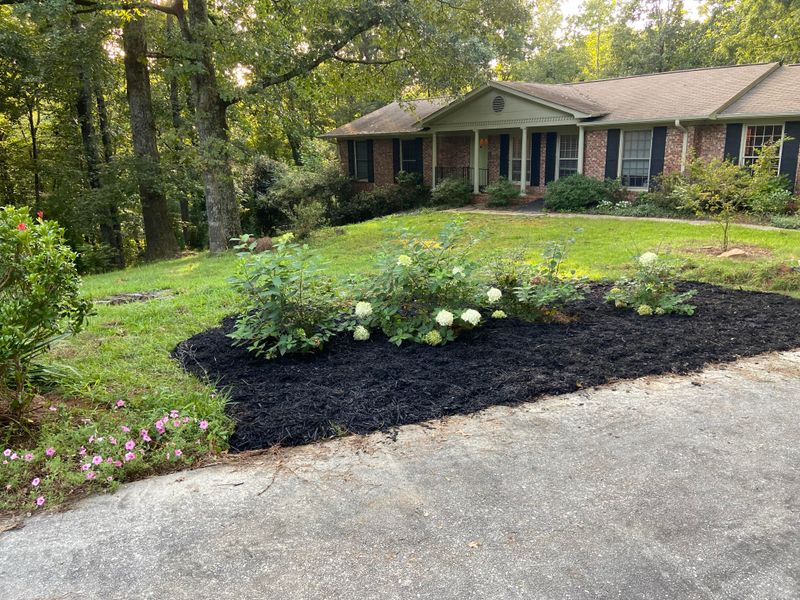
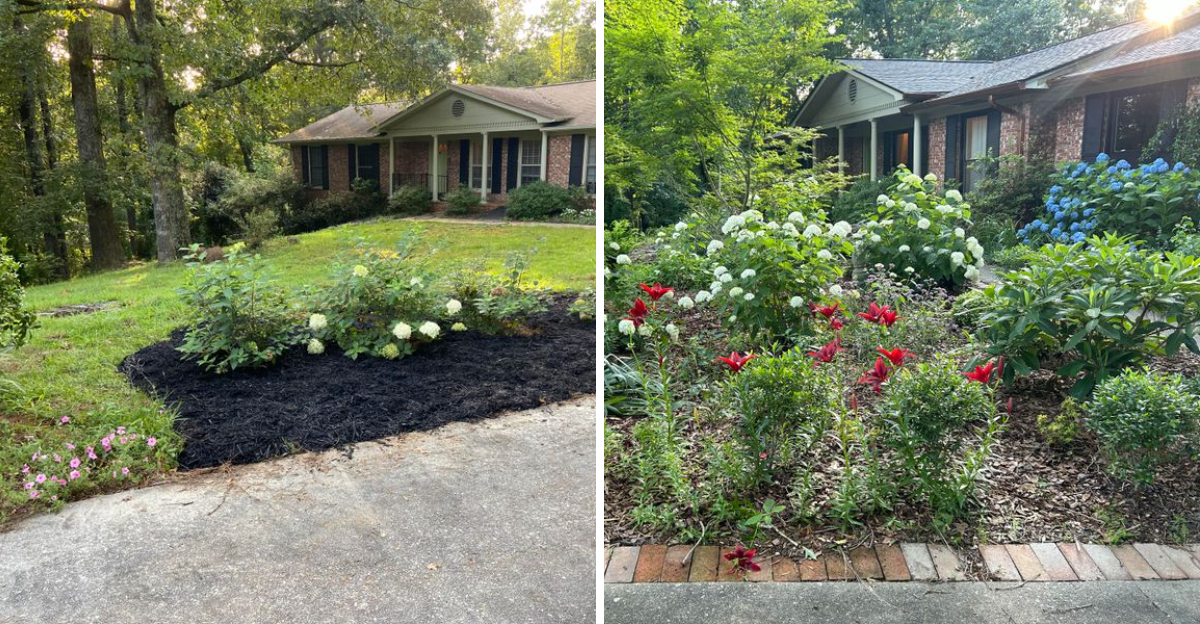
At first glance, most of the front yard is covered by grass rather than planted beds, leaving the space largely open.
Across the front of the house, the lawn dominates the view, with only a small section converted into a mulched planting area.
The homeowner said, “We bought this place four years ago,” explaining that the property sits on a city street near the town square and a local college campus.
That location is visible in the photo, with the yard positioned close to the street and no fencing separating it from the sidewalk.
According to the homeowner, “My husband and I began turning the patchy mix of grass and weeds into garden beds in August/September of 2021.”
Early signs of that work appear in the image, where young plants are spaced apart and large areas of lawn remain intact. She also shared, “I drew out a rough sketch when we first bought our house,” describing how the garden plan began.
While the details changed over time, she said “the basic layout of the garden plan stayed the same.”
Before the yard was fully filled in, the photo shows open gaps between plants and visible space for future additions.
The homeowner noted the growing conditions as well, saying the home is in “Northern Georgia, US zone 8A,” with “red clay soil.”
Overall, the image shows the starting point of the project, with a mostly open lawn just beginning to shift toward planted areas.
2. Flowering Shrubs And Layered Plantings Created A Fuller, More Natural Look
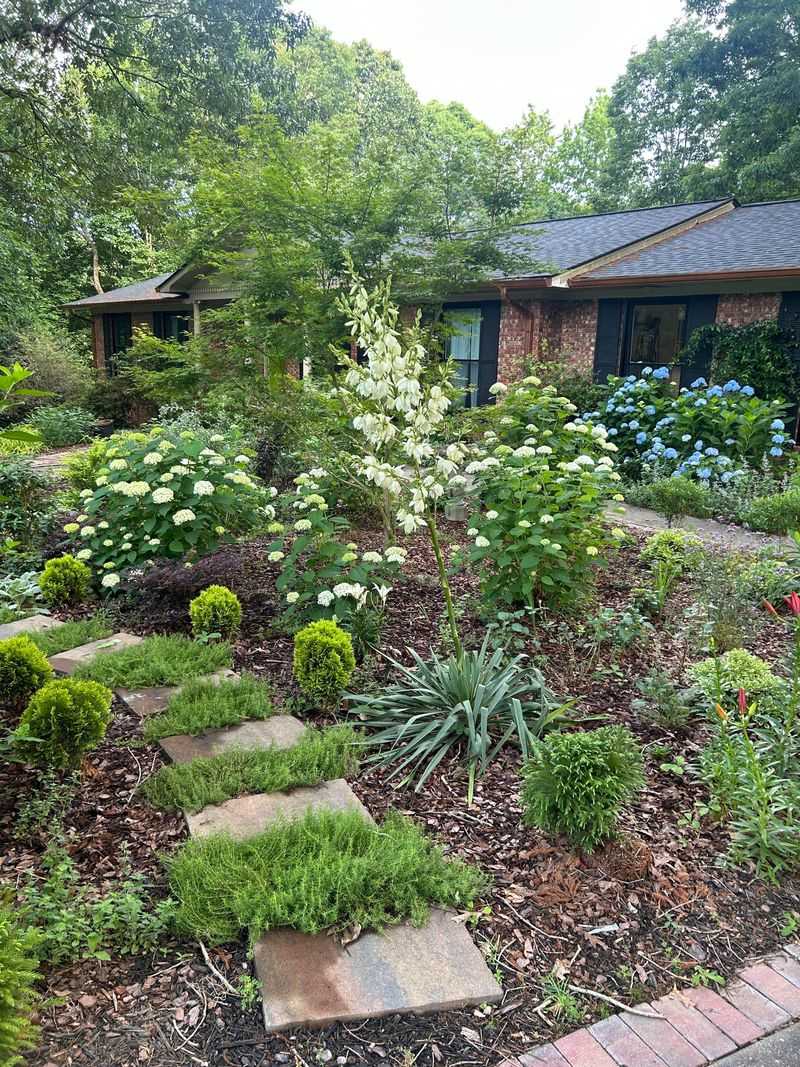
Flowering shrubs and layered plantings now fill much of the front yard, replacing the wide open lawn seen in earlier stages of the project.
In the photo, garden beds are densely planted with shrubs, perennials, and small trees arranged at different heights to create a more complete landscape.
Hydrangeas appear throughout the space, with clusters of white and blue blooms spread across multiple beds. Low-growing plants sit closer to the path, while taller shrubs and small trees rise behind them near the house.
The homeowner said she wanted the space to remain walkable as the garden filled in. “Where I wanted pathways to be able to meander through garden beds without trampling plants,” she wrote.
A narrow stone path is visible in the image, cutting through the garden beds rather than running along the edges.
She added, “I knew I wanted a main pathway to take me from my mailbox to my front door to make it easy for visitors.”
Your Georgia Garden Changes Every Week. Your Plan Should Too.
Gardening in Georgia changes quickly throughout the season. Every Friday you’ll receive a simple weekly plan showing exactly what to plant, prune, fertilize, harvest, and protect so you never miss the right timing.
That main route can be seen guiding movement through the yard, passing directly between flowering shrubs and layered plantings. The path curves gently instead of following a straight line, allowing the garden beds to wrap around it naturally.
Plants are spaced closely but do not block the walkway. Mulch covers the soil throughout the beds, creating clear borders around the path and helping define the planted areas.
The layering allows plants to overlap visually without crowding the walking space.
Shrubs frame the path while ground-level plants soften its edges and blend into the surrounding beds.
Instead of open grass, the space is now shaped by plant groupings and connected pathways that lead visitors through the yard. The photo shows how the front yard became fuller while still remaining accessible.
3. Large Hydrangea Shrubs Became One Of The Most Eye-Catching Features In The Yard
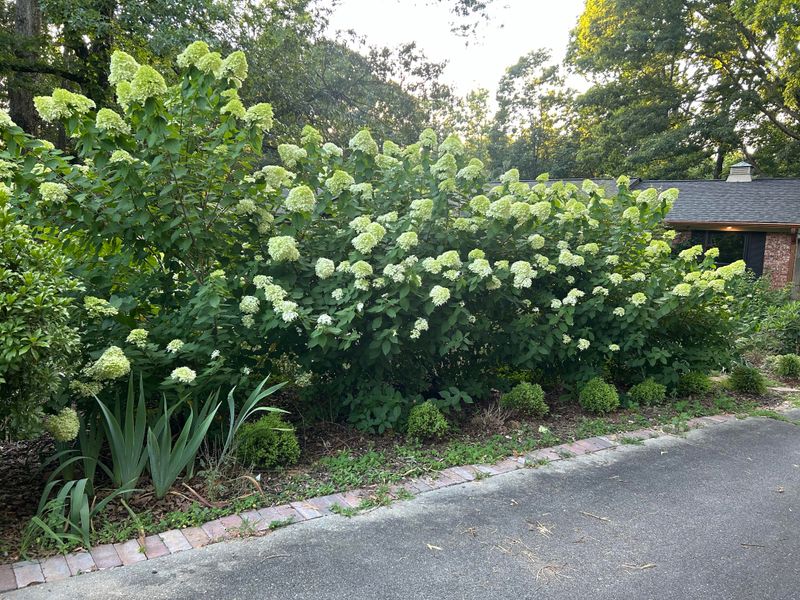
One look at the front of the yard and your eye immediately lands on the long row of hydrangeas lining the street and driveway. Their size, shape, and pale green blooms make them impossible to miss, especially compared to the earlier open lawn.
In the photo, the shrubs form a soft boundary between the house and the street, adding privacy without closing the space off. The house remains visible behind them, while the seating area feels more sheltered.
That balance was intentional, according to the homeowner. “Where larger shrubs and small trees needed to go to provide the privacy I wanted,” she wrote.
She explained her placement choice clearly, saying, “I planted hydrangeas by the street and driveway so that you can still see the house, but you can’t see me when I’m sitting in my chair.” The image reflects that idea, with the plants tall enough to screen the yard while keeping open sightlines.
She identified the plants as Limelight hydrangeas and shared why they worked well for the space. “They’re a hydrangea that loves the sun and blooms on new wood,” she wrote.
That growth habit mattered to her, especially after cold seasons. She added that “even if you have a bitter winter, they’ll bloom for you.”
Maintenance was part of her approach as well. “Just prune them back by 1/4 of their size each spring,” she noted.
She also mentioned flexibility in how they can be shaped, writing, “You can also trim them into trees if you want more space around them.” In the photo, the shrubs remain full and natural, anchoring the front edge of the yard and becoming one of its strongest visual features.
4. A Winding Garden Path Led Through The Newly Planted Landscape
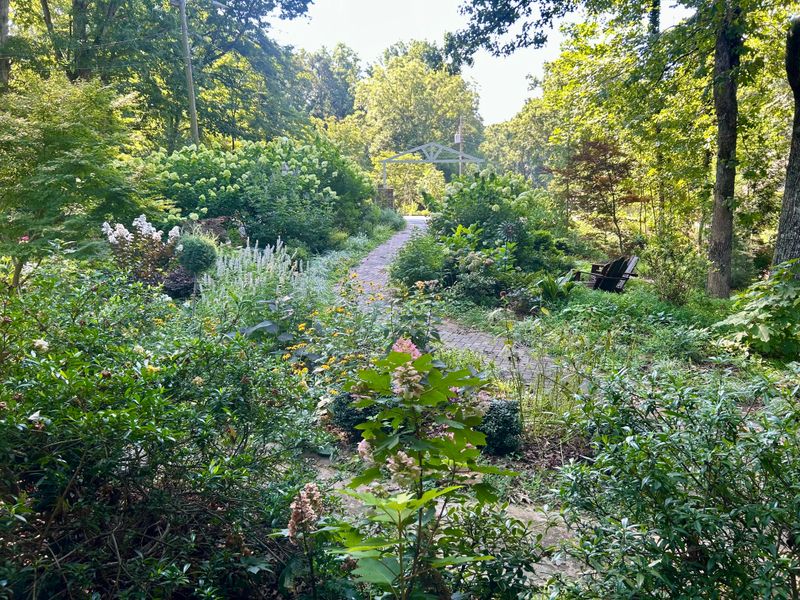
The moment you notice the winding path, the yard stops feeling like something to look at and starts feeling like a place meant to be explored.
In the photo, a narrow walkway curves gently through dense plantings, pulling you forward instead of directing you straight through.
Shrubs, perennials, and taller plants press in on both sides, making the path feel intentionally woven into the landscape rather than added later. Movement through the yard clearly mattered in the design.
The homeowner shared that plant variety was part of shaping that experience, saying, “I’ve also planted a variety of coneflower and native rudbeckia.”
Those plants appear throughout the beds, softening the edges of the path and blending structure with a natural flow.
5. Mature Shrubs And Flowering Plants Now Frame The Front Walkway
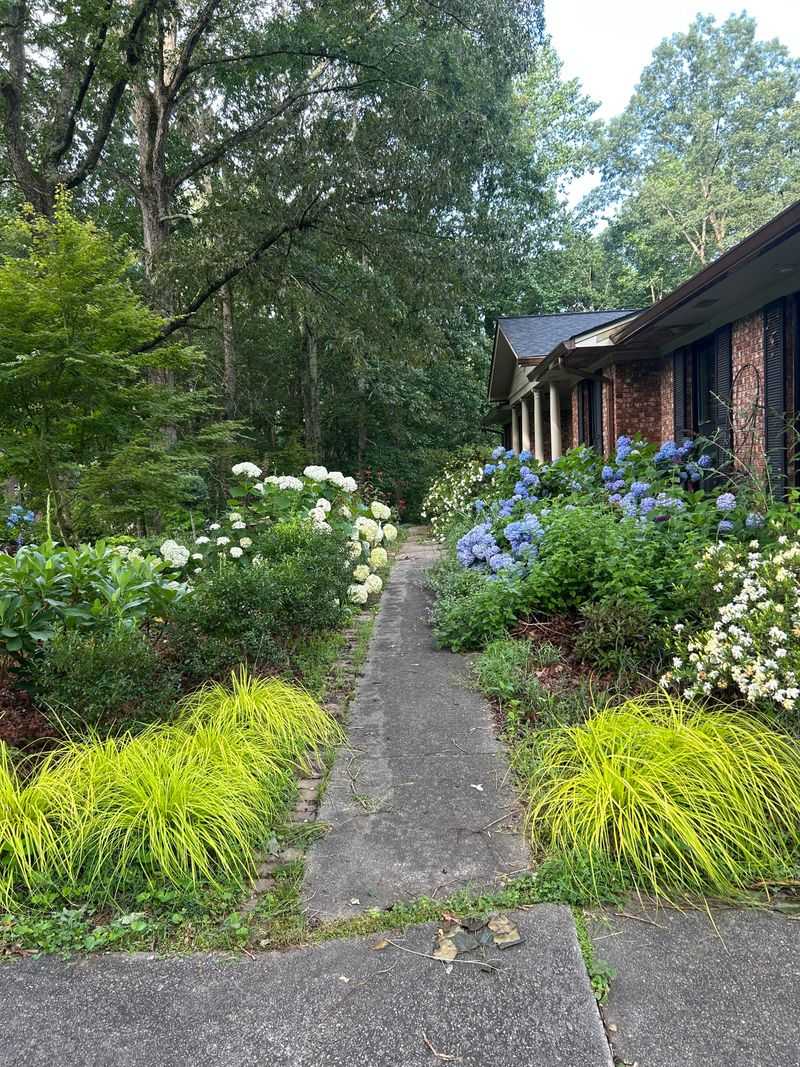
Here you can really feel how the front walkway has turned into part of the garden rather than just a way to reach the door.
Walking toward the house now means moving between mature shrubs and flowering plants that closely frame both sides of the path.
Hydrangeas dominate the view in the photo, with large clusters of blue and white blooms spilling gently toward the walkway.
Smaller shrubs and ground-level plants fill in the lower layers, creating a sense of depth that pulls your eye forward.
If you’re someone who can never resist adding just one more hydrangea, this scene probably feels familiar. The homeowner made it clear that these plants weren’t chosen casually or sparingly.
“Hydrangeas are my favorite!” she wrote. “I’ve planted around 40, and I’m still finding more places that ‘need’ a hydrangea.”
That affection shows in how heavily they’re featured along the path, where blooms sit at eye level as you walk past.
Instead of isolating the plants in separate beds, the walkway is wrapped by them, making the approach feel lush and immersive.
Mature shrubs anchor the planting, while flowering plants soften the edges and blur the line between path and garden. Nothing feels trimmed back too tightly or forced into symmetry.
The result is a front walkway that feels welcoming, personal, and clearly shaped by a gardener who enjoys living inside the landscape.
6. Brick Walkways Turned The Front Yard Into A Space Meant To Be Walked Through
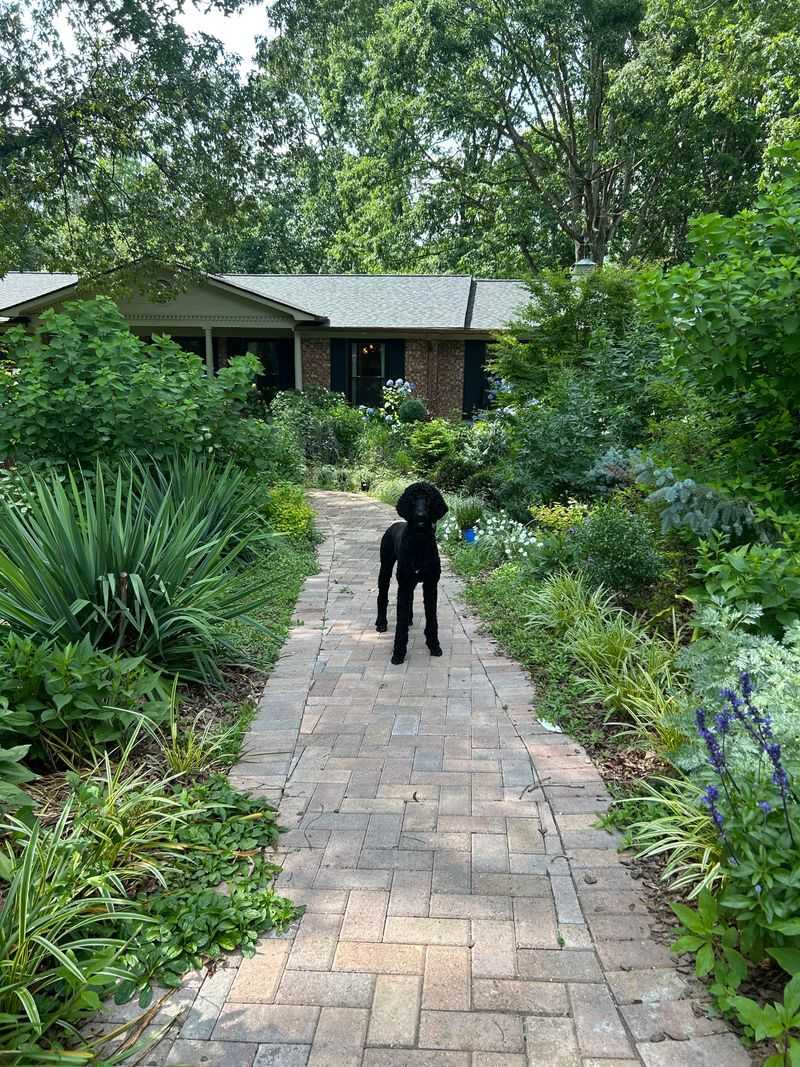
This is the moment when the front yard stopped feeling like something you looked at and started feeling like somewhere you move through. The brick walkway pulls you forward, guiding each step toward the house instead of leaving visitors to wander across plants or grass.
In the photo, the path runs straight through dense greenery, with layered plantings closing in softly along both sides.
Shrubs, grasses, and flowering plants frame the bricks, making the walkway feel intentional rather than decorative.
Have you ever noticed how a clear path instantly changes how a garden feels, even before a single plant matures? Here, the hardscaping quietly sets the rhythm for everything around it.
“This last winter, we finally pulled the trigger and installed a main brick walkway and arbor to give the garden some structure with some hardscaping,” the homeowner wrote.
That decision is visible in how the space now reads as organized and inviting.
Instead of cutting through the garden, the walkway belongs to it.
7. Blooming Perennials Added Color Throughout The Front Yard
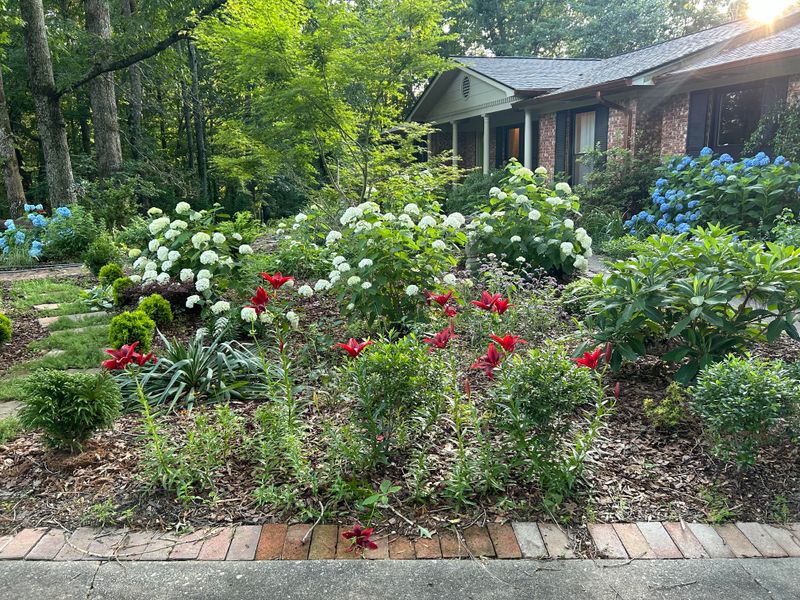
Color shows up in the garden in a way that feels calm and deliberate. Flowering perennials are placed throughout the beds, weaving between shrubs and paths instead of sitting in isolated patches.
In the photo, red lilies stand out against the mulch while softer blooms fill in the surrounding space, adding contrast without overpowering the scene.
These plants help soften the stronger lines created by walkways and larger shrubs. Rather than pulling focus to one spot, color appears in multiple areas, guiding the eye naturally through the yard.
Different bloom heights and shapes create movement and keep the planting beds visually interesting as the season changes.
Even when not everything is in bloom at once, the garden still feels layered and intentional.
Flowering perennials quietly support the overall layout, helping the front yard feel welcoming and complete.
8. The Front Yard Now Has A Defined Entrance Instead Of Open Lawn
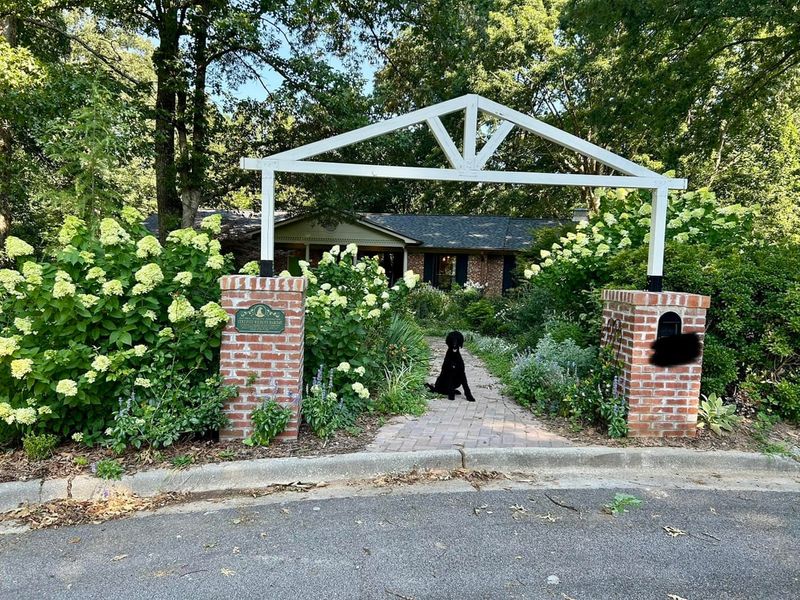
An entrance is often the first thing that shapes how a yard feels, and here it finally has a clear sense of arrival.
Instead of one continuous stretch of lawn, plantings now guide the eye toward the house and frame the space in a way that feels intentional.
The homeowner explained how the structure developed over time, saying, “We started with individual beds, first with the hedge of limelight hydrangeas along the driveway to welcome us home, then another row of Little Lime Hydrangeas along the street to give our house a bit of curb appeal and give the yard more structure and a sense of privacy.”
Those layers are visible in the photo, where shrubs define the edge of the property and create a natural gateway into the garden.
Looking ahead, she shared plans to keep building on that foundation. “My next goal is to add more native plants, evergreens for winter interest, and ground cover, as well as bird and owl houses—I’d love to install a bat box somewhere in our back yard as well.”
Even with all that growth, the pace remains steady.
As she put it, “During the winter? I spend almost no time working in the garden unless I want to add more plants.”
What began as an open lawn now reads as a welcoming entrance, shaped slowly through plants, paths, and choices that reflect how the space is actually lived in.