7 Spots In Georgia Yards That Stay Moist Longer Than Others
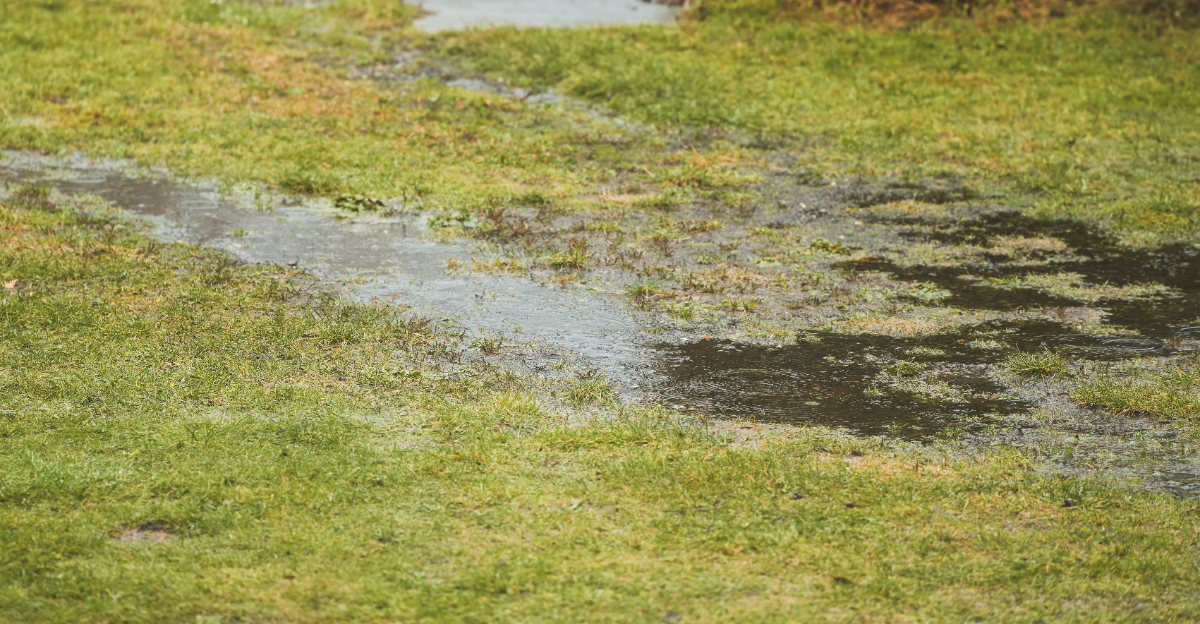
After a rain or a round of watering, some parts of a Georgia yard dry out quickly while others stay damp for days.
You might notice soggy soil near certain plants, moss showing up unexpectedly, or areas that never seem to fully dry no matter the season.
At first, it’s easy to brush it off as normal variation. But when moisture consistently lingers in the same spots, it usually has a reason tied to shade, soil, or drainage.
Learning where moisture hangs on the longest can help you avoid plant problems and make smarter choices across your Georgia yard.
1. Low-Lying Areas Where Water Naturally Collects
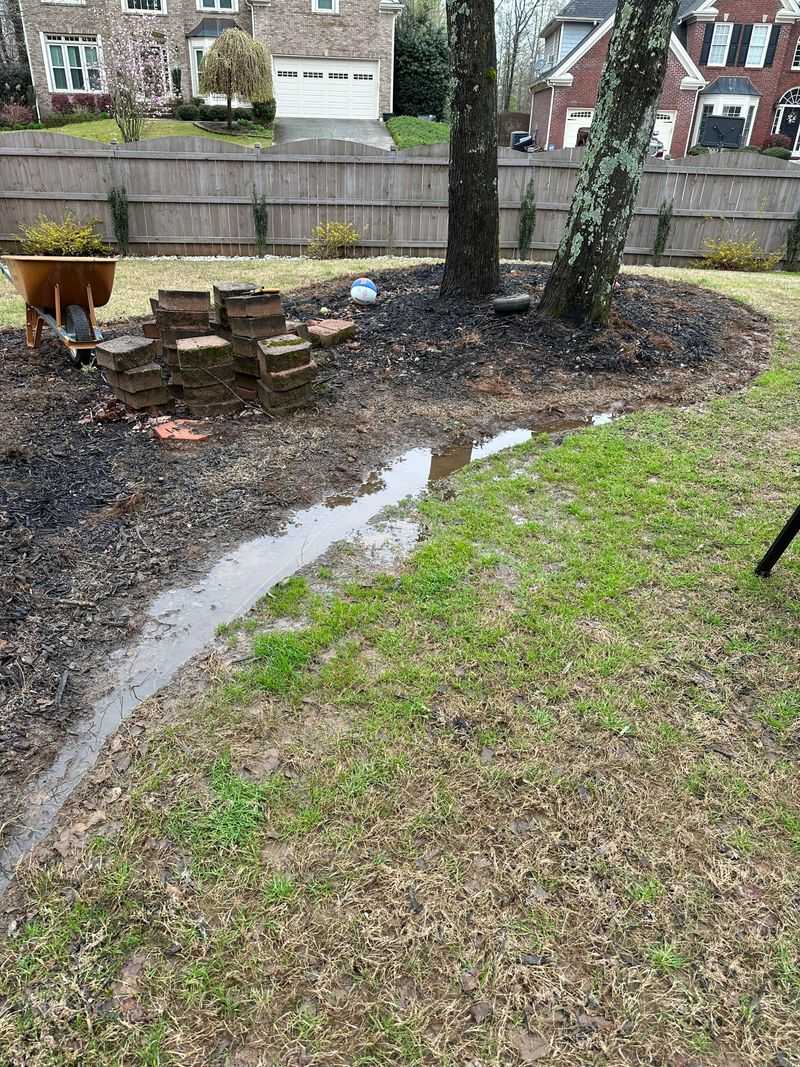
Water flows downhill, and your Georgia yard probably has at least one spot where gravity does all the work. These natural bowls or depressions become mini reservoirs after every rain, holding moisture days after surrounding areas dry out.
You’ll notice these zones stay green longer during dry spells because they’re essentially storing water for your grass.
Homeowners across Georgia often find these low spots frustrating when mowing because the ground feels spongy underfoot. The soil remains saturated longer simply because water has nowhere else to go.
Rain from your entire yard gradually migrates to these areas, concentrating moisture in one place.
These depressions might be natural landscape features or created accidentally during construction. Either way, they change how water moves through your property.
Plants growing in these areas rarely need supplemental watering since nature handles irrigation automatically.
Georgia’s clay-heavy soil makes this problem more noticeable because water doesn’t absorb quickly. Instead, it pools on the surface and slowly seeps downward.
Your lawn might look perfectly level until a good rainstorm reveals the hidden contours.
Mosquitoes love these spots because standing water provides perfect breeding grounds. You might need to address drainage if puddles last more than two days.
Some homeowners install French drains or add soil to level things out.
Smart landscaping uses these areas intentionally by planting moisture-loving species. Rain gardens work beautifully in Georgia’s climate when positioned in natural collection zones.
Native plants adapted to wet conditions thrive without extra maintenance.
Your grass type matters too, since some varieties tolerate wet feet better than others. Centipede grass handles moisture fairly well, while Bermuda prefers drier conditions.
Matching your turf to the terrain saves frustration.
Observing where water goes during storms helps you map these problem areas. Mark them with flags so you remember their locations when planning projects.
Understanding your yard’s natural drainage patterns prevents costly mistakes.
2. North-Facing Sides Of The Yard With Less Sun
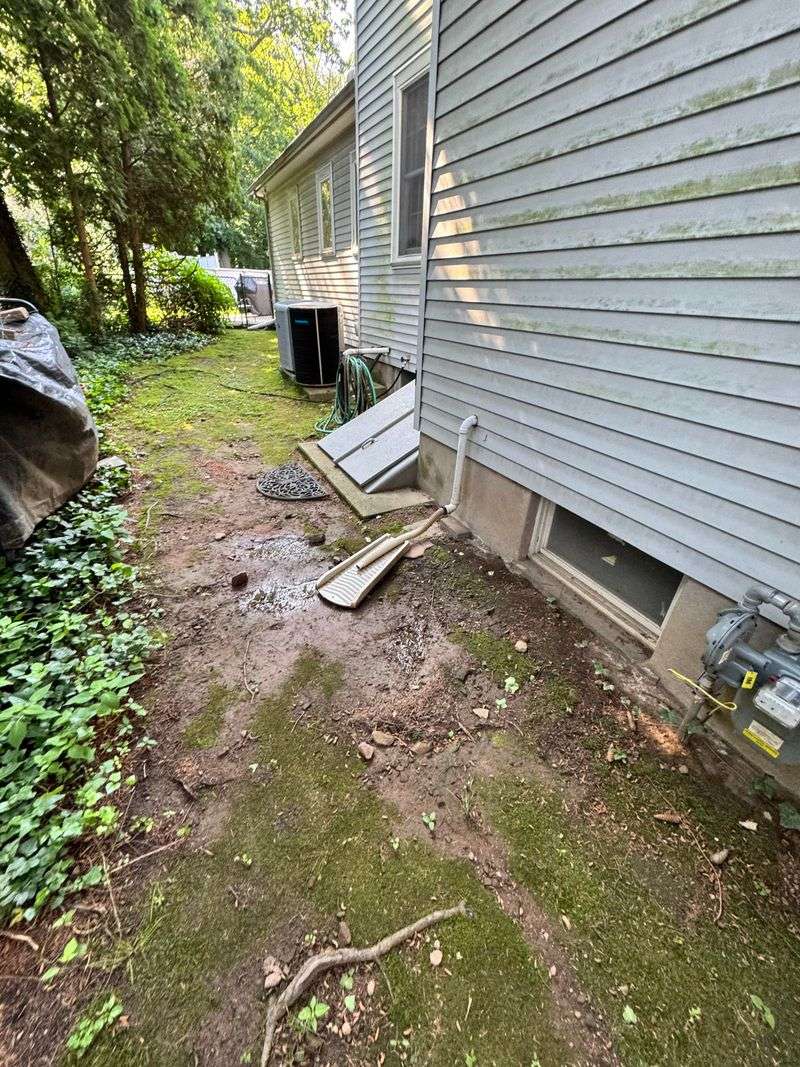
Sunlight patterns dramatically affect moisture retention, and north-facing areas get the short end of the stick. These sections receive limited direct sun throughout the day, meaning evaporation happens much slower.
Your grass stays damp well into afternoon hours even after morning dew disappears elsewhere.
Georgia’s intense summer sun bakes most lawns dry by midday, but northern exposures maintain cooler temperatures. This temperature difference might seem minor, but it significantly impacts how quickly soil moisture evaporates.
Your Georgia Garden Changes Every Week. Your Plan Should Too.
Gardening in Georgia changes quickly throughout the season. Every Friday you’ll receive a simple weekly plan showing exactly what to plant, prune, fertilize, harvest, and protect so you never miss the right timing.
You’ll notice moss growing more readily in these shadier zones.
The reduced sun exposure creates a microclimate distinct from the rest of your property. Temperatures might be five to ten degrees cooler, which plants definitely notice.
Shade-tolerant grass varieties perform better here than sun-loving types that struggle in dimmer conditions.
Many Georgia homeowners overlook this factor when planning irrigation systems. North-facing areas need less frequent watering because moisture lingers naturally.
Overwatering these spots leads to fungal problems and weak root systems.
Your home’s shadow stretches across these areas for much of the day, blocking direct rays. Even in winter when the sun sits lower, northern exposures receive minimal light.
This consistent shade keeps soil temperatures down and evaporation rates low.
Foot traffic compacts soil faster in damp conditions, so paths through these areas suffer more wear. Consider installing stepping stones or mulched walkways to protect the turf.
Compacted wet soil creates additional drainage headaches.
Choosing plants for these spots requires different thinking than sunny beds. Hostas, ferns, and other shade lovers thrive where sun-hungry plants would languish.
Georgia natives adapted to forest understories work beautifully in northern exposures.
Lawn diseases find these conditions ideal because fungal spores love cool, damp environments. Brown patch and dollar spot spread quickly when grass stays wet too long.
Improving air circulation helps, though you can’t change the sun’s path.
Morning sun hits these areas briefly if at all, depending on your home’s orientation. Eastern light provides some warmth, but it’s fleeting compared to southern exposures that bake all day.
This limited sun window keeps things consistently moist.
3. Soil Near Foundations And Downspouts
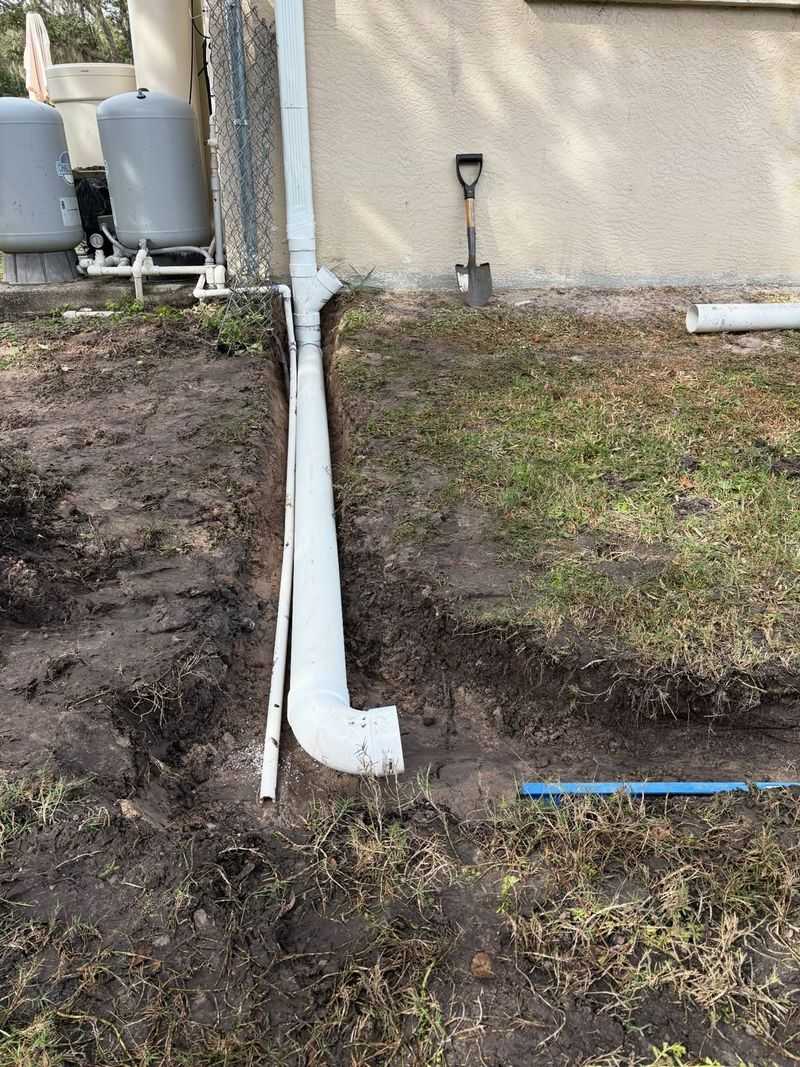
Your roof collects thousands of gallons during Georgia’s frequent thunderstorms, and all that water funnels to specific exit points. Downspouts concentrate this flow into narrow zones, saturating soil directly beneath them.
Even days after rain stops, these areas remain noticeably damper than surrounding ground.
Foundation perimeters naturally retain moisture because builders typically grade yards to slope away from homes. This necessary design feature creates a transition zone where water moves slowly.
Soil right against your foundation stays moist longer as water gradually drains away from the structure.
Clay soil common throughout Georgia exacerbates this situation by draining slowly. Water released from downspouts doesn’t disperse quickly, instead pooling near the discharge point.
You might see erosion channels where concentrated flow wears away soil over time.
Splash blocks help direct water away from foundations, but many homes lack them or have ones that shifted out of position. Without proper direction, water dumps straight down and soaks into the ground immediately adjacent to your home.
This creates a permanently damp band around your foundation.
Homeowners often plant shrubs near foundations, not realizing how much extra moisture these areas receive. Established plants might not need supplemental watering at all if positioned near downspouts.
Overwatering combined with natural roof runoff drowns roots.
Georgia’s humidity makes evaporation slower near foundations because air circulation is restricted. Your home blocks wind, creating stagnant conditions where moisture lingers.
This combination of concentrated water and poor airflow keeps soil consistently damp.
Gutter systems should direct water at least five feet from foundations, but many discharge much closer. Extending downspouts with flexible pipes or buried drains moves moisture away from your home.
This simple fix prevents both foundation problems and overly wet soil.
Basement or crawlspace moisture often correlates with saturated foundation perimeters. Water seeping through foundation walls starts as exterior moisture that never properly drained away.
Addressing outside drainage solves many interior dampness issues.
Some homeowners install rain barrels to capture downspout water, reducing the moisture load near foundations. This collected water can irrigate garden beds during dry spells.
Georgia’s variable rainfall makes water storage smart planning.
4. Shaded Areas Under Mature Trees
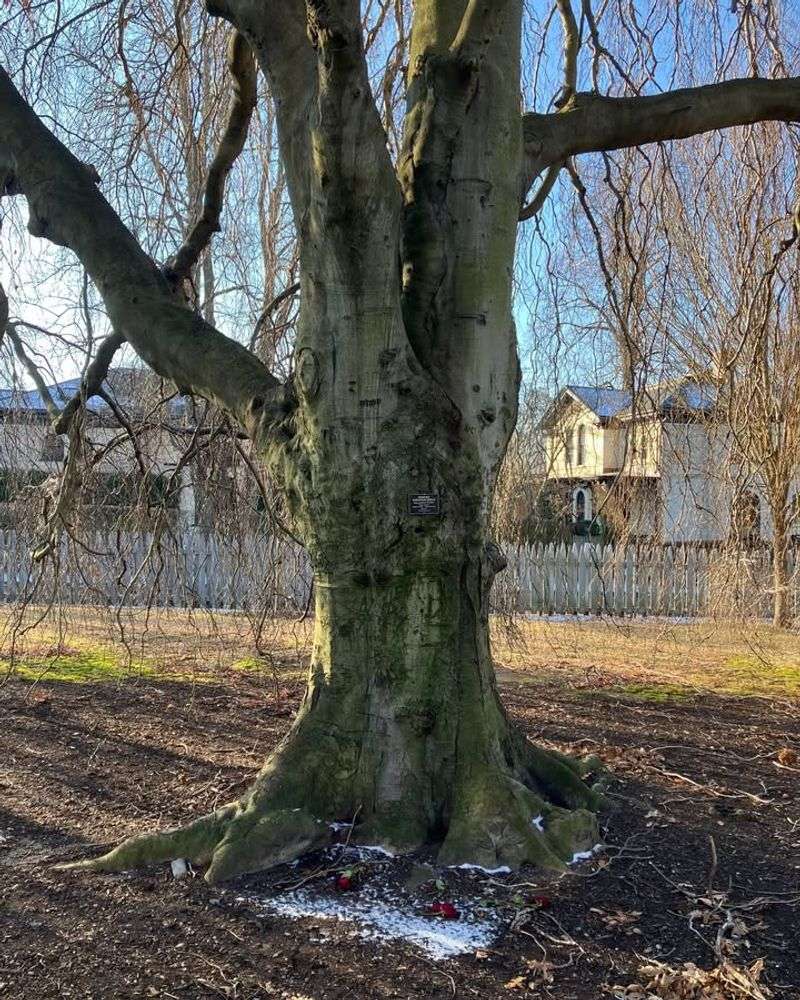
Mature trees create their own weather systems beneath their canopies, and moisture retention is part of that effect. Shade from dense foliage blocks sun from reaching the ground, dramatically slowing evaporation.
Georgia’s tall oaks, pines, and magnolias cast shadows that keep underlying soil consistently damp.
Leaf litter accumulates under established trees, forming a natural mulch layer that holds moisture. This organic blanket prevents evaporation while gradually decomposing to enrich soil.
You’ll notice ground under trees feels cooler and stays moist longer than open lawn areas.
Tree roots extend far beyond the visible canopy, but the zone directly beneath trunks receives the most benefit from shade. Grass growing in these areas faces tough competition from tree roots for both water and nutrients.
Many homeowners struggle to maintain healthy turf under large trees.
Georgia’s summer heat makes these shaded refuges noticeably cooler, sometimes by fifteen degrees or more. This temperature difference affects how quickly moisture evaporates from soil.
Morning dew might linger until noon under trees while disappearing by eight o’clock in sunny spots.
Rainfall interception by tree canopies creates interesting patterns too. Heavy foliage catches initial rain, which then drips slowly to the ground long after storms pass.
This extended moisture delivery keeps soil damp hours beyond what open areas receive.
Moss and other shade-loving ground covers thrive under mature trees where grass struggles. Many Georgia homeowners eventually give up on turf in deep shade and embrace alternative plantings.
Working with natural conditions produces better results than fighting them.
Root competition makes these zones tricky for landscaping because trees take most available water and nutrients. Shallow-rooted trees like maples create particularly challenging conditions.
Supplemental watering might not help much if tree roots intercept it immediately.
Air circulation under dense canopies is limited, creating humid microclimates. This stagnant air combined with reduced sunlight and consistent moisture promotes fungal growth.
Mushrooms appearing after rain indicate how damp these areas stay.
Some tree species create more shade than others, with evergreens blocking sun year-round. Deciduous trees allow winter sun through bare branches, giving grass a seasonal break.
Georgia’s mild winters mean shade-stressed turf gets limited recovery time.
5. Along Fence Lines With Reduced Airflow
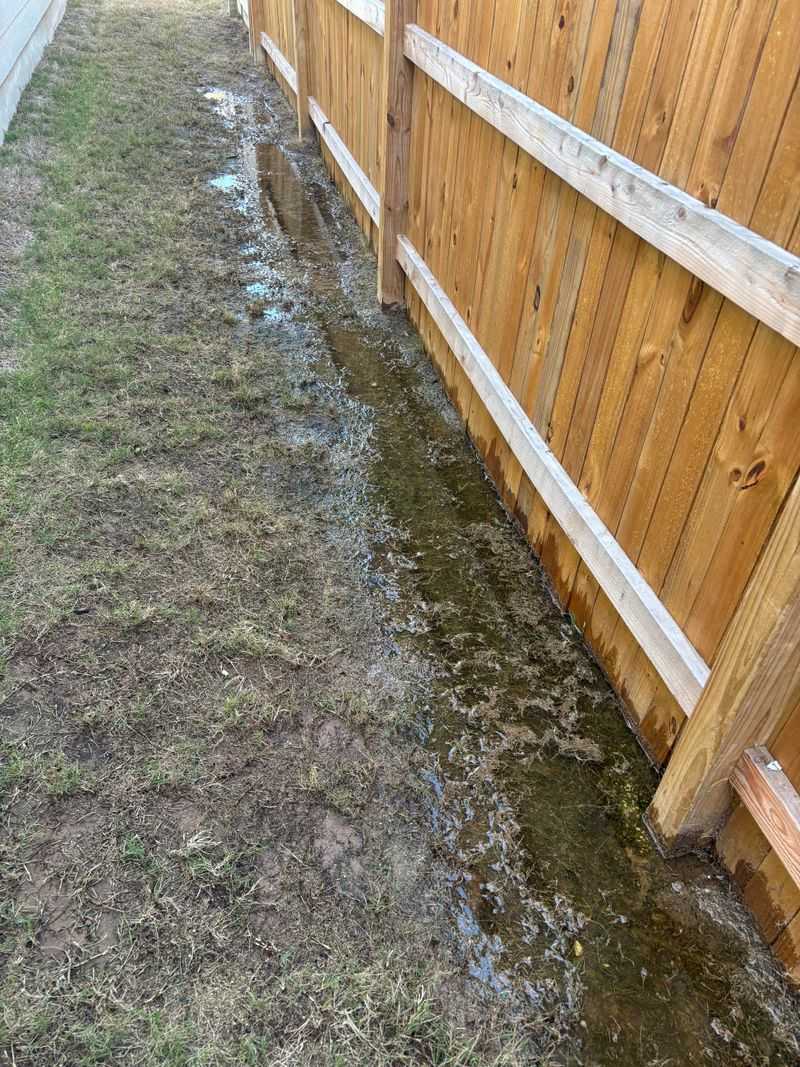
Fences create barriers that do more than mark property boundaries—they alter how air moves across your yard. Wind that would normally dry moisture-laden soil gets blocked or redirected by solid fencing.
Areas immediately adjacent to fences stay damper because air circulation is restricted.
Georgia’s humidity levels make this effect more pronounced since moisture-heavy air tends to stagnate near barriers. Your fence line might show a distinct band of greener grass because extra moisture lingers there.
This phenomenon is most noticeable with solid privacy fences that completely block airflow.
Morning dew takes longer to evaporate along fences because wind can’t sweep across the surface. Open lawn areas dry quickly as breezes move moisture away, but fence-protected zones remain damp.
You’ll notice this pattern especially on calm mornings when air movement is minimal.
Vegetation growing against fences also contributes to moisture retention by adding another layer of obstruction. Vines, shrubs, or grass pressed against fence boards trap moisture between plant material and wood.
This creates perfect conditions for rot and mildew on wooden fences.
Homeowners often overlook these narrow strips when planning irrigation systems. Fence lines might need less watering than open areas because they naturally hold moisture longer.
Overwatering these zones promotes fungal diseases and weakens grass.
Georgia’s frequent afternoon thunderstorms dump rain that gets trapped along fence lines. Water running across your yard encounters the fence barrier and slows down, soaking into soil there.
This concentrated moisture makes fence-adjacent soil consistently damper.
Shaded fence lines stay even wetter because they combine reduced airflow with limited sun exposure. North-facing fences create particularly challenging conditions where moisture seems permanent.
Moss growth along fence bases indicates chronically damp conditions.
Privacy fences block more air than chain-link or picket styles, creating more pronounced moisture retention. Solid panels act like walls, completely stopping wind flow.
Choosing fence styles affects how air moves through your property.
Some homeowners install lattice panels at fence tops to improve airflow while maintaining privacy. This compromise allows some wind circulation while still blocking sight lines.
Better air movement helps moisture evaporate more normally.
6. The Bottom Of Slopes Or Gentle Grades
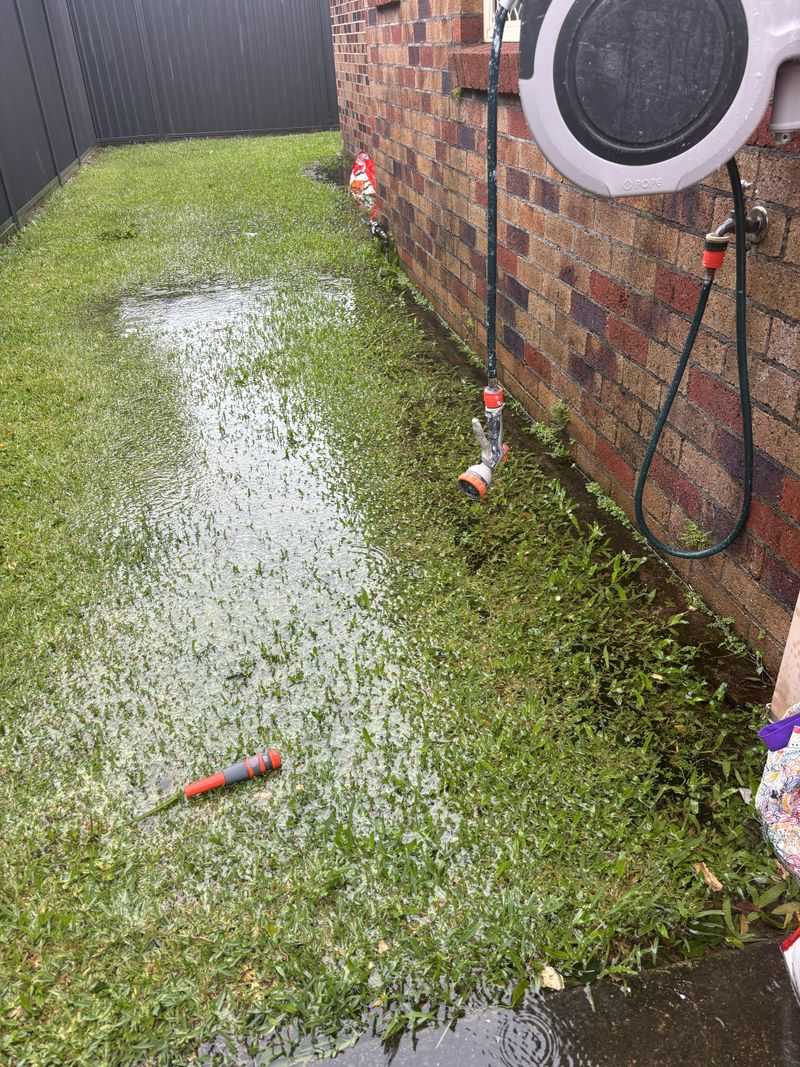
Gravity never stops working, and every raindrop that falls on sloped areas eventually rolls downhill. The bottom of any grade becomes a collection point where water accumulates naturally.
Georgia yards rarely sit perfectly flat, so most properties have at least one area where slopes terminate.
These transition zones where land levels out act like catch basins for runoff from higher ground. Soil at slope bottoms absorbs water flowing from above, staying saturated long after hilltop areas dry completely.
You’ll see this pattern clearly after storms when low areas remain muddy while slopes drain quickly.
Even gentle grades that barely look sloped channel significant water downhill over time. A yard that appears relatively flat might have subtle contours that direct moisture to specific zones.
These accumulation areas stay consistently damper than surrounding terrain.
Georgia’s clay soil doesn’t absorb water quickly, so runoff travels farther before soaking in. Slopes concentrate this flow, delivering moisture to bottom areas in concentrated amounts.
The soil at grade bottoms receives water from the entire slope above it.
Erosion often occurs on slopes themselves, but deposition happens at the bottom where water slows. Sediment carried downhill settles out when flow velocity decreases, gradually building up soil depth.
These depositional zones tend to have richer, deeper soil that holds moisture better.
Homeowners sometimes struggle with perpetually wet spots at slope bases without realizing topography is the cause. Installing drainage solutions helps, but understanding the natural water flow is crucial.
French drains or dry creek beds can redirect excess moisture.
Plant selection for slope bottoms should emphasize species that tolerate wet feet. Georgia natives adapted to floodplains or stream banks work well in these consistently moist zones.
Fighting the natural conditions with drainage-loving plants leads to frustration.
Lawn mowing becomes challenging when slope bases stay soggy because mower wheels sink into soft ground. Many homeowners eventually convert these problem areas to planting beds or rain gardens.
Working with natural moisture patterns produces better results.
Winter rains keep these areas wet for extended periods because Georgia’s mild temperatures mean slow evaporation. Even without active rain, moisture from higher ground continues seeping downward.
These zones might stay damp all winter long.
7. Beds With Heavy Clay Soil That Drains Slowly
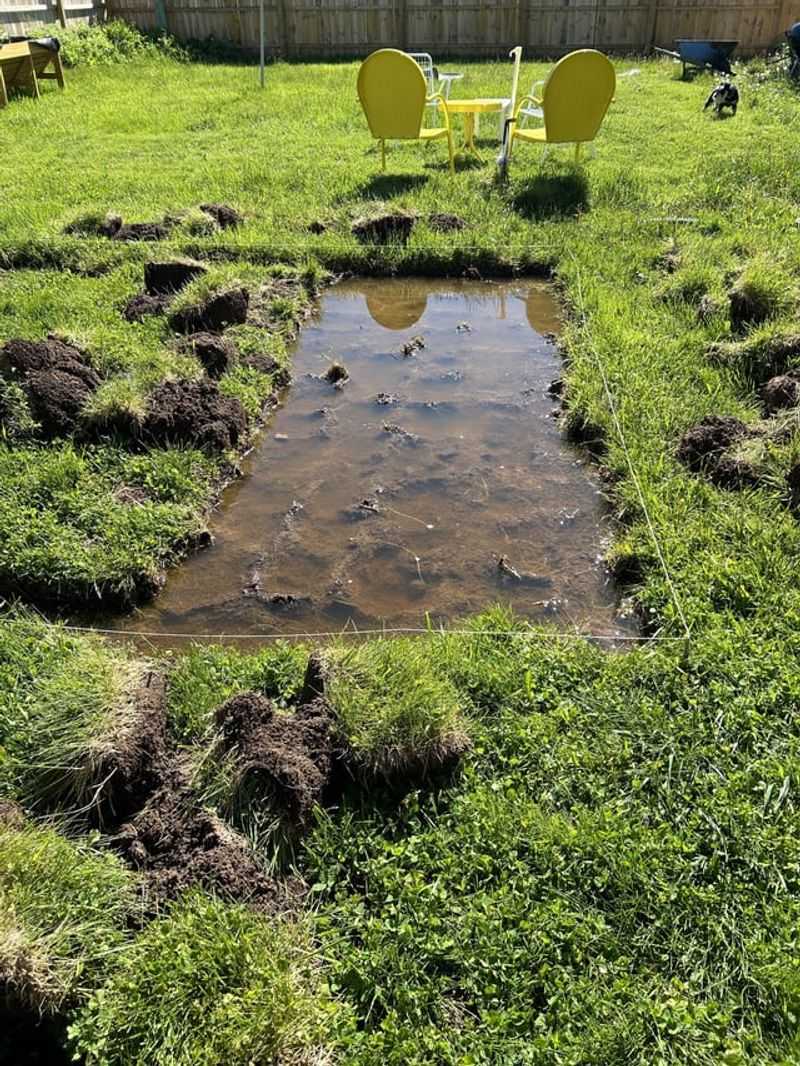
Clay soil dominates much of Georgia, and anyone who’s tried to dig a hole knows how heavy and sticky it gets when wet. This dense soil structure holds water like a sponge, releasing it slowly over days or weeks.
Beds with high clay content stay saturated long after sandy or loamy areas dry out completely.
Tiny clay particles pack together tightly, leaving minimal space for air or water movement. When rain soaks into clay beds, it essentially gets trapped there because drainage happens so slowly.
You might see standing water on the surface hours after a storm because the soil below can’t accept more moisture.
Georgia’s red clay is notorious for creating drainage problems that frustrate gardeners and homeowners alike. This soil type swells when wet and shrinks when dry, creating cracks during droughts.
The expansion and contraction cycle affects plant roots and makes moisture levels inconsistent.
Beds with heavy clay often puddle during rains because water can’t infiltrate fast enough. Instead of soaking in immediately, water sits on the surface until it slowly percolates downward.
This surface ponding keeps soil saturated much longer than well-draining beds.
Plant roots struggle in waterlogged clay because they need oxygen as much as water. Constantly saturated soil suffocates roots, leading to stunted growth and unhealthy plants.
Many species simply can’t tolerate the wet conditions that heavy clay creates.
Amending clay soil with organic matter improves drainage, but it’s a long-term project requiring consistent effort. Compost, aged manure, or leaf mold gradually lightens clay’s texture.
Georgia gardeners often spend years working to improve their native clay soil.
Some homeowners install raised beds to avoid dealing with clay altogether. Building up soil above the clay layer provides better drainage and easier root penetration.
This solution works well for vegetable gardens and ornamental plantings.
Clay’s water-holding capacity can be beneficial during droughts because plants access stored moisture. The same characteristic that creates wet problems in spring provides insurance during summer dry spells.
Understanding this dual nature helps you work with clay rather than against it.
Selecting plants adapted to Georgia’s clay soils makes gardening much easier than fighting natural conditions. Many native species evolved to handle heavy, moisture-retentive soil.
Dogwoods, beautyberries, and switchgrass all tolerate clay well.