These Groundcovers Keep Weeds From Taking Over Your Georgia Garden
Weeds have a way of filling every open inch of a Georgia garden if nothing is there to stop them. Bare soil doesn’t stay bare for long, especially once temperatures start warming.
That’s where groundcovers quietly do their best work. Instead of fighting weeds one by one, these plants spread, shade the soil, and limit the space weeds need to get established.
In Georgia’s growing conditions, the right groundcovers can step in early and keep beds looking controlled with far less effort. Using groundcovers isn’t about creating a perfect carpet overnight.
It’s about choosing plants that naturally compete well and hold their ground as the season progresses.
When they’re well matched to the site, weeds lose their advantage, and the garden becomes easier to manage instead of a constant cleanup project.
1. Creeping Phlox
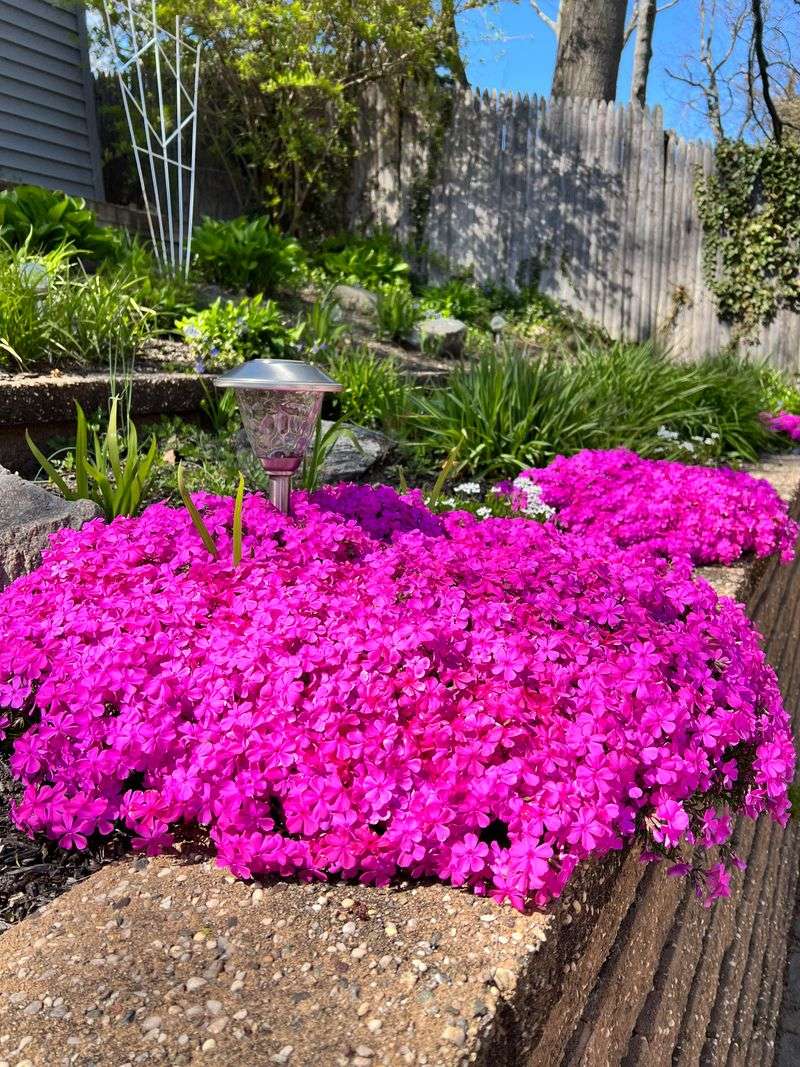
Gardeners across Georgia fall in love with this stunning groundcover when it bursts into bloom each spring, transforming ordinary garden beds into carpets of vivid color. Creeping phlox spreads quickly once established, forming tight mats that leave no room for weeds to sneak through.
The foliage stays semi-evergreen throughout our mild Georgia winters, providing year-round coverage even when the flowers aren’t showing off.
This low-growing plant reaches only about six inches tall but spreads up to two feet wide, making it perfect for covering large areas without much height.
The flowers come in shades of pink, purple, white, and blue, creating eye-catching displays that last for several weeks in early spring. Pollinators absolutely adore the blooms, bringing beneficial insects to your garden when they’re just waking up from winter.
Creeping phlox handles Georgia’s full sun conditions beautifully, though it appreciates some afternoon shade in the hottest parts of summer. The plant tolerates drought once its roots establish, making it ideal for slopes and areas where watering proves difficult.
Well-drained soil is essential because soggy conditions can cause problems, but our sandy or amended clay soils work wonderfully. You’ll find this groundcover particularly useful on hillsides where erosion concerns you and weeds tend to take over.
The dense root system holds soil in place while the thick foliage blocks weed seeds from germinating. Maintenance stays minimal after the first year, requiring only occasional trimming after flowering to keep plants compact and encourage bushier growth for next season’s spectacular display.
2. Asiatic Jasmine
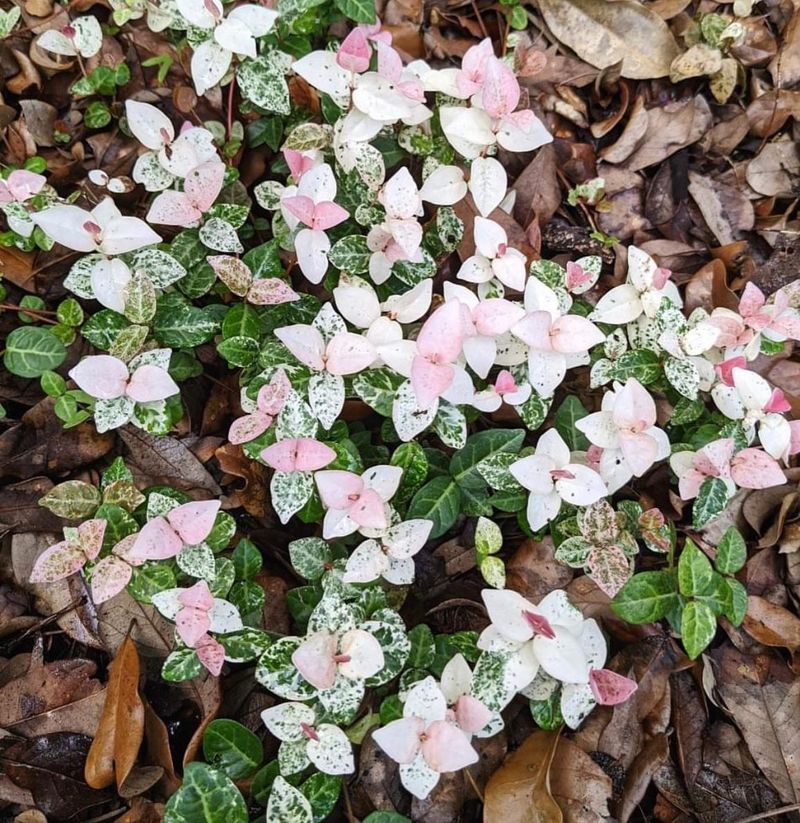
Walk through established neighborhoods in Georgia and you’ll likely spot this workhorse groundcover thriving in yards where homeowners want beauty without constant maintenance.
Asiatic jasmine creates an incredibly dense mat of small, glossy leaves that weeds simply cannot penetrate once the plants fill in completely.
The evergreen foliage stays attractive throughout all four seasons, providing consistent coverage that looks professionally maintained even when you’re barely touching it. This groundcover spreads through trailing stems that root wherever they touch soil, allowing it to cover large areas relatively quickly.
Plants grow about six to twelve inches tall, creating a uniform appearance that works beautifully as a lawn alternative in shady spots where grass struggles. The thick growth pattern means you’ll spend far less time pulling weeds compared to traditional mulched beds.
Your Georgia Garden Changes Every Week. Your Plan Should Too.
Gardening in Georgia changes quickly throughout the season. Every Friday you’ll receive a simple weekly plan showing exactly what to plant, prune, fertilize, harvest, and protect so you never miss the right timing.
Asiatic jasmine adapts remarkably well to Georgia’s varied conditions, tolerating everything from deep shade to partial sun exposure. It handles our clay soils without complaint and becomes quite drought-tolerant once established, though regular watering during the first growing season helps plants spread faster.
The groundcover even tolerates moderate foot traffic, making it practical for pathways and areas between stepping stones. You’ll appreciate how this plant requires minimal care after it fills in your garden beds.
An annual trimming with a mower or string trimmer set on high keeps plants looking fresh and encourages denser growth. Asiatic jasmine rarely suffers from pest or disease problems in Georgia, and its aggressive growth habit means it outcompetes weeds naturally without any chemical assistance needed in most situations.
3. Creeping Jenny
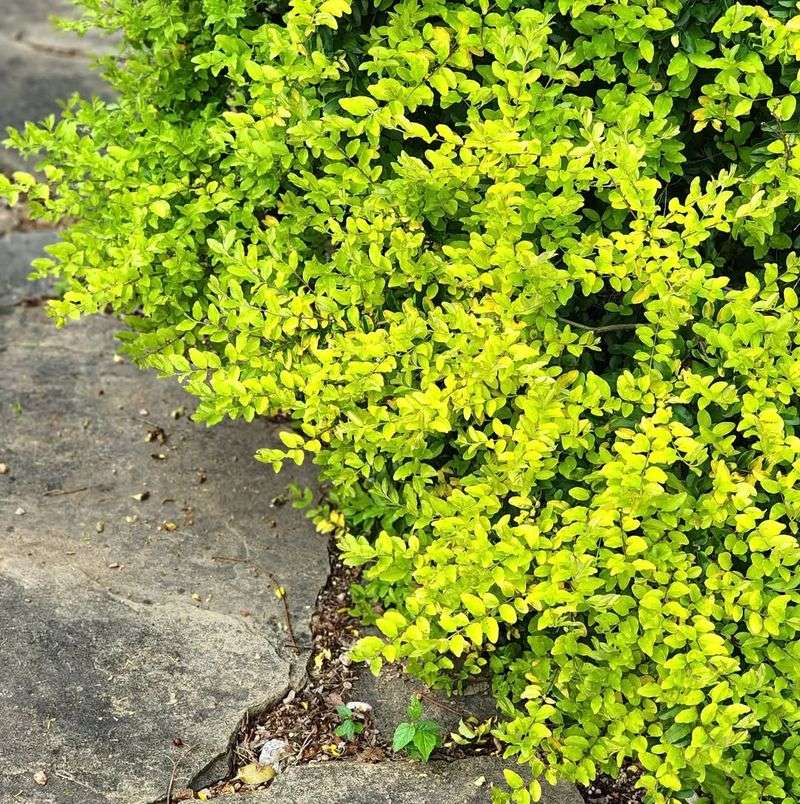
Bright, cheerful foliage that practically glows in shady spots makes this groundcover a favorite for Georgia gardeners dealing with difficult areas under trees and along foundations.
Creeping jenny produces round, coin-shaped leaves in brilliant chartreuse or golden-green shades that brighten dark corners where little else thrives.
The trailing stems spread rapidly across soil surfaces, forming dense mats that smother weed seedlings before they gain a foothold. This fast-growing plant stays low to the ground, typically reaching only two to four inches in height while spreading several feet in all directions.
Small yellow flowers appear in summer, adding another layer of interest to the already attractive foliage. The plant’s vigorous growth habit means it fills in bare spots quickly, which proves especially valuable in newly planted areas where weeds love to establish.
Creeping jenny performs best in Georgia’s partial to full shade locations, though it tolerates some morning sun if given adequate moisture. The plant actually prefers our heavier clay soils when they retain some dampness, making it perfect for those spots in your yard that stay slightly wet.
Areas near downspouts, low-lying sections, and the edges of water features become ideal growing locations. You’ll find this groundcover particularly useful as an edging plant along pathways and borders, where its trailing habit creates soft, flowing lines.
The plant can become enthusiastic in spreading, so consider using it in contained areas or places where aggressive growth actually helps your landscaping goals. Regular moisture keeps the foliage looking its best, and the plant requires virtually no other maintenance once established in appropriate Georgia locations.
Because creeping jenny spreads aggressively, it’s best used in contained areas where it won’t spread into natural spaces.
4. Liriope
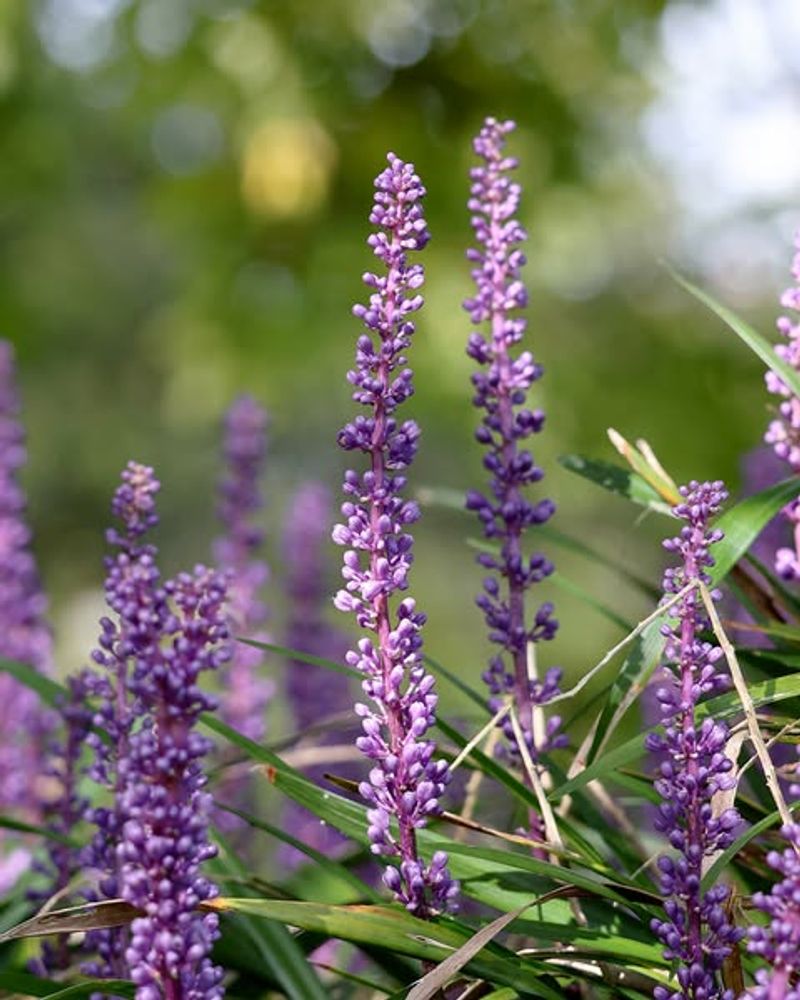
Southern gardeners have relied on this tough-as-nails groundcover for generations, and its popularity continues because it simply refuses to fail in Georgia’s challenging conditions. Liriope produces grass-like foliage that grows in dense clumps, creating a textured groundcover that weeds find nearly impossible to penetrate.
The dark green leaves provide year-round interest, and spikes of purple or white flowers emerge in late summer when many other plants look tired from the heat.
Plants typically grow twelve to eighteen inches tall depending on the variety, with clumping types staying more contained and spreading varieties gradually colonizing larger areas.
The foliage remains evergreen through Georgia winters, looking fresh and attractive even during our coldest months. Black berries follow the flowers, adding another season of interest and providing food for wildlife.
This groundcover handles virtually any light condition Georgia throws at it, from deep shade to full sun exposure. It tolerates our clay soils, drought conditions once established, and even occasional flooding in low spots.
Liriope grows so reliably in our state that landscape professionals often specify it for commercial projects where maintenance budgets stay tight and plant performance must stay consistent. You’ll discover that liriope works beautifully as edging along walkways, mass plantings under trees, and border plants in mixed beds throughout Georgia landscapes.
The dense root system prevents weeds from establishing while also helping control erosion on slopes. Maintenance couldn’t be simpler: just mow or trim plants back to about three inches in late winter before new growth emerges, removing old foliage and keeping plants looking tidy for another growing season ahead.
5. Ajuga (Bugleweed)
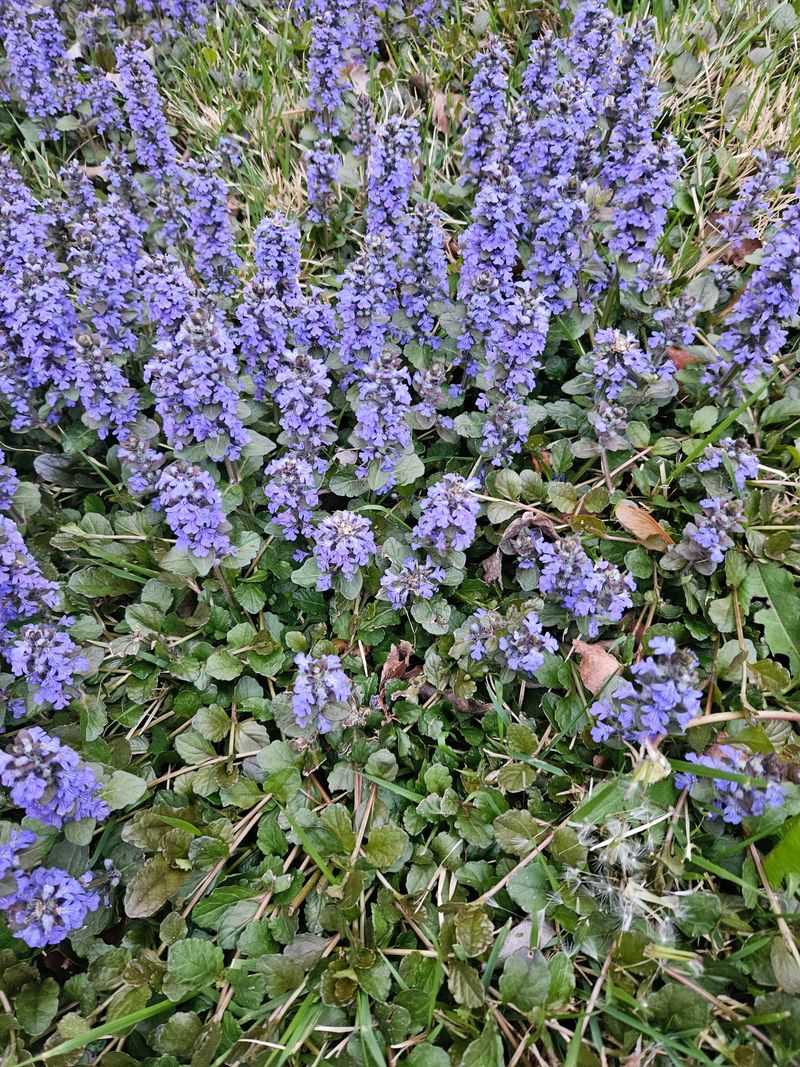
Colorful foliage that ranges from deep burgundy to bronze creates year-round visual interest with this fast-spreading groundcover that Georgia gardeners adore for shady spots.
Ajuga forms dense rosettes of leaves that overlap tightly, creating an impenetrable carpet that blocks light from reaching weed seeds below.
Spikes of blue, purple, or white flowers shoot up in spring, adding vertical interest and attracting bees and butterflies to your garden when pollinators need early-season nectar sources. Plants stay quite low, typically reaching only four to six inches in height without flowers, though the bloom spikes can extend another few inches upward.
The groundcover spreads through runners that root as they go, allowing ajuga to fill in bare areas relatively quickly. Different varieties offer foliage colors including chocolate-brown, deep purple, and variegated patterns that brighten dark corners where other plants struggle.
This shade-loving groundcover thrives in Georgia’s woodland gardens, under trees, and along shaded foundations where grass refuses to grow. It prefers consistently moist soil but tolerates our clay ground once established and handles brief dry spells without significant stress.
Ajuga performs best with some protection from our intense afternoon sun, though morning light helps intensify the foliage colors. You’ll appreciate how ajuga requires minimal maintenance while delivering maximum impact in Georgia landscapes.
The plant stays evergreen through our winters, looking attractive even when temperatures occasionally dip below freezing.
6. Vinca Minor (Periwinkle)
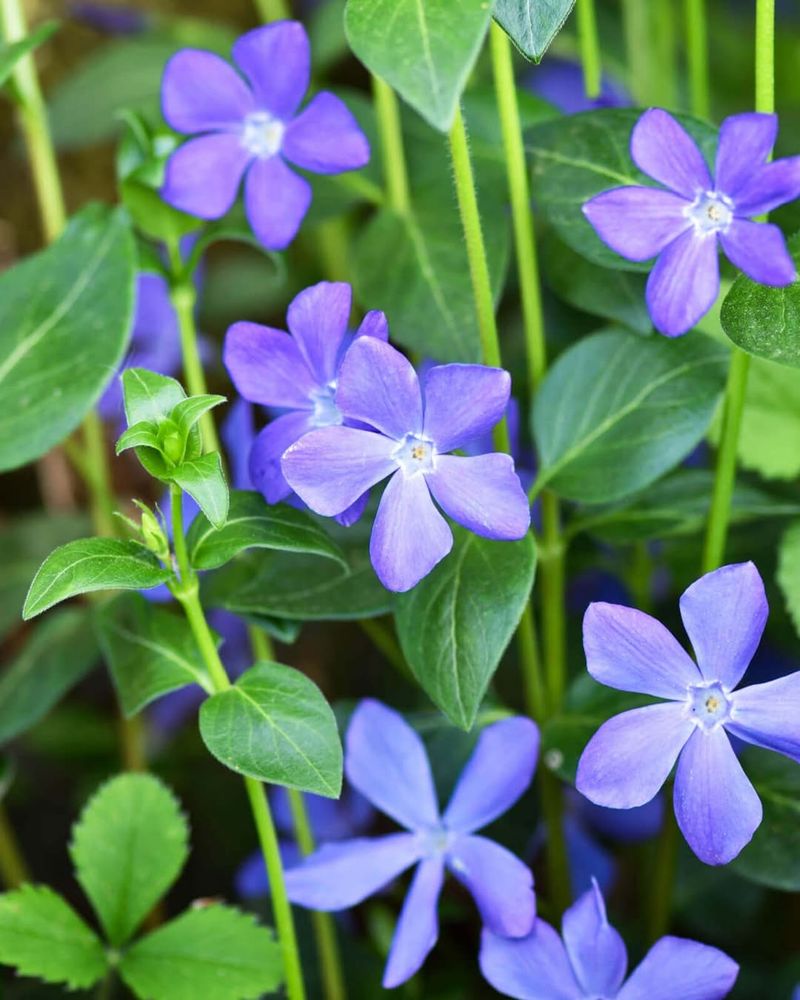
Traditional Southern gardens have featured this classic groundcover for decades because it delivers reliable performance in challenging shade conditions where weeds typically dominate.
Vinca minor produces glossy, dark green leaves on trailing stems that weave together into dense mats, effectively blocking weed growth while adding elegance to Georgia landscapes.
Delicate purple-blue flowers appear in early spring, dotting the foliage with color just when gardens need brightening after winter’s dormancy. The evergreen foliage stays attractive throughout all seasons in Georgia, maintaining its deep green color even during winter months.
Plants grow about six inches tall and spread through trailing vines that root at nodes, gradually covering large areas without becoming overly aggressive like some groundcovers. The flowers bloom most heavily in spring but often produce scattered blooms throughout summer in our climate.
This shade-tolerant groundcover excels in Georgia’s woodland settings, under mature trees, and along shaded slopes where erosion concerns homeowners. It adapts to our clay soils when amended with organic matter and becomes quite drought-resistant once established.
Vinca minor handles the dense shade cast by buildings and evergreen trees where few other flowering plants survive. You’ll find this groundcover particularly valuable for covering large areas where mowing proves difficult or impractical in Georgia yards.
The dense growth suppresses weeds naturally while requiring almost no maintenance beyond occasional trimming to keep plants within bounds. Vinca minor should be monitored to prevent it from spreading beyond planted areas, especially near wooded landscapes.
7. Dwarf Mondo Grass
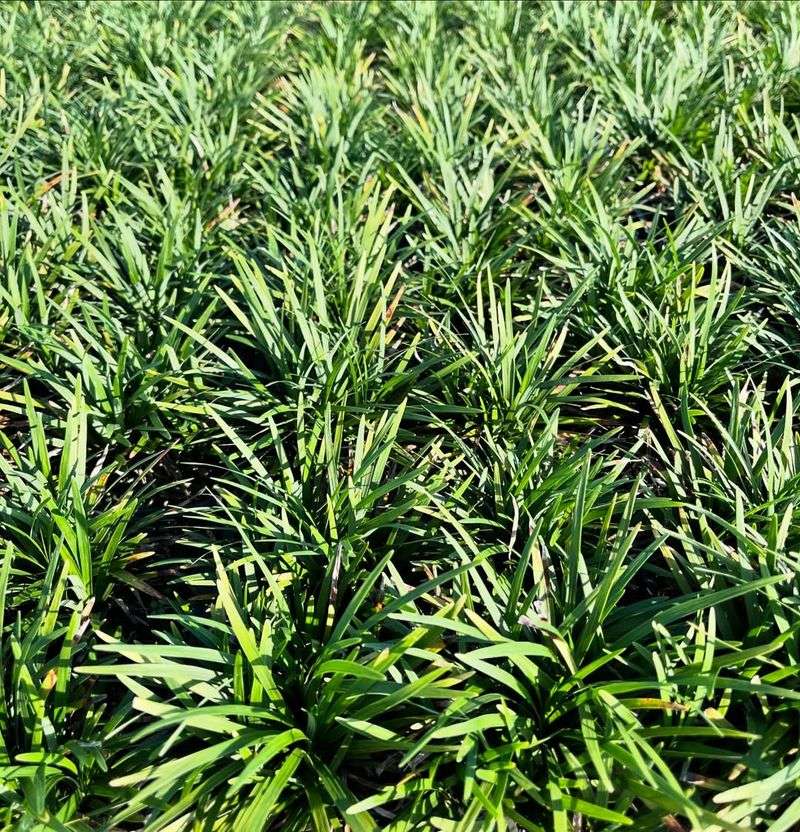
Sophisticated texture and almost black-green coloring make this groundcover a designer favorite for contemporary Georgia landscapes where visual impact matters as much as weed suppression.
Dwarf mondo grass produces fine, grass-like foliage that grows in dense tufts, creating a lush carpet that weeds cannot penetrate.
The dark foliage provides dramatic contrast against lighter-colored plants and hardscaping, adding depth and interest to garden designs throughout our state. Plants stay remarkably short, typically reaching only two to four inches in height, making them perfect for tight spaces between stepping stones and as edging along pathways.
Small purple flowers hide within the foliage in summer, followed by blue-black berries that add subtle interest. The groundcover spreads slowly but steadily through underground rhizomes, gradually filling in to create seamless coverage.
This shade-loving plant thrives in Georgia’s woodland gardens and shaded borders where it receives protection from our intense summer sun. It tolerates our clay soils well and becomes quite drought-resistant once established, though regular moisture during the first year helps plants spread more quickly.
Dwarf mondo grass handles foot traffic better than many groundcovers, making it practical for areas that see occasional walking. You’ll discover that this groundcover requires virtually no maintenance once established in Georgia landscapes.
The evergreen foliage looks fresh throughout winter, and plants rarely need trimming or dividing. Dwarf mondo grass naturally suppresses weeds through its dense growth habit while adding refined elegance to garden designs.
The plant works beautifully in Asian-inspired gardens, modern landscapes, and traditional settings alike, proving its versatility for homeowners throughout Georgia seeking low-maintenance solutions.
8. Native Frogfruit
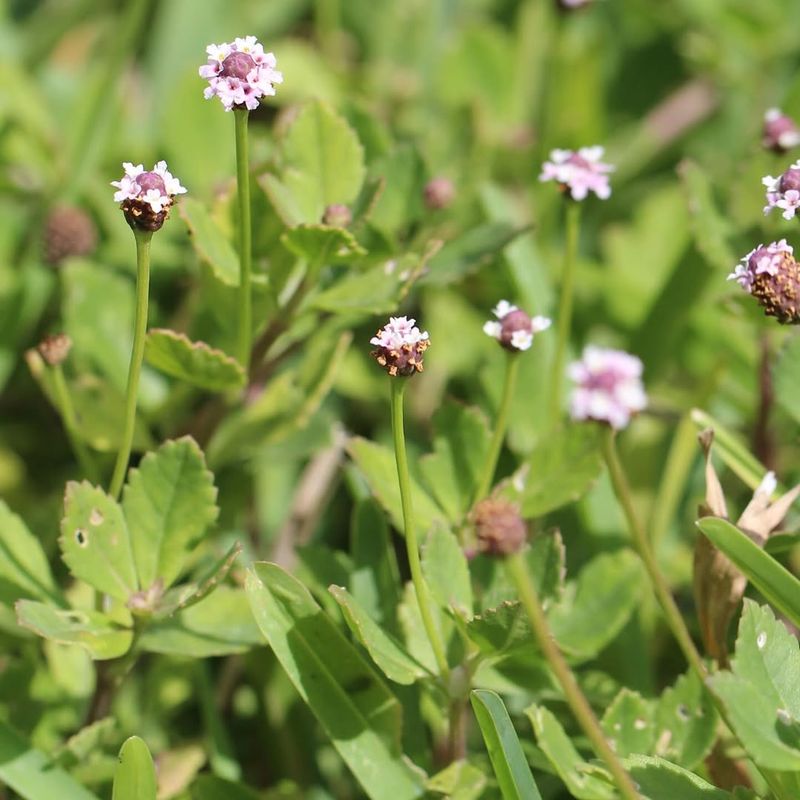
Georgia’s native plant enthusiasts celebrate this homegrown groundcover that supports local wildlife while aggressively suppressing weeds in sunny locations. Frogfruit spreads rapidly through trailing stems that root at every node, creating dense mats that leave absolutely no room for unwanted plants to establish.
Tiny white or lavender flowers bloom continuously from spring through fall, attracting an incredible array of butterflies, bees, and other beneficial insects to gardens throughout our state.
The low-growing foliage stays under three inches tall, hugging the ground tightly and creating a living mulch that conserves soil moisture while blocking weed seeds from germinating.
Plants spread enthusiastically once established, making frogfruit ideal for covering large areas quickly.
This sun-loving groundcover thrives in Georgia’s hot, humid summers, actually performing better than many exotic alternatives. It tolerates our clay soils, handles drought conditions once established, and even grows in sandy soils where other plants struggle.
Frogfruit works beautifully as a lawn alternative in sunny areas, requiring far less water and maintenance than traditional turf grass. You’ll love how this native groundcover supports Georgia’s ecosystem while solving your weed problems naturally.
The flowers provide nectar for native pollinators, including several butterfly species that depend on frogfruit as a host plant for their caterpillars. The plant tolerates moderate foot traffic and bounces back quickly from occasional mowing.
Frogfruit requires no fertilizer, pest control, or special care once established, making it perfect for environmentally conscious gardeners throughout Georgia who want beautiful, functional landscapes that work with nature.