These 9 Shade Trees Grow Fast And Actually Thrive In California
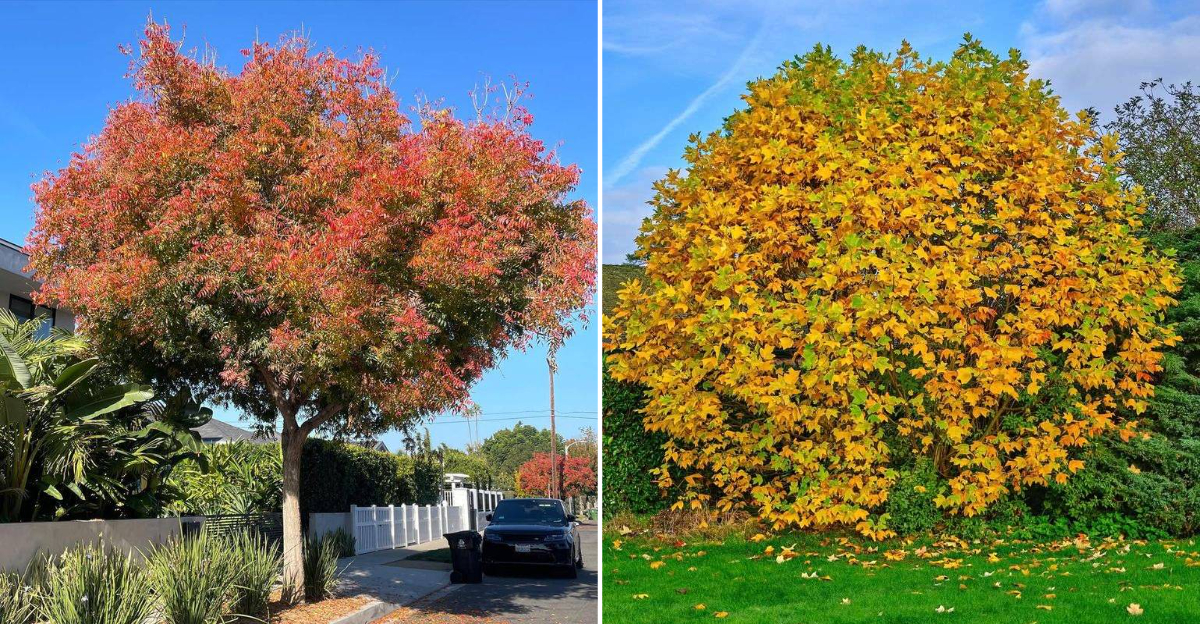
California homeowners want shade fast, but not every tree can handle heat, drought, and tough soil. Some grow quickly and still struggle.
Others shoot up fast and thrive in local conditions without constant care. The difference comes down to choosing trees built for this climate.
The right shade trees establish strong roots, handle hot summers, and create wide canopies that actually cool your yard. They also boost curb appeal and make outdoor spaces more comfortable year-round.
Instead of waiting a decade for results, smart choices can deliver noticeable shade in just a few seasons. These fast-growing trees aren’t just quick.
They’re resilient, reliable, and made for California landscapes. Get ready to discover the shade trees that grow hard, grow strong, and actually last.
1. California Sycamore (Platanus racemosa)
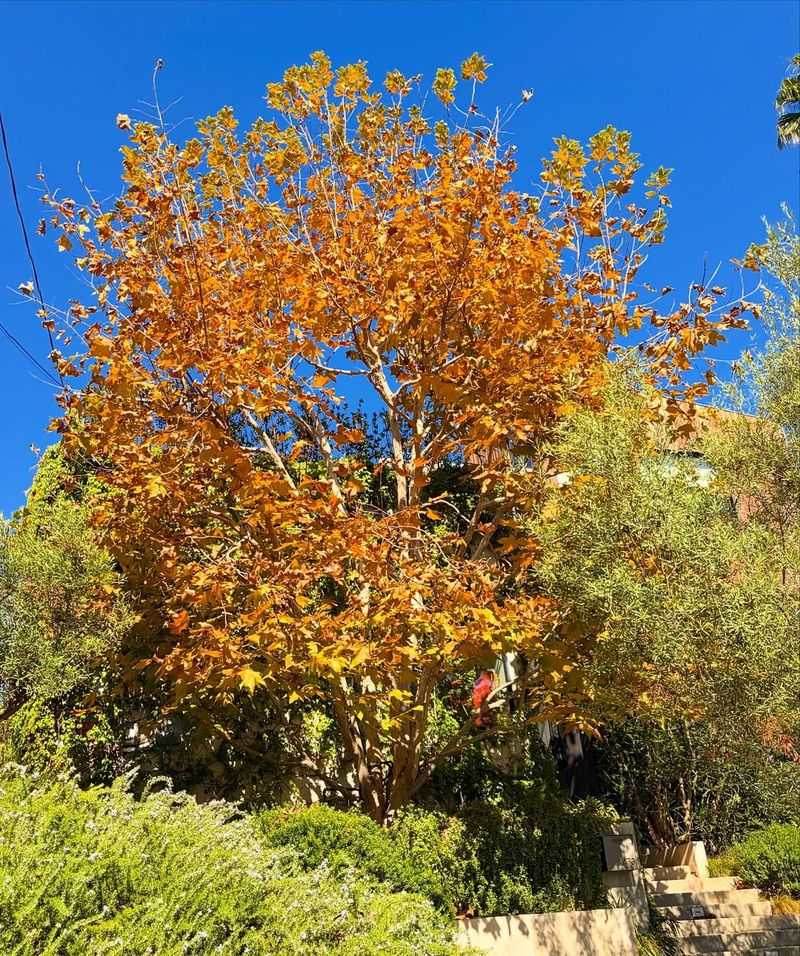
Your backyard feels like an oven by July, and you’re tired of retreating indoors every afternoon. California Sycamore delivers massive shade fast, often adding 2–3 feet per year under favorable growing conditions.
This native tree can reach 40-80 feet tall with an equally wide canopy that cools your home naturally. It thrives in full sun across most California climates, from coastal valleys to inland areas.
The tree prefers deep watering during establishment and becomes moderately drought tolerant once well established. Its distinctive peeling bark in white, tan, and gray patches adds year-round visual interest to your landscape.
California Sycamore performs best with adequate root space and occasional summer water during extreme heat. The tree naturally grows along streambeds, so it appreciates deeper soil moisture.
Its broad leaves create dense summer shade that can reduce your air conditioning costs significantly. This native adapts well to California’s clay or sandy soils and tolerates urban conditions better than many fast-growers.
The sycamore drops leaves in winter, allowing warming sunlight to reach your home when you need it most. Consider planting it away from patios since it sheds bark and leaves throughout the year.
2. Coast Redwood (Sequoia sempervirens)
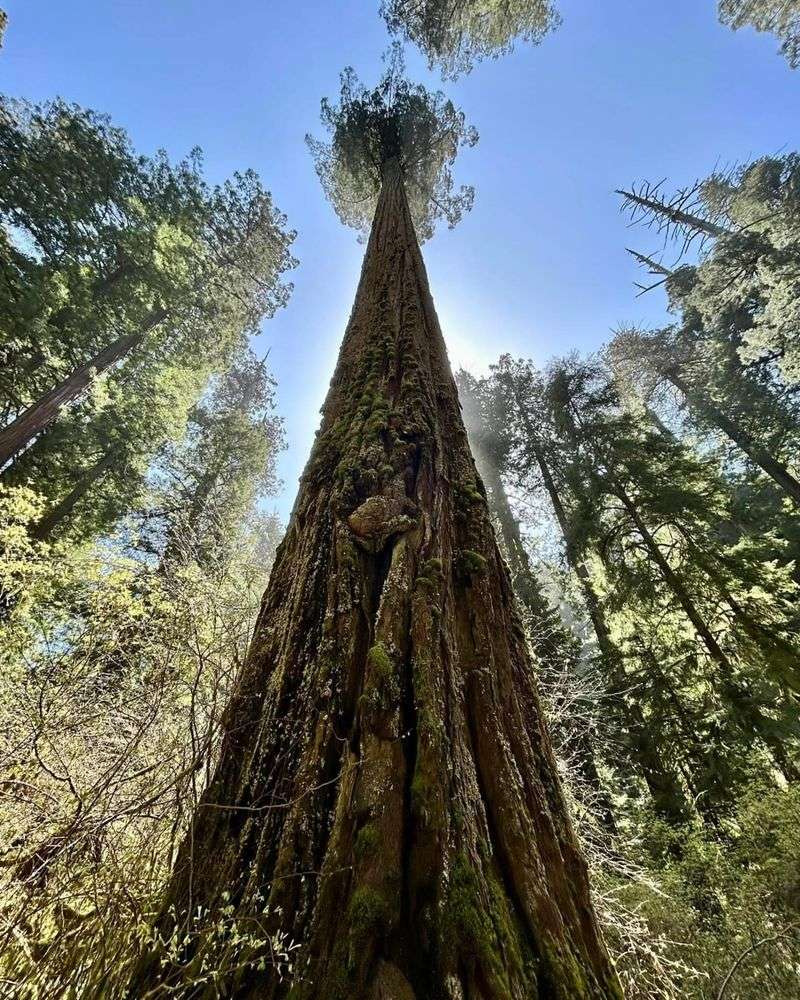
Coastal fog keeps your mornings cool, but you need year-round shade that grows quickly without constant watering.
Coast Redwood shoots upward remarkably fast in the right conditions, gaining 2-3 feet annually in coastal and Bay Area climates.
This evergreen giant provides permanent shade while naturally thriving in California’s fog belt. The tree performs best within 30 miles of the coast where marine air moderates temperatures.
It tolerates full sun to partial shade and prefers well-draining soil with regular moisture during establishment. Once mature, fog moisture and deeper root systems help reduce summer water stress.
Coast Redwood can eventually reach 60-100 feet in residential settings, though it grows more slowly inland. Its dense evergreen canopy blocks summer heat while providing windbreak protection year-round.
The tree’s vertical growth habit means it won’t overwhelm smaller yards as quickly as spreading species. This California native adapts to various soil types but struggles in hot, dry interior valleys.
The redwood’s shade remains consistent through all seasons, making it ideal for cooling spaces you use year-round. Its fibrous root system generally causes fewer hardscape problems than some aggressive surface-rooted species when given adequate space.
Your California Garden Changes Every Week. Your Plan Should Too.
Gardening in California changes quickly throughout the season. Every Friday you’ll receive a simple weekly plan showing exactly what to plant, prune, fertilize, harvest, and protect so you never miss the right timing.
3. Fremont Cottonwood (Populus fremontii)
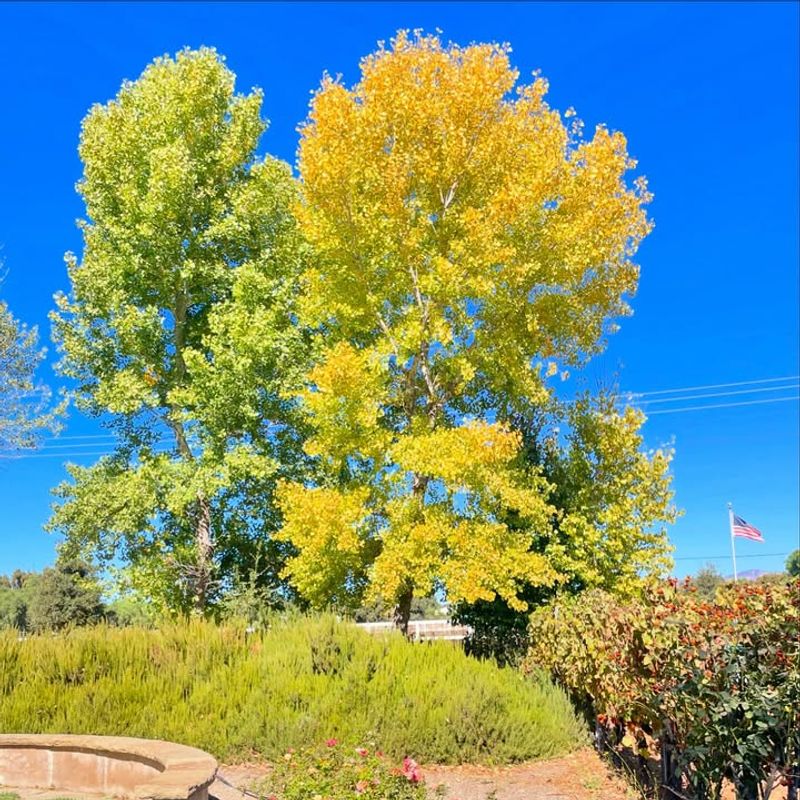
Your inland valley yard bakes under 105-degree heat, and young trees struggle to establish before providing meaningful shade. Fremont Cottonwood grows faster than almost any California native, often adding 4-6 feet per year.
This deciduous giant can reach 40-90 feet tall, creating cooling shade that makes your outdoor spaces usable again. The tree thrives in full sun across California’s Central Valley, inland Southern California, and desert edges.
It naturally grows along rivers and streams, so it appreciates deep watering during establishment and summer heat waves.
Once established with a 3–4 year root system, it becomes more drought resilient than many fast-growing trees but still performs best with periodic deep watering.
Fremont Cottonwood performs best in deep soil where roots can spread without restriction. Its broad, heart-shaped leaves flutter in the slightest breeze, creating moving shade patterns and natural evaporative cooling.
The tree drops leaves in fall, allowing winter sun to warm your home when temperatures drop. This native adapts to California’s alkaline soils and tolerates occasional flooding better than most species.
The cottonwood’s rapid growth means you’ll enjoy substantial shade within 5-7 years rather than waiting decades. Be aware that it sheds cotton-like seeds in late spring and has aggressive roots that seek water sources.
4. Desert Willow (Chilopsis linearis)
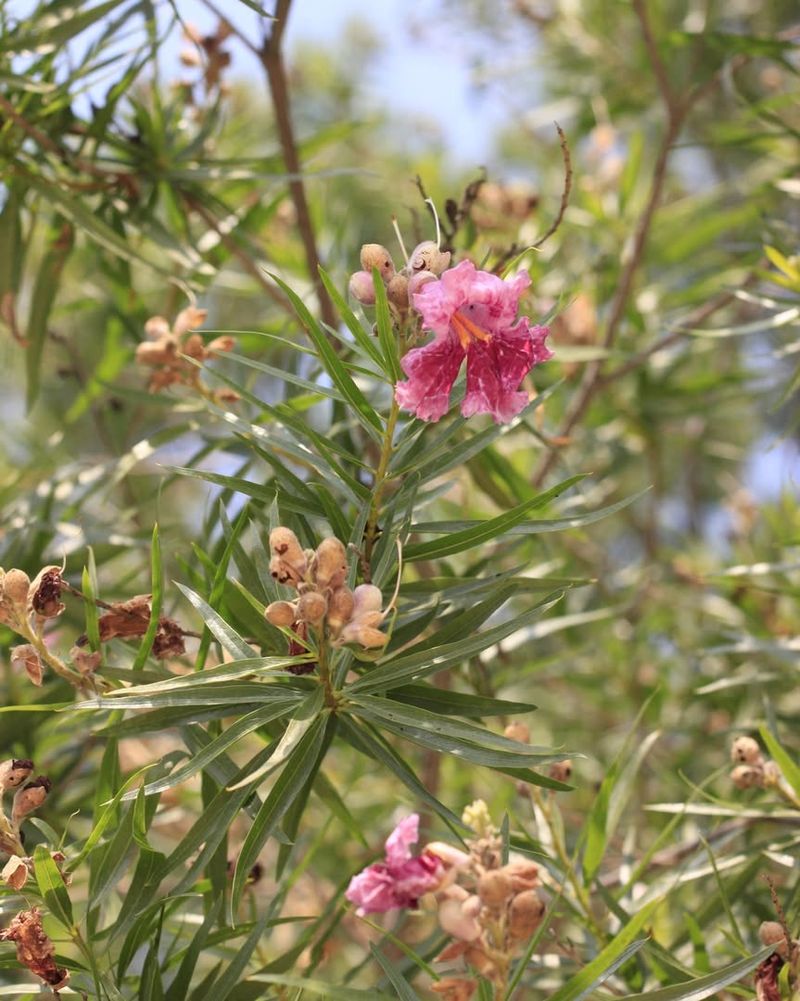
Hot desert conditions and water restrictions make traditional shade trees impossible, but you still need relief from scorching sun. Desert Willow grows quickly in California’s driest regions while using minimal water once established.
This small to medium tree reaches 15-30 feet tall, providing filtered shade perfect for patios and smaller yards. It thrives in full sun across Southern California deserts, inland valleys, and foothill areas with hot summers.
TThe tree actually prefers fast-draining soil and needs minimal supplemental water once established. Its willowy form and open canopy create dappled shade rather than dense coverage.
Desert Willow produces stunning trumpet-shaped flowers in pink, purple, or white from spring through fall. These blooms attract hummingbirds while the tree’s airy structure allows cooling breezes to pass through your outdoor spaces.
The filtered shade it provides is often more comfortable than heavy canopy trees in desert heat. This California native adapts to poor soils, reflected heat, and extreme temperatures that kill other fast-growers.
The tree grows 2-3 feet per year in favorable conditions, establishing useful shade within just a few seasons. It drops leaves in winter, remaining dormant during cooler months when shade isn’t needed anyway.
5. California Bay Laurel (Umbellularia californica)
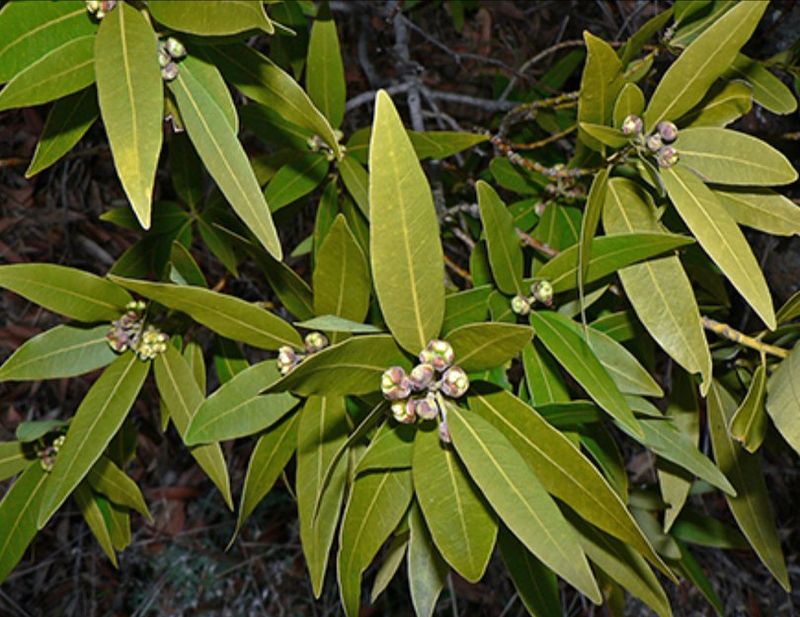
You want fast-growing shade that stays green year-round without creating a massive maintenance burden.
California Bay Laurel grows steadily at 1-2 feet per year while providing dense evergreen coverage that works in both sun and partial shade.
This versatile native reaches 20-40 feet tall in residential landscapes, creating reliable cooling shade through every season. The tree performs well along the coast, in valleys, and in foothill areas with moderate climates.
It tolerates full sun to partial shade and adapts to various soil types from clay to sandy loam. Bay Laurel needs regular water during establishment but becomes moderately drought tolerant once its root system develops.
Its aromatic leaves release a pleasant scent when crushed, and the tree’s dense canopy blocks intense summer sun effectively. The evergreen nature means your yard maintains privacy and wind protection even in winter.
This shade remains consistent, helping reduce cooling costs during California’s increasingly long heat seasons. California Bay Laurel grows naturally in canyons and slopes throughout the state, proving its adaptability to local conditions.
The tree generally experiences fewer serious pest or disease problems compared to many faster-growing exotic species.
Its moderate growth rate and manageable size make it ideal for smaller yards where giant trees would eventually overwhelm the space.
6. London Plane Tree (Platanus × acerifolia)
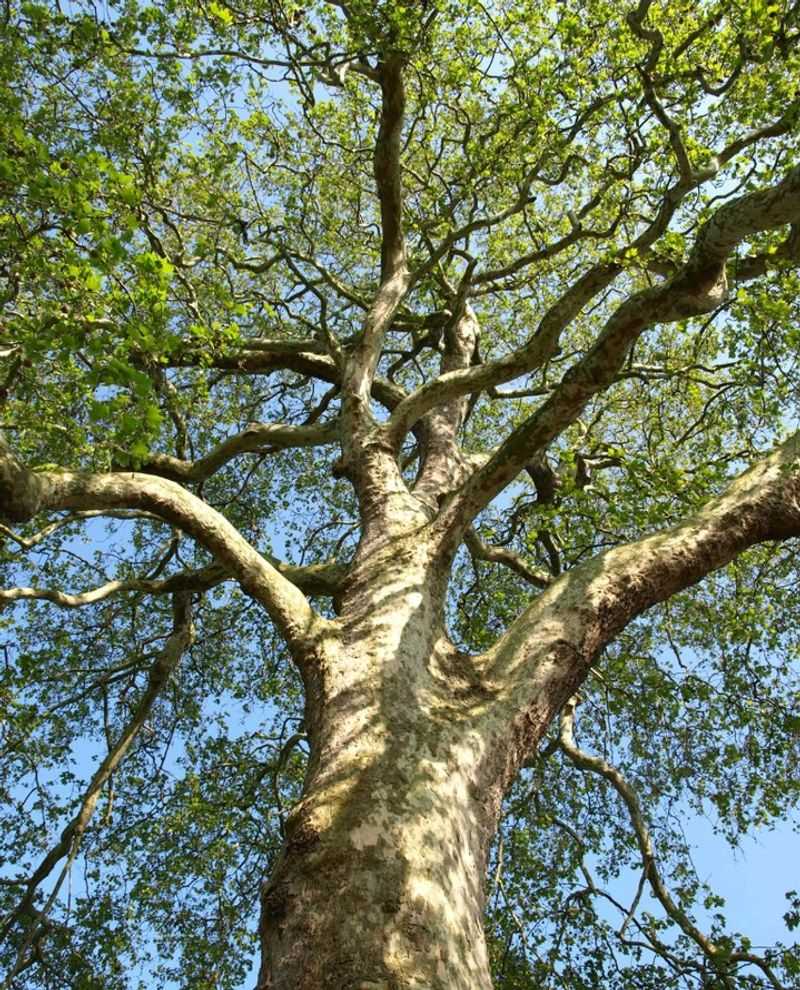
Urban heat islands make your neighborhood unbearable, and you need tough shade trees that actually survive street conditions. London Plane Tree grows rapidly at 3-5 feet per year while tolerating pollution, compacted soil, and reflected heat from pavement.
This hybrid reaches 60-80 feet tall with a broad canopy that dramatically cools sidewalks and homes. The tree thrives in full sun across California’s diverse climates from coastal areas to inland valleys.
It adapts to various soil types and tolerates both drought and occasional flooding once established. Regular deep watering during the first few summers helps it develop the robust root system that supports fast growth.
London Plane’s distinctive exfoliating bark in cream, tan, and olive-green patches provides year-round visual interest beyond its shade benefits.
The large maple-like leaves create dense summer coverage that can significantly reduce surface and localized air temperatures through shade and evapotranspiration.
This cooling effect reduces energy costs while making outdoor spaces comfortable during heat waves. The tree has proven reliable in California municipalities for decades, demonstrating its ability to thrive in challenging urban conditions.
Its deciduous nature allows winter sun penetration when you want passive solar heating. Be prepared for significant leaf drop in fall and occasional fruit balls that require cleanup throughout the year.
7. Chinese Pistache (Pistacia chinensis)
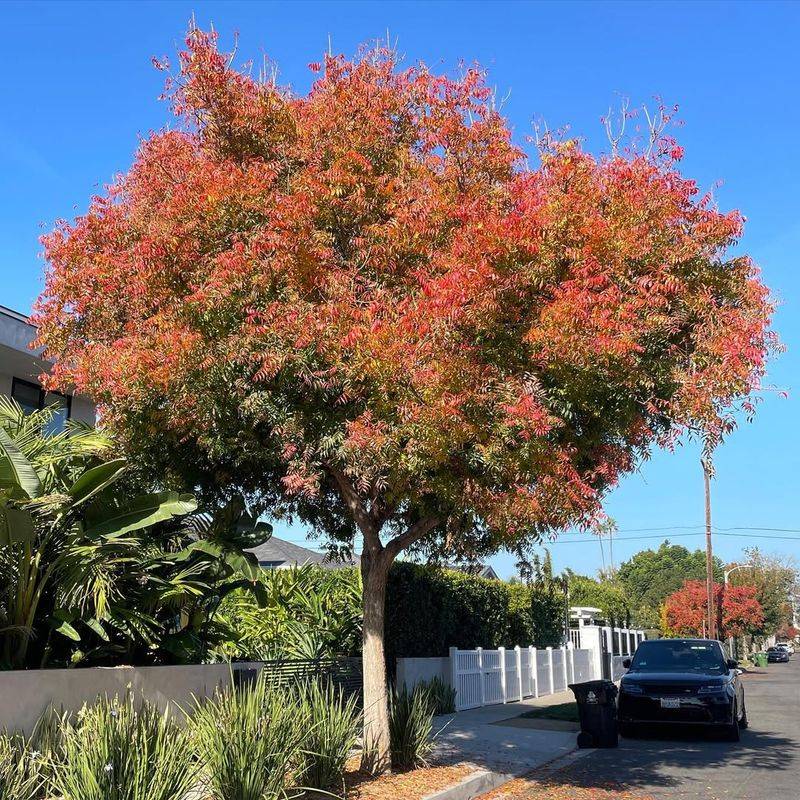
Rising water bills and drought restrictions make you hesitate to plant any tree, but summer heat forces you indoors every afternoon.
Chinese Pistache grows steadily at 2-3 feet per year while becoming extremely drought-tolerant once established.
This medium-sized tree reaches 25-40 feet tall, providing substantial shade without the water demands of thirstier species. It thrives in full sun across most inland and warm coastal California climates, from hot valleys to foothill areas.
The tree tolerates poor soil, alkaline conditions, and reflected heat that kills less adaptable species. After two years of establishment watering, Chinese Pistache requires minimal supplemental irrigation even during extended dry periods.
Its rounded canopy creates comfortable shade for patios and outdoor living spaces while the tree remains manageable in size. Chinese Pistache delivers spectacular fall color in orange, red, and crimson shades rarely seen in California landscapes.
This seasonal display adds ornamental value beyond the tree’s practical cooling benefits. The tree rarely suffers from serious pest or disease problems common to faster-growing species.
Its moderate growth rate means less aggressive roots that typically won’t damage sidewalks or foundations.
Chinese Pistache drops leaves in winter, allowing solar gain when you want natural warmth, then provides dense shade again each spring when temperatures climb.
8. Tulip Tree (Liriodendron tulipifera)
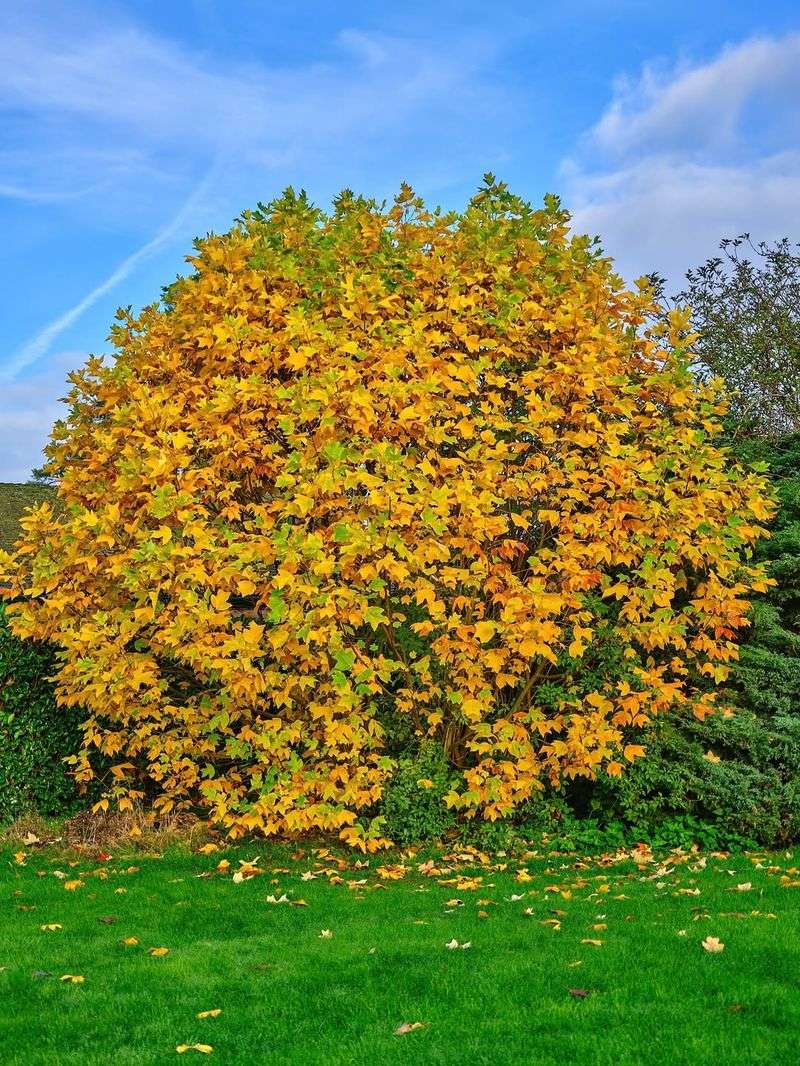
Your large yard needs substantial shade quickly, but you want something more interesting than the usual suspects.
Tulip Tree grows remarkably fast at 2-4 feet per year, reaching 60-90 feet tall with a straight trunk and pyramidal form.
This eastern native can adapt well to select coastal and Bay Area microclimates, providing massive shade within a decade.
The tree performs best in coastal and Bay Area climates with moderate temperatures and adequate moisture.
It prefers full sun and deep, well-draining soil with regular water during establishment and dry summers. Tulip Tree struggles in hot, dry interior valleys but thrives where marine influence moderates temperature extremes.
Its unique tulip-shaped flowers in yellow-green and orange appear in late spring, adding ornamental interest beyond shade benefits. The distinctively shaped leaves turn golden yellow in fall before dropping.
This deciduous habit allows winter sun to reach your home when passive heating is beneficial. Tulip Tree creates dense summer shade that significantly reduces cooling costs while its vertical form doesn’t spread as widely as some species.
The tree needs space to develop properly since it can become quite tall in favorable conditions. Its relatively clean growth habit means less maintenance than messy cottonwoods or sycamores, though it does drop leaves seasonally like any deciduous tree.
9. Hybrid Poplar (Populus hybrids)
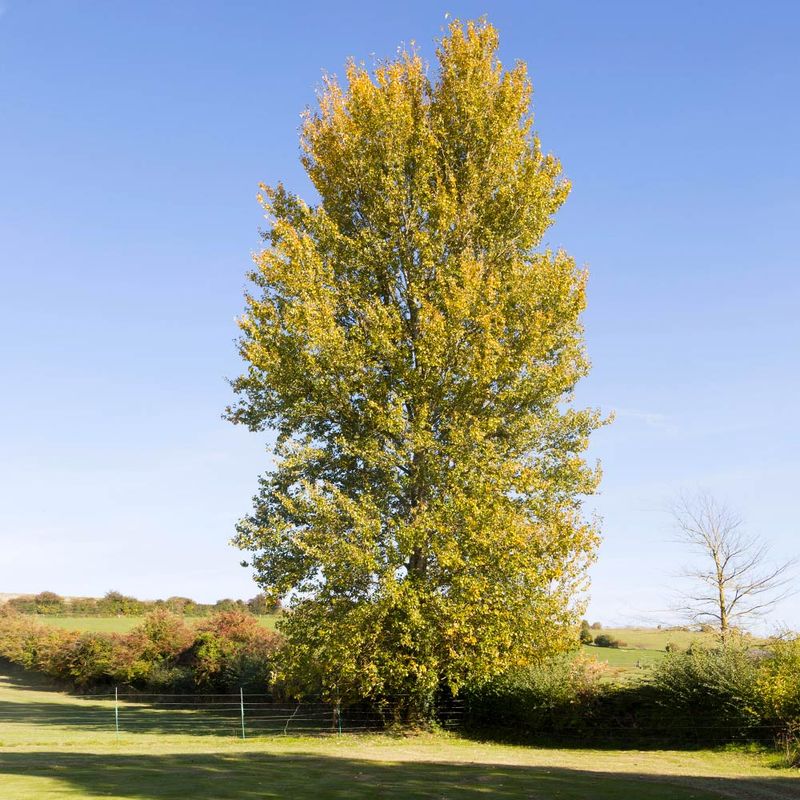
You need shade immediately, not in 20 years, and you’re willing to accept some tradeoffs for speed. Hybrid Poplar grows faster than most trees, and can add 5–8 feet per year under ideal growing conditions.
These specially bred trees can reach 40-60 feet tall within a decade, providing substantial shade and windbreak protection quickly. The tree thrives in full sun across California’s valleys and inland areas with hot summers.
It requires regular deep watering during establishment and benefits from occasional summer irrigation even when mature. Hybrid Poplar performs best in deep soil where its aggressive root system can spread without encountering barriers.
Its rapid vertical growth creates tall shade that cools homes and outdoor spaces remarkably fast. The columnar to pyramidal form works well for windbreaks or privacy screens along property lines.
These poplars drop leaves in fall, allowing winter sun penetration when you want natural warmth. Hybrid Poplar has a shorter lifespan than slower-growing species, typically 30-50 years versus centuries for oaks.
The tree’s aggressive roots seek water and can invade irrigation lines or septic systems if planted too close.
Despite these considerations, hybrid poplars deliver unmatched speed when you need shade immediately and understand you’re planting for near-term rather than multi-generational benefits.