The Best Way To Protect Young Trees From California Wind Damage Right Now
If you have ever watched a young tree in your yard whip back and forth during a California windstorm, you know that sinking feeling.
One blustery afternoon can undo months of careful planting, leaving trees leaning, snapped, or stressed right when they should be putting down roots.
From Santa Ana winds to surprise spring gusts, California weather loves to test young trees before they are ready. The tricky part is that protecting them the wrong way can actually cause more damage than doing nothing at all.
Overstaking, poor ties, and bad timing are common mistakes that slow growth and weaken trunks. Right now is a critical window to get it right.
In this guide, we will walk through the best way to protect young trees from wind damage, what materials actually help, and when to step back and let nature do its thing. Your trees will thank you later.
Why California Winds Break Young Trees
Across California backyards, newly planted trees topple during the first serious wind event of the season. Homeowners discover snapped trunks, exposed root balls, or trees leaning at awkward angles after a single night of gusts.
The problem isn’t just wind speed, it’s that young trees haven’t developed the root anchoring or trunk flexibility needed to survive our state’s unpredictable wind patterns.
Newly planted trees face a critical vulnerability window during their first one to two growing seasons. Their root systems remain small and shallow, unable to grip soil effectively when wind rocks the canopy back and forth.
Meanwhile, nursery-grown trees often have straight, uniform trunks that never learned to flex and bend like trees grown in natural conditions.
California’s wind events arrive with little warning and vary dramatically by region. Coastal areas experience steady ocean breezes that can suddenly intensify during storm fronts.
Inland valleys face powerful gusts funneled through mountain passes. Southern California endures hot, dry Santa Ana winds that can reach 40 to 60 miles per hour overnight.
Without proper protection during establishment, young trees experience trunk snap at the soil line, root ball rocking that severs new feeder roots, or complete uprooting.
Understanding these failure points helps homeowners choose protection methods that address real vulnerabilities rather than creating new problems.
How Flexible Staking Prevents Damage
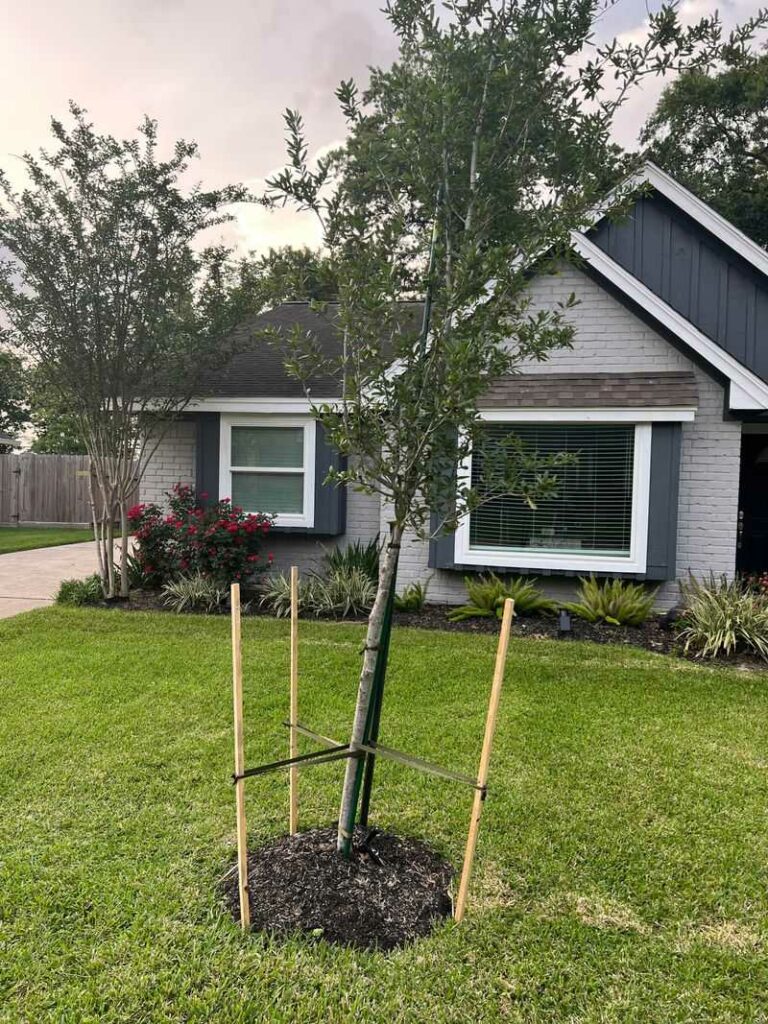
Many homeowners believe staking means locking a tree completely rigid, but that approach actually weakens trunk development and increases long-term failure risk.
Proper flexible staking allows controlled trunk movement while preventing the two most dangerous wind damage scenarios: sudden trunk snap and destructive root ball rocking.
When wind hits a young tree’s canopy, forces transfer down through the trunk to the root ball. If the tree can’t move at all, stress concentrates at rigid attachment points, often causing trunk breakage just above the ties.
If the tree moves too freely, the entire root ball rocks back and forth in the planting hole, tearing new roots before they can establish.
Flexible staking creates a middle ground. Stakes placed low on the trunk allow the upper canopy and top two-thirds of the trunk to sway naturally in wind.
Your California Garden Changes Every Week. Your Plan Should Too.
Gardening in California changes quickly throughout the season. Every Friday you’ll receive a simple weekly plan showing exactly what to plant, prune, fertilize, harvest, and protect so you never miss the right timing.
This movement stimulates the tree to develop stronger wood fibers and taper, the gradual thickening from roots to crown that characterizes wind-resistant trees.
Meanwhile, the stakes prevent excessive movement at the root ball level, keeping those critical new roots in contact with soil where they can grow and anchor.
California’s seasonal wind patterns make this protection especially important during fall and winter establishment periods when root growth slows but wind events intensify.
Where To Place Stakes
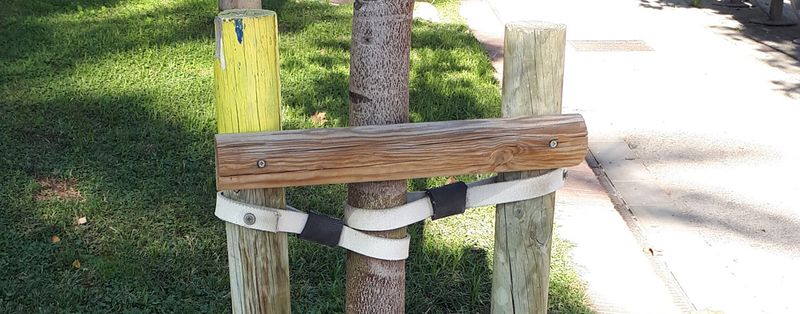
Walk through any California neighborhood after tree planting season and you’ll see stakes placed in every imaginable configuration. Some homeowners drive a single stake right against the trunk.
Others create elaborate four-stake corrals. Most of these well-intentioned setups either provide inadequate support or restrict healthy trunk movement.
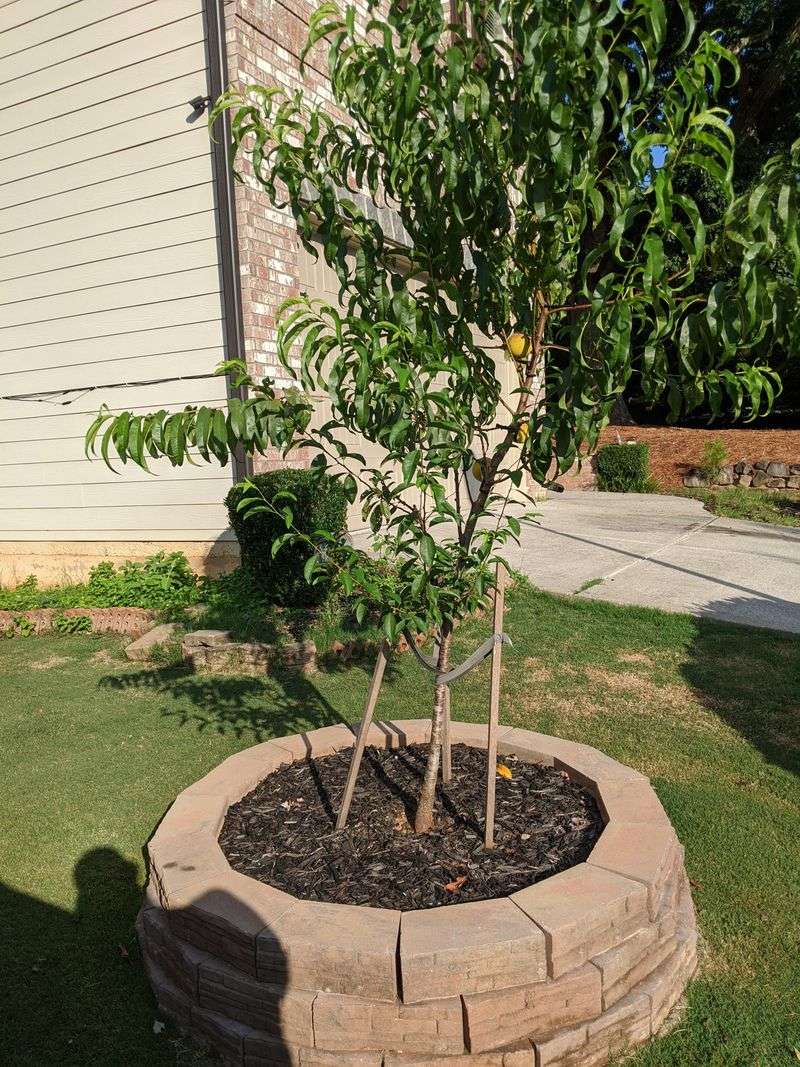
Correct stake placement depends on your tree’s size and your local wind direction. For most young trees with trunk diameters under three inches, use two stakes placed perpendicular to prevailing winds.
In California, this typically means positioning stakes on the north-south axis for coastal areas facing westerly ocean winds, or aligned with your local wind corridor in valley and foothill regions.
Place stakes 12 to 18 inches away from the trunk, outside the original root ball. This distance prevents stake installation from damaging existing roots while providing adequate leverage.
Drive stakes at least 18 inches deep into undisturbed soil beyond the planting hole, not into the loose backfill that won’t hold under stress.
For larger trees or extremely windy sites, three stakes arranged in a triangle pattern offer additional stability.
Always position stakes so ties attach to the lower third of the trunk, typically 18 to 24 inches above ground level.
Higher attachment points create leverage that can actually increase trunk snap risk during strong gusts.
Choosing The Right Ties And Materials
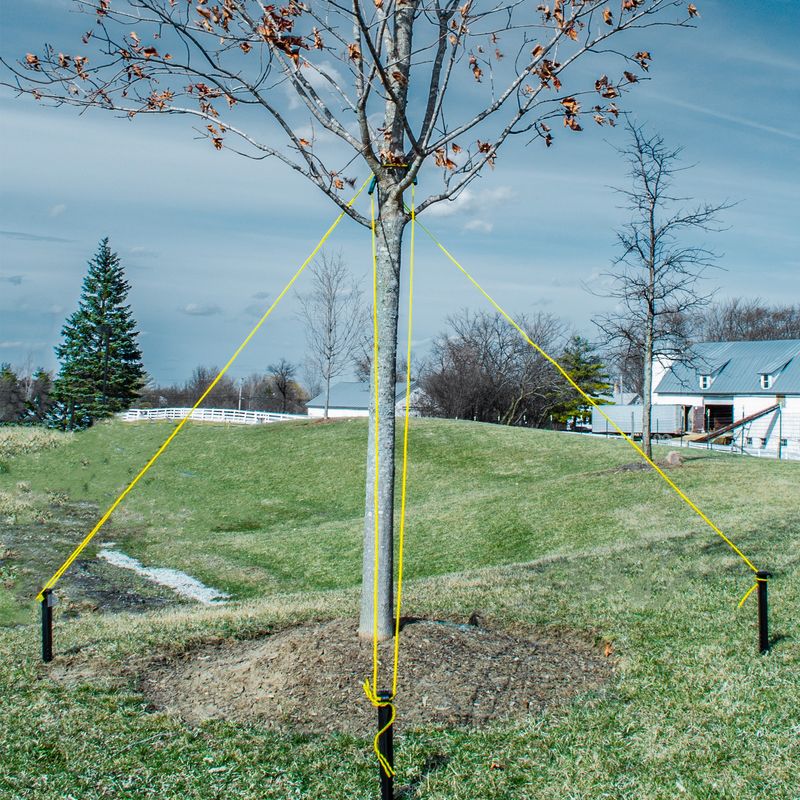
Hardware stores sell dozens of tree support products, but the wrong tie material causes more damage than wind ever could.
Homeowners often grab whatever’s convenient, wire, rope, bungee cords, or old hose sections, without understanding how these materials interact with growing bark during California’s long growing season.
Wire and rope cut into bark as trunks expand, creating wounds that invite disease and pest problems. Thin materials concentrate pressure into narrow bands that girdle the trunk, cutting off water and nutrient flow.
Bungee cords provide inconsistent tension and can snap back or compress bark unpredictably, leaving permanent compression damage.
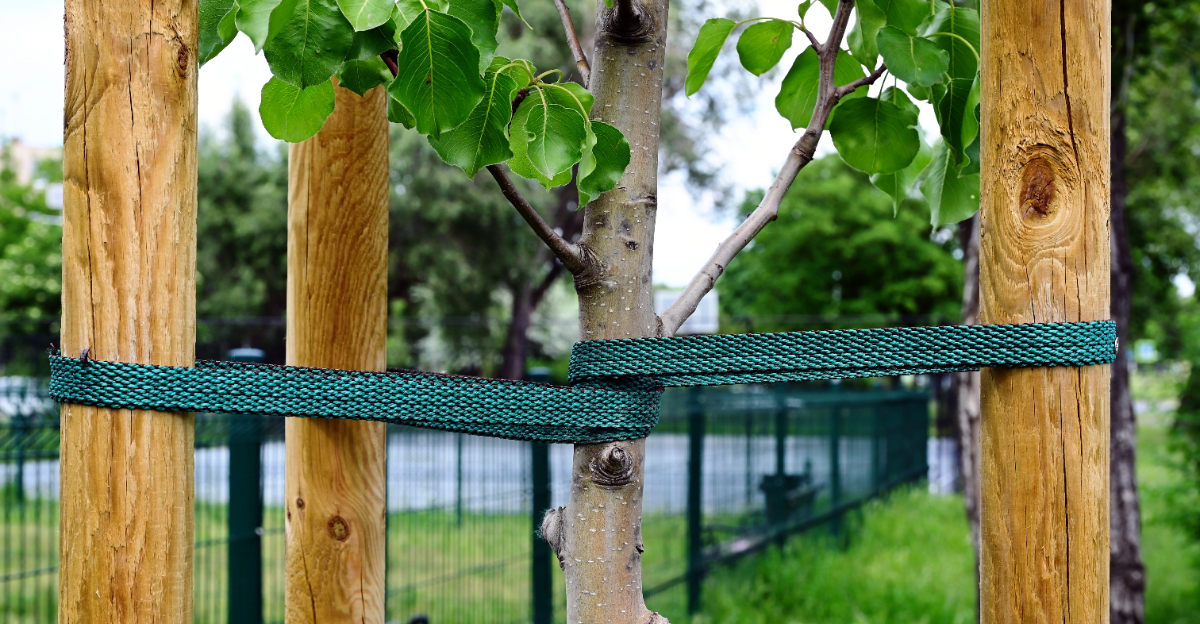
Professional-grade tree ties use wide, flat, flexible material that distributes pressure across several inches of trunk circumference.
Look for commercial tree strapping at least two inches wide, made from weather-resistant fabric or rubberized material.
These ties flex with trunk movement while preventing bark abrasion.
Create a figure-eight pattern between stake and trunk, with the crossing point between them. This configuration adds a cushioning twist that prevents the trunk from rubbing directly against the stake during movement.
In California’s intense summer sun, choose UV-resistant materials that won’t degrade and snap during the critical first growing season. Avoid materials that absorb water and stay damp against bark, which can promote fungal problems in our cool, wet winter months.
How Tight Is Too Tight?
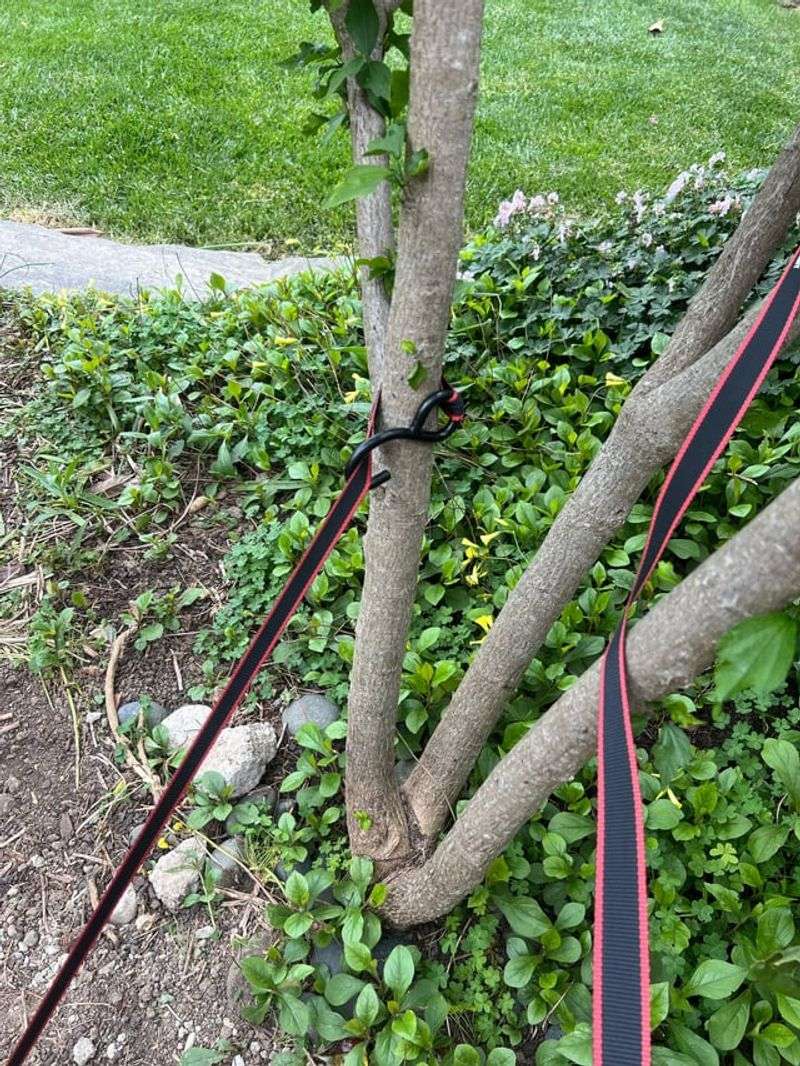
After installing stakes and ties, most homeowners face the same question: how snug should these ties actually be? The instinct is to cinch everything tight, creating what feels like solid support.
That approach defeats the entire purpose of flexible staking and can permanently damage your tree’s ability to develop natural wind resistance.
Proper tie tension allows approximately a small amount of visible trunk movement, typically about one to two inches for young trees in any direction at the tie point.
Stand next to your newly staked tree and gently push the trunk at tie height, you should feel some give, with the trunk able to flex slightly before the ties engage.
This small amount of movement is exactly what stimulates strength-building trunk taper.
Too-tight ties create a fulcrum effect. The trunk above the ties whips violently in wind while the trunk below remains completely rigid.
This unnatural stress concentration often causes breakage just above the tie point during California’s strongest wind events. Tight ties also prevent the slight trunk movement that triggers trees to add wood fiber in response to mechanical stress.
Check tension monthly during the growing season, especially after California’s spring growth flush when trunk diameter increases noticeably. Ties that felt perfect in January may be cutting into bark by June.
Loosen ties before they create visible indentations, and remember that stakes are temporary support, not permanent fixtures.
When To Adjust Or Remove Stakes
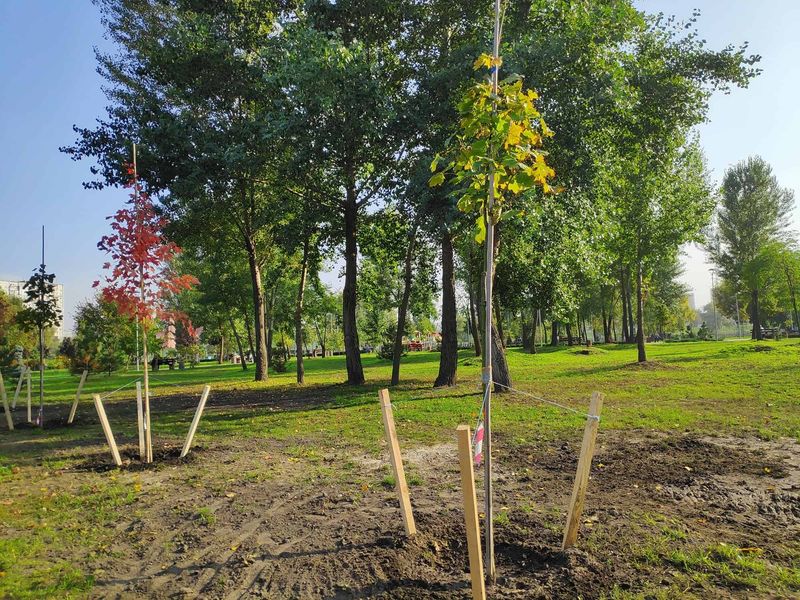
Staking is temporary protection, not permanent tree architecture. Leaving stakes in place too long creates dependent trees with weak trunks that can’t stand alone, yet many California homeowners leave stakes for years simply because they forget about them.
Knowing when to adjust and remove stakes is as important as installing them correctly.
During the first growing season, check your staking system monthly. Look for ties cutting into expanding bark, stakes that have loosened in soil, or any rubbing damage where trunk contacts ties.
Adjust tension as the trunk grows, and reposition ties if they’ve slipped up or down the trunk. California’s dry summers can cause soil settling that loosens stakes, while winter rains may cause stakes to lean.
Most young trees establish sufficient root anchoring within one to two growing seasons. Test readiness by temporarily loosening ties during calm weather and observing whether the tree stands upright without support.
If the trunk leans significantly or the root ball rocks when you push gently at chest height, leave stakes in place for another growing season.
Plan stake removal once the tree can stand independently, often in late fall or early winter, after the growing season ends but before California’s strongest winter storm period. Remove stakes by cutting ties and pulling stakes straight up to avoid root damage.
If stakes resist removal, dig carefully around them rather than levering them out, which can disturb nearby roots your tree needs for the upcoming wind season.
Common Staking Mistakes
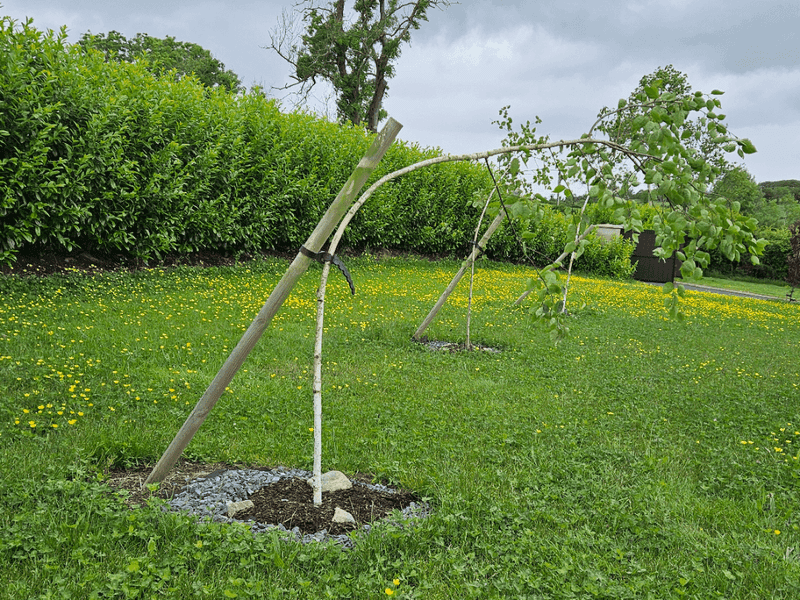
Even with good intentions, homeowners make predictable staking errors that increase wind damage risk rather than reducing it. Understanding these mistakes helps you avoid creating problems worse than the wind itself.
The most common error is staking too high on the trunk. Ties placed at mid-trunk or higher create excessive leverage during wind events, often snapping the trunk just below the attachment point.
Stakes should support only the lower third of the trunk, allowing the upper portion to develop natural flexibility.
Single-stake systems rarely provide adequate support in California’s multidirectional wind patterns. A tree staked on only one side can still rock dangerously in the perpendicular direction.
Two-stake systems oriented with prevailing winds offer much better protection.
Using stakes that are too short or driven too shallow is another frequent problem. Stakes must extend deep enough into undisturbed soil to resist pulling out during strong gusts.
A stake that fails during a wind event can whip around and damage the very tree it was meant to protect.
Perhaps the most damaging mistake is leaving stakes in place for multiple years. Trees become dependent on artificial support and fail to develop the trunk taper and root spread they need for long-term stability.
When stakes finally break or are removed, these dependent trees often fail in the first moderate wind event. Remove stakes as soon as your tree can stand independently to ensure it develops natural wind resistance.