These 9 Oregon Ground Covers Flower All Spring Long
Spring in Oregon is when the garden floor comes alive. While taller plants grab attention, the real magic often happens closer to the ground, where low growing spreaders weave color, texture, and life across beds and borders.
The right flowering ground covers do more than just fill empty space. They brighten shady corners, soften pathways, help hold moisture in the soil, and crowd out weeds before they even start.
Even better, many thrive in Oregon’s cool, damp spring and bloom steadily for weeks, sometimes months.
With the right picks, you can create a carpet of color that keeps your garden looking fresh and lively all season long.
1. Ajuga (Ajuga reptans)
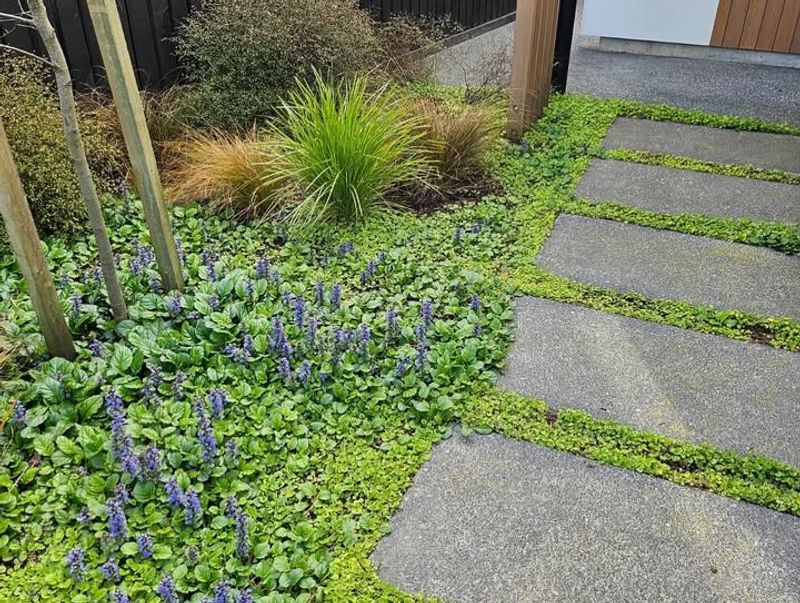
Glossy foliage creates year-round interest, but ajuga really shines when flower spikes emerge in March and continue into May. These vertical blue-purple blooms rise 4 to 6 inches above the leafy mat, creating a striking two-toned effect.
Shade gardens particularly benefit from ajuga since it brightens dark corners where few other flowering ground covers succeed.
Choose sites with partial to full shade and moist, rich soil for best results. Space plants 8 to 12 inches apart, and they’ll spread readily through runners to fill gaps.
Oregon’s spring rains provide ideal moisture levels, though you’ll want to water during dry spells to keep foliage looking fresh.
Ajuga tolerates a range of soil types but performs best when you add compost before planting. The plant spreads quickly, so consider edging beds or using it in contained areas.
It works well under trees where grass struggles to grow.
Bronze and burgundy-leaved varieties add extra color beyond bloom time. Hummingbirds occasionally visit the tubular flowers, adding movement to your garden.
Remove spent flower stalks to keep plants tidy and encourage energy into foliage growth.
2. Creeping Thyme (Thymus serpyllum)
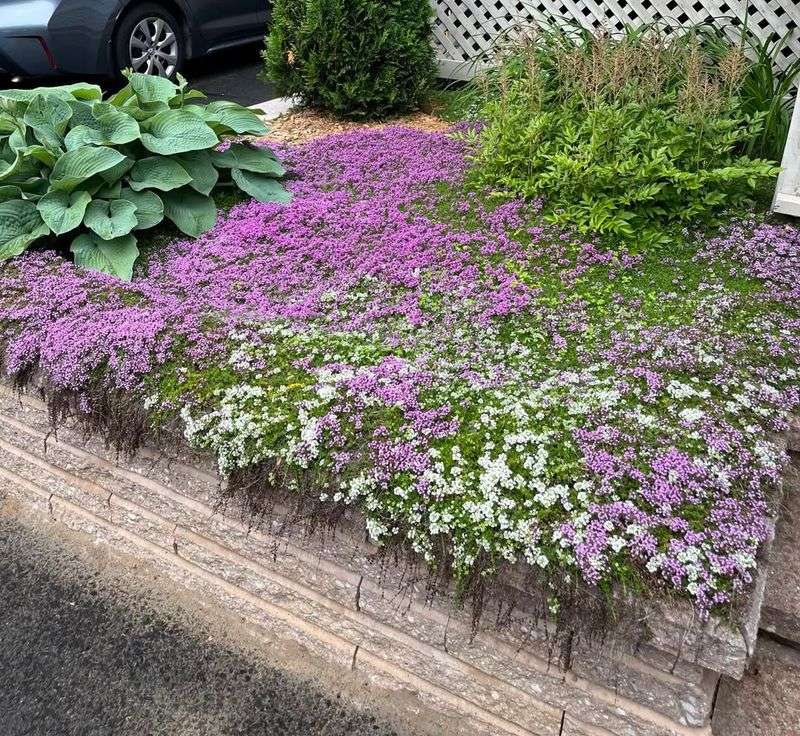
Walking across a carpet of creeping thyme releases a wonderful herbal scent that makes this ground cover unforgettable.
This Mediterranean native has adapted beautifully to Oregon’s spring conditions, producing waves of tiny purple-pink flowers from April through June.
Your garden gains both beauty and function since this plant tolerates light foot traffic between stepping stones.
Plant creeping thyme in full sun with well-draining soil, spacing plants 6 to 12 inches apart for quick coverage. It handles Oregon’s wet winters better than many herbs because it doesn’t sit in soggy soil once established.
Water regularly during the first growing season, then reduce frequency as roots take hold.
Bloom time extends when you shear plants lightly after the first flush of flowers fades. This encourages a second round of blooms in late spring.
Creeping thyme thrives in zones 4 through 9, making it suitable for most Oregon gardens from the coast to eastern valleys.
Pair it with sedums or ornamental grasses for contrasting textures. Bees and butterflies visit the flowers constantly, making your garden a pollinator haven throughout spring.
3. Bugleweed (Ajuga ‘Chocolate Chip’)
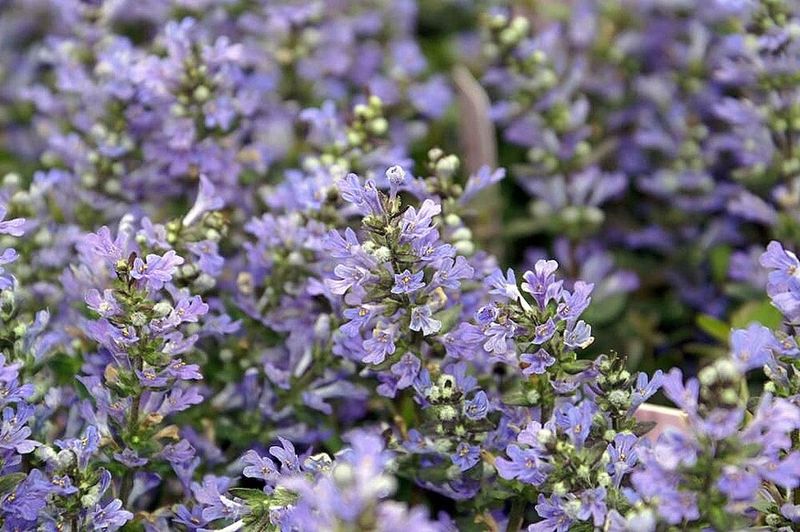
Tiny chocolate-brown leaves give this ajuga cultivar its appetizing name and make it stand out from the standard green varieties. Blue flower spikes appear in April and May, creating a delightful contrast against the dark foliage.
Your Oregon Garden Changes Every Week. Your Plan Should Too.
Gardening in Oregon changes quickly throughout the season. Every Friday you’ll receive a simple weekly plan showing exactly what to plant, prune, fertilize, harvest, and protect so you never miss the right timing.
This compact selection spreads more slowly than regular ajuga, giving you better control in smaller garden spaces.
Plant ‘Chocolate Chip’ in partial shade with consistently moist soil, spacing plants 6 to 10 inches apart. It adapts to Oregon’s climate zones easily, handling both coastal moisture and inland temperature swings.
The slower growth rate means less maintenance than aggressive spreaders.
This cultivar reaches only 3 to 4 inches tall, making it perfect for edging pathways or filling between pavers. Water regularly during establishment, then maintain even moisture throughout the growing season.
Mulch around plants helps retain soil moisture during Oregon’s drier summer months.
The dark foliage provides contrast when planted near chartreuse hostas or golden sedges. Pollinators appreciate the spring blooms just as much as they do larger ajuga varieties.
Divide clumps every few years to maintain vigor and spread plants to new areas of your garden.
4. Creeping Phlox (Phlox subulata)
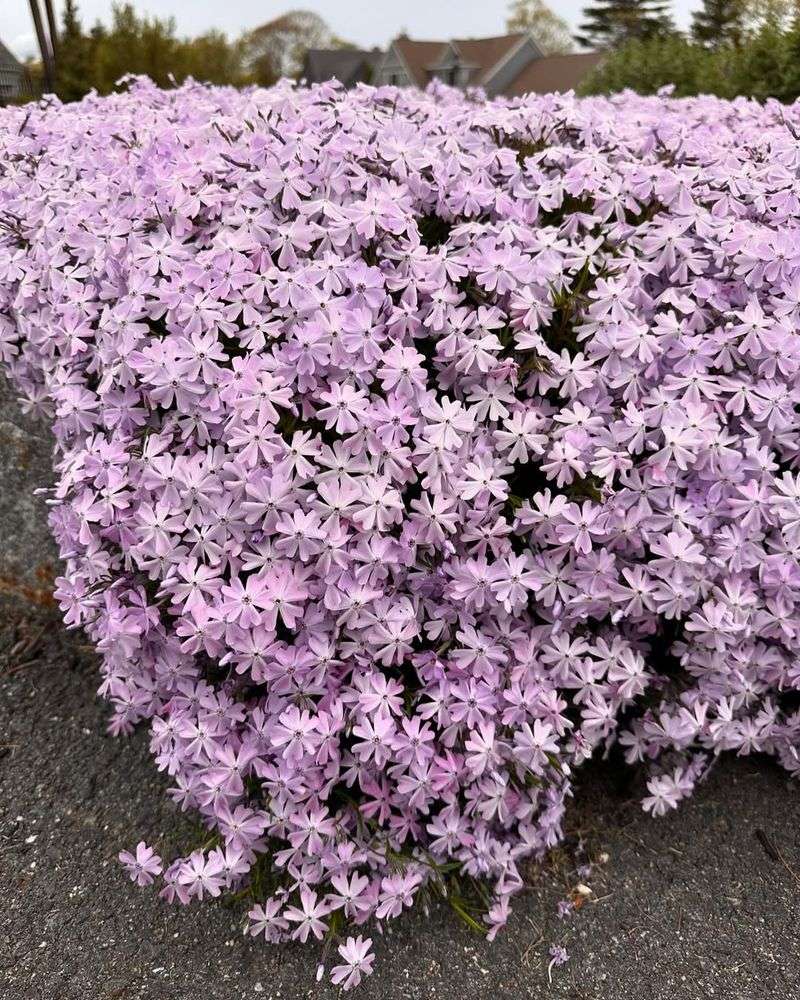
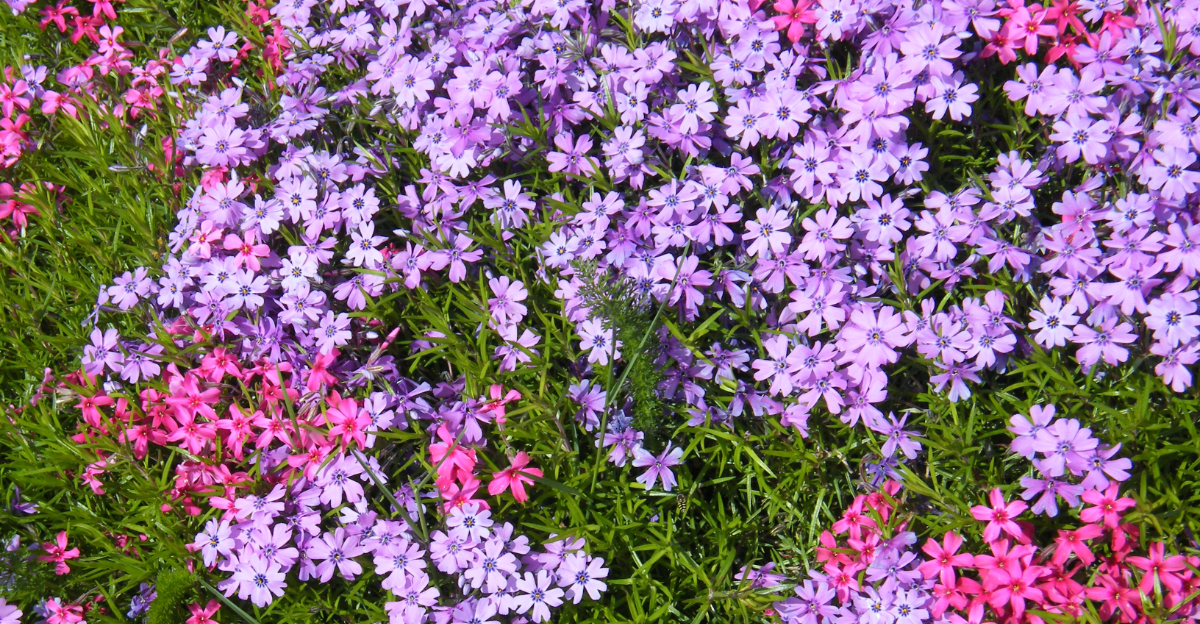
Cascades of bright flowers transform slopes and rock gardens when creeping phlox hits peak bloom in April and May. This evergreen ground cover creates a spectacular show with colors ranging from hot pink to soft lavender and pure white.
Needle-like foliage stays attractive even after flowers fade, providing texture through all seasons.
Full sun locations with excellent drainage give you the best flowering performance. Space plants 12 to 18 inches apart on slopes or rock walls where they can spill over edges.
Creeping phlox handles Oregon’s wet winters well when planted in raised beds or on hillsides that don’t hold water.
Trim plants back by one-third after blooming finishes to encourage dense growth and prevent woody centers. This also promotes better flowering the following spring.
Water moderately during establishment, then reduce frequency once plants settle in.
Mix different flower colors for a patchwork effect, or stick with one hue for dramatic impact. The plant thrives in zones 3 through 9, covering most Oregon growing areas.
Butterflies visit the five-petaled flowers throughout the bloom period, adding life to your garden display.
5. Sweet Woodruff (Galium odoratum)
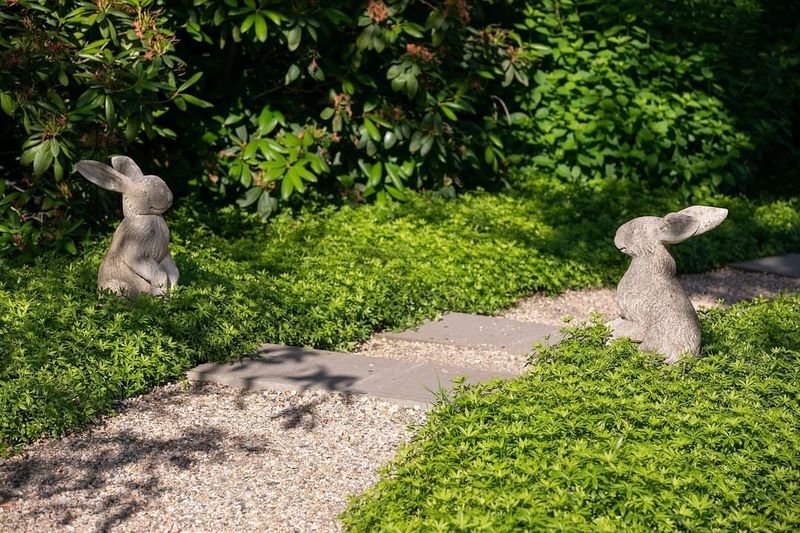
Shade gardens come alive when sweet woodruff unfurls its white star-shaped flowers above whorls of bright green leaves. Blooming from April through June, this European native has naturalized beautifully in Oregon’s woodland gardens.
The plant releases a pleasant vanilla-like scent when leaves are crushed or dried, adding sensory appeal beyond visual beauty.
Plant in partial to full shade with moist, humus-rich soil, spacing plants 10 to 12 inches apart. Sweet woodruff spreads steadily through rhizomes, eventually forming a dense mat that suppresses weeds effectively.
It tolerates the dry shade under trees once established, though consistent moisture produces lusher growth.
This ground cover reaches 6 to 12 inches tall, creating a soft carpet beneath shrubs and perennials. Water regularly during the first season, then maintain moderate moisture levels.
Mulching with leaf compost mimics the plant’s natural woodland habitat and improves soil quality over time.
Pair sweet woodruff with ferns, hostas, and bleeding hearts for a classic shade garden combination. The white flowers brighten dark corners and reflect available light.
Deer typically avoid this plant, making it valuable in gardens where browsing creates challenges.
6. Corsican Mint (Mentha requienii)
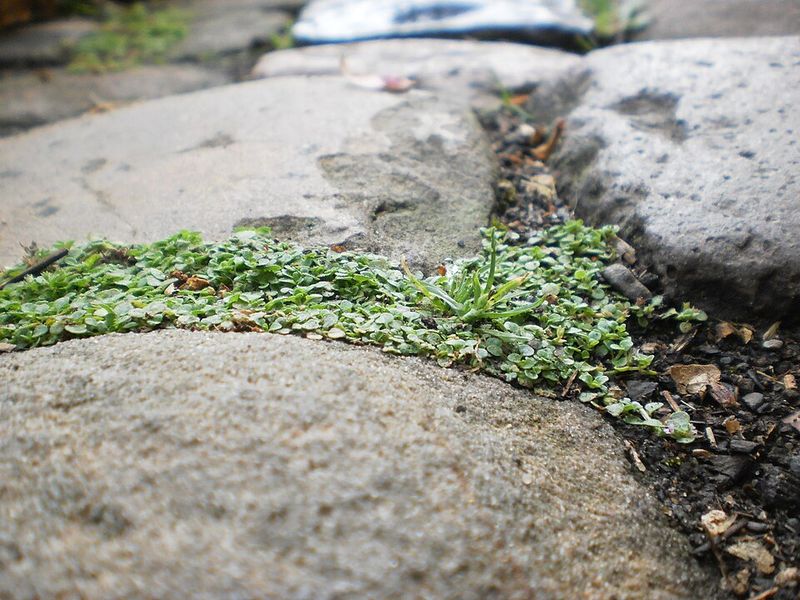
Tiny purple flowers dot this ultra-low ground cover throughout spring, though you’ll need to look closely to spot the blooms. Corsican mint grows just 1 inch tall, creating a moss-like carpet that releases a strong minty fragrance when stepped on.
This makes it perfect for tucking between pavers or along pathways where occasional foot traffic occurs.
Partial shade and consistently moist soil produce the healthiest growth. Space small plants or divisions 4 to 6 inches apart, and they’ll knit together quickly.
Corsican mint thrives in Oregon’s cool, damp spring conditions but needs protection from hot afternoon sun in warmer inland areas.
Water frequently to keep soil evenly moist, especially during establishment and through summer months. This ground cover spreads by creeping stems that root at nodes, gradually filling spaces.
It works well in rock gardens, around water features, or anywhere you want a soft, fragrant carpet.
The plant blooms from April through June with tiny tubular flowers that attract small pollinators. Zones 6 through 9 suit Corsican mint best, covering most Oregon gardens.
Combine it with larger stepping stones or use it as a lawn alternative in low-traffic areas.
7. Mazus (Mazus reptans)
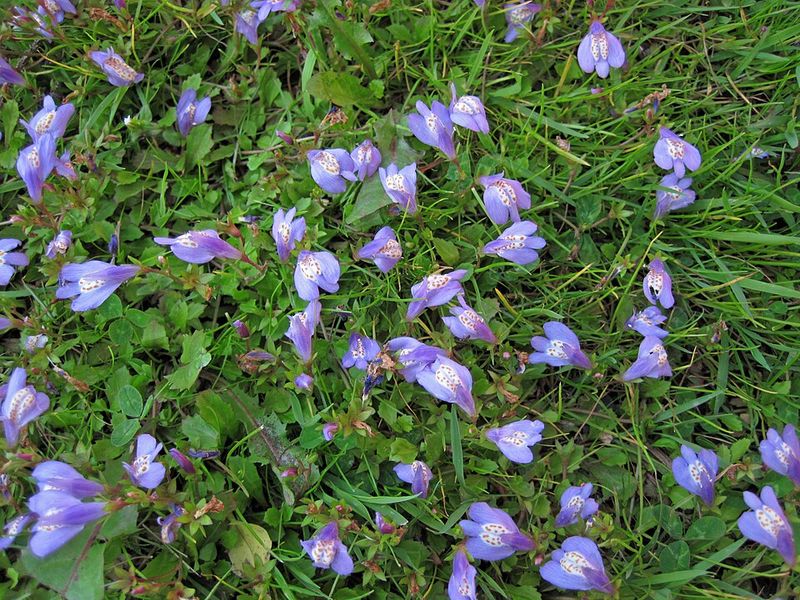
Purple-blue flowers resembling tiny snapdragons appear in abundance from April through June, making mazus a spring standout. This ground cover stays under 2 inches tall, forming a dense mat that tolerates light foot traffic.
The flowers feature yellow and white markings in their throats, creating intricate detail when viewed up close.
Plant mazus in full sun to partial shade with moist, well-drained soil. Space plants 6 to 12 inches apart for quick coverage.
It adapts well to Oregon’s spring rains and moderate temperatures, spreading readily through creeping stems that root along the ground.
Water consistently during the growing season to maintain the lush appearance. Mazus handles more moisture than many ground covers, making it suitable for areas that stay slightly damp.
It works beautifully between stepping stones or as a lawn substitute in areas with light use.
The plant thrives in zones 5 through 8, covering most Oregon growing regions. Bloom time extends when you keep soil evenly moist and remove any dead foliage.
Pair mazus with taller perennials that appreciate similar moisture levels, or use it to edge garden beds for a soft, flowering border.
8. Periwinkle / Vinca (Vinca minor)
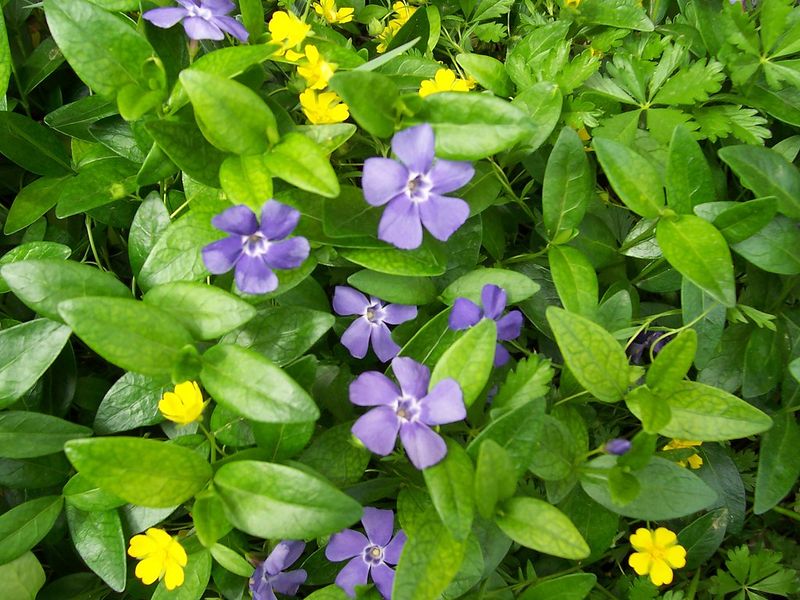
Five-petaled periwinkle-blue flowers emerge in April and continue sporadically through June, standing out against glossy dark green foliage. This evergreen ground cover excels in challenging spots where other plants struggle, including dry shade and slopes.
The trailing stems root wherever they touch soil, creating dense coverage that outcompetes most weeds.
Partial to full shade with average to dry soil suits vinca well. Space plants 12 to 18 inches apart, and they’ll fill in within two growing seasons.
Vinca minor handles Oregon’s varied microclimates, from coastal gardens to inland valleys, though it prefers some shade in hotter areas.
Water during establishment, then reduce frequency once plants spread. This ground cover tolerates drought better than many shade plants, making it valuable under mature trees.
The glossy leaves stay attractive year-round, providing winter interest when little else looks fresh.
Keep vinca contained with edging since it spreads vigorously through runners. White and purple-flowered varieties offer alternatives to the classic blue.
The plant grows 4 to 6 inches tall, creating a uniform carpet. Pair it with spring bulbs that emerge through the foliage for added seasonal color.
9. Irish Moss (Sagina subulata)
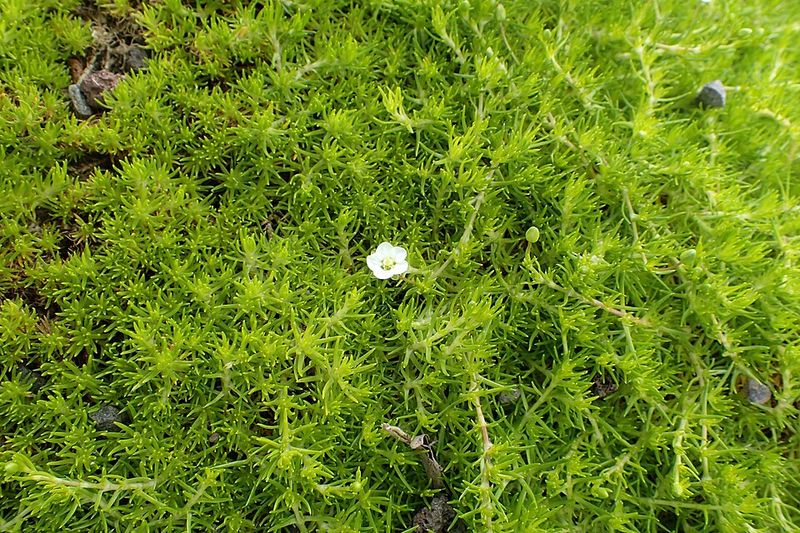
Bright green moss-like foliage creates a soft, emerald carpet that erupts with tiny white star flowers in April and May. Despite its common name, Irish moss isn’t actually a moss but a flowering perennial that forms dense mats just 1 to 2 inches tall.
The delicate flowers appear in such numbers that they create a snow-dusted effect across the green carpet.
Plant in full sun to partial shade with moist, well-drained soil. Space plants or divisions 4 to 6 inches apart for quick coverage.
Irish moss appreciates Oregon’s cool spring temperatures and consistent moisture, thriving in conditions that many ground covers find challenging.
Water regularly to keep soil evenly moist, especially during dry spells. This ground cover tolerates light foot traffic, making it suitable for pathways or between pavers.
It spreads slowly but steadily, filling spaces without becoming invasive.
The plant performs best in zones 4 through 8, covering Oregon’s diverse climate zones. Use Irish moss around water features, in rock gardens, or as a lawn alternative in small areas.
The fine texture contrasts beautifully with coarser plants like hostas or larger sedums. Divide clumps every few years to rejuvenate growth and expand your planting area.