8 Native Ohio Shrubs That Feed Birds All Winter (And 4 To Avoid)
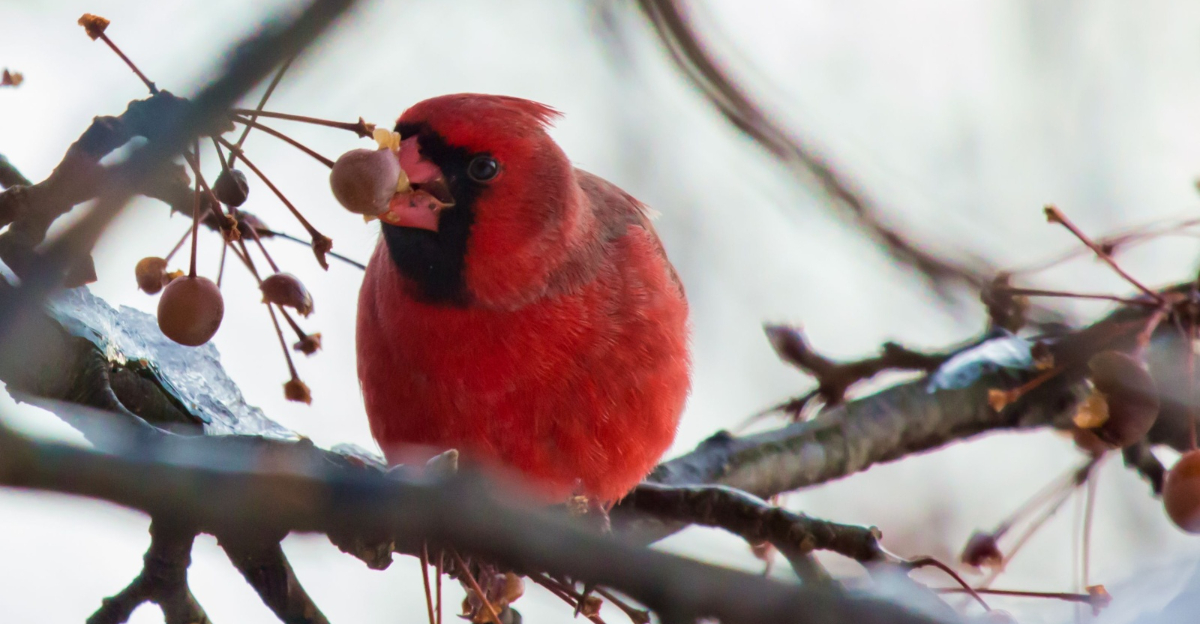
Snow locks the ground, winds bite hard, and the backyard suddenly feels quiet. Many birds that brightened Ohio gardens all summer now face their toughest season.
Natural food disappears, insects vanish, and survival depends on finding high energy berries that persist through cold, ice, and snow.
The right native shrubs can turn an ordinary yard into a winter lifeline, drawing cardinals, bluebirds, waxwings, and chickadees right outside your window when the landscape feels frozen and still.
Some plants feed birds for months, but others give them almost no real nutrition. A few common shrubs can also spread fast and take over, pushing out the native plants birds actually depend on.
Plant the right shrubs and you can turn your own yard into a safe winter haven, full of color, fluttering wings, and birdsong right outside your window. Want to truly support Ohio’s birds through winter?
You are about to learn exactly which shrubs keep them alive and which plants may be hurting them.
1. Winterberry: Winter’s Brightest Bird Buffet
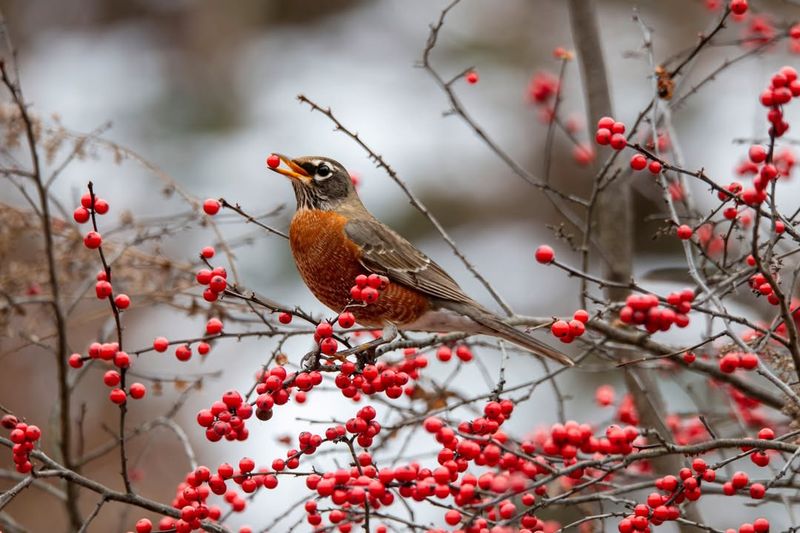
Bright red berries glow like tiny lanterns against snow-covered branches, making winterberry one of the most stunning sights in an Ohio winter landscape. This native holly holds its fruit well into the coldest months, providing critical nutrition when birds need it most.
Both male and female plants must be present for berry production, with one male pollinating multiple females within a hundred feet. Female plants produce the showy berries that attract robins, waxwings, bluebirds, and mockingbirds throughout winter.
Winterberry thrives in Ohio’s moist soils and tolerates everything from full sun to partial shade. Wet areas where other shrubs struggle become perfect spots for this adaptable native.
Plant it near ponds, rain gardens, or low spots in your yard.
Space female plants four to six feet apart for a natural berry hedge. Choose varieties like ‘Winter Red’ or ‘Berry Heavy’ for abundant fruit production.
Pruning requirements stay minimal, with light shaping in early spring if needed.
The berries ripen in fall but persist through winter, softening with freeze-thaw cycles. Birds often wait until late winter to feast, when the berries become easier to digest and other food runs scarce across Ohio.
2. Arrowwood Viburnum: Cold-Season Berry Bank
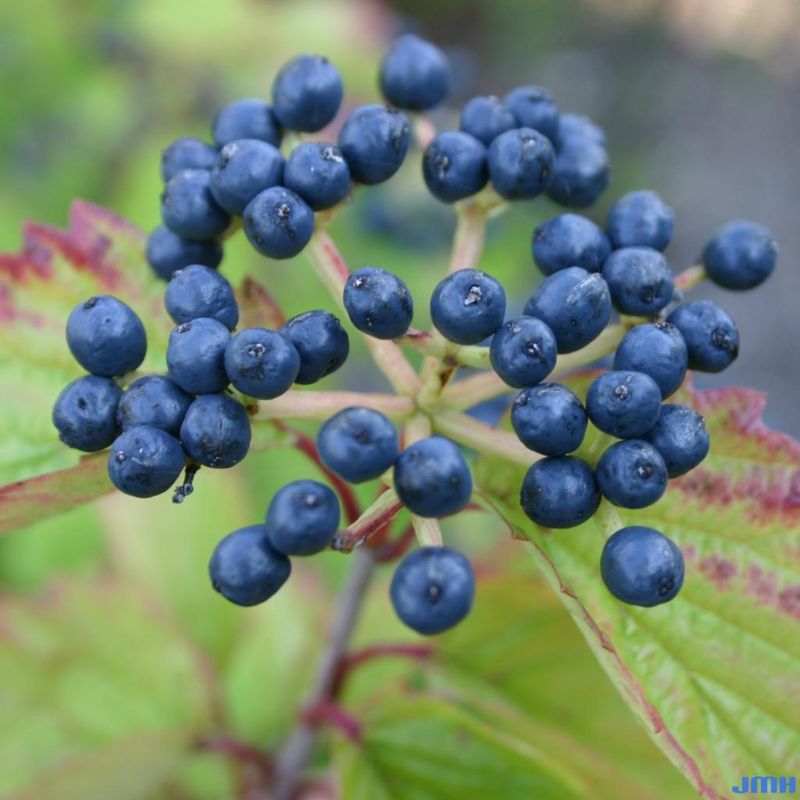
Dark blue-black berries cluster along sturdy branches, offering birds a reliable food source from fall straight through winter. Arrowwood viburnum earns its reputation as one of Ohio’s most valuable native shrubs for wildlife support.
Dense branching creates excellent shelter where birds can escape harsh winds and predators. The thick growth pattern provides safe roosting spots during long winter nights.
Cardinals, thrushes, and cedar waxwings frequently visit both for berries and protection.
Ohio soils suit this adaptable native perfectly, whether clay-heavy or sandy. It handles full sun to partial shade and tolerates both wet and dry conditions once established.
This flexibility makes placement easy in almost any yard.
Pruning needs stay light, with occasional removal of older stems to encourage fresh growth. Remove no more than one-third of the plant in any year.
Your Ohio Garden Changes Every Week. Your Plan Should Too.
Gardening in Ohio changes quickly throughout the season. Every Friday you’ll receive a simple weekly plan showing exactly what to plant, prune, fertilize, harvest, and protect so you never miss the right timing.
Late winter or early spring offers the best timing for maintenance cuts.
The shrub reaches six to ten feet tall and wide at maturity. White spring flowers attract pollinators before developing into the valuable berries.
Fall foliage turns attractive shades of red and purple, adding seasonal interest beyond its wildlife benefits in Ohio landscapes.
3. American Cranberrybush: Snow-Season Survival Food
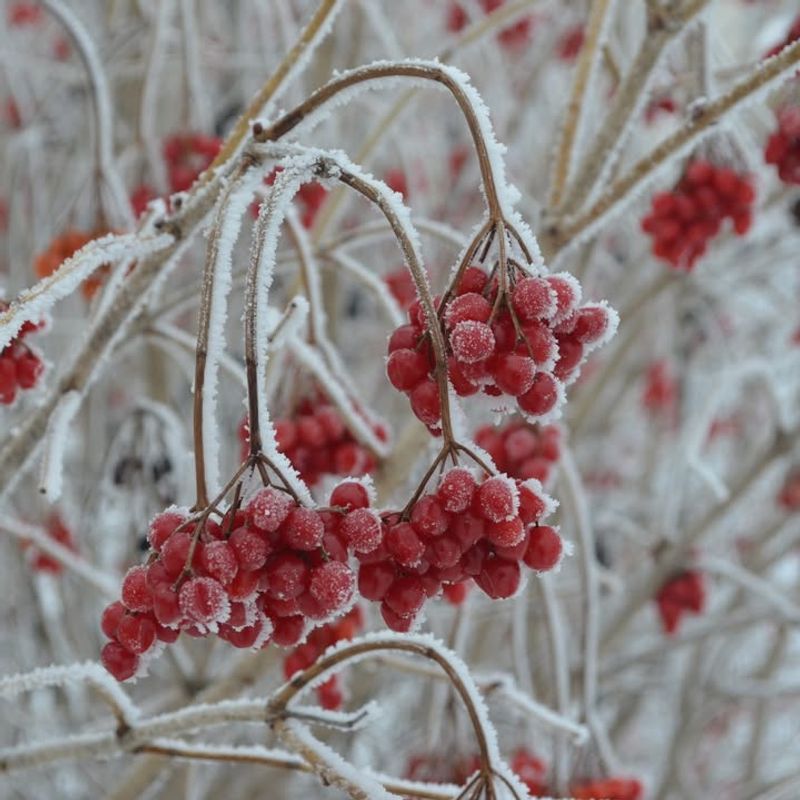
Bright red berries dangle in eye-catching clusters, remaining on branches even as snow piles up around them. American cranberrybush provides emergency rations when winter weather turns severe and other food sources become buried or depleted.
Cold tolerance ranks exceptional for this Ohio native. Temperatures well below zero cause no damage, and the berries actually improve in palatability after several hard freezes.
Birds including grosbeaks, waxwings, and grouse rely on this dependable food supply.
Spring brings showy white flowers resembling snowballs, followed by green berries that ripen to translucent red. Fall foliage blazes with red and purple hues before dropping.
The multi-season interest makes this shrub attractive year-round in Ohio yards.
Full sun produces the heaviest berry crops, though partial shade works acceptably. Moist soil suits it best, but established plants tolerate occasional dry spells.
Space plants eight to twelve feet apart, as mature size reaches ten to fifteen feet in both height and width.
Minimal maintenance keeps this shrub thriving. Remove damaged branches in early spring.
The berries often persist into late winter or early spring, providing food during the most desperate months when birds face the greatest survival challenges across Ohio.
4. Red-osier Dogwood: Berries & Shelter Combo
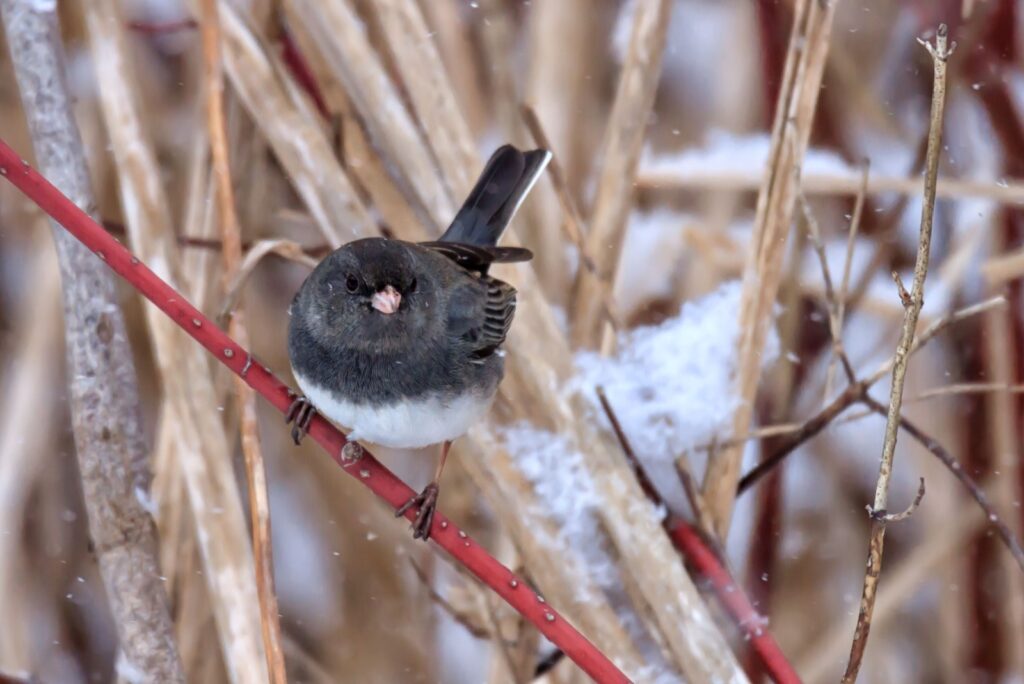
Brilliant red stems light up the winter landscape like glowing embers against white snow. Red-osier dogwood offers birds far more than just berries, combining food, shelter, and visual beauty throughout the coldest months in Ohio.
White berries appear in late summer and persist into winter, attracting over forty bird species. The dense, spreading growth creates protected spaces where small birds can hide from hawks and escape biting winds.
Chickadees, sparrows, and juncos frequently seek refuge in the tangled branches.
Wet soils pose no problem for this moisture-loving native. Plant it along streams, in rain gardens, or anywhere water collects.
The extensive root system excels at erosion control on slopes and banks throughout Ohio.
Young stems display the brightest red color, so regular pruning keeps the winter show dramatic. Cut one-third of the oldest stems to ground level each spring.
New growth emerges quickly, ensuring fresh red stems for the next winter display.
The shrub spreads by underground stems, forming colonies over time. This habit makes it perfect for naturalizing large areas or creating wildlife thickets.
Space plants three to five feet apart for a connected hedge that maximizes bird shelter value in your Ohio landscape.
5. Roughleaf Dogwood: Wildlife Powerhouse Shrub
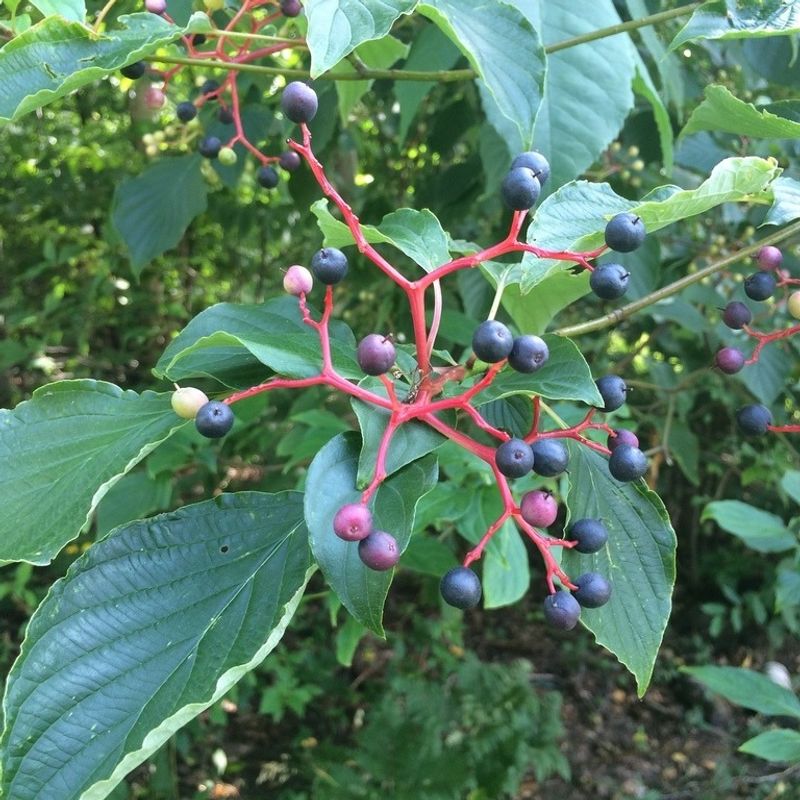
Few native shrubs match the wildlife value packed into roughleaf dogwood. Birds flock to this unassuming shrub throughout fall and winter, making it one of Ohio’s most important food sources for year-round residents and migrating species alike.
White berries ripen in late summer but many persist well into winter. Over thirty bird species consume the high-fat fruit, including woodpeckers, thrashers, and catbirds.
The late-season availability proves especially critical when other berry sources become depleted across Ohio.
Hardy growth handles tough conditions with ease. This dogwood tolerates poor soils, drought once established, and both full sun and partial shade.
It thrives in conditions where fussier shrubs struggle, making it ideal for low-maintenance landscapes.
The spreading growth habit creates dense thickets over time. These natural tangles provide nesting sites in summer and protective cover in winter.
Small mammals also benefit from the shelter and food, supporting a complete backyard ecosystem.
Plant roughleaf dogwood in groups of three or more for maximum impact. Space them four to six feet apart and let them grow into a connected mass.
Minimal pruning keeps them healthy, with occasional removal of damaged branches. This native workhorse deserves a spot in every bird-friendly Ohio yard.
6. Black Chokeberry: Late-Winter Lifeline
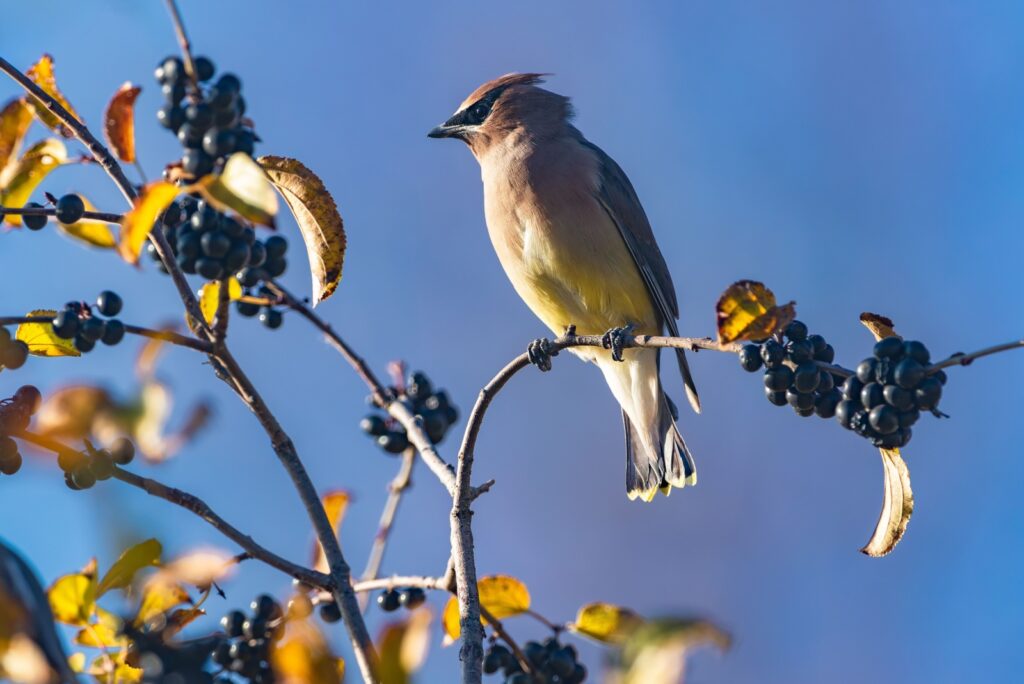
Dark purple-black berries cling stubbornly to bare branches, often lasting until spring arrives. Black chokeberry earns its reputation as a late-winter lifeline when nearly every other natural food source has been exhausted across Ohio.
Birds typically ignore these berries early in winter, preferring sweeter options first. As temperatures cycle through freezes and thaws, the fruit softens and becomes more palatable.
By late winter, when desperation sets in, birds eagerly consume what remains.
Cold hardiness ranks outstanding for this native shrub. Ohio winters cause no damage, and the plant tolerates both wet and dry soils once established.
It adapts to full sun or partial shade, though berry production peaks with more sunlight.
White spring flowers create an attractive display, followed by glossy green leaves that turn brilliant red and purple in fall. The ornamental value extends beyond wildlife benefits, making this shrub earn its space in formal landscapes as well as naturalized areas.
Maintenance requirements stay minimal. Prune lightly in early spring if shaping is needed, but avoid heavy cutting that removes berry-producing wood.
Space plants four to six feet apart. The compact growth reaches four to eight feet tall, fitting well in smaller Ohio yards where space is limited.
7. Elderberry: Heavy Crop, Happy Birds
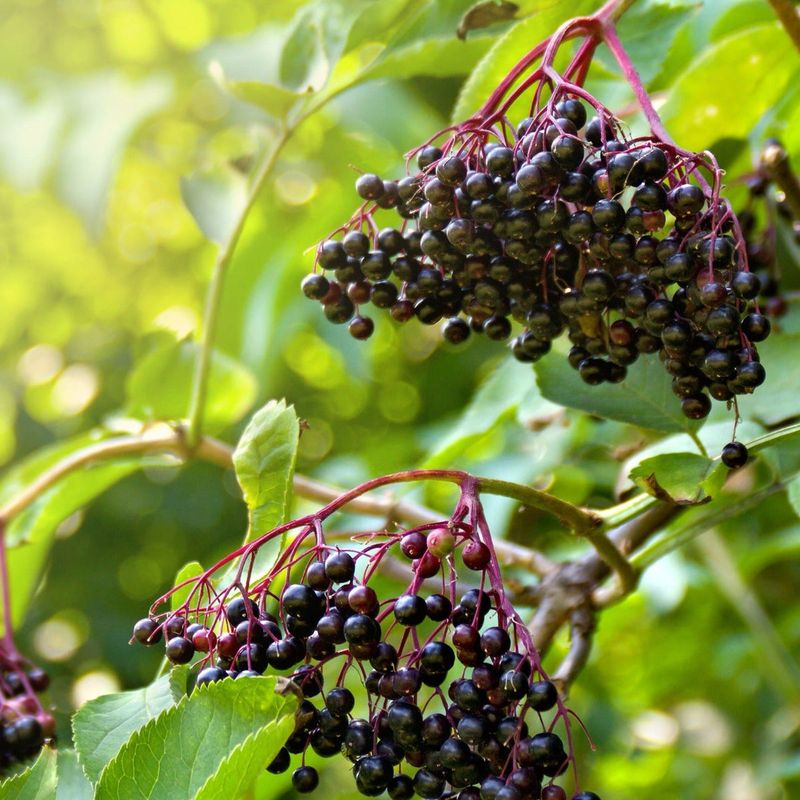
Massive clusters of dark purple berries weigh down branches in late summer, creating an all-you-can-eat buffet that birds cannot resist. Elderberry produces more fruit per shrub than almost any other native, making it a favorite among Ohio’s bird populations.
Fast growth means quick results in new landscapes. Plants reach six to twelve feet tall within just a few years.
The rapid development makes elderberry perfect for filling gaps or establishing new wildlife areas quickly across Ohio.
Both pollinators and birds benefit from this shrub. Large white flower clusters in early summer buzz with bees and butterflies.
Weeks later, the heavy berry crop attracts robins, waxwings, orioles, and dozens of other species. The dual benefit maximizes wildlife value.
Full sun and moist soil produce the biggest harvests. Plant in areas with good drainage but consistent moisture, such as along streams or in rain gardens.
Space plants six to ten feet apart for a berry-producing hedge.
Annual pruning keeps elderberry productive and manageable. Cut older canes to ground level each spring, leaving younger stems to produce that season’s crop.
This renewal pruning prevents the shrub from becoming overgrown while maximizing berry production for birds visiting your Ohio property.
8. Native Brambles: Food, Thorns & Safe Haven
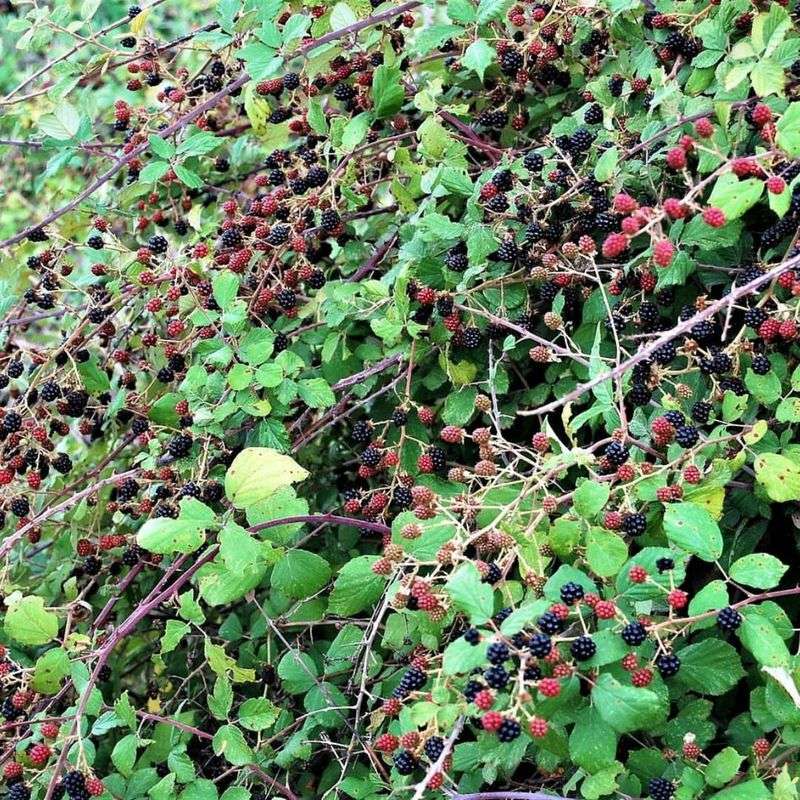
Thorny tangles might look messy, but birds view native raspberry and blackberry brambles as five-star hotels. The combination of food and fortress-like protection makes these plants irreplaceable in wildlife-friendly Ohio landscapes.
Summer berries attract birds first, with robins, catbirds, and thrashers feasting on the ripe fruit. Later, the dense, prickly canes provide winter shelter where predators cannot follow.
Small birds roost deep within the thorny maze, safe from hawks and cats.
Natural hedge formation happens quickly as brambles spread through underground runners. This growth habit creates expanding thickets that improve with age.
The layered structure offers shelter at multiple heights, accommodating birds of various sizes.
Easy growth requires little effort in Ohio. Brambles tolerate poor soil, handle full sun to partial shade, and spread readily without special care.
Plant them along property edges or in areas where their spreading nature becomes an asset rather than a problem.
Wildlife importance extends beyond birds. Pollinators visit the flowers, and small mammals browse the leaves and shelter in the thickets.
Managing brambles means cutting back old canes in late winter and controlling spread where necessary. Let them grow wild in designated areas for maximum benefit to Ohio’s bird populations and ecosystem health.
9. Bush Honeysuckle: Invasive With Junk Food Berries
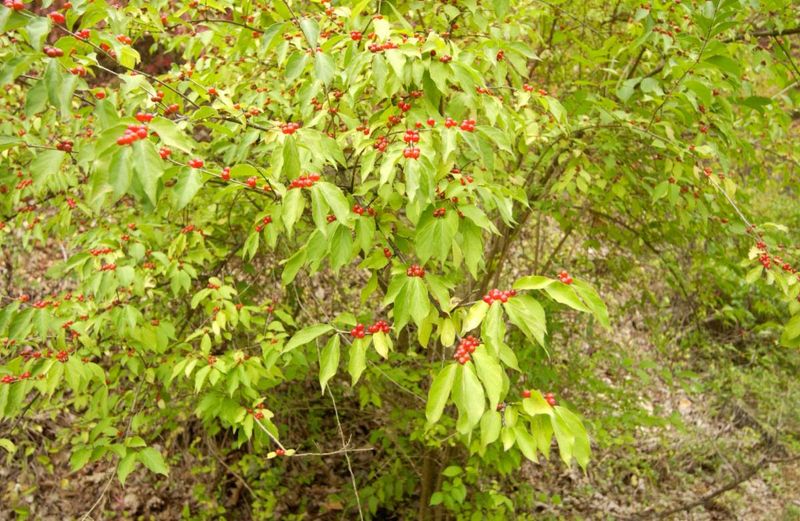
Pretty red berries and fast growth hide a serious problem. Bush honeysuckle ranks among Ohio’s worst invasive plants, spreading aggressively through yards, parks, and natural areas while offering birds little real nutritional value.
The berries contain far less fat and protein than native alternatives. Birds fill up on these empty calories, missing out on the quality nutrition they need for winter survival.
Studies show birds eating primarily invasive berries often suffer poorer health outcomes in Ohio.
Aggressive spread happens through bird droppings containing seeds. A single shrub produces thousands of berries, which birds distribute across miles.
New plants sprout readily, forming dense thickets that shade out native wildflowers, grasses, and beneficial shrubs throughout Ohio landscapes.
Habitat displacement creates the biggest long-term problem. Where bush honeysuckle dominates, native plants vanish.
This reduces insect populations that birds need for feeding nestlings. The entire ecosystem suffers as diversity collapses under the invasive’s dominance.
Removing existing plants and replacing them with natives like winterberry or viburnum dramatically improves bird health. Pull small plants by hand or cut larger shrubs and treat stumps to prevent regrowth.
Choose any native alternative from this list to provide real nutrition and support healthy bird populations across Ohio instead of perpetuating this invasive problem.
10. Autumn Olive: Aggressive Habitat Invader
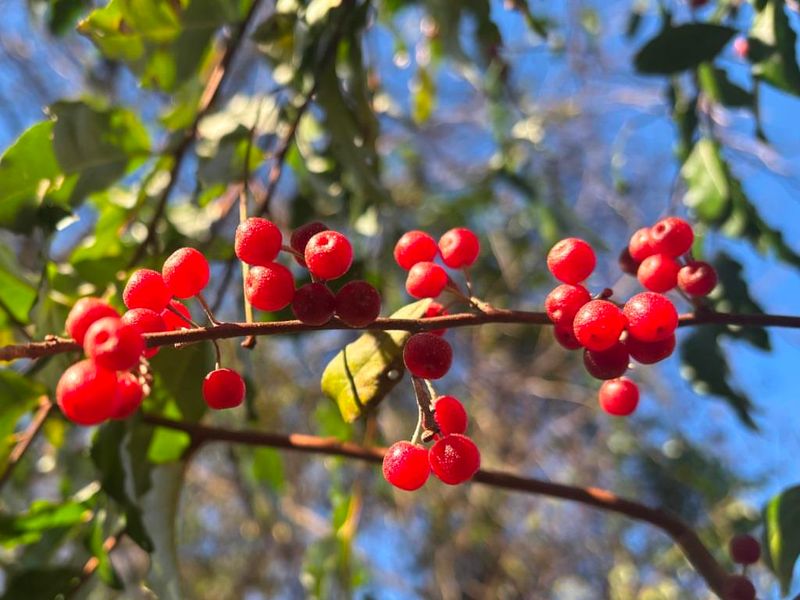
Silver-backed leaves and abundant red berries make autumn olive appear attractive, but this aggressive invader destroys more habitat than it helps. Rapid spread across Ohio has made this plant a serious ecological threat to native ecosystems.
Soil takeover happens through nitrogen-fixing root nodules that change nutrient levels. This alteration favors the invader while harming natives adapted to Ohio’s natural soil chemistry.
Dense stands form monocultures where little else survives, eliminating plant diversity.
Birds eagerly eat the berries and spread seeds far and wide through droppings. A single shrub produces thousands of fruits, and birds can distribute seeds across entire counties.
Germination rates run high, with new plants establishing quickly in disturbed areas throughout Ohio.
Ecological harm extends beyond simple crowding. Native shrubs that provide quality winter nutrition get shaded out and replaced.
Insect diversity plummets in autumn olive thickets, reducing food for baby birds in spring. The entire food web suffers under this invasion.
Planting native alternatives prevents these problems while actually helping birds thrive. Arrowwood viburnum, chokeberry, or elderberry offer superior nutrition and support complete ecosystems.
Remove existing autumn olive by cutting and treating stumps, then replace with natives that truly benefit Ohio’s birds and wildlife for generations to come.
11. Multiflora Rose: Thicket That Takes Over
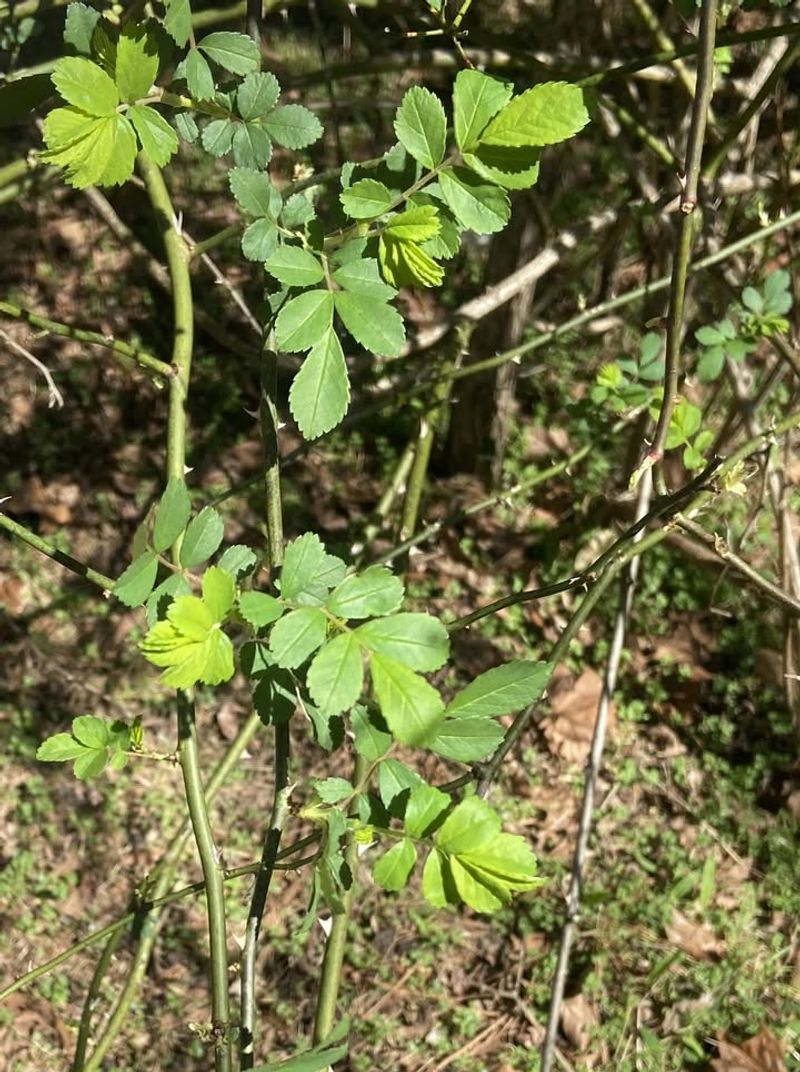
Vicious thorns and sprawling canes create impenetrable tangles that consume acres of Ohio land. Multiflora rose was once promoted for erosion control and wildlife cover, but this introduction from Asia has become one of the state’s most problematic invasive plants.
Dense spreading growth forms thickets so thick that nothing else survives underneath. The arching canes root where they touch ground, creating expanding colonies that march across pastures, forests, and yards.
Single plants can cover thousands of square feet within years.
Control difficulty frustrates landowners across Ohio. Thorns make hand removal painful and dangerous.
Cutting stimulates more vigorous regrowth. Seeds remain viable in soil for years, sprouting long after plants are removed.
Persistent effort over multiple seasons becomes necessary for successful elimination.
Impact on native habitats proves devastating. Where multiflora rose dominates, native shrubs and wildflowers disappear.
Bird nesting sites seem abundant in the thorny tangles, but poor plant diversity means fewer insects for feeding nestlings. The habitat becomes an ecological desert despite appearing thick with vegetation.
Long-term harm to bird ecosystems justifies removal efforts. Native brambles provide similar thorny shelter while supporting complete food webs.
Replace multiflora rose with roughleaf dogwood, native raspberries, or other beneficial shrubs that help rather than harm Ohio’s environment and bird populations.
12. Privet: Bird-Spread Troublemaker
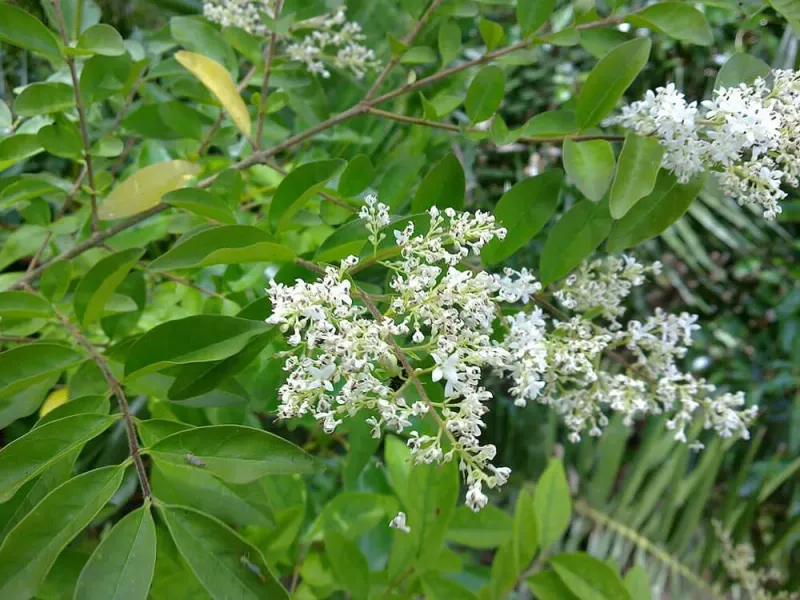
Tidy hedges in suburban yards seem harmless, but privet escapes cultivation constantly across Ohio. Birds eat the small dark berries and spread seeds into natural areas, where this invasive shrub outcompetes natives and reduces overall plant diversity.
Spread through birds happens efficiently and over long distances. The berries offer minimal nutrition but birds consume them anyway.
Seeds pass through digestive systems and get deposited miles from parent plants, establishing new colonies throughout Ohio’s forests and parks.
Biodiversity reduction follows wherever privet becomes established. The dense shade cast by privet leaves prevents native wildflowers and shrubs from growing underneath.
Forest floors once rich with spring ephemerals become barren under privet canopies. Insect populations crash without diverse native plants to support them.
Competition with native shrubs proves especially damaging. Privet leafs out earlier in spring and holds leaves later in fall than natives.
This extended growing season gives it an unfair advantage, allowing it to outcompete beneficial plants that evolved in Ohio’s natural conditions.
Replacing privet with native alternatives improves landscapes immediately. Winterberry, viburnum, or dogwood species provide better winter bird food while supporting healthy ecosystems.
Remove privet by cutting and treating stumps to prevent regrowth. Choose natives that work with Ohio’s environment rather than against it for truly bird-friendly landscapes that benefit all wildlife.