The 11 Drought-Tolerant Perennials Oregon Gardeners Should Plant This Spring
Spring in Oregon often brings rain, but smart gardeners know dry days always return. Planting drought tolerant perennials now is one of the easiest ways to build a garden that stays beautiful without constant watering later.
These tough, reliable plants are made to handle changing conditions, from wet spring soil to warmer, drier summers, all while coming back year after year.
Even better, many offer long blooms, attract pollinators, and need far less maintenance once established.
That means less time dragging hoses, lower water use, and a garden that keeps performing even when the weather shifts. The key is choosing perennials that are both resilient and well suited to Oregon’s climate.
1. Russian Sage (Perovskia atriplicifolia)
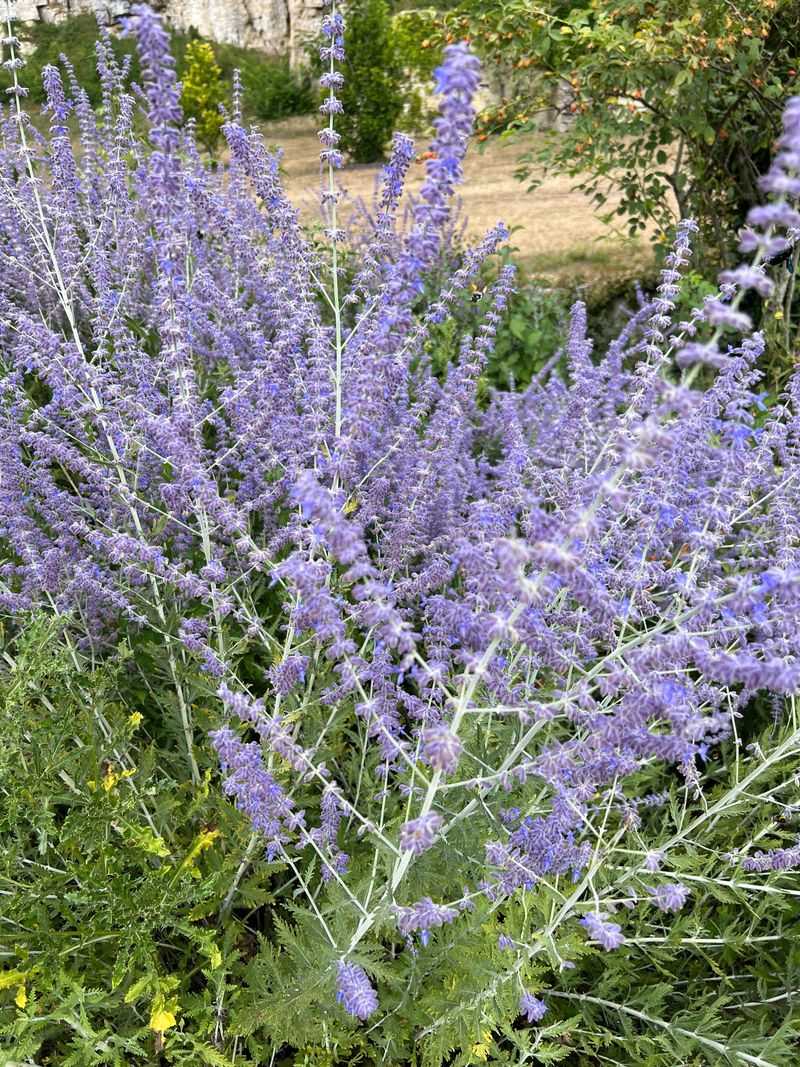
Planting Russian Sage early in the season gives this tough perennial the head start it needs to develop deep roots before summer. Once established, it handles Oregon’s dry spells beautifully, thriving in full sun with minimal supplemental water.
The silvery foliage and tall lavender-blue flower spikes create a stunning vertical element in your garden from July through September.
Choose a location with excellent drainage, as Russian Sage won’t tolerate soggy soil through Oregon’s wet winters. Sandy or loamy soil works best, and you can plant it 2 to 3 feet apart to allow for its mature spread.
This plant grows 3 to 4 feet tall and equally wide, making it perfect for mid-border placements or mass plantings.
Pruning back to 6 inches in early spring encourages bushier growth and more flower production. Russian Sage pairs wonderfully with Sedum, Echinacea, or ornamental grasses, creating textural contrast while supporting pollinators.
Its aromatic foliage also deters deer, making it ideal for Oregon gardens where wildlife browsing can be an issue.
2. Sedum (Stonecrop varieties)
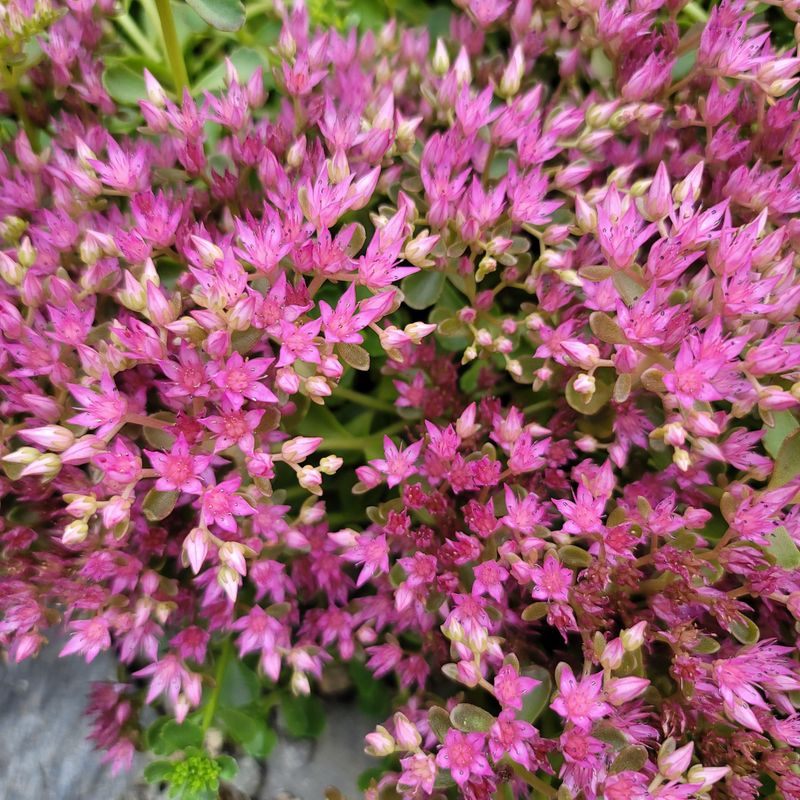
Few perennials match Sedum’s ability to survive on almost nothing. These succulent plants store water in their thick leaves, allowing them to breeze through Oregon’s driest months without complaint.
Varieties like ‘Autumn Joy’ and ‘Herbstfreude’ offer late-season blooms that transition from pink to copper-red, providing visual interest when many other plants have faded.
Planting Sedum in early spring allows roots to anchor before heat arrives. They prefer full sun and well-drained soil, performing especially well in rocky or sandy conditions that mimic their native habitats.
Space upright varieties 18 to 24 inches apart, while low-growing types can be planted closer for ground cover effects.
Sedum requires virtually no fertilization and benefits from neglect rather than overwatering. Cut back spent flower heads in late winter to tidy up the garden, though many gardeners leave the dried blooms for winter structure and bird interest.
These plants work beautifully in rock gardens, along pathways, or mixed with other xeric perennials like Yarrow and Coreopsis for a cohesive drought-tolerant design.
3. Lavender (Lavandula spp.)
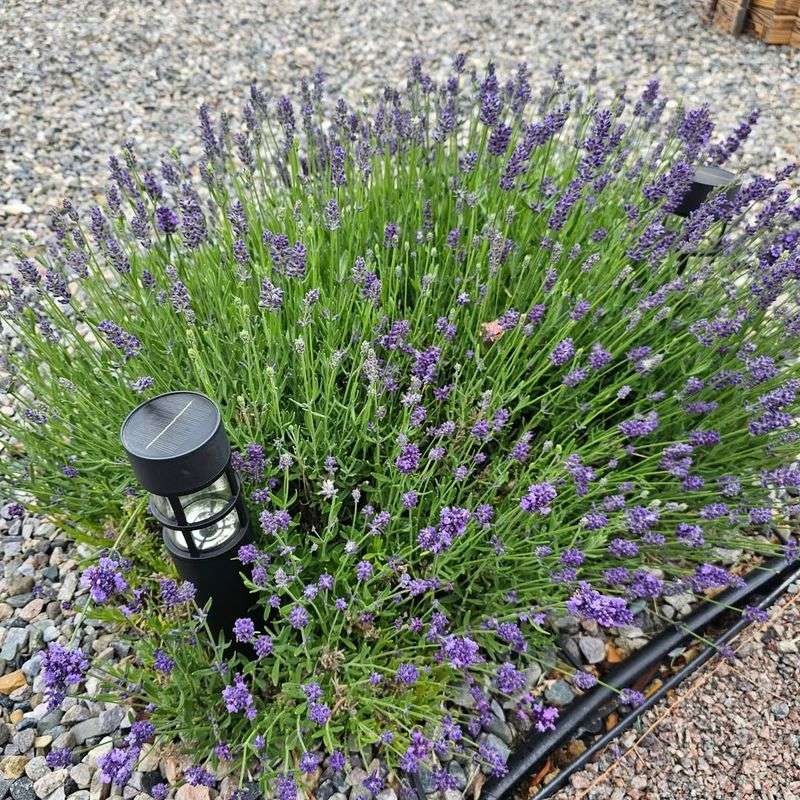
Lavender brings Mediterranean charm to Oregon gardens while demanding little water once established. English Lavender (Lavandula angustifolia) handles cooler coastal conditions better than other species, while Spanish and French varieties thrive in warmer inland areas.
Early planting gives these woody perennials time to develop strong root systems before facing summer heat.
Your Oregon Garden Changes Every Week. Your Plan Should Too.
Gardening in Oregon changes quickly throughout the season. Every Friday you’ll receive a simple weekly plan showing exactly what to plant, prune, fertilize, harvest, and protect so you never miss the right timing.
Site selection matters significantly with Lavender. Choose locations with full sun exposure and excellent drainage, as winter wetness causes more problems than summer drought.
Amending heavy clay soils with gravel or coarse sand improves drainage and prevents root rot. Space plants 18 to 24 inches apart, allowing air circulation that reduces disease pressure.
Lavender blooms from June through August, attracting bees and butterflies while filling your garden with fragrance. Harvest flower spikes just as they open for culinary use or dried arrangements.
Prune plants lightly after flowering and again in early spring, removing about one-third of the growth to maintain compact shape. Avoid cutting into old wood, as Lavender struggles to regenerate from bare stems.
4. Yarrow (Achillea millefolium)
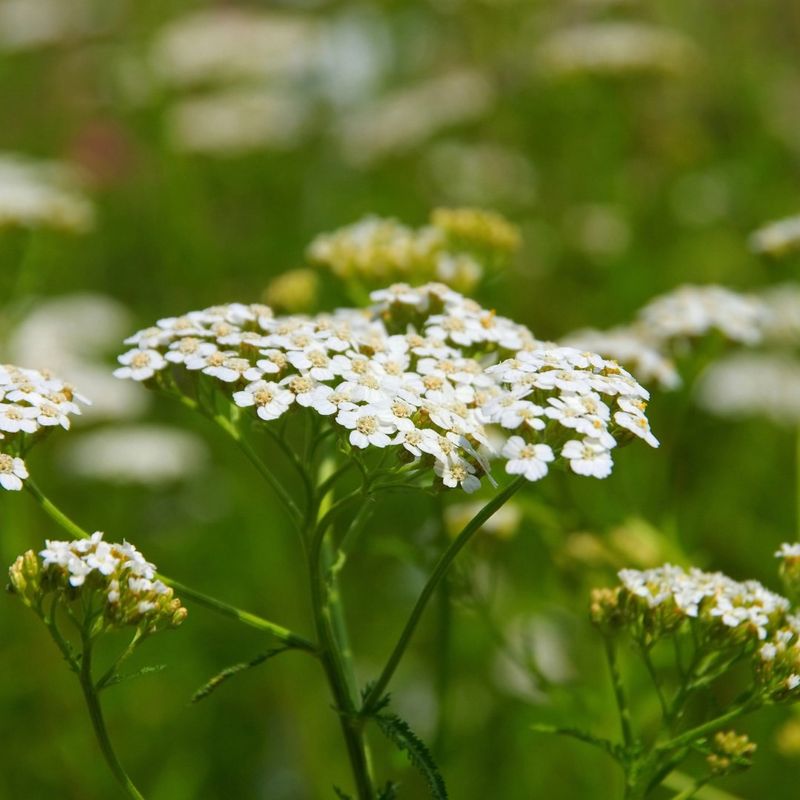
This native plant handles Oregon’s climate naturally, requiring minimal intervention once roots establish. Its fern-like foliage stays attractive even when plants aren’t blooming, providing textural interest throughout the growing season.
Plant Yarrow in full sun with average to poor soil—rich soil actually causes floppy growth that requires staking. Space plants 18 inches apart and water regularly during the first season to encourage deep rooting.
After establishment, Yarrow tolerates extended dry periods without wilting or losing vigor, making it perfect for low-maintenance landscapes.
Flowers appear from June through September, attracting beneficial insects including ladybugs and lacewings that help control garden pests. Deadheading spent blooms encourages additional flowering, though allowing some seed heads to remain provides winter interest and bird food.
Divide clumps every three to four years to maintain vigor and prevent overcrowding. Yarrow combines beautifully with ornamental grasses, Salvia, and Agastache in naturalistic prairie-style plantings.
5. Echinacea (Coneflower)
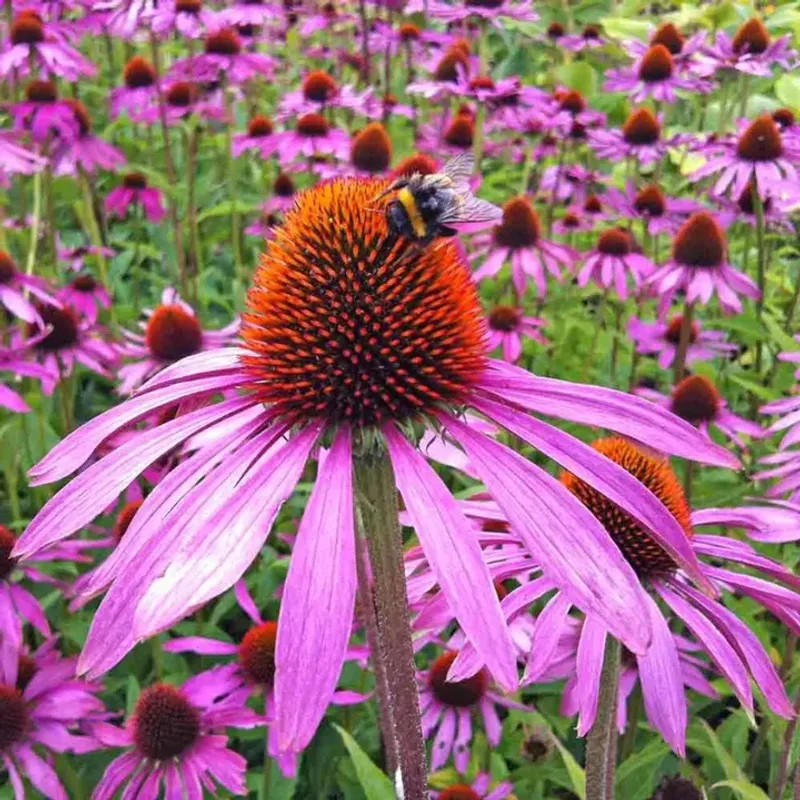
Coneflowers bring bold color and pollinator appeal to Oregon gardens while handling drought with remarkable resilience. The classic purple Echinacea purpurea remains popular, but newer cultivars offer white, yellow, orange, and coral options.
These prairie natives develop deep taproots that access moisture unavailable to shallow-rooted plants, explaining their drought tolerance.
Early spring planting allows Echinacea to establish before blooming begins in mid-summer. Choose sites with full sun to light shade and well-drained soil.
While adaptable to various soil types, Coneflowers perform best in loamy conditions with moderate fertility. Space plants 18 to 24 inches apart, giving them room to form substantial clumps over time.
Blooms appear from July through September, providing nectar for butterflies and seeds for goldfinches in late season. Leaving seed heads standing through winter offers food for birds and architectural interest in the dormant garden.
Echinacea rarely needs division and actually resents disturbance once established. Combine with ornamental grasses, Rudbeckia, or Salvia for a naturalistic meadow effect that requires minimal maintenance.
6. Salvia (Perennial varieties)
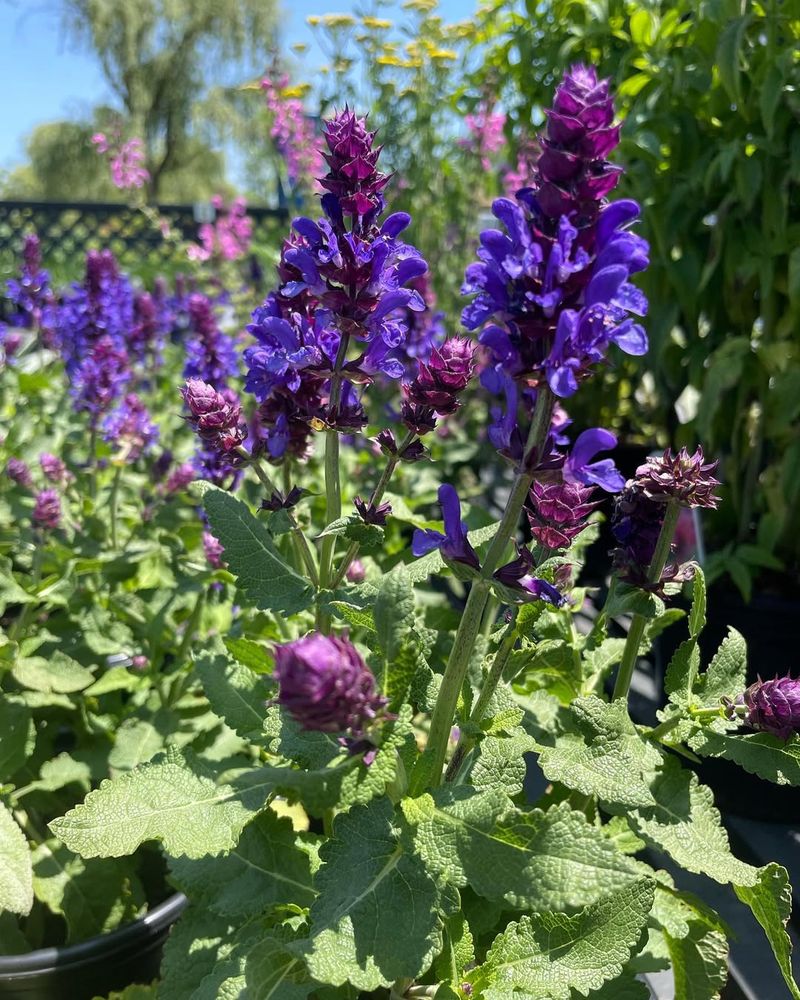
Perennial Salvias offer some of the longest blooming periods of any drought-tolerant plant, with many varieties flowering from May through October.
‘May Night’ produces deep indigo spikes, while ‘Caradonna’ features striking purple-black stems that contrast beautifully with violet-blue flowers. These plants thrive in Oregon’s climate, handling both coastal fog and inland heat with equal success.
Plant Salvia in full sun with well-drained soil, spacing them 18 to 24 inches apart depending on variety. Early planting encourages strong root development before flowering begins.
Water regularly during establishment, then reduce frequency as plants mature. Perennial Salvias actually bloom more prolifically with moderate water stress, producing more flowers when slightly dry.
Shearing plants back by one-third after the first flush of blooms encourages reblooming and maintains compact growth. Salvia’s aromatic foliage deters deer and rabbits while attracting hummingbirds and bees.
These plants combine beautifully with roses, providing vertical interest and filling gaps between larger shrubs. Divide clumps every four to five years to maintain vigor and prevent woody centers from developing.
7. Agastache (Hummingbird Mint)
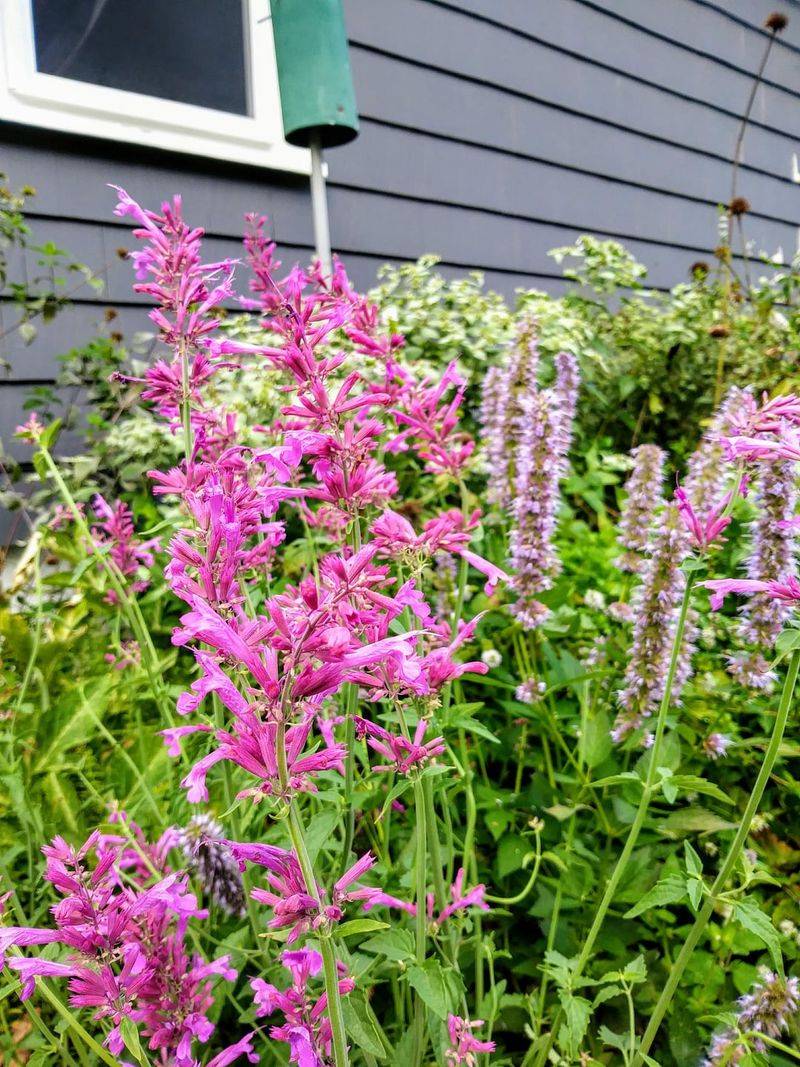
Hummingbirds can’t resist Agastache’s tubular flowers, making this perennial a favorite for wildlife enthusiasts. Varieties like ‘Blue Fortune’ and ‘Sunset’ offer long blooming periods from June through September with minimal water requirements.
The aromatic foliage smells like licorice or mint, adding sensory interest beyond visual appeal.
Agastache demands excellent drainage and full sun to perform well in Oregon gardens. Heavy clay soils amended with gravel or planted in raised beds work better than flat ground that stays wet during winter.
Space plants 15 to 18 inches apart, allowing air circulation that prevents powdery mildew in humid conditions. Early planting gives roots time to establish before summer flowering begins.
These plants tolerate heat, drought, and poor soil once established, making them ideal for low-maintenance landscapes. Deadheading isn’t necessary, as Agastache continues blooming without intervention.
Cut plants back to basal foliage in late fall or early spring. Combine with Penstemon, Gaillardia, and ornamental grasses for a vibrant pollinator garden that requires minimal supplemental water.
Agastache typically lives three to five years, so plan to replace or divide periodically.
8. Coreopsis
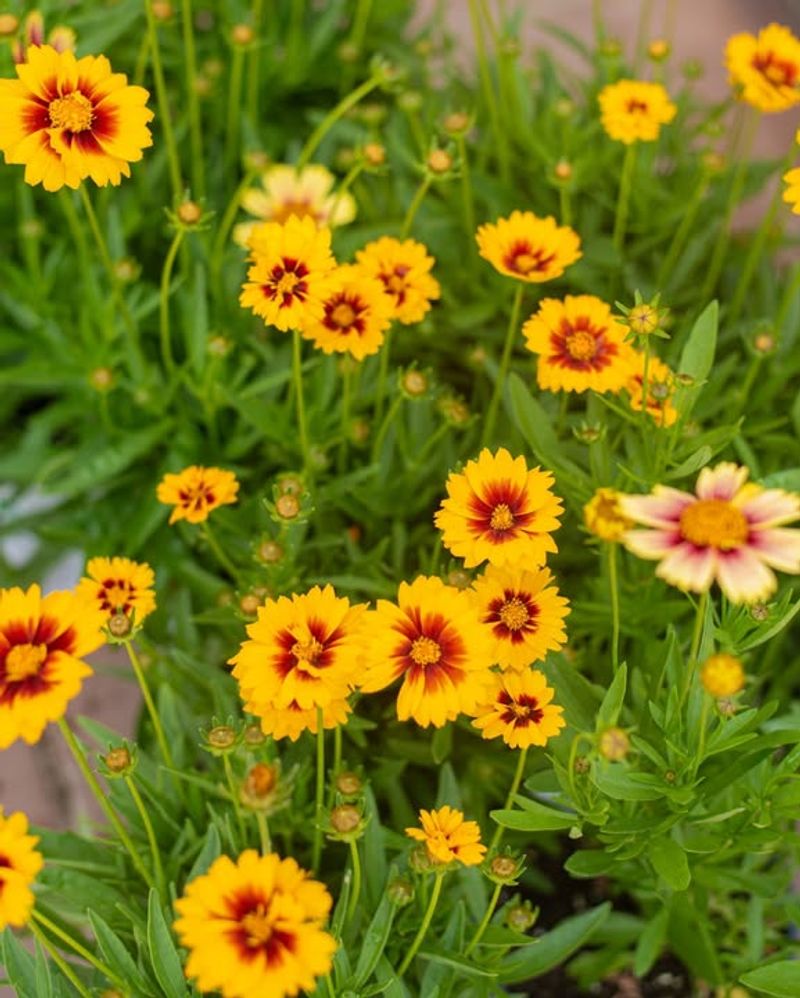
Cheerful yellow blooms characterize most Coreopsis varieties, though newer cultivars offer pink, coral, and bicolor options.
These North American natives handle Oregon’s growing conditions naturally, requiring minimal care once roots establish. ‘Moonbeam’ produces pale yellow flowers on compact plants, while ‘Zagreb’ offers golden blooms on slightly taller stems.
Full sun and well-drained soil suit Coreopsis best, though plants tolerate partial shade in warmer inland areas. Space plants 12 to 18 inches apart, depending on variety.
Early spring planting allows establishment before peak blooming begins in June. Water regularly during the first season, then reduce frequency as plants mature and develop drought tolerance.
Coreopsis blooms from early summer through fall, providing continuous color with minimal deadheading. Shearing plants back by half in mid-summer encourages fresh growth and additional flowering.
These plants self-seed moderately, naturalizing in garden beds without becoming invasive. Coreopsis attracts butterflies and beneficial insects while deer typically avoid the foliage.
Combine with purple-flowered perennials like Salvia or Echinacea for striking color contrasts that enliven sunny borders.
9. Penstemon (Beardtongue)
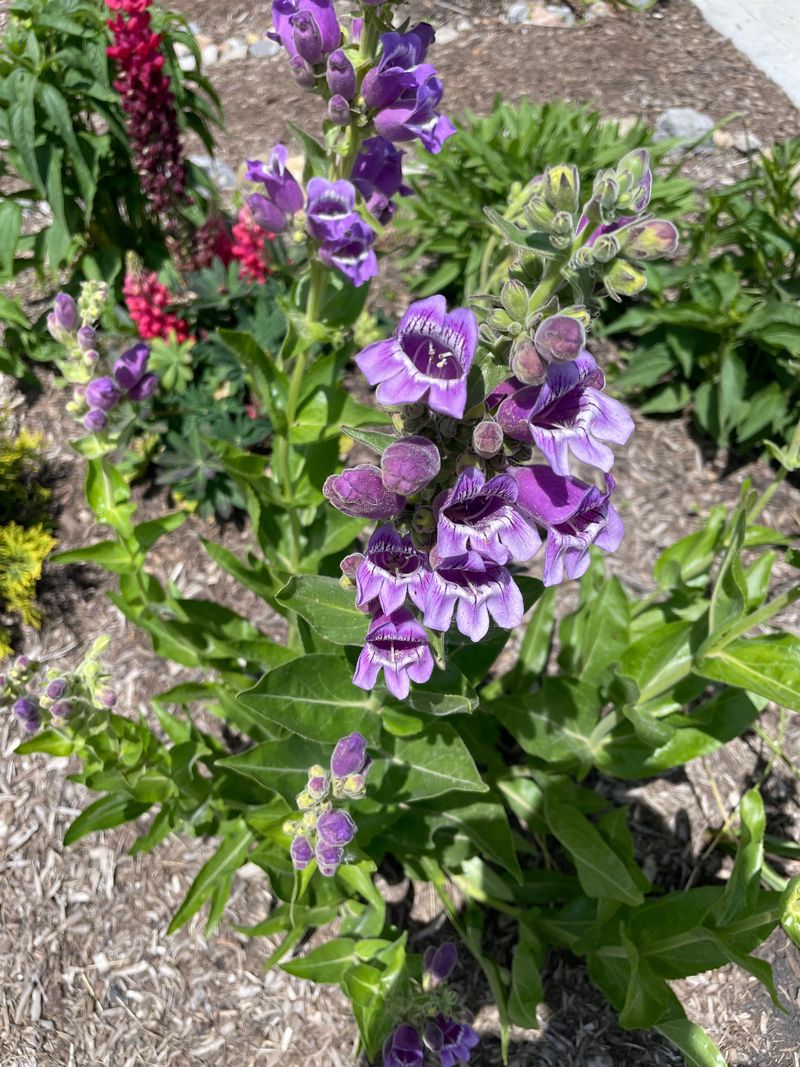
Native Penstemons thrive in Oregon gardens, offering tubular flowers that hummingbirds adore. Rocky Mountain Penstemon (P. strictus) produces stunning blue-purple spikes, while Firecracker Penstemon (P. eatonii) features brilliant red blooms.
These plants evolved in dry western conditions, making them naturally suited to low-water landscapes.
Plant Penstemon in full sun with excellent drainage—soggy winter soil causes more failures than any other factor. Sandy or gravelly soil works perfectly, while clay soils benefit from amendments or raised bed planting.
Space plants 12 to 18 inches apart and water regularly during establishment. Once roots develop, Penstemon handles extended drought without wilting or reduced flowering.
Blooms appear from May through July, attracting hummingbirds and native bees. Deadheading extends flowering slightly, though it isn’t necessary for plant health.
Cut stems back to basal foliage after blooming finishes. Penstemon typically lives three to five years, so treating it as a short-lived perennial helps set appropriate expectations.
Combine with other natives like Coreopsis, Yarrow, and ornamental grasses for authentic regional landscapes that support local wildlife while conserving water.
10. Gaillardia (Blanket Flower)
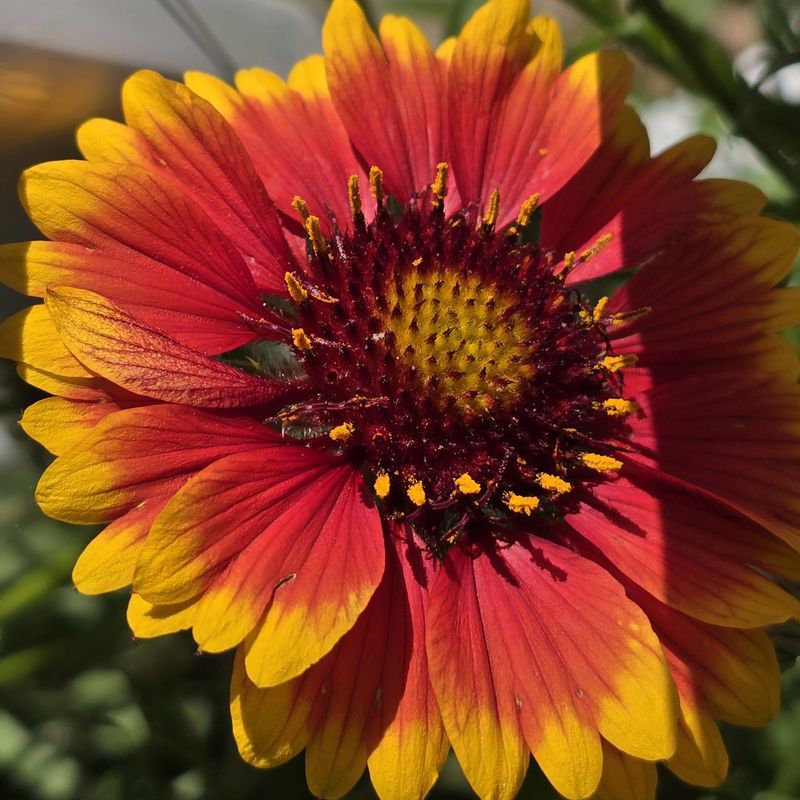
Blanket Flower’s vibrant red and yellow blooms bring southwestern flair to Oregon gardens.
These tough perennials handle heat, drought, and poor soil without complaint, making them perfect for low-maintenance landscapes.
Varieties like ‘Fanfare’ offer trumpet-shaped petals, while ‘Goblin’ stays compact at 12 inches tall with classic daisy-form flowers.
Gaillardia requires full sun and excellent drainage to thrive. Heavy soil causes root rot, so amending with sand or gravel improves success rates significantly.
Space plants 12 to 15 inches apart and water regularly during establishment. Once roots develop, Blanket Flower tolerates extended dry periods without supplemental irrigation, even during Oregon’s driest summers.
Blooming begins in June and continues through September with regular deadheading. Removing spent flowers encourages continuous bloom production and prevents excessive self-seeding.
Gaillardia attracts butterflies and bees while deer typically avoid the foliage. These plants combine beautifully with blue-flowered perennials like Salvia or Agastache, creating complementary color schemes.
Divide clumps every two to three years to maintain vigor, as Gaillardia tends toward short-lived perennial behavior in some Oregon gardens.
11. Catmint (Nepeta spp.)
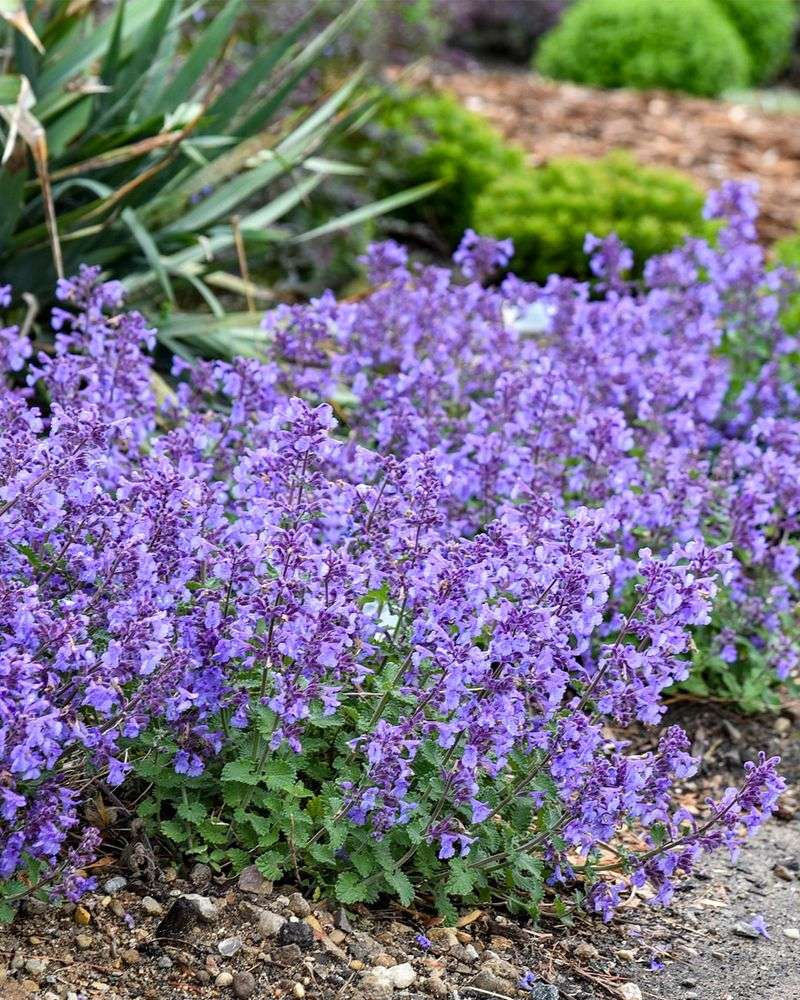
This gorgeous plant creates billowing mounds of lavender-blue flowers that soften garden edges beautifully.
‘Walker’s Low’ remains one of the most popular varieties, growing 18 to 24 inches tall with exceptional drought tolerance. Despite its name, cats show less interest in ornamental Catmint than in true catnip, though some feline attention may occur.
Full sun and well-drained soil suit Catmint best, though plants tolerate light shade in warmer areas. Space plants 18 to 24 inches apart, allowing room for their spreading habit.
Early planting encourages establishment before summer flowering begins. Water regularly during the first season, then reduce frequency as plants mature and develop deep roots that access moisture efficiently.
Blooms appear from May through September, with peak flowering in early summer. Shearing plants back by half after initial flowering encourages reblooming and maintains compact growth.
Catmint’s aromatic foliage deters deer and rabbits while attracting bees and butterflies. These plants work beautifully as edging along pathways, in mass plantings, or paired with roses where they hide bare lower stems.
Catmint rarely needs division and actually resents disturbance once established in your landscape.