These 10 Pollinator Plants Thrive In California Heat And Drought
California heat and drought can be tough on gardens, but some plants handle it like champions while still feeding bees, butterflies, and hummingbirds.
The secret is choosing pollinator friendly plants that are naturally built for dry summers, strong sun, and low water.
Once established, these resilient bloomers keep producing nectar rich flowers even when conditions get harsh, turning your yard into a buzzing, fluttering oasis of life.
Even better, many need very little maintenance, saving you time, water, and effort while supporting local wildlife.
A few smart choices can transform a thirsty garden into a vibrant, drought wise habitat that stays colorful and alive through the hottest months.
Get ready for a garden that stays colorful, tough, and buzzing with life, these sun loving, drought smart plants know how to steal the show even in serious heat.
1. Sunflower (Helianthus annuus)
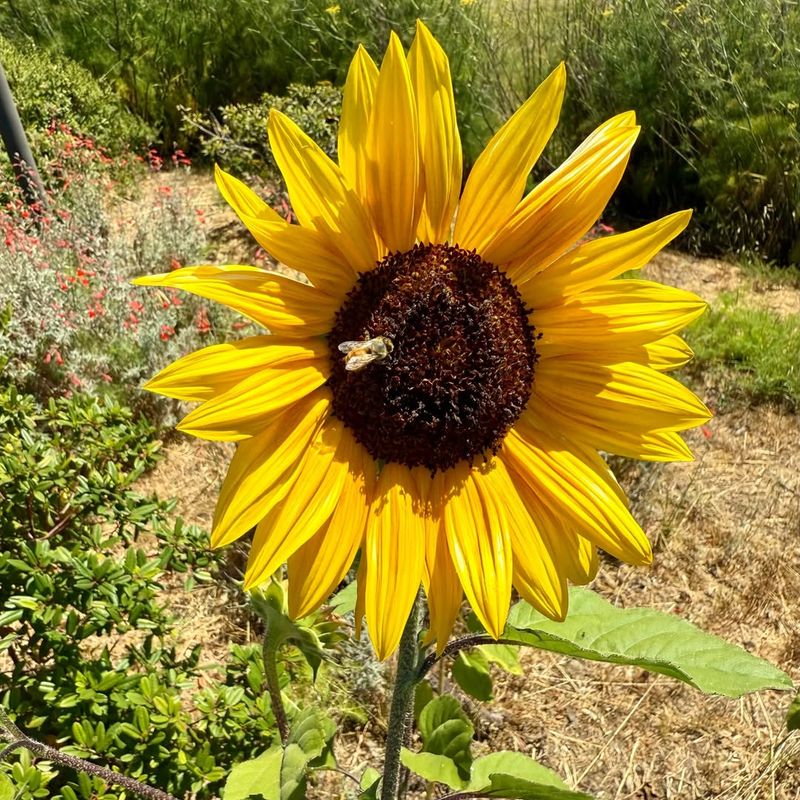
Annual flowers often get dismissed as water-wasters, but sunflowers challenge that assumption by tolerating heat and moderate drought while supporting dozens of pollinator species.
The large flower heads contain hundreds of individual florets, each producing pollen and nectar that feed bees, beetles, and butterflies throughout summer and fall.
Native bees pack sunflower pollen into leg baskets, making multiple trips daily to provision their nests. Bumblebees work the outer ray florets, while smaller native bees focus on the central disk.
Later in the season, goldfinches and other birds harvest the developing seeds, extending wildlife value beyond the bloom period.
Sunflowers evolved in hot, dry regions and handle California heat remarkably well. Their deep taproots access moisture other annuals can’t reach, reducing irrigation needs compared to typical bedding plants.
Full sun is mandatory for strong stems and large flowers, and well-draining soil prevents stem rot.
Plant seeds directly in spring after frost danger passes, spacing them 12 to 18 inches apart. Water regularly until plants reach two feet tall, then reduce frequency to weekly or less.
Taller varieties may need staking in windy locations. Leave seed heads standing after bloom to feed birds through fall and winter, providing wildlife value long after flowers fade.
2. California Fuchsia (Epilobium canum)
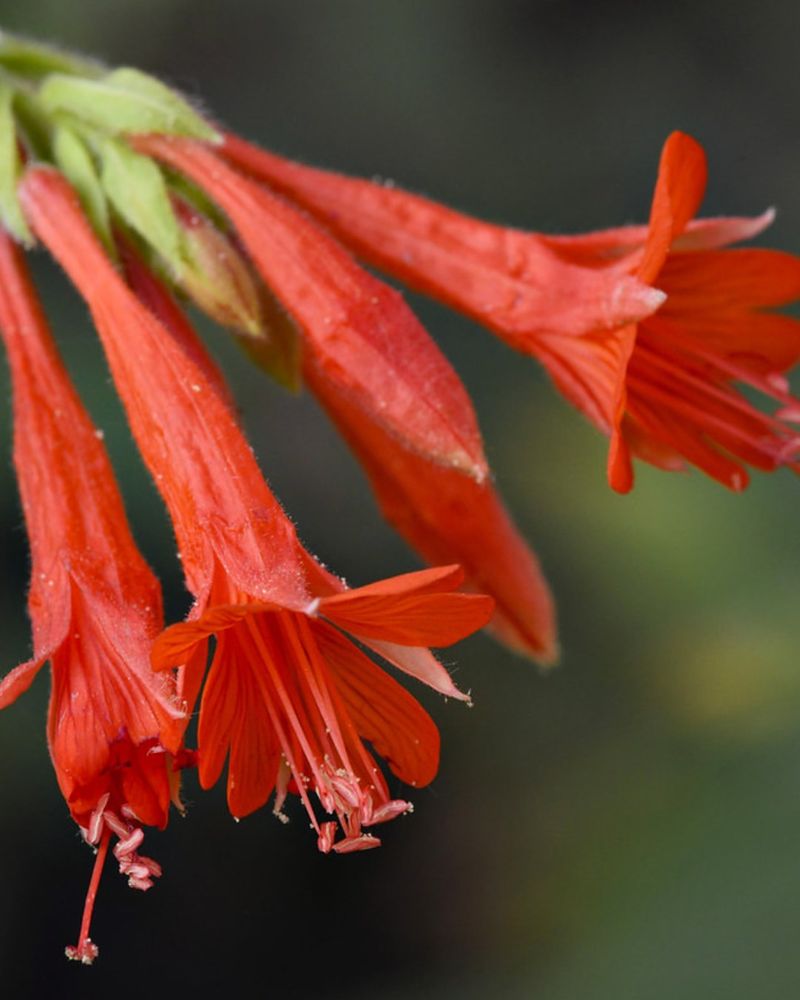
Late summer can feel like a pollinator desert when most flowers have faded and hummingbirds are desperately searching for nectar.
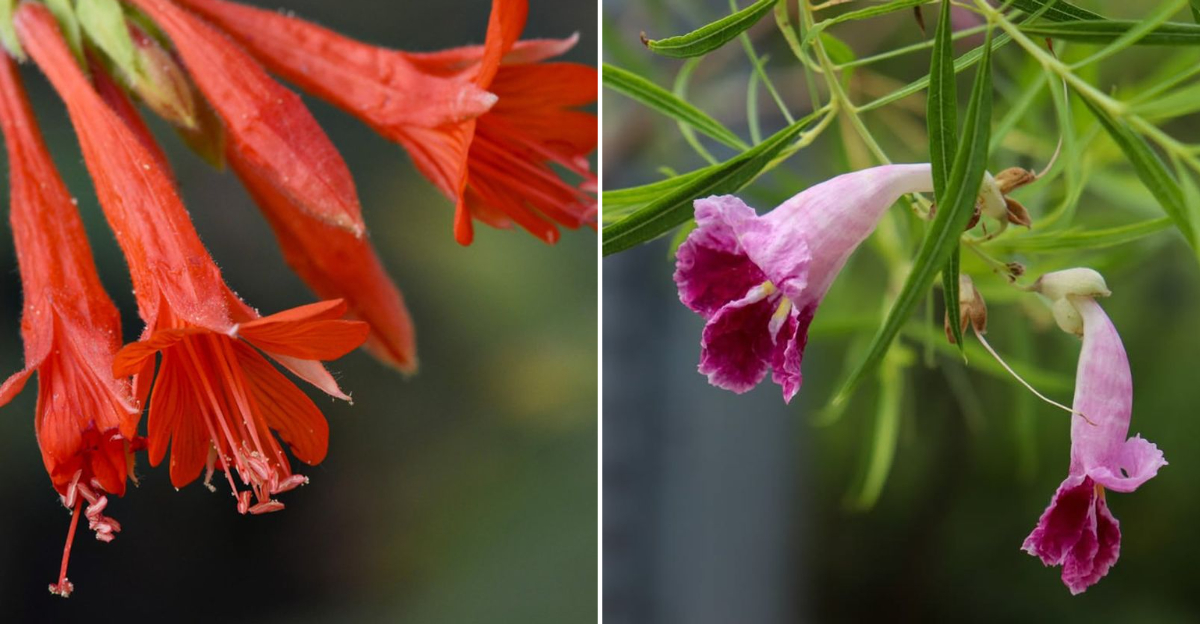
California fuchsia bursts into bloom exactly when wildlife needs it most, producing brilliant red-orange tubular flowers from August through October.
Hummingbirds rely heavily on this plant during fall migration, and you’ll see them visiting dozens of times each day. The tubular shape perfectly matches hummingbird beaks, making nectar access easy and efficient.
Heat and drought barely faze this California native once established. Its silvery-green foliage actually helps reflect intense sunlight, while deep roots tap into moisture other plants can’t reach.
Full sun and well-draining soil keep it happiest, though it tolerates some afternoon shade in inland valleys.
Water deeply once a week during the first summer, then cut back to monthly irrigation or less. Coastal gardens may need no supplemental water after year two.
The plant spreads gradually through underground runners, creating colorful patches that support more pollinators over time. Prune back by half in late winter to encourage compact growth and abundant fall blooms.
Your California Garden Changes Every Week. Your Plan Should Too.
Gardening in California changes quickly throughout the season. Every Friday you’ll receive a simple weekly plan showing exactly what to plant, prune, fertilize, harvest, and protect so you never miss the right timing.
3. Cleveland Sage (Salvia clevelandii)
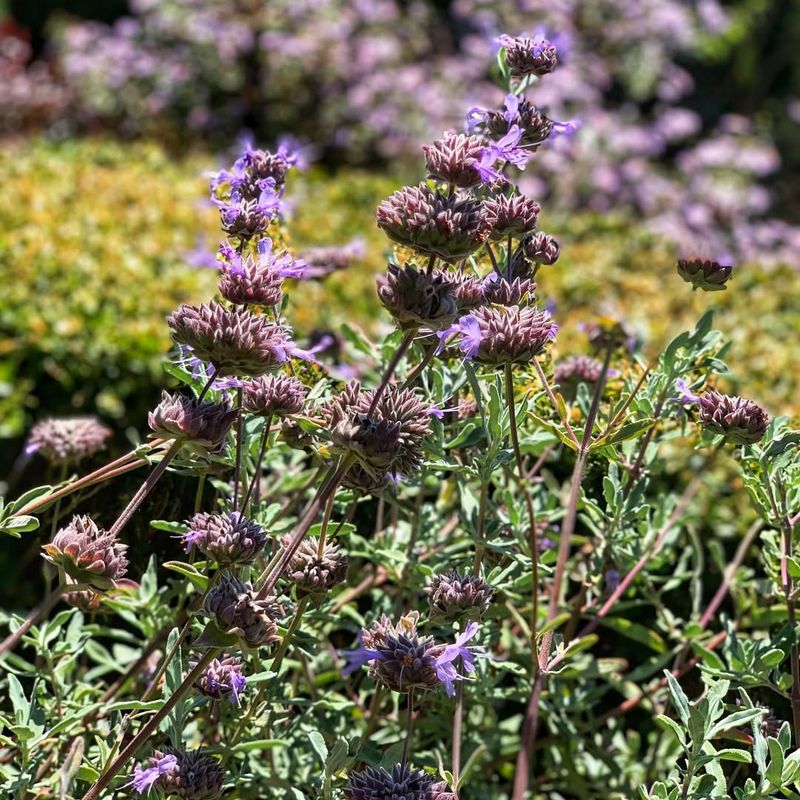
Bees can detect the fragrance of Cleveland sage from remarkable distances, making this shrub a pollinator magnet during late spring and early summer.
The intensely aromatic leaves release essential oils that perfume entire gardens, especially after rain or when temperatures rise.
Native bees, honeybees, and bumblebees cover the purple-blue flower spikes throughout May and June. Each flower cluster produces abundant nectar, and the tubular blooms provide perfect landing platforms for bee foraging.
This sage thrives in California’s toughest conditions because it evolved in our coastal sage scrub ecosystems. Established plants survive on rainfall alone in most regions, though inland gardens benefit from one deep watering per month during extreme heat.
Full sun and excellent drainage are non-negotiable requirements.
The gray-green foliage stays attractive year-round, and the compact rounded form needs minimal pruning. Plant it where people can brush against the leaves and release that incredible scent.
Avoid overwatering, which causes root rot and weakens the plant’s natural drought defenses. After bloom, lightly trim spent flowers to maintain shape without cutting into old wood, which doesn’t regenerate easily.
4. California Buckwheat (Eriogonum fasciculatum)
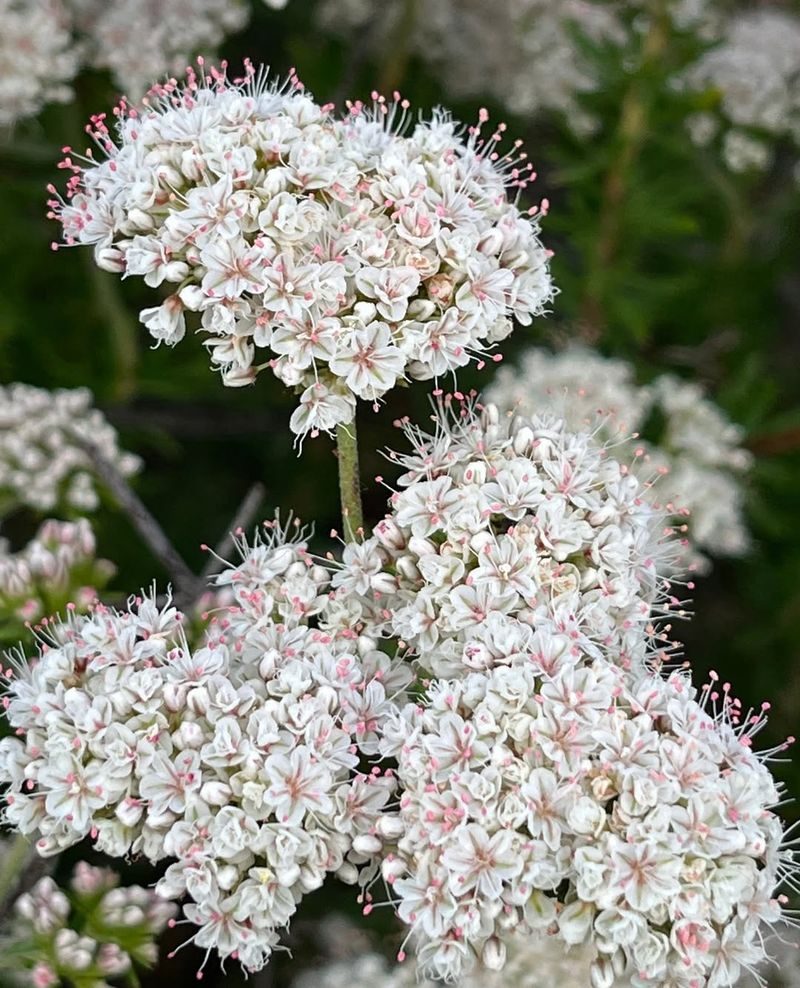
Few plants support as many pollinator species as California buckwheat, which hosts over 60 different butterfly species and countless native bees.
The small clustered flowers may look modest, but they produce abundant nectar from spring through fall, creating a reliable food source when other plants fade.
Butterflies particularly love the flat-topped flower clusters that provide easy landing surfaces. Watch closely and you’ll spot swallowtails, painted ladies, hairstreaks, and blues visiting throughout the day.
Native bees harvest both nectar and pollen, making multiple trips as flowers mature from white to pink to rusty red.
Extreme heat and zero summer water don’t faze established buckwheat plants. Their deep taproots access moisture far below the surface, while small leaves reduce water loss through transpiration.
Full sun and fast-draining soil produce the healthiest specimens, though plants tolerate rocky or sandy conditions that defeat other species.
Water weekly during the first summer only, then let nature take over. The rounded shrub form needs no pruning, though you can lightly shape plants in late winter if desired.
Coastal and inland gardens both succeed with this adaptable native.
5. Desert Willow (Chilopsis linearis)
Scorching inland valleys demand tough plants that won’t collapse when temperatures hit triple digits for weeks.
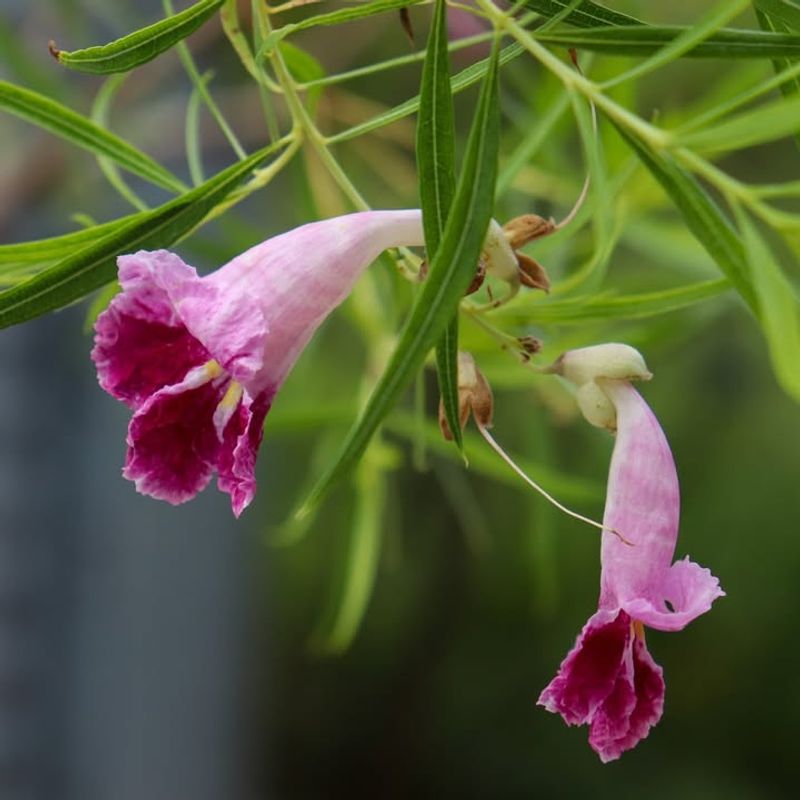
Desert willow answers that challenge with spectacular orchid-like flowers that keep blooming through the hottest months, providing critical nectar when hummingbirds need it most.
The trumpet-shaped flowers come in shades of pink, purple, and white, attracting hummingbirds and carpenter bees throughout summer and fall.
Each bloom produces generous nectar, and the tree produces flowers continuously rather than in one big flush, extending the pollinator benefit across months.
Native to desert washes, this small tree evolved to handle extreme heat and drought. Established specimens survive on rainfall alone in most California climates, though one deep monthly watering during severe drought keeps blooms coming strong.
Full sun and excellent drainage are essential for success.
The narrow willow-like leaves create light, filtered shade without heavy water demands. Plant it as a patio tree or focal point where you can watch hummingbirds feed.
Water weekly during the first two summers to establish deep roots, then scale back dramatically. The tree drops leaves in winter, which is normal dormancy behavior rather than plant stress.
6. Yarrow (Achillea millefolium)
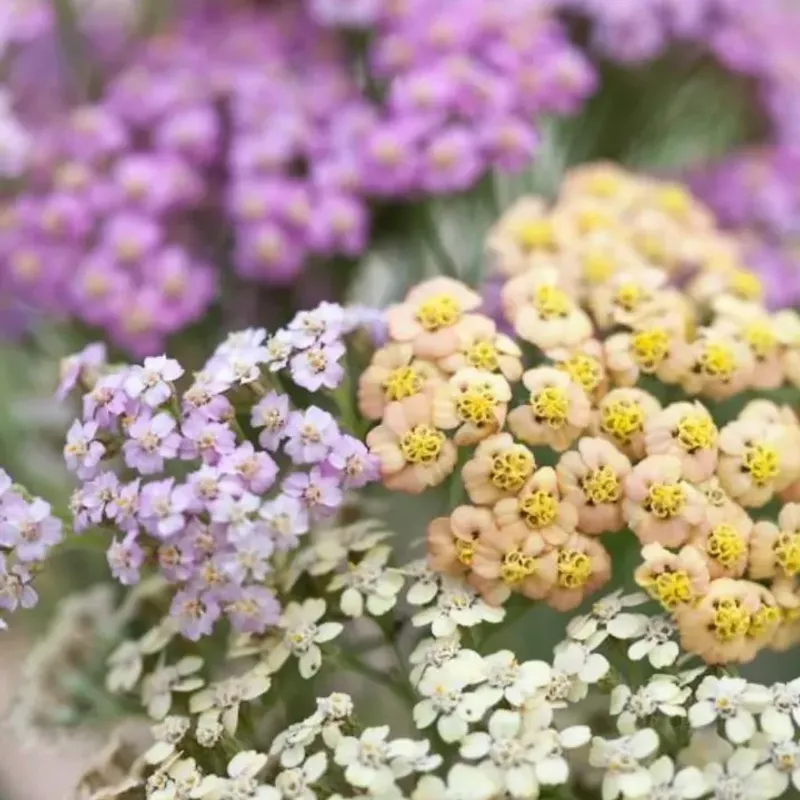
Beneficial insects need landing pads, and yarrow’s flat-topped flower clusters provide perfect platforms for tiny native bees, soldier beetles, and lacewings.
The clustered tiny flowers create accessible feeding stations for pollinators too small to manage larger blooms, supporting garden biodiversity that many people overlook.
Native bees swarm yarrow flowers throughout spring and summer, while butterflies stop by for quick nectar hits. The plant also attracts predatory insects that control aphids and other pests, making it valuable for both pollination and natural pest management.
California’s native yarrow tolerates heat and drought far better than European varieties sold in many nurseries. Once established, plants survive on rainfall alone in coastal areas and need only monthly watering inland.
Full sun produces the most flowers, though plants tolerate partial shade with slightly reduced blooming.
The ferny foliage stays low and spreading, making yarrow useful as a groundcover or meadow plant. Water regularly during the first summer, then cut back gradually.
Deadheading spent flowers encourages continuous blooming through fall. Plants spread slowly through underground runners, filling in bare spots without becoming aggressive.
Coastal gardens enjoy the longest bloom season, while inland plantings may go summer-dormant during extreme heat.
7. Milkweed (Asclepias spp.)
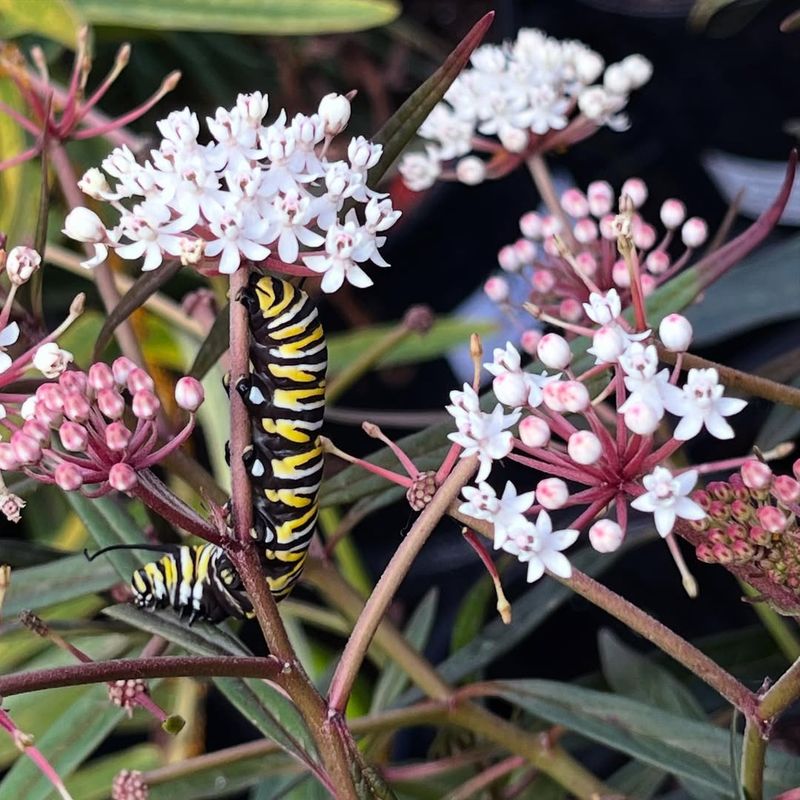
Monarch butterflies face serious population declines, and California gardeners can help by planting their essential host plant.
Milkweed provides the only food source for monarch caterpillars, while the nectar-rich flowers feed adult butterflies, bees, and other pollinators throughout summer and fall.
Several milkweed species thrive in California’s heat and drought, including narrow-leaf milkweed and showy milkweed. Monarchs lay eggs exclusively on milkweed leaves, and the caterpillars consume foliage voraciously before forming chrysalises.
Adult butterflies, bees, and beetles visit the fragrant flower clusters for abundant nectar.
Native California milkweeds evolved to handle our dry summers and hot temperatures. Narrow-leaf milkweed tolerates extreme heat and needs minimal water once established, while showy milkweed prefers slightly more moisture but still qualifies as drought-tolerant.
Both species need full sun and well-draining soil to thrive.
Plant milkweed in clusters rather than single specimens to attract more monarchs and support larger caterpillar populations. Water weekly during establishment, then reduce to every two weeks or monthly depending on species and location.
Don’t panic when caterpillars defoliate plants, that’s success! New growth emerges quickly.
Avoid tropical milkweed, which disrupts monarch migration patterns and harbors diseases. Stick with California native species for best results.
8. Penstemon (Penstemon spp.)
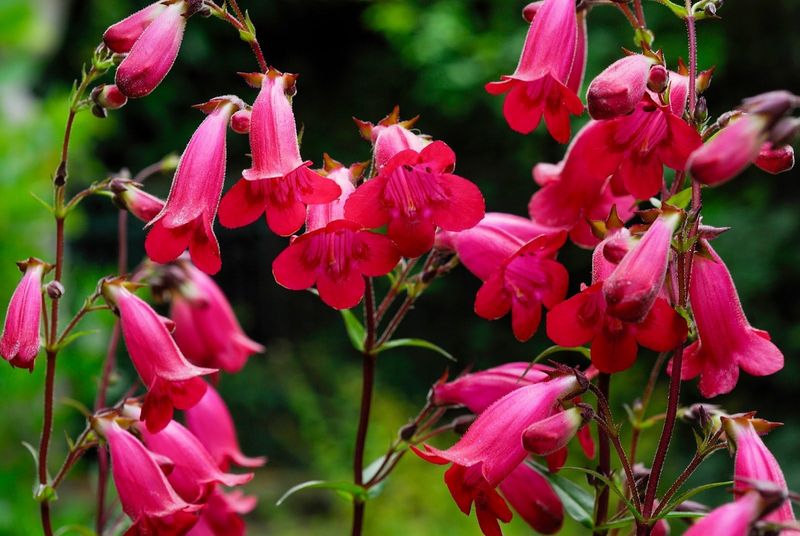
Tubular flowers evolved specifically for certain pollinators, and penstemons showcase this relationship beautifully. The tube shape matches bee tongue lengths perfectly, while the landing lip provides a stable platform for insects to work efficiently.
Different penstemon species bloom from spring through fall, extending pollinator support across seasons.
Native bees, bumblebees, and hummingbirds all visit penstemon flowers regularly. Watch bees crawl deep into tubes to reach nectar, emerging dusted with pollen that transfers to the next flower.
The bright colors, purple, pink, red, or blue depending on species—help pollinators locate flowers from considerable distances.
Most penstemon species native to California handle heat and drought exceptionally well once roots establish. They evolved in rocky, well-drained soils with seasonal rainfall patterns, making them naturally adapted to our Mediterranean climate.
Full sun produces the most prolific blooming, though afternoon shade helps in the hottest inland valleys.
Choose species appropriate to your region, foothill penstemon for inland areas, island penstemon for coastal gardens. Water deeply once or twice monthly during the first summer, then reduce to monthly or less.
Good drainage prevents root rot, the main cause of penstemon failure in gardens.
9. Hummingbird Sage (Salvia spathacea)
Shade gardeners often struggle to find pollinator plants that perform well under trees or on north-facing slopes.
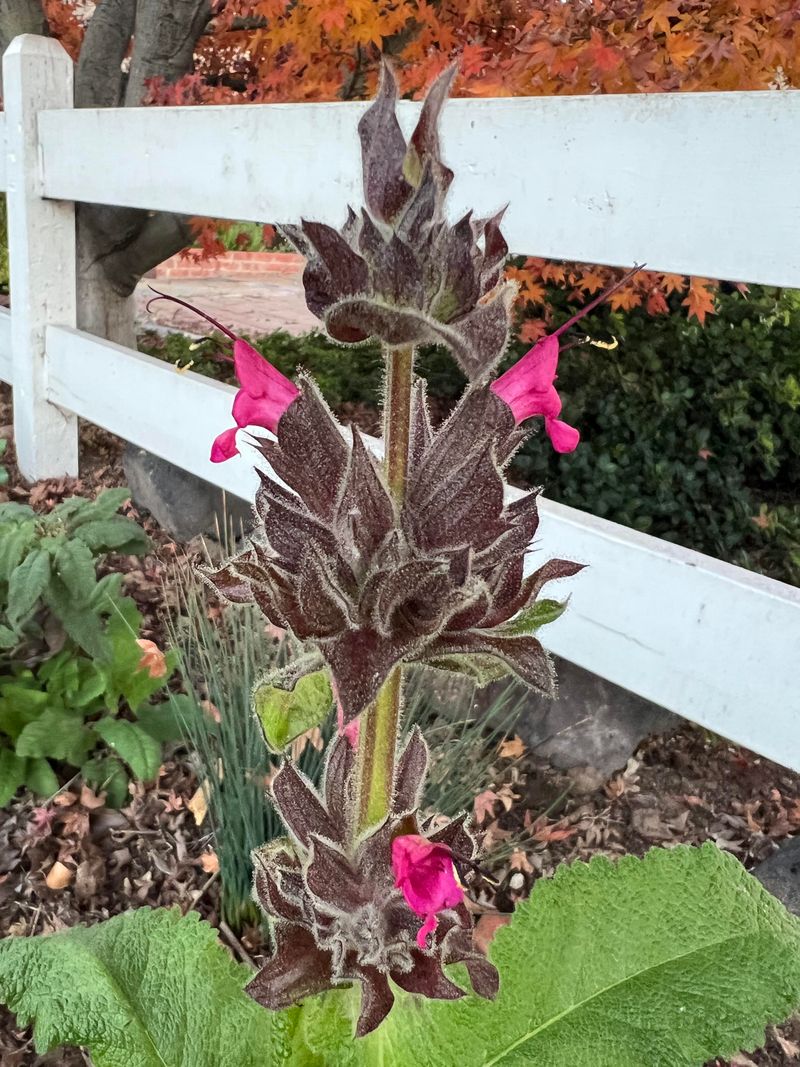
Hummingbird sage solves this problem beautifully, producing stunning magenta-pink flower spikes in partial to full shade while tolerating dry conditions once established.
The flower spikes rise dramatically above large arrow-shaped leaves, making nectar easily accessible for hummingbirds. Blooming peaks in spring, exactly when hummingbirds are nesting and need abundant food sources.
The tubular flowers exclude most insects, reserving nectar specifically for hummingbirds with long beaks and tongues.
This California native evolved under oak canopies and in coastal canyons where summer shade and dry soil create challenging conditions. The large leaves might suggest high water needs, but established plants thrive on monthly watering or less during summer.
Coastal gardens may need no supplemental irrigation after the second year.
The spreading groundcover habit fills in bare spots under trees where lawn struggles. Water weekly during the first summer to establish roots, then reduce frequency gradually.
The plant spreads through underground runners, creating expanding patches over time. Trim back old flower stalks and tattered leaves in fall to keep plantings tidy and encourage fresh spring growth.
10. Manzanita (Arctostaphylos spp.)
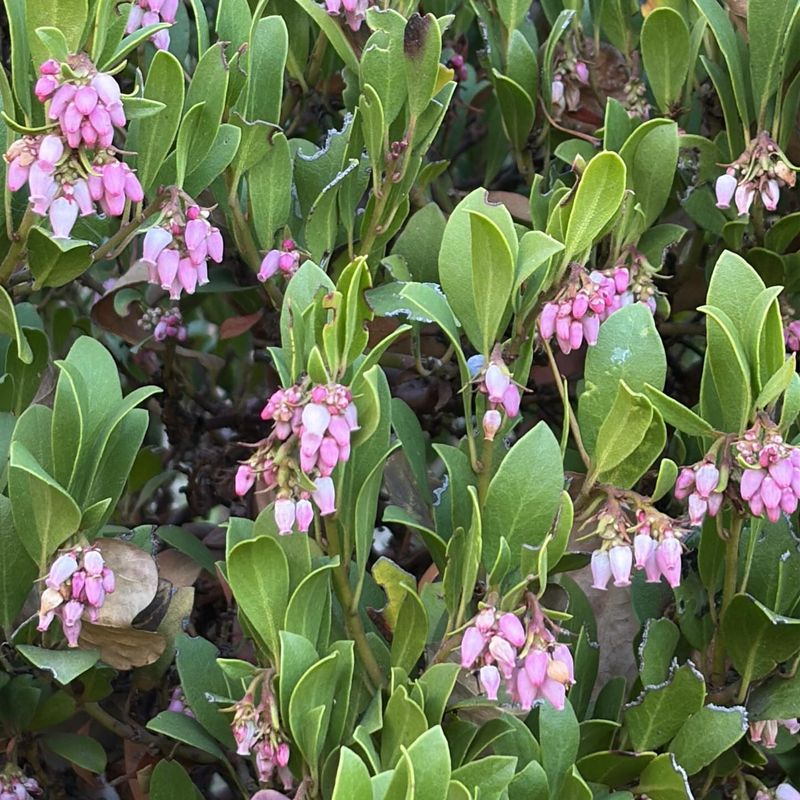
Early spring can challenge pollinators when few plants are blooming and cold snaps still occur. Manzanita species bloom from winter through early spring, providing critical nectar and pollen when bees and hummingbirds need it most.
The small urn-shaped flowers may look delicate, but they produce generous nectar that sustains wildlife through lean months.
Hummingbirds hover beneath flower clusters to sip nectar, while native bees crawl into the small bells to access pollen and nectar. The early bloom timing means less competition from other flowers, so pollinators visit manzanita repeatedly throughout the day.
Few plants match manzanita’s drought tolerance once established. These shrubs evolved on California’s driest slopes and ridges, developing deep roots and waxy leaves that minimize water loss.
Zero summer water is normal for established plants in most regions. Full sun and excellent drainage are absolutely essential, manzanitas wither away quickly in heavy or poorly-draining soil.
Choose species appropriate to your area, from groundcover types to large shrubs. The smooth red bark provides year-round beauty beyond the flowering season.
Water every two weeks during the first summer only, then stop completely. Never water established manzanitas in summer, as moisture promotes fatal root diseases.
The shrubs need no pruning or fertilizing.