7 Pennsylvania Native Plants To Start Planning For Spring Gardens
Want your Pennsylvania garden to burst with life the moment spring arrives? Smart gardeners know that choosing native plants early can make a huge difference once the growing season begins.
These plants are naturally suited to local soil, weather, and wildlife, which helps them grow stronger, require less upkeep, and support helpful pollinators like bees and butterflies.
Planning ahead also gives you the chance to shape a garden that feels balanced, colorful, and easy to manage.
Pennsylvania native plants bring reliable beauty and resilience, creating a landscape that feels lively and connected to the natural surroundings.
With the right choices, your garden can wake up full of color, movement, and energy, setting the tone for a thriving and rewarding season outdoors.
1. Eastern Columbine
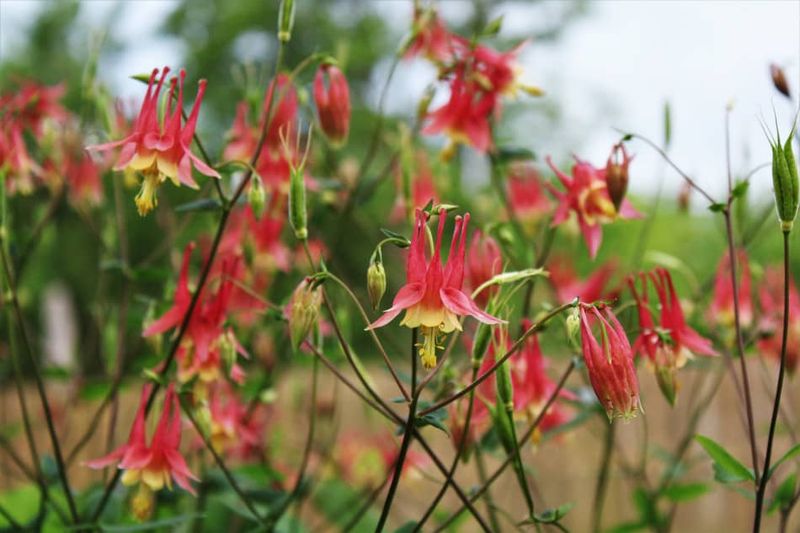
Hummingbirds go absolutely crazy for this plant. Eastern Columbine produces dangling flowers that look like tiny red and yellow lanterns hanging from delicate stems.
The blooms appear in late spring and early summer, creating a magical display that attracts pollinators from all around your Pennsylvania yard.
This woodland native thrives in partial shade, making it perfect for those tricky spots under trees where grass won’t grow.
The plant reaches about two feet tall and spreads naturally without becoming invasive. Its unique foliage looks like miniature fans and stays attractive even after the flowers fade.
Growing Eastern Columbine is surprisingly easy in Pennsylvania gardens. It prefers well-drained soil but tolerates various conditions once established.
The plant self-seeds moderately, giving you new plants each year without overwhelming your garden beds.
Deer usually leave this plant alone, which is a huge bonus for Pennsylvania gardeners dealing with browsing wildlife.
The columbine’s slightly bitter taste keeps most animals away. However, butterflies and hummingbirds visit constantly during bloom time.
Plan to add Eastern Columbine to shaded borders, woodland gardens, or naturalized areas. It pairs beautifully with ferns and other shade-loving natives. Start seeds indoors in late winter or purchase plants from local nurseries in spring.
Once established, this Pennsylvania native will return year after year, spreading joy and color throughout your garden while supporting local ecosystems.
2. Black-Eyed Susan
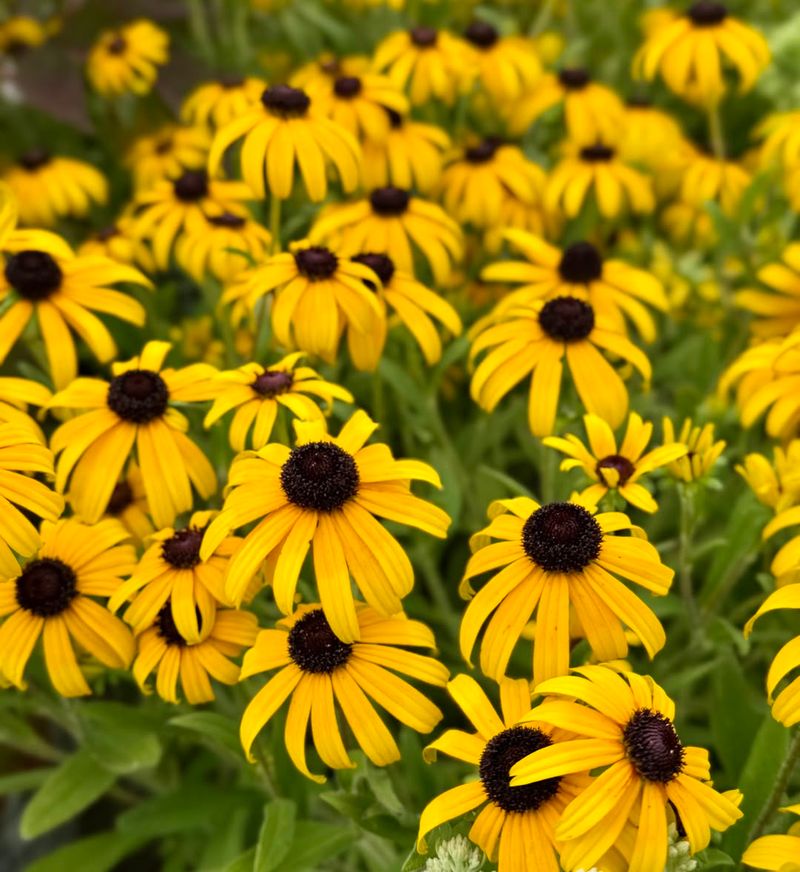
Nothing says summer in Pennsylvania quite like masses of golden Black-Eyed Susans swaying in the breeze. These cheerful flowers bloom from June through September, providing months of bright color when many other plants start looking tired.
The golden petals surrounding dark chocolate centers create a classic look that never goes out of style.
Black-Eyed Susans love full sun and actually prefer Pennsylvania’s clay soil to fancy garden amendments. They’re incredibly tough and handle heat, humidity, and occasional drought without complaint.
These plants grow two to three feet tall and spread naturally to form impressive drifts over time.
Butterflies, bees, and other beneficial insects flock to these flowers for nectar. Later in fall and winter, goldfinches and other songbirds feast on the seed heads.
Leaving the spent flowers standing through winter provides food for wildlife and adds interesting texture to your Pennsylvania garden.
Starting Black-Eyed Susans from seed is simple and budget-friendly. Scatter seeds in prepared soil in early spring or fall.
Your Pennsylvania Garden Changes Every Week. Your Plan Should Too.
Gardening in Pennsylvania changes quickly throughout the season. Every Friday you’ll receive a simple weekly plan showing exactly what to plant, prune, fertilize, harvest, and protect so you never miss the right timing.
They’ll germinate quickly and bloom the following year. Alternatively, nursery plants give you instant color the first season.
These natives work everywhere in Pennsylvania landscapes. Plant them in prairie gardens, cottage borders, or naturalized areas. They combine beautifully with native grasses and purple coneflowers.
Once established, Black-Eyed Susans require almost no maintenance and return reliably year after year, brightening your garden and supporting local pollinators throughout the growing season.
3. Wild Geranium
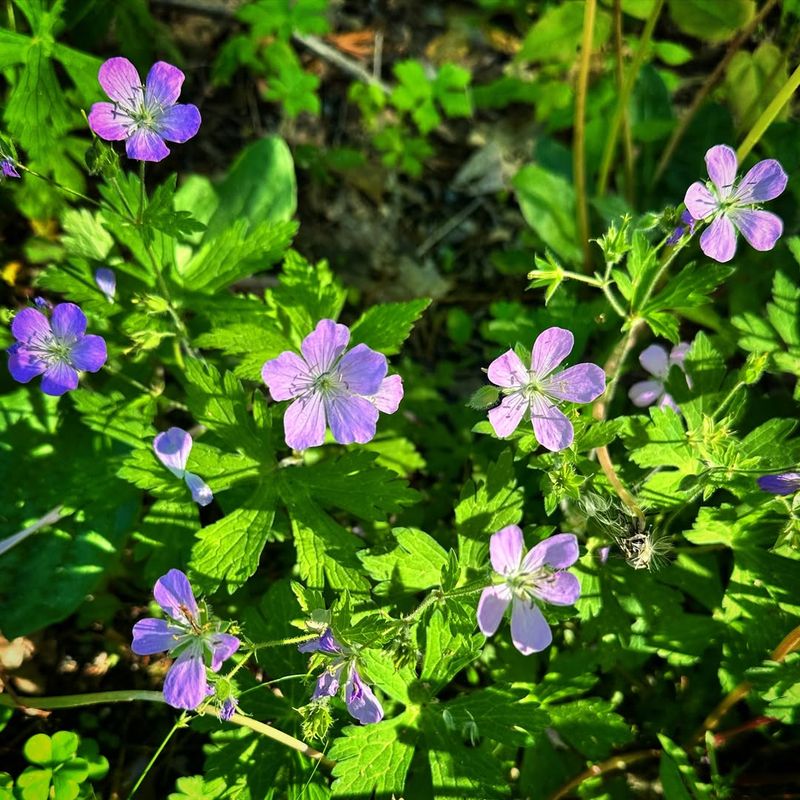
Forget those fancy geraniums at the garden center. Wild Geranium is Pennsylvania’s answer to elegant spring color.
This native produces clusters of soft pink to lavender flowers in April and May. Each bloom features five delicate petals with darker veining that guides pollinators to the nectar.
The foliage deserves attention too. Deeply lobed leaves emerge fresh green in spring and often develop reddish tones in fall.
Even after flowering ends, the attractive mounds of foliage provide texture and interest throughout the growing season in Pennsylvania gardens.
Wild Geranium adapts to various light conditions from full sun to partial shade. It prefers moist, rich soil but tolerates typical Pennsylvania clay once established.
Plants grow about 18 inches tall and spread slowly to form neat clumps that never become weedy or invasive.
Bees love visiting these flowers in spring when food sources are still limited. The plant also hosts several native moth species.
After blooming, Wild Geranium develops interesting seed capsules that spring open when ripe, flinging seeds several feet away.
Add Wild Geranium to shade gardens, woodland edges, or mixed borders throughout Pennsylvania. It combines beautifully with ferns, Solomon’s seal, and other woodland natives.
Plants are easy to divide in early spring or fall.
This reliable native returns year after year, requiring minimal care while providing maximum beauty and supporting beneficial insects during critical spring weeks.
4. New England Aster
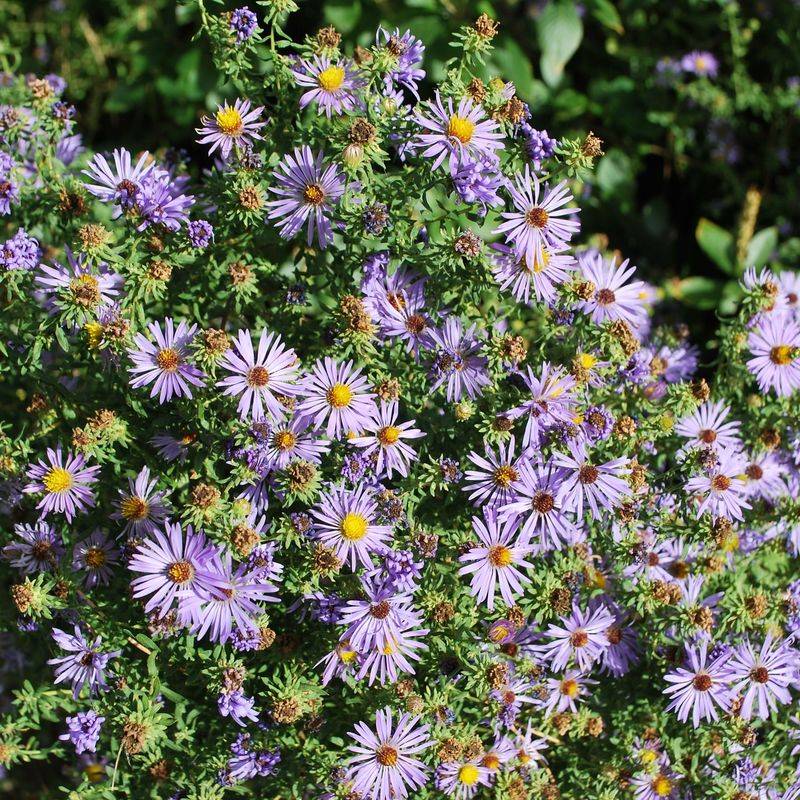
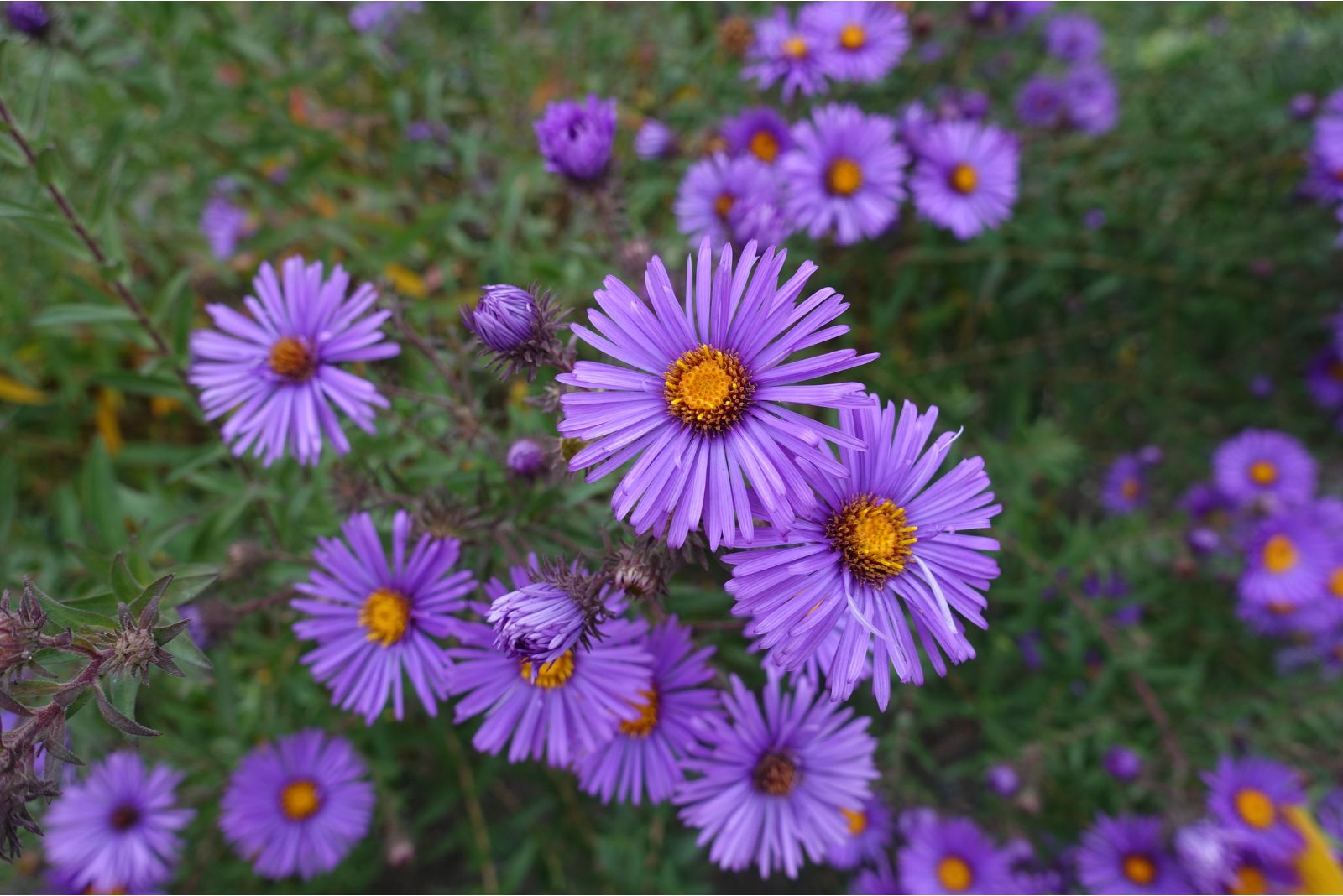
Late summer gardens in Pennsylvania come alive when New England Asters burst into bloom. These natives produce masses of purple daisy-like flowers from August through October.
Each plant becomes covered with hundreds of blooms, creating a spectacular display when many other plants are winding down for the season.
Butterflies absolutely mob these flowers. Monarchs preparing for migration rely heavily on New England Asters for fuel.
You’ll also see countless bees, beneficial insects, and other pollinators visiting throughout the day. The nectar-rich blooms provide crucial food when other sources become scarce.
New England Asters grow three to six feet tall depending on growing conditions. They prefer full sun and average soil in Pennsylvania gardens.
Plants develop into substantial clumps that provide structure and height in borders. The stems stay strong and rarely need staking.
Growing these natives is straightforward. Plant them in spring with plenty of space since they spread moderately.
Pinching stems back in early June creates bushier plants with more flowers. Otherwise, they require almost no maintenance beyond occasional watering during extreme drought.
Position New England Asters in back borders, meadow gardens, or anywhere you want late-season color throughout Pennsylvania.
They combine beautifully with ornamental grasses and goldenrod. Plants spread gradually through underground stems and self-seeding.
This reliable native transforms fall gardens into butterfly magnets while providing essential habitat for pollinators preparing for winter or migration journeys.
5. Virginia Bluebells
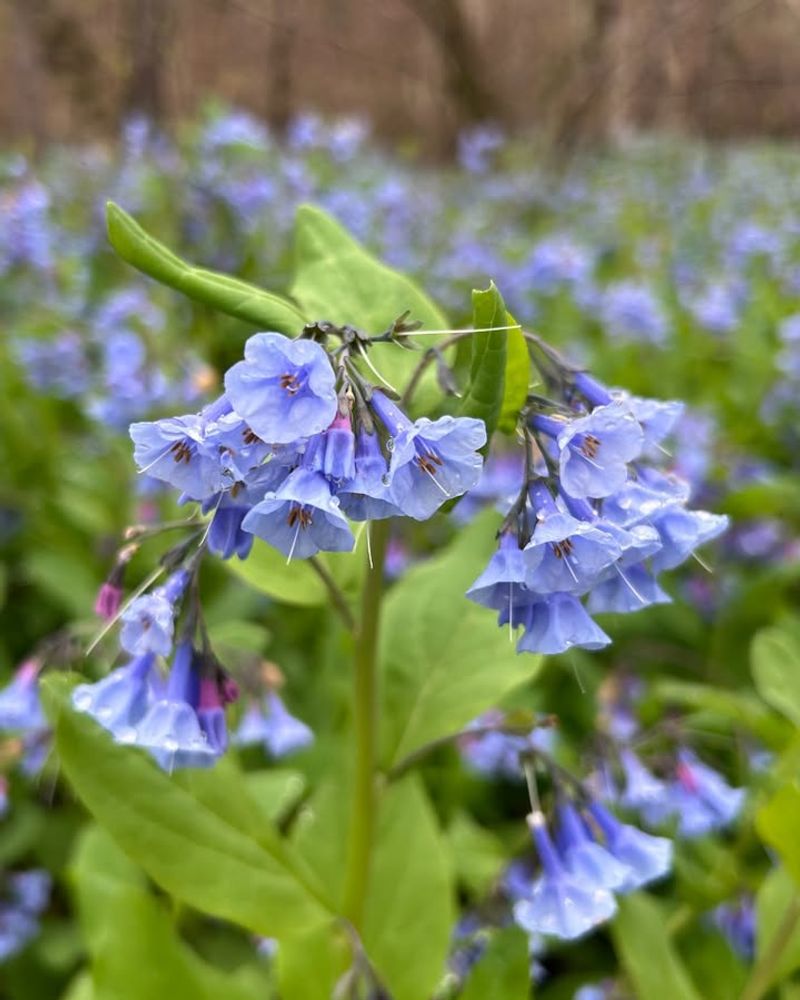
Early spring magic happens when Virginia Bluebells emerge in Pennsylvania woodlands. The flowers start as pink buds that open into sky-blue bells hanging in graceful clusters.
This color transformation creates a stunning two-toned effect that signals winter is finally over and warmer days are arriving.
Virginia Bluebells bloom in April and May, providing critical early nectar for bumblebees and other pollinators. The plants grow 12 to 24 inches tall with smooth blue-green leaves.
They prefer rich, moist soil in partial to full shade, making them perfect for woodland gardens throughout Pennsylvania.
One unique characteristic sets these natives apart. Virginia Bluebells go dormant by midsummer, completely disappearing until the following spring.
This ephemeral nature means you should plant them with companions like ferns or hostas that fill in after the bluebells vanish.
Starting Virginia Bluebells requires patience but rewards you for years. Plant roots in fall or purchase potted plants in spring.
They spread slowly through self-seeding and underground growth. Once established in suitable Pennsylvania locations, colonies expand gradually into impressive displays.
Position Virginia Bluebells under deciduous trees, along shaded paths, or in naturalized woodland areas.
They combine beautifully with spring ephemerals like trilliums and wild ginger. Mark their locations so you don’t accidentally dig them up during their summer dormancy.
These beloved natives return faithfully each spring, bringing joy and supporting early pollinators throughout Pennsylvania gardens.
6. Butterfly Weed
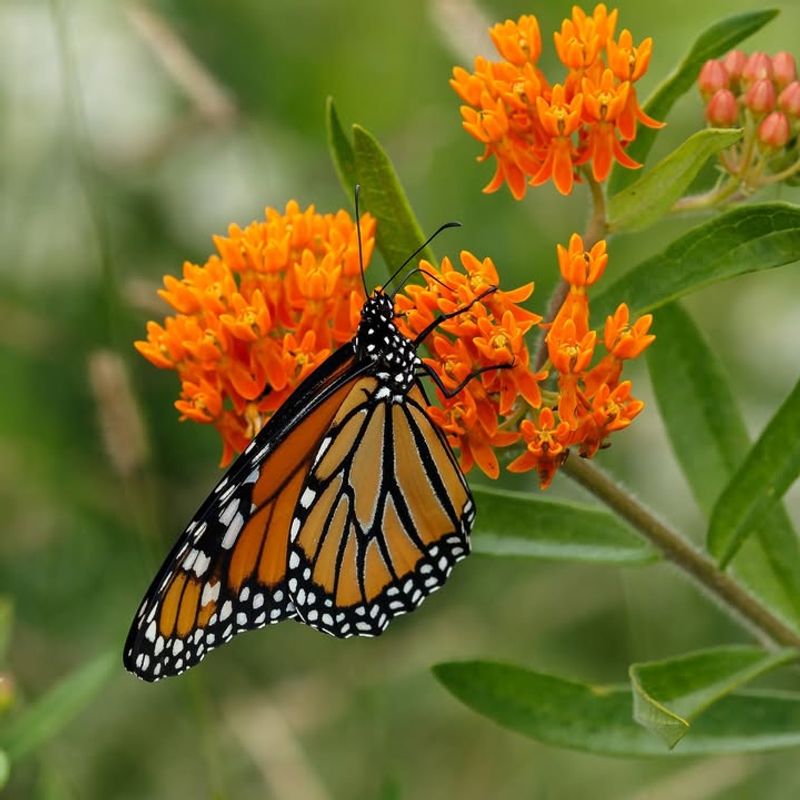
Orange is rare among Pennsylvania native wildflowers, making Butterfly Weed a standout performer. The brilliant orange flower clusters appear in June and continue through August.
Each bloom head contains dozens of tiny flowers packed with nectar that butterflies find absolutely irresistible.
Monarch butterflies depend on this plant. Female monarchs lay eggs on the foliage, and caterpillars feed on the leaves before forming chrysalises.
Adult butterflies of many species visit the flowers constantly. You’ll also see bumblebees, hummingbird moths, and countless other beneficial insects throughout the day.
Butterfly Weed grows two to three feet tall in full sun. It prefers well-drained soil and actually thrives in poor, sandy conditions that challenge other plants.
Once established in Pennsylvania gardens, it handles drought exceptionally well. The deep taproot makes transplanting difficult, so choose your location carefully.
Starting Butterfly Weed from seed is economical and rewarding. Sow seeds outdoors in fall or stratify them indoors for spring planting.
Plants take two years to bloom from seed but live for decades once established. Nursery plants provide quicker results if you’re impatient.
Add Butterfly Weed to sunny borders, prairie gardens, or anywhere you want to attract butterflies throughout Pennsylvania.
It combines beautifully with purple coneflowers and native grasses. Plants emerge late in spring, so mark their locations to avoid accidental damage.
This spectacular native transforms gardens into butterfly havens while thriving in challenging conditions that defeat less adapted plants.
7. Smooth Penstemon
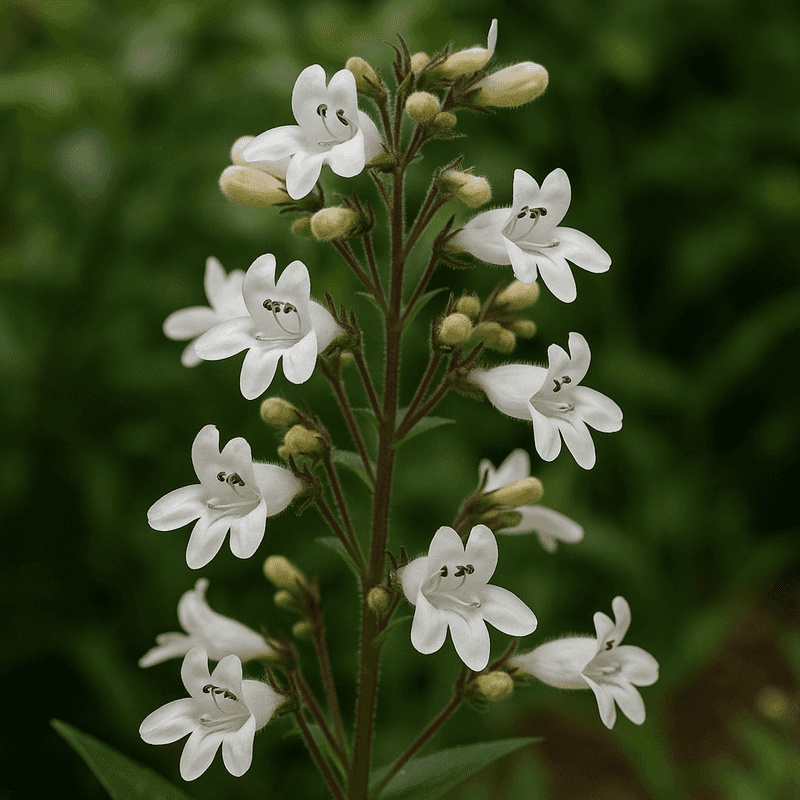
Elegant white flowers make Smooth Penstemon a sophisticated addition to Pennsylvania gardens. The tubular blooms appear in late spring on tall spikes that rise above glossy foliage.
Each flower is perfectly shaped for pollination by bumblebees, which crawl inside to reach the nectar.
Smooth Penstemon grows two to three feet tall with an upright habit that adds vertical interest to borders. The foliage stays attractive all season with thick, waxy leaves that resist pests and diseases.
Plants prefer full sun to partial shade and adapt to various soil types common throughout Pennsylvania.
Hummingbirds occasionally visit these flowers, though bees are the primary pollinators. The white color stands out in evening gardens, glowing softly as daylight fades.
Smooth Penstemon blooms for several weeks, providing consistent beauty during the transition from spring to summer.
Growing this native is straightforward in Pennsylvania landscapes. Plant in spring with good drainage.
Once established, it tolerates dry periods better than many garden perennials. Plants rarely need dividing and maintain neat clumps that don’t spread aggressively.
Position Smooth Penstemon in mixed borders, cottage gardens, or naturalized areas throughout Pennsylvania.
It combines beautifully with colorful companions like Black-Eyed Susans and purple coneflowers. The white flowers provide contrast and brightness that makes other colors pop.
This reliable native returns year after year, requiring minimal maintenance while supporting pollinators and adding elegant beauty to gardens from spring through fall with attractive foliage.