How To Design A Pennsylvania Pollinator Garden With Native Plants This Spring
Want your Pennsylvania garden buzzing with life and color this spring? Designing a pollinator garden with native plants is one of the most rewarding ways to support bees, butterflies, and other helpful visitors while creating a beautiful outdoor space.
Native plants are naturally adapted to local soil and weather, which makes them easier to grow and better for local wildlife.
With the right mix of blooms, shapes, and planting spots, you can provide food, shelter, and a safe place for pollinators throughout the season. The best part? You do not need a huge yard or expert skills to make it work.
Thoughtful planning and smart plant choices can turn even a small area into a lively, colorful habitat. A well designed pollinator garden brings movement, color, and purpose to your landscape, creating a vibrant spring space that feels alive and full of natural energy.
1. Wild Columbine
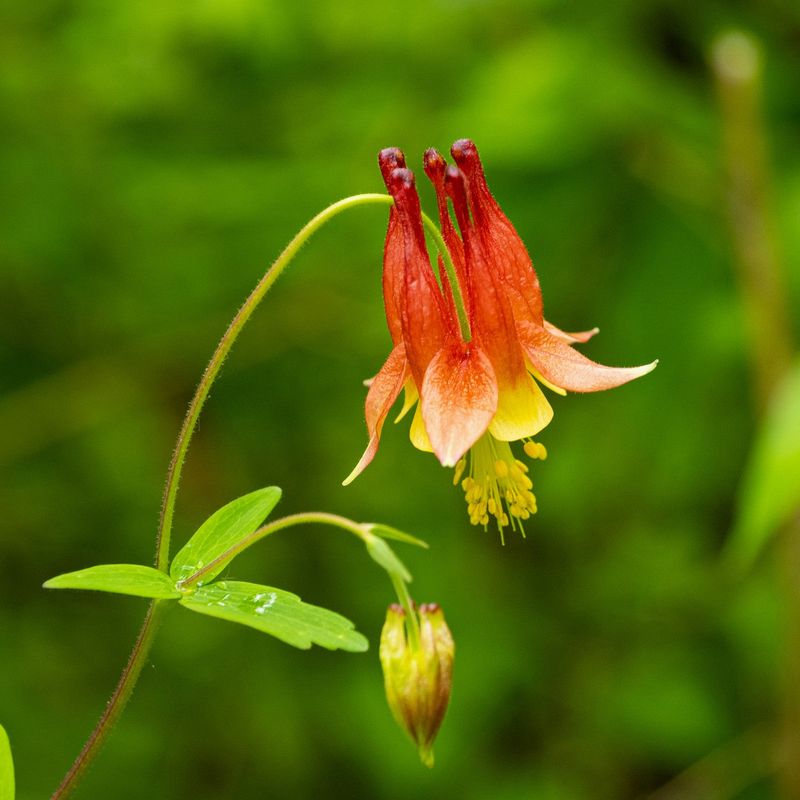
Hummingbirds go absolutely crazy for wild columbine, and once you see those dangling red and yellow flowers swaying in the breeze, you’ll understand why.
This Pennsylvania native blooms from April through June, offering nectar right when hummingbirds return from their long migration south.
The tubular shape of each blossom is perfectly designed for a hummingbird’s long beak, making it one of the best early-season food sources you can plant.
Wild columbine grows well in partial shade, which makes it ideal for spots under trees or along the edges of wooded areas in your yard.
It reaches about one to two feet tall and spreads slowly over time without becoming invasive. The delicate, lacy foliage adds texture to garden beds even after the flowers fade.
Planting wild columbine in Pennsylvania is simple because it tolerates a range of soil types, from rocky to clay-heavy ground. Seeds can be sown directly in fall or early spring, or you can buy small plants from a local nursery.
Once established, this perennial returns year after year with very little maintenance required.
Besides hummingbirds, native bees also visit wild columbine for pollen, making it a dual-purpose pollinator plant. The bright colors and unique shape make it a standout feature in any garden design.
Adding this plant to your Pennsylvania pollinator garden ensures you’ll have early spring beauty and plenty of buzzing visitors.
2. Virginia Bluebells
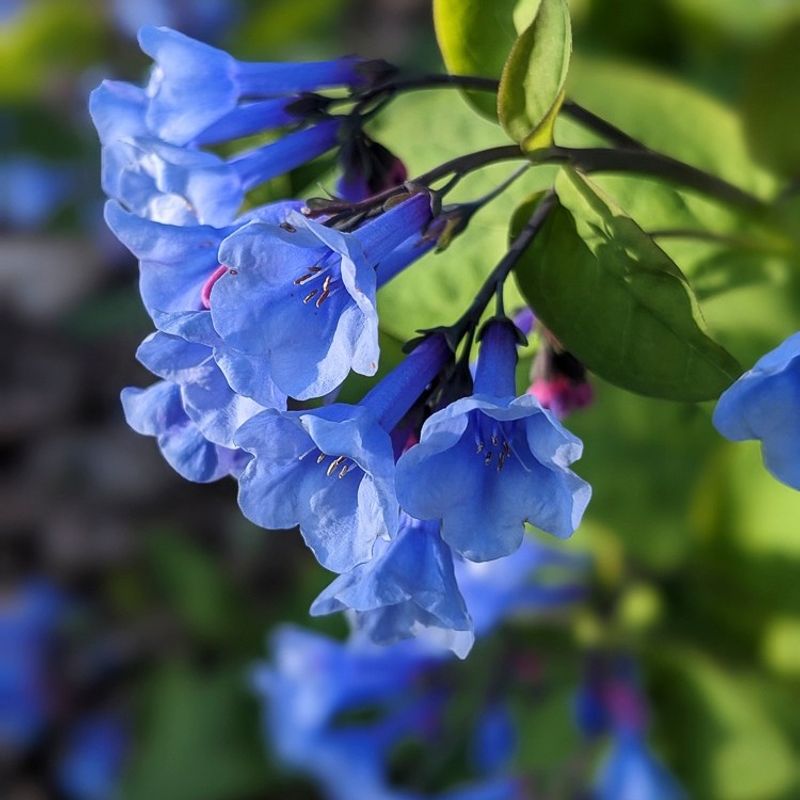
Few plants signal spring quite like Virginia bluebells, with their pastel pink buds that open into sky-blue trumpet-shaped flowers. These natives carpet Pennsylvania woodlands every April and May, creating sweeps of color that look almost magical.
Bumblebees and native bees depend on Virginia bluebells for early nectar, especially when other food sources are still scarce.
Virginia bluebells prefer moist, rich soil and thrive in shaded or partially shaded areas of your yard. They grow about one to two feet tall and spread naturally over time, forming lovely colonies.
The foliage dies back by midsummer, so plant them alongside ferns or hostas to fill in the space later in the season.
One interesting feature of Virginia bluebells is their color-changing flowers. Buds start out pink, then shift to a soft blue as they mature, creating a two-toned effect that’s visually stunning.
Your Pennsylvania Garden Changes Every Week. Your Plan Should Too.
Gardening in Pennsylvania changes quickly throughout the season. Every Friday you’ll receive a simple weekly plan showing exactly what to plant, prune, fertilize, harvest, and protect so you never miss the right timing.
This color change also helps pollinators identify which flowers are freshest and most rewarding to visit.
Planting Virginia bluebells in Pennsylvania is best done in fall using bulbs or root divisions, though potted plants work well too. They naturalize easily and require almost no maintenance once established.
Because they go dormant in summer, they won’t compete with other perennials for water or nutrients during the hottest months, making them perfect companions in a layered pollinator garden design.
3. Golden Alexanders
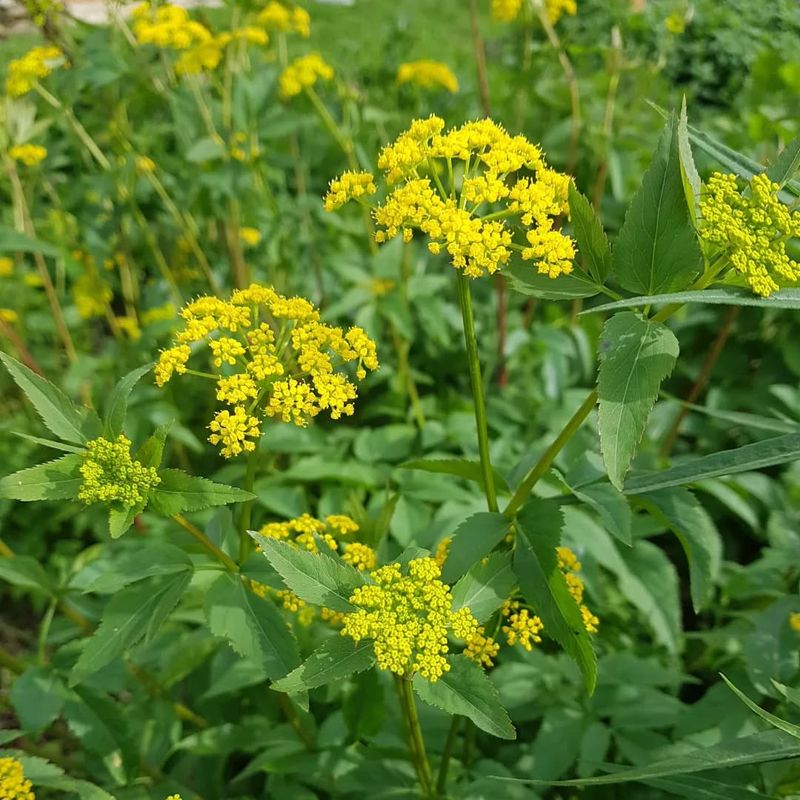
Butterflies adore Golden Alexanders, and this cheerful yellow wildflower is one of the most reliable native plants for Pennsylvania pollinator gardens.
Blooming from late April through June, it produces clusters of tiny golden flowers that stand out beautifully against green foliage.
Swallowtail butterflies, in particular, lay their eggs on Golden Alexanders because their caterpillars feed exclusively on plants in the carrot family.
Golden Alexanders grow well in full sun to partial shade and tolerate both wet and dry soils, making them incredibly versatile. They reach about two to three feet tall and spread slowly through self-seeding, creating natural drifts over time.
The lacy, parsley-like leaves add interesting texture to garden beds throughout the growing season.
One reason Golden Alexanders work so well in Pennsylvania is their ability to handle clay soil and fluctuating moisture levels. They’re tough enough to thrive in rain gardens or low-lying areas that stay damp after storms.
At the same time, they adapt to drier conditions once their roots establish, making them low-maintenance perennials.
Planting Golden Alexanders alongside other natives like wild geranium or Virginia bluebells creates layers of color and bloom times that keep pollinators fed all spring long. Seeds can be sown in fall, or you can transplant small plants in spring.
This native plant not only supports butterflies but also provides nectar for native bees and beneficial insects, making it a cornerstone species for any Pennsylvania pollinator garden.
4. Bloodroot
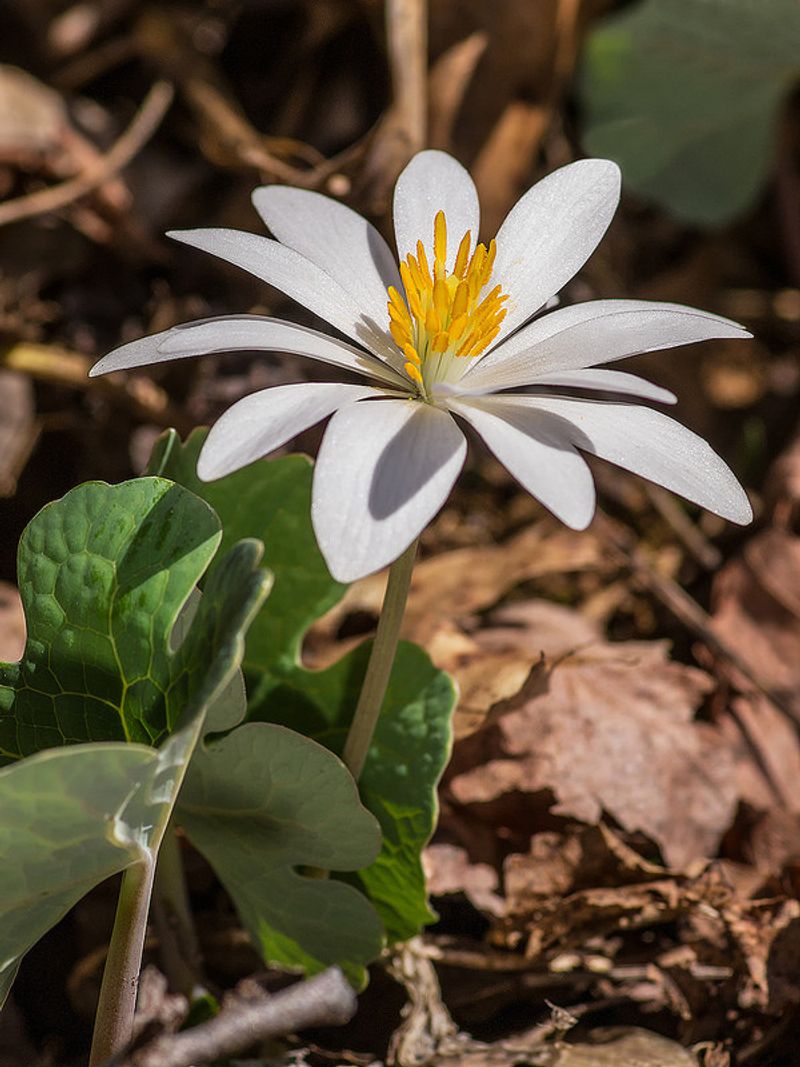
Bloodroot is one of the earliest bloomers in Pennsylvania, often poking through leaf litter in March before most other plants wake up. Its pure white petals and bright yellow center create a striking contrast against the bare forest floor.
Native bees and small flies visit bloodroot for pollen, making it an important early-season food source when little else is available.
Bloodroot grows naturally in shaded woodlands and prefers moist, well-drained soil rich in organic matter. Each plant produces a single flower that lasts only a few days, but the large, lobed leaves remain attractive throughout spring and early summer.
The leaves eventually die back by midsummer, so pair bloodroot with ferns or other shade-loving perennials.
The name bloodroot comes from the plant’s reddish-orange sap, which oozes from the roots and stems when cut. Native Americans historically used this sap as a natural dye and for medicinal purposes.
While the sap is toxic if ingested, the plant itself poses no danger when left undisturbed in the garden.
Planting bloodroot in Pennsylvania is best done in fall using rhizomes, which are thick underground stems that store energy. Space them about six inches apart in shaded areas under trees or along wooded edges.
Once established, bloodroot spreads slowly and forms small colonies that naturalize beautifully. Adding this native to your pollinator garden ensures you’ll have early spring blooms that support the first bees and insects emerging from winter.
5. Wild Geranium
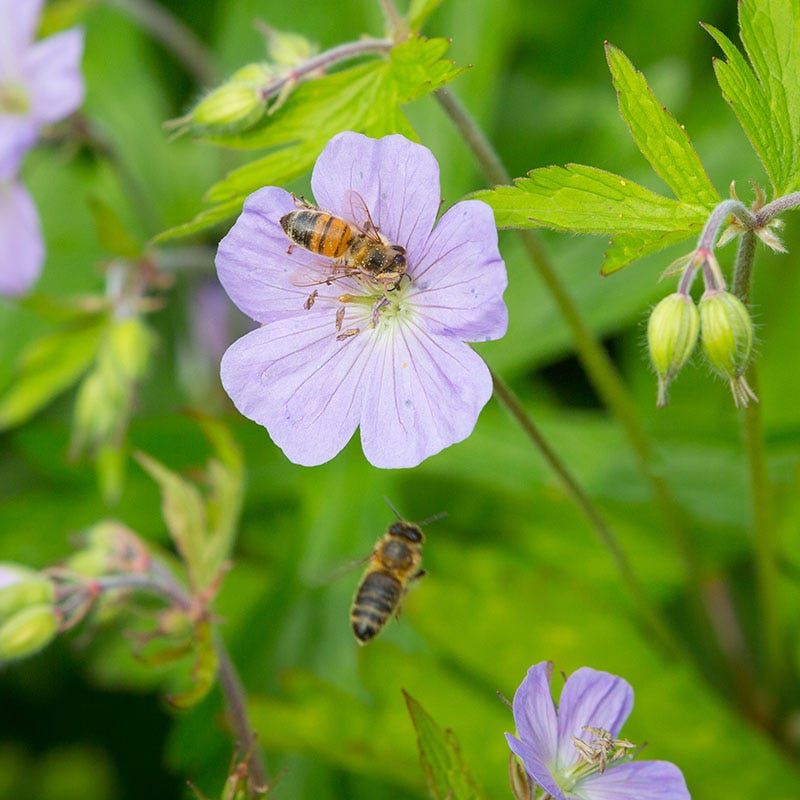
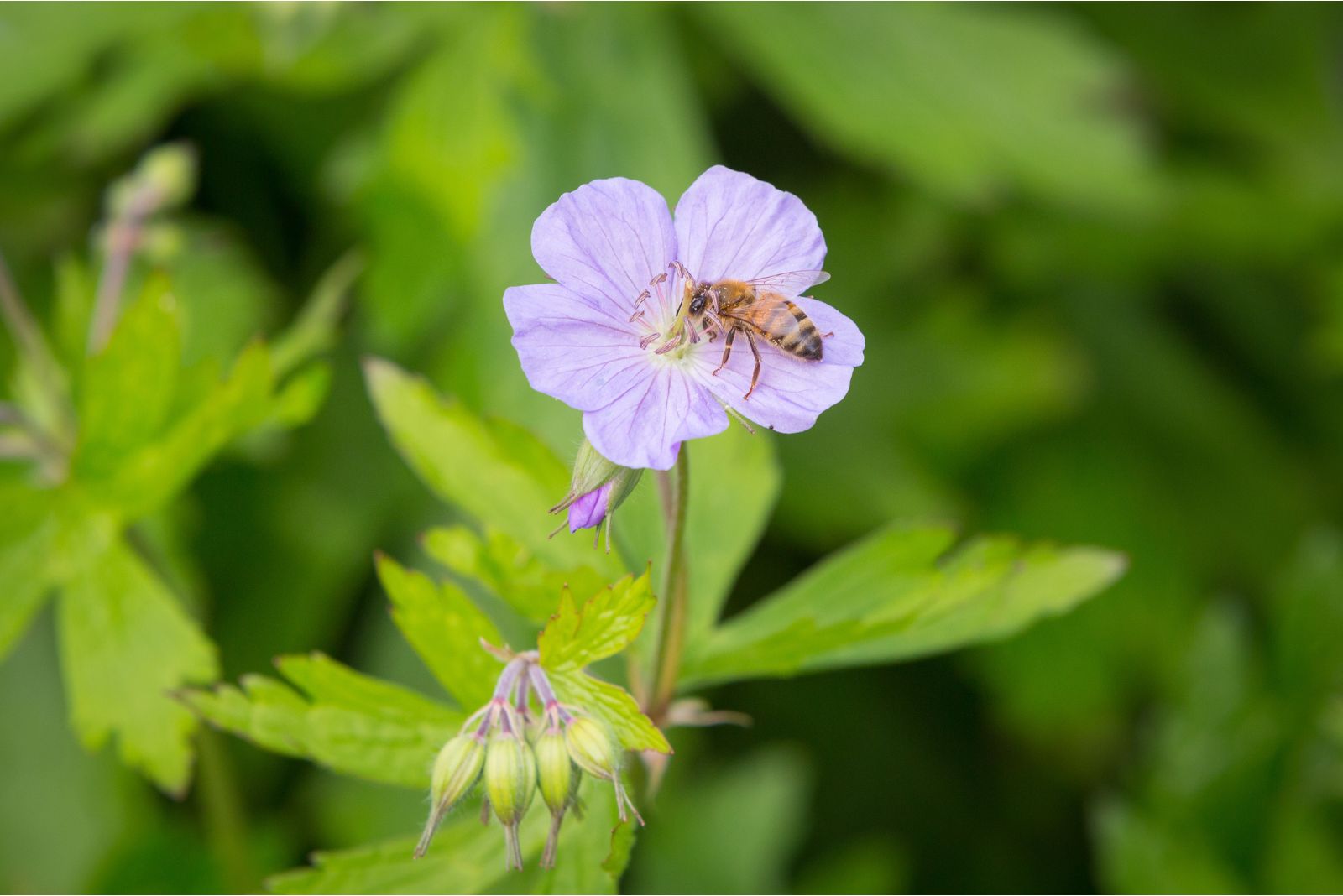
Wild geranium is a Pennsylvania favorite for good reason, producing masses of soft pink or lavender flowers from May through June. Bumblebees and native bees visit wild geranium constantly, buzzing from bloom to bloom to collect pollen and nectar.
The flowers have five rounded petals and delicate veining that adds charm to any garden bed or woodland edge.
Wild geranium grows well in partial shade to full sun and adapts to a variety of soil types, including clay and loam. It reaches about one to two feet tall and forms attractive mounds of deeply lobed foliage.
The leaves often develop reddish tints in fall, adding a second season of interest beyond the spring blooms.
One benefit of wild geranium is its long bloom period, which overlaps with many other native plants and keeps pollinators fed for weeks. After flowering, the seed capsules split open dramatically, flinging seeds several feet away to start new plants.
This self-seeding habit helps wild geranium naturalize and fill in gaps in your Pennsylvania pollinator garden over time.
Planting wild geranium is easy using nursery-grown plants or divisions from established clumps. Space them about 12 inches apart in garden beds or along pathways where their blooms can be appreciated up close.
Once established, wild geranium requires almost no care and tolerates drought well. Pairing it with ferns, wild columbine, or Virginia bluebells creates a layered, naturalistic look that supports diverse pollinators throughout spring and early summer.
6. Eastern Redbud
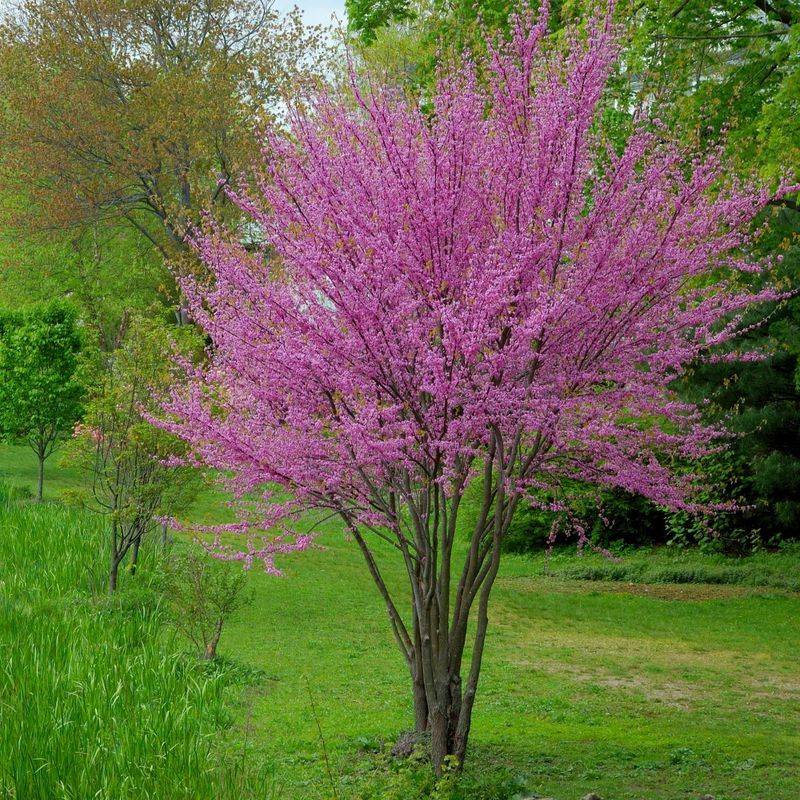
Eastern redbud is a small native tree that steals the show every April when it bursts into bloom with vibrant pink-purple flowers. These blooms appear directly on the branches and even the trunk, creating a stunning display before the heart-shaped leaves emerge.
Bumblebees and honeybees flock to eastern redbud for nectar, making it one of the most important early-season trees for Pennsylvania pollinators.
Eastern redbud grows well in full sun to partial shade and tolerates a range of soil conditions, from sandy to clay-heavy. It typically reaches 20 to 30 feet tall, making it perfect for smaller yards or as an understory tree beneath taller oaks and maples.
The heart-shaped leaves provide light shade in summer, and the seed pods that follow the flowers feed birds in fall and winter.
One unique feature of eastern redbud is its edible flowers, which have a slightly tangy, pea-like flavor. You can toss them into salads or use them as a colorful garnish, though it’s best to leave most blooms for the bees.
The flowers are rich in nectar and provide critical energy for pollinators emerging from winter dormancy.
Planting eastern redbud in Pennsylvania is best done in spring or fall using nursery-grown saplings. Choose a spot with good drainage and space for the tree to spread its branches naturally.
Once established, eastern redbud requires minimal care and adds year-round beauty to your landscape, from spring blooms to summer foliage to interesting winter branching patterns.
7. Foamflower
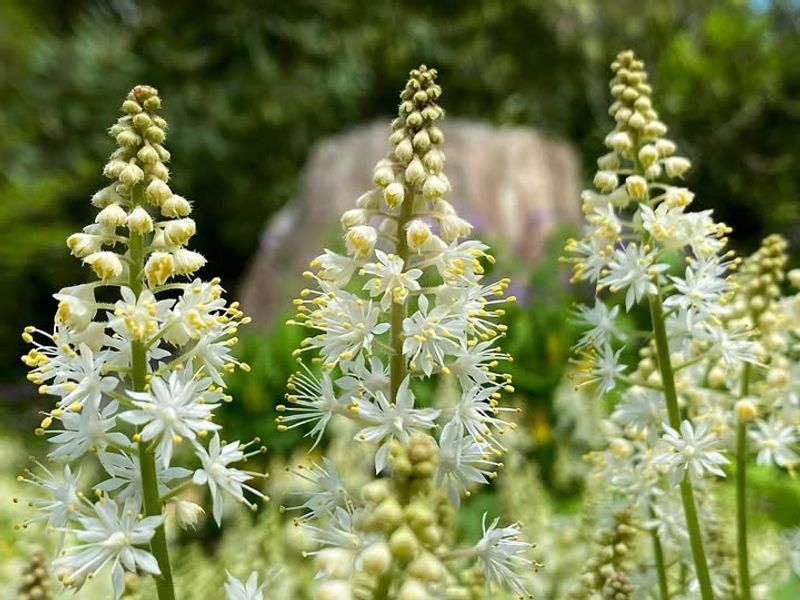
Foamflower earns its name from the frothy white or pale pink flower spikes that rise above the foliage in late April and May. These delicate blooms attract small native bees, butterflies, and other beneficial insects that appreciate the easily accessible nectar.
Foamflower thrives in shaded or partially shaded areas, making it perfect for Pennsylvania woodland gardens or spots beneath trees where other plants struggle.
Foamflower grows low to the ground, reaching only six to 12 inches tall, and spreads slowly through underground runners to form attractive groundcover.
The leaves are semi-evergreen, meaning they stay green through much of the winter and provide year-round interest.
Many varieties feature mottled or burgundy-marked foliage that adds color even when the plant isn’t blooming.
One advantage of foamflower is its tolerance for dry shade, which is notoriously difficult for most plants. Once established, it handles competition from tree roots and low light levels without complaint.
The dense foliage also helps suppress weeds and retain soil moisture, making it both beautiful and functional in garden design.
Planting foamflower in Pennsylvania is simple using small potted plants spaced about 12 inches apart. Water regularly during the first growing season to help roots establish, then reduce watering as the plants mature.
Foamflower pairs beautifully with ferns, wild ginger, and other shade-loving natives to create a lush, layered look.
Adding this groundcover to your pollinator garden ensures you’ll have spring blooms and attractive foliage that supports small pollinators throughout the season.