Creative Garden Edging Ideas North Carolina Homeowners Are Loving
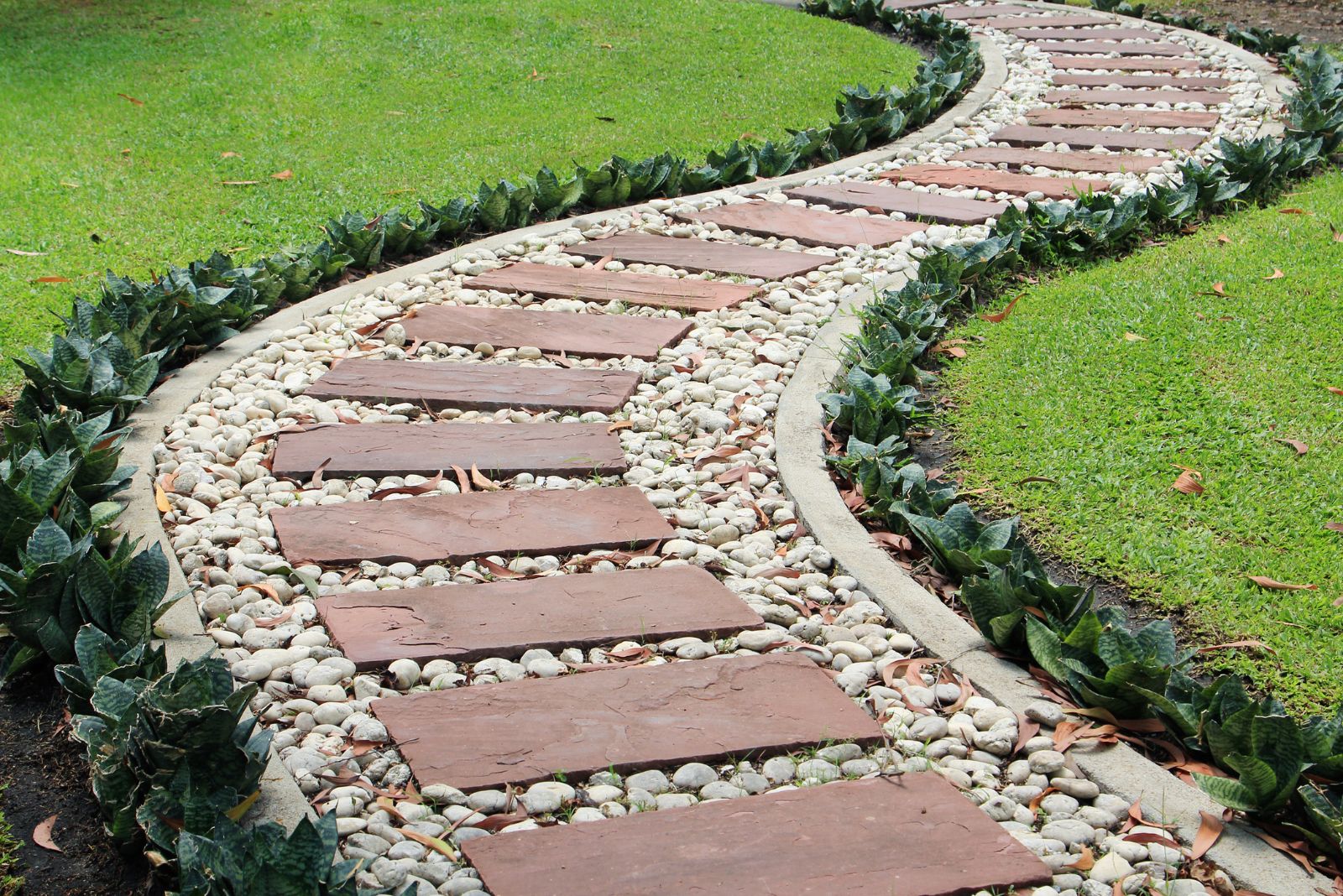
If you want your yard to look polished and well-designed, garden edging can make a bigger difference than most people expect. North Carolina homeowners are getting creative with borders that do more than just separate lawn from garden beds.
The right edging adds structure, boosts curb appeal, and makes the whole landscape feel intentional and finished. Even better, many modern edging ideas are affordable, durable, and easy to maintain in our warm, sometimes rainy climate.
From natural looks that blend into the landscape to bold designs that stand out, there is something for every style and budget. Whether you are refreshing an old flower bed or starting a brand new garden, a smart edging choice can completely transform the space.
Let’s explore creative garden edging ideas North Carolina homeowners are loving right now and find the perfect way to frame your outdoor spaces beautifully.
1. Natural Stone Borders
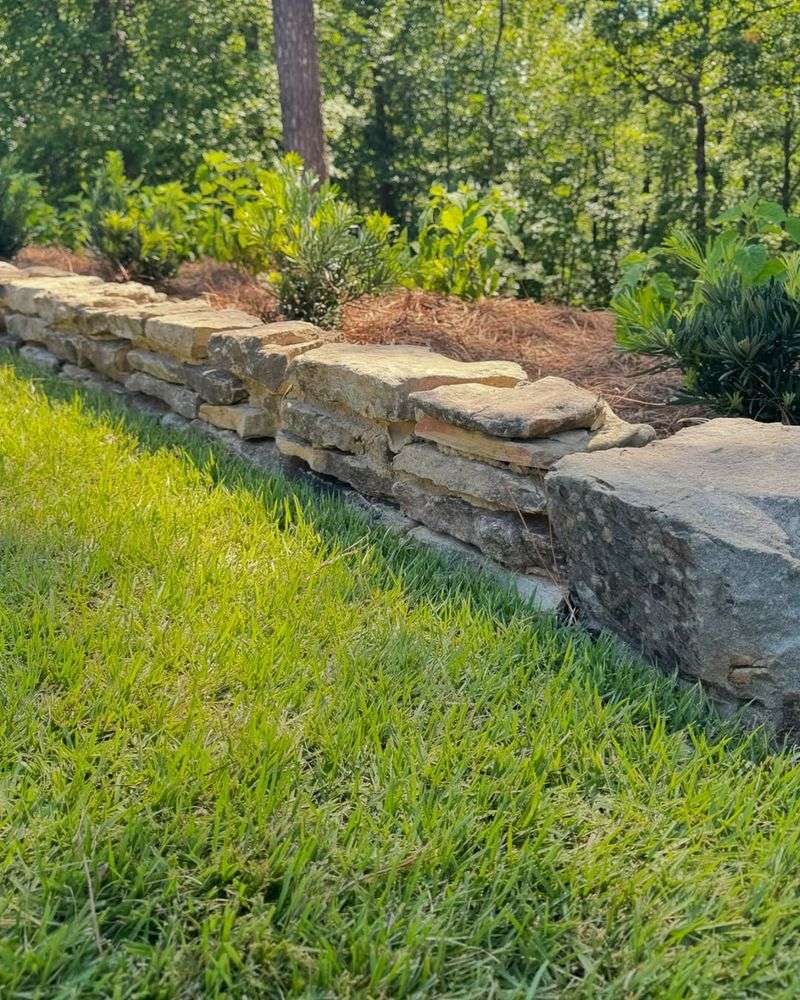
Natural stone brings an earthy elegance that never goes out of style. Flagstone, fieldstone, and stacked stone create borders that look like they’ve always belonged in your yard.
These materials weather beautifully over time and blend seamlessly with North Carolina’s native landscapes.
Installation is easier than you might think. Start by digging a shallow trench along your garden bed. Lay larger flat stones first to create a stable base. Fill gaps with smaller pieces to lock everything in place.
The beauty of stone edging lies in its versatility. You can arrange stones in straight lines for formal gardens or curve them naturally around existing trees and shrubs.
Stone also handles our humid summers and occasional freezes without cracking or shifting. Cost varies depending on your stone choice. Fieldstone collected from local sources offers budget-friendly options.
Premium cut flagstone creates polished, uniform edges. Both types last for decades with minimal maintenance.
Stone borders work especially well in mountain regions and Piedmont areas where natural rock formations inspire landscape design. They pair beautifully with native azaleas, ferns, and hostas.
This timeless approach adds instant character while requiring almost no upkeep year after year.
2. Brick Edging For Classic Charm
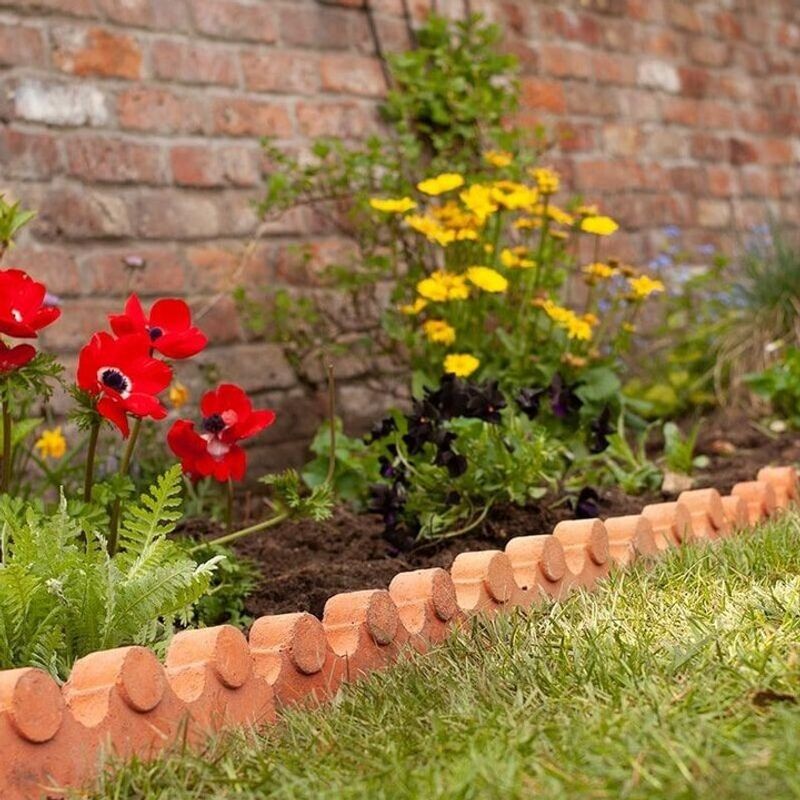
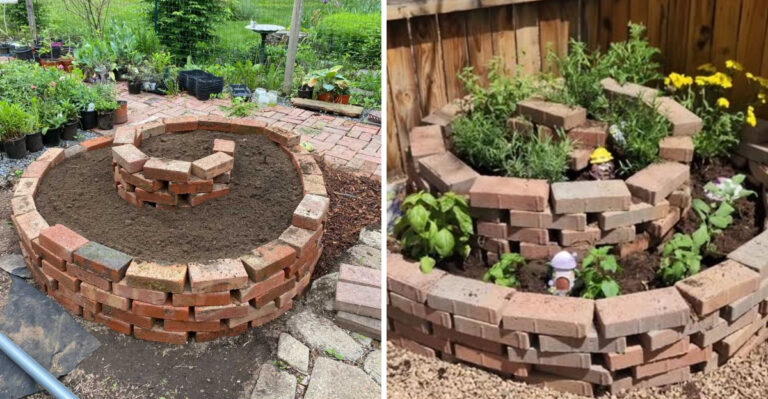
Brick edging brings cottage garden romance to any North Carolina yard. Red clay bricks create warm, inviting borders that complement both historic homes and new construction.
Recycled bricks add character with their weathered patina and tell stories of the past. Laying brick edging requires some planning but delivers lasting results. Dig a trench about four inches deep and two inches wider than your brick.
Add a sand base for drainage and stability. Stand bricks upright in a soldier course or lay them flat for different looks.
The classic appeal of brick works beautifully with traditional plantings. Think roses, boxwoods, and flowering annuals that echo Southern garden traditions. Brick also defines pathways and creates transitions between different garden areas.
Maintenance stays minimal once your edging is installed. Bricks resist our hot summers and mild winters without deteriorating.
Weeds occasionally sprout between bricks, but a quick pull keeps everything tidy. Moss growth adds attractive green accents in shaded areas.
Your North Carolina Garden Changes Every Week. Your Plan Should Too.
Gardening in North Carolina changes quickly throughout the season. Every Friday you’ll receive a simple weekly plan showing exactly what to plant, prune, fertilize, harvest, and protect so you never miss the right timing.
New bricks cost more but offer uniform color and size. Salvaged bricks from demolition sites provide budget options with unique character.
Either choice creates edges that age gracefully and increase your property’s curb appeal for years to come.
3. Curved Metal Edging
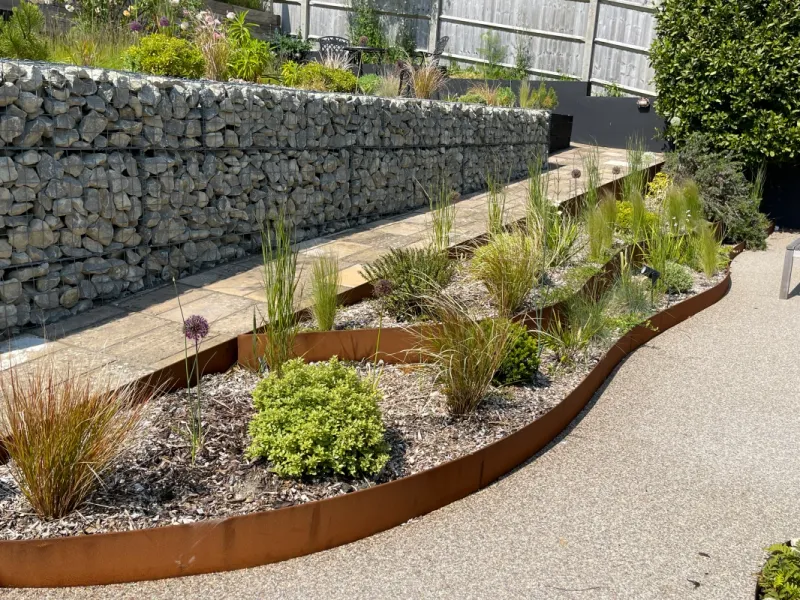
Metal edging transforms gardens with sleek, contemporary lines that make a bold statement. Corten steel develops a beautiful rust patina that contrasts strikingly against green lawns and colorful plantings.
Smooth aluminum or steel strips offer polished finishes for ultra-modern designs. Installation goes quickly with the right tools. Metal strips flex easily around curves and corners.
Pound stakes through pre-drilled holes to anchor the edging firmly in place. The material’s flexibility lets you create flowing, organic shapes or sharp geometric patterns.
Durability stands out as metal’s biggest advantage. These borders resist rot, insect damage, and weather extremes.
Corten steel actually strengthens as it oxidizes, forming a protective layer that prevents further corrosion. Your edging will look intentionally rustic rather than worn out.
Modern landscapes benefit most from metal edging’s clean aesthetic. Pair it with architectural plants like yucca, agave, or ornamental grasses.
The industrial vibe works wonderfully in urban Charlotte gardens and contemporary Raleigh neighborhoods. Cost runs higher than some alternatives, but longevity justifies the investment. Metal edging lasts twenty years or more without replacement.
It also adds substantial visual impact that cheaper materials cannot match, making your landscape stand out in any neighborhood across North Carolina.
4. Living Edges With Groundcovers
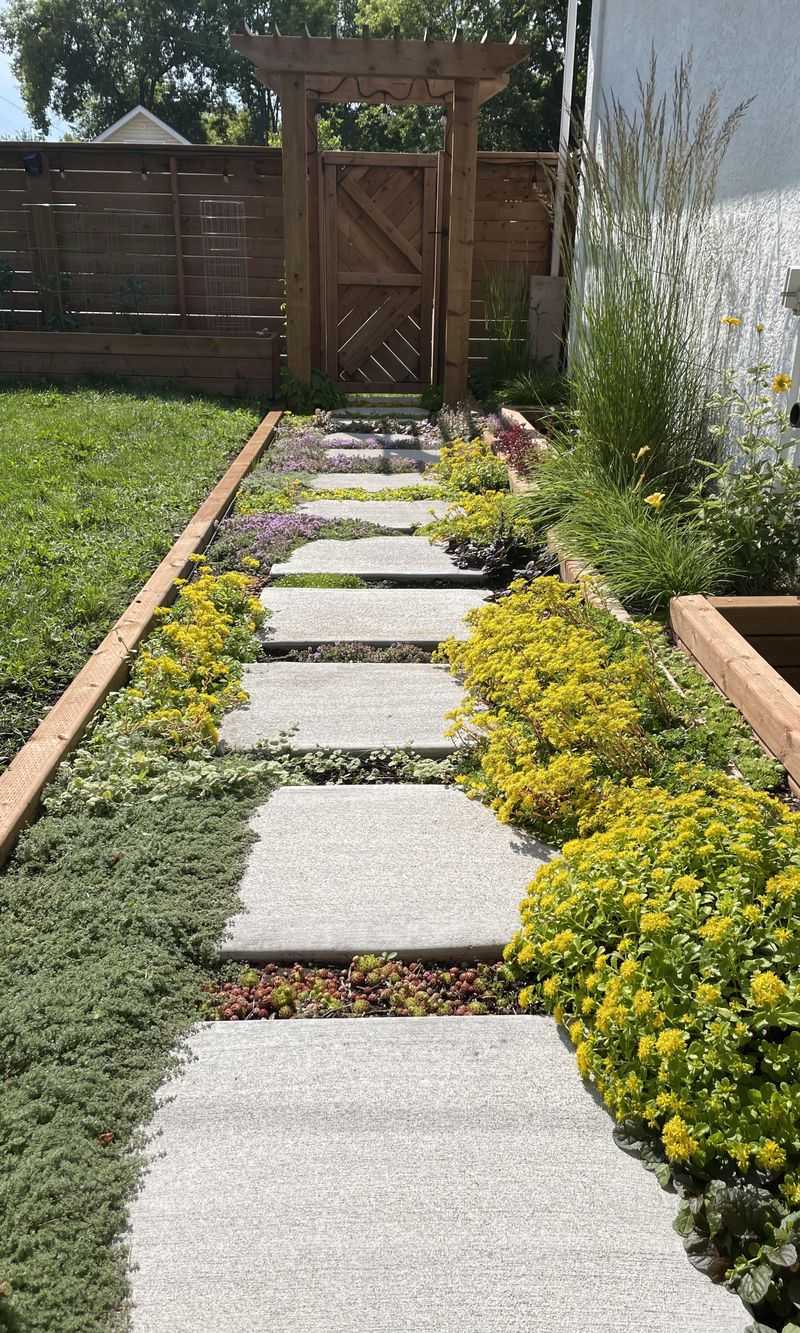
Groundcover plants create living borders that soften hard edges while suppressing weeds naturally. Creeping thyme releases fragrance when stepped on and blooms with tiny purple flowers.
Ajuga spreads quickly with bronze or variegated foliage that stays attractive year-round. Planting living edges requires patience but rewards you with low-maintenance beauty. Space plants six to twelve inches apart depending on variety.
Water regularly during establishment, then let nature take over. These tough plants thrive in North Carolina’s climate once their roots settle in.
Sedum offers another excellent choice for sunny spots. Its succulent leaves store water, making it drought-tolerant during our summer heat. Dwarf mondo grass creates neat, dark green ribbons that never need mowing or trimming.
The environmental benefits make living edges especially appealing. Groundcovers prevent soil erosion during heavy rains.
They provide habitat for beneficial insects and pollinators. Your garden becomes more sustainable while looking absolutely gorgeous.
Maintenance stays simple with proper plant selection. Choose varieties suited to your sun exposure and soil type.
Trim back aggressive spreaders once or twice yearly. Pull any weeds that appear before groundcovers fill in completely.
Within two seasons, you’ll have lush, self-sustaining borders that enhance your garden’s natural beauty.
5. Brick Paver Bands
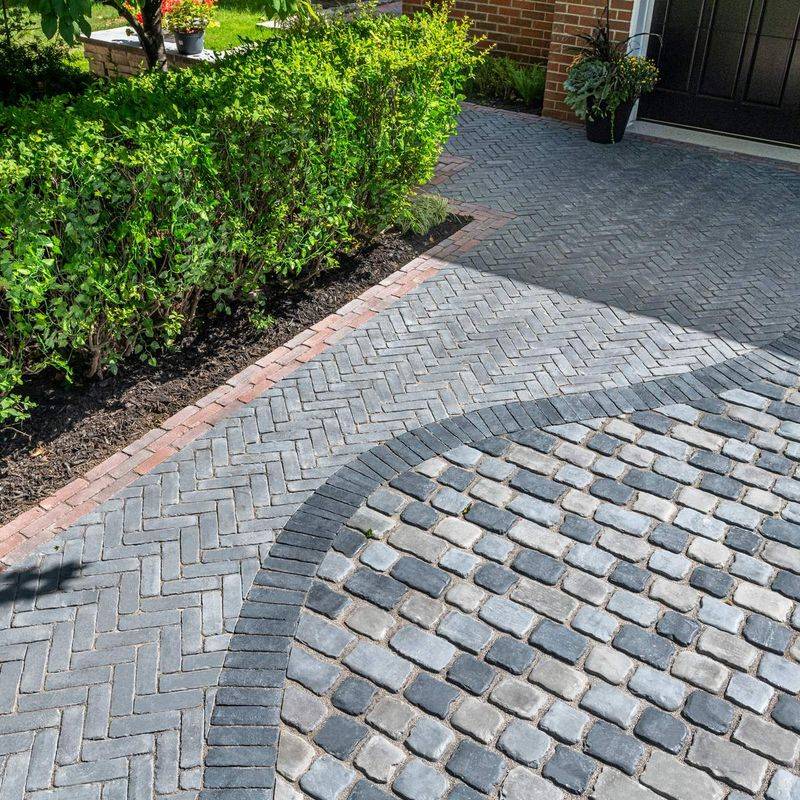
Paver bands create functional transitions that look professionally designed. Herringbone patterns add visual interest with their interlocking diagonal arrangement.
Soldier course layouts offer simpler, linear elegance that guides the eye through your landscape. Installing paver bands takes more effort than single-row edging but delivers stunning results. Excavate a strip wide enough for your chosen pattern.
Compact the base thoroughly and add sand for leveling. Lay pavers carefully, tapping each one level with a rubber mallet.
These borders serve multiple purposes beyond aesthetics. They create mowing strips that eliminate trimming along garden edges.
Pavers also handle foot traffic, making them ideal for high-use areas. Rain drains through joints rather than pooling on your lawn.
Pattern choices let you match your home’s architectural style. Victorian homes shine with intricate basketweave designs.
Modern builds look sharp with simple running bond patterns. Color options range from traditional red to contemporary charcoal gray.
Durability makes pavers worth the initial investment. They withstand North Carolina’s freeze-thaw cycles without cracking.
Weeds occasionally sprout between joints, but polymeric sand minimizes this issue. Individual pavers can be replaced if damaged, unlike poured concrete that cracks permanently. Your paver bands will look fresh for decades with minimal care.
6. Reclaimed Timber Borders
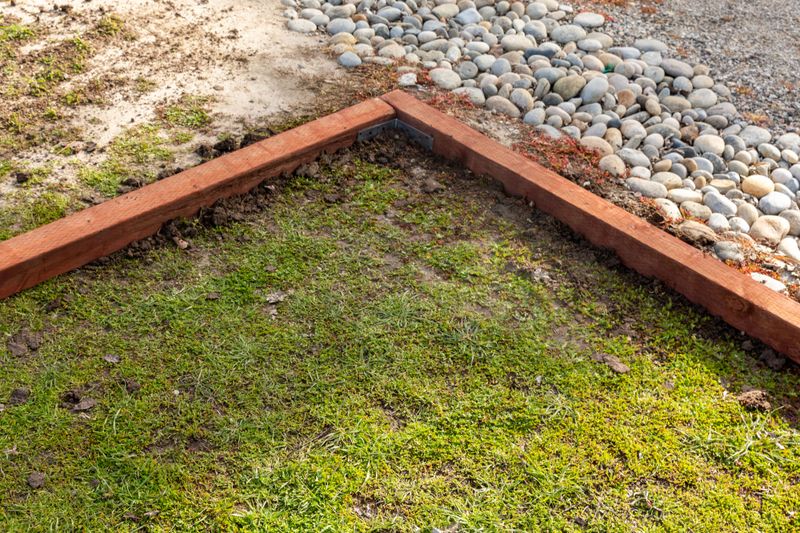
Reclaimed wood adds warmth and character that manufactured materials cannot replicate. Old railroad ties, barn wood, and salvaged timber bring history into your landscape.
Each piece tells a story through its weathered texture and natural imperfections. Proper installation ensures safety and longevity. Always use properly treated wood or naturally rot-resistant species like cedar or locust.
Avoid creosote-treated railroad ties near edible gardens. Secure timbers with rebar driven through pre-drilled holes into the ground below.
Mountain and farmhouse-style gardens benefit most from timber edging. The rustic aesthetic complements wildflower meadows, vegetable patches, and informal cottage plantings.
Stacked timbers create raised beds that improve drainage in our clay-heavy soils. Environmental considerations matter when choosing reclaimed wood. Verify that your timber comes from sustainable sources.
Some salvaged materials contain harmful preservatives unsuitable for organic gardens. Ask suppliers about treatment history before purchasing.
Maintenance requirements stay reasonable with quality materials. Check stability annually and replace any rotting sections promptly.
Wood naturally weathers to silver-gray patina that many gardeners find attractive. Seal timber with eco-friendly products if you prefer maintaining original color.
This edging style works beautifully throughout North Carolina, from Asheville’s mountain gardens to rural Piedmont landscapes.
7. Gravel And River Rock Borders
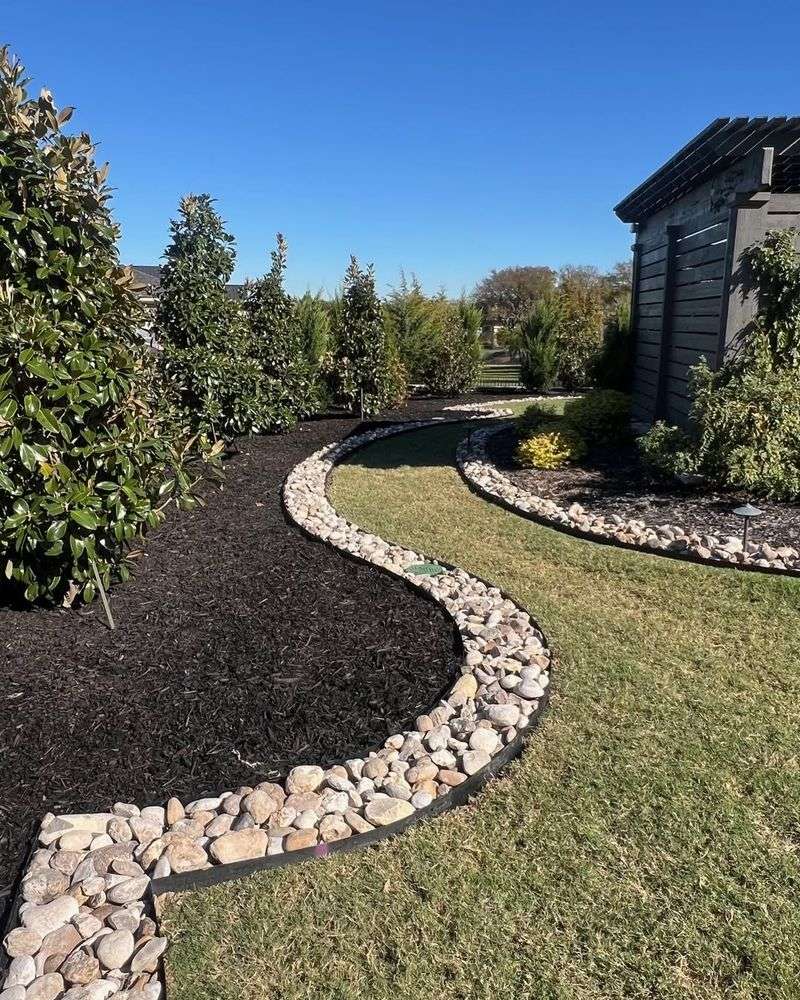
Loose stone edging solves drainage problems while adding textural interest. River rocks in shades of tan, gray, and rust create natural-looking borders.
Crushed granite or pea gravel offers budget-friendly alternatives that still look polished and intentional.
Installation goes quickly compared to mortared stone or brick. Dig a shallow trench and line it with landscape fabric to prevent weeds.
Pour your chosen stone material and rake it level. Edge restraints keep gravel from migrating into lawn areas.
Rain gardens and xeric beds benefit enormously from gravel borders. Water flows freely through stone rather than pooling around plant roots.
This drainage advantage makes gravel ideal for North Carolina’s heavy spring rains and occasional summer downpours.
Low maintenance ranks among gravel’s biggest selling points. No mowing, trimming, or painting required.
Simply rake the surface occasionally to keep it looking fresh. Add more stone every few years as settling occurs. Design flexibility allows creative combinations. Mix different stone sizes for varied texture.
Use darker rocks against light-colored mulch for contrast. Gravel borders work everywhere from coastal Wilmington gardens to Piedmont xeriscapes, adapting beautifully to any landscape style while requiring almost zero upkeep throughout the seasons.
8. Concrete Curbs And Sculpted Edges
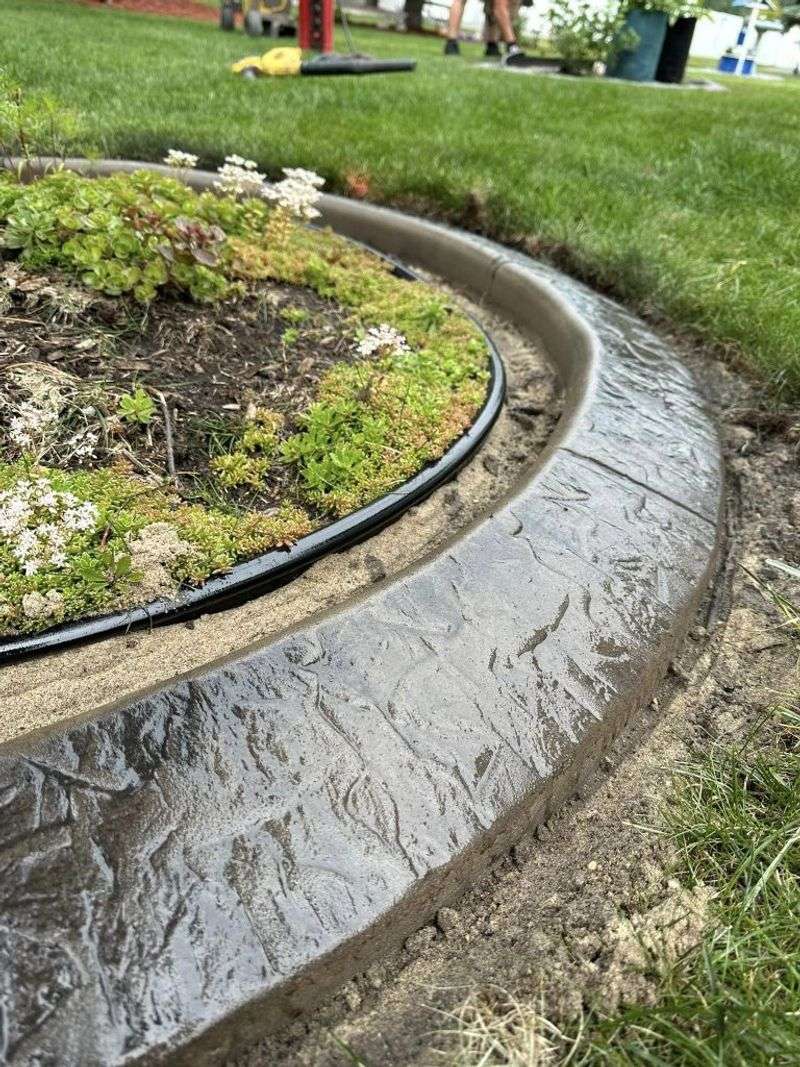
Poured concrete delivers custom edges with smooth, continuous lines. Scored patterns add decorative detail without joints or gaps.
This modern approach suits formal landscapes and contemporary homes throughout North Carolina’s urban areas.
Professional installation typically works best for concrete edging. Contractors use specialized forms and tools to create consistent results.
However, determined DIYers can tackle smaller projects with rented equipment and careful planning. Design possibilities expand dramatically with concrete. Curve borders around existing features or create geometric patterns.
Stamp textures into wet concrete for stone or brick appearances. Integral color eliminates painting and adds permanent hue.
Durability exceeds most other edging materials when properly installed. Concrete resists weather, insects, and mechanical damage from mowers.
Reinforcement with rebar or fiber mesh prevents cracking in our clay soils that expand and contract seasonally.
Maintenance stays minimal after installation. Seal concrete every few years to prevent staining and moisture penetration. Repair small cracks promptly before they spread. Power wash occasionally to remove algae or dirt buildup.
Cost runs higher than simple materials but delivers permanent results. Concrete edging adds significant curb appeal and property value.
The clean, professional appearance suits Raleigh’s modern neighborhoods and Charlotte’s upscale developments perfectly, creating landscapes that look expertly designed.
9. Mixed Material Edges With Plants
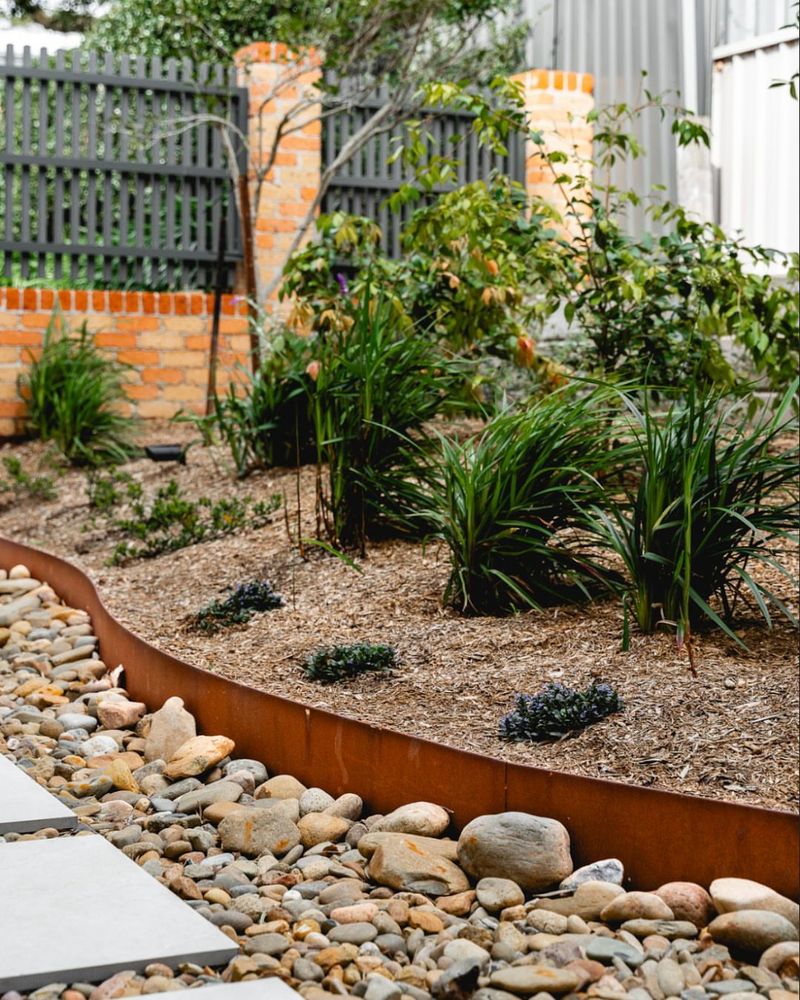
Combining hard materials with soft plantings creates depth and visual interest. Brick or stone provides structure while low plants add color and texture.
This layered approach delivers the best of both worlds for North Carolina gardeners. Design strategy matters when mixing materials and plants. Install your hard edge first to establish clean lines.
Then plant groundcovers or low perennials along the outer edge. This sequence creates a gradual transition from lawn to garden bed.
Plant selection dramatically impacts your edge’s success. Dwarf mondo grass stays neat year-round with zero trimming.
Creeping rosemary adds fragrance and evergreen foliage. Ajuga blooms with blue spikes in spring while spreading to fill gaps.
The structural element prevents plant creep into lawn areas. Brick or stone acts as a barrier that mowers can ride against.
Plants soften the hard edge and add seasonal color that changes throughout the year. Maintenance balances both components. Trim plants as needed to maintain proportions.
Keep hard materials visible rather than letting plants completely obscure them. This partnership creates sophisticated edges that look professionally designed.
This approach works beautifully across all North Carolina regions. Mountain gardens gain cottage charm.
Coastal landscapes achieve relaxed elegance. Urban yards look polished yet inviting with this balanced, creative edging style.