New Fruits And Vegetables You Can Try Growing In Georgia In 2026
Feeling a little bored planting the same crops every spring? A lot of Georgia gardeners reach that point where tomatoes, peppers, and cucumbers just don’t feel exciting anymore.
The good news is, Georgia’s long growing season leaves room to experiment without risking the whole garden.
Trying something new doesn’t mean growing anything complicated or fussy. Many lesser-known fruits and vegetables actually handle Georgia’s warmth, humidity, and shifting seasons better than expected.
Some thrive in shoulder seasons, others shrug off heat, and a few surprise gardeners with how productive they are once established.
This year is a great time to branch out. Adding new crops keeps gardening interesting, helps you learn what truly works in your space, and can even improve harvest timing.
These options are worth a closer look if you want something different growing in your Georgia garden in 2026, especially crops many gardeners are only now starting to try.
1. Hardy Kiwi Brings Big Flavor To Georgia Backyards
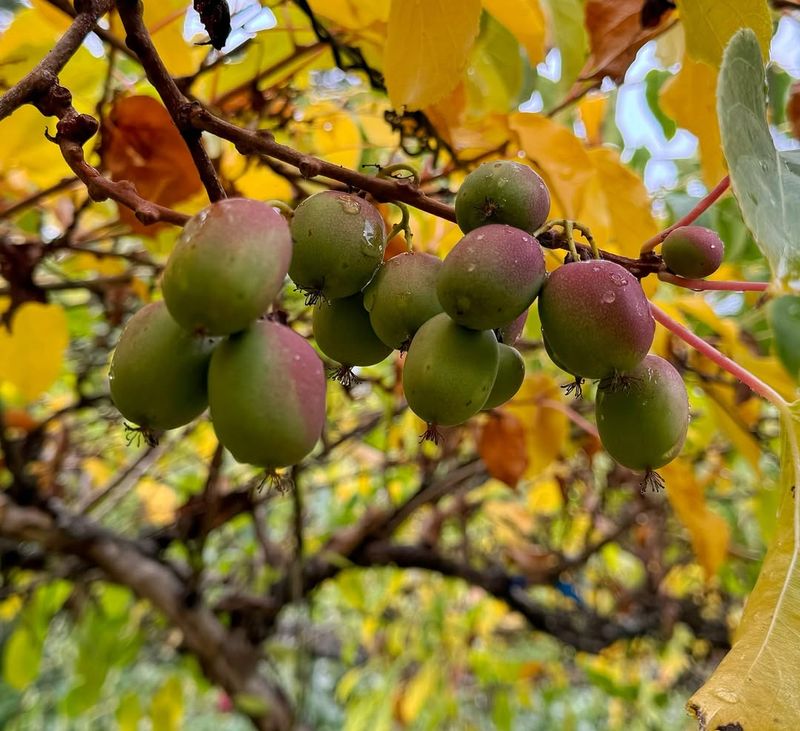
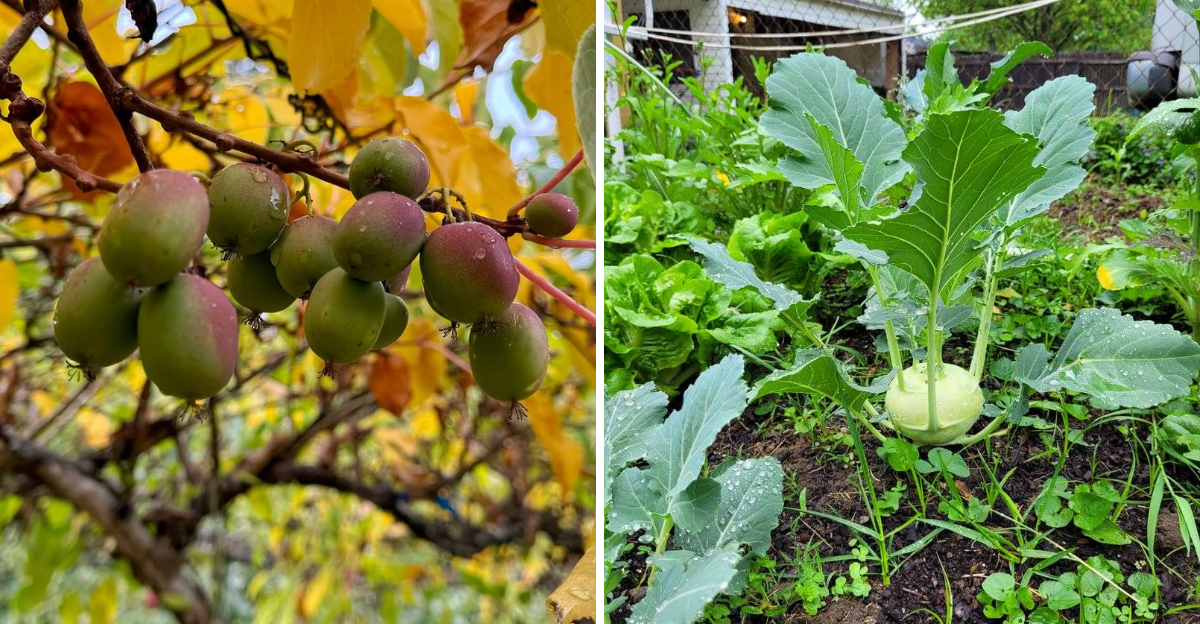
Forget the fuzzy brown kiwis from the grocery store. Hardy kiwi produces smooth-skinned, grape-sized fruits that pack even more sweetness and can actually survive Georgia winters without any trouble.
These vigorous vines grow quickly once established and can cover an arbor or fence in just a few seasons, giving you both shade and fruit in one package.
Most hardy kiwi varieties need a male and female plant to produce fruit, so plan to buy at least two vines when you start out. They prefer full sun and well-drained soil with plenty of organic matter mixed in.
Georgia’s climate suits them perfectly because they need some winter chill to set fruit but can handle the summer heat as long as they get consistent water.
Harvest time usually arrives in late September or early October across Georgia. The fruits ripen all at once, so you’ll have plenty to share with neighbors or preserve for later.
Hardy kiwis store well in the refrigerator for several weeks and make excellent additions to fruit salads, smoothies, or just eating fresh off the vine.
With proper support and annual pruning, these plants can produce for twenty years or more in Georgia gardens.
2. Pineapple Guava Handles Georgia Heat With Ease
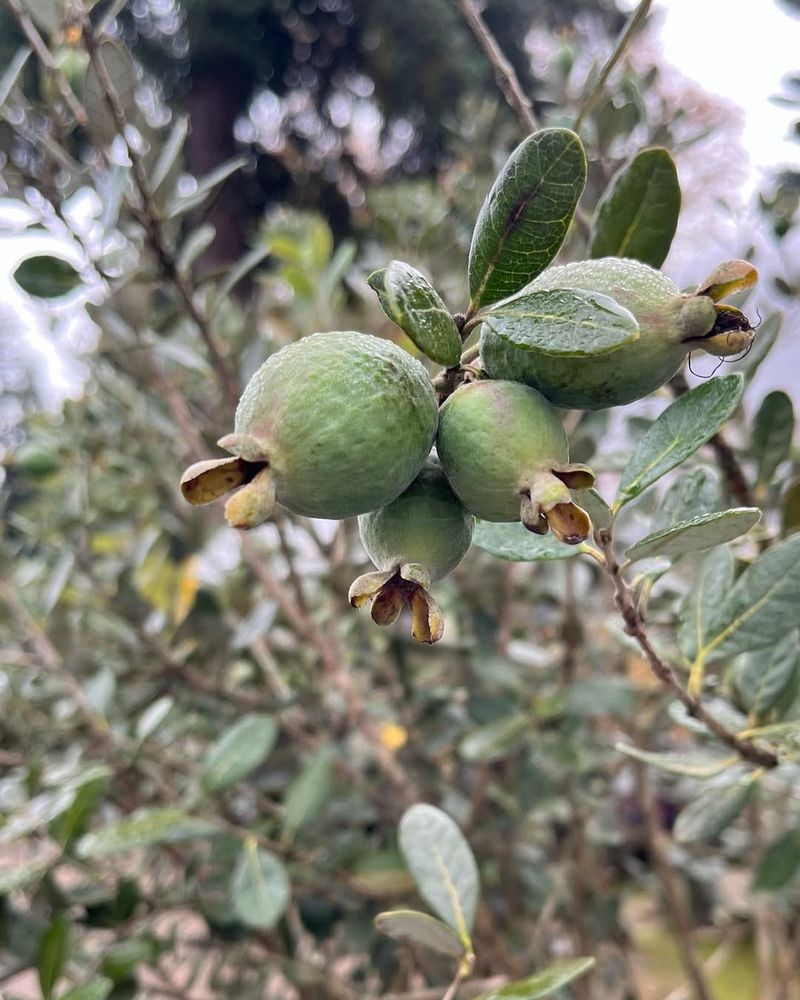
Pineapple guava earns its place in Georgia landscapes by combining beautiful appearance with tasty fruit and zero fuss about summer temperatures. The silvery-green leaves look attractive year-round, and the unusual flowers with bright red stamens and white petals appear in late spring.
Even better, those flower petals are edible and add a sweet touch to salads.
This evergreen shrub grows slowly to about ten feet tall and wide, making it perfect for foundation plantings or privacy screens in Georgia yards. It tolerates our red clay soil better than many fruit plants as long as drainage is decent.
The fruits ripen in fall and taste like a blend of pineapple, mint, and strawberry, with a texture similar to a pear.
You can grow pineapple guava as a single specimen, but planting two different varieties increases fruit production significantly. The plants handle drought once established and rarely suffer from pest problems in Georgia.
Your Georgia Garden Changes Every Week. Your Plan Should Too.
Gardening in Georgia changes quickly throughout the season. Every Friday you’ll receive a simple weekly plan showing exactly what to plant, prune, fertilize, harvest, and protect so you never miss the right timing.
Fruits drop from the plant when fully ripe, making harvest as simple as checking under the bush every few days during October and November.
The flavor improves if you let them soften for a day or two after picking.
3. Improved Muscadine Types Expand Fruit Options
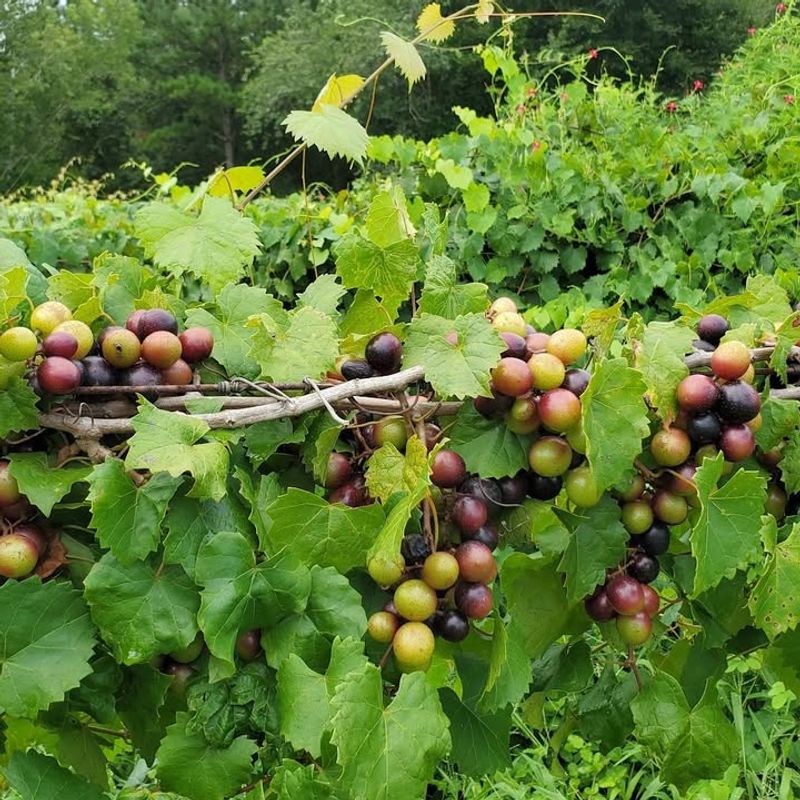
Muscadines have fed Georgia families for generations, but new varieties released in recent years offer bigger berries, better flavors, and colors beyond the traditional bronze and purple. Plant breeders have focused on creating types that resist diseases common in humid climates while producing grapes that rival anything from other regions.
These native vines still provide the same toughness that made old varieties popular.
Modern muscadines like Supreme and Triumph produce fruit nearly twice the size of older types, with thinner skins that make eating more pleasant. Some new releases are self-fertile, eliminating the need to plant multiple varieties for pollination.
They grow vigorously in Georgia’s heat and rarely need spraying for insects or diseases that plague European grape types.
A simple wire trellis or arbor gives muscadines the support they need to produce heavy crops each August and September. These vines adapt to various soil types across Georgia but appreciate a sunny spot with good air circulation.
Fresh muscadines taste wonderful, but they also make excellent jelly, juice, and wine.
One mature vine can easily produce forty pounds of grapes in a season, giving you plenty for all uses.
4. Low-Chill Asian Pears Fit Georgia’s Winters
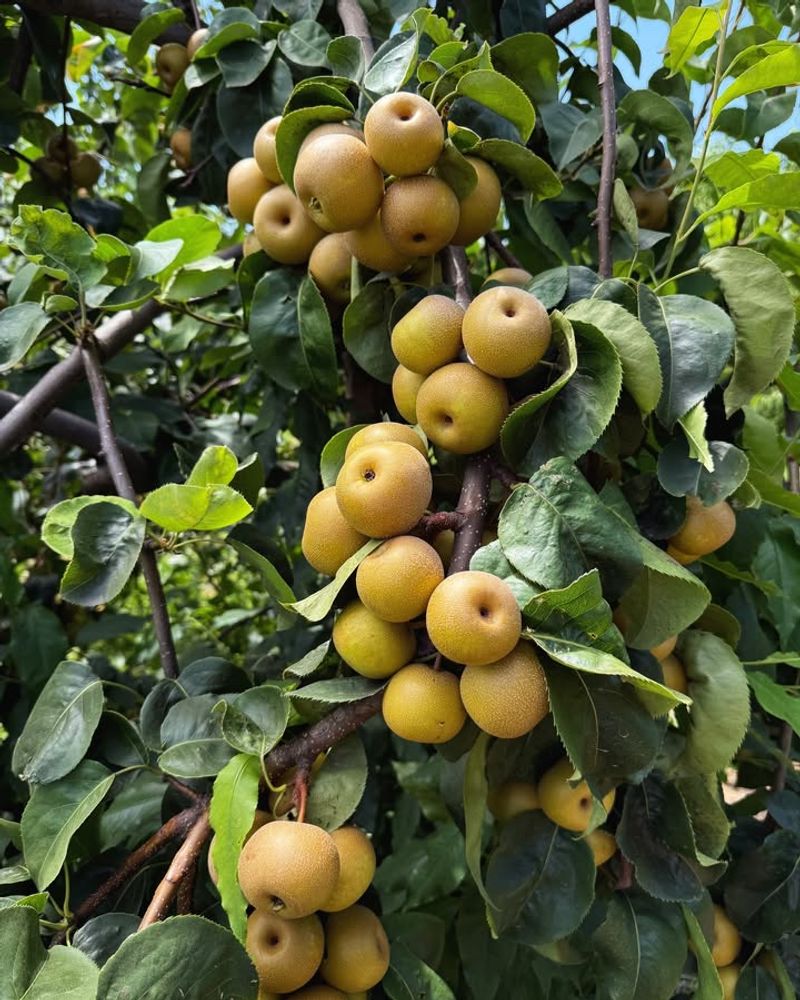
Asian pears bring a crisp, juicy texture completely different from European pear varieties, and new low-chill selections finally make them practical for most Georgia locations. Traditional Asian pears need more winter cold than our state typically provides, but recent introductions require only 300 to 400 chill hours.
That range fits perfectly with what middle and south Georgia winters deliver most years.
These trees bloom later than peaches, helping them avoid late spring freezes that sometimes damage fruit crops in Georgia. The round fruits look more like apples than traditional pears and stay crunchy even when fully ripe.
Shinseiki and Twentieth Century are two varieties that perform well across the state, producing reliable crops of golden fruit each summer.
Asian pears need another variety nearby for cross-pollination, so plan your planting accordingly. They grow best in full sun with well-drained soil and benefit from the same spray program used for apples in Georgia.
Harvest arrives in July and August, giving you fresh fruit during the hottest part of summer.
The pears store for several months in the refrigerator, maintaining their signature crunch much longer than soft European types.
5. Elderberry Gains Attention In Georgia Gardens
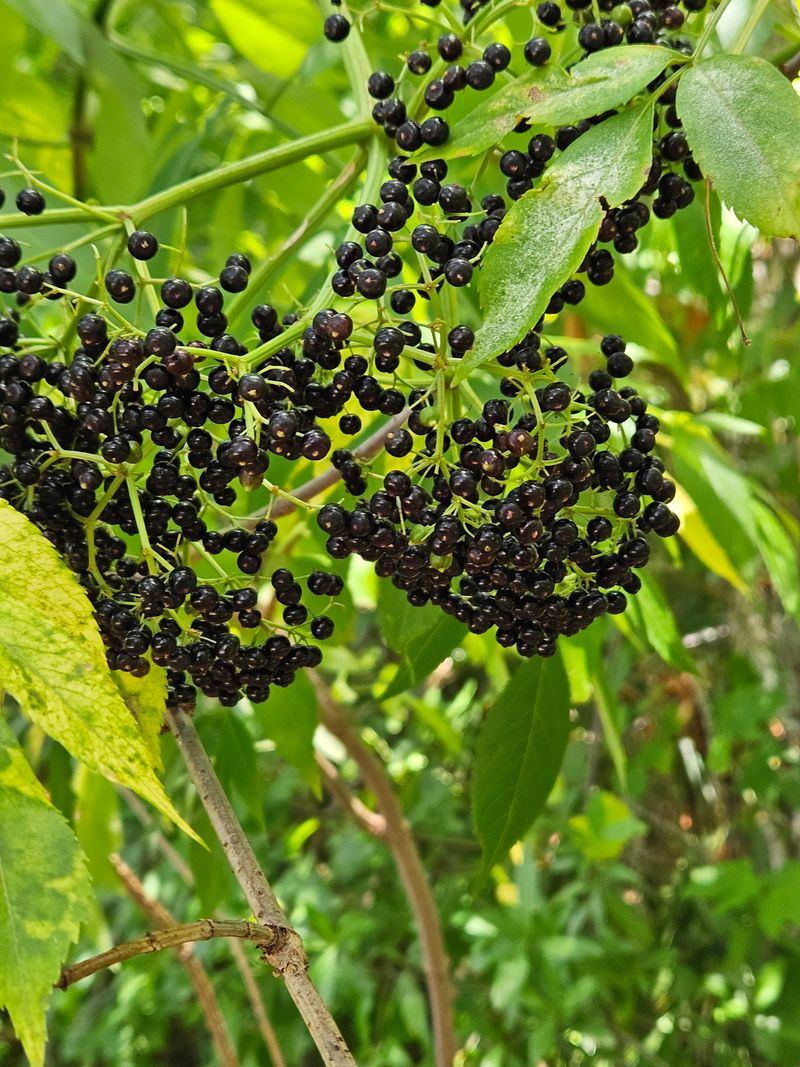
Elderberries have moved from wild roadsides into cultivated Georgia gardens thanks to improved varieties that produce larger berries and heavier yields. These native shrubs handle our climate naturally and provide beautiful white flower clusters in spring followed by deep purple berries in midsummer.
Growing interest in immune-supporting foods has made elderberries increasingly popular for syrups, jellies, and wines.
Named varieties like York and Nova produce berries much larger than wild types, with better flavor and higher yields. The plants grow quickly, often reaching six feet tall in their second year in Georgia.
They prefer moist soil and partial shade but adapt to full sun if watered regularly during dry spells.
Plant at least two different varieties to ensure good pollination and heavy berry production. The flower clusters attract beneficial insects to your garden, and birds love the ripe berries, so netting may be necessary if you want to harvest them yourself.
Elderberries ripen in waves during July and August across Georgia, giving you several pickings from each plant. The berries must be cooked before eating, but they make exceptional preserves and beverages.
These tough shrubs rarely suffer from pest problems and can produce for fifteen years or more.
6. Yardlong Beans Thrive In Georgia Summer Heat
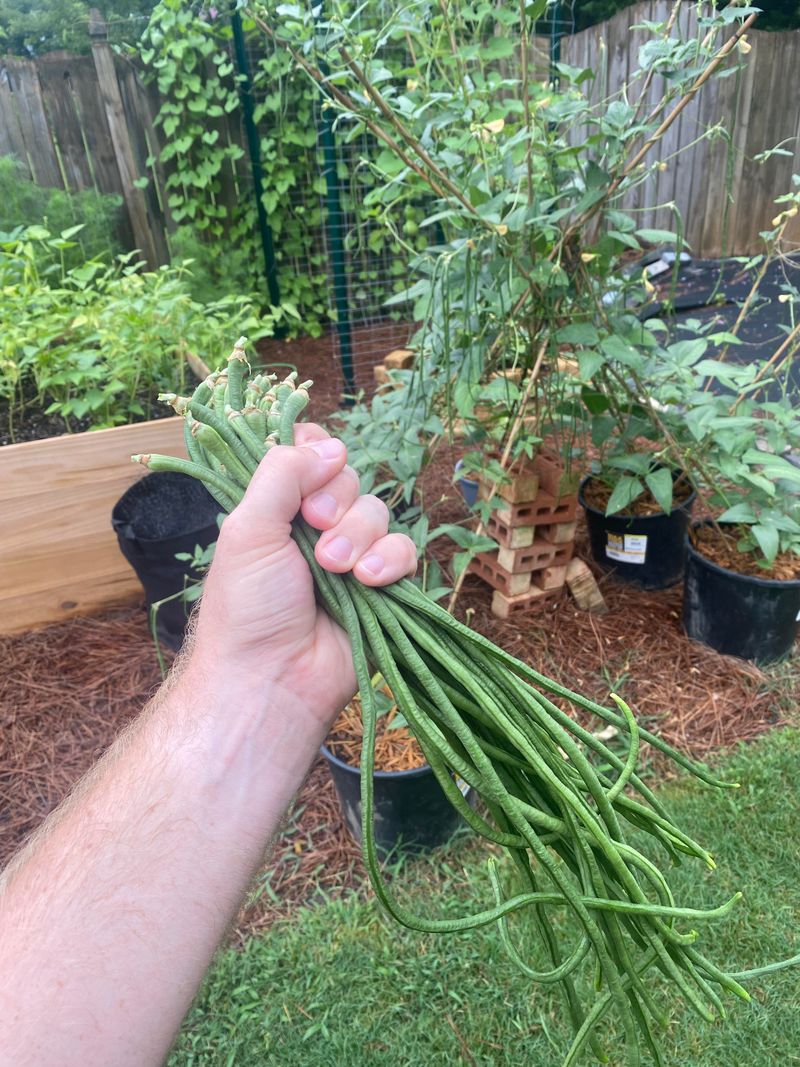
Regular green beans often struggle and stop producing when Georgia’s summer temperatures climb into the nineties, but yardlong beans actually prefer that heat. These Asian vegetables produce slender pods that can reach eighteen inches or longer, though they taste best when picked at twelve to fifteen inches.
The vigorous vines keep flowering and setting pods straight through July and August when other beans have quit.
Yardlong beans need a sturdy trellis or fence to climb, as the vines easily reach six to eight feet tall during a Georgia growing season. Plant them after the soil warms completely in late May, and they’ll start producing within sixty days.
The pods have a slightly different flavor than snap beans, with a texture that stays firm even when cooked.
These beans handle Georgia’s humidity without developing the rust and mildew problems that plague bush beans in summer. Pick pods regularly to keep production going strong through September.
They work well in stir-fries, steamed as a side dish, or cut into sections for freezing. Several varieties are available, with both green and purple-podded types performing equally well in Georgia.
The plants rarely need spraying and actually improve soil by fixing nitrogen.
7. Malabar Spinach Replaces Traditional Summer Greens
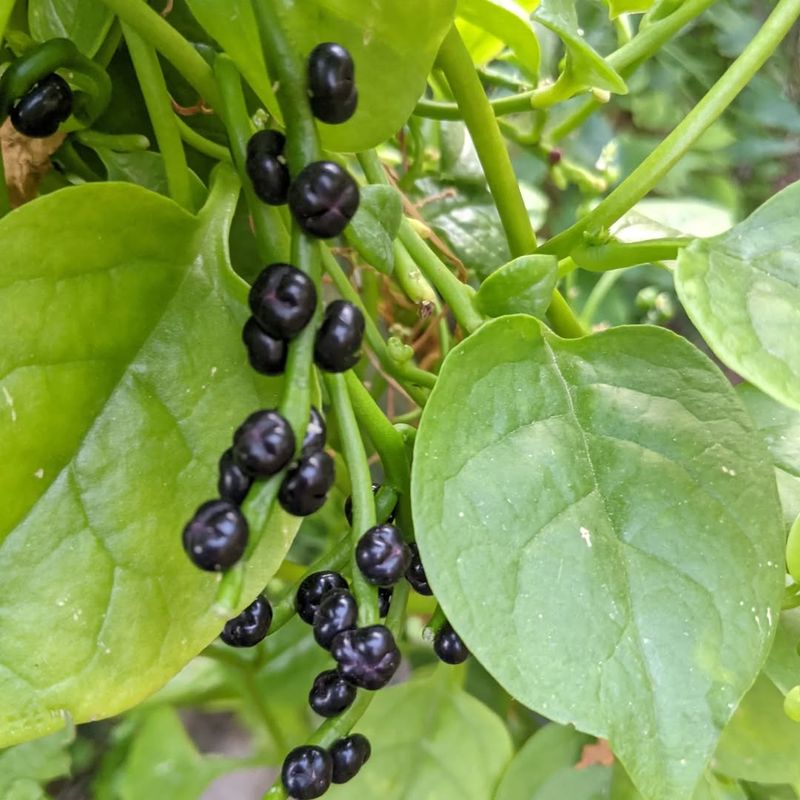
True spinach bolts and turns bitter when Georgia temperatures rise in June, but Malabar spinach thrives in that same heat and keeps producing tender leaves all summer long. This tropical vine isn’t actually related to regular spinach, but the thick, succulent leaves have a mild flavor that works perfectly in salads or cooked dishes.
The red-stemmed varieties add beautiful color to garden fences and arbors.
Malabar spinach grows as a vigorous climbing vine that needs support to reach its full potential in Georgia gardens. Plant it in late May after all frost danger passes, and it will quickly cover a trellis or fence.
The plants tolerate partial shade, making them useful for spots that get afternoon protection from Georgia’s intense summer sun.
Harvest individual leaves as needed, or cut six-inch stem tips to encourage branching and bushier growth. The leaves stay tender even in August heat that would destroy regular greens.
Malabar spinach contains more vitamins A and C than traditional spinach and adds a slightly mucilaginous texture to soups and stews. The plants often self-seed in Georgia gardens, coming back year after year in the same location.
They rarely suffer from pest damage and need only consistent moisture to produce abundantly.
8. Kohlrabi Performs Well In Georgia’s Cool Seasons
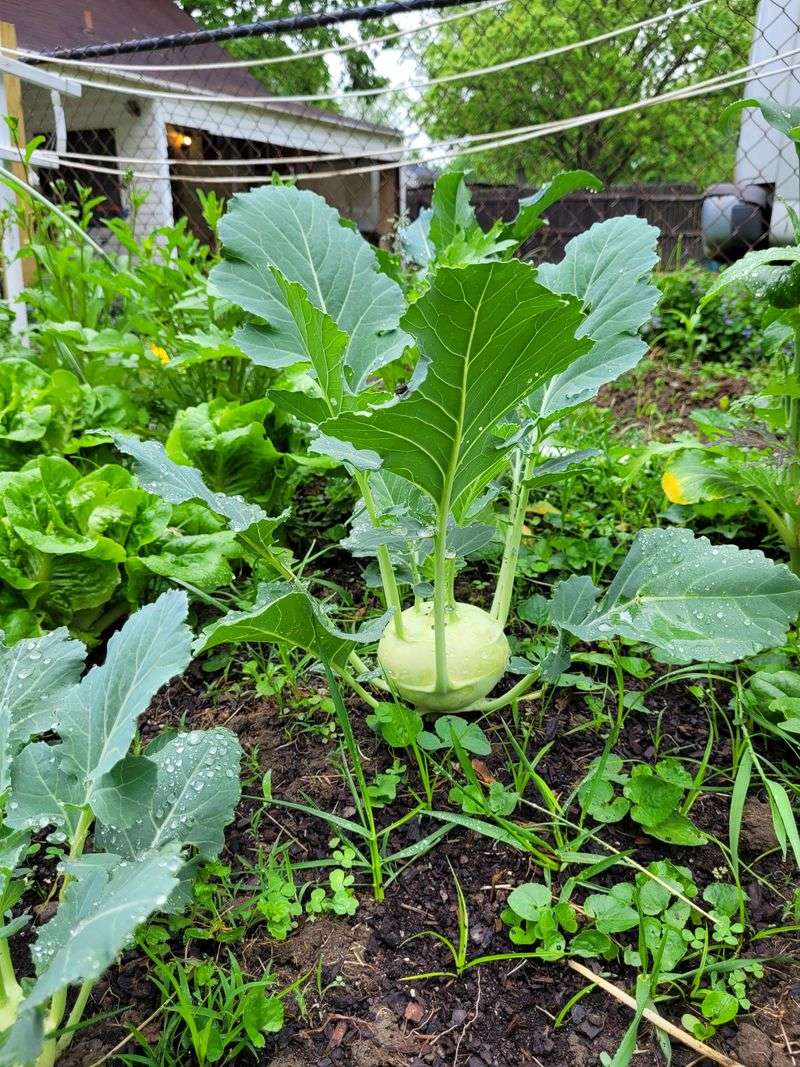
Kohlrabi might look strange with its round, swollen stem sitting above the ground, but this cool-season vegetable produces reliable crops during Georgia’s spring and fall when grown properly. The crisp, mild flavor resembles a cross between cabbage and broccoli stems, but sweeter and more delicate.
Both green and purple varieties grow equally well in Georgia, with the purple types adding attractive color to garden beds.
Plant kohlrabi in early spring as soon as soil can be worked, or start a fall crop in late August for harvest in October and November. The plants mature quickly, ready to pick just fifty to sixty days after planting.
They handle light frosts without damage, extending the harvest season at both ends in Georgia.
Harvest kohlrabi when the bulbs reach two to three inches across for the best texture and flavor. Larger bulbs become woody and tough, so don’t wait too long.
The entire plant is edible, with young leaves making excellent cooked greens. Kohlrabi stores well in the refrigerator for several weeks and can be eaten raw, roasted, or added to stir-fries.
These plants take up little space and rarely suffer from the pest problems that affect other cabbage family members in Georgia gardens.
9. Romanesco Broccoli Fits Spring And Fall Windows
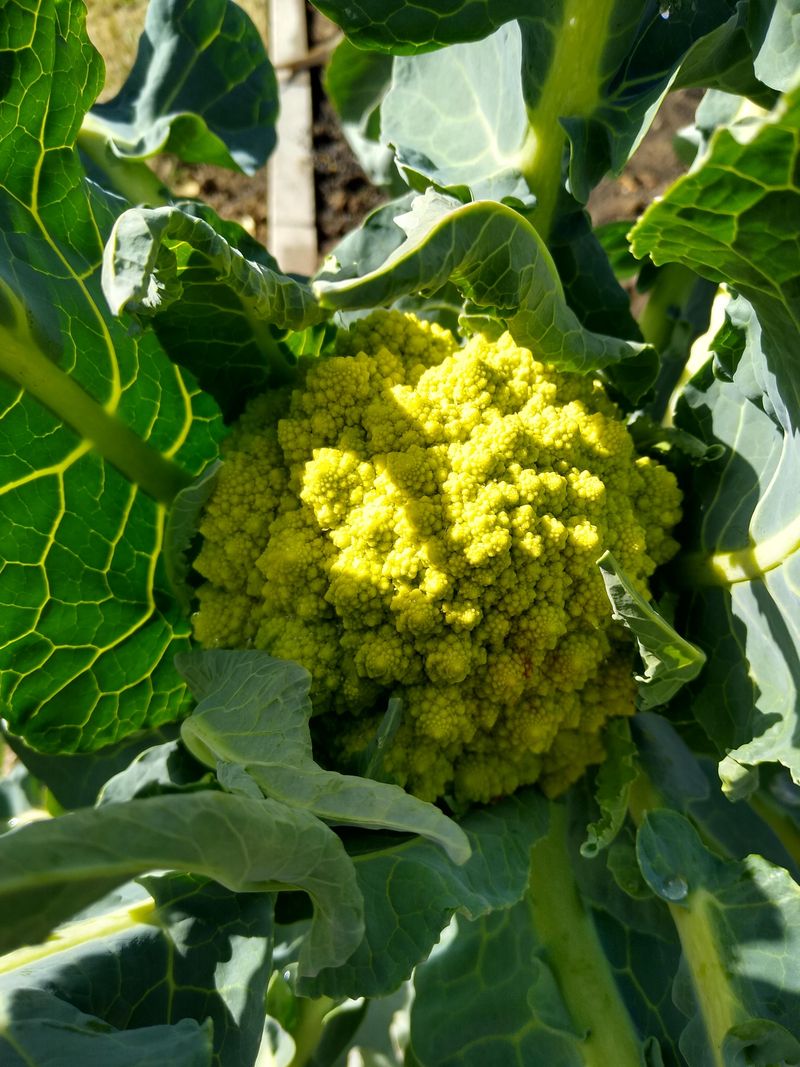
Romanesco broccoli creates stunning geometric patterns with its lime-green, spiral florets that look almost too perfect to be real. This Italian heirloom vegetable tastes milder and nuttier than regular broccoli, with a texture that stays firm when cooked.
Growing it successfully in Georgia requires timing your planting for cool weather, but the results are worth the effort.
Start Romanesco seeds indoors in early February for spring planting, or in July for fall crops that mature in October. The plants need consistent cool temperatures to form proper heads, so avoiding Georgia’s summer heat is essential.
Fall crops often perform better because temperatures steadily decrease as the plants mature.
Romanesco takes longer to mature than regular broccoli, typically requiring seventy-five to one hundred days from transplanting. The plants need rich soil with plenty of nitrogen and consistent moisture throughout the growing period.
Floating row covers protect spring plantings from flea beetles and help extend the harvest window in Georgia. Each plant produces one large central head followed by smaller side shoots.
The unique appearance makes Romanesco a conversation starter at farmers markets or dinner tables, and the superior flavor converts people who normally avoid broccoli.
10. Cucamelons Offer A Heat-Tolerant Vine Crop
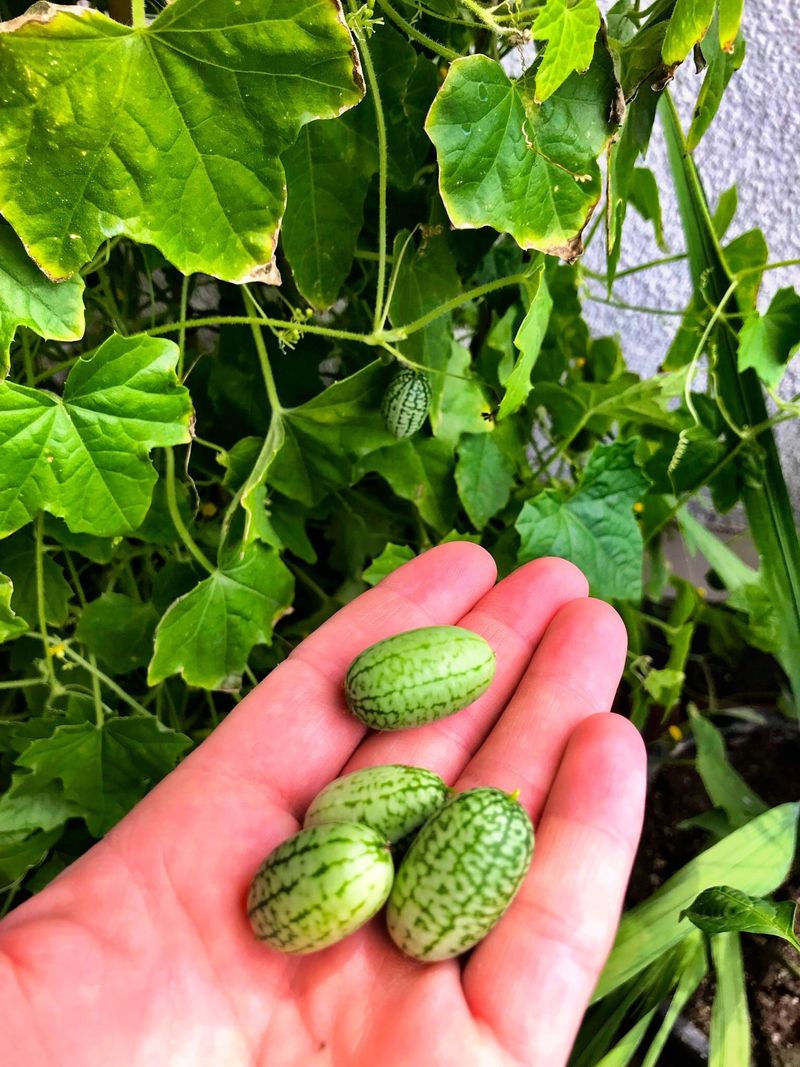
Cucamelons produce grape-sized fruits that look like miniature watermelons but taste like cucumbers with a hint of lime. These Central American natives handle Georgia’s summer heat and humidity far better than regular cucumbers, continuing to produce when other vine crops struggle.
The delicate vines take up less space than standard cucumber plants, making them perfect for small gardens or containers.
Plant cucamelon seeds directly in the garden after the last spring frost, or start them indoors three weeks earlier. The vines grow slowly at first but eventually reach six to eight feet long, benefiting from a small trellis or cage for support.
They start producing in midsummer and continue until frost arrives in Georgia.
The tiny fruits are ready to pick when they reach about one inch long and feel firm to the touch. Check the vines every few days because cucamelons hide under the leaves and can be easy to miss.
They make excellent pickles, add crunch to salads, or work as a unique garnish for drinks. Cucamelons rarely suffer from the powdery mildew and cucumber beetles that plague regular cucumbers in Georgia.
The plants often develop tuberous roots that can be dug and stored over winter for replanting the following spring.