How North Carolina Gardeners Grow Snow Oyster Mushrooms During Winter
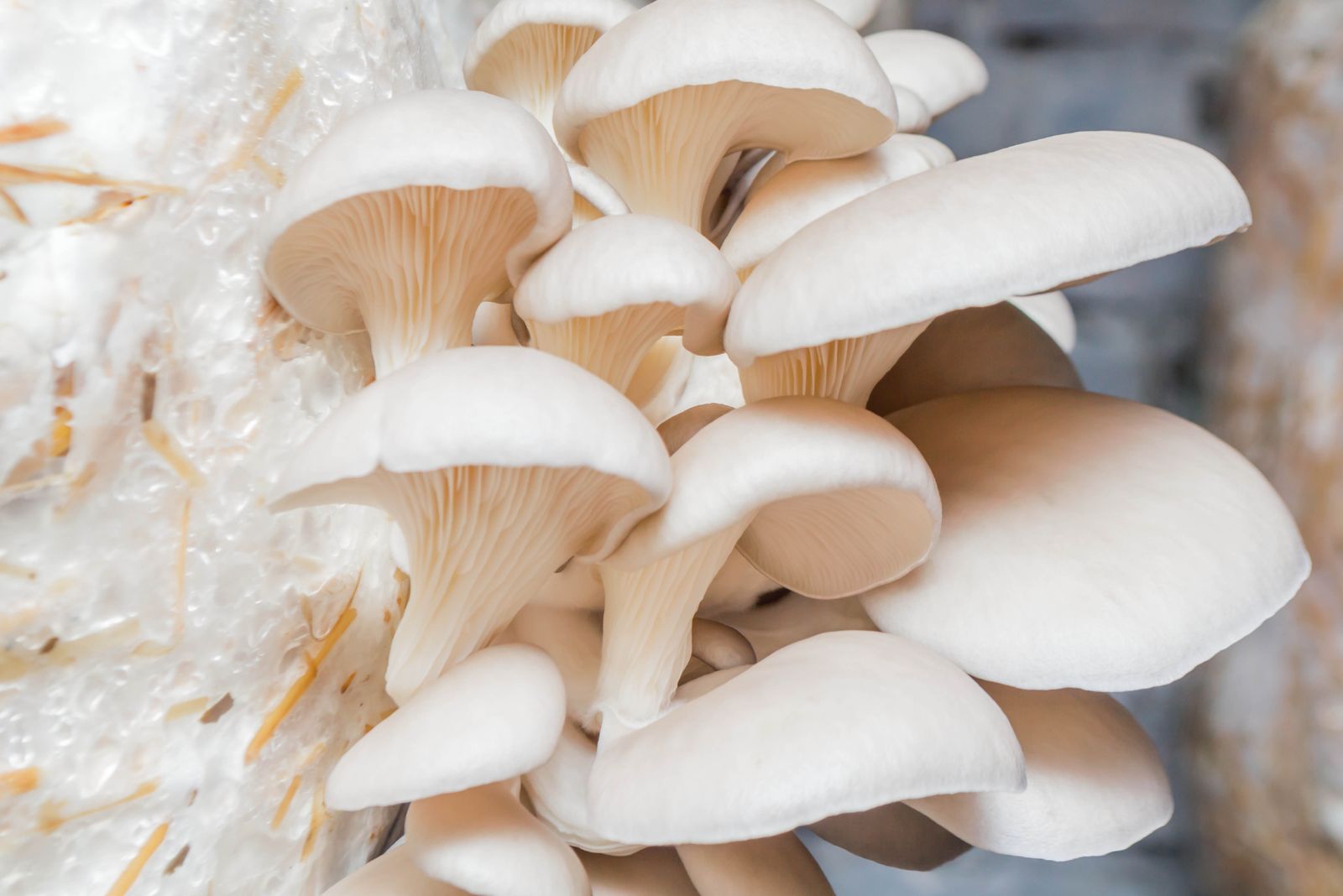
Winter gardening in North Carolina does not stop at plants. Many gardeners turn to snow oyster mushrooms during the colder months, using the cool temperatures to their advantage.
Unlike many crops that slow down or go dormant, these mushrooms thrive in chilly, controlled conditions, making them a popular choice for indoor growing when outdoor gardens rest.
Growing snow oyster mushrooms usually begins with a simple setup. Gardeners use clean containers or grow bags filled with a suitable substrate, often kept in a cool, dim space where temperatures stay steady.
Moisture matters more than warmth, so maintaining humidity helps the mushrooms develop properly while preventing the growing medium from drying out. With patience and the right balance, clusters begin to form and mature over time.
For many North Carolina gardeners, growing mushrooms in winter keeps the gardening rhythm alive, providing a fresh, rewarding harvest even during the quietest season of the year.
Maintain Cool Growing Temperatures Between 45–60°F
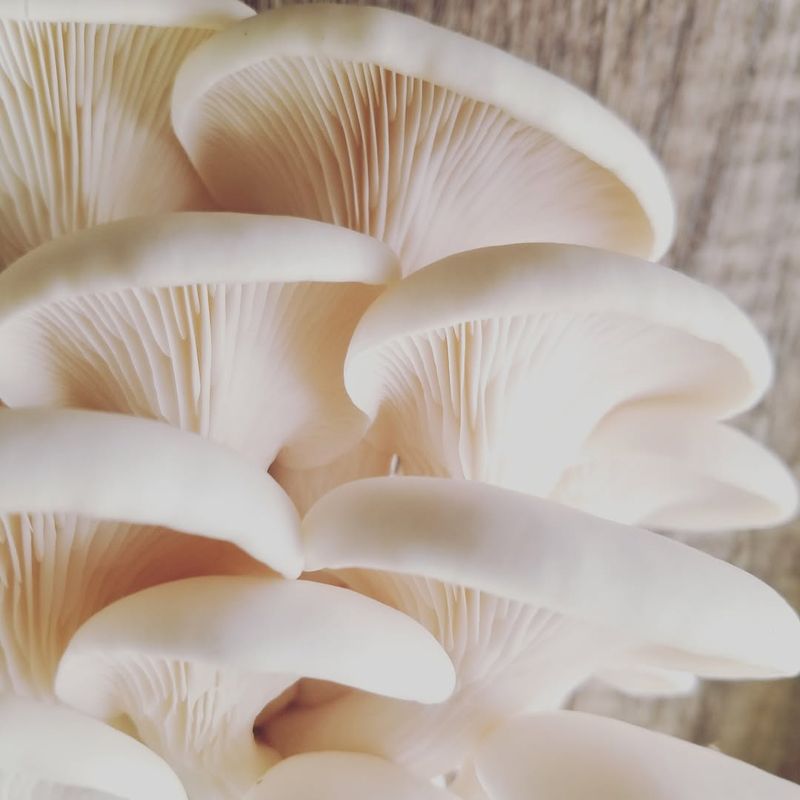
Snow oyster mushrooms love cool conditions that match North Carolina’s winter weather perfectly. Keeping your growing space between 45 and 60 degrees Fahrenheit creates the sweet spot these fungi need to produce healthy fruiting bodies.
Many basements naturally stay within this range during colder months without extra heating or cooling.
Temperature stability matters more than hitting one exact number throughout the day. Wild swings stress the mycelium and slow down mushroom formation, so finding a spot with steady conditions pays off.
Unheated garages, insulated sheds, or spare rooms work well if they hold consistent temperatures without freezing.
Warmer temperatures above 65 degrees can trigger faster growth but often result in thin stems and smaller caps. Cooler conditions encourage dense, meaty mushrooms with better texture and flavor.
A simple indoor thermometer helps you monitor conditions and adjust if needed. North Carolina’s variable winter weather means some days feel mild while others bring frost.
Indoor growing spaces buffer these fluctuations and give you control over the environment. Checking temperatures morning and evening helps you understand your space’s natural rhythm.
If your growing area runs too warm, opening a window during cool nights or using a small fan brings temperatures down safely. Too cold?
Adding a space heater on low or moving containers to a slightly warmer corner solves the problem without expensive equipment.
Use Pasteurized Straw Or Hardwood Sawdust Substrate
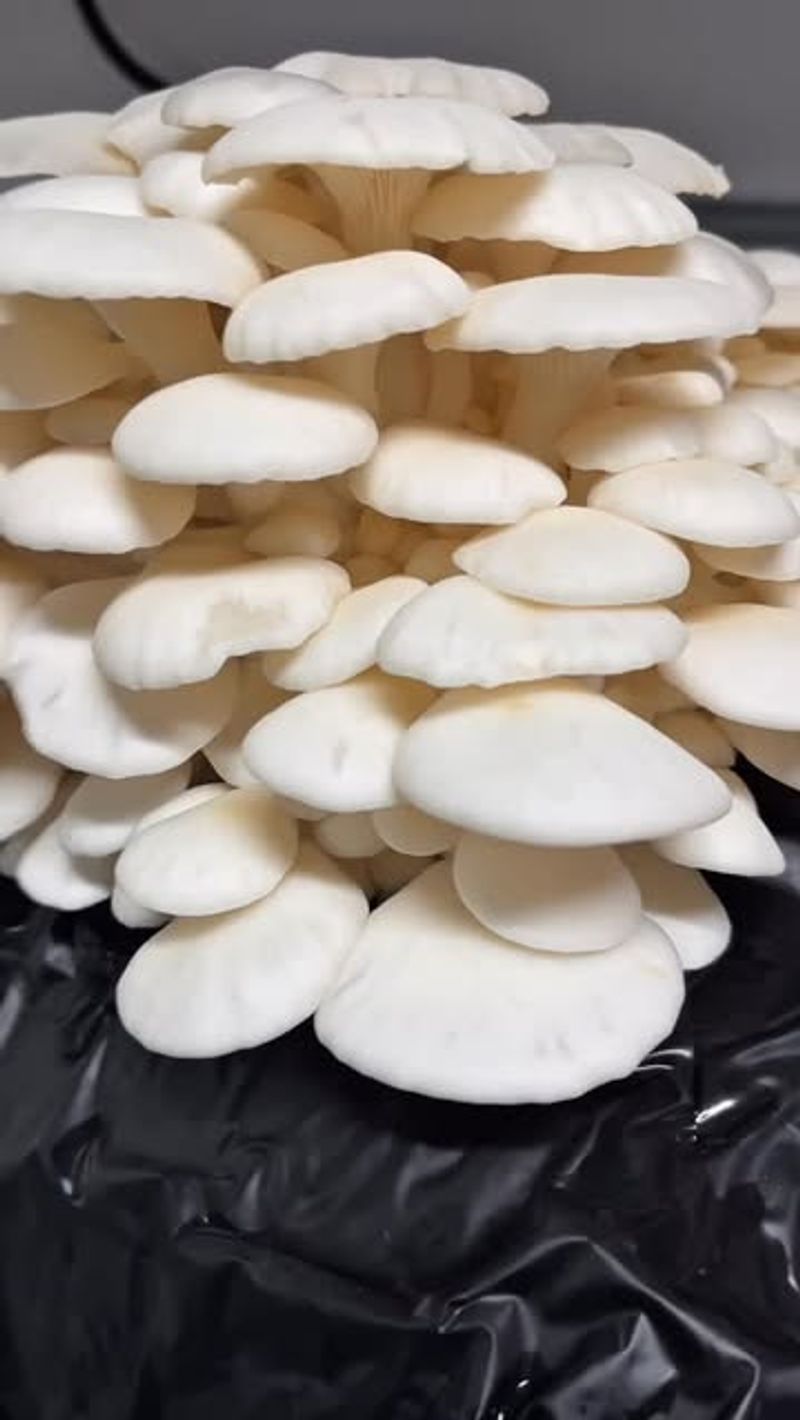
Choosing the right growing medium sets the foundation for successful mushroom cultivation throughout winter months. Pasteurized straw offers an affordable, accessible option that snow oyster mushrooms colonize quickly and fruit abundantly.
Hardwood sawdust works equally well and produces dense, flavorful mushrooms with excellent texture. Pasteurization eliminates competing organisms without sterilizing the substrate completely, leaving beneficial microbes that support healthy mycelium growth.
Heating straw or sawdust to 160-180 degrees for 90 minutes accomplishes this effectively at home. A large pot or drum with a thermometer makes the process manageable for small batches.
Straw breaks down faster than sawdust, which means quicker colonization but shorter productive periods overall. Sawdust substrates take longer to colonize but often produce multiple flushes over extended timeframes.
Your North Carolina Garden Changes Every Week. Your Plan Should Too.
Gardening in North Carolina changes quickly throughout the season. Every Friday you’ll receive a simple weekly plan showing exactly what to plant, prune, fertilize, harvest, and protect so you never miss the right timing.
Mixing both materials combines their benefits and creates a balanced growing medium. Moisture content matters just as much as the substrate type itself when preparing your growing blocks.
Properly pasteurized material should feel damp like a wrung-out sponge, holding moisture without dripping when squeezed. Too wet causes problems with anaerobic conditions, while too dry slows mycelium spread.
North Carolina gardeners find local sawmills and feed stores supply fresh hardwood sawdust and straw affordably. Oak, maple, and hickory sawdust work beautifully, while pine and cedar contain oils that inhibit mushroom growth.
Always verify your source before purchasing materials for your winter mushroom projects.
Maintain High Humidity Around 85–95%
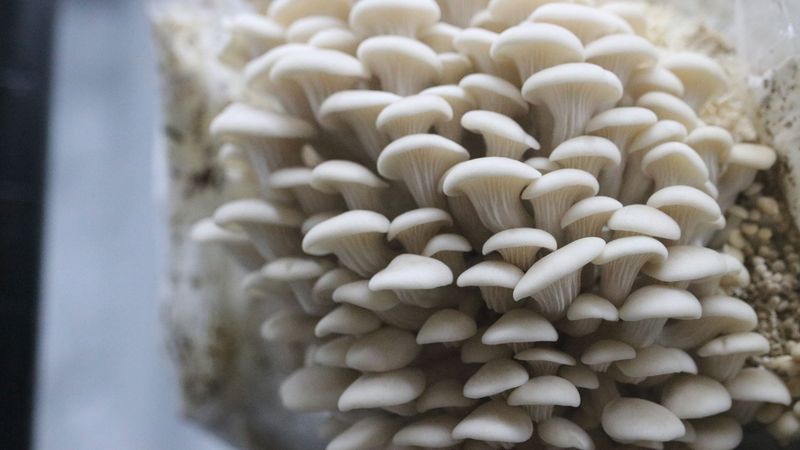
Humidity creates the atmosphere snow oyster mushrooms need to form and develop properly during their fruiting stage. Maintaining levels between 85 and 95 percent mimics the moist forest conditions where these fungi naturally thrive.
Without adequate moisture in the air, developing mushrooms dry out and growth stalls before harvest.
Simple humidity gauges placed near your growing containers provide instant feedback about environmental conditions. Digital hygrometers cost less than ten dollars and help you track trends throughout the day.
Most North Carolina homes run dry during winter heating season, making active humidity management essential.
Misting fruiting blocks two or three times daily keeps surface moisture high without waterlogging the substrate underneath. A basic spray bottle works fine for small setups, while larger operations benefit from ultrasonic humidifiers.
Positioning containers inside plastic totes with loose lids traps moisture and reduces misting frequency.
Mushroom pins abort and turn brown when humidity drops below 80 percent for extended periods. Young fruiting bodies need constant moisture to expand properly and develop their characteristic oyster shape.
Mature mushrooms tolerate slightly lower humidity but still prefer moist air. Bathrooms naturally maintain higher humidity than other rooms, making them surprisingly good growing spaces if light and temperature suit your mushrooms.
Basements also hold moisture well, especially in North Carolina’s humid climate. Grouping multiple growing containers together creates a microclimate that holds humidity better than isolated blocks.
Provide Gentle Airflow To Prevent Stale Conditions
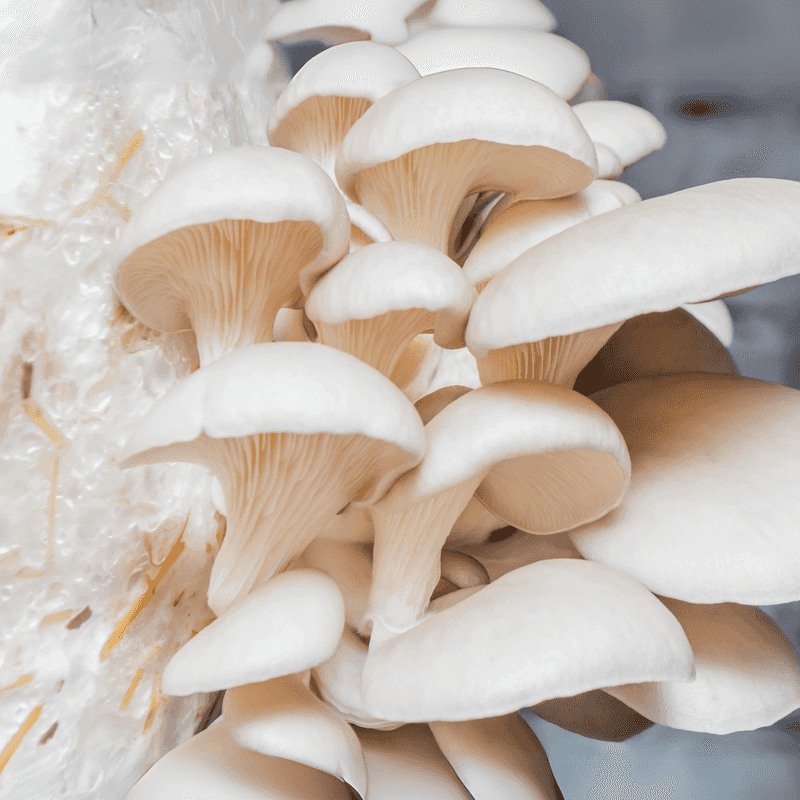
Fresh air exchange supports healthy mushroom development and prevents the elongated stems that result from stale, carbon-dioxide-rich environments.
Snow oyster mushrooms respire continuously, releasing carbon dioxide that accumulates without proper ventilation. Gentle airflow removes this buildup and supplies the oxygen mycelium needs for vigorous growth.
A small fan running on low speed several times daily provides adequate air movement for home growing setups. Position fans to create indirect circulation rather than blasting air directly onto fruiting blocks.
Harsh airflow dries out developing mushrooms and causes irregular cap formation. Opening growing room doors or windows briefly each day refreshes the air naturally without equipment.
This simple practice works well in North Carolina’s moderate winter climate when outdoor temperatures stay above freezing. Five minutes of fresh air exchange twice daily makes a noticeable difference.
Mushrooms grown in stagnant air develop long, thin stems as they stretch toward fresh oxygen sources. Caps stay small and pale, producing disappointing harvests despite good substrate and humidity.
Proper airflow encourages short, thick stems and large, well-formed caps that look and taste better.
Plastic totes used for humidity control need ventilation holes to prevent complete air stagnation inside. Drilling several quarter-inch holes near the top allows carbon dioxide to escape while retaining moisture.
Covering holes with micropore tape filters incoming air without restricting gas exchange significantly.
Use Indirect Light During Fruiting Stage
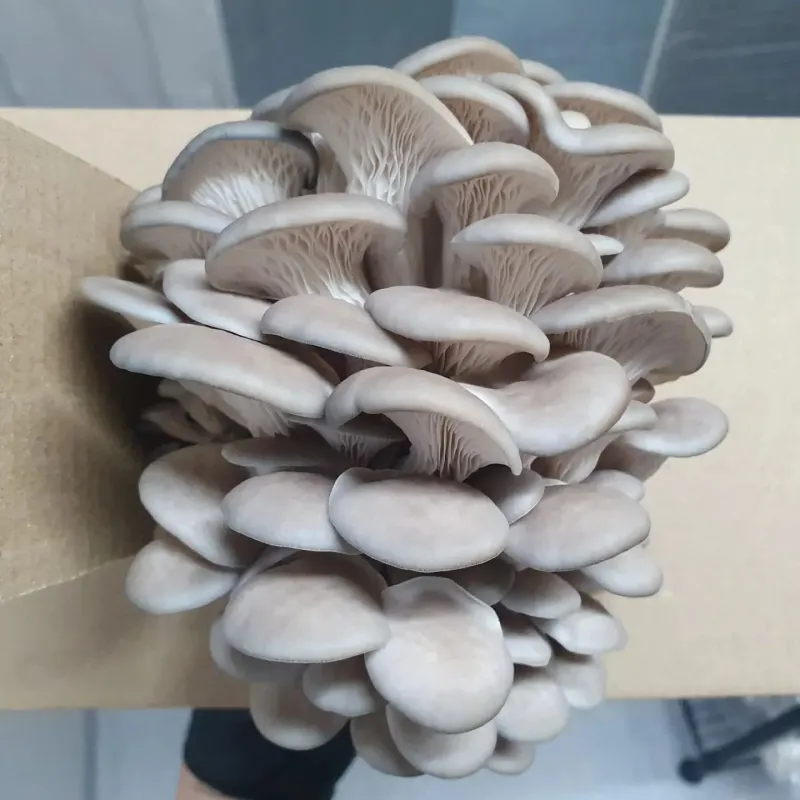
Light guides mushroom development even though these fungi don’t photosynthesize like green plants do. Snow oyster mushrooms use light cues to orient their growth and form properly shaped fruiting bodies.
Indirect natural light or ambient artificial lighting provides everything they need without intense brightness.
A north-facing window supplies gentle, consistent light throughout winter days in North Carolina without direct sun exposure. Mushrooms positioned near these windows develop normal cap shapes and grow toward the light source naturally.
Direct sunlight heats substrates unevenly and dries out developing mushrooms quickly. Artificial lighting works equally well when natural light proves insufficient or unavailable in your growing space.
Standard LED bulbs or fluorescent tubes provide adequate illumination without generating excessive heat.
Mushrooms need light during their 12-hour active period but tolerate complete darkness during colonization.
Growing mushrooms in total darkness produces odd results, with caps that fail to develop properly or stems that grow in random directions. Light intensity matters less than consistency, so even dim ambient room lighting supports normal fruiting.
Avoid sudden changes between bright and dark conditions. Basements with small windows or artificial lighting produce excellent mushroom crops when other conditions stay optimal. The key involves providing some light cues rather than intense illumination.
North Carolina gardeners find that matching natural day length rhythms, even with artificial lights, yields the most predictable results throughout winter growing seasons.
Keep Growing Area Clean And Sanitized
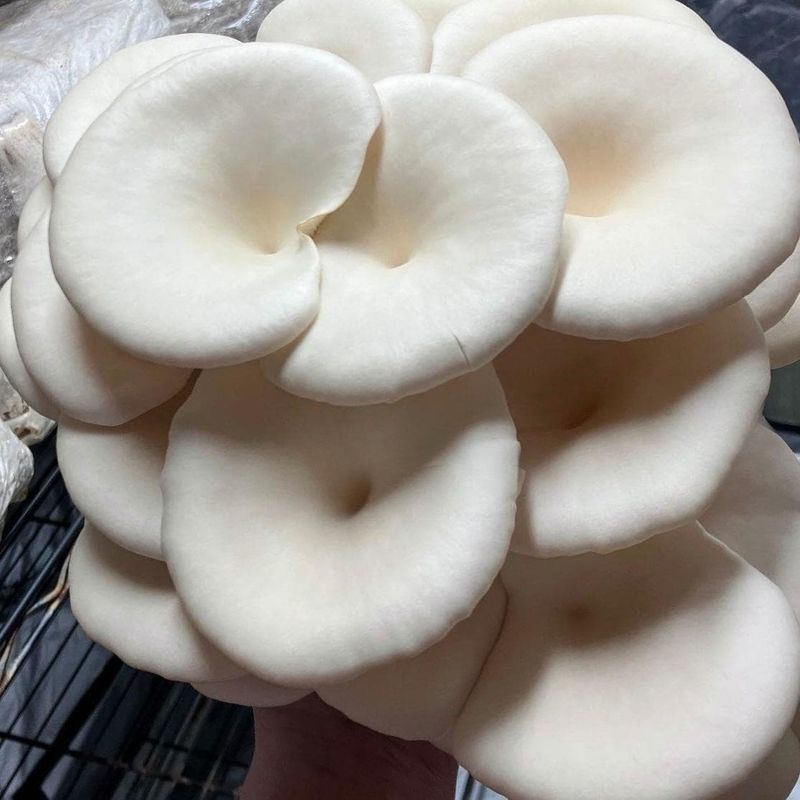
Cleanliness prevents contamination that competes with your mushrooms and ruins entire growing projects before harvest.
Snow oyster mushrooms grow vigorously when given proper conditions, but molds and bacteria colonize substrates even faster if sanitation lapses. Simple cleaning practices protect your investment and ensure successful crops.
Wiping down surfaces with diluted bleach solution before starting new batches eliminates lingering spores and bacteria. A ratio of one tablespoon bleach per gallon of water works effectively without leaving harmful residues.
Let surfaces air dry completely before placing mushroom containers in the growing area. Wearing clean gloves when handling spawn and substrates reduces contamination from skin oils and environmental microbes.
Washing hands thoroughly before working with mushrooms helps even when wearing gloves. These small habits make big differences in success rates over time.
North Carolina’s humid climate encourages mold growth year-round, making vigilance especially important during winter growing seasons. Removing spent substrates promptly prevents contamination from spreading to active growing blocks.
Composting exhausted materials outdoors keeps spores away from indoor growing spaces. Air filters or simply keeping growing areas dust-free reduces airborne contamination settling onto substrates.
Regular vacuuming and damp mopping floors removes potential contamination sources. Growing spaces don’t need laboratory-level sterility, but basic cleanliness dramatically improves outcomes and reduces frustrating losses to competing organisms.
Maintain Moist But Not Saturated Substrate
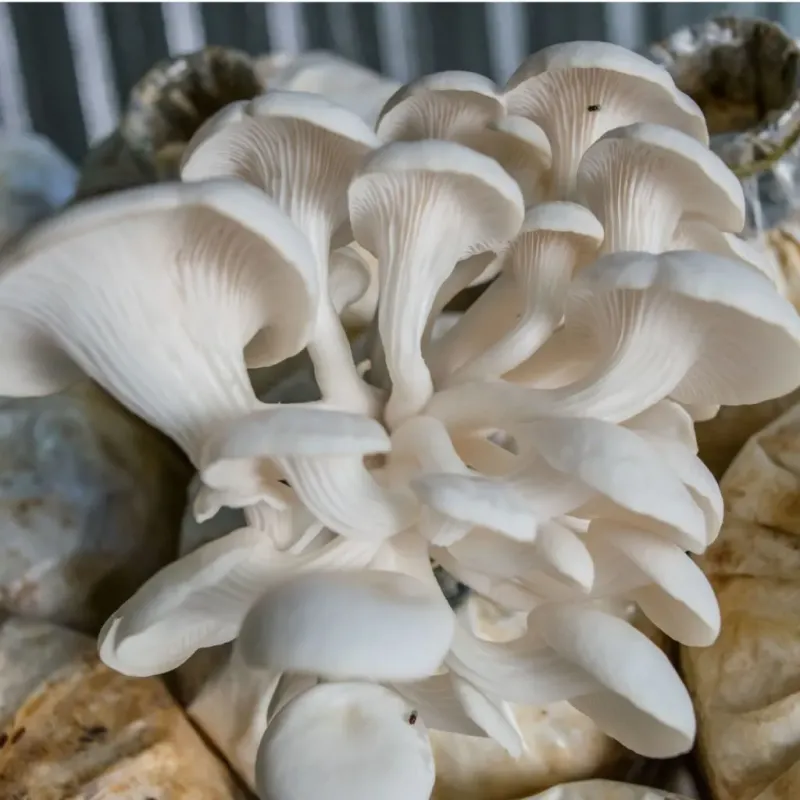
Substrate moisture balance determines whether mycelium thrives or struggles throughout the growing cycle. Snow oyster mushrooms need consistently moist growing medium that holds water without becoming waterlogged or soggy.
Finding this balance takes practice but becomes intuitive after a few growing cycles. Properly prepared substrate feels like a damp sponge when squeezed, releasing a few drops of water without streaming.
Too much moisture creates anaerobic pockets where beneficial mycelium can’t grow and harmful bacteria multiply. Too little moisture slows colonization and reduces eventual mushroom yields significantly.
Checking substrate moisture weekly during colonization helps you catch problems before they become serious. Gently pressing the surface should feel springy and damp without leaving wet impressions.
Weight provides another clue, as properly moist blocks feel substantially heavier than dry ones.
North Carolina’s variable winter humidity affects substrate moisture over time, with drier indoor air pulling moisture from growing blocks. Keeping containers covered during colonization conserves moisture and maintains ideal conditions.
Misting surfaces during fruiting replaces evaporated moisture without re-wetting the substrate interior.
Waterlogged substrates smell sour or unpleasant as anaerobic bacteria break down organic matter improperly. Healthy mycelium produces a clean, mushroomy scent that signals good conditions.
Adjusting initial moisture levels based on your specific substrate materials and growing environment prevents problems and supports vigorous mushroom production throughout winter months.
Grow Indoors Or In Protected Spaces During Winter
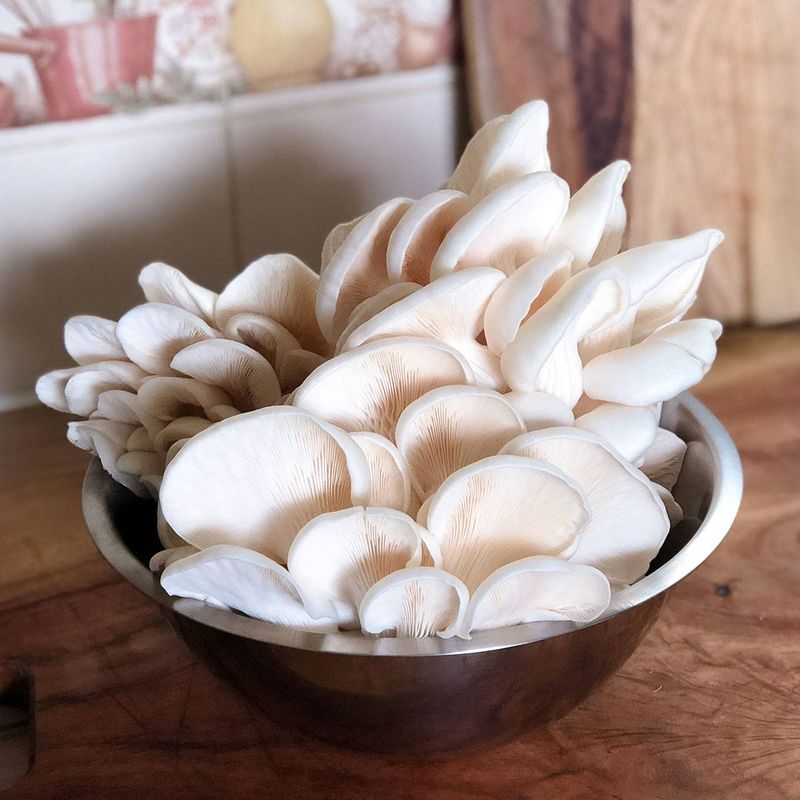
North Carolina winters bring temperature swings that outdoor mushroom growing can’t accommodate reliably. Moving cultivation indoors or into protected spaces gives you environmental control that ensures consistent production.
Basements, garages, spare bathrooms, and insulated sheds all work beautifully for winter mushroom projects.
Basements offer naturally stable temperatures and higher humidity than other indoor spaces, making them ideal for mushroom cultivation.
The cooler temperatures that make basements uncomfortable for living spaces create perfect conditions for snow oyster varieties. Natural darkness during colonization and easy light control during fruiting add to their advantages.
Garages work well if they stay above freezing and receive some insulation from extreme temperature fluctuations. Unheated garages in North Carolina typically maintain temperatures within the ideal range for snow oysters during winter months.
Adding a small heater for particularly cold nights protects your crops from freezing damage.
Spare bathrooms provide built-in humidity advantages along with easy access to water for misting. The confined space holds moisture naturally, reducing the effort needed to maintain proper conditions.
Ventilation fans help with air exchange when running briefly several times daily. Insulated sheds or outbuildings become productive growing spaces with minimal modifications for winter mushroom cultivation.
Adding weather stripping and basic insulation transforms these structures into reliable growing environments.
North Carolina’s moderate climate means expensive heating systems aren’t necessary for successful winter mushroom production in protected spaces.
Harvest When Caps Are Fully Formed But Not Flattened
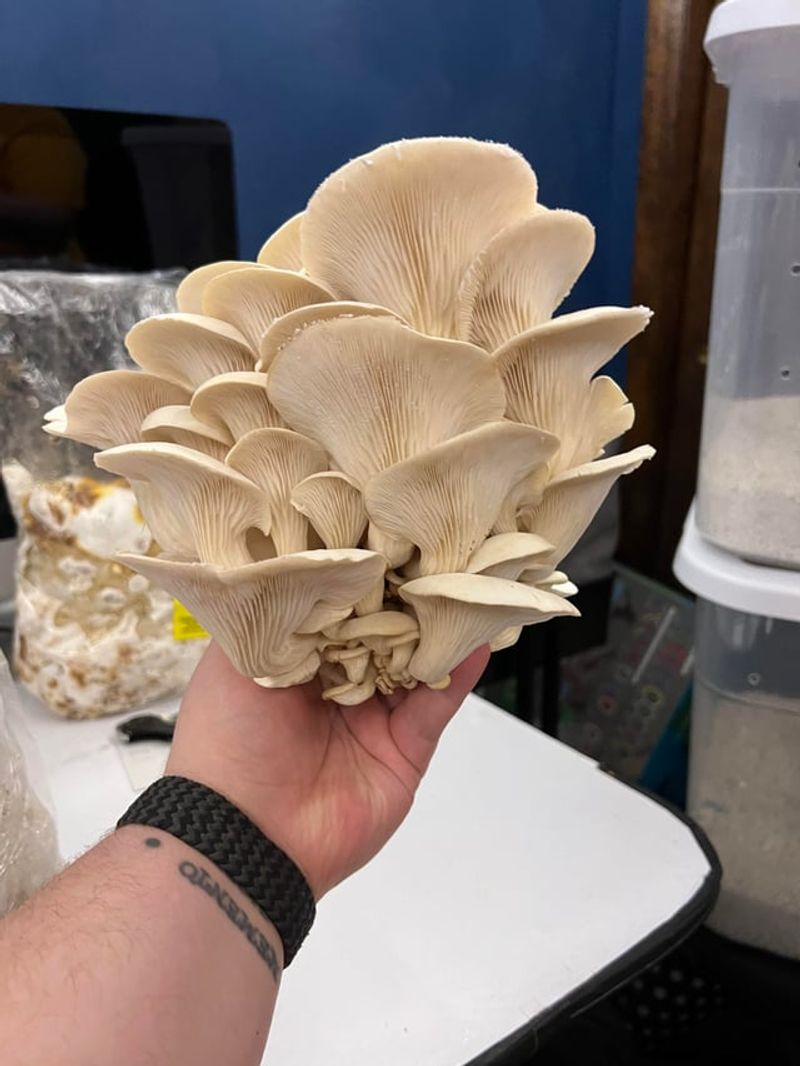
Timing your harvest correctly maximizes mushroom quality and encourages additional flushes from the same substrate. Snow oyster mushrooms reach peak condition when caps fully expand but maintain their characteristic curved or cupped shape.
Waiting too long results in flattened caps that release spores and decline in texture. Young mushrooms with tightly curled cap edges aren’t quite ready despite tempting appearances.
Allowing caps to open fully develops better flavor and texture while increasing total harvest weight.
The transition from curled to flat happens quickly, so checking your mushrooms daily during fruiting prevents missing the optimal window.
Mature mushrooms ready for harvest feel firm when gently pressed and show no soft or slimy spots. Caps should look vibrant and healthy without browning edges or white spore deposits underneath.
Harvesting at this stage delivers the best eating quality and longest refrigerator storage life. Twisting mushroom clusters gently at their base removes entire fruiting bodies without damaging the underlying mycelium.
Clean cuts with a sharp knife work too, though twisting often proves easier and cleaner. Leaving small stem bases doesn’t harm future flushes.
North Carolina gardeners typically see second and sometimes third flushes from well-maintained substrates after initial harvests.
Allowing the substrate to rest for a week between flushes while maintaining proper moisture and conditions encourages additional mushroom formation.
Prompt harvesting at the right stage maximizes total production throughout your winter growing season.