These 8 Native Trees For Ohio Front Yards Thrive In Local Soil
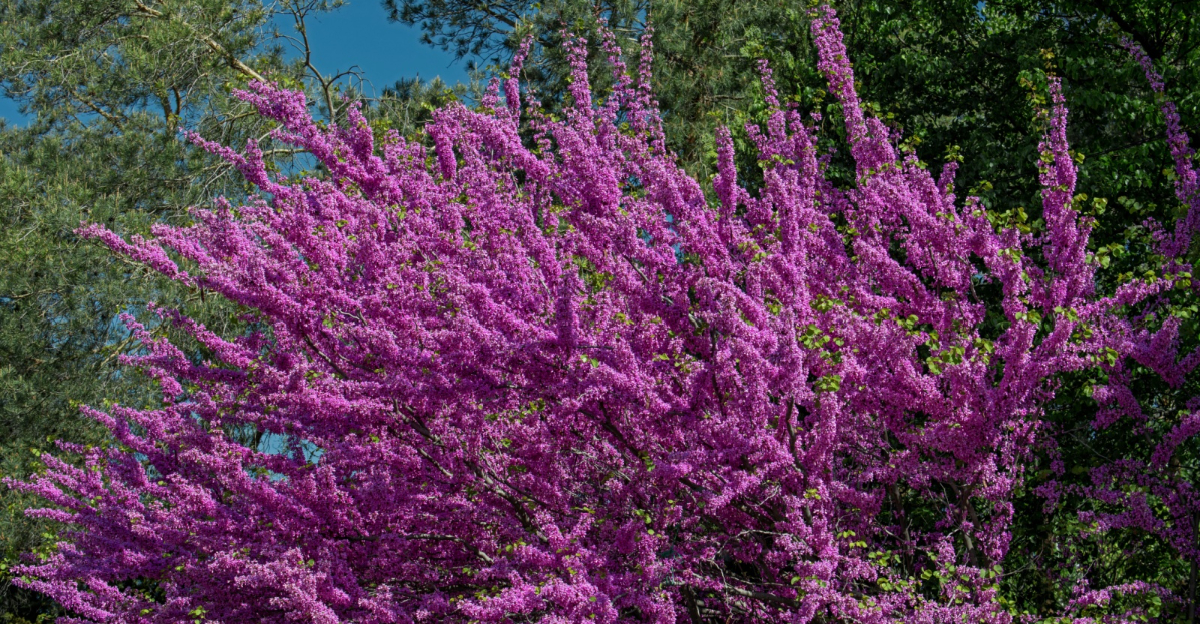
Every Ohio neighborhood has one yard everyone notices. One explodes with redbud blossoms in April, glows with fiery leaves in October, and fills with birds all summer.
The other fights withering branches, cracked sidewalks, and trees that never quite thrive. The difference rarely comes from luck. It comes from planting trees that belong here.
Ohio soil leans heavy, weather shifts fast, and many popular landscape trees fail quietly after a few years. Native trees grow up in these conditions. They handle clay, cold snaps, summer heat, and local pests without constant struggle.
They bring shade that lasts, color that returns every year, and wildlife back to ordinary front yards. The right tree turns a house into a place people remember. The wrong tree becomes a costly mistake.
The native trees ahead have proven themselves across Ohio yards and streets.
Plant once. Enjoy for decades.
1. Eastern Redbud Brings Early Spring Color To Front Yards
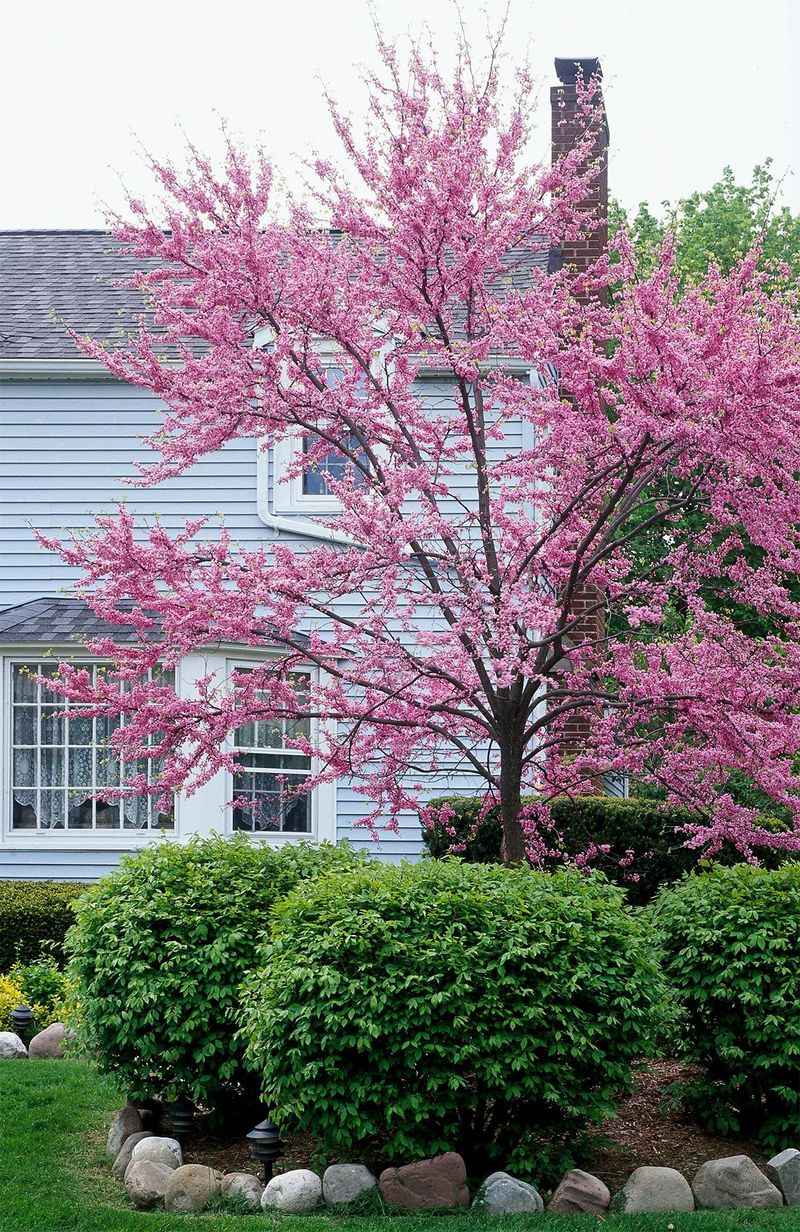
Few sights signal spring’s arrival in Ohio quite like an Eastern Redbud bursting into bloom. Before most trees have even leafed out, this small native covers its branches with clusters of rosy-pink flowers that seem to glow against the gray late-winter sky.
Homeowners love it because it fits beautifully in smaller front yards without overwhelming the space or blocking windows.
Redbuds grow naturally in Ohio’s woodlands and tolerate a range of soils, but they perform best in well-drained locations. Poorly drained or compacted clay can shorten their lifespan.
Mature trees reach about 20 to 30 feet tall with a similar spread, creating a graceful, rounded canopy that works well as a focal point near an entryway or driveway. The heart-shaped leaves emerge after the flowers fade, adding soft green texture through summer before turning golden-yellow in fall.
Plant your Redbud in a spot with full sun to partial shade and give it regular water during its first couple of years. Once established, it becomes quite drought-tolerant and requires little care.
Redbuds are somewhat short-lived (often 20–30 years) and may develop canker or wilt in stressful conditions. Avoid planting too deeply; keep the root flare visible at the soil line to prevent stress and rot.
Pollinators adore Redbud blossoms, and you’ll often see early bees visiting the flowers for nectar. The tree’s compact size and multi-season interest make it a favorite for Ohio front yards where space and beauty both matter.
2. Flowering Dogwood Adds Classic Beauty To Ohio Landscapes
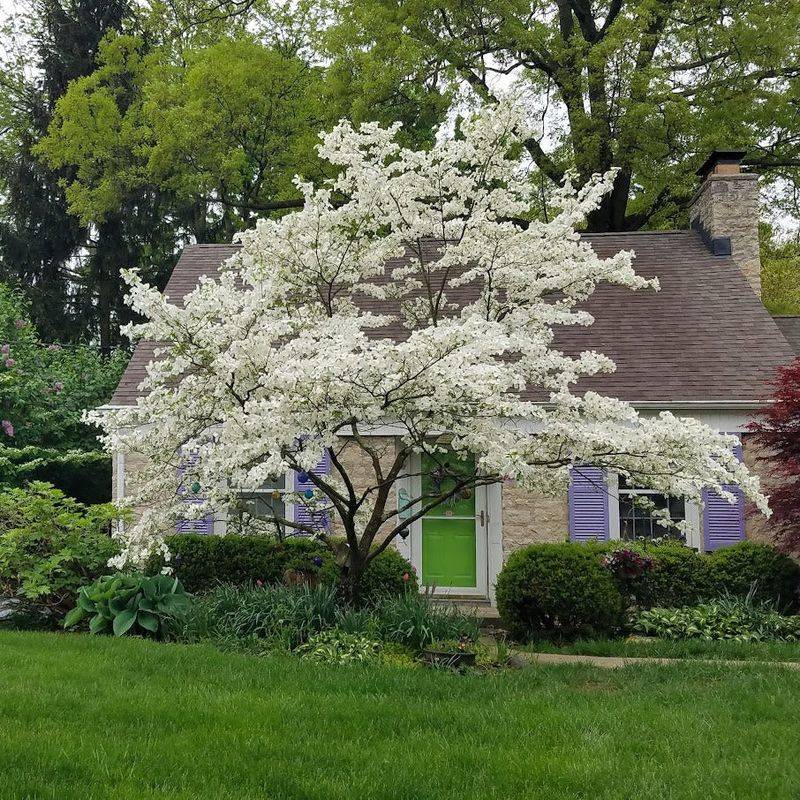
Flowering Dogwood is one of Ohio’s most beloved native trees, and for good reason. Its showy white or pink bracts appear in late spring, creating layers of elegant blooms that seem to float above the branches.
This tree brings a timeless, cottage-garden charm to any front yard and pairs beautifully with spring bulbs and perennials.
Dogwoods prefer slightly acidic, well-drained soil and thrive in partial shade, making them ideal for planting under taller trees or on the north or east side of your home. In Ohio, they grow naturally in forest understories, so they appreciate some protection from harsh afternoon sun.
Your Ohio Garden Changes Every Week. Your Plan Should Too.
Gardening in Ohio changes quickly throughout the season. Every Friday you’ll receive a simple weekly plan showing exactly what to plant, prune, fertilize, harvest, and protect so you never miss the right timing.
Mature trees typically reach 15 to 30 feet tall with a horizontal branching pattern that adds architectural interest even in winter.
Beyond spring flowers, Flowering Dogwood offers bright red berries in fall that attract songbirds, and its foliage turns rich shades of red and purple as temperatures drop. The tree’s bark develops an attractive blocky texture with age, adding subtle year-round appeal.
When planting, Dogwoods require well-drained soil and often struggle in heavy clay, even when amended. Avoid low, wet, or compacted sites and protect trees from drought and heat stress.
Also, avoid planting in areas with reflected heat from pavement or buildings. With proper siting and care, Dogwood becomes a long-lived centerpiece that enhances your front yard’s beauty through every season.
Just bear in mind that Flowering Dogwood can be susceptible to dogwood anthracnose and borers, especially when stressed.
3. Serviceberry Delivers Flowers, Berries, And Fall Color
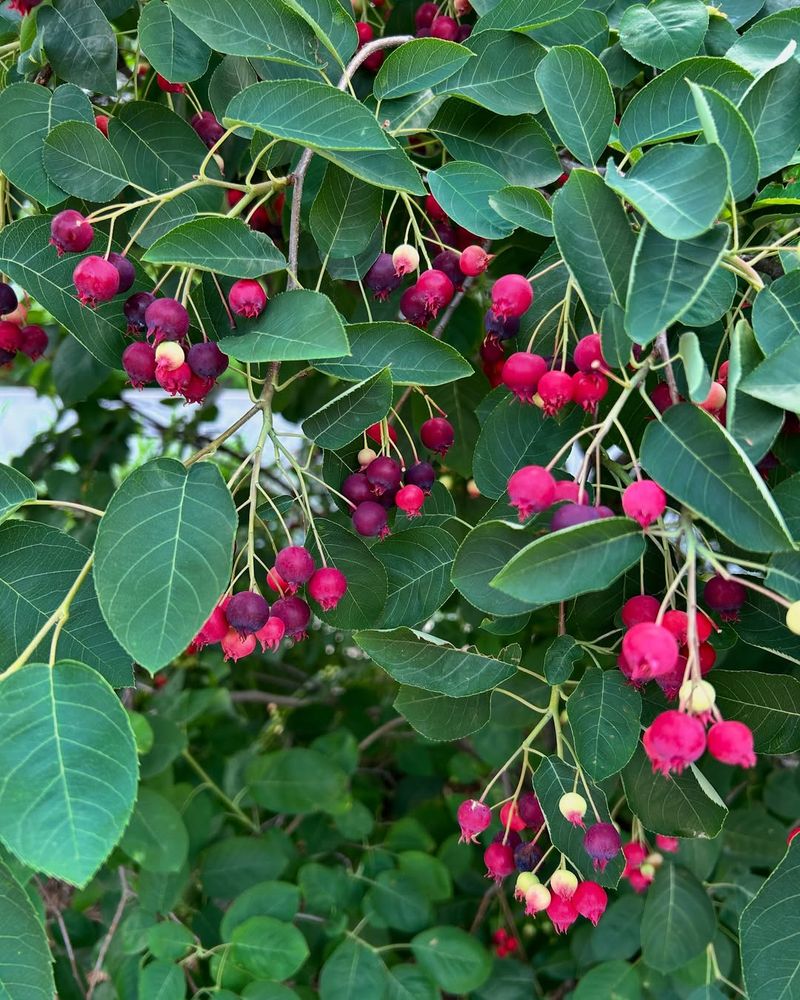
Serviceberry offers something special in every season, making it a standout choice for Ohio homeowners who want maximum impact from a single tree. In early spring, clouds of delicate white flowers cover the branches before most other trees have woken up.
By early summer, small purple berries ripen and attract robins, cardinals, and cedar waxwings, turning your front yard into a wildlife haven.
Also known as Juneberry or Shadbush, this native tree tolerates many soil types but prefers well-drained soil and may struggle in poorly drained heavy clay. It grows as a small tree or large shrub, typically reaching 15 to 25 feet tall, with a graceful, upright form that works well in tight spaces or as a companion planting near larger trees.
The berries aren’t just for birds; they’re edible for people too, with a sweet, almond-like flavor that’s perfect for pies, jams, or eating fresh. Fall brings another surprise when the foliage turns brilliant shades of orange, red, and yellow, rivaling any ornamental tree for autumn drama.
Serviceberry thrives in moist, well-drained soil but tolerates occasional dry spells once established. Plant it where you can enjoy the flowers up close and watch birds feast on the berries.
Minimal pruning is needed, and the tree resists most pests and diseases common in Ohio, making it a low-maintenance choice that delivers high rewards year after year.
4. Ohio Buckeye Thrives Naturally In Local Soil
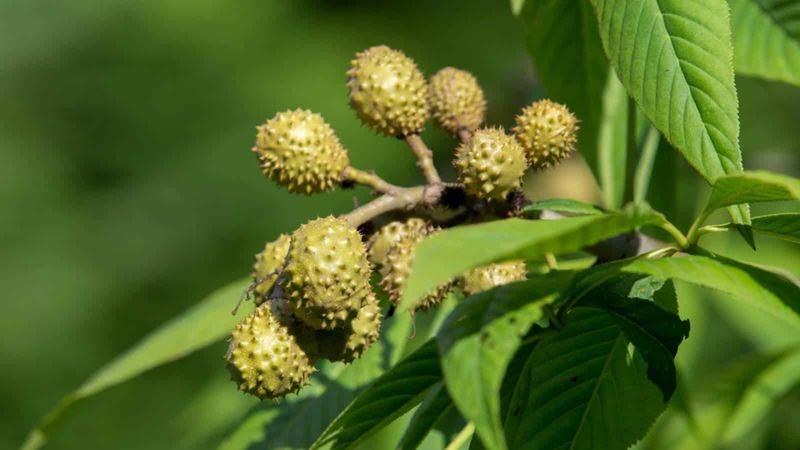
As Ohio’s state tree, the Buckeye holds a special place in the hearts of residents. It is well adapted to local soils but is not always ideal as an ornamental front-yard tree because it often drops leaves early and can appear sparse by late summer.
Its unique palmate leaves and upright clusters of yellow-green flowers give it a distinctive look that sets it apart from more common landscape trees. Homeowners who plant a Buckeye are celebrating Ohio’s natural heritage while adding a conversation-starting specimen to their front yard.
Buckeyes grow naturally in Ohio’s forests and floodplains, so they handle heavy clay and occasional wet conditions better than many other species. Mature trees reach 20 to 40 feet tall with a rounded canopy that provides moderate shade.
The tree’s most famous feature is its glossy brown nuts encased in spiky husks, which appear in late summer and fall.
While the nuts aren’t edible for people, they’re a beloved symbol of Ohio pride and fun for kids to collect. Buckeye nuts are toxic if eaten by pets or livestock, and falling nuts can create a mess near walkways or patios.
The tree’s early leafing-out in spring and early leaf drop in fall are natural traits; don’t be alarmed if it looks bare while other trees are still green in late summer.
Plant Buckeye in full sun to partial shade and give it room to spread. It prefers moist, well-drained soil but adapts to various conditions once established.
Avoid planting near patios or walkways where falling nuts might create a hazard. With its strong Ohio roots, Buckeye is a meaningful native tree, though it is best suited for naturalized areas or larger yards rather than formal front-yard plantings.
5. American Hornbeam Offers Strength And Year-Round Interest
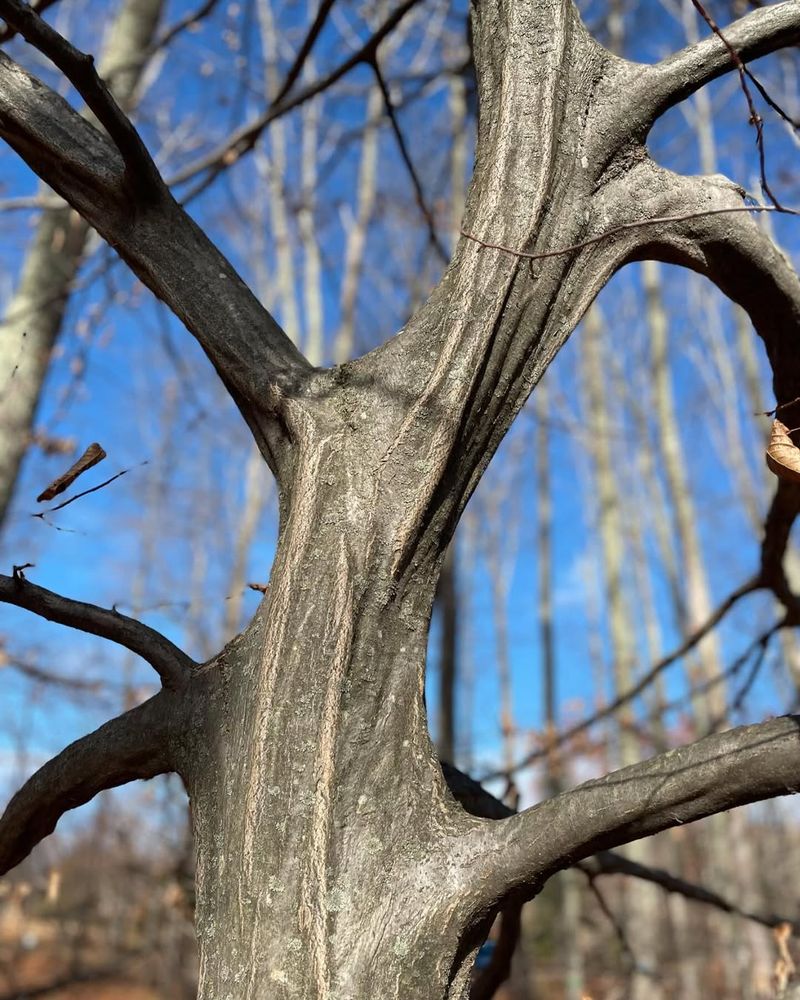
American Hornbeam may not be the flashiest tree in the neighborhood, but it offers quiet elegance and remarkable toughness that Ohio homeowners appreciate. Its smooth, sinewy gray bark resembles flexed muscles, earning it the nickname “musclewood,” and provides striking visual interest in winter when other trees fade into the background.
Hornbeam grows slowly and stays relatively compact, reaching 20 to 30 feet tall with a similar spread. Its dense, layered branching creates a refined canopy that casts dappled shade, perfect for underplanting with hostas, ferns, or spring bulbs.
Hornbeam grows slowly, so it may take time to reach its full landscape impact. The tree adapts to a wide range of soil conditions, including heavy clay and occasional flooding, making it ideal for challenging front yard sites.
Spring brings small, inconspicuous flowers followed by clusters of nutlets that dangle from leafy bracts, adding subtle texture through summer. Fall foliage turns shades of yellow, orange, and red, providing a warm seasonal display.
The tree’s fine-textured leaves and graceful form make it an excellent choice for smaller front yards where space is limited.
Plant American Hornbeam in full sun to partial shade and keep it watered during establishment. It tolerates urban conditions well, including compacted soil and air pollution, so it’s a smart pick for front yards near streets or driveways.
Once settled, it requires minimal maintenance and is generally resistant to serious pests and diseases, offering decades of reliable beauty and strength.
6. Red Maple Creates Shade And Brilliant Fall Color
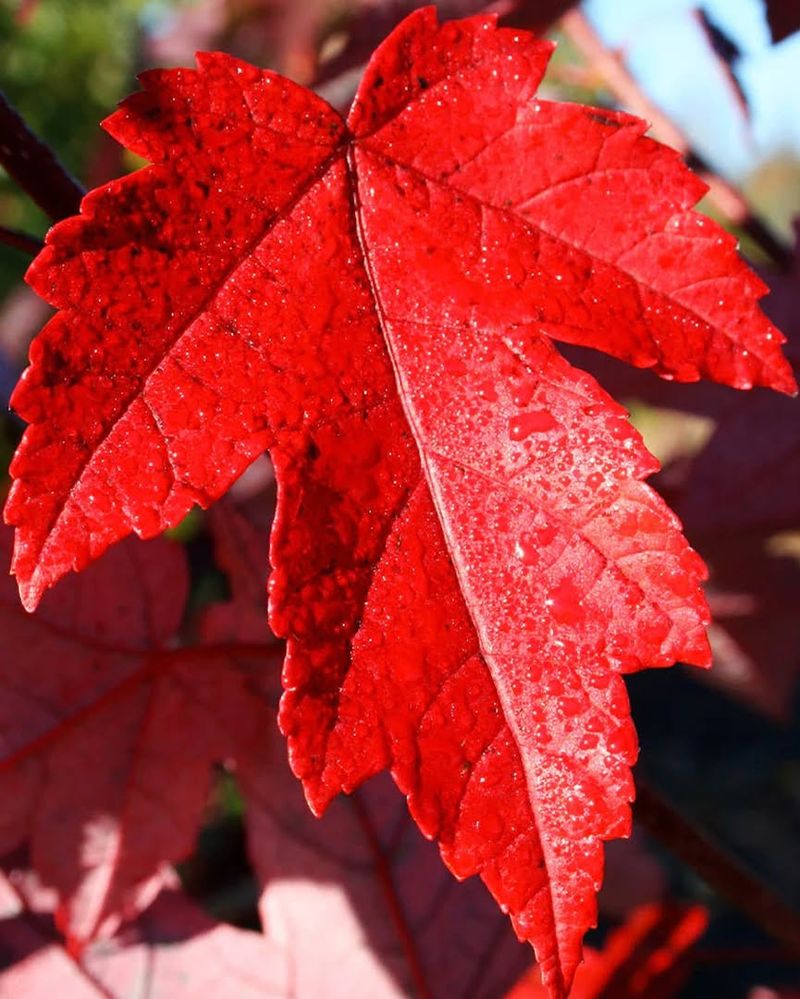
Red Maple is one of the most versatile and widely planted native trees in Ohio, and it’s easy to see why. It grows quickly, tolerates many soil conditions but may struggle in highly compacted urban clay and can develop surface or girdling roots if planted improperly.
Red maple delivers spectacular fall color that ranges from bright orange to deep crimson. Homeowners who want a fast-growing shade tree with dependable seasonal interest often turn to Red Maple as their first choice.
Mature trees can reach 40 to 60 feet tall with a rounded to oval canopy that provides generous shade for front yards, patios, and driveways.
Red Maple tolerates Ohio’s heavy clay, occasional flooding, and even urban pollution, making it one of the more adaptable native shade trees when given adequate space and soil conditions.
It thrives in full sun but also handles partial shade reasonably well.
Early spring brings clusters of small red flowers that appear before the leaves emerge, providing an early nectar source for pollinators. The tree’s winged seeds, called samaras, ripen in late spring and twirl to the ground like tiny helicopters, delighting kids and adding visual interest.
Fall is when Red Maple truly shines, lighting up the landscape with fiery hues that rival any ornamental tree.
When planting, choose a site with adequate space for the tree’s mature size and avoid areas with compacted soil if possible. Water regularly during the first few years to encourage strong root development.
Red Maple’s combination of fast growth, adaptability, and stunning fall color makes it a standout choice for Ohio front yards.
7. Black Gum Lights Up Yards With Fiery Autumn Leaves
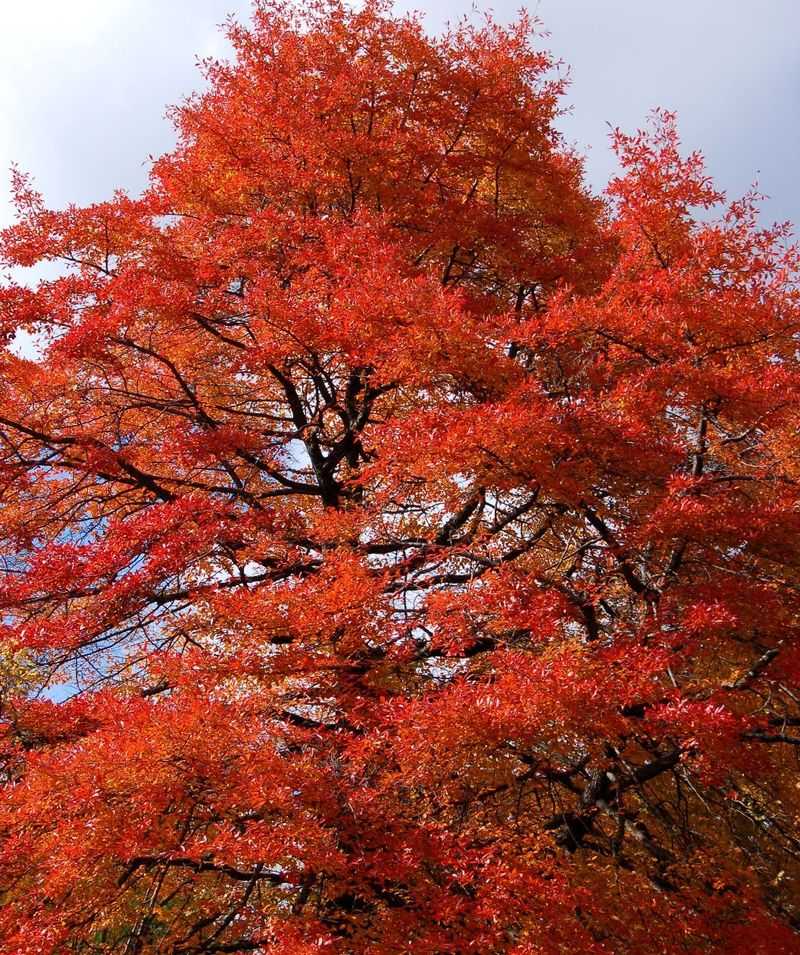
Black Gum, also called Tupelo, is a hidden gem among Ohio’s native trees, offering some of the most intense fall color you’ll find anywhere. When fall arrives, its glossy green leaves transform into blazing shades of scarlet, orange, and purple, often before other trees have even started changing.
If you want your front yard to stand out in fall, Black Gum delivers in a big way.
This tree grows naturally in Ohio’s wetlands and bottomlands. Black Gum prefers acidic, well-drained soil and may struggle in alkaline or poorly drained clay common in some parts of Ohio.
Mature trees reach 30 to 50 feet tall with a pyramidal to irregular shape that adds character and visual interest. Black Gum’s dark, blocky bark and horizontal branching pattern create a striking silhouette in winter, and its small blue-black berries attract songbirds in late summer and fall.
It grows best in moist, acidic soil and full sun, though established trees tolerate moderate drought. It’s slow to moderate in growth, so patience pays off with a long-lived, low-maintenance tree that improves with age.
The tree’s deep taproot makes it somewhat difficult to transplant, so choose your planting site carefully and buy container-grown or balled-and-burlapped specimens.
Plant Black Gum where you can enjoy its fall display from a window or driveway. Water regularly during dry spells for the first few years, and apply mulch to keep roots cool and moist.
With its spectacular autumn color and wildlife value, Black Gum is a rewarding choice for Ohio homeowners seeking something special.
8. Hackberry Stands Tough In Challenging Ohio Conditions
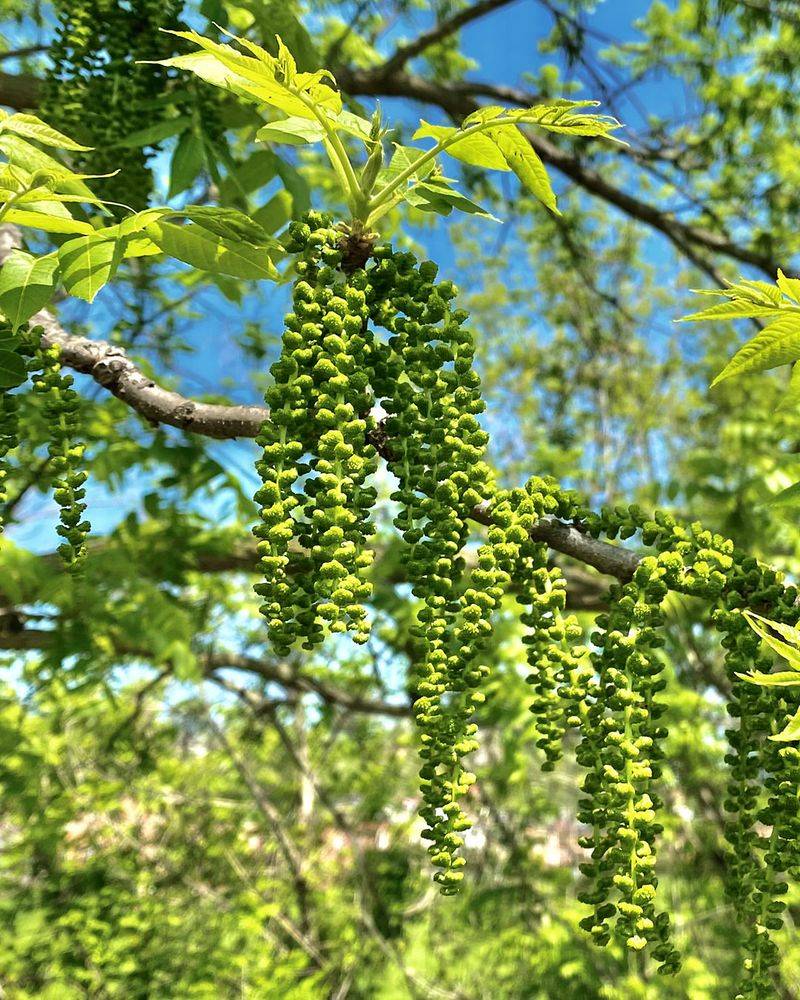
This tree doesn’t get much fanfare, but it’s one of the toughest native trees you can plant in an Ohio front yard. Hackberry handles heavy clay, drought, compacted soil, road salt, and urban pollution without complaint, making it ideal for challenging sites where other trees struggle.
If you have a difficult spot that needs a dependable shade tree, Hackberry is worth serious consideration.
Mature trees grow 40 to 60 feet tall with a rounded, spreading canopy that provides excellent shade. The bark is distinctively rough and corky with warty ridges, giving the trunk interesting texture year-round.
Hackberry’s elm-like leaves turn soft yellow in fall, and its small purple berries persist into winter, providing food for migrating birds and adding subtle visual interest.
Hackberry thrives in full sun and adapts to various soil types. It’s fast-growing and long-lived, often outlasting more finicky ornamental trees.
The tree’s strong wood resists storm damage, and it rarely suffers from serious pest or disease problems in Ohio.
Plant Hackberry where you need a low-maintenance workhorse tree that won’t demand constant attention. It’s perfect for front yards near streets, driveways, or sidewalks where soil conditions are less than ideal.
Water during establishment, then let nature take over. Hackberry may not be the showiest tree on the block, but its reliability and toughness make it a smart, practical choice for Ohio homeowners.
Even native trees perform best when matched carefully to soil drainage, space, and sunlight. Proper planting depth and early watering are key to long-term success.