Hummingbirds Can Return To North Carolina As Early As February, Here Is How To Attract Them To Your Yard
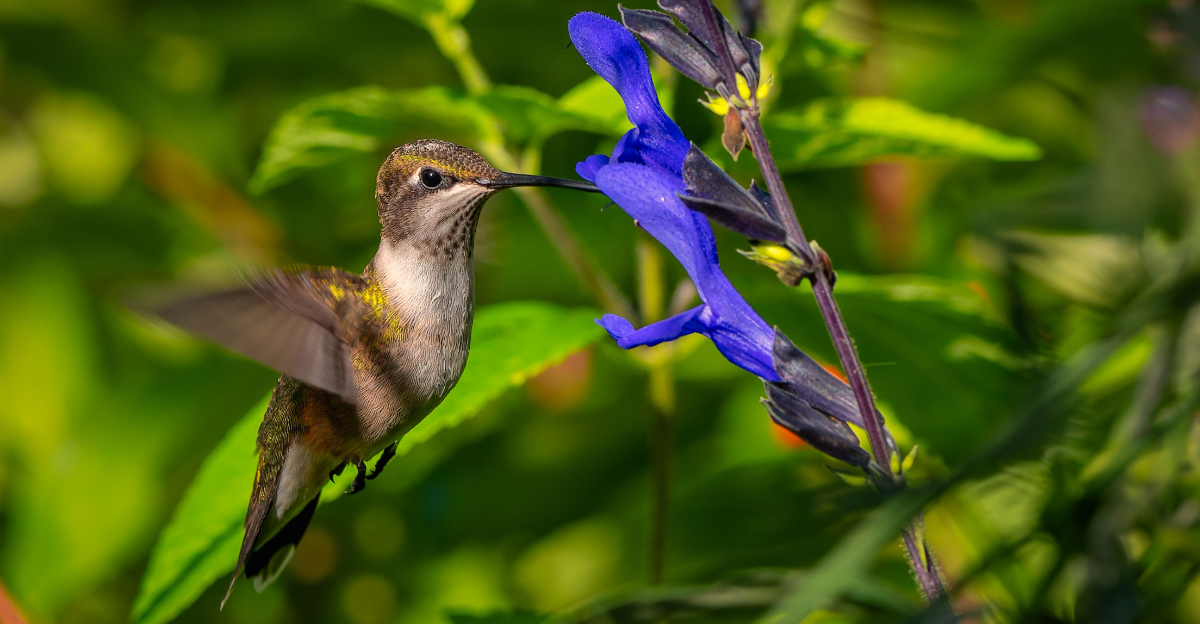
As winter loosens its grip and the first warm days return, something magical begins to happen across North Carolina. Ruby throated hummingbirds start making their incredible journey back, some arriving as early as late February after traveling hundreds of miles.
These tiny flyers are fast, fearless, and constantly searching for food to rebuild their energy after migration.
If your yard is ready, you can become one of their favorite spring stopovers. A few simple steps can turn your outdoor space into a hummingbird haven filled with movement, color, and life. The reward is unforgettable.
Watching these shimmering birds hover, dart, and sip right outside your window never gets old. With the right mix of nectar plants, fresh water, and safe shelter, you can welcome hummingbirds early and keep them visiting all season long.
Use Proper Nectar Ratio (1 Part Sugar To 4 Parts Water)
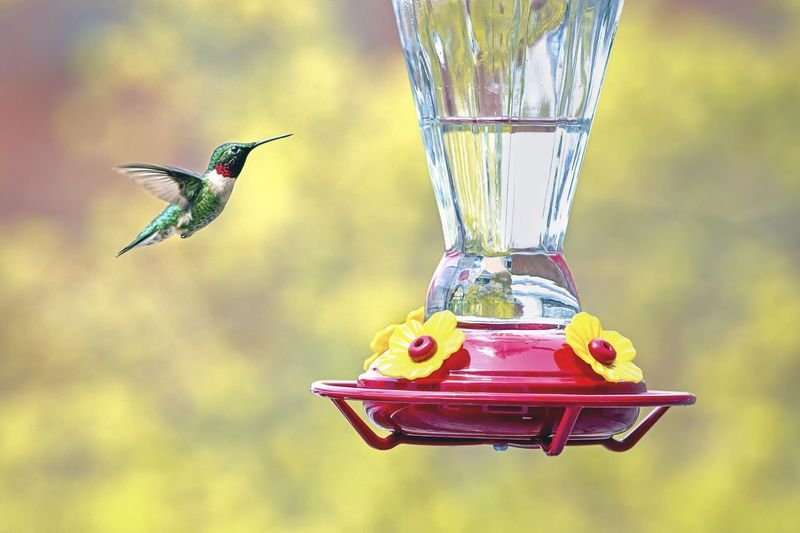
Making your own hummingbird nectar takes just two ingredients and five minutes. Plain white granulated sugar mixed with water creates a solution that closely mimics natural flower nectar.
The magic ratio is one part sugar to four parts water, which provides the perfect energy concentration these fast-metabolism birds require.
Boil water first to remove impurities and help sugar dissolve completely. Add one cup of white sugar to four cups of water, stirring until crystals disappear. Let the mixture cool completely before filling feeders, as hot liquid can warp plastic components or harm birds.
Never use honey, artificial sweeteners, or brown sugar. Honey ferments quickly and promotes harmful bacterial growth. Artificial sweeteners offer no nutritional value, and brown sugar contains iron levels too high for hummingbird systems.
Red dye seems tempting but adds unnecessary chemicals that may affect bird health over time.
Store extra nectar in your refrigerator for up to two weeks. This preparation method saves money compared to commercial mixes while giving you complete control over ingredients.
Fresh homemade nectar costs pennies per batch and ensures hummingbirds receive clean, safe nutrition.
Wildlife experts universally recommend this simple recipe because it works beautifully without adding anything nature didn’t intend.
Put Out Feeders Before Migration Begins
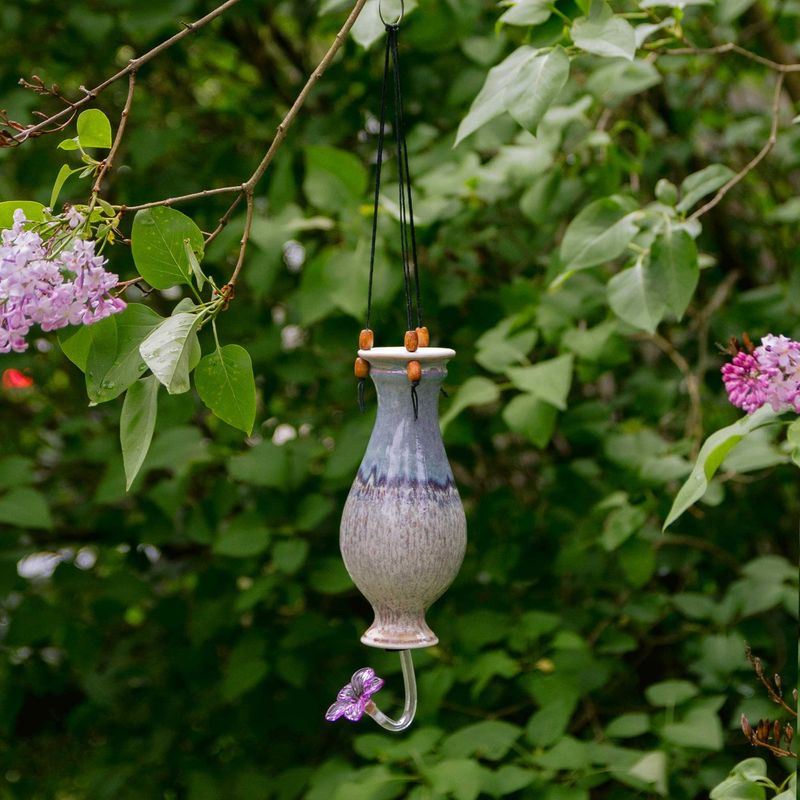
February might seem too early to think about hummingbirds, but these tiny travelers don’t wait for perfect spring weather.
Ruby-throated hummingbirds begin their northward journey from Central America when temperatures start climbing. Males typically arrive first, scouting territories and food sources before females follow weeks later.
Setting up feeders in mid to late February gives early arrivals exactly what they need. After flying hundreds of miles, these birds require immediate access to high-energy food.
A well-placed feeder can make the difference between a successful stopover and a difficult search for natural nectar sources that haven’t bloomed yet.
Choose a location visible from your windows so you can monitor activity. Hang feeders in partially shaded spots to keep nectar fresh longer. Southern-facing areas warm up faster and attract more insects, which hummingbirds also eat for protein.
Weather patterns influence arrival times significantly. Mild winters bring hummingbirds earlier, while cold snaps delay migration. Keeping feeders ready by Presidents’ Day ensures you won’t miss these first visitors.
Your North Carolina Garden Changes Every Week. Your Plan Should Too.
Gardening in North Carolina changes quickly throughout the season. Every Friday you’ll receive a simple weekly plan showing exactly what to plant, prune, fertilize, harvest, and protect so you never miss the right timing.
Even if hummingbirds don’t show up immediately, having feeders prepared demonstrates your commitment to supporting wildlife during vulnerable migration periods when natural food remains scarce across much of their journey.
Keep Feeders Clean And Fresh
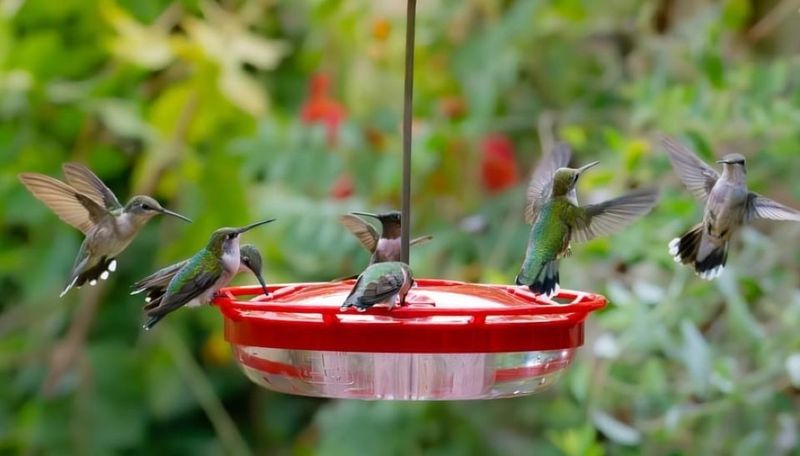
Hummingbird feeders require more maintenance than you might expect. Nectar spoils quickly, especially during warm weather when temperatures climb above 70 degrees.
Cloudy liquid, black mold spots, or floating particles signal it’s time for immediate cleaning and fresh nectar.
Warm weather demands feeder cleaning every two to three days. Cooler spring temperatures allow slightly longer intervals, perhaps four to five days maximum.
Hot summer conditions might require daily attention if feeders sit in direct sunlight where heat accelerates fermentation.
Take feeders apart completely for thorough cleaning. Use hot water and a bottle brush to scrub every surface, paying special attention to feeding ports where mold loves to grow.
A diluted vinegar solution helps remove stubborn residue, but rinse extremely well afterward. Avoid soap when possible, as residue can linger and affect nectar taste.
Some people run feeders through dishwashers, which works for sturdy models. Check manufacturer guidelines first to prevent melting or warping. Dry all parts completely before refilling to prevent mold spores from contaminating fresh nectar.
Clean feeders protect hummingbird health and keep them returning to your yard. Birds quickly abandon feeders with spoiled nectar, seeking cleaner sources elsewhere.
Regular maintenance shows respect for these remarkable visitors while ensuring they receive safe, nutritious food throughout their stay.
Plant Native Nectar Flowers
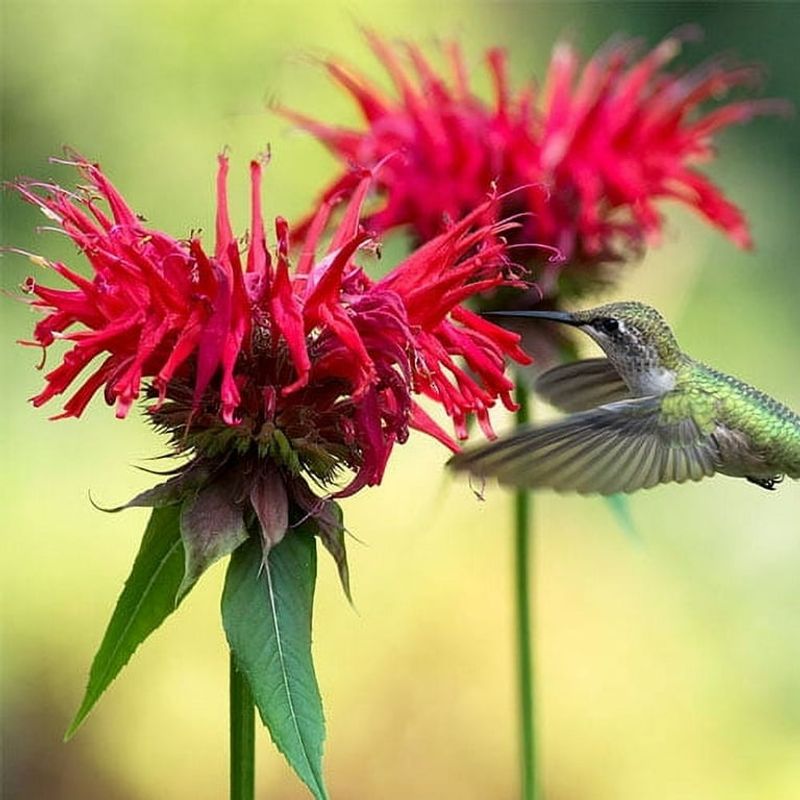
Native plants evolved alongside hummingbirds, creating perfect partnerships that benefit both. Coral honeysuckle produces tubular red flowers that hummingbird beaks fit perfectly.
This vigorous vine blooms from spring through fall, providing reliable nectar when birds need it most. Bee balm spreads cheerfully through garden beds, offering pink, red, or purple blooms that hummingbirds adore.
Cardinal flower grows naturally along stream banks, producing brilliant red spikes that act like landing beacons. Native azaleas bloom early, feeding hungry migrants right when they arrive.
These plants require less water and fertilizer than non-native species because they’re adapted to local conditions.
They resist pests better and support entire ecosystems beyond just hummingbirds. Native insects feed on native plants, and hummingbirds eat those insects for essential protein.
Group several plant species together for maximum impact. Hummingbirds prefer visiting gardens with abundant flower clusters rather than scattered individual plants. Layer different heights, from ground covers to tall shrubs, creating diverse feeding opportunities.
Visit local native plant nurseries for species suited to your specific area. Staff can recommend varieties that thrive in your soil type and sun exposure. Planting natives shows environmental stewardship while creating stunning landscapes.
These gardens practically maintain themselves once established, giving you more time to enjoy watching hummingbirds rather than working on constant upkeep.
Provide Continuous Bloom From Spring Through Fall
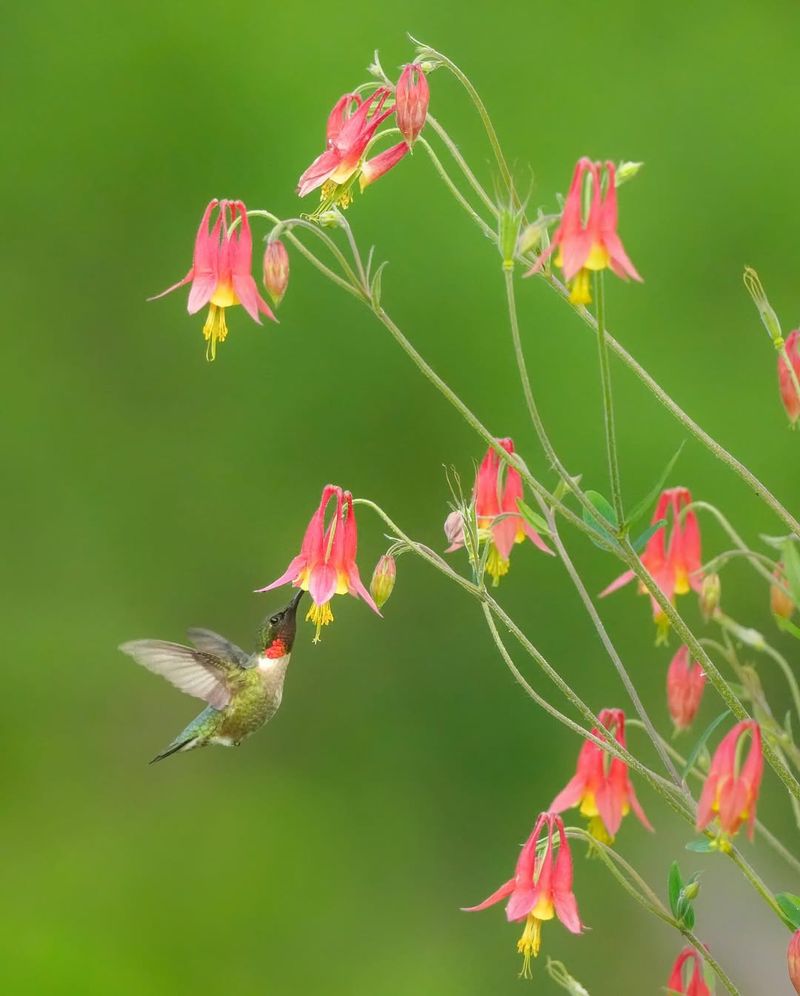
Strategic planting creates a nectar buffet that never closes. Early bloomers like columbine and bleeding heart welcome spring migrants. As these fade, salvia and penstemon take over, carrying through early summer.
Late-season champions like trumpet vine and jewelweed keep hummingbirds fueled for fall migration south.
Planning succession blooming requires thinking several seasons ahead. Sketch your garden layout noting when each plant flowers. Fill gaps where nothing blooms by adding species that peak during those quiet periods.
Garden centers often label plants with bloom times, making selection easier. Perennials return year after year, reducing replanting work while providing reliable food sources.
Annuals fill spaces quickly and bloom continuously if deadheaded regularly. Combining both creates insurance against crop failure if one plant struggles during a particular season.
Hummingbirds develop regular feeding routes, visiting favorite flowers on predictable schedules throughout the day. Continuous blooms keep them returning to your property instead of wandering elsewhere.
This consistency especially matters during nesting season when females need extra energy for egg production and chick rearing.
Observe which plants attract the most attention and expand those varieties. Regional climate variations affect bloom timing, so local experience trumps general guidelines. Take notes each year about what bloomed when and how hummingbirds responded.
This knowledge helps refine your garden into an increasingly effective hummingbird haven that supports these birds throughout their entire residency period.
Offer Shallow Water Or Light Mist
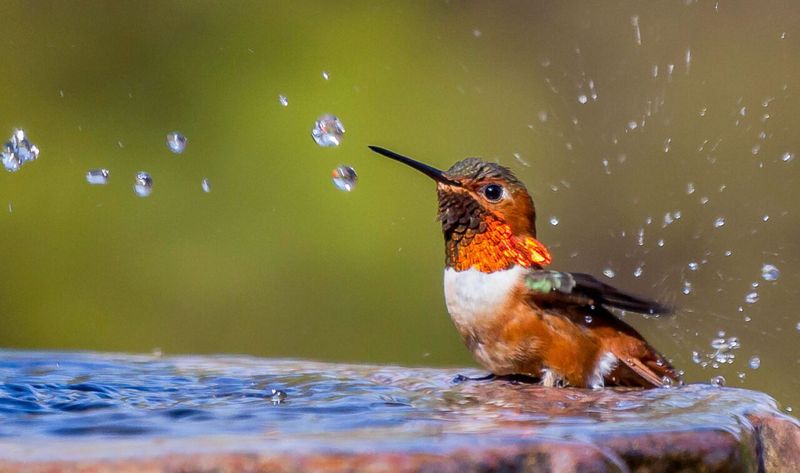
Watching hummingbirds bathe ranks among gardening’s most delightful surprises. These fastidious birds groom constantly, and they approach water differently than larger species.
Deep birdbaths don’t work because hummingbirds can’t swim and avoid water deeper than their bellies.
Misters create ideal bathing conditions. Install battery-operated or solar-powered units near flowering areas where hummingbirds already feed.
The fine spray mimics natural dewdrops on leaves, and birds fly directly through the mist, letting droplets coat their feathers. They’ll return repeatedly, performing aerial acrobatics through the spray.
Shallow saucers filled with clean water and small pebbles provide alternative bathing spots. The stones give birds secure footing while they splash and preen. Change water daily to prevent mosquito breeding and bacterial growth.
Running water attracts more attention than still sources. Small fountain pumps create gentle movement and pleasant sounds that draw hummingbirds from greater distances. Position water features where you can observe from comfortable indoor viewing spots.
Morning watering times work best because birds prefer bathing when temperatures rise and they can dry quickly. Wet feathers affect flight capability, so hummingbirds choose bathing moments carefully.
Providing multiple water sources throughout your yard increases chances that birds will find and use them.
Clean feathers improve insulation and flight efficiency, making water features nearly as important as food sources for supporting healthy hummingbird populations.
Provide Shelter And Perching Areas
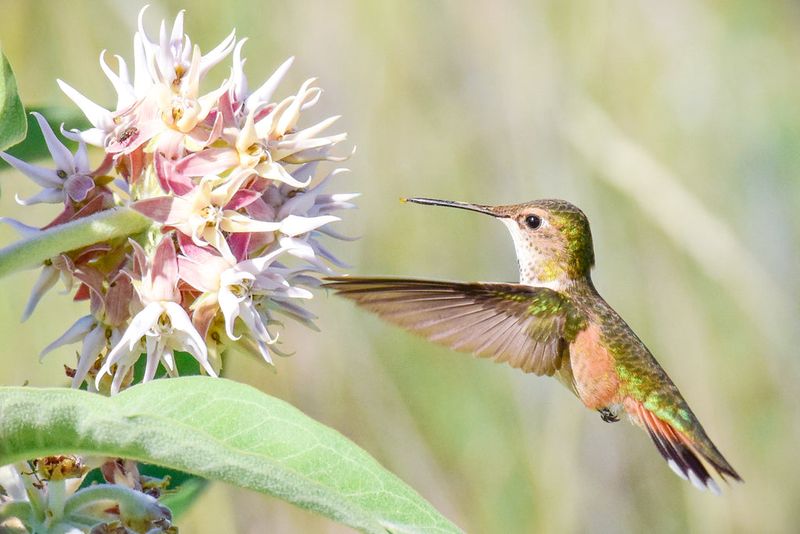
Hummingbirds spend surprisingly little time actually flying despite their aerial reputation. These tiny birds rest frequently, perching on thin branches between feeding bouts.
Males especially use prominent perches for territorial displays, watching over their claimed feeding areas while conserving energy.
Small trees and large shrubs create perfect resting infrastructure. Dogwoods, redbuds, and ornamental fruit trees offer appropriately sized branches. Hummingbirds prefer perches with clear sightlines to feeders and flowers they’re defending.
Dead twigs work fine since birds care more about position than aesthetics. Dense shrubs provide nesting sites for females raising young. Hummingbirds build tiny cup nests barely larger than walnuts, camouflaging them with lichen and spider silk.
They prefer locations protected from wind and rain but close enough to food sources for convenient feeding trips.
Avoid excessive pruning during spring and summer when nesting occurs. That scraggly branch you want to remove might support an active nest invisible from ground level.
Hummingbird eggs are smaller than jellybeans, and nests blend remarkably well into surrounding vegetation.
Evergreen trees and shrubs offer year-round structure, though hummingbirds only need them during their residency period.
Layering vegetation at different heights creates more opportunities for perching, hiding, and nesting. This habitat complexity benefits numerous bird species while making your yard more visually interesting.
Thoughtful landscaping transforms ordinary yards into genuine wildlife sanctuaries that hummingbirds eagerly claim as their own.
Avoid Pesticides Near Feeding Areas
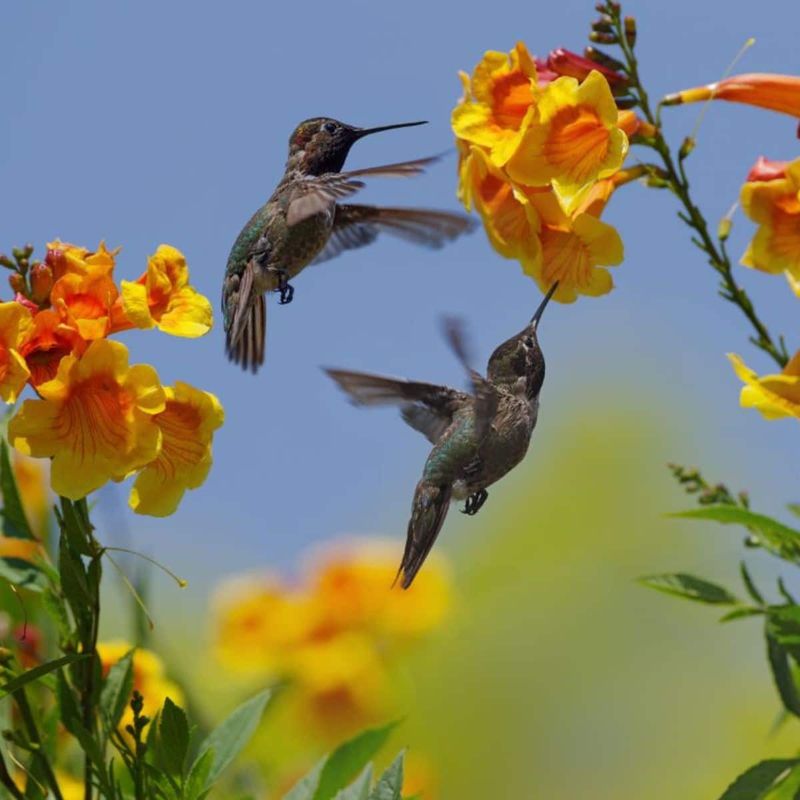
Hummingbirds aren’t strictly nectar feeders despite popular belief. These birds consume hundreds of tiny insects and spiders daily, obtaining essential proteins, fats, and minerals absent from sugar water.
Gnats, fruit flies, aphids, and small spiders all contribute to hummingbird nutrition, especially during breeding season when chicks need protein for growth.
Pesticide applications reduce insect populations that hummingbirds depend upon. Chemical sprays also contaminate flower nectar and water sources, potentially harming birds directly.
Even organic pesticides affect beneficial insects that support healthy garden ecosystems. Embrace natural pest management instead. Encourage predatory insects like ladybugs and lacewings that control aphids without chemicals.
Hand-pick larger pests or use targeted water sprays to dislodge them. Healthy plants resist pest damage better than stressed specimens, so focus on proper watering and soil nutrition.
Accept some leaf damage as part of natural gardening. Perfect foliage matters less than creating safe habitat for wildlife. Gardens buzzing with insect activity attract more hummingbirds because birds recognize these areas as productive hunting grounds.
If you must treat serious infestations, choose least-toxic options and apply them carefully away from flowers and water features.
Timing applications for evening hours when hummingbirds aren’t active reduces direct exposure. Better yet, plant pest-resistant native species that thrive without chemical intervention.
Chemical-free yards benefit entire food webs, from soil microbes to top predators, while giving you peace of mind about the environment you’re creating.
Leave Feeders Up Through Fall Migration
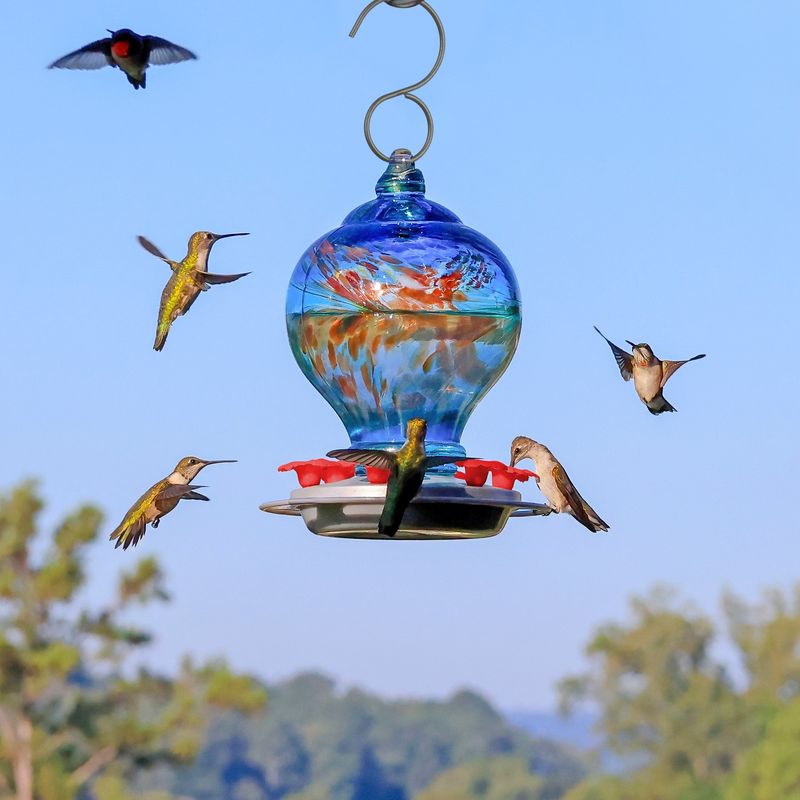
A persistent myth claims that leaving feeders up prevents hummingbirds from migrating. This misconception causes well-meaning people to remove feeders too early, potentially harming late migrants.
Hummingbirds migrate based on instinct and daylight changes, not food availability. Your feeder won’t trap birds who are biologically programmed to travel south.
Fall migration stretches across many weeks as different individuals depart on personal schedules. Young birds born late in the season leave after adults. Stragglers from northern populations pass through areas where local birds already departed.
Keeping feeders available through October or even November helps these travelers. Late-season migrants face greater challenges than spring birds.
Fewer flowers bloom in fall, and insect populations decline as temperatures drop. Your feeder might represent the only reliable food source for exhausted birds building energy reserves for their long journey.
Watch for decreased activity as your signal to remove feeders. Once you haven’t seen hummingbirds for two solid weeks, migration has likely finished. Clean feeders thoroughly before storage to prevent mold growth during winter months.
Some regions occasionally host winter hummingbirds, usually western species blown off course.
If you spot hummingbirds in December or January, contact local wildlife organizations for guidance. These rare visitors may need special support surviving unexpected conditions.
Leaving feeders up longer than traditional wisdom suggests demonstrates your commitment to supporting hummingbirds whenever they need help most.