These 7 Native California Trees Are Perfect To Plant This Spring
Spring in California feels like a fresh start, and nothing marks the season better than planting a tree that truly belongs.
Native trees are built for the local climate, thriving in sunshine, handling dry summers, and supporting birds, bees, and butterflies along the way.
They bring natural beauty without the constant fuss, settling into the landscape as if they have always been there. Imagine soft new leaves catching golden light, branches filling with songbirds, and your yard slowly growing into a cooler, greener retreat.
The right native tree does more than look good. It saves water, strengthens the ecosystem, and adds lasting value to your space year after year.
1. Western redbud (Cercis occidentalis)
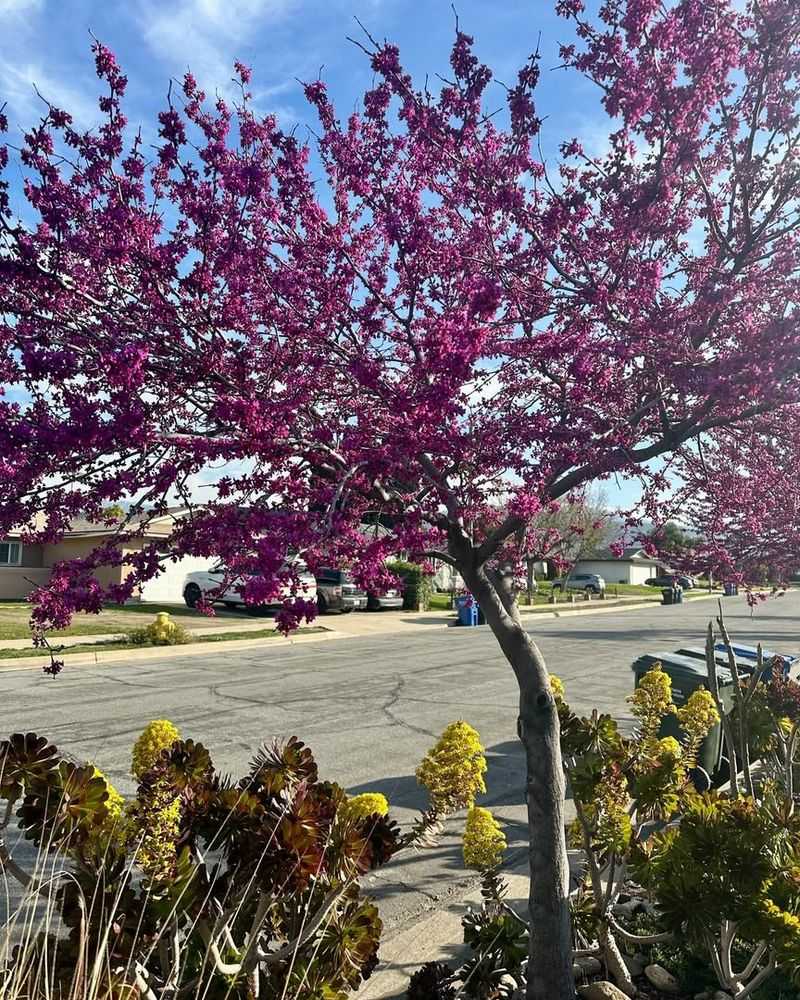
When bare branches suddenly burst into clouds of magenta-pink flowers before leaves even appear, you know spring has arrived.
Western redbud delivers that moment beautifully, transforming from a modest winter silhouette to a striking showstopper in just a few weeks.
This California native stays manageable for most yards, typically reaching about twelve to twenty feet tall with a graceful, spreading shape. It works well as an understory tree beneath oaks or as a standalone focal point near patios and entryways.
The flowers attract early-season pollinators seeking nectar after winter, helping support garden habitat.
After blooming, heart-shaped leaves emerge in fresh green, turning shades of yellow and red-orange in fall. Redbud often tolerates clay soil better than many natives and can handle both coastal and inland conditions once established.
It generally prefers some afternoon shade in hotter areas but is adaptable in suitable environments.
Plant in spring in well-draining soil, water regularly through the first summer, then gradually reduce watering. Mature redbuds typically need little irrigation once established.
Avoid heavy fertilizers that can encourage weak growth. Given proper conditions, this tree can provide many years of seasonal interest.
2. Toyon (Heteromeles arbutifolia)
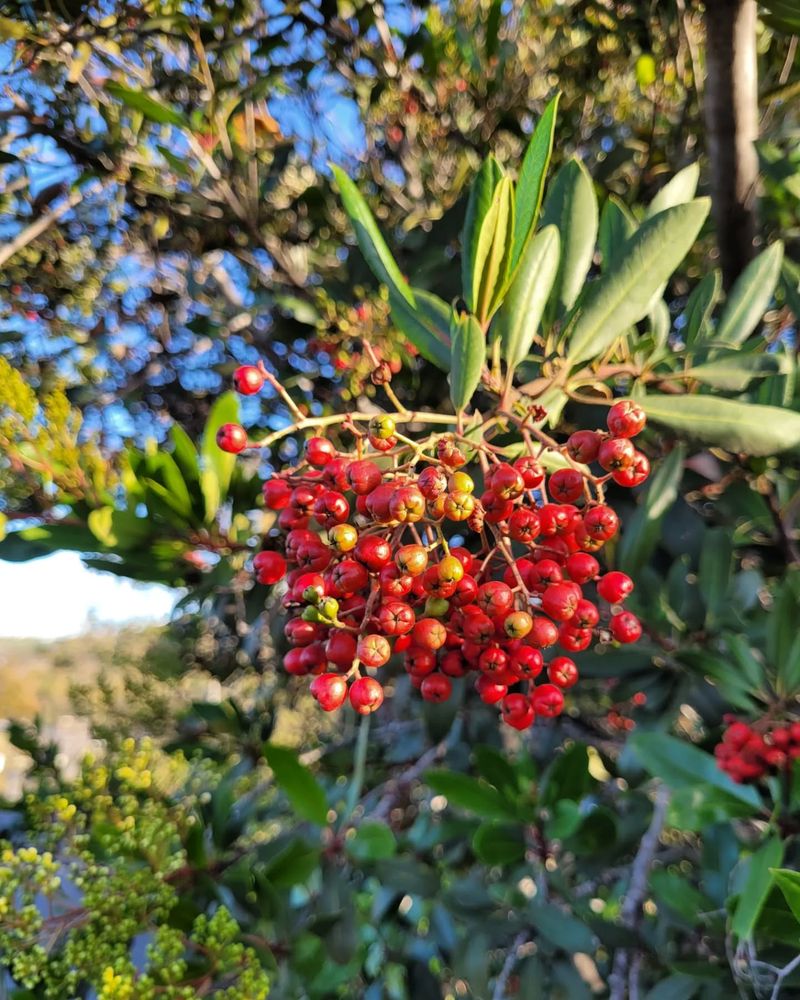
Bright red berries glowing against dark evergreen leaves bring cheer to California gardens during the holidays, which is why toyon earned the nickname California holly.
Birds are strongly attracted to the berries, making this native a valuable wildlife plant from late fall through winter.
Toyon grows as either a large shrub or small multi-trunk tree, reaching about fifteen to twenty-five feet depending on pruning and conditions.
The glossy, toothed leaves stay attractive year-round, and clusters of small white flowers typically appear in early summer, adding soft beauty before the berries develop.
This plant tolerates a range of sun and soil conditions, including slopes and relatively poor soils.
It grows across much of coastal and inland California and, once established, can tolerate drought and a range of temperatures. Toyon generally performs best with minimal care rather than frequent watering or rich amendments.
Established plants usually need only occasional deep watering during extended dry periods.
Spring planting allows time to establish before the first summer. Choose a location with good drainage and enough space for its natural spread.
Prune lightly to shape if desired, but avoid heavy shearing that can reduce berry production.
3. Desert willow (Chilopsis linearis)
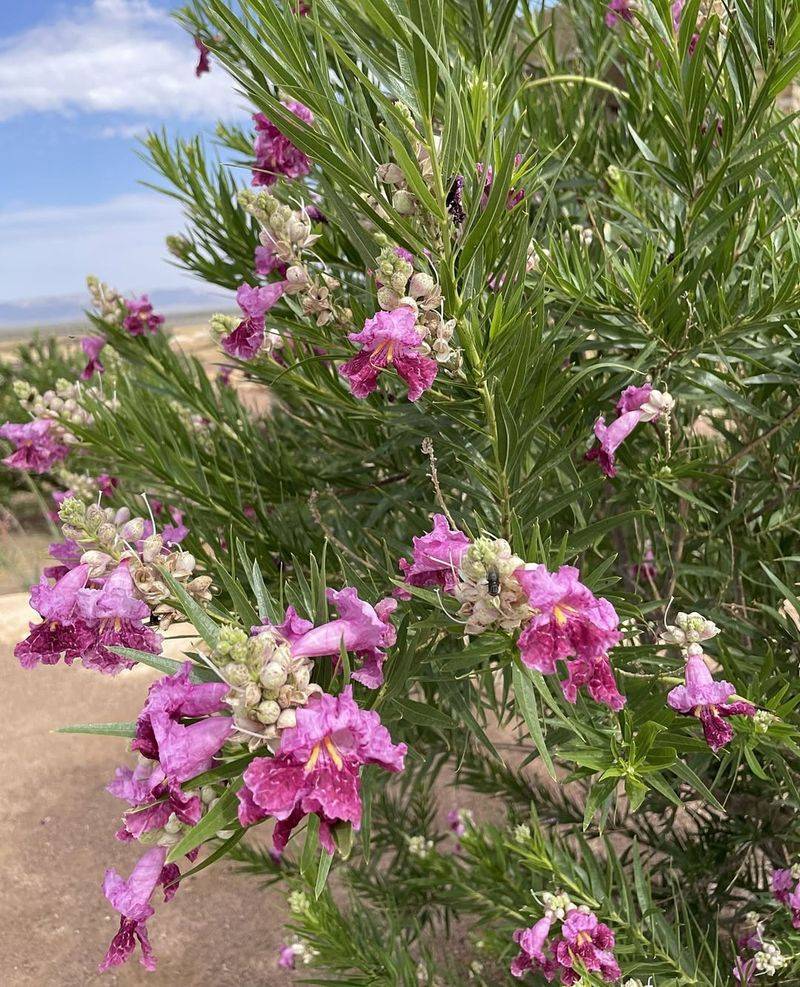
If you garden in California’s hotter, drier inland areas, you need trees that tolerate intense summer heat instead of struggling under it. Desert willow does exactly that while putting on a floral show that can rival many ornamental imports.
Your California Garden Changes Every Week. Your Plan Should Too.
Gardening in California changes quickly throughout the season. Every Friday you’ll receive a simple weekly plan showing exactly what to plant, prune, fertilize, harvest, and protect so you never miss the right timing.
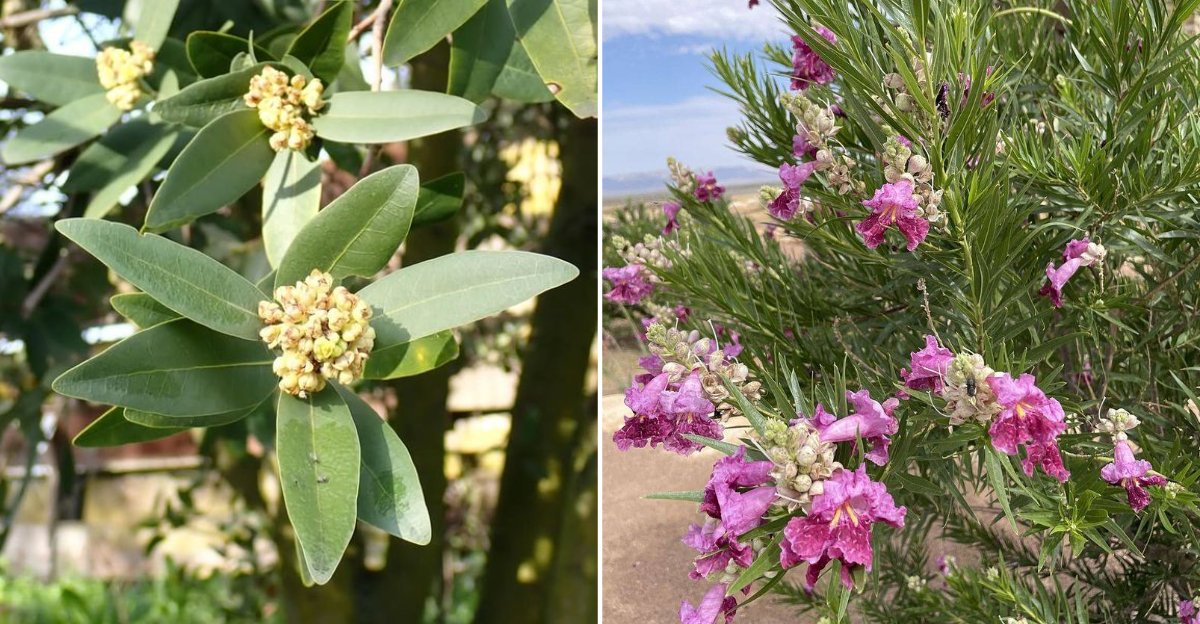
Trumpet-shaped flowers in shades of pink, lavender, or white appear through much of the warm season, attracting hummingbirds.
Despite its common name, this is not a true willow but a drought-adapted native well suited to low-water landscapes. It grows relatively quickly into an airy, open tree about fifteen to thirty feet tall with narrow, willow-like leaves that move easily in the breeze.
The overall effect feels light and elegant rather than heavy or dense.
Desert willow grows best in full sun and fast-draining soil, making it suitable for difficult sites where many trees struggle. It tolerates alkaline soil, reflected heat, and drought once established.
Overwatering can cause more issues than moderate underwatering for this species.
Plant in spring, water moderately through the first summer, then gradually reduce irrigation. Mature trees usually need only occasional deep watering during extended hot, dry periods.
Prune in late winter to maintain shape and remove any frost-damaged growth. This tree performs well with relatively low maintenance in challenging conditions.
4. Hollyleaf cherry (Prunus ilicifolia)
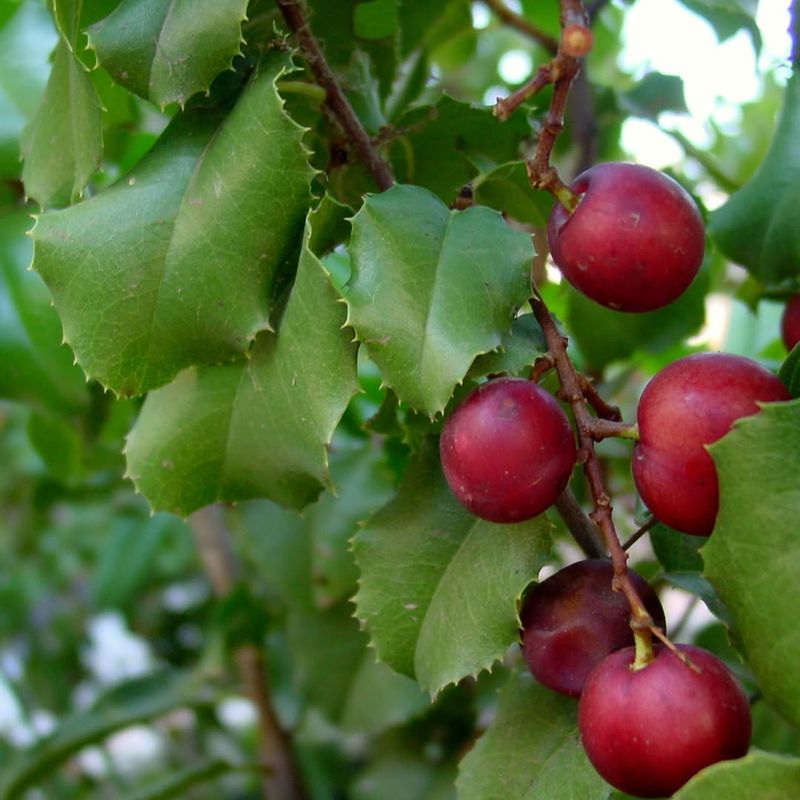
Dark, glossy leaves with spiny edges make this native cherry resemble true holly, but the similarity ends there. Hollyleaf cherry is a California chaparral species adapted to hot, dry summers and lean soils that challenge many landscape plants.
It provides year-round structure and wildlife value in suitable regions of southern and central California.
This evergreen grows as a dense shrub or small tree, typically reaching about ten to twenty-five feet depending on conditions and pruning. Creamy white flower clusters appear in spring with a light fragrance that attracts native bees and other pollinators.
Small dark cherries follow in summer and are eaten by birds, though they are generally not palatable for people when raw.
Hollyleaf cherry tolerates full sun to partial shade and adapts to various soils with adequate drainage. It is considered relatively fire-resistant compared to many plants and is drought-tolerant once established, which can make it useful in defensible space plantings when properly maintained.
The dense foliage provides cover for birds.
Spring planting allows roots to establish before summer heat. Water regularly during the first year, then gradually reduce irrigation.
Mature plants usually need little supplemental water except during prolonged drought. Prune lightly to shape or allow a natural form for a more informal appearance suited to native landscapes.
5. Catalina cherry (Prunus ilicifolia ssp. lyonii)
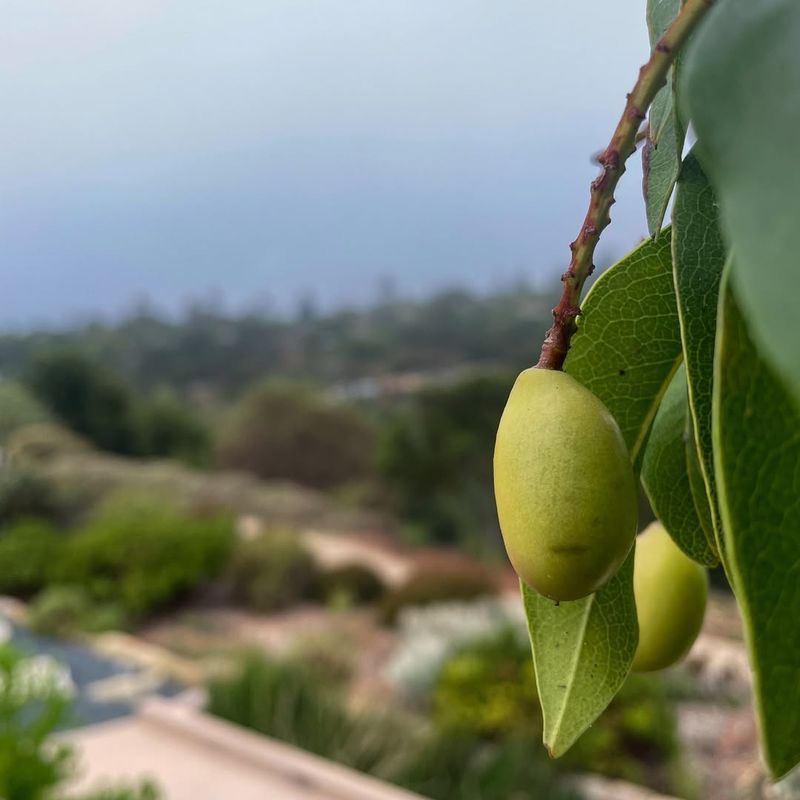
Imagine hollyleaf cherry’s more relaxed coastal cousin, and you have Catalina cherry. The leaves are larger, smoother, and lack spiny edges, giving this subspecies a softer appearance while maintaining similar toughness and adaptability.
It is native to California’s Channel Islands and is widely grown in coastal areas, with some success in milder inland locations.
Catalina cherry can grow larger than its spiny-leaved relative, reaching roughly twenty-five to forty-five feet tall with a broad, rounded canopy under favorable conditions. The evergreen foliage remains attractive year-round, and white flower clusters in spring provide nectar for pollinators.
Birds eat the dark cherries that follow later in the season.
This tree performs well in coastal climates and can adapt to inland heat with appropriate care, including periodic deep watering during dry periods. It tolerates a range of soils and some shade, though it typically grows more vigorously in full sun.
The canopy can provide dense shade in landscape settings.
Plant in spring while temperatures are mild so roots can establish before summer. Water regularly during the first year, then gradually shift to deeper, less frequent watering.
Once established, mature trees generally require only occasional deep watering during extended dry periods. Prune lightly to maintain structure, removing dead or crossing branches as needed.
6. California bay (Umbellularia californica)
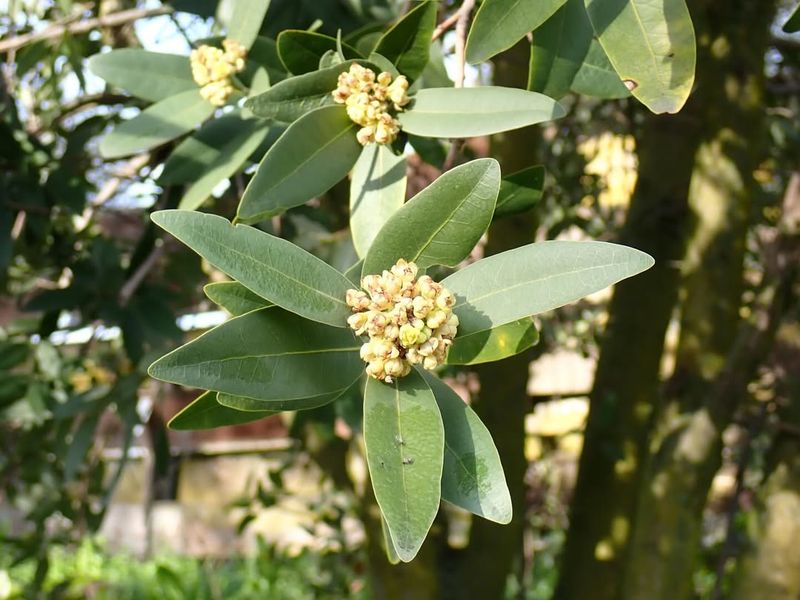
Crush a leaf between your fingers and you’ll understand why this native is also called California laurel. The spicy, aromatic scent is strong and more pungent than Mediterranean bay laurel commonly used in cooking.
California bay offers notable fragrance, evergreen foliage, and substantial shade where space allows for a large tree.
This species can grow quite large, reaching roughly forty to eighty feet tall in favorable conditions, though it may remain smaller in drier sites or with pruning.
The glossy, lance-shaped leaves create dense shade year-round, and small yellowish flowers typically appear in winter, attracting pollinators.
Olive-like fruits follow and are eaten by wildlife, though they are very strong in flavor for human use.
California bay occurs in coastal canyons and foothill woodlands across much of California, growing in sun or shade and adapting to various soils. It is drought-tolerant once established but often grows more vigorously with periodic deep watering.
The aromatic foliage is often avoided by deer.
Plant only where there is adequate space for a potentially large tree and where dense shade is acceptable. Spring planting allows time for root establishment before summer.
Water regularly during the first few years, then gradually reduce irrigation. Mature trees usually require little supplemental water except during extended drought.
Prune lower branches if desired to encourage a more tree-like form and improve clearance beneath the canopy.
7. Coast Live Oak
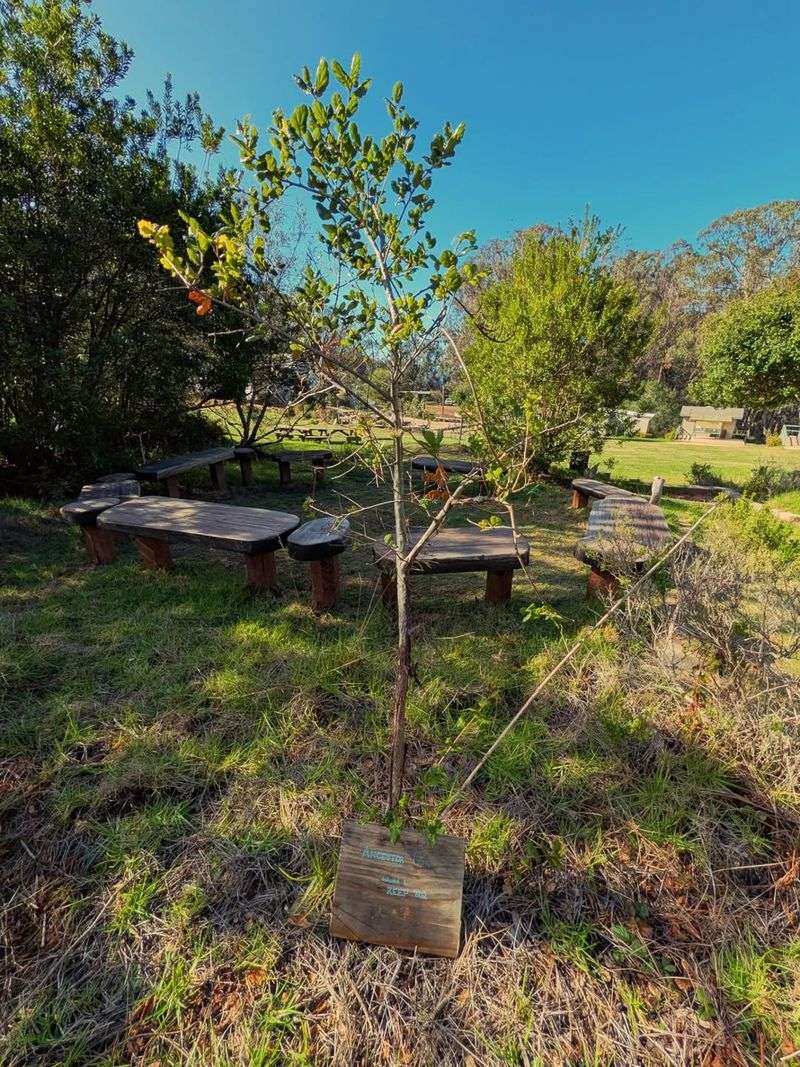
No tree is more closely associated with California than a gnarled, sprawling coast live oak with branches reaching wide and casting dappled shade across the ground.
These evergreen trees are a defining part of the landscape and provide significant ecological value, supporting many native species while contributing to complex habitat systems beneath their canopies.
Coast live oaks grow slowly, eventually reaching about forty to seventy feet tall with a broad spread. The dark green, slightly cupped leaves persist year-round, and the tree produces acorns that feed wildlife through fall and winter.
The wide canopy creates extensive shade and requires adequate space to develop without frequent pruning.
These oaks grow across coastal regions and inland valleys, tolerating clay soils, summer drought, and moderate cold once established. They generally perform best in well-drained, relatively lean soils with little summer irrigation.
Excess summer watering around established trees can contribute to root disease problems.
Plant only where there is sufficient room for mature size, often requiring a wide open area for canopy spread. Spring planting is suitable.
Water moderately during the first one to two summers within the original root zone and avoid wetting the trunk. After establishment, additional irrigation is usually unnecessary except during severe drought.
Avoid fertilizers, placing mulch directly against the trunk, and frequent summer watering near mature trees.