These 11 Easy Plants Make California Gardens Look Fuller Fast
A lush, full garden does not have to take years to create. In California’s sunny climate, the right fast growing plants can quickly fill empty spaces, soften bare soil, and bring instant life to your landscape.
With smart choices, you can turn a sparse yard into a layered, vibrant space in just one season.
Think leafy textures spilling over edges, colorful blooms popping through borders, and greenery that makes everything feel richer and more complete.
Many of these easy growers thrive with minimal care, handle heat well, and bounce back quickly after trimming, which makes them perfect for busy gardeners. The secret is picking plants that spread gracefully without becoming a headache later.
Ready to give your garden that full, thriving look without the long wait? These simple yet hardworking plants will help your California yard feel lush, lively, and beautifully established sooner than you imagined.
1. Coral Bells (Heuchera spp.)
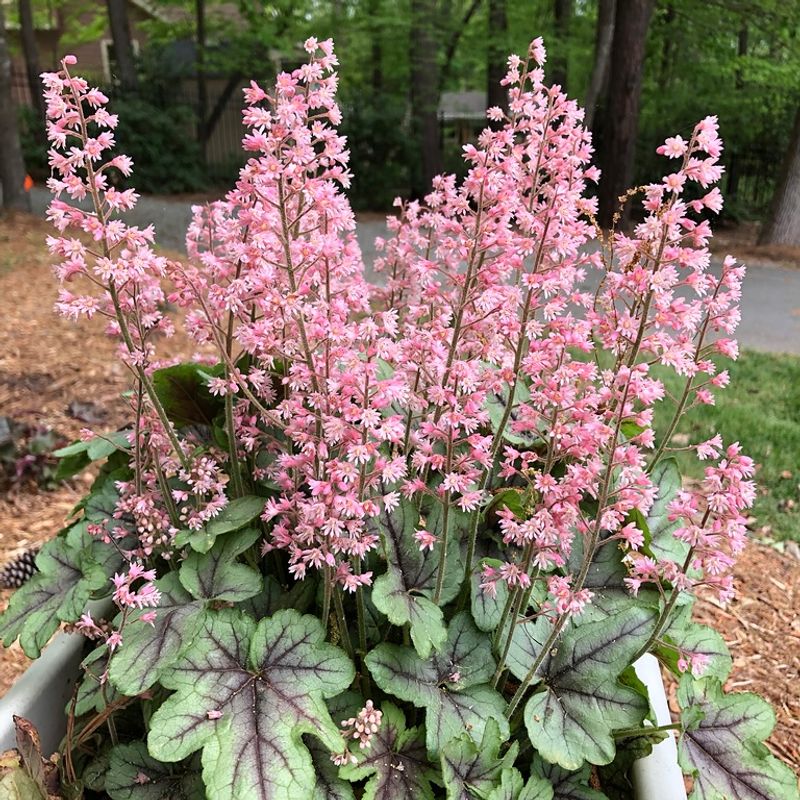
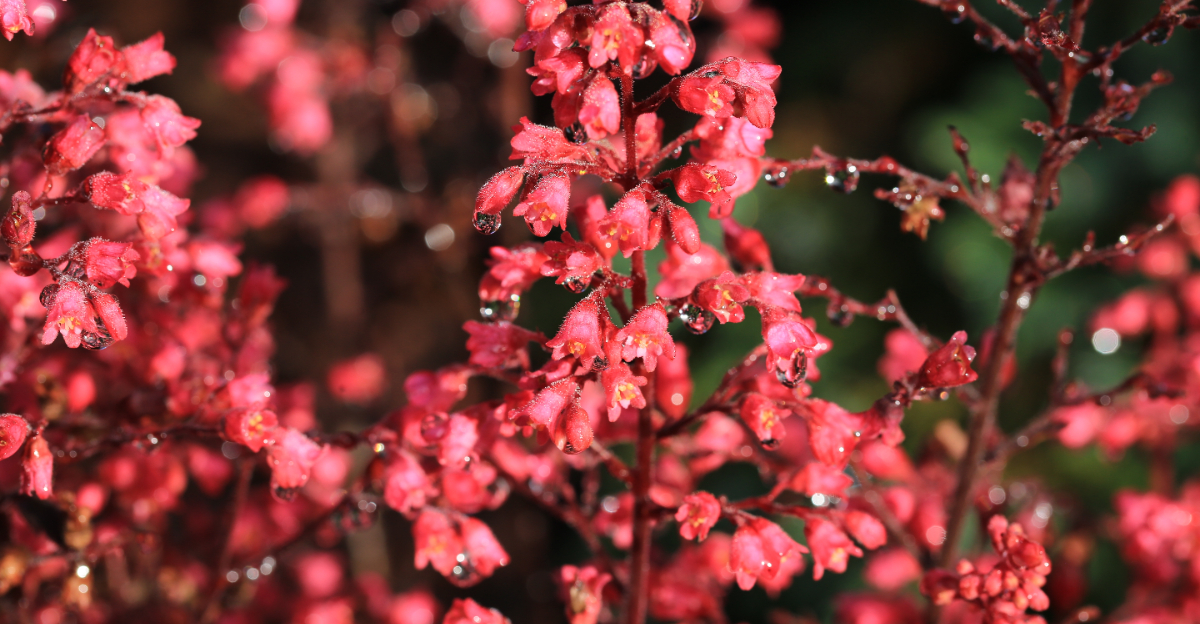
Shady spots under trees or along north-facing walls can feel sparse and challenging to fill with color. Coral bells help address this by offering attractive foliage in shades ranging from lime green to deep burgundy, adding visual interest even when not in bloom.
These perennials form compact clumps that gradually expand, filling spaces between larger plants while remaining manageable.
Slender flower stalks typically appear in late spring to summer, rising above the foliage with small bell-shaped flowers that hummingbirds may visit. In many parts of California’s mild climate, coral bells remain evergreen or semi-evergreen, providing year-round texture.
They generally perform best with consistent moisture during dry summers, particularly in warmer inland areas where heat can stress the foliage.
Plant coral bells in partial shade in well-draining soil amended with organic matter. Water regularly during active growth and apply mulch around the base to help moderate soil moisture and temperature.
Clumps can be divided periodically if centers become woody or to propagate new plants. The wide range of foliage colors allows for layered plantings that add depth and visual richness to shaded garden areas.
2. Cleveland Sage (Salvia clevelandii)
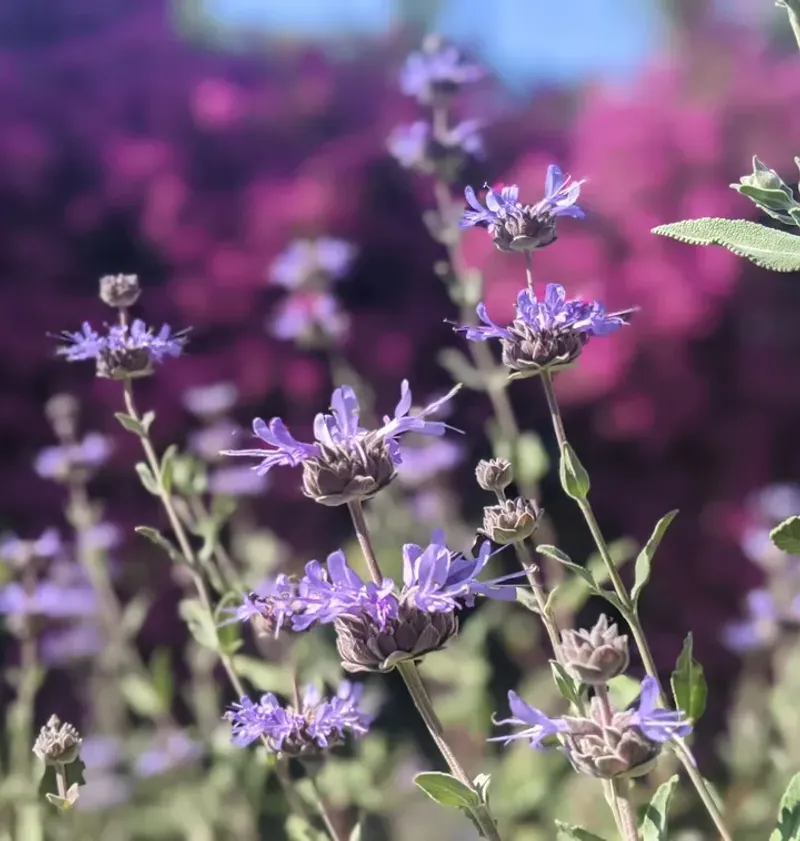
When the afternoon sun heats up garden beds, plants that tolerate strong sun are especially useful. Cleveland sage grows into a rounded mound about three to five feet wide, with fragrant gray-green leaves that release a pleasant scent when brushed.
Purple to blue flower spikes typically appear in late spring to early summer, attracting hummingbirds and bees.
This native shrub can grow in clay or sandy soils if drainage is adequate. After establishment, it is drought-tolerant and may survive on natural rainfall in some coastal and inland areas, though conditions vary.
Overwatering can lead to root problems and overly loose growth rather than a compact form.
Plant Cleveland sage in full sun with space for its mature spread. After flowering, trim spent stalks to maintain a neat shape and encourage fuller foliage.
The silvery leaves provide consistent color and texture through much of the year. It combines well with other low-water plants, including many natives and Mediterranean species, in water-wise landscapes.
Your California Garden Changes Every Week. Your Plan Should Too.
Gardening in California changes quickly throughout the season. Every Friday you’ll receive a simple weekly plan showing exactly what to plant, prune, fertilize, harvest, and protect so you never miss the right timing.
3. California lilac
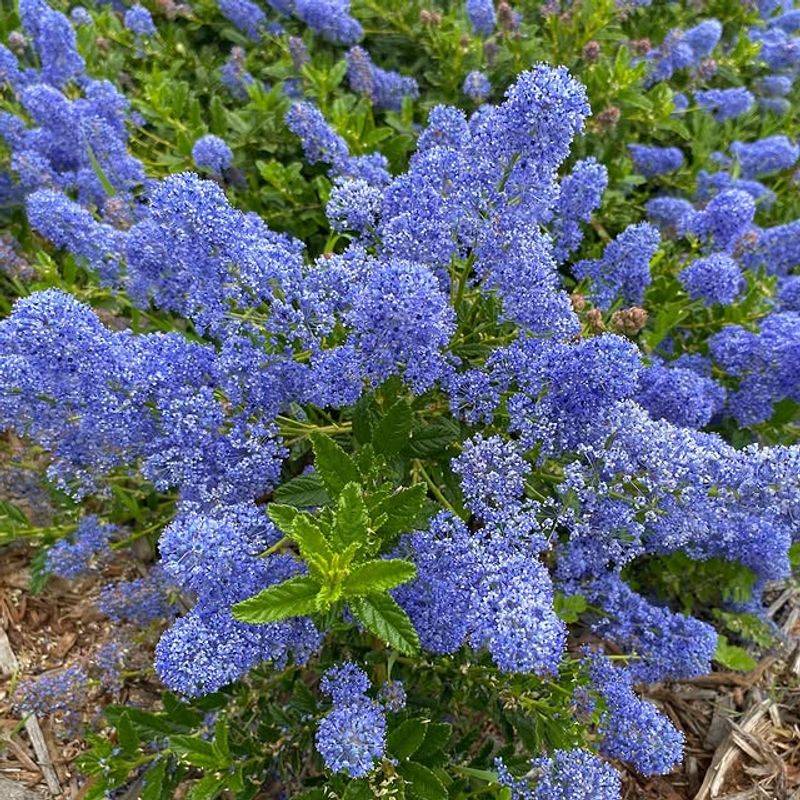
Few plants match the visual impact of California lilac when it comes into bloom each spring. Low-growing varieties such as ‘Yankee Point’ spread broadly, often covering about four to eight feet with evergreen foliage that remains attractive year-round.
Dense clusters of blue flowers create a strong display that attracts many pollinators, and the bloom period can last for several weeks.
Ceanothus generally grows best in lean, well-drained soil and may perform poorly with rich amendments or frequent fertilization. Common problems include planting in poorly drained clay soils or watering too often during summer.
Many species originate from dry habitats and prefer relatively dry conditions once established, though timing can vary depending on site and climate.
Select a sunny location with excellent drainage and allow space for mature spread. After flowering, light shaping can be done if needed, but avoid heavy pruning into older wood, as many ceanothus do not resprout well from hard cuts.
The evergreen foliage provides year-round structure, and spring flowering adds strong seasonal color to the garden.
4. Kangaroo Paw (Anigozanthos hybrids)
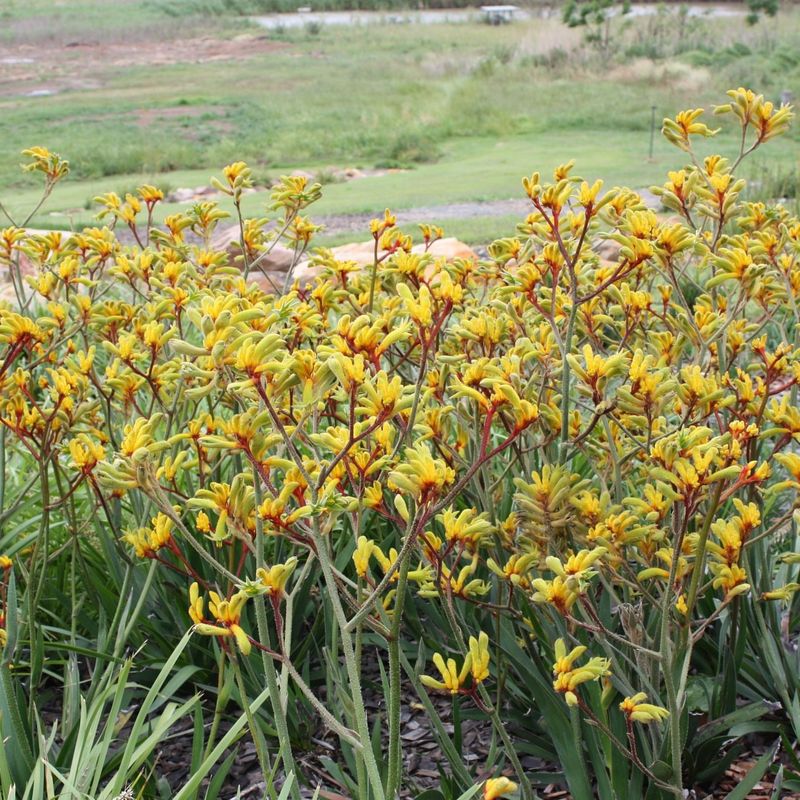
Bold, architectural plants draw attention and can create strong focal points in garden design. Kangaroo paw provides this effect with distinctive fuzzy flowers that rise above grass-like foliage in shades of red, orange, yellow, or burgundy.
The blooms often persist for an extended period, typically from spring into fall, and attract hummingbirds that feed from the tubular flowers.
These Australian natives are well suited to many parts of California, growing best in full sun and tolerating considerable heat. The foliage forms dense clumps, while tall flower stems add vertical interest without occupying much ground space.
Proper watering is important, as plants benefit from moderate moisture during active growth but may develop root problems in poorly drained or consistently wet soil.
Plant in a sunny location with well-draining soil and water regularly during the growing season, allowing soil to dry somewhat between waterings. Remove spent flower stalks to encourage continued blooming and maintain appearance.
Clumps can be divided periodically if they become crowded or flowering declines. The distinctive flowers and strong form make kangaroo paw a striking addition to many California gardens.
5. Blue fescue (Festuca glauca)
Ornamental grasses add movement and texture that soften hard edges and create visual flow between different garden areas.
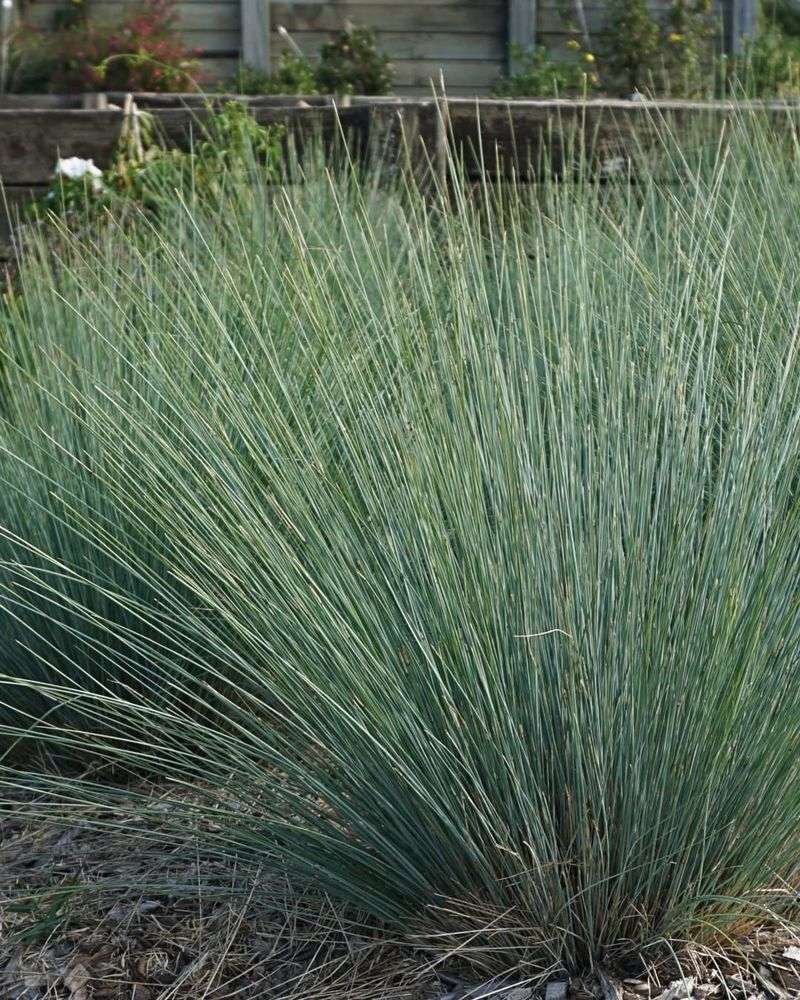
Blue fescue forms neat, rounded clumps of steel-blue foliage that stay compact at about eight to twelve inches tall, making it well suited for edging paths, filling spaces between larger plants, or repeating throughout a planting.
The fine-textured leaves provide consistent color and contrast with broader-leaved plants.
This cool-season grass grows well in California’s mild winters and can tolerate summer heat with occasional deep watering. Blue fescue generally prefers moderate moisture and may develop root problems in poorly drained, soggy soil.
Plant in well-draining soil and allow the surface to dry somewhat between waterings to help maintain dense, tidy clumps.
Space plants roughly a foot apart for a continuous border, or use them as accents among perennials and shrubs. The grass produces slender flower stalks in late spring, though it is often grown mainly for foliage color and texture.
Periodically trimming or combing out old foliage in early spring can encourage fresh growth and help maintain its compact form and color.
6. Society Garlic (Tulbaghia violacea)
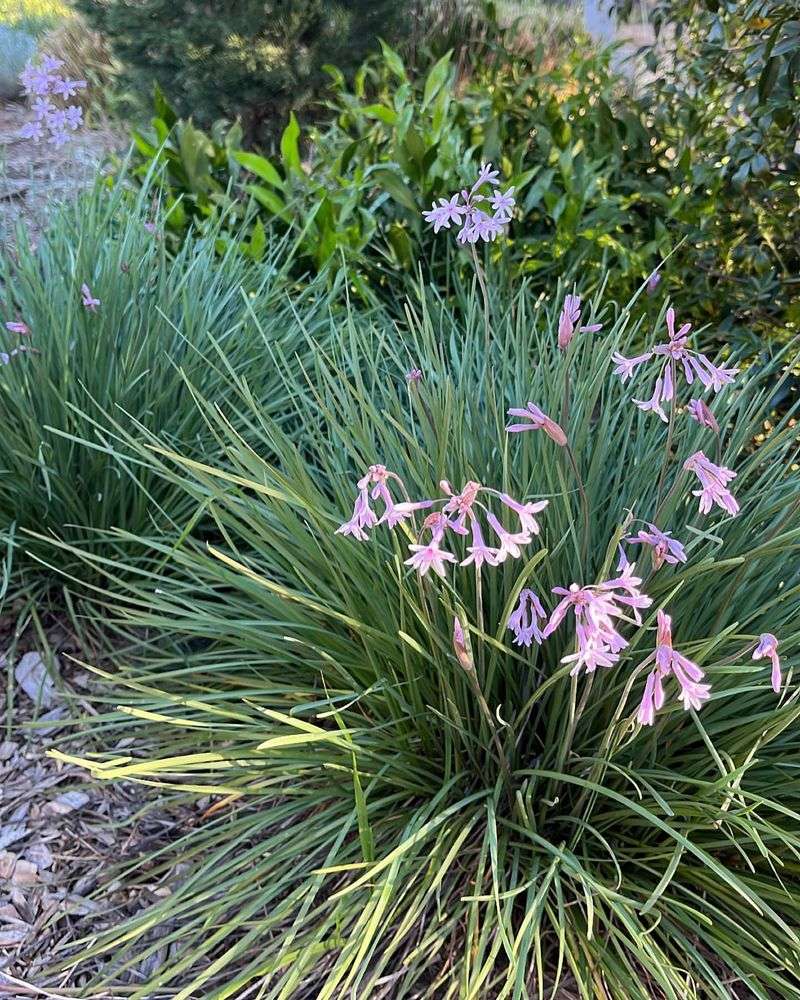
Reliable bloomers that flower repeatedly through much of the year are especially valued in low-maintenance gardens. Society garlic produces clusters of lavender-purple flowers for extended periods in California’s mild climate, often with heavier blooming in spring and fall.
The narrow, grass-like foliage forms dense clumps that gradually expand while remaining relatively tidy and manageable.
The common name refers to the mild garlic-like scent released when the leaves are crushed, though it is much subtler than true garlic.
This South African native tolerates a range of conditions from full sun to partial shade and can grow in clay or sandy soils with adequate drainage.
Poor flowering may occur in deep shade, and congested clumps can benefit from occasional division.
Plant society garlic along borders, in containers, or as edging for consistent color. Water regularly during the first growing season to establish roots, then shift to less frequent, deeper watering.
Removing spent flowers can improve appearance but is not required for continued blooming. The combination of attractive foliage, long flowering period, and relatively easy care makes society garlic a dependable addition for adding color and texture to the garden.
7. Trailing Lantana
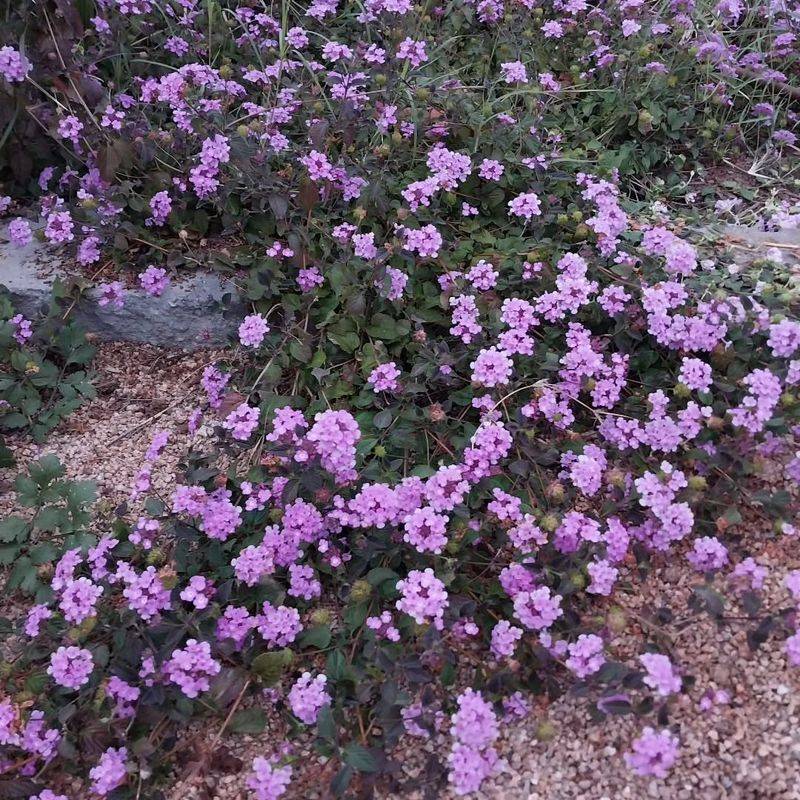
Ground covers that bloom heavily while spreading across bare soil can quickly turn open areas into colorful plantings.
Trailing lantana produces clusters of purple or white flowers over a long season, often from spring into fall, attracting butterflies and sometimes hummingbirds while spreading roughly two to four feet per plant.
Its low, trailing habit works well on slopes, over walls, or in areas needing broad coverage.
Some newer sterile or low-seed varieties reduce the reseeding concerns associated with older lantana types, though behavior can vary by cultivar and region.
Trailing lantana grows best in full sun and, once established, tolerates heat, drought, and relatively poor soils, while occasional deep summer watering can improve appearance and flowering.
Plant in spring after frost risk has passed, spacing plants about three feet apart to allow room to spread. Water regularly during the first growing season, then reduce to periodic deep watering during hot weather.
In colder inland areas, top growth may be damaged by frost, but plants can regrow from the base in spring under suitable conditions. Light pruning in late winter or early spring can help encourage fuller growth and continued flowering.
8. Creeping Rosemary (Salvia rosmarinus ‘Prostratus’)
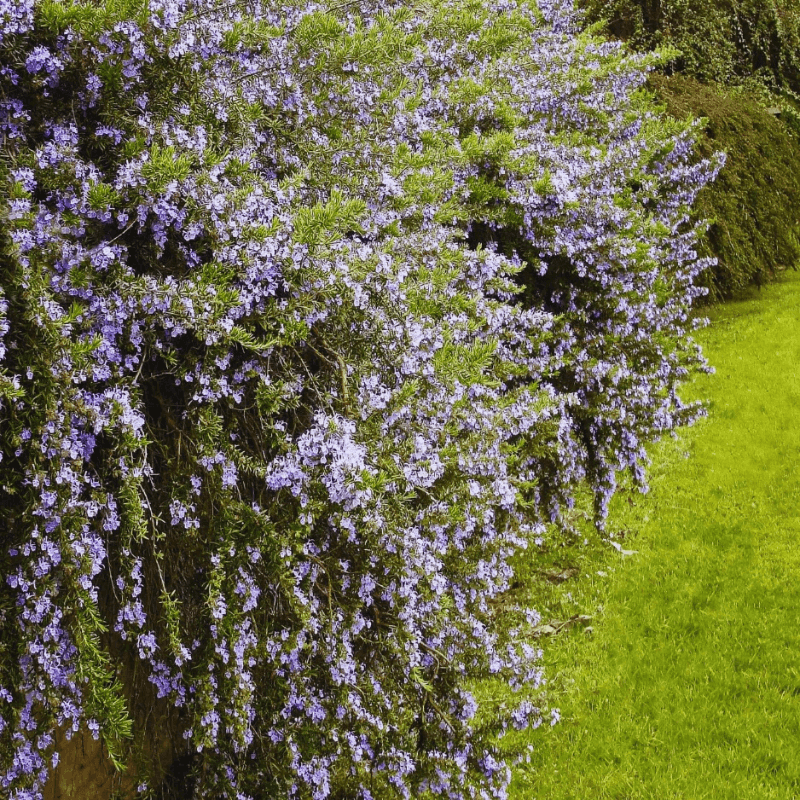
Slopes and banks can be challenging to plant because of drainage and exposure, yet creeping rosemary performs well in these conditions while remaining attractive. It spreads outward to cover several feet of ground and can trail over walls or edges.
The aromatic, needle-like foliage stays evergreen, and blue flowers typically appear in late winter to spring, adding early seasonal color.
This Mediterranean herb is well suited to many parts of California, tolerating heat, drought, and lean soils once established. Trailing stems may root where they contact soil, which can help stabilize slopes.
Planting in overly rich soil with frequent watering can lead to excessive, loose growth rather than a dense, long-lived form.
Select a sunny location with excellent drainage and avoid heavy fertilization at planting. Water occasionally during the first summer, then reduce to infrequent deep watering once established.
Sprigs can be harvested for culinary use, which also provides light pruning to help maintain compact growth. The combination of fragrance, evergreen form, and low maintenance makes creeping rosemary a practical choice for covering space and stabilizing soil.
9. Dwarf Coyote Brush (Baccharis pilularis ‘Pigeon Point’)
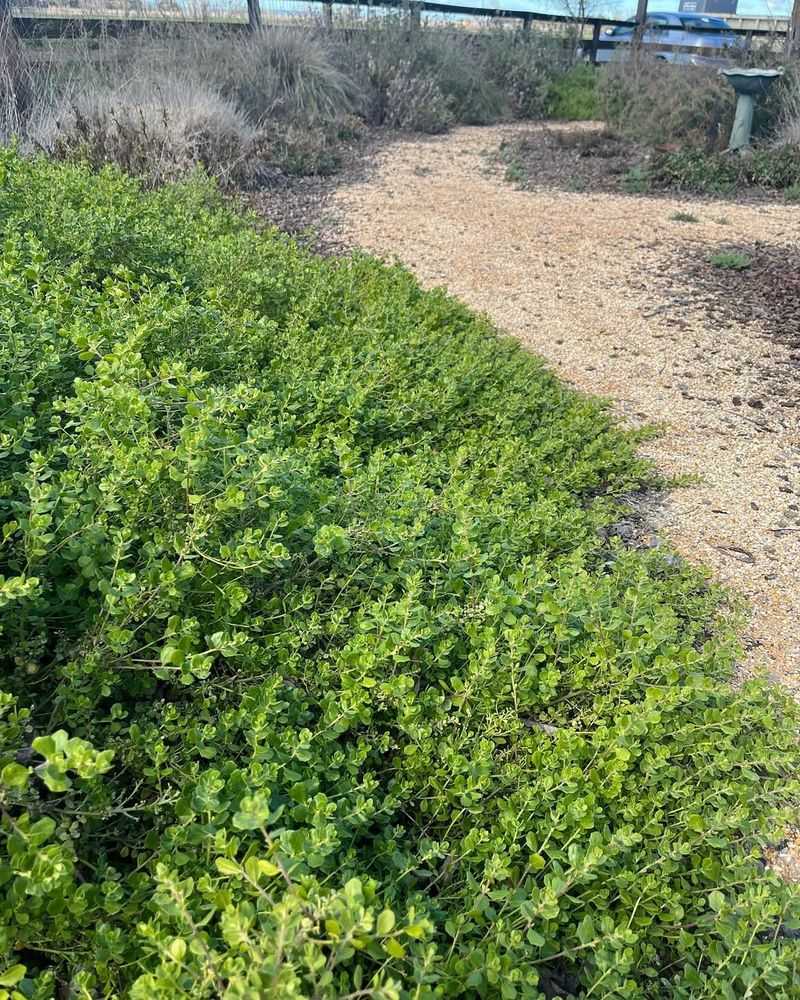
Native ground covers that spread while staying low can help stabilize soil and suppress weeds, especially on slopes or open areas.
Dwarf coyote brush typically grows about one foot tall and can spread several feet wide, forming a dense mat of green foliage that remains present year-round.
This California native tolerates coastal exposure, inland heat, and a range of soil types, making it widely used in low-water landscapes.
The cultivar ‘Pigeon Point’ is a female selection that produces little to no fluffy seed, reducing the windblown seed effect sometimes associated with the species.
Once established, it is drought-tolerant and may persist largely on natural rainfall in some regions, often performing best with minimal summer water.
Excess shade or frequent watering can lead to thinner, weaker growth rather than a dense groundcover.
Plant in full sun in well-draining soil, spacing plants roughly four feet apart to allow coverage over one to two growing seasons under favorable conditions.
Water regularly during the first year to establish roots, then reduce to occasional deep watering or minimal irrigation in coastal climates.
Light shearing in late winter can help maintain an even surface, but avoid cutting deeply into older wood, which may recover slowly.
10. California Fuchsia (Epilobium canum)
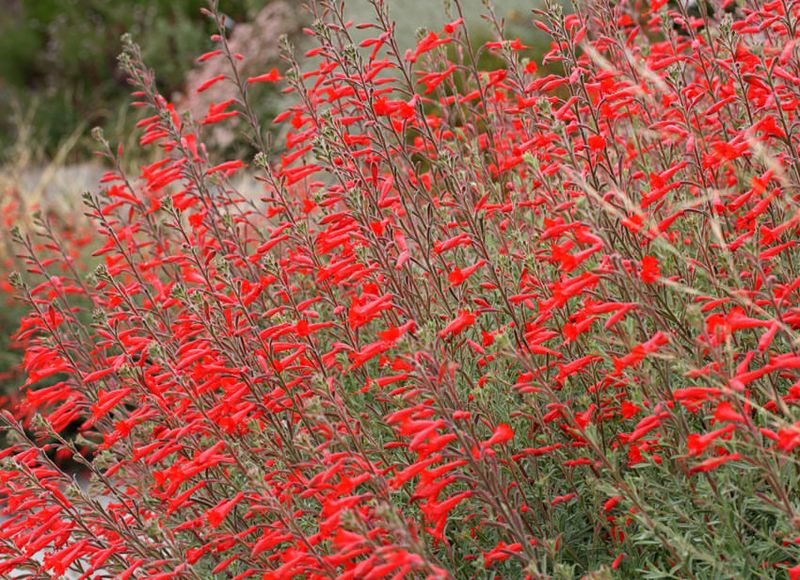
Late summer can feel like a quieter blooming period in California gardens, with spring flowers finished and fall color still developing.
California fuchsia helps fill this gap by producing bright orange-red tubular flowers typically from late summer into fall, providing nectar for hummingbirds and other pollinators.
The gray-green foliage can spread by underground runners, forming a low, drought-tolerant planting usually about one to two feet tall.
This California native grows well in hot, dry conditions that challenge many perennials, making it suitable for sunny locations. In colder areas, it may go dormant and die back to the ground in winter, while in mild coastal climates it can remain partially evergreen.
Its spreading habit can be managed by removing unwanted shoots or using barriers if needed.
Plant in full sun in well-draining soil with minimal amendments. Water occasionally during the first summer to help establish roots, then reduce to infrequent deep watering once established.
Cutting stems back in late winter or early spring can encourage fuller growth and flowering. The combination of late-season bloom, pollinator value, and drought tolerance makes California fuchsia a strong choice for adding seasonal color.
11. Japanese Forest Grass (Hakonechloa macra)
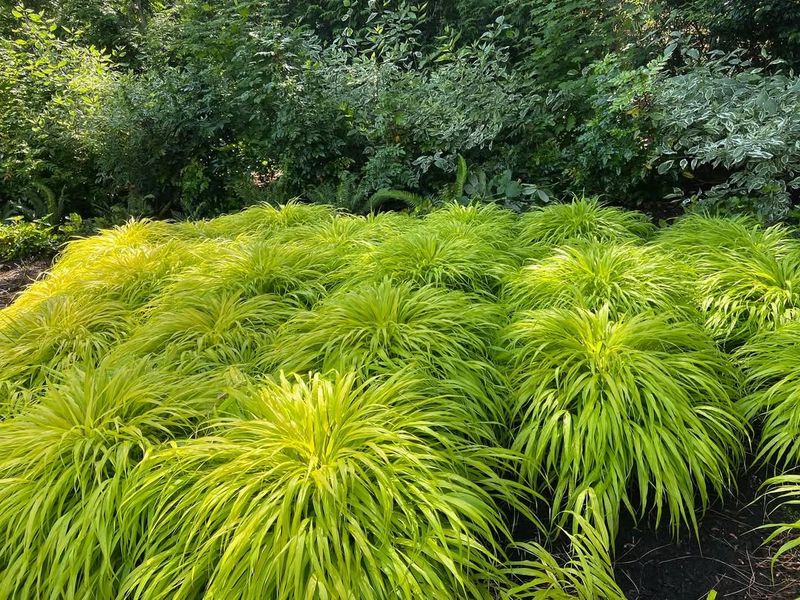
Shaded areas under trees or along house foundations can feel dim and difficult to brighten, but foliage plants with strong color and texture can create a luminous effect without relying on flowers.
Japanese forest grass forms graceful, cascading mounds of golden-green or variegated foliage that appears to brighten shaded spaces.
The arching leaves move gently with light breeze, adding softness and motion to shaded plantings.
This shade-adapted grass grows slowly at first and gradually forms larger clumps that remain manageable.
In many parts of California, the foliage stays attractive through much of the year, often taking on bronze tones in cooler seasons before going partially dormant in winter.
Consistent moisture is important, as Japanese forest grass prefers evenly moist soil and may struggle in very dry shade without irrigation and mulch.
Plant in partial to full shade in rich, moisture-retentive soil amended with organic matter. Water regularly during active growth, particularly in warmer inland climates.
Apply mulch to help retain soil moisture and moderate temperature. Cut back old foliage in late winter before new growth begins.
The graceful form and bright foliage can make it a standout choice for shaded garden areas where adequate moisture can be provided.