The Easy Method You Can Use To Multiply Houseplants In Georgia
If you have ever looked at a favorite houseplant and wished you could turn one healthy stem into several new plants, you are not alone. Many Georgia plant lovers are surprised to learn how simple propagation can be when timing and conditions are right.
With warm indoor temperatures, bright windows, and naturally higher humidity for much of the year, Georgia homes often create an ideal environment for rooting cuttings. You do not need special tools or complicated steps to make it work.
One healthy cutting can become a full new plant with just a clean snip and the right setup. Spring and early summer give roots the energy they need to form quickly and strongly.
When you use a simple, reliable method, multiplying houseplants feels less like an experiment and more like a smart routine.
1. Spring Is The Sweet Spot For Taking Strong Cuttings
Timing makes all the difference when you want your plant babies to thrive. Spring brings longer days and warmer temperatures to Georgia, which naturally wakes up your houseplants and gets their growth engines running at full speed.
Plants produce more energy during this season, and their stems are packed with nutrients ready to support new root development.
Your pothos, philodendrons, and spider plants will show you when they’re ready by pushing out fresh leaves and extending their vines.
The active growth phase means cuttings taken now will root faster and stronger than those taken during fall or winter when plants naturally slow down.
Georgia’s mild spring weather also means your indoor temperatures stay consistent, which helps prevent shock to your new cuttings.
Watch for new growth appearing on your plants, usually showing up as lighter green shoots at the tips. This signals that the plant is in its prime propagation window.
The stems will feel firm but flexible, not woody or brittle, which indicates they have the right balance of maturity and vigor.
Early morning is the best time to take your cuttings because plants are fully hydrated after the cool night. Use clean, sharp scissors or pruning shears to make your cuts, and work quickly to get your cuttings into water or soil.
Spring propagation in Georgia typically runs from March through May, giving you a solid three-month window to multiply your entire indoor jungle and fill every corner of your home with thriving greenery.
2. Cut Just Above A Growth Node For The Best Results
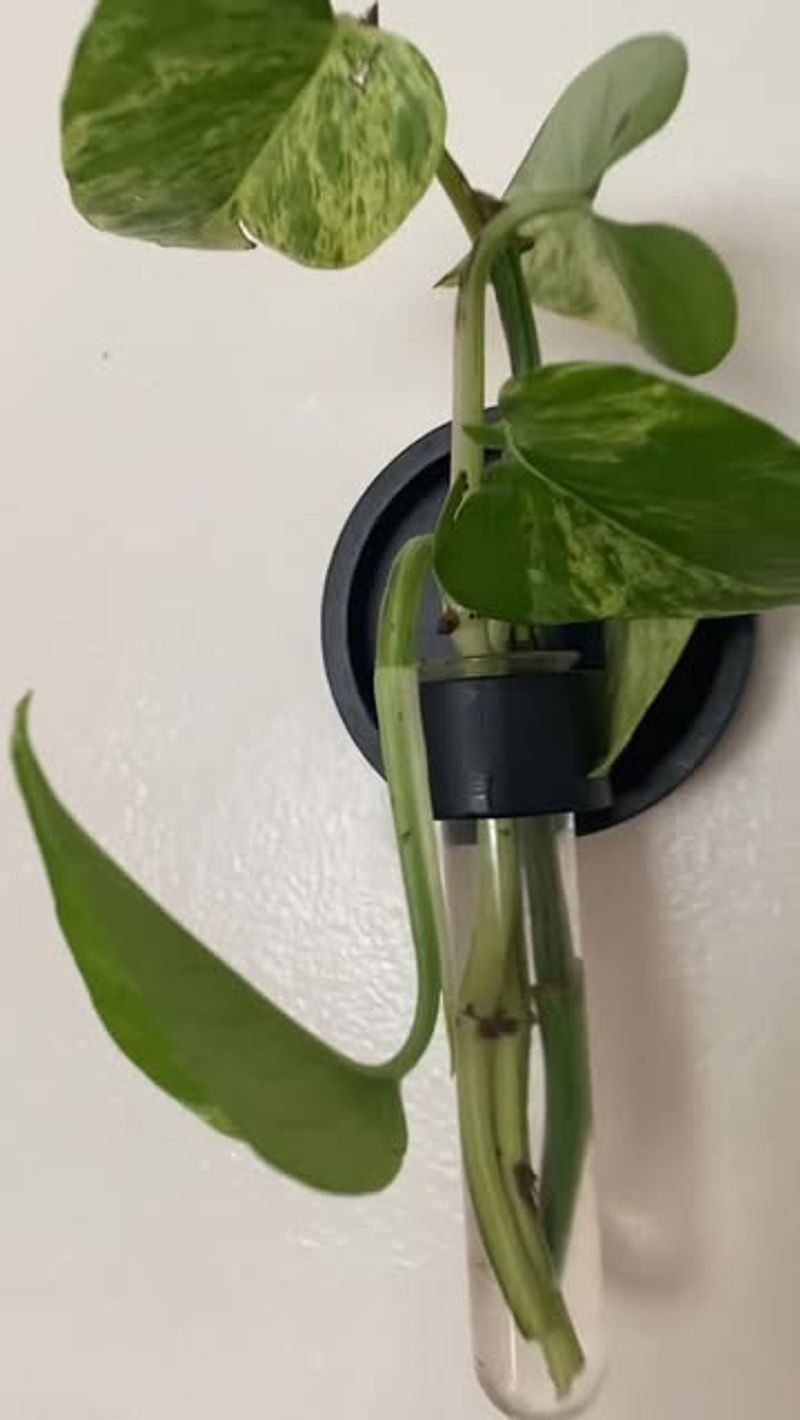
Growth nodes look like little bumps or rings on your plant stems where leaves attach or have fallen off. These spots contain concentrated cells that can transform into roots when you give them the right conditions.
Making your cut in the wrong place can mean the difference between success and watching your cutting struggle for weeks without any progress.
Position your scissors about a quarter inch above a node on the mother plant, leaving that node intact so the original plant can keep growing.
The cutting itself should have at least one or two nodes below where you made the cut because those underwater nodes will sprout your new roots.
Your Georgia Garden Changes Every Week. Your Plan Should Too.
Gardening in Georgia changes quickly throughout the season. Every Friday you’ll receive a simple weekly plan showing exactly what to plant, prune, fertilize, harvest, and protect so you never miss the right timing.
Georgia gardeners find that leaving two to three inches of stem below the top leaves works perfectly for most common houseplants.
The node contains special hormone-producing tissue that triggers root formation when exposed to moisture. Without a node on your cutting, you’re basically asking a stick to grow roots, which just won’t happen no matter how long you wait.
Each node increases your chances of successful rooting, so cuttings with multiple nodes generally perform better than those with just one.
Look closely at your plant before cutting to identify the nodes clearly. They appear as slight swellings on the stem and often have a different color or texture than the rest of the stem.
Some plants like pothos show very obvious nodes, while others like snake plants have less visible ones.
Taking a moment to locate the nodes before you cut saves you from wasting perfectly good plant material and ensures your propagation efforts in Georgia pay off with healthy new plants.
3. Save The Fresh Tips Because They Root Faster
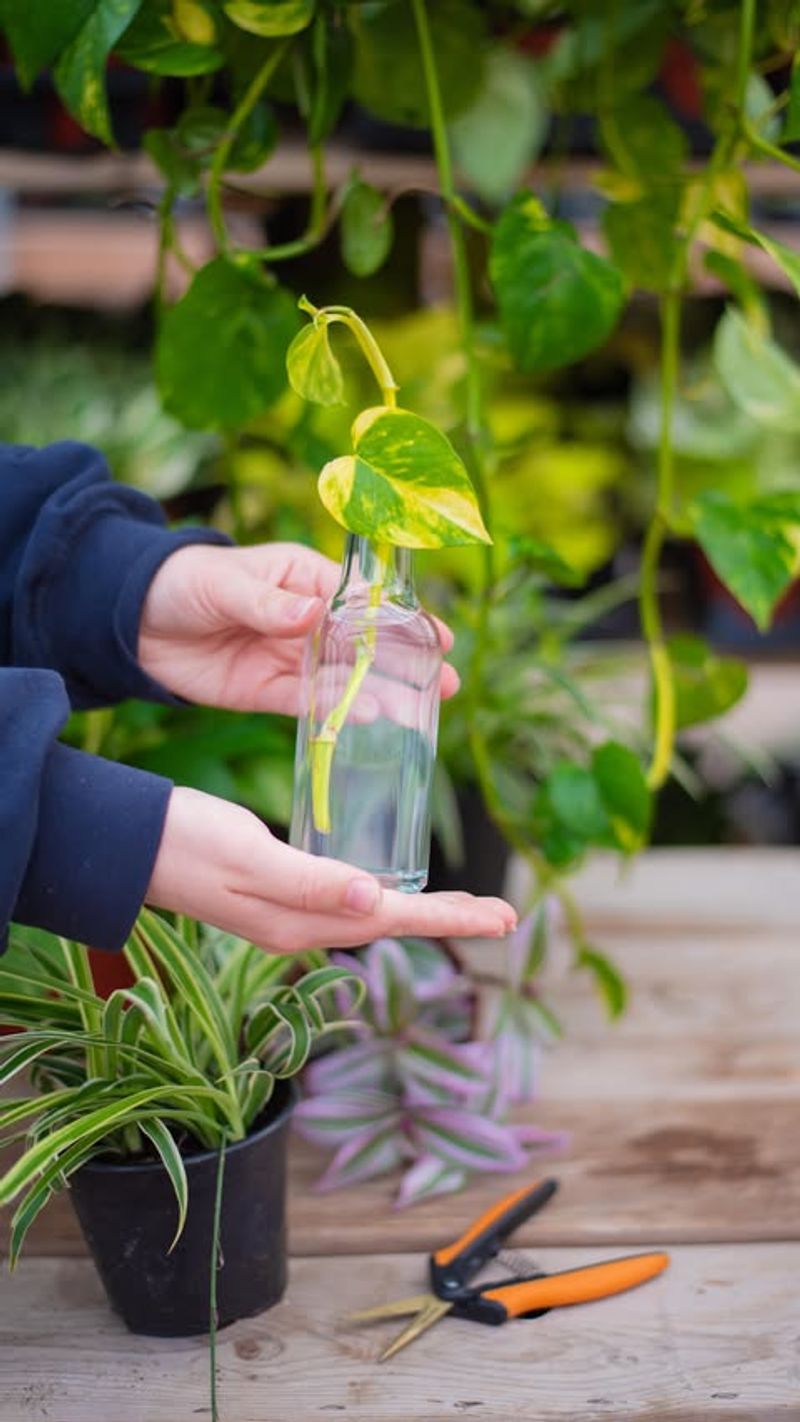
The youngest, most tender growth at the very end of your plant stems contains the highest concentration of growth hormones.
These tip cuttings come ready to root because they’re already in active growth mode, unlike older, woodier sections that need more time to wake up and start producing roots.
Georgia plant lovers consistently see faster results when they choose these fresh tips over older stem sections.
Tip cuttings should include the top three to four inches of a stem with at least two sets of leaves. The new growth appears lighter in color and feels softer than mature growth further down the stem.
This tender tissue adapts quickly to water or soil conditions and typically shows root development within one to two weeks for fast-growing varieties common in Georgia homes.
Remove the bottom set of leaves from your tip cutting to expose the nodes that will sit in water or soil. Keeping leaves underwater leads to rot that can spread up the stem and ruin your cutting entirely.
The remaining top leaves should stay above the water line where they can continue photosynthesis and provide energy for root production.
Plants like tradescantia, coleus, and begonias respond especially well to tip cuttings taken during their active growth periods. The success rate with tip cuttings often reaches ninety percent or higher when conditions stay consistent.
Your Georgia home provides stable temperatures that support this quick rooting process.
Fresh tips also adapt better to their new environment because they haven’t developed the rigid cell structures found in older growth, making them more flexible and responsive to the rooting process.
4. Water Propagation Works For Many Easy Georgia Houseplants
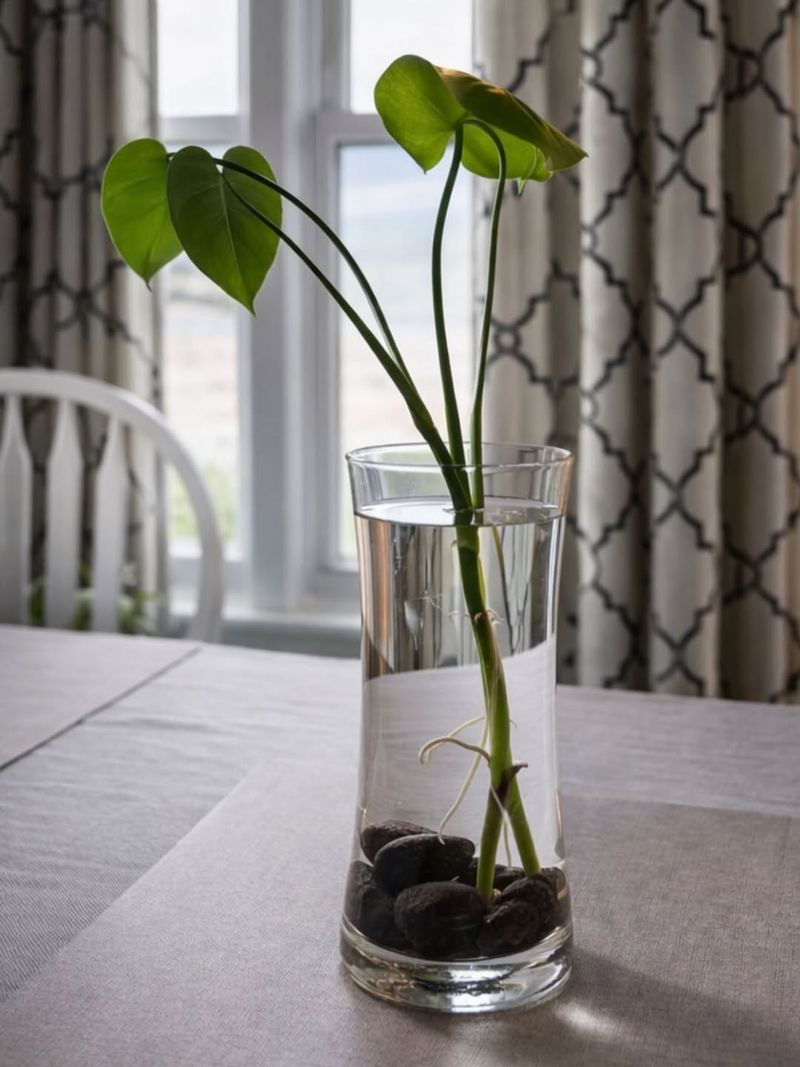
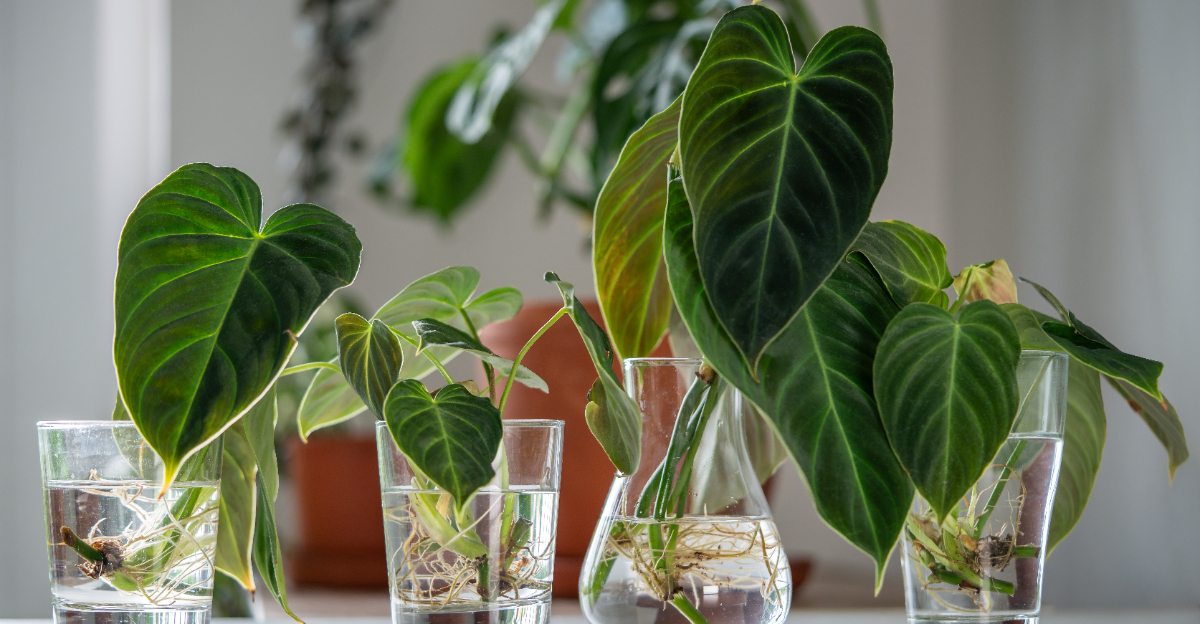
Watching roots grow right before your eyes makes water propagation incredibly satisfying for beginners and experienced plant people alike. Clear containers let you monitor progress daily and spot any problems before they become serious issues.
Many popular houseplants found in Georgia homes root beautifully in plain tap water without any special additives or equipment needed.
Fill clean glass jars or vases with room temperature water and place your prepared cuttings inside with nodes submerged. Change the water every three to five days to keep it fresh and oxygenated, which prevents bacterial growth that can damage developing roots.
Georgia’s municipal water works fine for most plants, though letting it sit overnight allows chlorine to evaporate if you’re concerned about chemical sensitivity.
Position your water-rooted cuttings in bright, indirect light near a window but out of harsh afternoon sun. East-facing windows work perfectly in Georgia homes because they provide gentle morning light without the intense heat that can cook your cuttings.
Roots typically appear within one to three weeks depending on the plant variety and time of year.
Pothos, philodendron, and Swedish ivy root so readily in water that they sometimes continue growing in their jars for months. Eventually you’ll want to transfer them to soil for long-term health, but there’s no rush once roots reach two to three inches long.
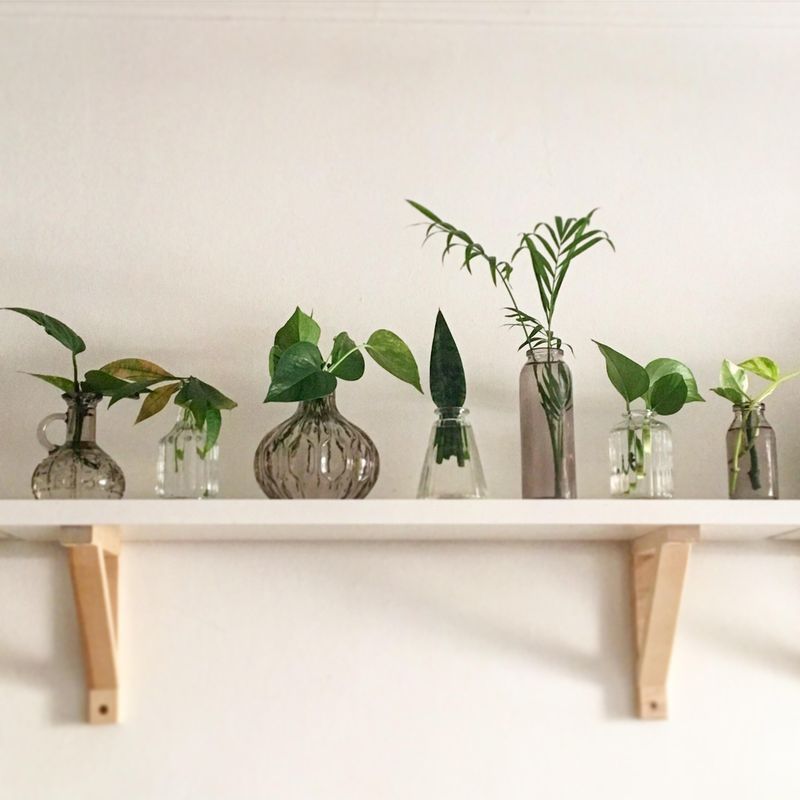
Some Georgia gardeners keep attractive cuttings in decorative vases as permanent water plants, changing the water weekly and adding diluted liquid fertilizer monthly to keep them thriving indefinitely in this simple setup.
5. Soil Rooting Builds Stronger Long Term Growth
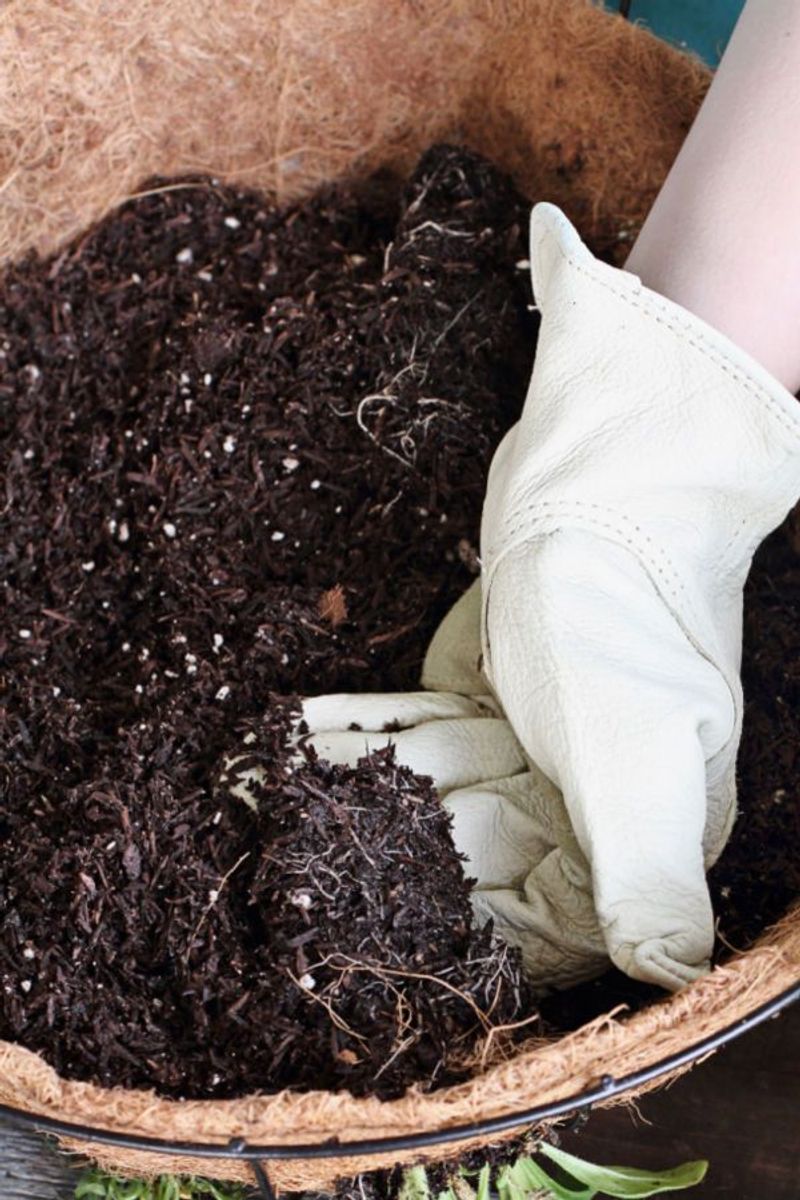
Roots that develop directly in soil grow tougher and more branched than water roots, which means less transplant shock and faster establishment.
The transition from propagation to permanent home happens automatically because your cutting never has to adjust from water to soil conditions.
Georgia gardeners who want robust plants often choose this method despite it taking slightly longer to show visible results.
Use a light, well-draining potting mix rather than garden soil, which stays too dense and wet for delicate new roots. A blend of regular potting soil mixed with perlite or coarse sand in equal parts creates ideal conditions.
Moisten the mix thoroughly before inserting your cuttings, then poke holes with a pencil to avoid damaging the stem ends.
Insert each cutting about an inch deep, making sure at least one node sits below the soil surface. Firm the soil gently around the stem to hold it upright and ensure good contact between the node and the moist growing medium.
Multiple cuttings can share one pot as long as they don’t touch each other, which helps maintain humidity levels in Georgia’s sometimes dry indoor air.
Keep the soil consistently moist but never soggy during the rooting period, which usually takes three to four weeks. You’ll know roots have formed when you see new leaf growth appearing or feel gentle resistance when you tug lightly on the cutting.
Soil propagation works especially well for plants like succulents, geraniums, and herbs that prefer drier conditions.
The established root system means your new plants can go straight into regular care routines without the adjustment period that water-rooted cuttings require.
6. Simple Humidity Tricks That Speed Up Root Formation
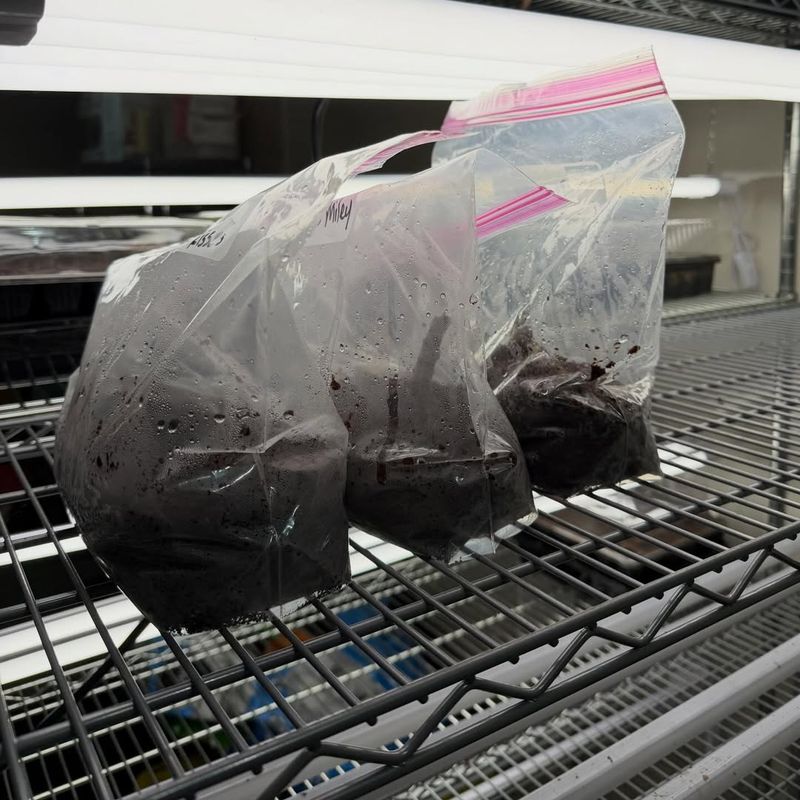
Moisture in the air prevents your cuttings from drying out before they develop roots to drink water from soil or containers. Higher humidity also keeps leaf pores open, which allows better gas exchange and faster cell division in developing root tissue.
Creating a mini greenhouse effect around your cuttings dramatically improves success rates, especially during Georgia’s air-conditioned summer months when indoor humidity drops.
Clear plastic bags slipped over pots or jars work perfectly as humidity domes for individual cuttings or small groups. The plastic traps moisture that evaporates from the soil and leaves, creating a constantly humid microclimate.
Poke a few small holes in the plastic to allow some air circulation while maintaining high humidity levels inside.
Check your covered cuttings daily and wipe away excess condensation if water droplets completely obscure your view. Too much moisture encourages fungal problems, so you want to see light misting rather than heavy dripping inside the plastic.
Remove the covering for an hour each day to refresh the air and prevent mold growth on the soil surface.
Georgia homes with naturally humid bathrooms or kitchens provide built-in propagation stations where cuttings often root without any covering needed. Grouping multiple plants together also raises local humidity as they all release moisture through their leaves.
Pebble trays filled with water and topped with a layer of stones create humidity when placed under propagation containers, with the evaporating water providing constant moisture to the air around your cuttings without making the soil too wet.
7. Layering And Leaf Cuttings That Multiply Plants Even Faster
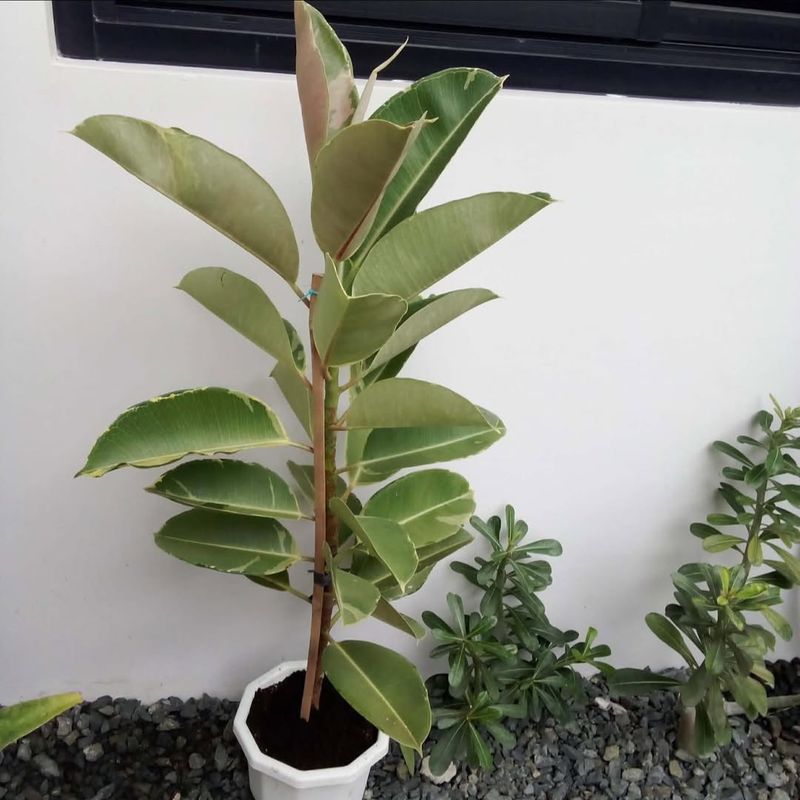
Some plants practically beg you to propagate them through specialized methods that work even better than standard stem cuttings.
Layering involves rooting a stem while it’s still attached to the mother plant, which means it keeps receiving nutrients and water during the entire rooting process.
This technique works wonderfully for trailing plants common in Georgia homes like pothos and philodendrons that have long vines.
Pin a section of vine to the soil in a nearby pot using a bent paper clip or small stone, making sure a node touches the moist soil. The stem stays connected to the parent plant and continues growing while roots form at the buried node.
Once roots establish after three to four weeks, simply cut the stem between the two pots and you have a new plant without any rooting stress.
Leaf cuttings work like magic with plants such as African violets, begonias, and succulents. Remove a healthy leaf with its stem intact and insert the stem into moist soil or lay the entire leaf flat on the soil surface depending on the plant type.
Tiny new plants emerge from the base of the leaf or along its edges, creating multiple babies from a single leaf.
Snake plants propagate readily from leaf sections cut into three-inch pieces and stuck upright in soil. Each section can produce a new plant from its base, though this method takes longer than division.
Georgia’s warm indoor temperatures support these alternative propagation methods beautifully.
Combining several techniques lets you multiply different plants in your collection efficiently, turning one plant shopping trip into dozens of new plants within a few months.