Grow This Native Ohio Flower To Attract More Goldfinches To Your Yard
If you want to see more goldfinches flitting around your Ohio yard, the right plants can make all the difference.
Native flowers provide seeds, shelter, and a familiar environment that keeps these cheerful birds coming back. Planting native species not only supports goldfinches but also helps your garden thrive with less maintenance.
Hardy, low-maintenance blooms can create vibrant patches of color while giving birds the food and cover they need.
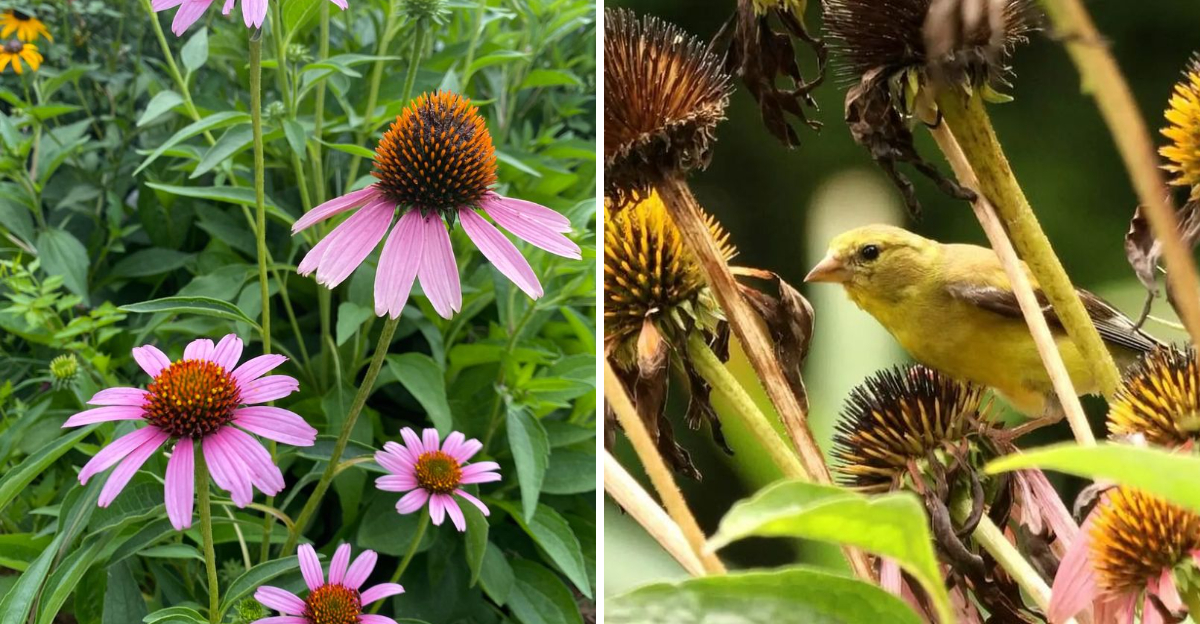
One standout choice is the purple coneflower, which produces seeds goldfinches love and adds a splash of long-lasting color to your garden. By including plants like this, you can turn your yard into a haven for wildlife while enjoying the beauty of native blooms.
1. Purple Coneflower Produces Seeds Goldfinches Love
Goldfinches have strong, cone-shaped beaks perfectly designed for cracking open small seeds. Purple coneflower produces exactly the type of seeds these birds seek out naturally.
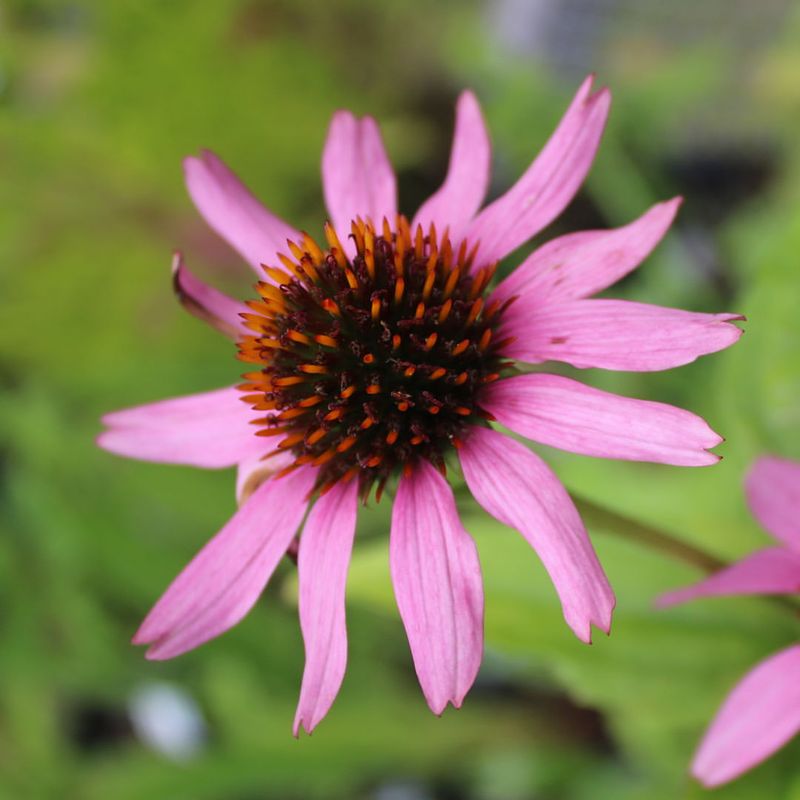
The dark center cone of each flower matures into a seed head filled with small, oil-rich seeds that provide excellent nutrition for goldfinches during their molting period and beyond.
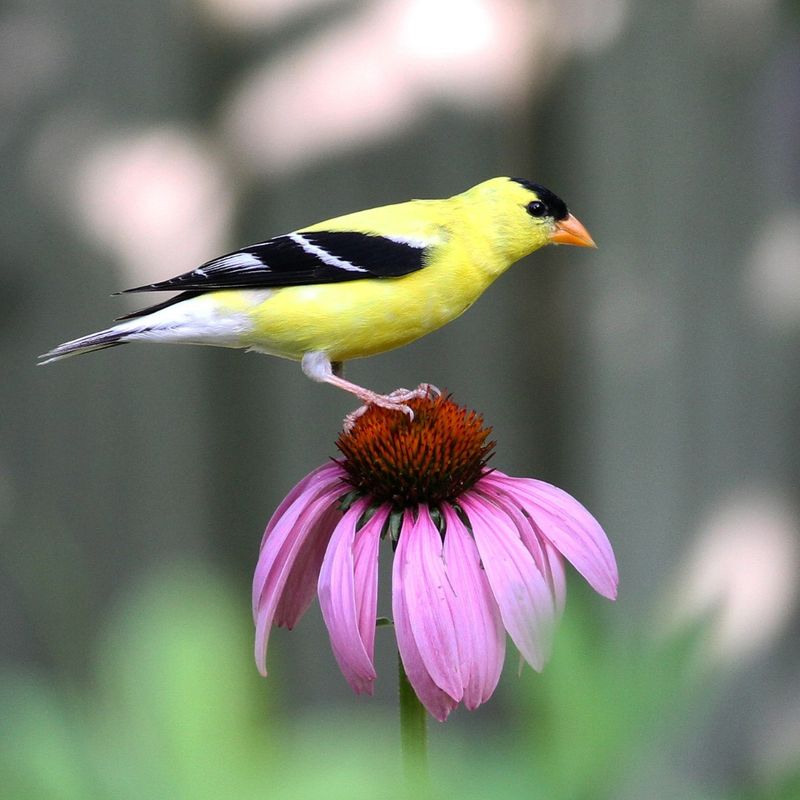
Each flower head can hold dozens of seeds arranged in a spiral pattern. Goldfinches land directly on the sturdy cone and work their way around, extracting seeds with impressive skill.
You’ll often see multiple birds visiting the same plant, sometimes waiting their turn on nearby stems.
The seeds begin forming in late July and early August across most of Ohio. By mid-August, goldfinches start testing the ripening seeds, and their visits increase as more seeds reach full maturity.
Northern Ohio gardens may see slightly later seed development, while southern regions often have seeds ready by early August.
Purple coneflower seeds contain moderate fat and protein content typical of small prairie seeds. These nutrients help goldfinches build energy reserves for late-season movement and winter survival and maintain their bright plumage.
The seeds remain attached to the cone even as they ripen, creating a stable feeding platform that smaller songbirds appreciate. Unlike seeds that scatter on the ground, coneflower seeds stay accessible and clean, which goldfinches strongly prefer when choosing where to feed in your yard.
2. Seed Heads Become Natural Bird Feeders
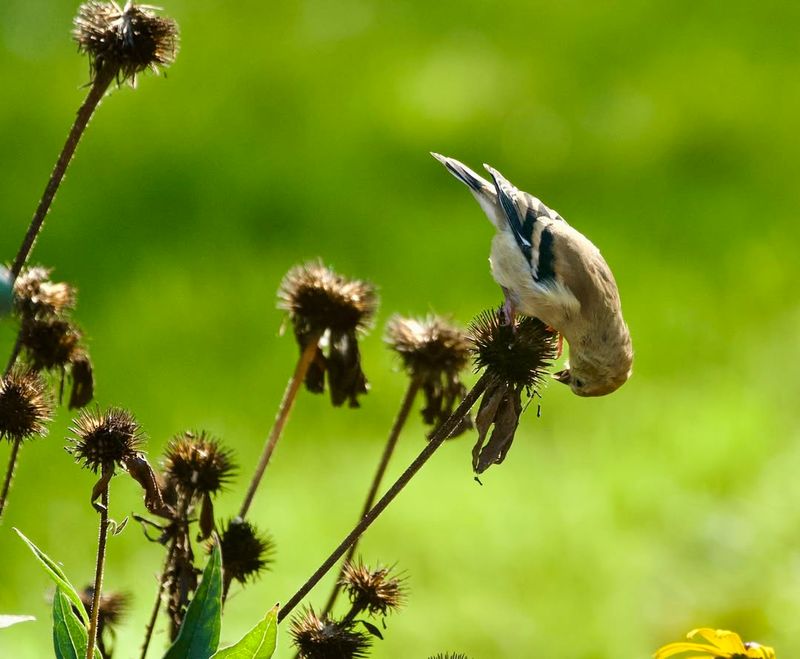
Once the purple petals drop away, the remaining seed head functions like a perfectly designed feeder. The cone stands firm on a strong stem, creating a stable perch where goldfinches can land and feed comfortably.
Unlike traditional hanging feeders that swing in the wind, these natural feeding stations stay steady, which birds find much easier to use.
The raised cone shape gives goldfinches excellent access from multiple angles. Birds can grip the stem below the seed head or balance directly on the cone itself while extracting seeds.
This flexibility means several goldfinches can feed from the same plant without crowding each other out, and you’ll often observe peaceful feeding sessions with birds rotating positions.
Purple coneflower seed heads continue offering food for months after the initial bloom period ends. As goldfinches remove seeds from the outer sections of the cone, they gradually work toward the center, where seeds often remain viable well into fall.
Your Ohio Garden Changes Every Week. Your Plan Should Too.
Gardening in Ohio changes quickly throughout the season. Every Friday you’ll receive a simple weekly plan showing exactly what to plant, prune, fertilize, harvest, and protect so you never miss the right timing.
This extended feeding period keeps birds returning to your garden repeatedly throughout the season.
The natural presentation of seeds on coneflower plants avoids some problems associated with manufactured feeders. There’s no need to clean moldy seed trays or refill containers.
Rain rarely creates soggy seed piles, and the elevated position helps keep seeds away from many ground-dwelling animals. Ohio gardeners appreciate how these plants provide bird food without the maintenance requirements of traditional feeding methods.
3. Late Season Seeds Keep Birds Visiting Longer
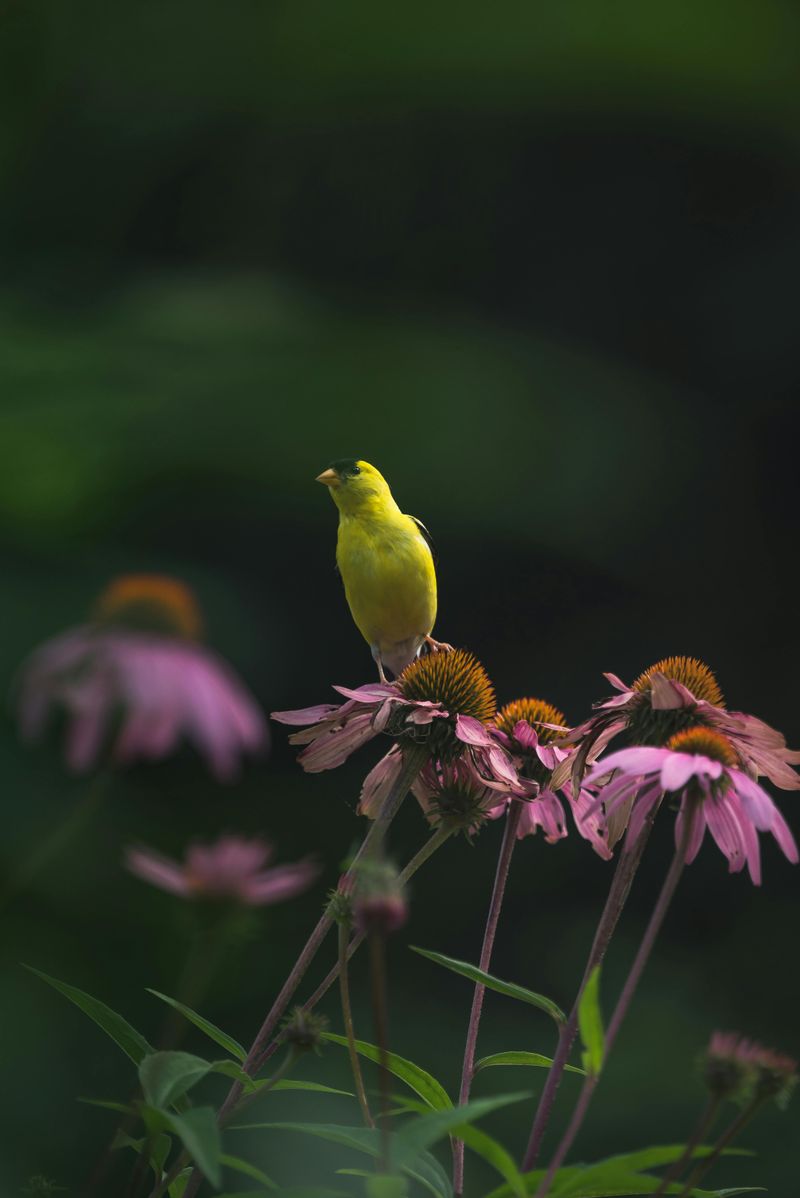
Most garden flowers finish blooming by late summer, leaving fewer natural food sources for birds. Purple coneflower extends the feeding season significantly because its seeds remain available long after the colorful petals disappear.
Goldfinches continue visiting these plants through September and October, giving you extended opportunities to observe their behavior and enjoy their presence in your yard.
The timing of seed maturity aligns perfectly with goldfinch breeding patterns. Unlike many songbirds that nest in spring, goldfinches wait until late summer when thistle and other seed sources become abundant.
Purple coneflower seeds ripen just as goldfinch parents are feeding their young, making your garden a helpful food source during this period.
As fall progresses across Ohio, goldfinches shift their feeding habits to build fat reserves. They need high-calorie foods to prepare for colder weather, and coneflower seeds deliver concentrated nutrition.
Central Ohio gardens typically provide good feeding opportunities through mid-October, while southern regions may see goldfinch activity continuing into early November on well-stocked plants.
The extended availability of seeds creates a reliable food source that goldfinches remember and return to year after year. Birds develop feeding routes that include dependable locations, and gardens with abundant seed-producing plants become regular stops.
By maintaining purple coneflowers that produce seeds into fall, you establish your yard as a valuable habitat that supports goldfinches during their seasonal transitions and encourages repeated visits throughout multiple months.
4. Strong Stems Hold Seeds Through Fall
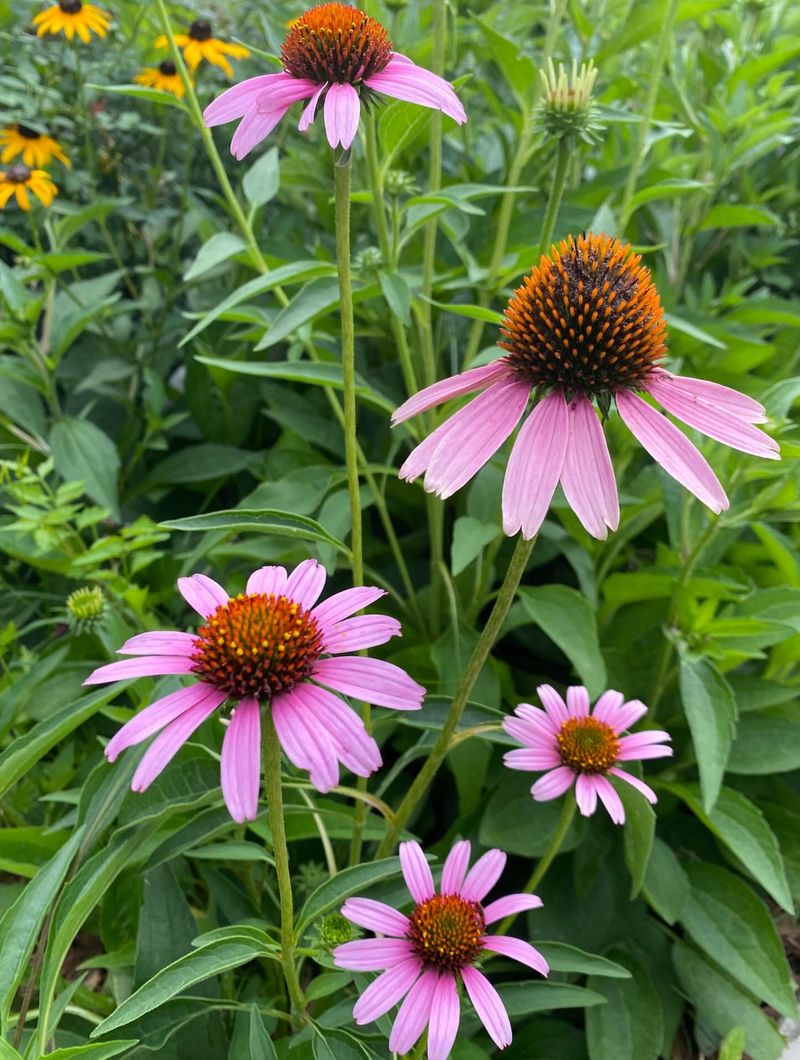
Purple coneflower develops remarkably sturdy stems that can support seed heads through months of weather. These thick, rigid stalks usually remain upright through most fall weather, even when goldfinches land on them or when fall winds pick up.
The structural strength of the plant ensures seeds remain accessible to birds rather than falling to the ground where they’re harder to reach.
Each stem grows two to four feet tall depending on growing conditions and variety. The height puts seed heads at an ideal level for goldfinches, which prefer feeding stations elevated above ground level.
The stems maintain their upright position even as the plant stops actively growing, creating feeding platforms that last well beyond the blooming season.
Ohio’s fall weather includes rain, wind, and temperature swings that can damage weaker plants. Purple coneflower stems resist these conditions effectively.
The woody texture of mature stems provides excellent support, and the way seed heads attach to stems prevents them from snapping off during storms. Northern Ohio gardeners particularly appreciate this durability as their plants face earlier cold snaps and stronger autumn winds.
The lasting structure of coneflower plants means goldfinches can continue feeding even after several hard frosts. While many garden plants collapse or become unattractive after frost, purple coneflowers maintain their form and function.
The seed heads may look dried and brown, but they remain firmly attached and fully accessible, providing reliable food sources when other options become scarce in the late-season landscape.
5. Native Blooms Support Birds And Pollinators
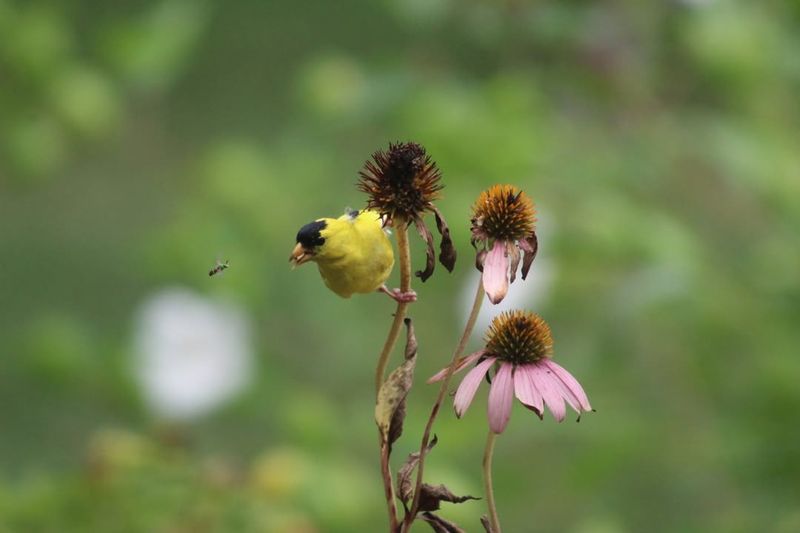
Growing native plants creates benefits that extend far beyond attracting one species of bird. Purple coneflower naturally occurs in Ohio ecosystems, which means it has evolved alongside local wildlife and fills multiple ecological roles.
While goldfinches appreciate the seeds, bees and butterflies depend on the nectar and pollen available during the summer blooming period.
The flowers typically bloom from late June through August across Ohio. During this time, you’ll see bumblebees, honeybees, and various butterfly species visiting the blooms regularly.
These pollinators help ensure good seed production, which directly benefits the goldfinches that arrive later. The interconnected relationships between plants, pollinators, and seed-eating birds demonstrate how native gardens support complete food webs.
Native plants like purple coneflower often require less water and fewer inputs once established because they’re adapted to local conditions. Ohio’s clay soils, variable rainfall, and temperature extremes don’t stress these plants the way they might affect species from other regions.
This natural hardiness means you can grow healthy, productive plants without intensive care or resources.
By choosing native flowers, you’re supporting bird populations beyond just feeding them. Goldfinches and other songbirds need diverse habitats with multiple food sources, shelter, and nesting materials.
Gardens filled with native plants provide these elements naturally, creating spaces where birds can thrive throughout the year. Purple coneflower serves as one component of this larger habitat, contributing to the overall health and diversity of your yard’s ecosystem.
6. Easy Care Makes It Perfect For Ohio Yards
Gardeners appreciate plants that deliver results without demanding constant attention. Purple coneflower ranks among the most reliable and low-maintenance perennials you can grow in Ohio.
Once established, these plants handle drought, resist most serious pests, and come back stronger each year, only occasionally needing division every few years.
The first growing season requires regular watering to help roots establish, but after that, mature plants tolerate dry periods remarkably well. Ohio’s typical summer rainfall usually provides enough moisture, though extended droughts may require occasional deep watering.
The deep taproot system allows plants to access water below the surface, reducing their dependence on frequent irrigation.
Purple coneflower resists common garden pests and diseases that trouble other perennials. Deer occasionally browse young plants, but they generally leave established coneflowers alone.
Japanese beetles may visit during their peak season, but they rarely cause significant damage. Fungal issues can develop in poorly drained soil, but proper site selection prevents most problems before they start.
These plants don’t require fertilizing in most Ohio soils. Adding compost at planting time provides sufficient nutrients, and annual mulching with organic material maintains soil health.
Avoid high-nitrogen fertilizers, which promote excessive leaf growth at the expense of flowers and seeds. The minimal care requirements make purple coneflower ideal for gardeners who want to attract goldfinches without taking on complicated maintenance schedules or dealing with finicky plants that struggle in Ohio’s variable climate.
7. Sun Loving Growth Encourages More Blooms
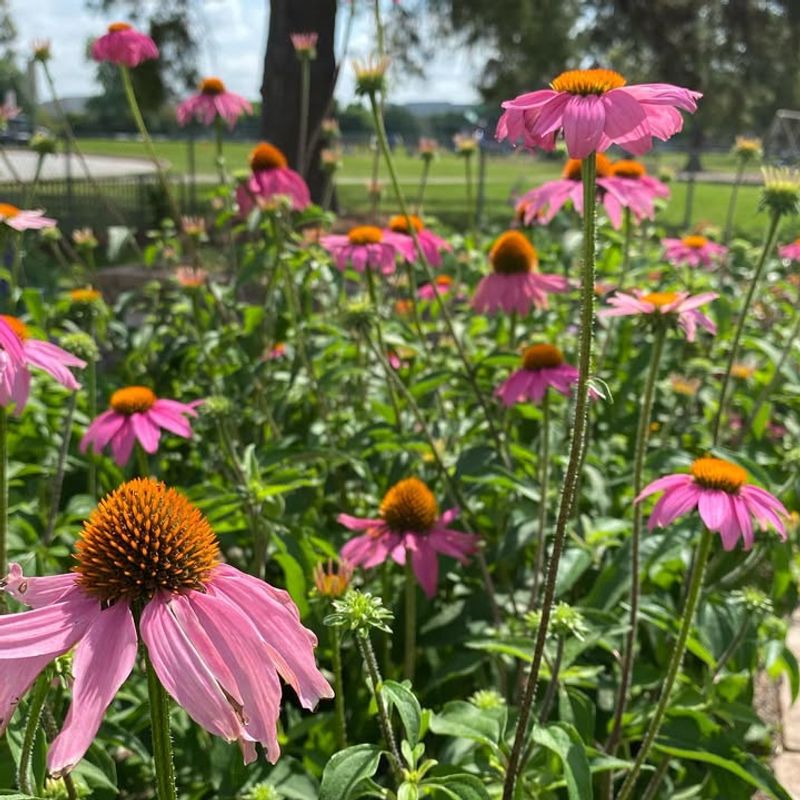
Sunlight directly affects how many flowers your purple coneflower plants produce, and more flowers eventually mean more seeds for goldfinches. These plants perform best in locations receiving at least six hours of direct sun daily.
Full sun sites produce the most vigorous growth, with plants developing multiple stems and numerous flower heads throughout the blooming season.
In shadier conditions, purple coneflower can survive but produces fewer blooms. Plants grown in partial shade tend to stretch toward available light, creating taller, thinner stems that may require staking.
The reduced flower production translates to fewer seeds later, which means less food available for goldfinches when they visit your garden.
Ohio gardens offer various sun exposure options depending on your property layout. South-facing beds receive the most intense sunlight, ideal for maximizing coneflower performance.
Eastern exposures work well too, providing strong morning sun that helps dry dew from leaves and reduces disease pressure. Western exposures can be hotter and may require adequate soil moisture, but plants adapt reasonably well with adequate moisture.
When selecting planting sites, consider both current conditions and how shade patterns might change as trees grow. A sunny spot today could become partially shaded in a few years if nearby trees expand their canopy.
Planning ahead ensures your coneflowers continue receiving sufficient light to produce abundant blooms and seeds. The investment in proper site selection pays off with healthier plants that attract more goldfinches season after season.
8. Leave Seed Heads Standing For Winter Birds
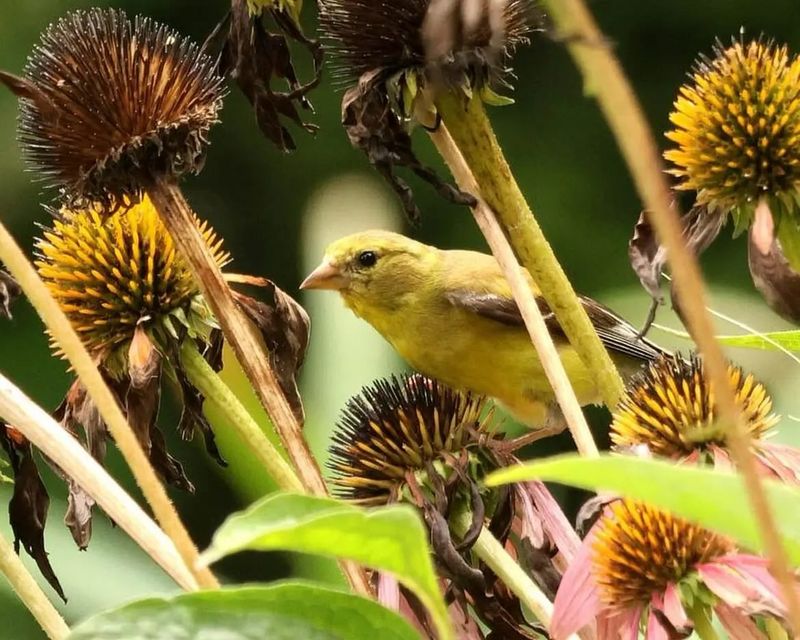
Many gardeners instinctively cut back perennials in fall, but leaving purple coneflower seed heads standing through winter provides an important late-season food source for goldfinches and other birds. The seeds that remain on plants after fall feeding continue offering nutrition during the coldest months when natural food sources become scarce.
This simple practice of delayed cleanup significantly increases your garden’s value to wintering birds.
Goldfinches may visit seed heads during milder winter periods whenever weather permits. On milder days between snowfalls, you’ll see small flocks working through gardens, checking plants for remaining seeds.
Even partially empty seed heads contain enough food to make the visit worthwhile, and birds efficiently extract every accessible seed.
The standing stems and seed heads also provide winter interest in your garden. The architectural forms create visual texture against snow, and the seed heads catch frost in beautiful patterns.
Rather than looking messy, winter gardens with standing perennials appear intentionally designed and ecologically purposeful.
Wait until late winter or early spring to cut back old coneflower stems. By March, most seeds have been consumed or scattered, and new growth begins emerging at the plant base.
Cutting stems to about four inches above ground level at this point removes old growth while protecting emerging shoots. The timing allows you to tidy the garden just as spring arrives while ensuring birds had access to food throughout the winter months.
This approach balances garden aesthetics with practical support for goldfinches during their most challenging season.