10 Ohio Native Plants To Start Planning In February For Beautiful Spring Gardens
February might feel too early to think about gardening in Ohio, but it’s actually the perfect time to plan ahead. Snow may still cover the ground, and the air feels cold, yet this quiet month gives gardeners a chance to get organized and imagine how their spring will look.
You can decide where to add color, consider which spots get the most sun or shade, and picture how your yard will come alive in a few weeks.
Native plants are a smart choice for Ohio gardens, and planning now makes spring planting feel easier and more rewarding.
By the time the snow melts, you can be ready to transform your outdoor space into a vibrant garden filled with blooms, color, and activity that feels alive from the first warm days.
1. Bloodroot Brings Early White Blooms
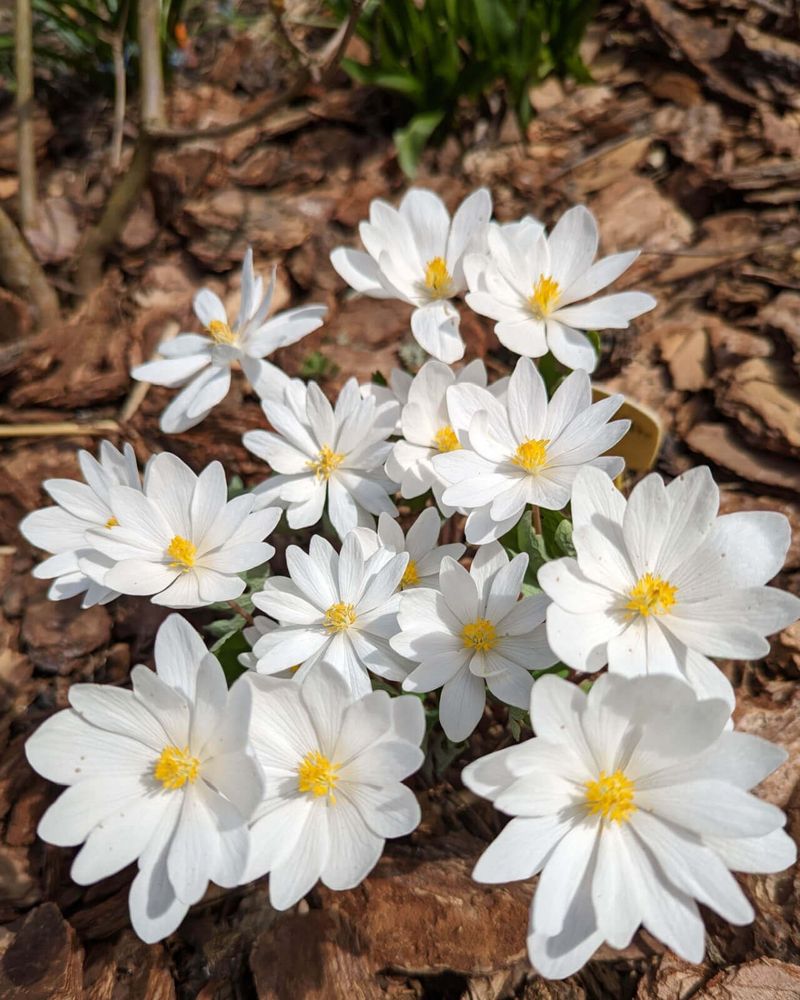
Among the earliest bloomers in Ohio woodlands, bloodroot pushes through leaf litter in late March or early April with pristine white flowers that seem to glow against bare earth. Each flower features eight to twelve delicate petals surrounding a golden center, creating a simple yet striking display that lasts about a week.
The plant gets its name from the reddish-orange sap in its rhizomes, which Native Americans once used as dye.
Bloodroot thrives in partial to full shade and prefers rich, moist, well-drained soil similar to what you’d find on a forest floor. It goes dormant by midsummer, so pair it with ferns or hostas that fill in as bloodroot foliage fades.
This ephemeral spring wildflower works beautifully under deciduous trees where it can bloom before leaves shade the area.
February is ideal for ordering bare-root rhizomes or planning where to plant them in early fall. In northern Ohio, expect blooms in mid-April, while central and southern regions may see flowers by late March.
Bloodroot spreads slowly through rhizomes, forming charming colonies over time.
Early bees and flies appreciate the pollen, making this native a valuable food source when little else is blooming across Ohio gardens.
2. Virginia Bluebells Nod Softly In Shady Spots
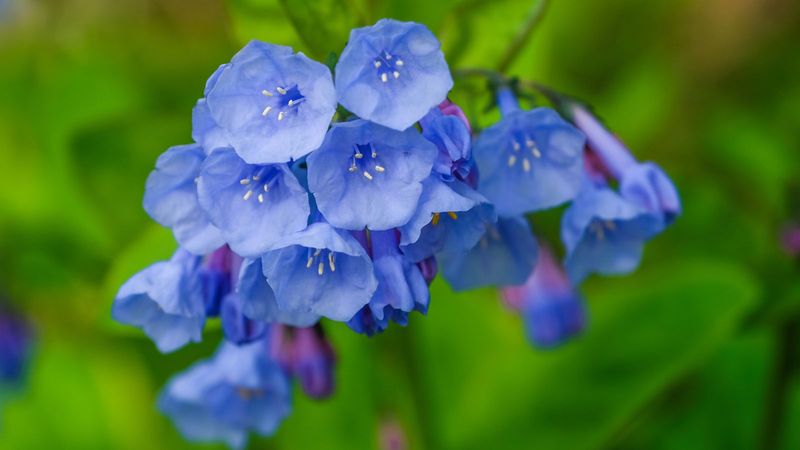
Few native plants deliver the visual impact of Virginia bluebells when they burst into bloom across Ohio gardens in April and early May. Buds emerge pink, then gradually shift to a soft sky blue as flowers open, creating a two-toned effect that adds depth and interest to shaded borders.
The tubular blooms dangle in clusters above smooth, oval leaves, attracting early butterflies and long-tongued bees.
These spring ephemerals prefer partial to full shade and rich, consistently moist soil with plenty of organic matter. They naturalize beautifully under trees or along shaded stream banks, forming sweeping drifts that can take your breath away.
By June, the foliage yellows and goes dormant, so plant them with ferns, wild ginger, or other shade lovers that emerge later.
Use February to identify suitable planting sites and amend soil with compost if needed. Virginia bluebells grow from tuberous roots that are best planted in fall, but planning now ensures you’re ready when planting season arrives.
Your Ohio Garden Changes Every Week. Your Plan Should Too.
Gardening in Ohio changes quickly throughout the season. Every Friday you’ll receive a simple weekly plan showing exactly what to plant, prune, fertilize, harvest, and protect so you never miss the right timing.
In southern Ohio, blooms may appear by mid-April, while northern gardens typically see flowers in early May.
These natives self-seed readily in favorable conditions, gradually expanding to create breathtaking spring displays year after year.
3. Trilliums Add Iconic Forest Elegance
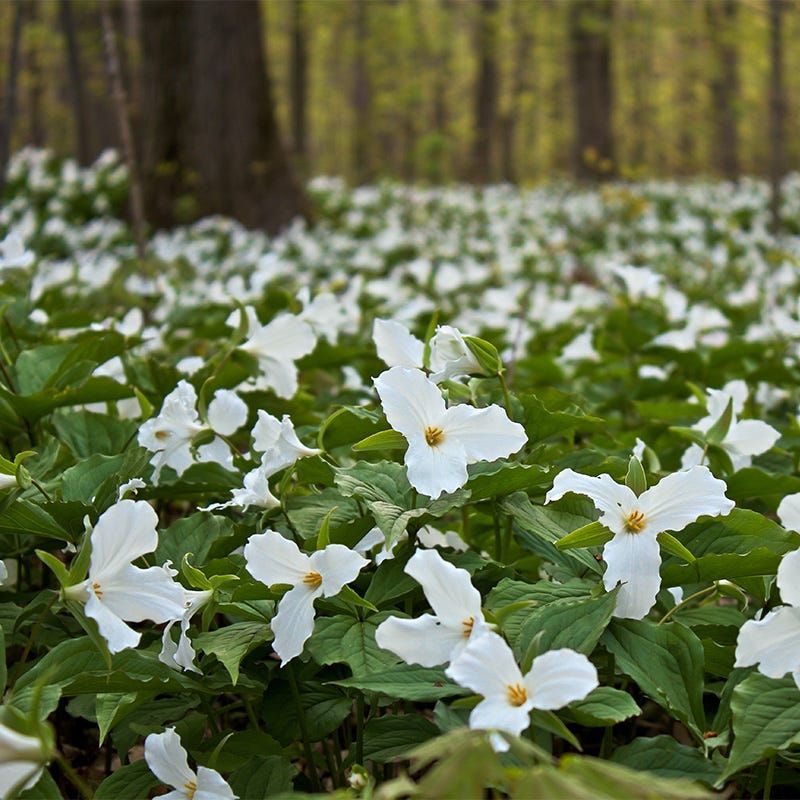
Trilliums stand as symbols of Ohio’s woodland heritage, with their distinctive three-petaled flowers and three-leaved whorls creating architectural interest in shaded gardens. White trillium, also called large-flowered trillium, is the most common species, though red and painted trilliums also grow in certain Ohio regions.
These slow-growing perennials can live for decades, becoming cherished fixtures in mature shade gardens.
They require rich, acidic, well-drained soil with consistent moisture and full to partial shade. Trilliums are extremely slow to establish from seed, taking up to seven years to bloom, so most gardeners purchase nursery-propagated plants.
Never dig trilliums from the wild, as this threatens native populations. They bloom from late April through May across Ohio, with timing varying by species and location.
February offers time to research reputable native plant nurseries and reserve plants for spring or fall planting. Prepare planting sites by adding leaf mold or compost to mimic forest soil conditions.
Trilliums pair beautifully with ferns, wild ginger, and other woodland natives. In northern Ohio, expect blooms in early to mid-May, while central and southern gardens may see flowers by late April.
These elegant natives reward patient gardeners with reliable spring beauty.
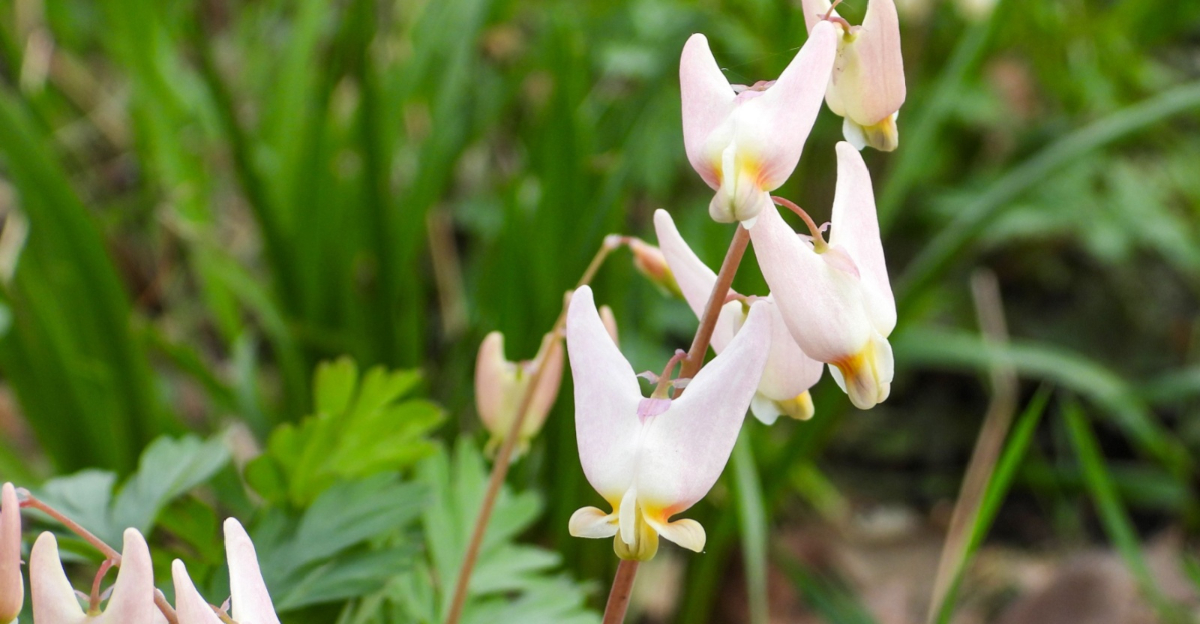
4. Dutchman’s Breeches Sprinkle Whimsical Charm
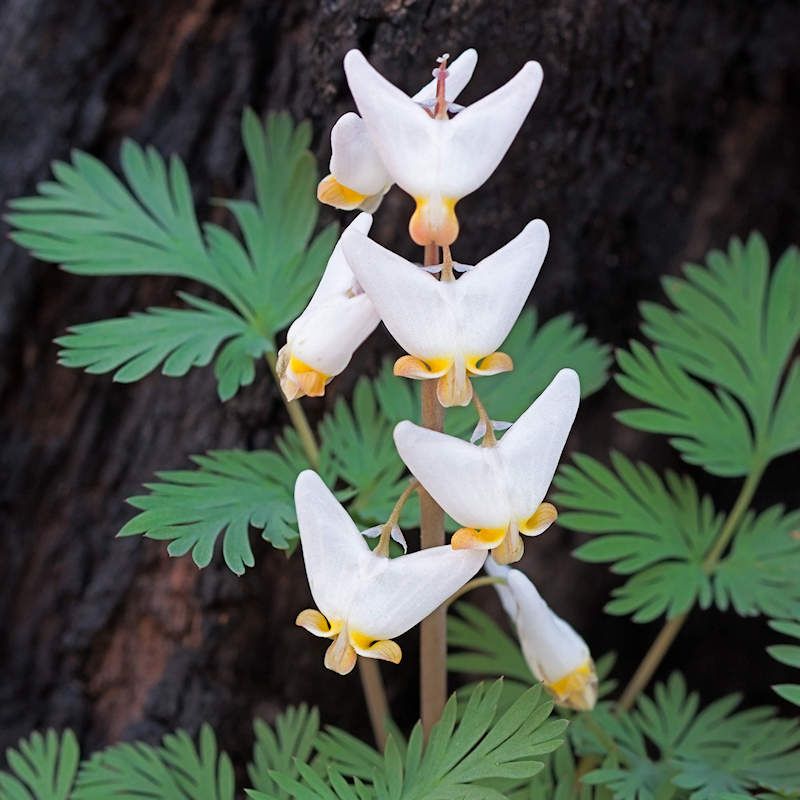
Imagine tiny white pantaloons hanging from a clothesline, and you’ll understand how Dutchman’s breeches earned its delightful name. This charming spring ephemeral produces arching stems lined with puffy white flowers tipped in yellow, each resembling a pair of upside-down pants.
The finely divided, fern-like foliage adds textural interest before the plant goes dormant by early summer.
Dutchman’s breeches thrives in partial to full shade with rich, moist, well-drained soil. It typically blooms in April across Ohio, often appearing alongside Virginia bluebells and other spring ephemerals.
The flowers attract early queen bumblebees with long tongues capable of reaching the nectar. Like other ephemerals, this native completes its growth cycle before tree canopies fully leaf out.
Spend February planning companion plantings that will fill space after Dutchman’s breeches goes dormant. Wild ginger, Solomon’s seal, and Christmas fern make excellent partners.
The plant grows from small tubers that are best planted in fall, but identifying planting sites now helps ensure success later. In northern Ohio, blooms typically appear in late April or early May, while southern regions may see flowers by mid-April.
This whimsical native adds playful character to woodland gardens while supporting early pollinators.
5. Wild Geranium Colors Beds With Long-Blooming Pink
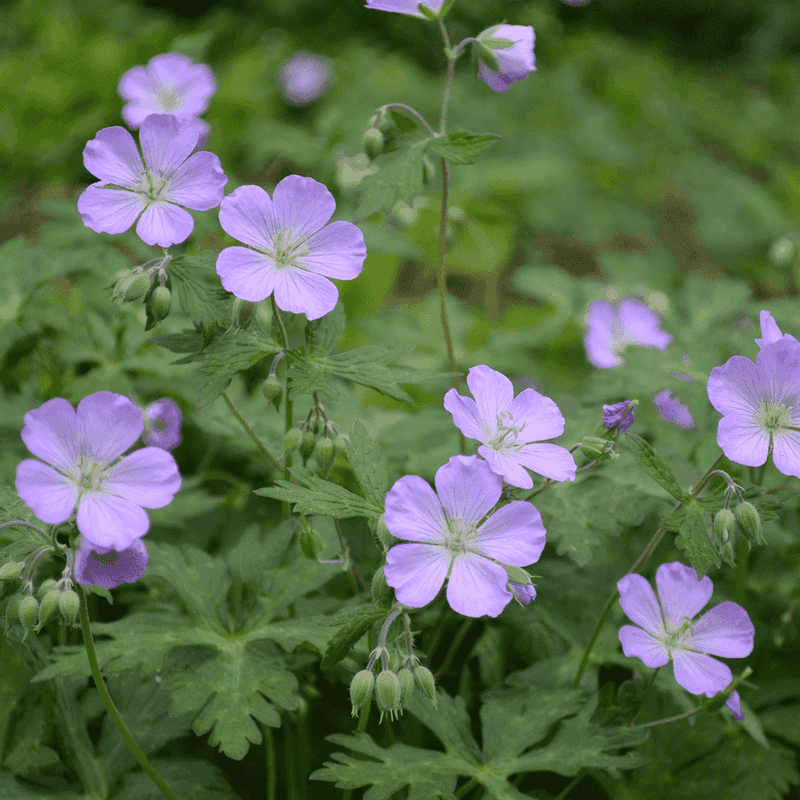
Unlike its annual cousins sold at garden centers, wild geranium is a tough native perennial that blooms reliably for weeks across Ohio gardens. From late April through June, it produces abundant pink to lavender flowers with five rounded petals and prominent veining.
The deeply lobed, textured foliage remains attractive throughout the growing season, turning reddish-bronze in fall before going dormant.
Wild geranium adapts to various light conditions from full sun to partial shade, though it performs best with morning sun and afternoon shade in southern Ohio. It tolerates a range of soil types as long as drainage is adequate, making it more versatile than many woodland natives.
The flowers attract native bees, butterflies, and other pollinators, while the foliage remains relatively deer-resistant.
February is perfect for ordering plants or seeds and identifying suitable garden spots. Wild geranium works beautifully in mixed borders, woodland edges, or naturalized areas.
It spreads slowly through rhizomes and self-seeds moderately, gradually forming attractive clumps. In northern Ohio, expect blooms from mid-May through June, while central and southern gardens typically see flowers starting in late April.
This adaptable native provides extended color when many spring ephemerals have already finished blooming, bridging the gap to summer perennials.
6. Columbine Draws Hummingbirds With Bright Flowers
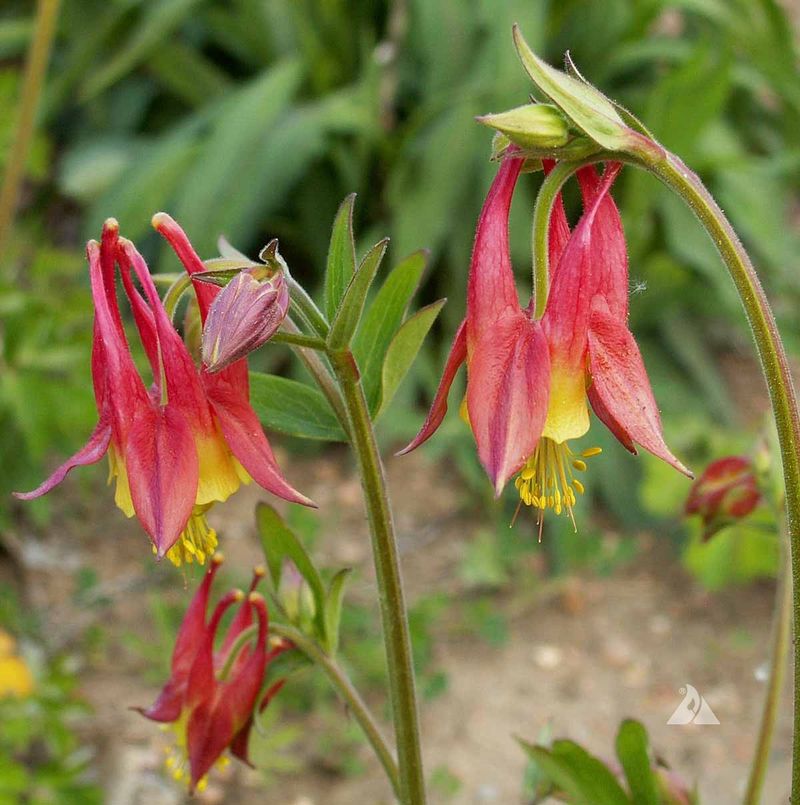
Eastern red columbine stands out among native plants for its ability to attract ruby-throated hummingbirds returning to Ohio in late April and May. The nodding flowers feature five red petals with yellow interiors and backward-pointing spurs filled with nectar.
The delicate, blue-green foliage resembles maidenhair fern and remains attractive even after blooming finishes, though plants may look ragged by late summer.
Columbine grows well in partial shade to full sun and adapts to various soil types, though it prefers well-drained conditions. In hot southern Ohio locations, afternoon shade helps prevent stress.
Plants typically bloom from late April through June, providing crucial early nectar for migrating hummingbirds. Native bees and butterflies also visit the flowers regularly.
Use February to plan planting locations that offer good visibility for watching hummingbirds. Columbine self-seeds readily, so allow some seedheads to mature if you want additional plants.
It grows easily from seed started indoors in late winter or direct-sown outdoors in fall. In northern Ohio, blooms typically appear in mid to late May, while central and southern regions see flowers by early May.
Pair columbine with ferns, wild ginger, or other natives that appreciate similar conditions.
This adaptable native brings both beauty and hummingbird activity to Ohio gardens.
7. Virginia Spiderwort Lights Gardens With Violet Clusters
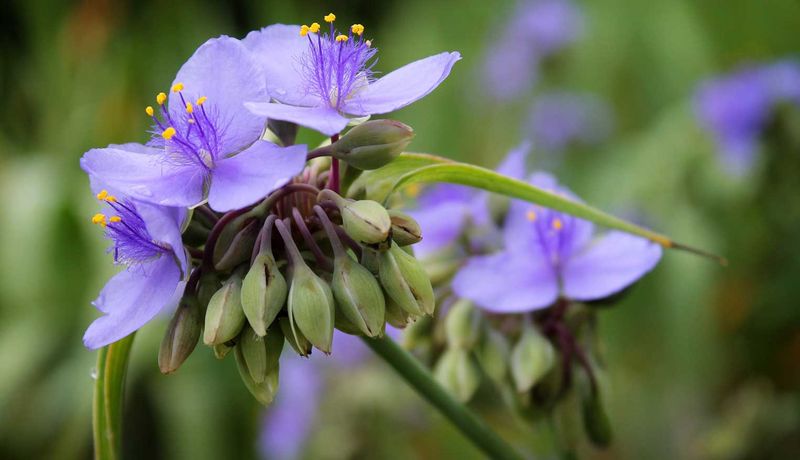
Virginia spiderwort produces clusters of three-petaled flowers in shades of violet-blue, purple, or occasionally pink that seem to glow in morning light. Each flower lasts only a day, but plants produce abundant buds that open successively from May through July, providing weeks of color.
The grass-like foliage forms attractive clumps that add vertical interest even when plants aren’t blooming.
This adaptable native thrives in full sun to partial shade and tolerates various soil types, from sandy to clay, as long as moisture is consistent during the growing season. It performs particularly well in slightly moist sites but also handles typical garden conditions once established.
The flowers attract native bees and other pollinators, while the foliage provides cover for ground-dwelling insects.
February planning should include identifying sunny to partially shaded spots with average to moist soil. Spiderwort spreads through rhizomes and self-seeds moderately, gradually forming substantial clumps that can be divided in spring or fall.
It’s one of the easier natives to grow from seed started indoors in late winter. In northern Ohio, expect blooms from late May through July, while central and southern gardens typically see flowers beginning in mid-May.
Pair spiderwort with wild geranium, columbine, or black-eyed Susans for extended seasonal interest across your Ohio garden.
8. Foamflower Adds Frosty Blooms And Lovely Foliage
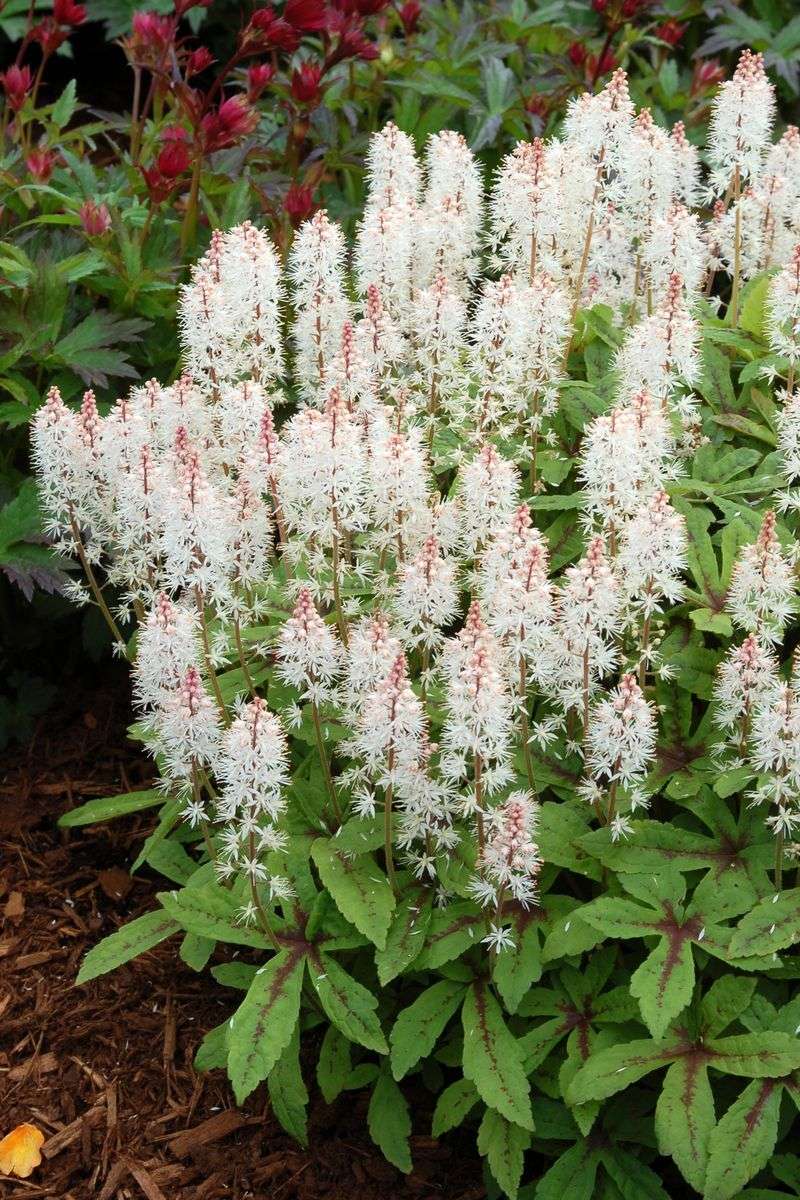
Foamflower earns its name from the frothy appearance of its white flower spikes that rise above mounds of attractive foliage in April and May. The tiny individual flowers cluster densely on upright stems, creating a foam-like effect that brightens shaded areas.
The maple-shaped leaves often feature burgundy markings along the veins, providing visual interest throughout the growing season and sometimes persisting through mild Ohio winters.
This native groundcover prefers partial to full shade and consistently moist, rich soil with plenty of organic matter. It spreads slowly through stolons, forming dense mats that help suppress weeds while creating an attractive carpet under trees and shrubs.
Foamflower works beautifully as an edging plant along shaded paths or massed under spring-blooming trees.
Use February to assess shaded areas that need groundcover and amend soil with compost if necessary. Foamflower pairs wonderfully with ferns, hostas, and other shade lovers that emerge as spring progresses.
In northern Ohio, blooms typically appear in early to mid-May, while central and southern gardens may see flowers by late April. The flowers attract small native bees and other pollinators.
This low-maintenance native provides reliable beauty in challenging shaded sites where many other plants struggle, making it valuable for Ohio gardeners seeking easy-care options.
9. Jacob’s Ladder Shows Off Blue Ladder-Shaped Flowers
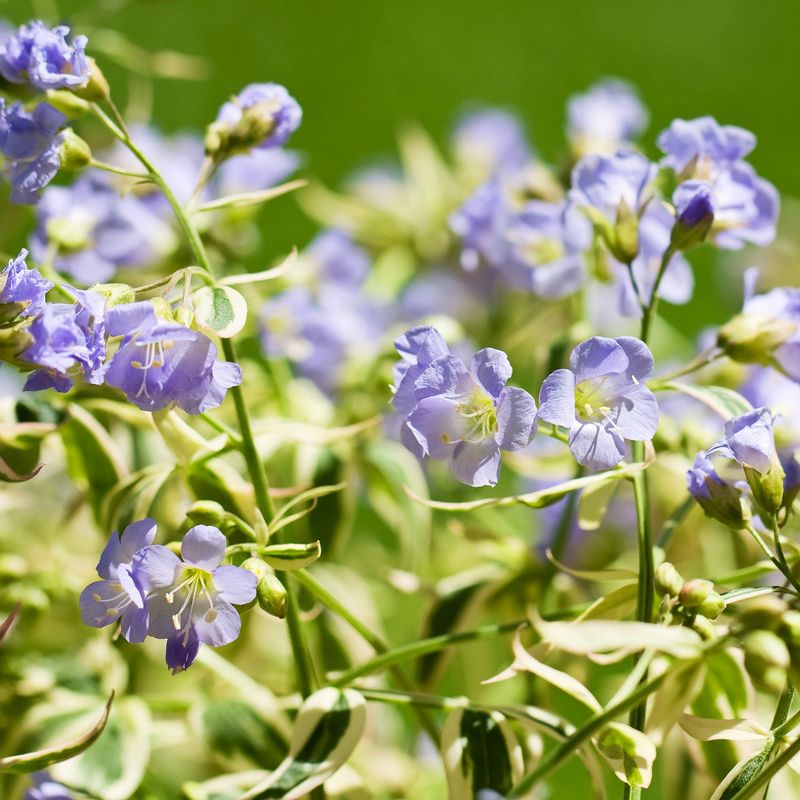
Jacob’s ladder gets its memorable name from the arrangement of its leaflets, which line up along the stem like rungs on a ladder. In late April and May, clusters of bell-shaped blue to lavender flowers appear above the distinctive foliage, creating a soft, romantic effect in shaded gardens.
The compound leaves remain attractive throughout the growing season, providing textural contrast to broader-leaved shade plants.
This native perennial prefers partial to full shade and moist, rich soil with good drainage. It performs best in cooler northern Ohio gardens but can succeed in central and southern regions with adequate shade and consistent moisture.
The flowers attract native bees and butterflies, while the foliage adds interest even after blooming finishes. Plants may self-seed moderately in favorable conditions.
February offers time to identify suitable planting locations and prepare soil by incorporating compost or leaf mold. Jacob’s ladder pairs beautifully with ferns, wild ginger, and spring ephemerals that bloom earlier.
In northern Ohio, expect flowers in mid to late May, while central and southern gardens typically see blooms by early May. This less common native deserves wider use in Ohio shade gardens for its unique foliage and charming flowers.
Consider starting plants from seed indoors in late winter or ordering nursery-grown plants for spring planting.
10. Spring Beauty Delights With Tiny Pink And White Blooms
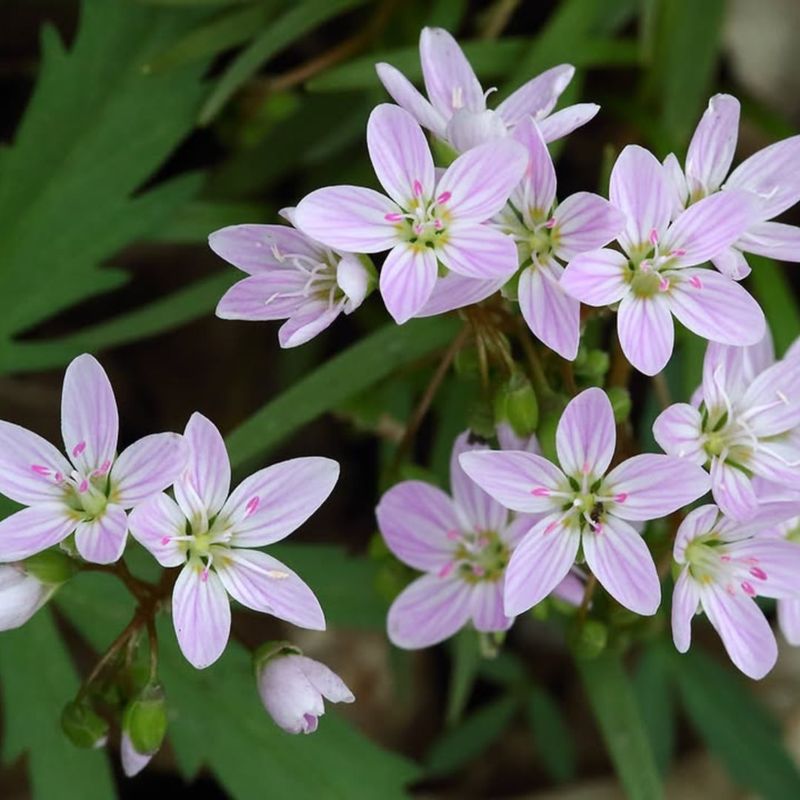
Spring beauty might be small, but this charming native creates stunning displays when it naturalizes across woodland floors and shaded lawns. The delicate flowers feature five white to pale pink petals with darker pink veining, each bloom measuring less than an inch across.
Despite their tiny size, plants produce numerous flowers that seem to carpet the ground in favorable conditions, creating a magical effect in early spring.
This ephemeral native prefers partial shade and moist, rich soil but tolerates a wider range of conditions than many woodland wildflowers. It blooms from late March through April across Ohio, often appearing in lawns before grass begins actively growing.
The narrow, grass-like leaves emerge from small corms and go dormant by late spring. Spring beauty provides important early nectar for native bees and other pollinators.
Use February to identify areas where spring beauty might naturalize, such as under deciduous trees or in less formal lawn areas. The plant spreads through corms and self-seeding, gradually forming extensive colonies in suitable sites.
In southern Ohio, blooms may appear by late March, while northern regions typically see flowers in mid to late April.
Consider allowing spring beauty to naturalize in lawn areas where you can delay mowing until foliage yellows, supporting both pollinators and this delightful native wildflower.