These Are The Most Beautiful Ohio Wildflower Trails Worth The Drive
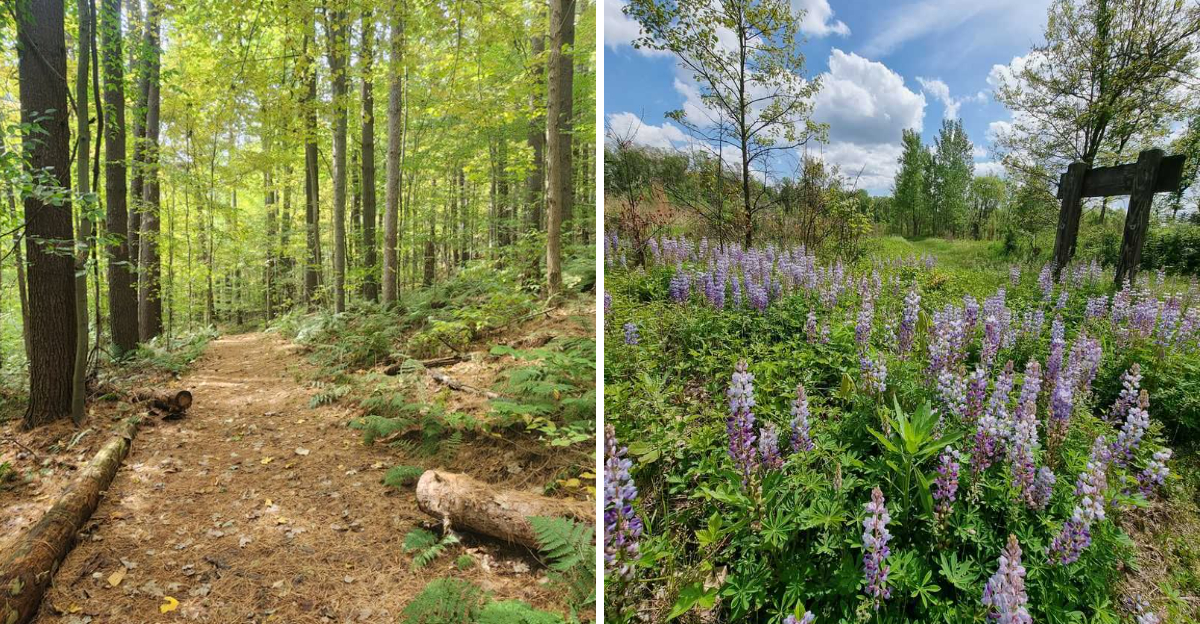
Spring in Ohio brings a quiet transformation. Forest floors wake up, hillsides soften with color, and narrow paths wind through carpets of trillium, bluebells, and other native blooms.
For nature lovers and casual explorers alike, wildflower trails offer more than a simple walk. They deliver fresh air, changing scenery, and a chance to see Ohio at its most vibrant.
Some trails burst with color early in the season, while others reveal new blooms week after week, rewarding those willing to take the drive.
A short trip can lead to rolling woodlands, peaceful valleys, and trails lined with delicate flowers that rarely appear anywhere else.
Cameras come out, footsteps slow down, and every bend in the path feels worth it.
Across the state, certain routes stand out for their beauty, variety, and unforgettable spring displays, drawing hikers, photographers, and flower lovers back year after year to experience Ohio in full bloom.
1. Hocking Hills Trails Burst With Spring Wildflowers
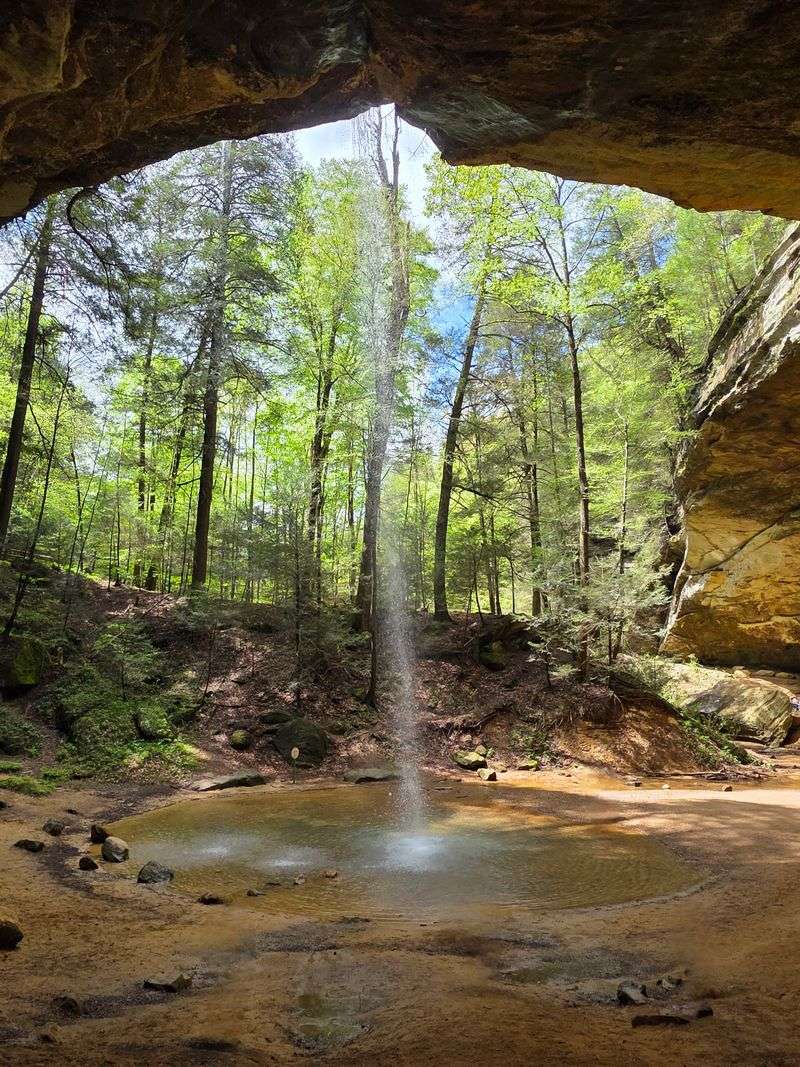
Early morning mist clings to the hemlock-lined trails as you step into one of Ohio’s most beloved natural areas. Hocking Hills transforms into a wildflower wonderland each April and May, when the forest floor erupts with color before the tree canopy fills in completely.
Trilliums are the stars here, their three-petaled white blooms dotting the landscape like fallen stars. You’ll also spot delicate spring beauties, cheerful trout lilies with their mottled leaves, and the curious hooded flowers of Jack-in-the-pulpit tucked along rocky ledges.
The combination of sandstone cliffs, waterfalls, and wildflowers creates photo opportunities that belong on postcards.
Old Man’s Cave Trail offers the most accessible wildflower viewing, with a relatively easy path that winds past waterfalls and through hemlock groves. For a quieter experience, Conkle’s Hollow features a gorge trail where wildflowers thrive in the cool, moist microclimate created by towering rock walls.
The rim trail there provides stunning overlooks where you can see the forest canopy beginning to green up.
Timing matters when visiting for wildflowers. Mid-April through early May typically offers peak blooms, though this shifts depending on spring temperatures.
Weekday visits help you avoid the weekend crowds that flock to Hocking Hills year-round. The trails can be muddy during spring, so waterproof hiking boots make the experience much more enjoyable as you explore these spectacular southeastern Ohio landscapes.
2. Mohican State Park Offers Stunning Woodland Bloom Walks
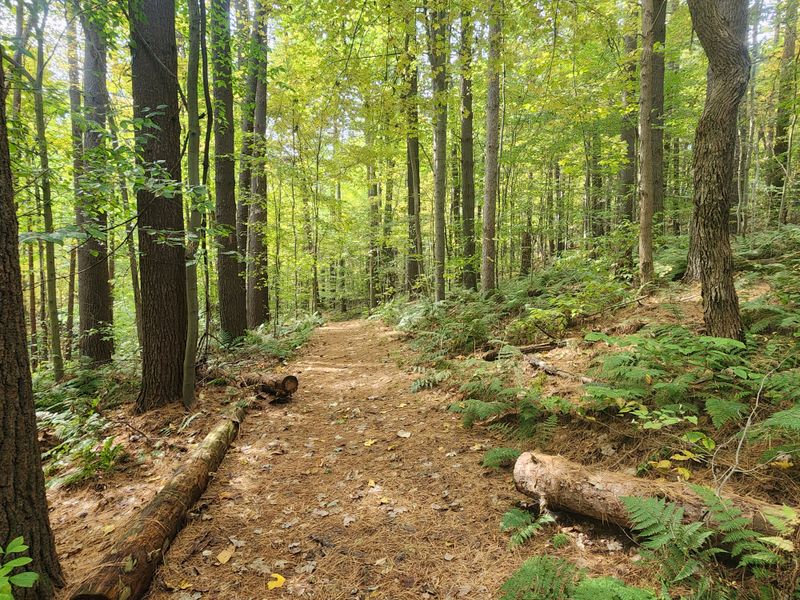
Rolling hills covered in hardwood forest create the perfect setting for one of north-central Ohio’s finest wildflower displays. Mohican State Park sits along the Clear Fork Gorge, where diverse terrain supports an impressive variety of spring blooms that attract nature lovers from across the region.
The Lyons Falls Trail stands out as a wildflower hotspot, offering a moderate hike that descends into a gorge where moisture-loving species thrive. Hepatica appears early, sometimes blooming while snow still lingers in shaded spots.
As temperatures warm, Virginia bluebells create stunning blue carpets along stream banks, while bloodroot pushes up its distinctive lobed leaves with pure white flowers.
Your Ohio Garden Changes Every Week. Your Plan Should Too.
Gardening in Ohio changes quickly throughout the season. Every Friday you’ll receive a simple weekly plan showing exactly what to plant, prune, fertilize, harvest, and protect so you never miss the right timing.
What makes Mohican special is the variety of habitats packed into a relatively small area. Dry ridgetops support different wildflowers than the moist ravines, giving you multiple ecosystems to explore in a single visit.
Dutchman’s breeches, with their peculiar pantaloon-shaped flowers, dangle from stems along rocky slopes. Wild ginger hides its maroon flowers beneath heart-shaped leaves near the trail.
The hemlock gorge section provides particularly good viewing because the evergreen canopy allows dappled sunlight to reach the forest floor throughout spring. Plan for a two to three-hour hike if you want to really take your time identifying species and capturing photos.
The park’s proximity to Loudonville makes it easy to combine wildflower viewing with a meal or overnight stay, turning your trail visit into a full weekend getaway.
3. Shawnee State Forest Is A Hidden Wildflower Paradise
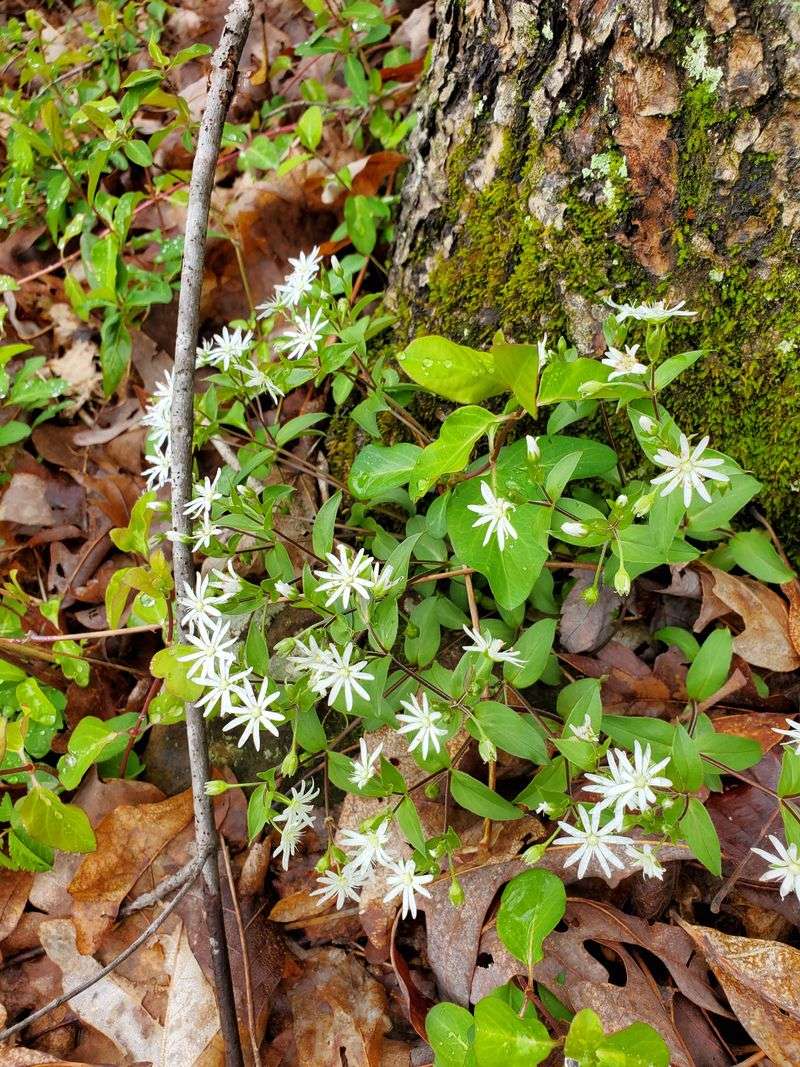
Southern Ohio’s rugged Appalachian foothills harbor one of the state’s best-kept wildflower secrets. Shawnee State Forest spans over 60,000 acres of mixed hardwood forest where the diversity of spring blooms rivals anywhere in the Midwest, yet it remains wonderfully uncrowded compared to more famous destinations.
The forest’s location creates unique conditions for wildflowers. Warmer southern influences mix with northern species at the edge of their range, resulting in exceptional botanical diversity.
Large-flowered trillium grows alongside pink lady’s slippers, while wild columbine dangles its red and yellow flowers from rocky outcrops. Rare species like snow trillium and twinleaf appear here in greater numbers than almost anywhere else in Ohio.
Backpack Trail Number 1 offers serious hikers a challenging route through prime wildflower territory, but you don’t need to tackle the entire loop to see spectacular blooms. The Day Hiker Trail provides a shorter option with excellent viewing, especially where it crosses small streams and passes through cove hardwood forests.
These sheltered valleys create the moist, rich soil conditions that spring wildflowers love.
Late April brings peak bloom for most species, though the extended spring season in southern Ohio means you can find something flowering from March through May. The remoteness adds to the experience.
You might hike for an hour seeing only deer and wild turkeys, making each wildflower discovery feel more special. Bring a field guide because you’ll encounter species you won’t find in northern parts of the state.
4. Cuyahoga Valley Trails Bloom With Native Ohio Beauty
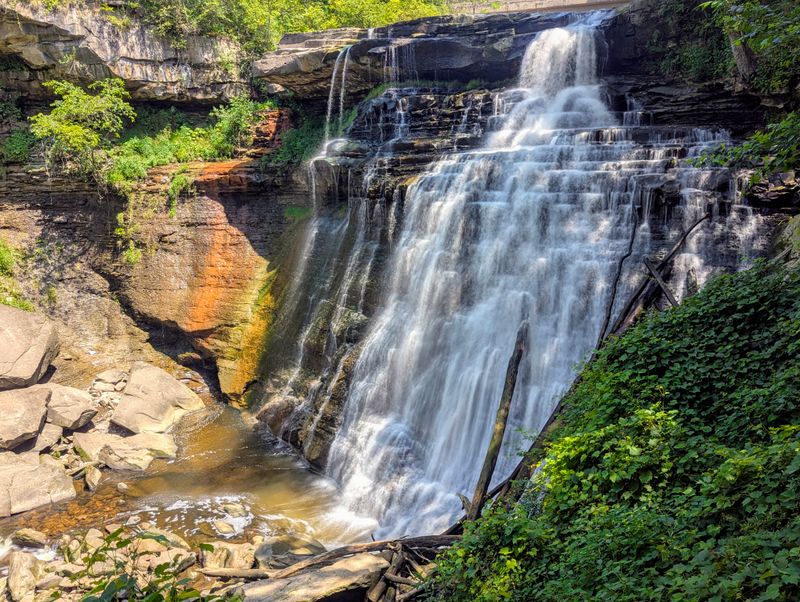
A national park sits right between Cleveland and Akron, offering urban residents easy access to world-class wildflower viewing. Cuyahoga Valley National Park protects diverse habitats along the Cuyahoga River valley, where spring brings explosive blooms that draw photographers and nature enthusiasts throughout April and May.
Virginia bluebells steal the show here. The Furnace Run Trail becomes legendary each spring when thousands of these pink-budded, blue-flowered beauties create a carpet along the stream.
Arriving on a warm April morning when the bluebells are at peak bloom feels like stepping into a fairy tale. The flowers often grow so densely that you can barely see the ground beneath them.
Brandywine Gorge Loop offers a different wildflower experience, with large colonies of white trilliums covering the slopes near the waterfall. The 1.5-mile trail takes you past the 65-foot Brandywine Falls before looping through rich woods where mayapples unfurl their umbrella-like leaves and spring beauties dot the forest floor with delicate pink-striped petals.
The Towpath Trail, following the historic Ohio and Erie Canal, provides level, accessible walking where you can spot wildflowers without tackling steep terrain. Marsh marigolds brighten wet areas with golden blooms, while trout lilies nod their yellow flowers along the path edges.
The park’s proximity to major cities means it can get busy on spring weekends, but weekday mornings offer peaceful viewing. Rangers often lead wildflower walks during peak season, providing expert identification help for curious visitors.
5. Wildflowers Light Up The Edge Of Appalachia Trails
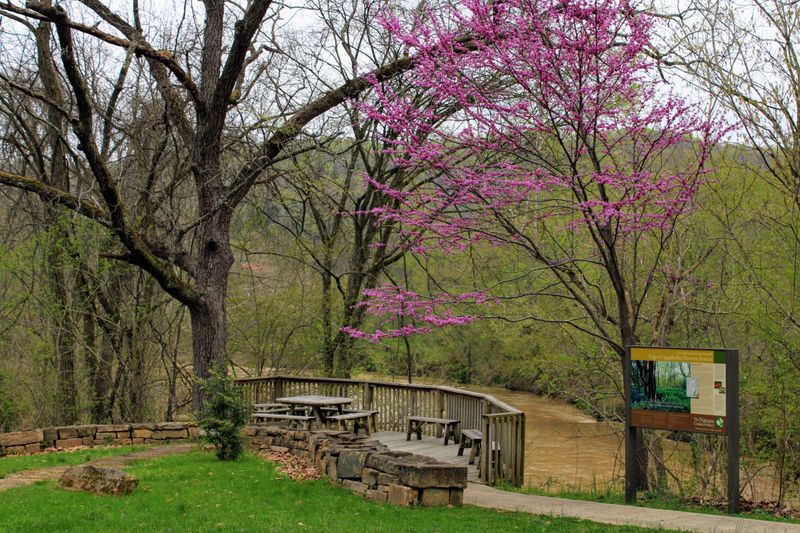
Where Ohio’s glaciated plains meet the unglaciated Appalachian foothills, something remarkable happens botanically. The Edge of Appalachia Preserve System protects over 20,000 acres of globally rare prairie-forest mosaic habitat in Adams County, creating wildflower viewing opportunities unlike anywhere else in the state.
The preserve system includes multiple properties, but Buzzardroost Rock and Lynx Prairie stand out for spring wildflowers. Buzzardroost Rock Trail climbs to spectacular overlooks where you’ll find early bloomers like bird’s-foot violet and golden ragwort brightening rocky outcrops.
The prairie openings support species more common hundreds of miles west, including shooting stars with their swept-back pink petals and cream wild indigo.
Lynx Prairie showcases the unique prairie-barren ecosystem that once covered much more of southern Ohio. In spring, the grassy openings come alive with wildflowers adapted to thin soil and intense sun, while the surrounding forest edges explode with woodland species.
This combination means you can see prairie wildflowers and forest wildflowers on the same hike, dramatically increasing the diversity of blooms you’ll encounter.
The preserve’s remote location in Adams County means fewer visitors discover these trails, despite their exceptional quality. May offers peak viewing for prairie species, while woodland wildflowers bloom earlier in April.
The landscape’s rugged beauty adds drama to wildflower photography, with rocky cliffs and distant hills providing stunning backdrops. Consider combining your visit with a stop at nearby Serpent Mound to make the drive to this far corner of Ohio even more worthwhile.
6. Oak Openings Preserve Explodes With Rare Prairie Blooms
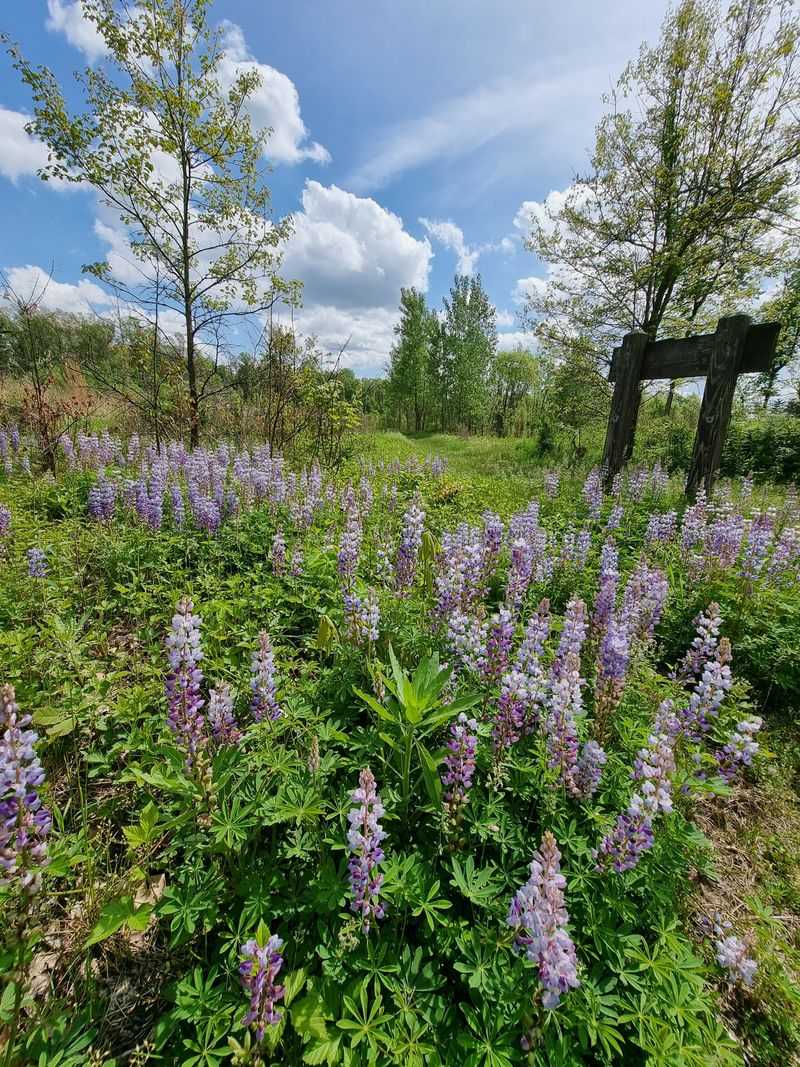
Northwest Ohio surprises visitors with landscapes that feel more like the Great Plains than typical Midwest forests. Oak Openings Preserve protects rare sand prairie and oak savanna habitats near Toledo, where ancient sand dunes left by glacial Lake Warren create unique growing conditions for wildflowers found almost nowhere else in the state.
Lupine dominates the spring show here, painting the sandy prairies brilliant blue in late May and early June. This member of the pea family thrives in the well-drained sandy soil that would challenge most plants.
Walking through a lupine bloom feels like strolling through waves of blue ocean. The endangered Karner blue butterfly depends entirely on lupine, making these flowers ecologically critical beyond their obvious beauty.
The preserve’s trails wind through multiple habitat types, each supporting different wildflower communities. Oak savanna areas feature scattered trees with prairie underneath, creating dappled shade where wild strawberry, golden Alexanders, and bird’s-foot violet bloom.
Wetter swales between sand ridges support entirely different species, including yellow lady’s slippers and showy orchis.
Evergreen Trail and Sand Dunes Trail offer the best wildflower viewing, with interpretive signs helping visitors understand this globally rare ecosystem. Spring starts earlier here than in southern Ohio, with some species blooming in late April, though the spectacular lupine display peaks in late May.
The preserve’s flat terrain makes it accessible for all fitness levels, and the unique landscape provides a completely different wildflower experience than Ohio’s forested trails. Photographers particularly love the open prairie views where wildflowers stretch toward distant horizons.
7. Caesar Creek Trails Shine With Colorful Spring Flowers
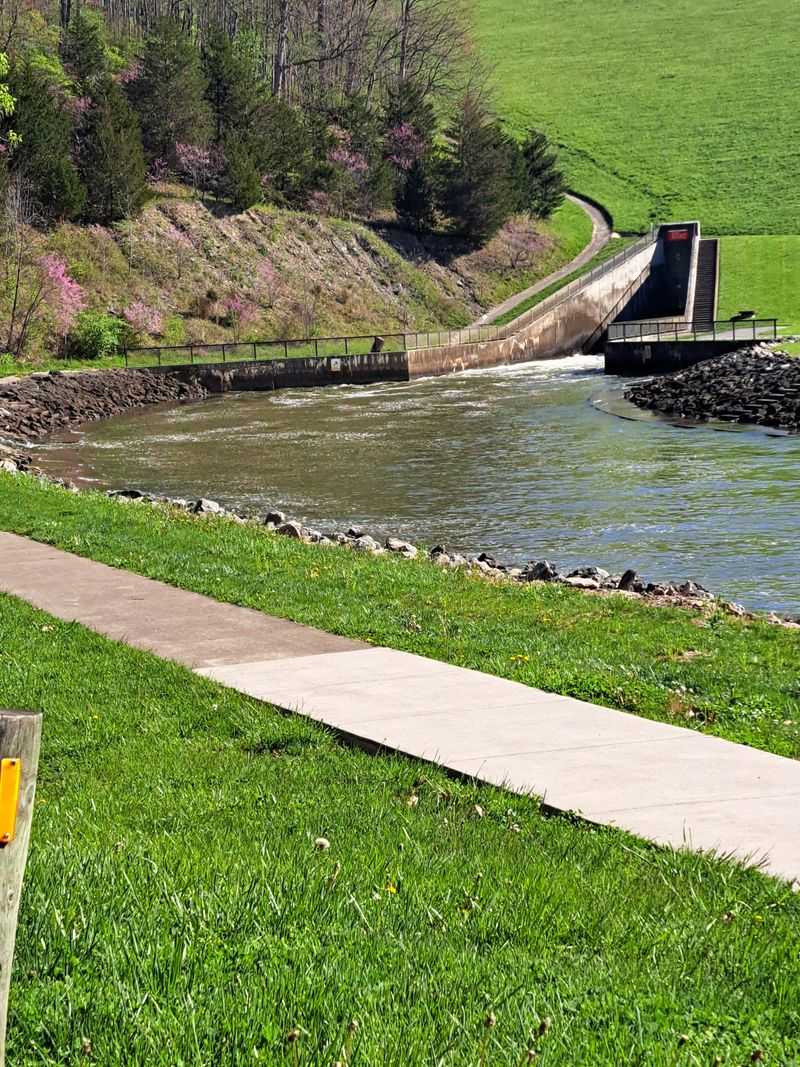
Southwest Ohio’s largest state park wraps around a sprawling reservoir, but the real treasure lies in the surrounding forests and prairies where wildflowers create stunning displays each spring. Caesar Creek State Park offers over 40 miles of trails through diverse habitats, giving wildflower enthusiasts plenty of territory to explore without feeling crowded.
The Perimeter Trail sections that wind through mature forest provide excellent wildflower viewing, particularly in areas away from the busy beach and campground. Large-flowered trillium, toothwort, and spring beauty carpet the forest floor in April, while wild geranium adds splashes of pink in May.
The variety of terrain means you’ll encounter different species as you move from ridgetops down into moist ravines.
Caesar Creek Gorge State Nature Preserve, accessible from the park, protects a limestone gorge where rare wildflowers cling to cliff faces and rocky slopes. Wild columbine dangles from crevices, while shooting stars bloom in gravelly areas near the creek.
The preserve’s specialized habitat supports species you won’t see on typical woodland trails, making it worth the extra effort to visit.
Shorter loop trails near the nature center offer family-friendly wildflower walks where interpretive programs often run during peak bloom season. The park’s location between Dayton and Cincinnati makes it an easy destination for a day trip, though the extensive trail system could easily fill a weekend.
Late April typically brings peak woodland wildflower blooms, while prairie areas near the dam shine brightest in May. The combination of lake views and wildflower-filled forests creates memorable spring hiking experiences.
8. Clifton Gorge Offers One Of Ohio’s Most Scenic Wildflower Walks
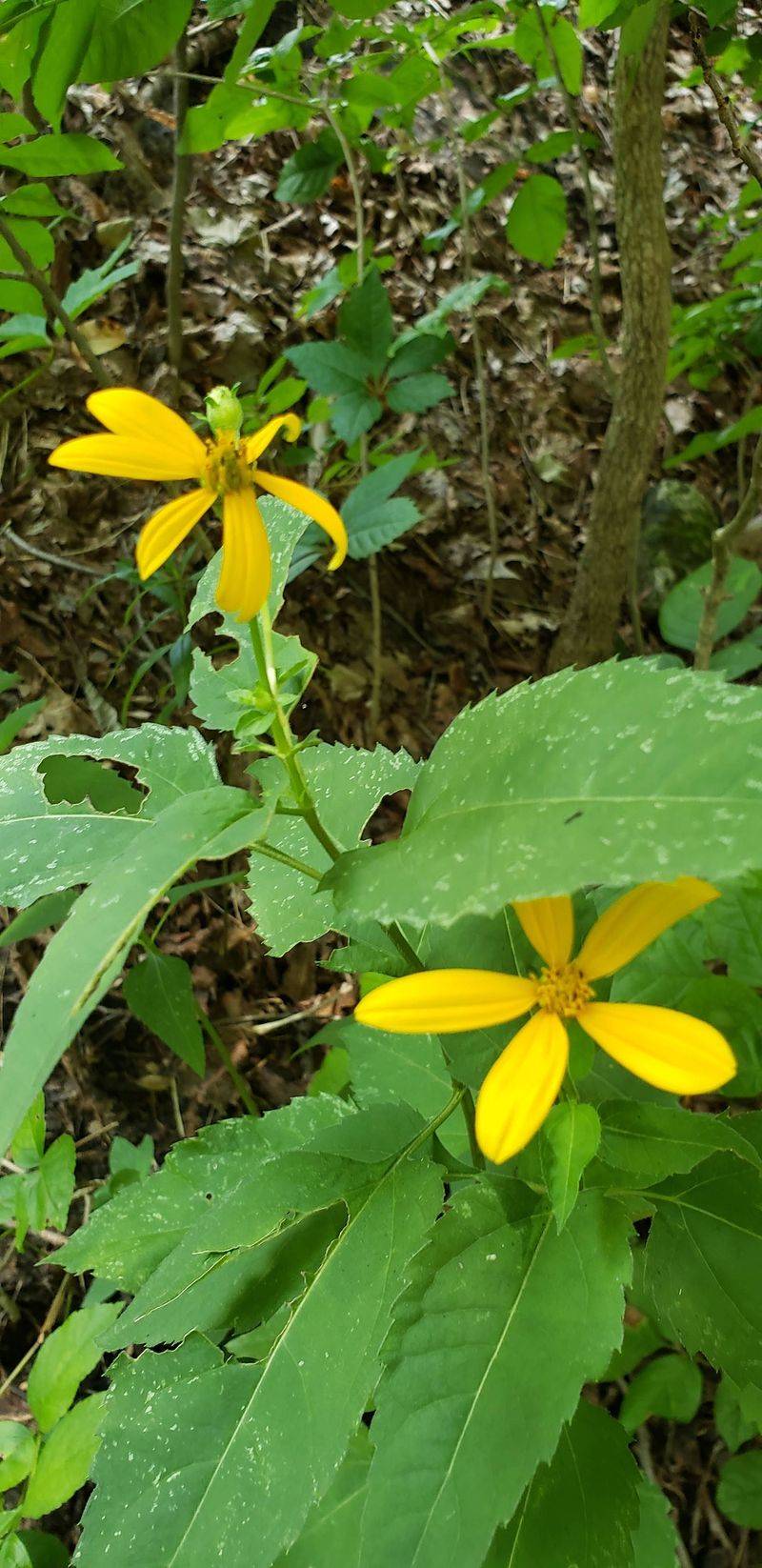
Limestone cliffs tower above the rushing Little Miami River, creating one of Ohio’s most dramatic natural settings. Clifton Gorge State Nature Preserve near Yellow Springs protects a spectacular gorge where wildflowers thrive in the cool, moist conditions created by the river and surrounding rock walls.
The main trail follows the gorge rim and descends to river level, passing through multiple wildflower zones. Columbine grows from cliff crevices where most plants couldn’t survive, its red and yellow flowers providing brilliant color against gray limestone.
Walking stick and wild ginger hide beneath rocky overhangs, while Virginia bluebells create blue clouds along the river’s edge in late April.
What makes Clifton Gorge special is the combination of geological drama and botanical diversity. The gorge’s microclimates support species typically found much farther north, including Canada yew and hemlock, while southern species reach their northern limits here.
This mixing zone creates exceptional wildflower variety in a relatively compact area. You can see dozens of species on a single two-hour hike.
The preserve connects to John Bryan State Park, where additional trails offer more wildflower viewing opportunities. The gorge trail itself requires careful footing on rocky, sometimes slippery sections, but the spectacular scenery rewards your attention.
Early morning visits in late April or early May provide the best combination of good light for photography and peak wildflower blooms. The nearby village of Yellow Springs offers dining and shopping options, making this southwestern Ohio destination perfect for combining nature exploration with small-town charm.
9. Jane Coates Wildflower Trail Blooms On South Bass Island
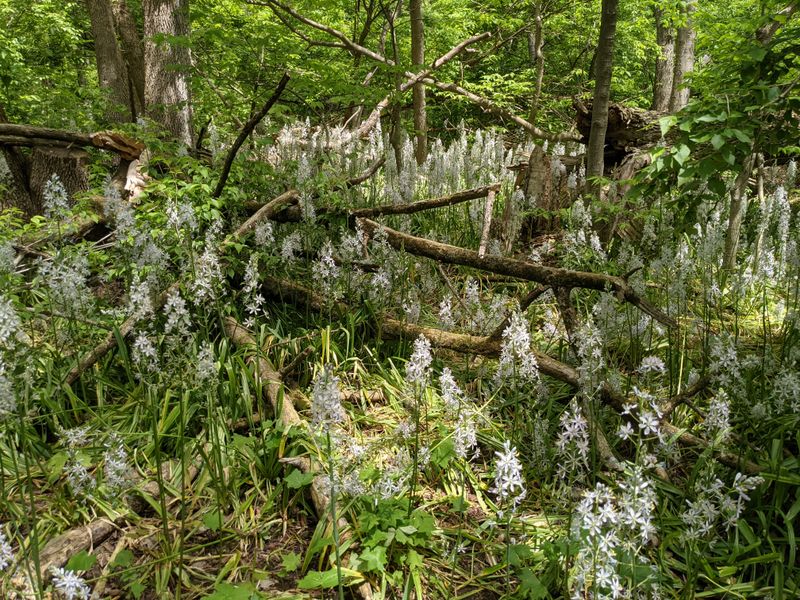
Lake Erie’s islands offer surprising wildflower treasures for visitors willing to take the ferry ride. Jane Coates Wildflower Trail on South Bass Island near Put-in-Bay provides a peaceful half-mile loop through island forest where spring wildflowers bloom while tourists crowd the downtown bars and attractions just a short walk away.
The trail’s limestone-derived soils create perfect conditions for species like Dutchman’s breeches, whose white pantaloon-shaped flowers dangle from arching stems in early spring. Jack-in-the-pulpit hides its hooded flowers beneath the forest canopy, while blue phlox carpets sunny openings with fragrant purple-blue blooms.
Trilliums, bloodroot, and spring beauties round out an impressive display for such a small area.
What makes this trail remarkable is its accessibility. The flat, well-maintained path works for all ages and abilities, and the loop design means you can complete it in thirty minutes or linger for an hour depending on your interest level.
Interpretive signs help visitors identify common species, making it educational as well as beautiful. The island setting creates a unique microclimate where spring often arrives earlier than on the mainland.
Visiting requires planning around ferry schedules, but combining wildflower viewing with other island attractions creates a well-rounded day trip. Late April through mid-May offers peak blooms, with weekdays providing quieter experiences than summer weekends when Put-in-Bay teems with tourists.
The trail offers a serene contrast to the island’s party reputation, proving that Ohio’s wildflower trails exist even in unexpected places. Pack your camera and enjoy this hidden botanical gem in Lake Erie.