The Front Door Plant Oregon Gardeners Trust For Year-Round Beauty
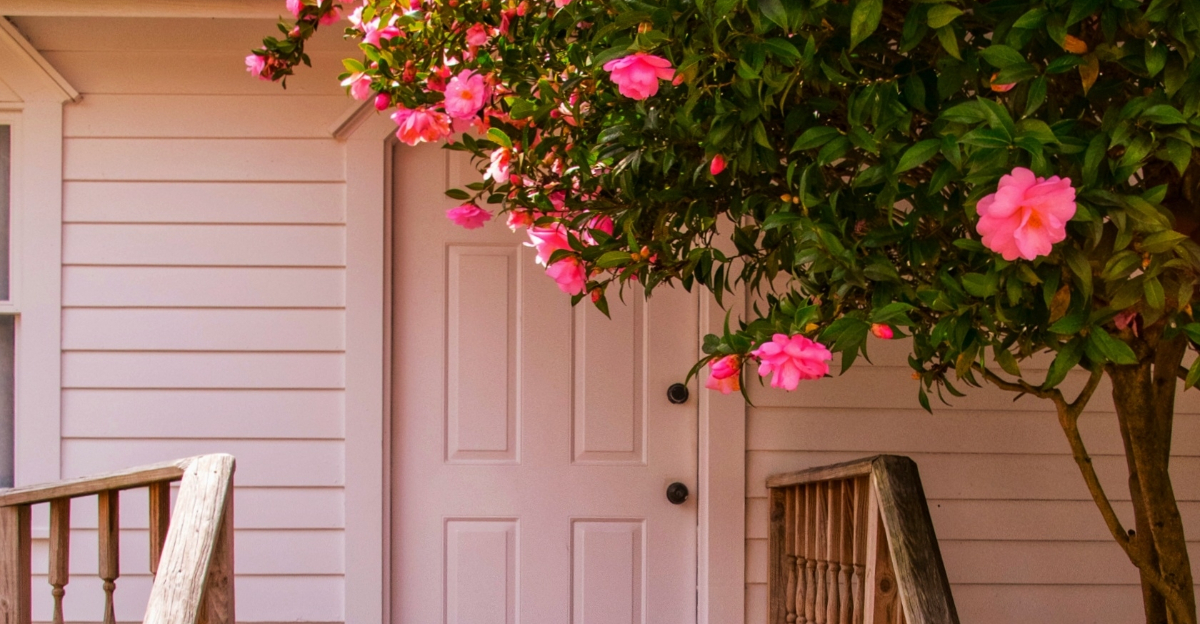
Right by the front door, where first impressions matter most, many Oregon gardeners rely on one timeless plant that never seems to have an off season.
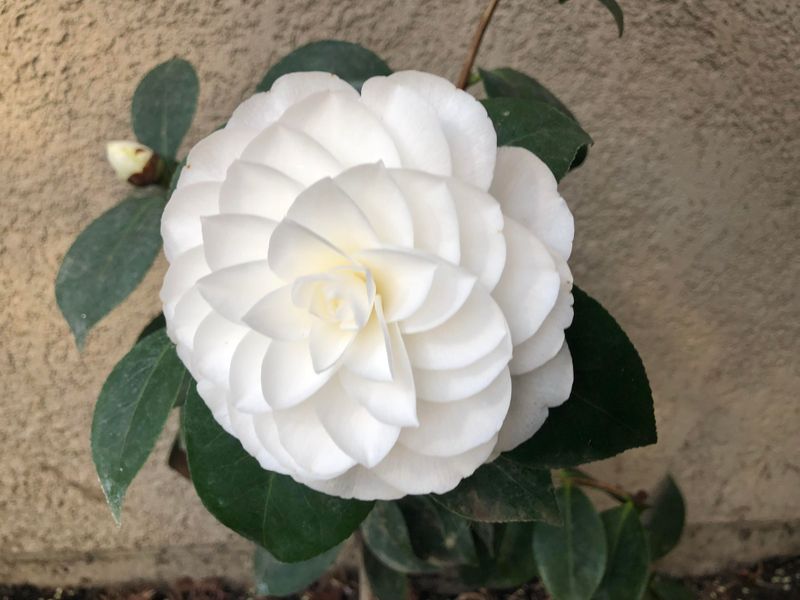
Camellias bring glossy evergreen leaves, elegant form, and stunning blooms that appear when much of the garden is still waking up.
In the gray days of late winter and early spring, their rose like flowers add a welcome splash of color just when it is needed most.
They handle Oregon’s cool, damp climate beautifully and stay neat, structured, and attractive all year long.
Planted in an entry bed or showcased in a decorative container, camellias create a welcoming, polished look without demanding constant care.
It is no surprise so many gardeners choose this reliable beauty to frame their doorway and keep their home looking vibrant through every season.
1. Why Camellias Own The Oregon Entryway
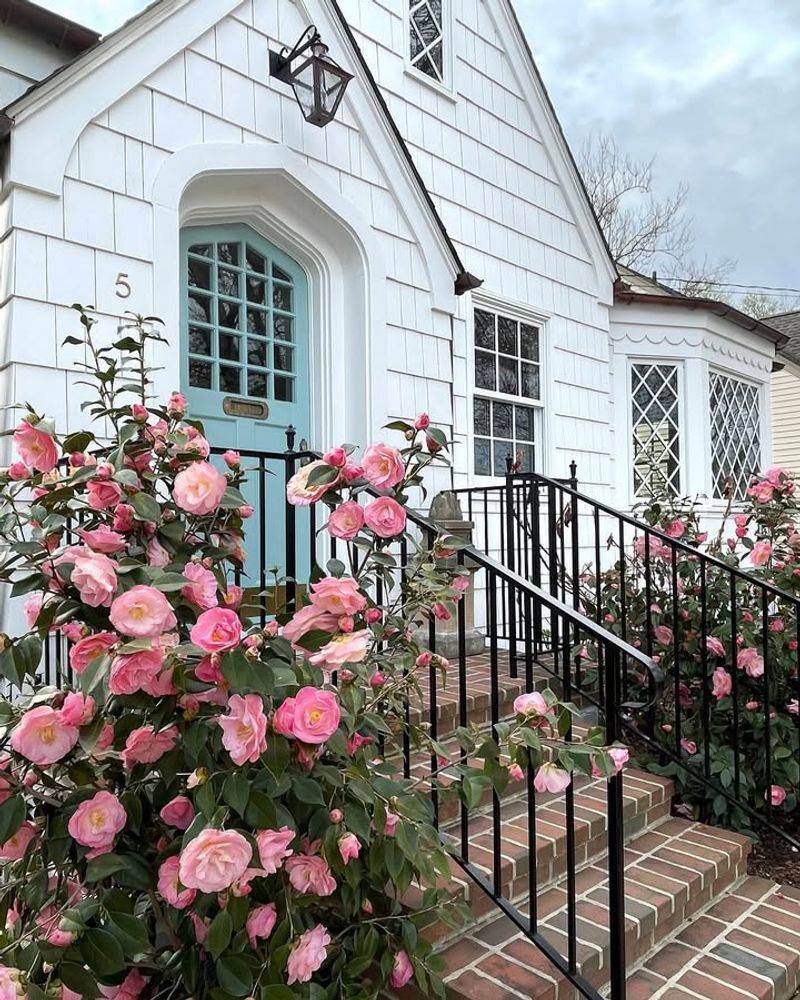
These plants have earned their front-door status through decades of reliable performance in our wet, cool climate. They don’t demand constant attention or perfect conditions, yet they deliver beauty that feels both elegant and effortless.
Camellias thrive in the exact conditions Oregon offers naturally: consistent moisture, mild temperatures, and plenty of shade. Unlike plants that sulk in our gray winters or rot in our rainy springs, camellias seem designed for this place.
Their roots appreciate the steady rain without getting waterlogged, and their leaves stay vibrant even when weeks pass without strong sunshine.
Homeowners love them because they solve the front-door dilemma perfectly. You want something attractive enough to frame your entrance, tough enough to handle neglect during busy weeks, and interesting enough to make neighbors pause.
Camellias check every box without asking for special soil amendments, complex feeding schedules, or protective coverings.
They simply grow, bloom, and look polished year after year, which explains why they’ve become the default choice for Oregon entryways that need to impress without constant fussing.
2. Winter Blooms When Nothing Else Dares
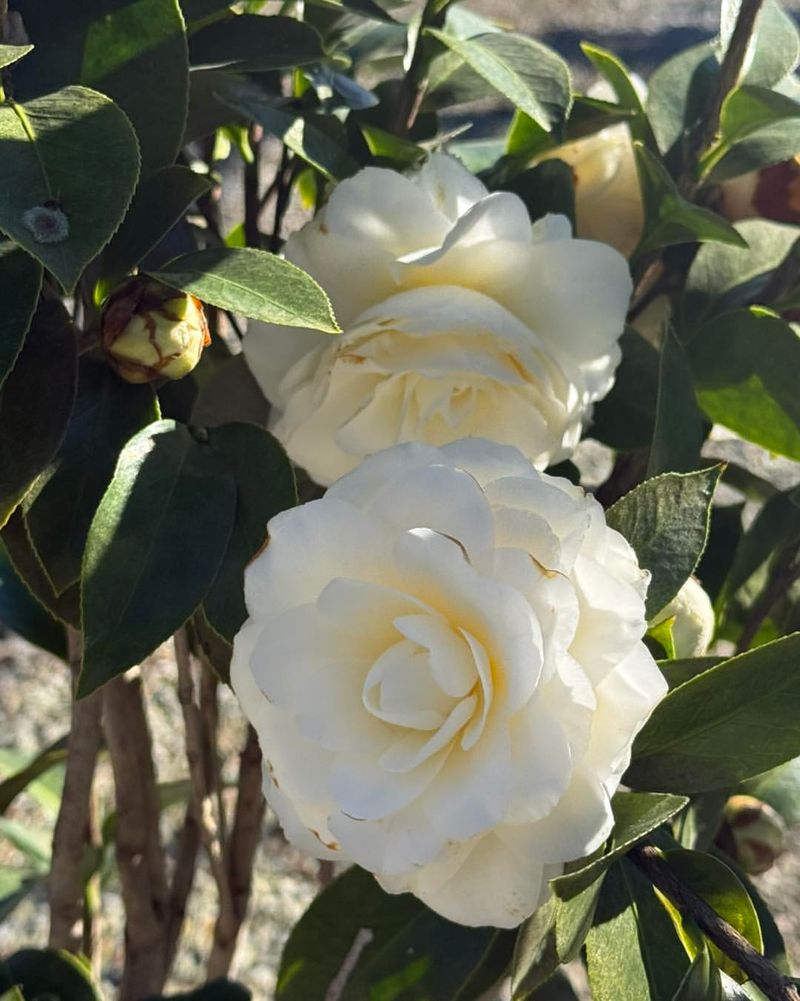
February in Oregon can feel endless: gray skies, bare branches, and garden beds that look more asleep than alive. Right when you need color most, camellias start opening their flowers, sometimes as early as late December.
Those blooms aren’t shy little things either, they’re big, bold, and impossible to miss from the street, offering shades of pink, red, white, and even variegated patterns that brighten the dreariest mornings.
Most flowering shrubs wait for spring warmth before they’ll risk blooming. Camellias bloom during our coldest, wettest months because they’ve evolved for exactly these conditions.
The flowers handle light frosts without turning brown, and they actually prefer the cool temperatures that keep petals fresh longer. Rain can batter the blooms a bit, but the plant keeps producing new ones throughout its flowering season, which often stretches from December through April depending on the variety.
This winter performance makes camellias uniquely valuable for front entrances. Your door becomes a focal point when everything else fades into dormancy.
Visitors notice the unexpected color, and you get the satisfaction of watching something thrive during months when most plants just endure.
Your Oregon Garden Changes Every Week. Your Plan Should Too.
Gardening in Oregon changes quickly throughout the season. Every Friday you’ll receive a simple weekly plan showing exactly what to plant, prune, fertilize, harvest, and protect so you never miss the right timing.
That reliable bloom cycle also means you’re not gambling on weather, camellias will flower whether winter stays mild or turns harsh.
3. Glossy Green Leaves All Year Long
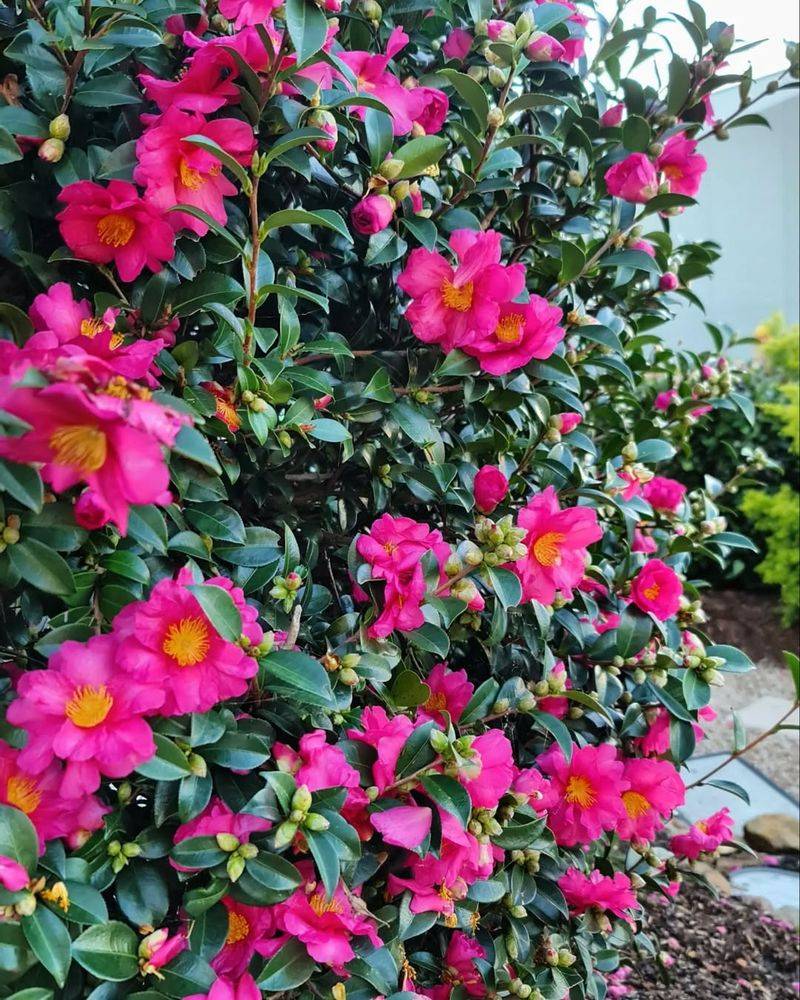
Even when camellias aren’t blooming, they’re working hard to make your entryway look intentional and cared-for. Those glossy, dark green leaves stay on the plant every single month, providing structure and color when deciduous shrubs stand bare.
The foliage has a polished quality that catches light beautifully, almost like someone wiped each leaf clean, which makes the plant look healthy and vibrant even during the dullest stretches of Oregon’s rainy season.
Evergreen foliage matters more than many gardeners realize at first. Your front door gets looked at constantly, by you, by visitors, by people walking past.
A plant that goes dormant leaves you staring at bare stems for months, which can make even a nice home feel neglected. Camellias prevent that problem completely.
Their leaves create a full, lush backdrop year-round, giving your entrance consistent visual weight and color that doesn’t disappear when temperatures drop.
The leaves also handle Oregon’s wet conditions remarkably well. They don’t develop the fungal spots or mildew issues that plague many broadleaf evergreens here.
Their natural waxy coating sheds water efficiently, and they tolerate shade without becoming sparse or leggy.
This means your plant looks equally good in January and July, through rain and occasional summer heat, without requiring constant grooming or worry about seasonal decline.
4. The Secret To Perfect Front-Door Placement
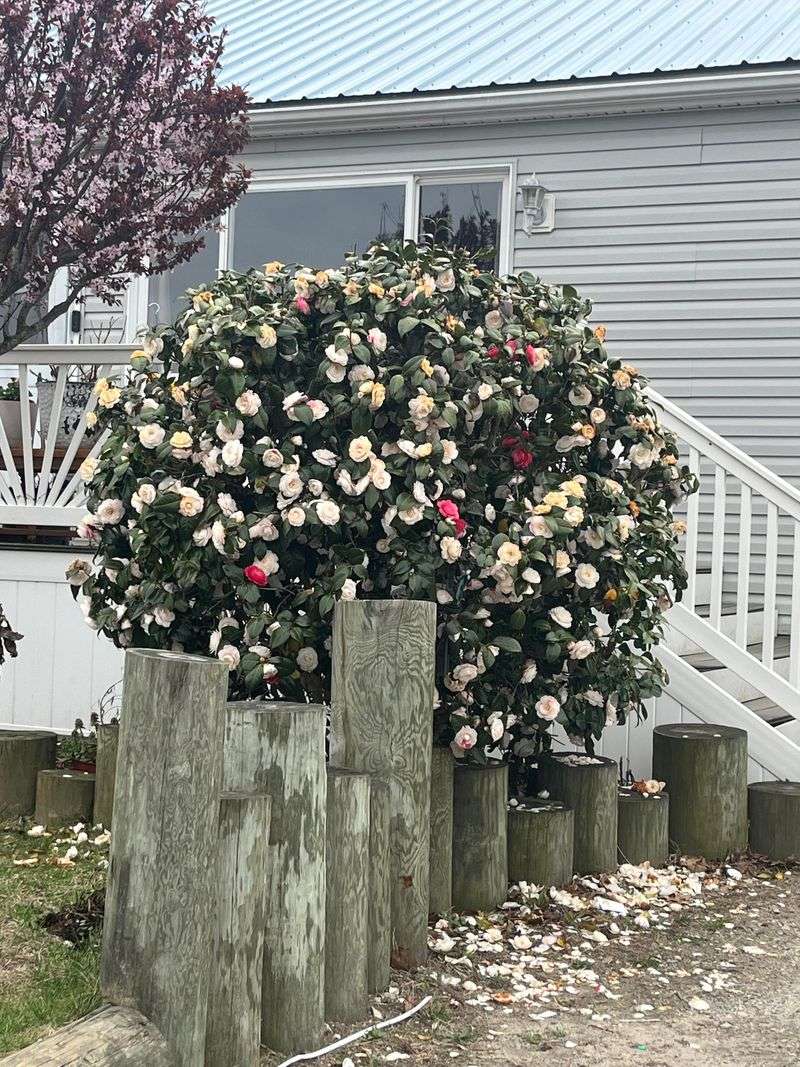
Camellias have specific preferences that, when matched correctly, turn them into low-maintenance showstoppers. The biggest secret involves light: they want bright shade or filtered sun, not the harsh afternoon exposure that many front doors receive.
If your entrance faces east or north, you’ve got ideal conditions. Morning sun with afternoon shade keeps the plant happy without scorching leaves or causing buds to drop unexpectedly.
Soil matters too, but probably not the way you think. Camellias prefer acidic soil, which Oregon naturally provides in many areas thanks to our conifer-heavy forests and ample rainfall.
If your soil tends toward neutral or alkaline, you’ll need to amend it with compost or use an acidic fertilizer occasionally. The plant also needs good drainage despite loving moisture, standing water around roots leads to problems quickly.
Planting on a slight slope or mounding the soil helps prevent that issue.
Placement near the door requires thinking about mature size. Many camellias grow six to ten feet tall and wide, which works beautifully for framing an entrance but can overwhelm a small porch if planted too close.
Give them three to four feet of clearance from walkways and walls. This spacing allows air circulation, prevents crowding, and lets you enjoy the full shape of the plant without constantly pruning it back to keep doors and windows accessible.
5. Rain, Cold, And Shade? No Problem
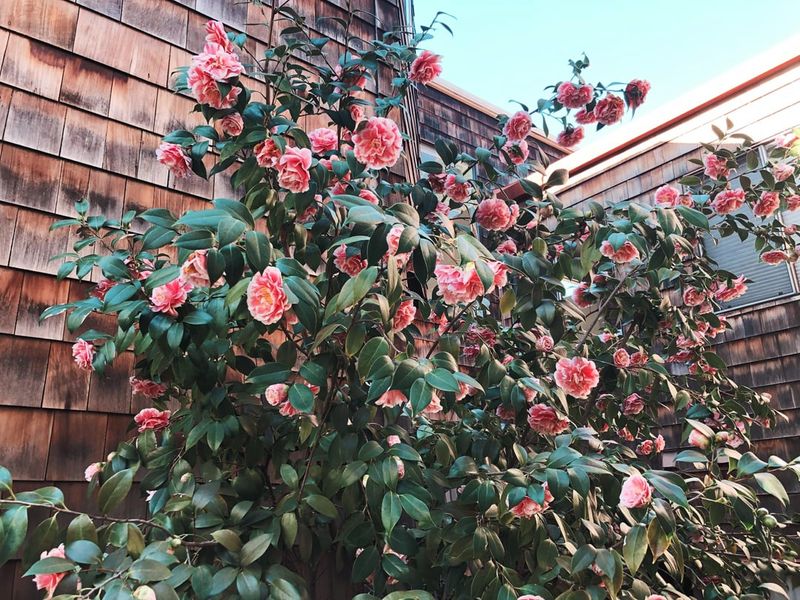
Oregon’s climate intimidates many popular garden plants, but camellias seem to shrug off conditions that send other shrubs into decline. Our long rainy stretches don’t bother them at all, in fact, they prefer consistent moisture over the dry spells that stress so many ornamentals.
Their roots stay active through cool, wet months, which is why they can bloom so prolifically in winter when other plants have essentially shut down for the season.
Cold tolerance surprises people who assume flowering shrubs need warmth. Most camellia varieties handle temperatures down to the teens without damage, and some cultivars tolerate even colder snaps.
The flowers themselves can take light frosts, though a hard freeze might brown the blooms temporarily. The plant recovers quickly once temperatures moderate, and it doesn’t sulk or skip the following year’s flowering like some temperamental shrubs do after cold exposure.
Shade adaptation makes camellias particularly valuable for Oregon homes surrounded by tall trees or situated on north-facing lots. They actually perform better with some shade protection, producing more flowers and healthier foliage than they would in full sun.
This means you can beautify those tricky shaded entryways that defeat sun-loving plants, turning a potential problem spot into a garden highlight that thrives naturally without fighting against the conditions your property provides.
6. Prune Smart, Bloom Better
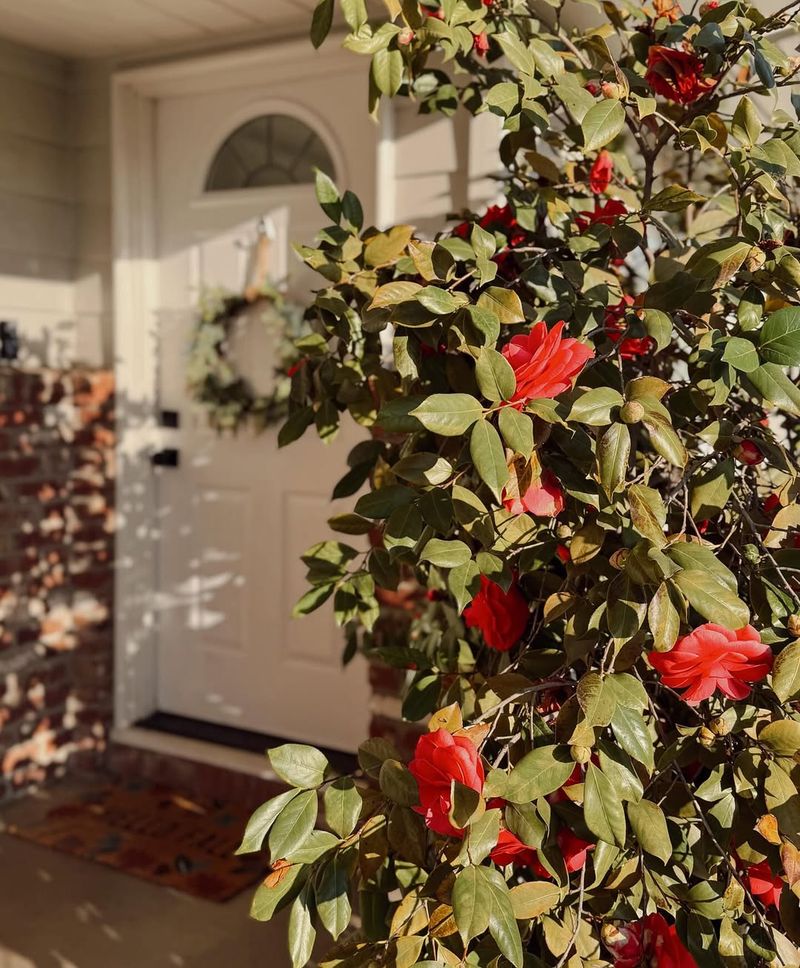
Camellias don’t demand heavy pruning, but a little strategic trimming keeps them looking their best and encourages better flowering. The key timing detail: prune right after blooming finishes, typically in late spring.
This gives the plant the entire growing season to set next winter’s flower buds. If you wait until fall or winter to prune, you’ll be cutting off the buds that would have bloomed, which defeats the whole purpose of growing a winter-flowering shrub.
Most camellias only need light shaping to remove withered wood, thin crowded branches, or control size. Focus on cuts that open up the interior of the plant, allowing better air circulation and light penetration.
This helps prevent fungal issues during our damp months and encourages more even growth throughout the shrub. Remove branches that cross or rub against each other, and take out any stems that look weak or diseased.
Don’t feel pressured to prune heavily every year. Many established camellias go several seasons with minimal intervention and still bloom beautifully.
If your plant has good shape and isn’t outgrowing its space, you can simply remove spent flowers and damaged wood as needed. Over-pruning actually reduces flowering because you’re eliminating the stems that would produce next season’s buds.
Light maintenance beats aggressive cutting for camellias, which naturally develop attractive forms without constant human interference.
7. A Classic Plant That Never Goes Out Of Style
Garden trends come and go, ornamental grasses surge in popularity, then succulents take over, followed by native plant movements and cottage garden revivals.
Through all these shifts, camellias remain quietly popular, never dominating conversations but never disappearing either.
Their staying power comes from delivering exactly what homeowners need: reliable beauty without demanding attention or following fleeting fashion.
This timeless quality makes camellias a safe investment for your front entrance. You won’t look at your landscaping in five years and feel like it’s dated or out of step with current styles.
The plant’s classic form and elegant flowers work equally well with modern, traditional, craftsman, or cottage-style homes. They add sophistication without feeling formal, and color without appearing overly busy or cluttered.
Camellias also connect Oregon gardens to a broader horticultural tradition. These plants have been cultivated for centuries in Asia and have grown in Pacific Northwest gardens for over a hundred years.
When you plant one by your front door, you’re joining that long history of gardeners who recognized something special in these shrubs. That sense of continuity feels reassuring in a world where so much changes quickly.
Your camellia will likely outlive many other garden experiments, quietly blooming each winter and reminding you that some choices simply work, decade after decade, without needing constant reinvention or second-guessing.