Visit Ohio’s Most Incredible Trees On One Epic Road Trip
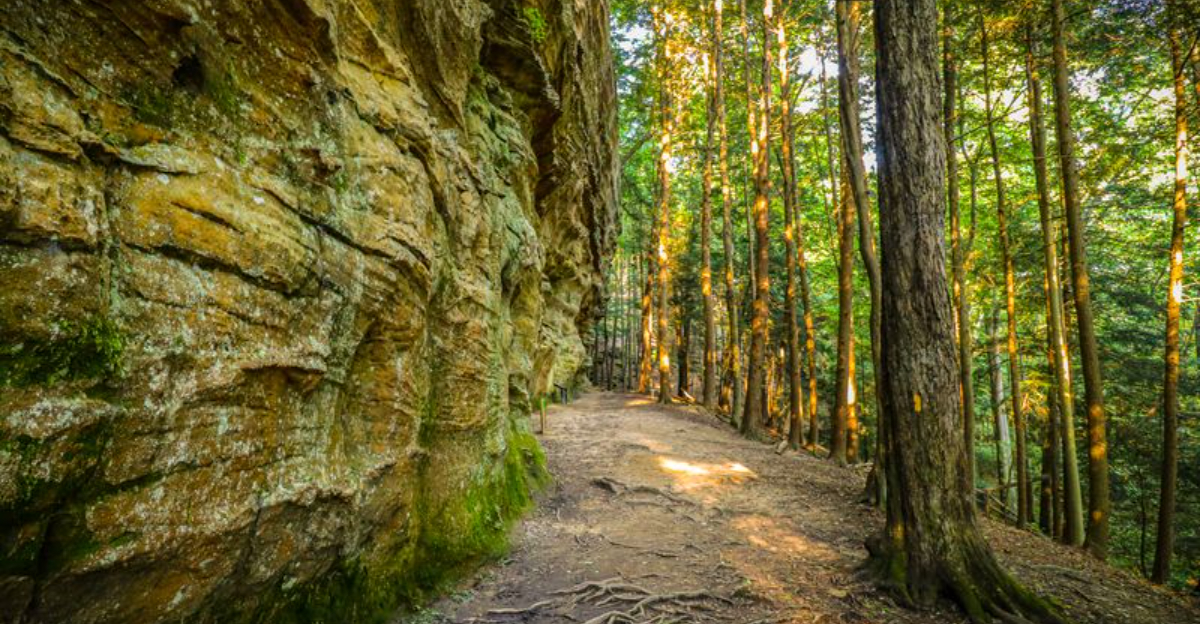
Ohio hides some of its greatest natural wonders in plain sight, towering above small towns, quiet parks, and winding country roads. Across the state stand massive oaks, ancient sycamores, rare species, and record-breaking giants that have witnessed generations pass beneath their branches.
Each tree tells a story shaped by time, weather, and history, making them far more than simple roadside sights.
An epic road trip built around these living landmarks offers a unique way to experience Ohio, far from crowded attractions and busy highways. Travelers move from shaded forest paths to open green spaces, discovering trees known for their size, age, beauty, or unusual form.
The journey blends nature, history, and exploration into one unforgettable route. For anyone who appreciates quiet landscapes and remarkable natural sights, this tree-focused road trip reveals a powerful side of Ohio that many people never expect to find.
1. Johnny Appleseed Apple Tree Descendants, Mansfield

Few figures in American folklore capture the imagination quite like Johnny Appleseed, and Mansfield proudly preserves living connections to this legendary nurseryman. The apple trees here trace their lineage directly back to seedlings planted by John Chapman himself during his travels through Ohio in the early 1800s.
These aren’t just historical curiosities; they’re thriving examples of heritage fruit varieties that gardeners can study and admire.
Walking among these descendants feels like stepping into a living history book. The trees display characteristics of old apple varieties that commercial orchards have largely abandoned, offering insights into what American apples tasted like two centuries ago.
Gardeners fascinated by heirloom varieties will find inspiration in the resilience these trees demonstrate, having survived harsh winters and changing landscapes for generations.
Located near the Johnny Appleseed Heritage Center at 1551 Harpsfield Road, Mansfield, OH 44903, these trees serve as educational resources for anyone interested in historical horticulture. The gnarled trunks and spreading branches tell stories of persistence, while spring blossoms and autumn fruit remind visitors that Chapman’s mission to spread apple cultivation continues bearing literal fruit.
For those passionate about preserving agricultural heritage through gardening, this stop offers both inspiration and a tangible connection to America’s horticultural past.
2. Blackhand Gorge Giant Sycamores, Licking County
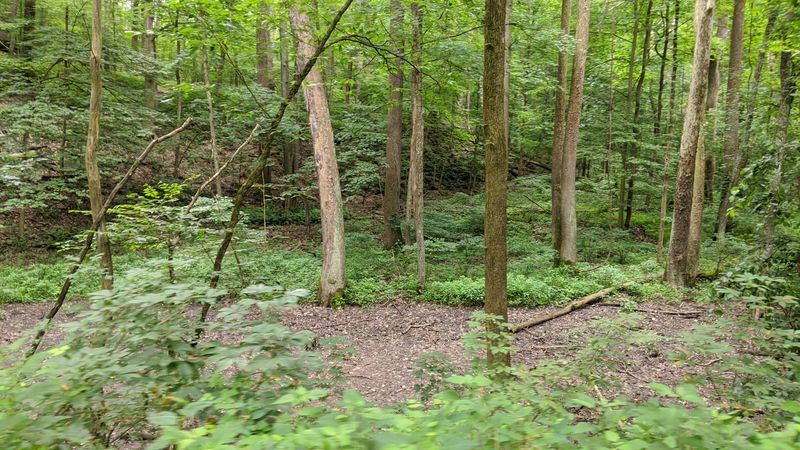
The sycamores towering along Blackhand Gorge stand as some of Ohio’s most impressive riparian giants, their distinctive mottled bark creating natural sculptures against the sandstone cliffs. These American sycamores (Platanus occidentalis) thrive in the moist environment along the Licking River, where some specimens reach heights exceeding 100 feet with trunk circumferences that require several people linking arms to encircle.
Their massive size demonstrates what optimal growing conditions can achieve over decades.
Gardeners who work with challenging wet areas in their landscapes will appreciate studying these adaptable trees. Sycamores excel in flood-prone zones where other species struggle, making them valuable references for understanding moisture-tolerant plantings.
The peeling bark that reveals cream, tan, and greenish layers creates year-round visual interest—a lesson in selecting trees that offer multi-season appeal.
The preserve at Hanover Township, OH 43056, features accessible trails that allow close observation of these magnificent specimens. Spring brings fresh foliage that creates dappled shade, while autumn sees the large leaves turning golden brown before carpeting the forest floor.
Your Ohio Garden Changes Every Week. Your Plan Should Too.
Gardening in Ohio changes quickly throughout the season. Every Friday you’ll receive a simple weekly plan showing exactly what to plant, prune, fertilize, harvest, and protect so you never miss the right timing.
For anyone interested in native tree identification or planning shade gardens near water features, these sycamores provide masterclass examples of form, function, and natural beauty working together in perfect harmony.
3. Dawes Arboretum Champion Trees, Newark
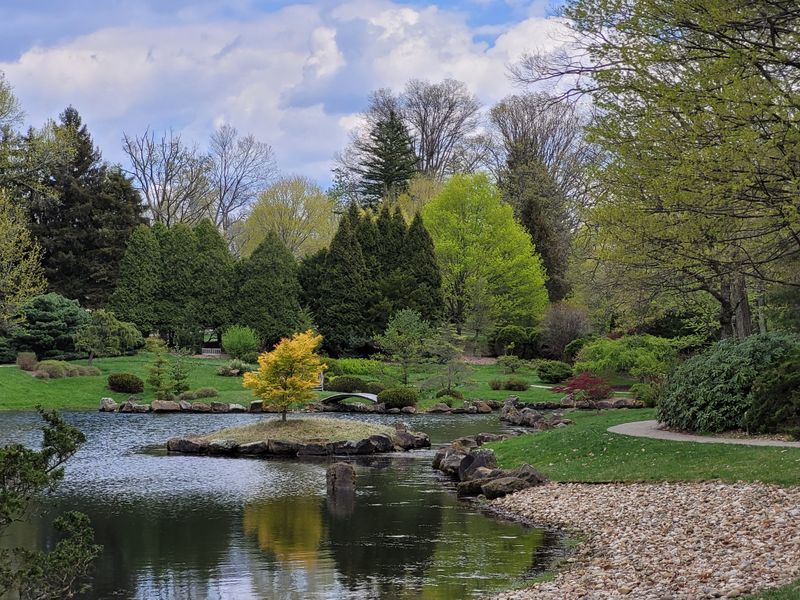
Have you ever wondered what the absolute finest example of a tree species looks like? The Dawes Arboretum maintains several Ohio Champion Trees—officially recognized as the largest specimens of their kind in the state.
Spanning nearly 2,000 acres at 7770 Jacksontown Road SE, Newark, OH 43056, this living museum showcases trees that have achieved record-breaking dimensions through ideal care and favorable conditions.
Champion trees earn their status through a point system combining height, trunk circumference, and crown spread. Studying these exceptional specimens teaches gardeners what peak performance looks like for various species.
You’ll observe perfect branch structure, optimal growth rates, and the results of professional arboricultural practices applied over many years.
The arboretum’s champion collection includes rare and common species alike, each labeled with information about its measurements and distinguishing features. Gardeners planning long-term landscapes gain valuable perspective on mature tree sizes—crucial knowledge for proper placement and spacing decisions.
The grounds also feature the Murch Canopy Walk, offering bird’s-eye views of the forest canopy that reveal growth patterns invisible from ground level.
Beyond the champions, the extensive collections demonstrate companion planting at grand scale, showing which understory plants thrive beneath different canopy types. This makes the arboretum an invaluable resource for designing layered gardens that mimic natural forest ecosystems.
4. Buckeye Trees At Ohio Statehouse, Columbus
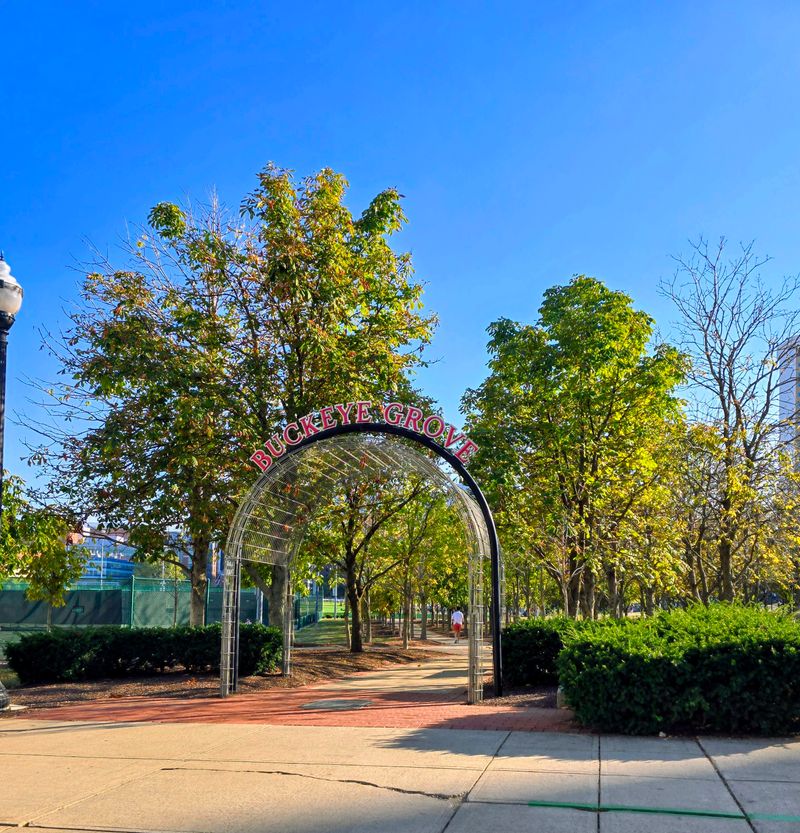
Right in the heart of Columbus, the Ohio Statehouse grounds feature magnificent specimens of the state’s namesake tree—the Ohio Buckeye (Aesculus glabra). Located at 1 Capitol Square, Columbus, OH 43215, these trees hold symbolic importance while demonstrating the ornamental qualities that make buckeyes excellent landscape choices.
Their palmate leaves create distinctive texture, and the glossy brown nuts that give the tree its name appear each autumn in spiny husks.
Buckeyes offer gardeners a medium-sized native tree option that adapts well to various soil types and urban conditions. The Statehouse specimens prove these trees can thrive despite foot traffic, compacted soil, and the heat island effects common in city centers.
Spring brings showy yellow-green flower clusters that attract pollinators, connecting even formal landscapes to ecological networks.
What makes these particular trees special is their historical context and the care they’ve received over generations. Groundskeepers maintain them as living symbols of Ohio identity, demonstrating best practices in urban tree management.
Gardeners interested in native species will find inspiration in how buckeyes provide seasonal interest—early spring blooms, summer shade, autumn color, and winter branch architecture.
The accessible location makes this an easy stop for anyone exploring Columbus, offering lessons in civic horticulture and the enduring appeal of choosing regionally appropriate trees for lasting landscape impact.
5. Serpent Mound Woodland Trees, Adams County
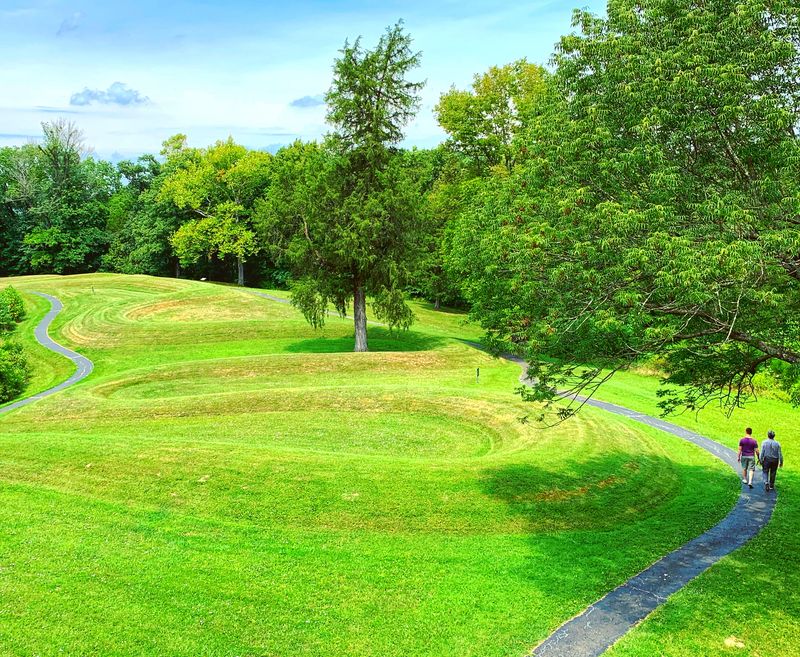
The forests surrounding Serpent Mound carry a sense of timelessness that few places can match. At 3850 State Route 73, Peebles, OH 45660, this ancient earthwork sits within mature woodlands dominated by oak and hickory species that have likely regenerated in waves over the centuries since the mound’s construction.
The trees here grow in soil shaped by both natural processes and the hands of ancient peoples, creating a unique connection between horticulture and archaeology.
Walking these woodland trails reveals the structure of a climax forest ecosystem—what happens when trees are allowed to reach maturity without significant disturbance. Gardeners interested in forest gardening or establishing naturalized areas can observe the layering effect: tall oaks and hickories forming the canopy, smaller understory trees filling middle zones, and shade-tolerant shrubs and herbaceous plants carpeting the forest floor.
The diversity here teaches valuable lessons about plant communities and succession. Notice which species grow together naturally, how they share resources, and the wildlife they support.
Spring wildflowers emerge before the canopy fully leafs out, demonstrating timing strategies that gardeners can replicate in shaded yards.
The site’s spiritual significance adds another dimension—these trees grow on sacred ground, reminding us that gardens and landscapes carry meaning beyond mere aesthetics. For those who view gardening as a way to connect with place and history, this woodland offers profound inspiration.
6. Giant Oak At Sharon Woods Metro Park, Columbus
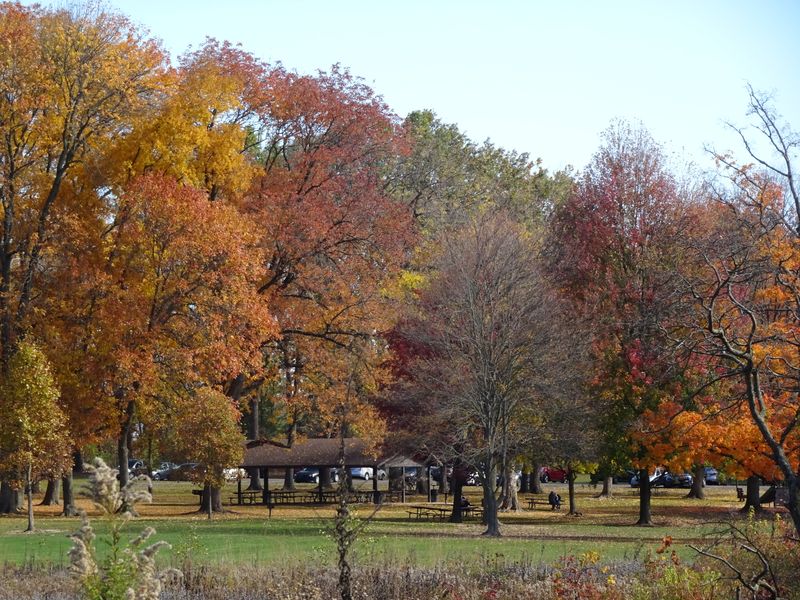
Sharon Woods Metro Park harbors a white oak of truly exceptional proportions—the kind of tree that makes you stop mid-stride and simply stare upward. Located at 6911 Cleveland Avenue, Westerville, OH 43081, this giant has likely been growing for well over two centuries, its massive trunk and sprawling crown demonstrating what white oaks (Quercus alba) can achieve given time and space.
The circumference measures several yards around, requiring multiple adults to embrace its full girth.
For gardeners, this tree represents the ultimate long-term investment. White oaks grow slowly but steadily, eventually becoming landscape anchors that define entire properties.
Observing this specimen reveals the mature form—low, wide-spreading branches that create cathedral-like space beneath the canopy, perfect for shade gardens or outdoor living areas. The thick, ridged bark and lobed leaves are textbook examples for identification practice.
The oak supports entire ecosystems within its branches and root zone. Countless insects, birds, and mammals depend on it for food and shelter, illustrating how a single well-chosen tree can multiply a garden’s ecological value.
The acorns produced each fall feed wildlife while demonstrating the tree’s continued vigor despite its advanced age.
Visiting during different seasons reveals the oak’s year-round contributions: spring’s tender green leaves, summer’s dense shade, autumn’s russet color transformation, and winter’s architectural silhouette. It’s a masterclass in selecting trees that deliver enduring value.
7. Old Hemlocks At Hocking Hills, Hocking County
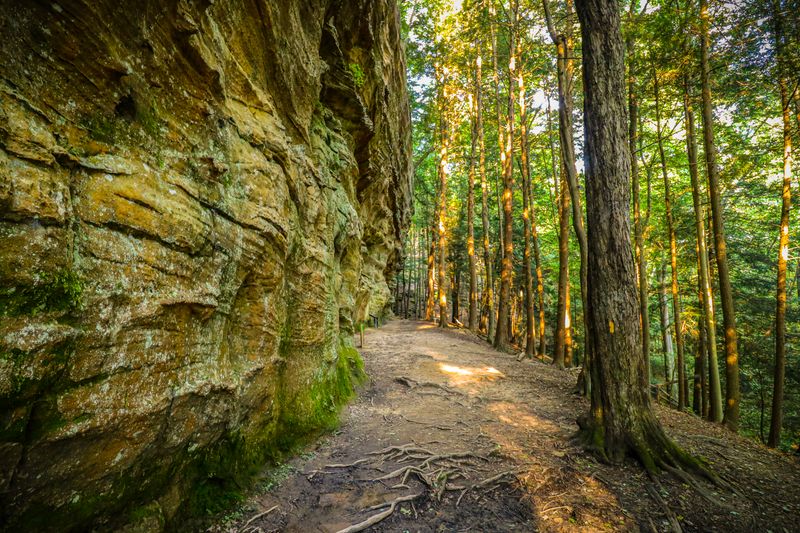
The hemlock groves of Hocking Hills create an atmosphere unlike anywhere else in Ohio—cool, dark, and primeval. Eastern hemlocks (Tsuga canadensis) thrive in the moist, shaded gorges carved through the Blackhand sandstone, some specimens reaching ages of 300-400 years.
Located throughout Hocking Hills State Park at 19852 State Route 664 South, Logan, OH 43138, these evergreens demonstrate remarkable adaptability to challenging growing conditions on cliff faces and rocky slopes.
Gardeners working with difficult shade situations can learn much from these resilient trees. Hemlocks tolerate deep shade better than most evergreens, making them valuable for north-facing slopes or areas beneath larger trees.
Their fine-textured needles create delicate visual effects, contrasting beautifully with the coarser foliage of deciduous companions. The shallow root systems allow them to anchor in thin soils where other species cannot establish.
The microclimate these hemlocks create supports specialized plant communities including mosses, ferns, and shade-loving wildflowers.
Notice how the dense evergreen canopy moderates temperature and moisture levels year-round, providing lessons applicable to creating protected microclimates in home landscapes.
The gorge setting showcases hemlocks at their most dramatic, clinging to cliff edges and framing waterfalls with graceful branches. For anyone designing water features or rock gardens, this natural composition offers inspiration for combining evergreens with stone and water elements in harmonious arrangements.
8. Giant Tulip Tree At Mohican State Park, Loudonville
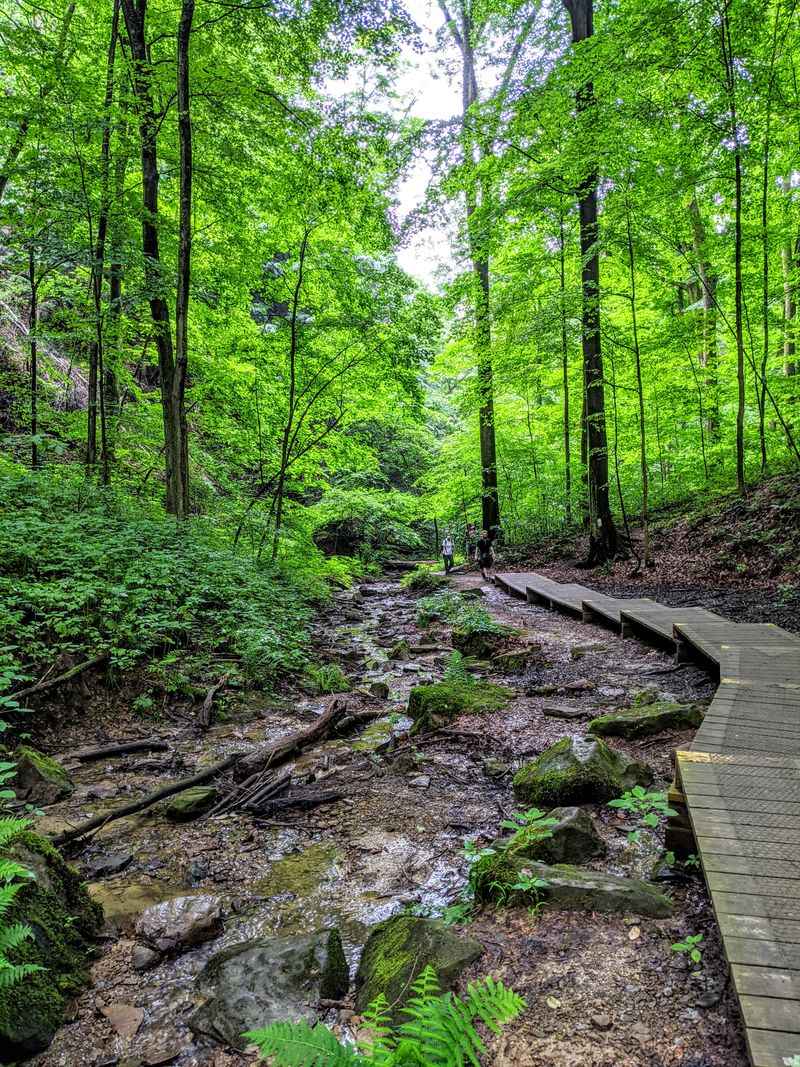
Standing before the giant tulip tree at Mohican State Park feels like meeting forest royalty.
This towering specimen of Liriodendron tulipifera reaches skyward with the straight, limbless trunk characteristic of the species, only branching once it has claimed its space high above competing trees.
Located within Mohican State Park at 3116 State Route 3, Loudonville, OH 44842, this tree exemplifies why tulip trees rank among the tallest hardwoods in eastern North America, often exceeding 150 feet in old-growth conditions.
The tulip tree’s rapid growth rate makes it appealing for gardeners seeking relatively quick shade, though its ultimate size requires careful placement with plenty of room. The distinctively shaped leaves—resembling tulips or cat faces depending on your imagination—turn brilliant yellow in autumn, creating spectacular seasonal displays.
Late spring brings the actual tulip-shaped flowers in yellow-green with orange markings, though they often bloom too high to appreciate from ground level on mature specimens.
This particular giant demonstrates the species’ preference for rich, moist, well-drained soils and its ability to dominate favorable sites. The straight trunk made tulip trees valuable timber species historically, but this protected specimen instead serves as an educational monument to what the species achieves when left to reach its full potential.
Gardeners planning for future generations might consider planting tulip trees as legacy specimens—fast-growing, long-lived, and ultimately majestic additions to spacious properties.