The Ultimate Road Trip To See California’s Most Famous Trees
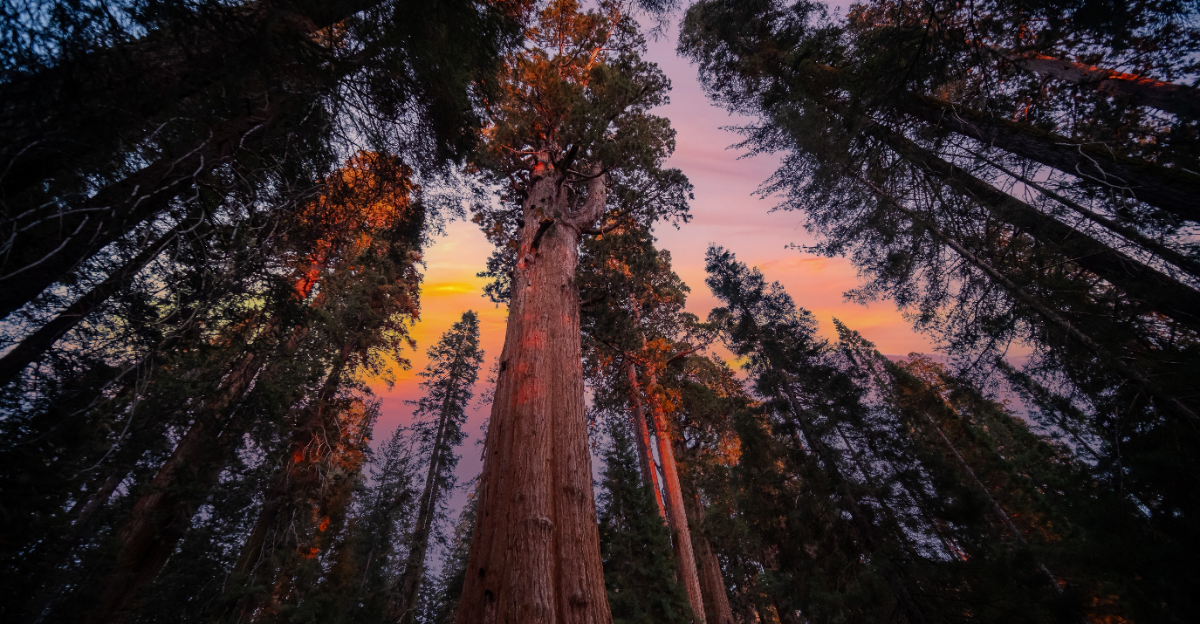
California is home to some of the most awe inspiring trees on the planet, and seeing them in person turns any drive into an unforgettable journey.
Towering giants, ancient survivors, and uniquely shaped icons are scattered across the state, each with its own story and sense of wonder.
One stop might leave you staring up at massive redwoods disappearing into the fog, another standing beside a tree that has lived for thousands of years.
The beauty of this road trip is the variety, changing landscapes, fresh mountain air, and the quiet power of nature at every turn.
It is not just about the destinations, but the experience of traveling through some of California’s most scenic regions.
This is the kind of road trip where the scenery keeps getting bigger, the air feels fresher, and each towering tree leaves a lasting impression long after the journey is over.
Hyperion, World’s Tallest Tree (Redwood National Park)
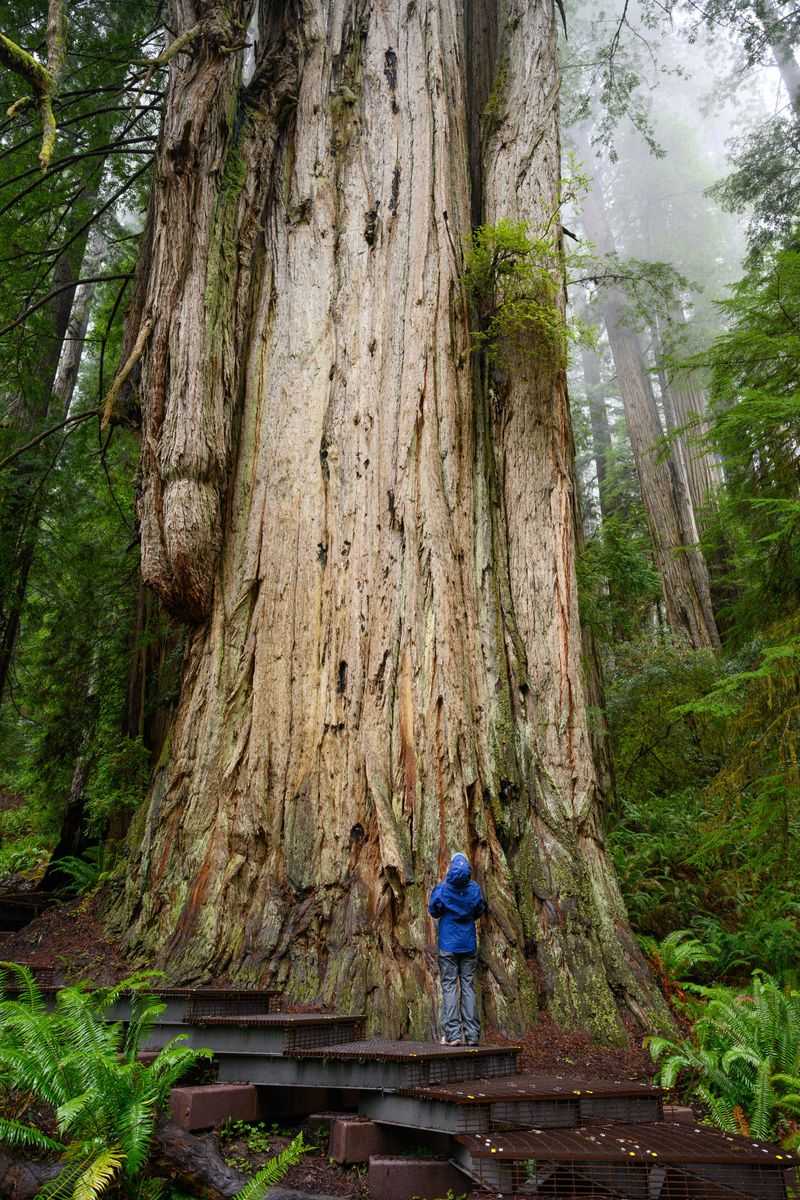
Standing somewhere in the remote reaches of Redwood National Park, Hyperion holds the title of the world’s tallest tree at over 380 feet. Its exact location is kept secret to protect the tree and surrounding ecosystem from damage caused by foot traffic.
Park rangers have seen firsthand how eager visitors can trample delicate root systems and soil.
The tree was discovered in 2006 by naturalists who were surveying old-growth forests. Hyperion’s height is roughly equivalent to a 35-story building, yet it continues growing each year.
The coastal redwoods thrive in the foggy climate where moisture from the Pacific Ocean nourishes their towering canopies.
Visiting Redwood National Park means exploring trails through cathedral-like groves where light filters through layers of branches. You won’t find Hyperion marked on any map, but the park’s accessible giants offer equally breathtaking experiences.
Respect for these ancient ecosystems ensures future generations can marvel at these natural wonders.
Chandelier Tree, The Classic Drive-Thru Redwood (Leggett)
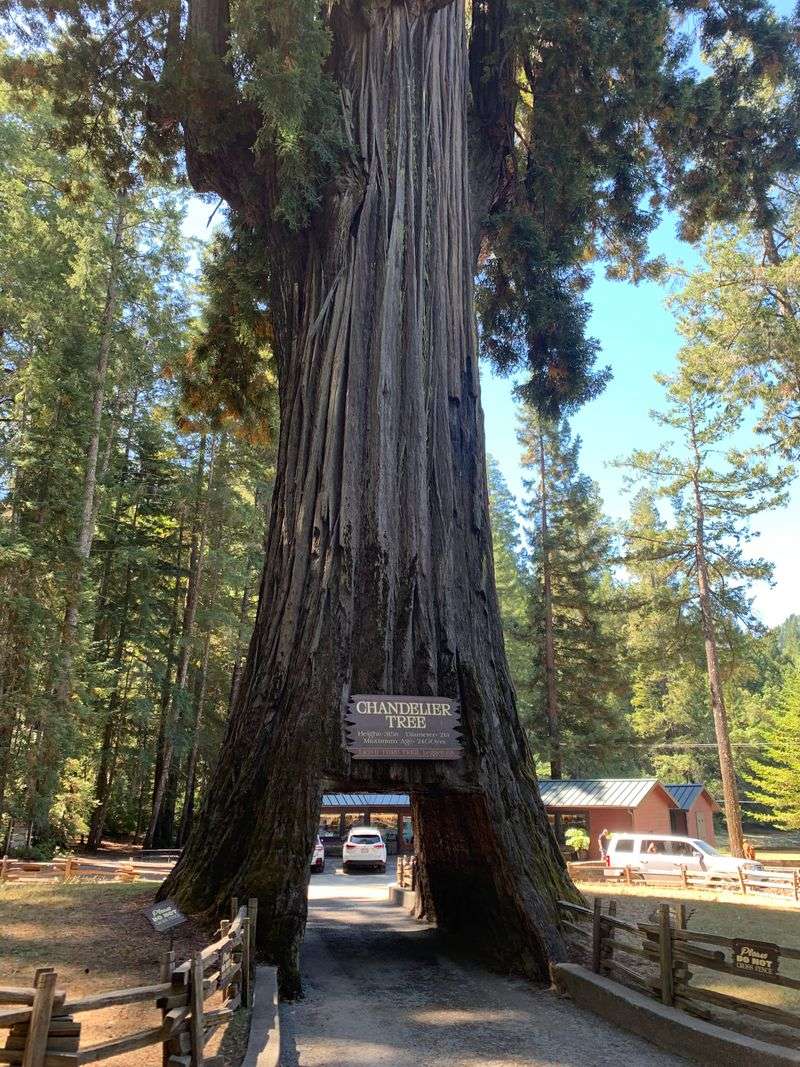
Along Highway 101 in Leggett, the Chandelier Tree invites travelers to drive right through its base. This 315-foot coastal redwood had a tunnel carved through it in the 1930s, creating one of California’s most iconic roadside attractions.
The tree earned its name from the chandelier-like arrangement of its upper branches.
Private landowners maintain the site, charging a small fee that helps preserve the tree and surrounding grove. The tunnel measures about six feet wide and seven feet tall, accommodating most passenger vehicles.
Larger RVs and trucks need to admire from outside, but everyone enjoys the novelty of this living landmark.
The tree remains healthy despite its unusual modification, thanks to the redwood’s incredible resilience. These trees have thick, fire-resistant bark and can compartmentalize damage to prevent decay from spreading.
Visiting the Chandelier Tree offers a fun photo opportunity and a reminder of California’s quirky roadside history blended with natural grandeur.
California Tunnel Tree, Mariposa Grove
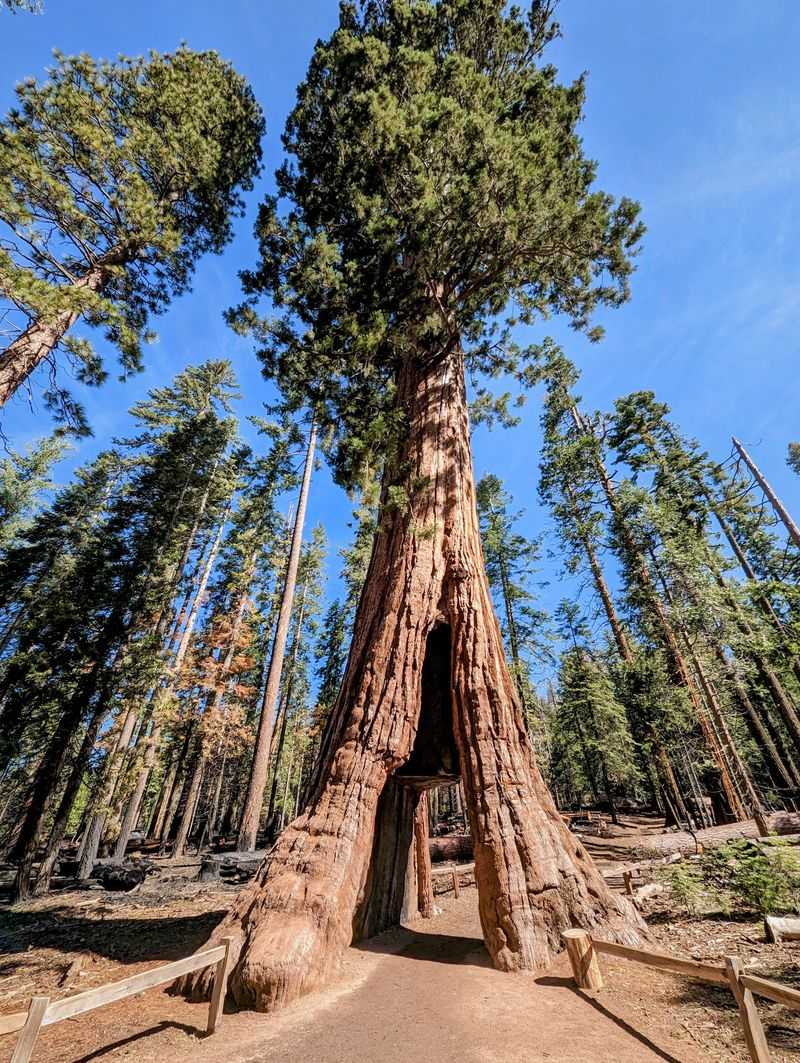
In the heart of Yosemite’s Mariposa Grove stands the California Tunnel Tree, a remarkable giant sequoia shaped by the early days of park tourism.
Your California Garden Changes Every Week. Your Plan Should Too.
Gardening in California changes quickly throughout the season. Every Friday you’ll receive a simple weekly plan showing exactly what to plant, prune, fertilize, harvest, and protect so you never miss the right timing.
Carved in 1895, the tunnel was created to give visitors an unforgettable, up-close encounter with one of the world’s largest tree species.
Unlike the towering coastal redwoods, this sequoia displays the immense trunk and rugged presence that define the giants of the Sierra Nevada.
The tree is still alive, a powerful example of the sequoia’s resilience. Its thick, fire-resistant bark and natural defenses against decay have allowed it to endure the historic cut while continuing to grow around the opening.
Walking through the tunnel, visitors are surrounded by the living wood of a tree that has stood for centuries, offering a rare perspective on its incredible scale.
Mariposa Grove protects hundreds of mature giant sequoias, preserving one of California’s most treasured forests. Trails winding through the grove lead past the Tunnel Tree and many other named giants, each with its own story.
In spring, dogwoods and wildflowers brighten the forest floor, while winter snow settles quietly among the massive trunks, giving the grove a timeless, cathedral-like calm.
The Wawona Tunnel Tree, Yosemite’s Historic Fallen Giant
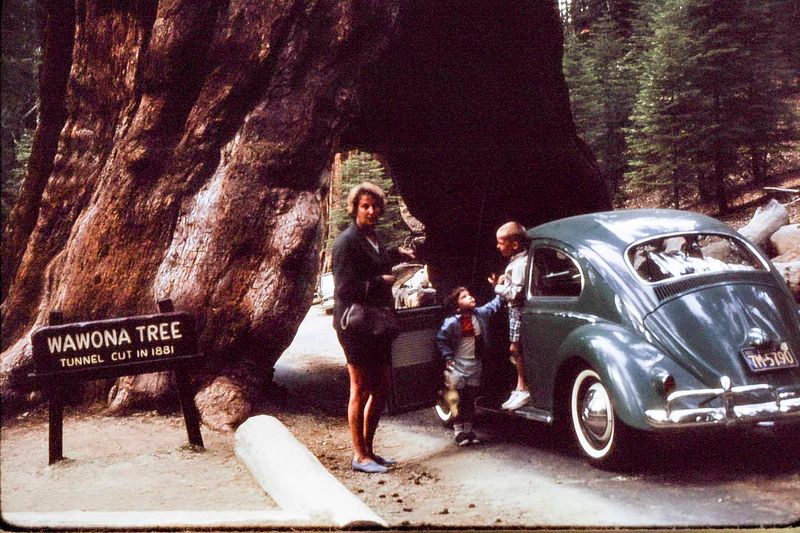
Though no longer standing, the Wawona Tunnel Tree remains an important part of Yosemite’s history. The giant sequoia fell during a heavy winter storm in 1969, ending its reign as one of California’s most photographed trees.
For decades, visitors had driven carriages and later automobiles through the tunnel carved in 1881.
The tree’s collapse came as no surprise to park naturalists who had watched it weaken over the years. The tunnel had removed too much structural support, and eventually nature reclaimed what humans had modified.
Today, the fallen giant rests in Mariposa Grove, where you can still see the tunnel opening and imagine the countless travelers who once passed through.
This tree’s story sparked important conversations about balancing tourism with preservation. Modern park management prioritizes protecting trees in their natural state rather than altering them for entertainment.
The Wawona’s legacy lives on in photographs and memories, reminding us that even giants are vulnerable and deserve our respect and protection.
Methuselah, Ancient Bristlecone Of The White Mountains
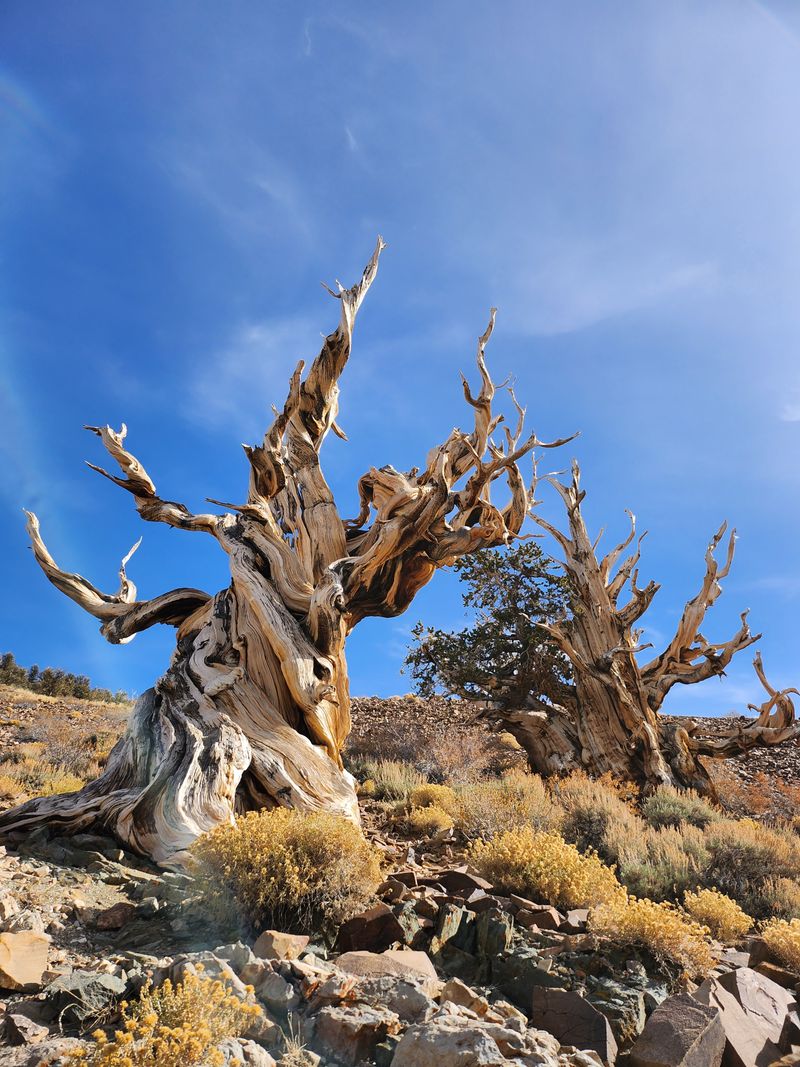
High in the White Mountains, where harsh winds and thin air challenge all life, Methuselah has endured for over 4,800 years. This bristlecone pine is among the oldest living organisms on Earth, predating the Egyptian pyramids.
Its exact location remains undisclosed to protect it from vandalism and excessive visitation.
Bristlecone pines thrive in conditions that would kill most trees—poor soil, extreme temperature swings, and minimal rainfall. Their slow growth creates incredibly dense wood that resists decay, insects, and disease.
Methuselah’s twisted, sculptural form reflects centuries of wind shaping its branches and stripping away bark.
The Ancient Bristlecone Pine Forest, managed by the Inyo National Forest, offers trails where you can walk among these living relics. The Methuselah Trail winds through groves of ancient bristlecones, each one a masterpiece of survival.
Summer brings the best visiting conditions, though the high elevation means bringing layers and plenty of water for your journey into this timeless landscape.
General Grant, The Nation’s Christmas Tree (Kings Canyon)
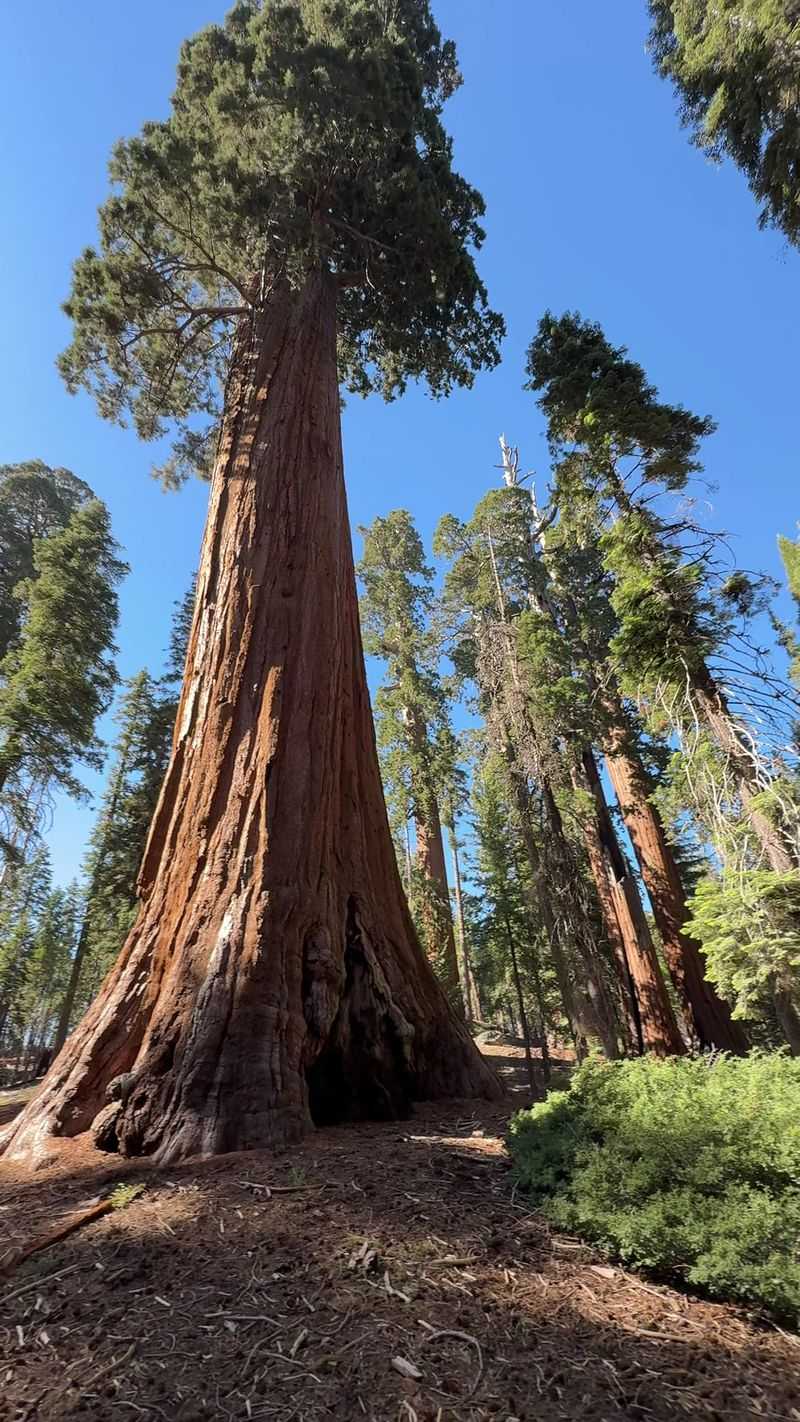
In Kings Canyon National Park’s Grant Grove, General Grant stands as the Nation’s Christmas Tree, a title bestowed by President Calvin Coolidge in 1926.
This giant sequoia ranks as the second-largest tree by volume in the world, with a base diameter of over 40 feet.
Each holiday season, park rangers hold a special ceremony at its base, honoring those who serve the country.
The tree was named in 1867 after Civil War general and later President Ulysses S. Grant.
Its tremendous size and perfect shape made it a natural choice for this patriotic designation. Walking the short paved trail to reach it, you’ll pass other named sequoias that help illustrate the incredible scale of these forest monarchs.
General Grant’s grove escaped logging in the late 1800s thanks to early conservation efforts. The area became part of the national park system, protecting these giants for future generations.
Spring snowmelt creates rushing creeks throughout the grove, while summer offers warm days perfect for exploring the surrounding trails and meadows.
The President, One Of The Oldest Giant Sequoias (Sequoia National Park)
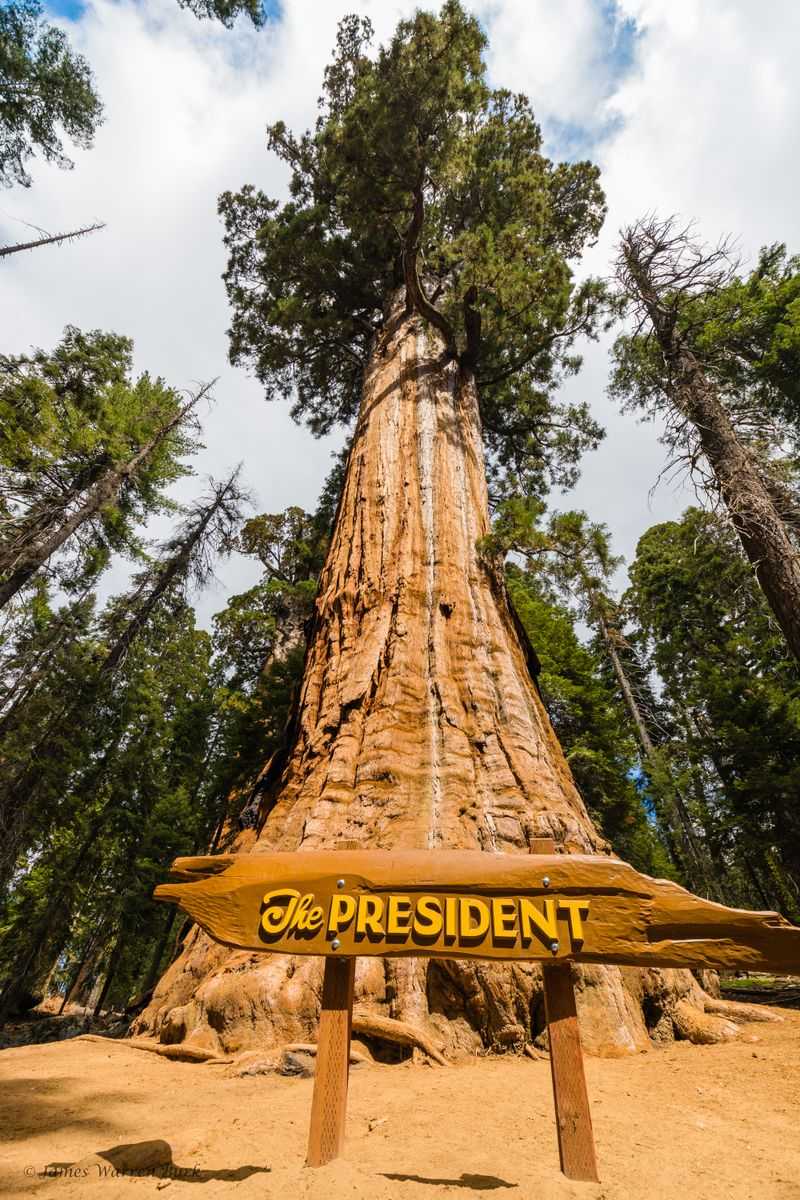
Sequoia National Park’s President tree combines age, height, and volume in truly impressive fashion. At approximately 3,200 years old, it ranks among the oldest giant sequoias, standing 241 feet tall with a trunk volume exceeding 45,000 cubic feet.
Scientists continue studying this tree to understand how these giants maintain their health across millennia.
Recent research revealed that The President adds about one cubic meter of wood annually, equivalent to a 50-foot-tall regular tree. This discovery challenged assumptions about tree growth slowing with age.
The tree’s upper branches, photographed by climbers, show dense foliage and vigorous growth despite its ancient status.
Located in the Giant Forest area, The President shares its grove with thousands of mature sequoias, creating an overwhelming sense of scale.
The Congress Trail loops past this giant and several others, offering a relatively easy walk through one of Earth’s most spectacular forests.
Winter snow blankets the grove in quiet beauty, while summer brings crowds eager to witness these living legends.
General Sherman, The Largest Tree On Earth (Sequoia National Park)
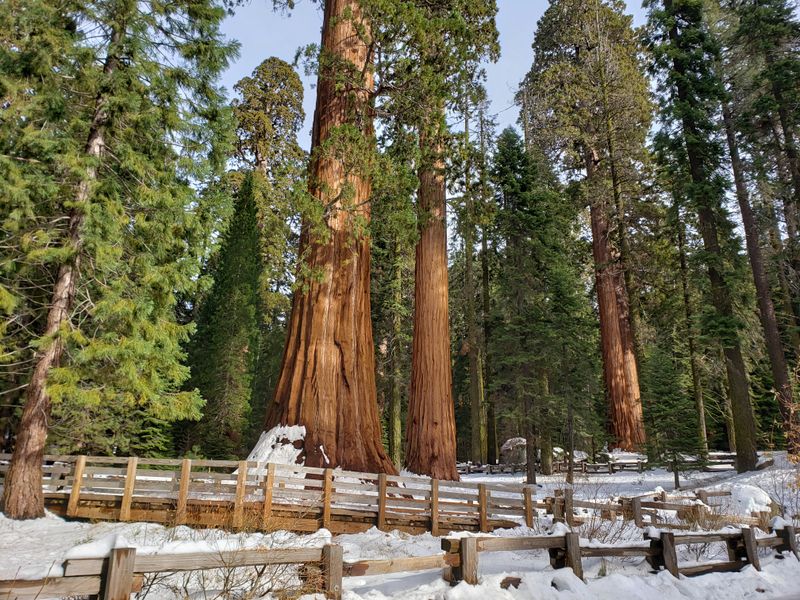
General Sherman holds the undisputed title of largest tree on Earth by volume, containing an estimated 52,500 cubic feet of wood. Located in Sequoia National Park’s Giant Forest, this 275-foot giant sequoia weighs approximately 2.7 million pounds.
Its base measures over 36 feet in diameter, and its largest branch alone is nearly seven feet thick.
The tree was named in 1879 by naturalist James Wolverton, who had served under General William Tecumseh Sherman during the Civil War.
Despite its massive size, General Sherman continues growing each year, adding enough wood to create an entire 60-foot tree annually.
Scientists estimate its age at around 2,200 years, making it relatively young compared to some bristlecone pines.
A paved, accessible trail leads from the parking area down to the tree, though the return climb can challenge visitors unaccustomed to the 6,800-foot elevation.
The surrounding grove contains countless other massive sequoias, but General Sherman’s combination of height, girth, and overall volume remains unmatched anywhere on the planet.
The Lone Cypress, California’s Most Iconic Coastal Tree (Monterey)
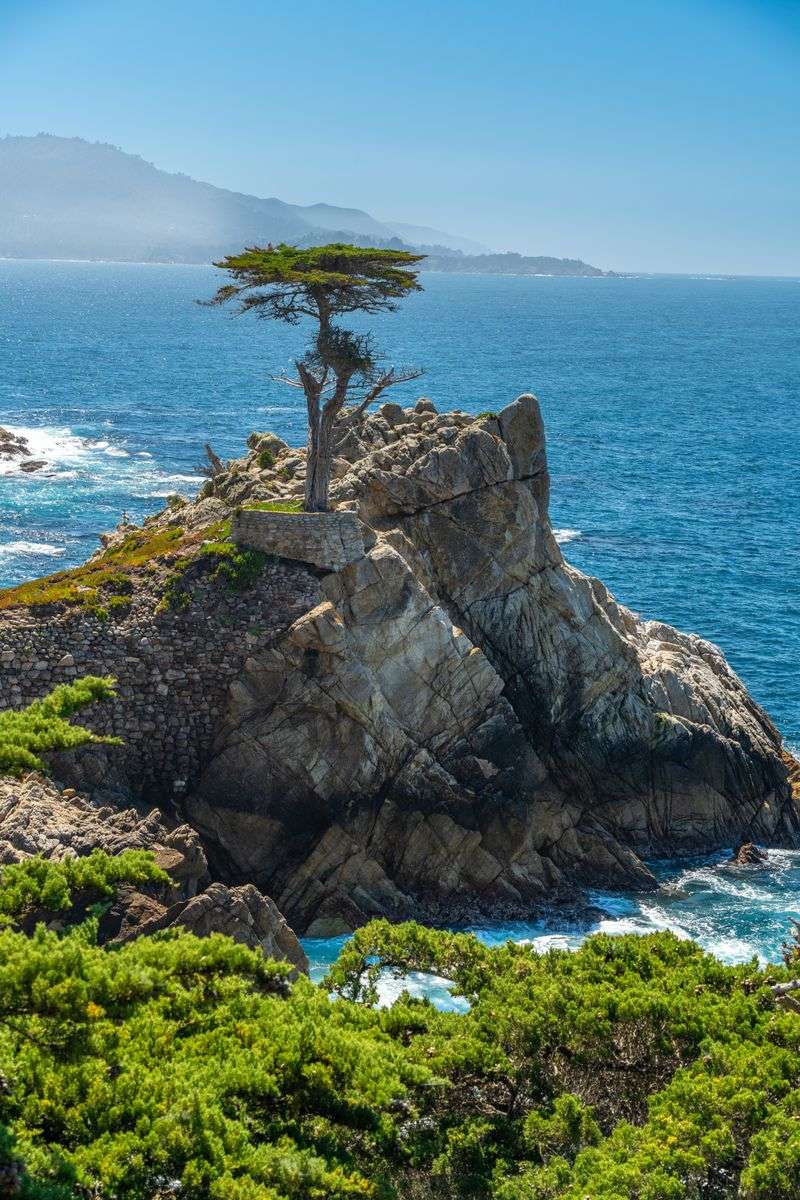
Perched on a granite outcrop along the 17-Mile Drive in Monterey, the Lone Cypress has become one of California’s most photographed trees. This Monterey cypress is estimated to be over 250 years old, clinging to its rocky perch above the crashing Pacific waves.
Its wind-sculpted silhouette symbolizes the rugged beauty of California’s coast.
The tree stands on private property owned by Pebble Beach Company, which has trademarked its image for commercial use. Support cables help stabilize the tree against strong coastal winds and the effects of age.
Despite these interventions, the cypress remains a powerful symbol of resilience and natural beauty.
Viewing areas along the 17-Mile Drive offer perfect vantage points for photographs, especially during golden hour when the setting sun illuminates the cypress against the ocean backdrop.
The Monterey Peninsula’s cypress groves once covered much of the coastline, but development and natural forces have reduced their range.
This solitary survivor reminds us of the delicate balance between preserving natural icons and sharing them with millions of admirers.