These Native Plants Support More Species Than You Expect In Arizona
You might look at a desert yard and see quiet gravel and tough plants, but beneath that calm surface there is constant movement, feeding, nesting, and pollinating every single day.
Arizona’s native plants do far more than survive heat and drought, they support birds, bees, butterflies, and even small mammals in ways most landscapes never match.
One well chosen native plant can turn an ordinary yard into a living habitat that hums with life from sunrise to dusk. In Arizona, plants that belong here naturally draw in the species that evolved beside them.
When a native shrub blooms or a cactus fruits, creatures respond almost instantly, and your yard begins to feel alive in a way gravel alone never could.
1. Desert Milkweed Hosts Monarch Caterpillars And Native Pollinators
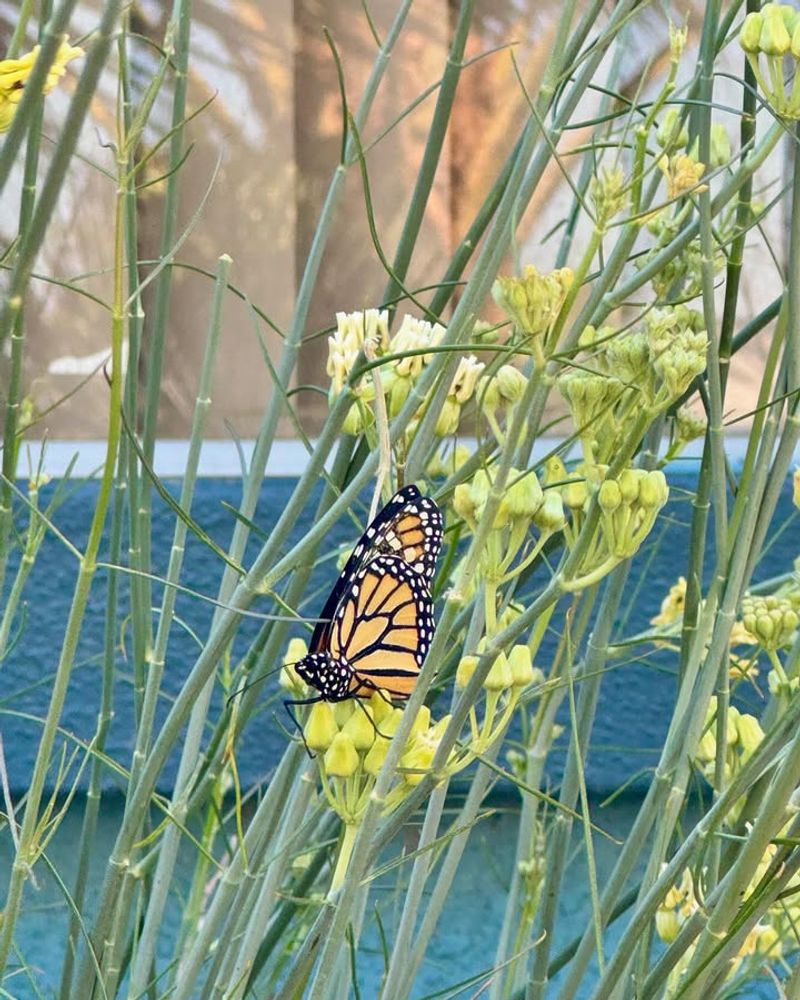
Monarch butterflies depend entirely on milkweed plants to complete their life cycle, and desert milkweed stands as their primary food source across Arizona.
Female monarchs lay eggs exclusively on milkweed leaves because the caterpillars can only eat this plant.
Without it, monarchs simply cannot reproduce. Desert milkweed thrives in hot, dry conditions that would stress other plants, making it perfectly adapted to Arizona gardens.
Beyond monarchs, this tough perennial attracts an impressive variety of native bees, beetles, and other butterflies. The clustered white and pink flowers produce abundant nectar during spring and summer months.
Native carpenter bees and bumblebees visit constantly, gathering pollen and nectar to feed their young. Milkweed bugs, though they feed on the seeds, don’t harm the plant and actually help spread seeds to new locations.
Growing desert milkweed requires minimal water once established, making it ideal for water-conscious Arizona gardeners. Plant it in full sun with well-draining soil, and it will return year after year.
The plant naturally goes dormant during extreme heat or cold, then bounces back when conditions improve. Seeds develop in distinctive pods that split open to release fluffy, wind-dispersed seeds.
By adding just a few desert milkweed plants to your Arizona landscape, you create a breeding ground for monarchs while supporting dozens of other pollinator species throughout the growing season.
2. Mesquite Trees Feed Birds, Bees, And Beneficial Insects Year Round
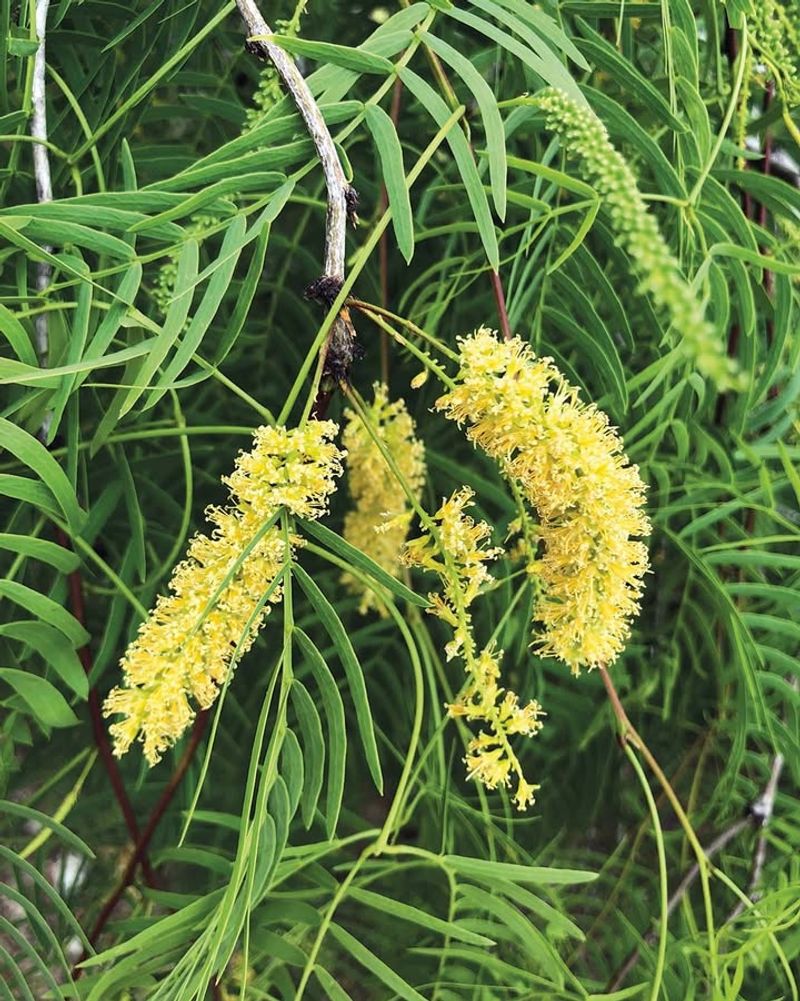
Mesquite trees function as wildlife cafeterias across Arizona’s deserts, providing food resources during every season. Spring brings fragrant yellow flower spikes that draw native bees by the hundreds.
These blooms produce protein-rich pollen and sweet nectar that fuel bee colonies when they’re building up their populations. Honeybees, carpenter bees, and countless native bee species all depend heavily on mesquite nectar during the critical spring months.
Summer transforms the flowers into long seed pods packed with nutrition. Coyotes, javelinas, rabbits, and ground squirrels all feast on fallen mesquite pods.
Birds including curve-billed thrashers, cactus wrens, and Gambel’s quail eat the seeds directly from the pods. The dense, thorny branches provide safe nesting sites for many Arizona bird species, protecting them from predators while they raise their young.
Even during winter, mesquite trees support wildlife through their structure and remaining seeds. Insects shelter in the bark crevices, and insect-eating birds glean these hidden treats throughout cooler months.
Your Arizona Garden Changes Every Week. Your Plan Should Too.
Gardening in Arizona changes quickly throughout the season. Every Friday you’ll receive a simple weekly plan showing exactly what to plant, prune, fertilize, harvest, and protect so you never miss the right timing.
The tree’s nitrogen-fixing roots actually improve soil quality for surrounding plants, creating better habitat for ground-dwelling insects and small mammals.
Mesquite wood also hosts beetle larvae that woodpeckers excavate, creating cavities later used by owls, flycatchers, and other cavity-nesting birds.
A single mature mesquite in your Arizona yard becomes a year-round hub of activity, supporting far more species than most people ever notice.
3. Saguaro Cactus Supports Nesting Birds And Night Pollinators
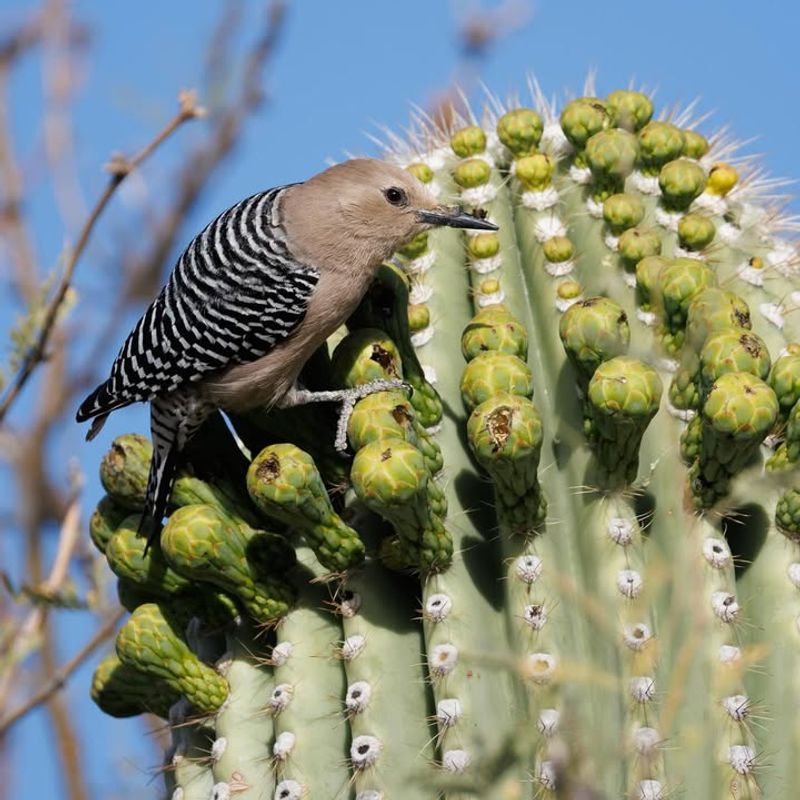
Saguaro cacti stand as iconic symbols of Arizona, but their real importance lies in the incredible number of species they support. These giant cacti can live over 150 years, and as they age, they become increasingly valuable to wildlife.
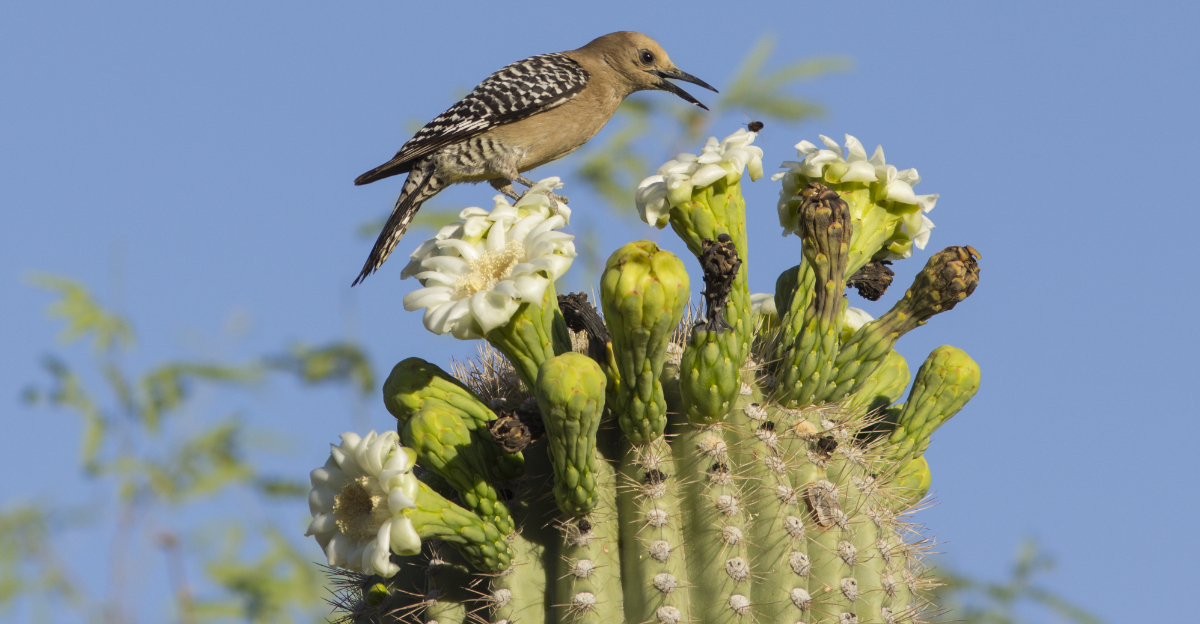
Gila woodpeckers and gilded flickers excavate nest cavities in the thick flesh, creating holes that countless other species will use for decades.
After the original birds move on, elf owls, purple martins, American kestrels, and even bats move into these ready-made homes.
Late spring brings spectacular white flowers that open at night, specifically timed for nocturnal pollinators. Lesser long-nosed bats fly between saguaros, drinking nectar and transferring pollen as they feed.
White-winged doves also pollinate saguaro flowers during early morning hours before the blooms close.
Without these specific pollinators, saguaros couldn’t reproduce, and without saguaros, these animals would struggle to find adequate food sources in Arizona’s deserts.
The resulting red fruits provide critical summer food when other resources become scarce. Doves, thrashers, and many other bird species time their breeding to coincide with saguaro fruit ripening.
Ground squirrels, coyotes, and javelinas eat fallen fruits, spreading seeds throughout the desert. Even the ribs and woody skeleton of deceased saguaros provide shelter for insects, lizards, and small mammals.
Protecting existing saguaros in Arizona landscapes means preserving entire communities of interconnected species that depend on these remarkable cacti.
4. Brittlebush Attracts Spring Pollinators When Little Else Is Blooming
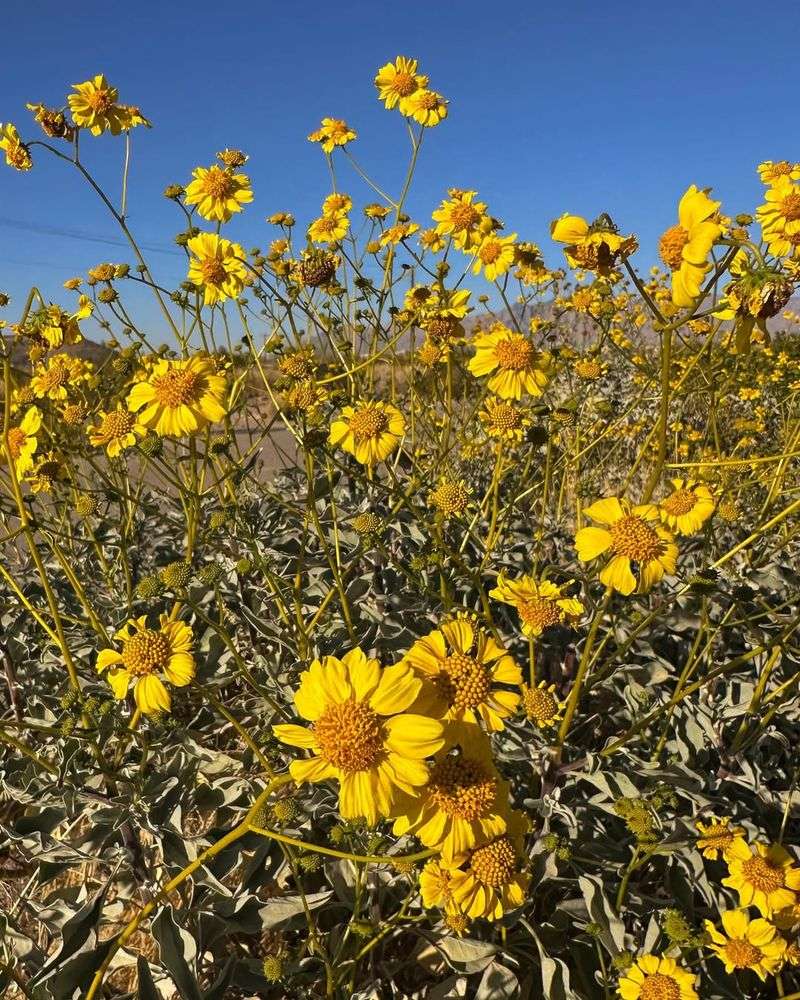
Brittlebush explodes with golden yellow flowers during late winter and early spring, often blooming before most other Arizona plants wake up. This early timing makes it absolutely critical for pollinators emerging from winter dormancy.
Native bees need immediate nectar sources to rebuild their energy after months of inactivity, and brittlebush delivers exactly when they need it most.
The bright daisy-like flowers cluster on tall stalks above silvery foliage, creating landing platforms that bees find irresistible.
Dozens of native bee species visit brittlebush throughout its extended bloom period. Digger bees, mason bees, and small sweat bees all gather pollen to provision their underground nests.
Butterflies including painted ladies and cloudless sulphurs also nectar on the abundant flowers.
The plant’s resinous leaves deter most herbivores but attract specialized insects that have adapted to feed on this specific plant, adding to the diversity it supports.
Brittlebush thrives in the hottest, driest spots of Arizona gardens where other plants struggle. It needs virtually no supplemental water once established and actually looks its best in poor, rocky soil.
The silvery leaves reflect intense sunlight, keeping the plant cool while creating an attractive contrast to other desert plants. After blooming finishes, the seed heads provide food for goldfinches and other small birds.
Plant brittlebush on slopes, in rock gardens, or as a colorful groundcover, and you’ll create an early-season pollinator magnet that requires almost no care while supporting critical spring wildlife in Arizona.
5. Desert Marigold Keeps Bees Active Through Long Warm Seasons
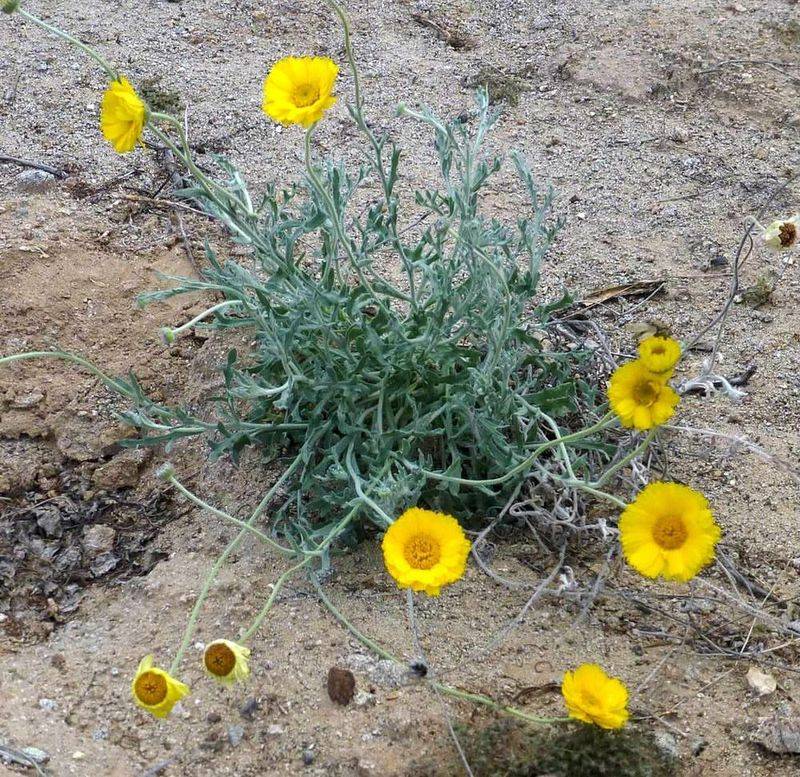
Desert marigold blooms almost continuously from spring through fall, and sometimes even during mild Arizona winters. This remarkably long flowering period makes it one of the most valuable pollinator plants you can grow.
While other plants bloom for a few weeks then fade, desert marigold keeps producing fresh flowers month after month. Native bees quickly learn to rely on this consistent nectar source, visiting the cheerful yellow blooms throughout the day.
Small native bees especially benefit from desert marigold’s compact flowers. The dark center disk contains hundreds of tiny florets, each producing a small amount of nectar and pollen.
Sweat bees, leafcutter bees, and small digger bees work methodically across each flower head, gathering resources efficiently.
Butterflies also visit regularly, and the low-growing plants provide shelter for ground-dwelling beneficial insects like ground beetles that hunt pest species in Arizona gardens.
Desert marigold self-seeds readily, creating expanding patches that increase its value to pollinators over time.
The plants grow quickly from seed and begin blooming within weeks, making them perfect for filling gaps in new landscapes.
They prefer full sun and well-drained soil but tolerate a wide range of conditions across Arizona. Deadheading spent flowers encourages even more blooms, though letting some go to seed ensures future plants.
The foliage has a pleasant scent when brushed, and the plants stay compact and tidy without pruning.
By establishing desert marigold in your yard, you guarantee that bees always have something to visit, supporting their populations through Arizona’s long growing season.
6. Chuparosa Fuels Hummingbirds During Dry Months
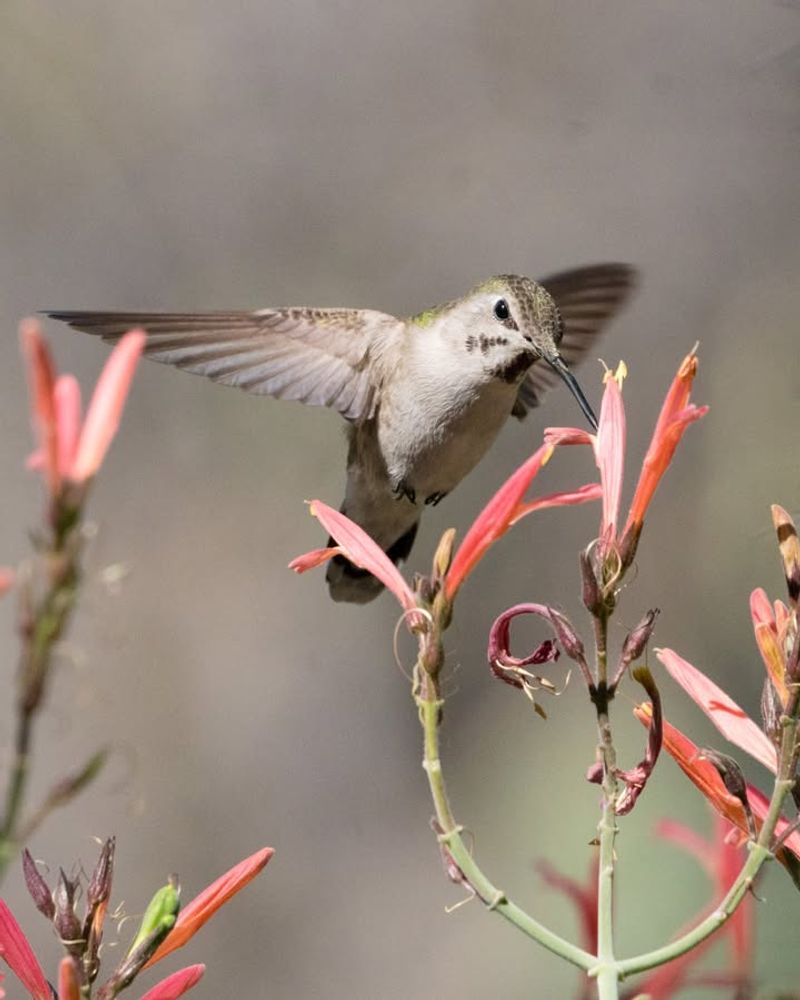
Chuparosa produces brilliant red tubular flowers during the cooler months when many Arizona plants stop blooming.
This winter and early spring flowering makes it essential for hummingbirds migrating through the state or overwintering in southern Arizona.
Costa’s and Anna’s hummingbirds rely on chuparosa nectar to fuel their fast metabolism. The tubular flowers match their bill length, allowing easy access to nectar while keeping most other pollinators out.
The shrub’s leafless appearance during dry periods is actually an adaptation that helps it survive Arizona’s intense heat. Chuparosa drops its leaves to conserve water, then produces flowers directly on green stems.
This strategy allows it to bloom even during drought when other plants have shut down completely.
Hummingbirds memorize the locations of reliable chuparosa plants and return repeatedly, sometimes defending favorite shrubs from other hummingbirds.
Native carpenter bees with long tongues also visit chuparosa flowers, though they’re secondary pollinators compared to hummingbirds. The plant’s arching branches create shelter for small birds and lizards seeking shade during hot Arizona days.
Chuparosa grows quickly and tolerates hard pruning, making it easy to maintain at any size. Plant it near windows or patios where you can watch hummingbird activity up close.
The shrub needs minimal water once established and actually blooms more profusely when kept slightly dry.
Adding chuparosa to your Arizona landscape guarantees hummingbird visits during months when these tiny birds need reliable food sources most desperately.
7. Native Grasses Shelter Ground-Dwelling Insects And Small Wildlife
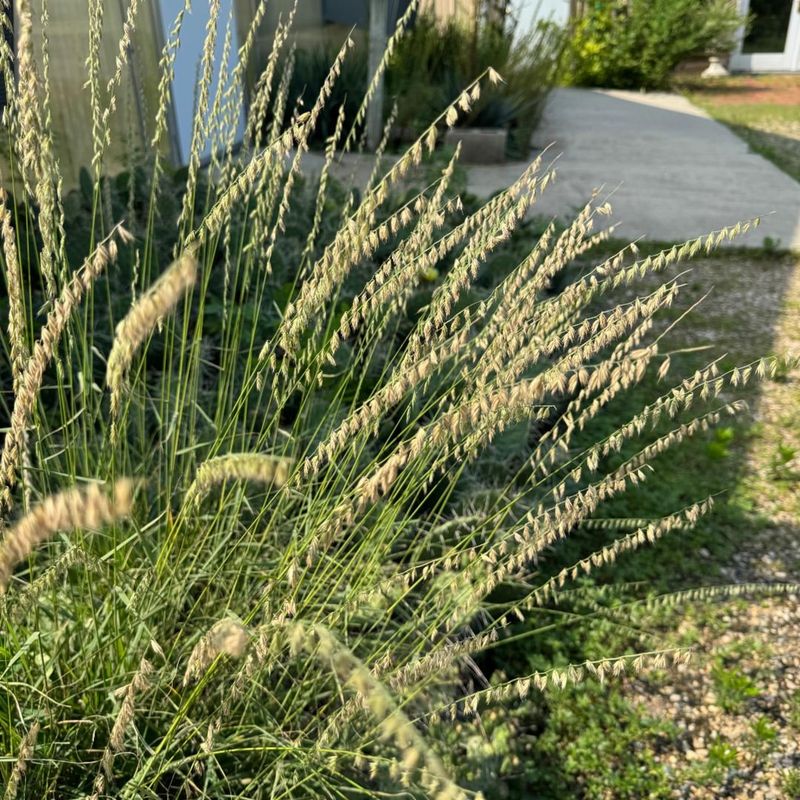
Native grasses create hidden worlds at ground level that support an astonishing diversity of Arizona wildlife. Bunch grasses like blue grama, deer grass, and sideoats grama grow in clumps rather than forming solid lawns, leaving bare soil between plants.
These gaps become highways for ground beetles, harvester ants, and other beneficial insects that control pest populations.
The grass clumps themselves shelter countless small creatures from predators and extreme temperatures that define Arizona’s climate.
Grasshoppers, crickets, and katydids feed on grass blades and in turn become food for lizards, birds, and small mammals. Sparrows, towhees, and quail forage beneath native grasses, finding both seeds and insects.
The dense root systems create underground networks that earthworms and other soil organisms use, improving soil health throughout your Arizona yard.
During summer monsoons, grass clumps trap moisture and organic matter, creating microhabitats where salamanders and toads can survive the dry months.
Native grass seed heads provide food from late summer through winter for numerous bird species. Curved-bill thrashers, mourning doves, and many sparrow species eat the nutritious seeds.
Pocket mice and kangaroo rats also harvest grass seeds, storing them in underground chambers. The dried grass blades become nesting material for birds and small mammals.
Unlike non-native lawn grasses, Arizona native grasses need no mowing, minimal water, and no fertilizers or pesticides.
They go dormant during extreme heat or cold, then green up quickly when conditions improve, supporting wildlife year-round with almost no maintenance required.
8. Desert Willow Provides Nectar For Bees And Shelter For Songbirds
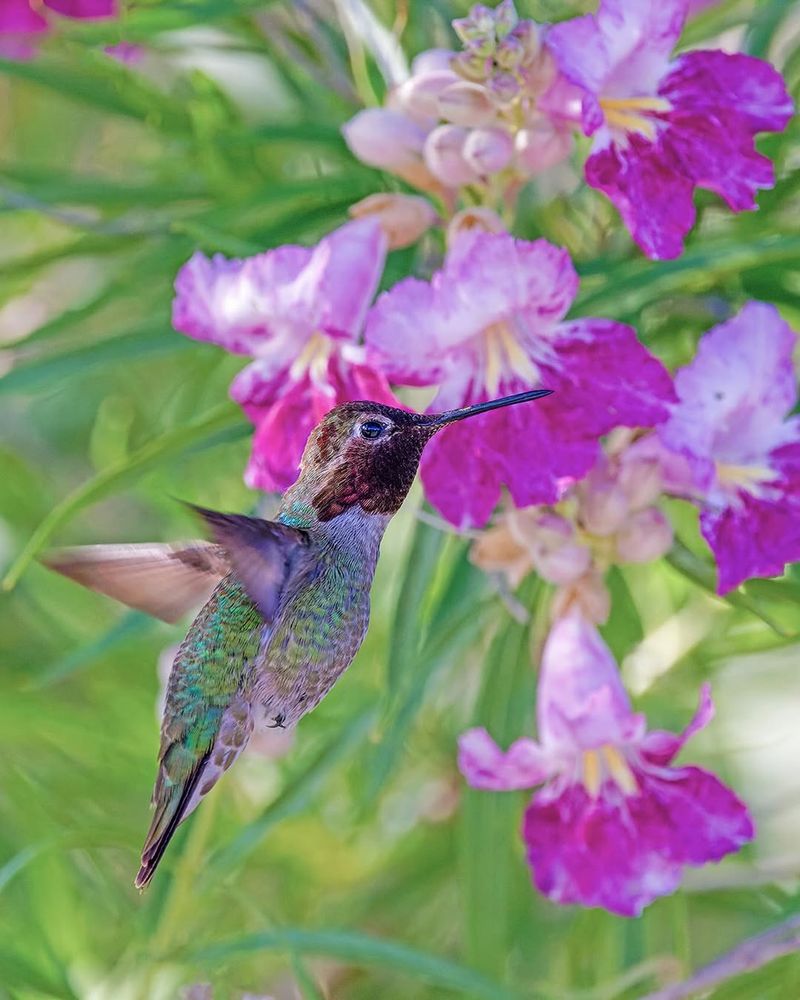
Desert willow produces stunning orchid-like flowers from late spring through early fall, creating one of the longest bloom periods of any Arizona native tree.
The large, trumpet-shaped flowers come in shades of pink, purple, and white, often with darker throats that guide pollinators to nectar.
Bumblebees and carpenter bees visit constantly, crawling deep into the flowers to reach nectar pools at the base. The flowers are large enough that bees must work hard to access resources, ensuring thorough pollen transfer between trees.
Valley carpenter bees, Arizona’s largest native bee species, especially favor desert willow blooms. These impressive bees are perfectly sized to pollinate the big flowers efficiently.
Hummingbirds also visit desert willow, though they’re less effective pollinators than the bees. The tree’s airy canopy and multiple trunks create ideal nesting sites for verdins, Lucy’s warblers, and other small songbirds common across Arizona.
The open branch structure allows birds to spot predators while providing enough cover to feel secure.
Long seed pods develop after flowering, persisting through winter and providing food for finches and other seed-eating birds. The pods split open to release flat, winged seeds that birds scatter throughout Arizona landscapes.
Desert willow grows quickly, often reaching fifteen feet tall within just a few years. It tolerates heat, drought, and poor soil while requiring almost no care beyond occasional deep watering during establishment.
The tree naturally grows with multiple trunks and an irregular shape that adds character to desert gardens while supporting diverse wildlife throughout the year.