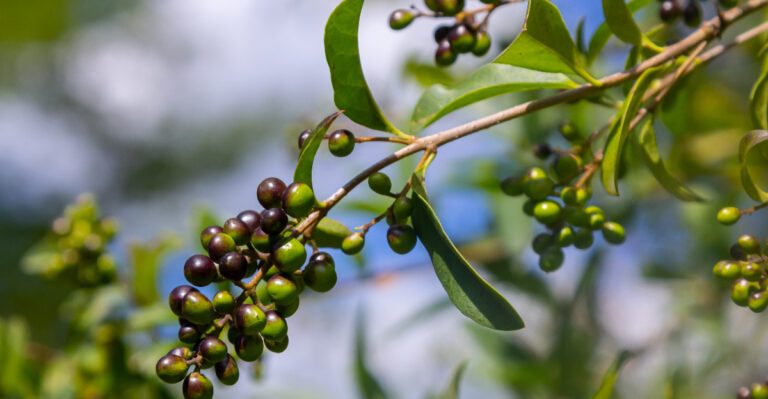
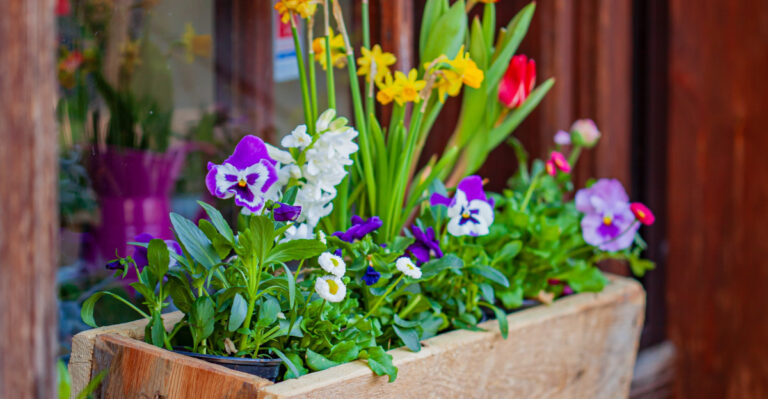
These Are The First Ohio Native Plants Birds Look For After Winter
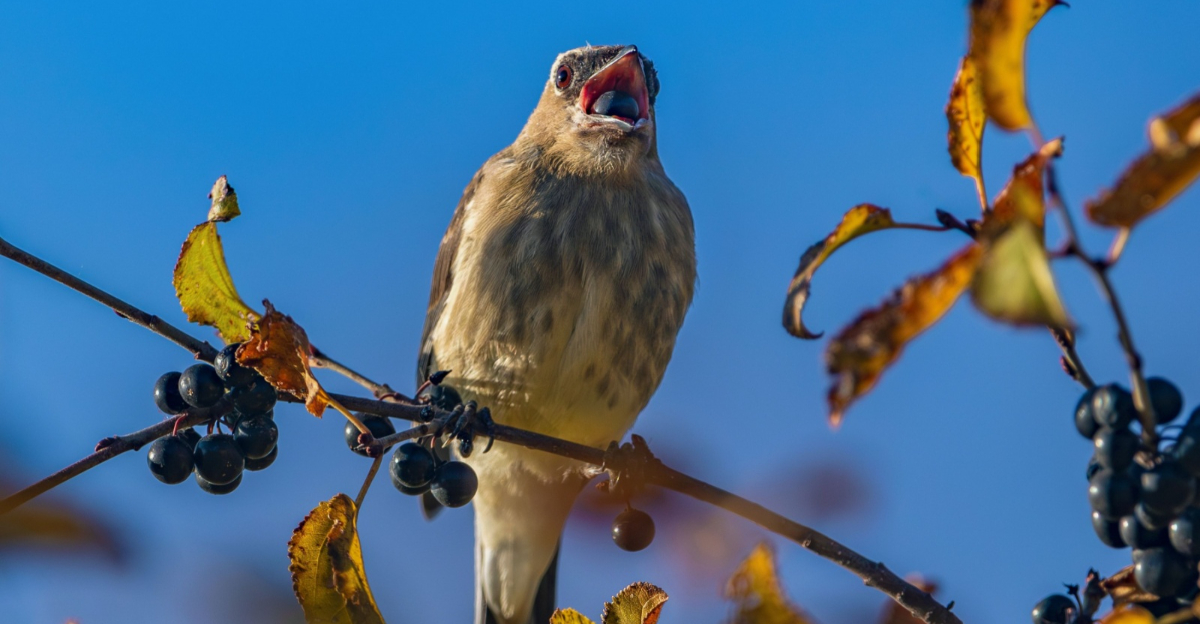
On the first mild mornings after a long Ohio winter, the garden feels almost empty. Then movement returns.
A sparrow drops low through last year’s stems, a robin crosses the yard, a chickadee tests the quiet air. Birds do not wait for full spring.
They search early, moving with purpose toward the plants that have always supported them when the season turns. Some landscapes seem to wake instantly with this activity, while others stay silent a while longer. The difference often lies in what grows there.
Certain Ohio native plants become early gathering points, drawing birds back as soon as conditions allow. These plants do more than signal spring.
They help restart the living rhythm of the garden, offering the first dependable resources after winter’s long pause and shaping where birds choose to return each year.
1. Serviceberry Feeds The First Hungry Birds
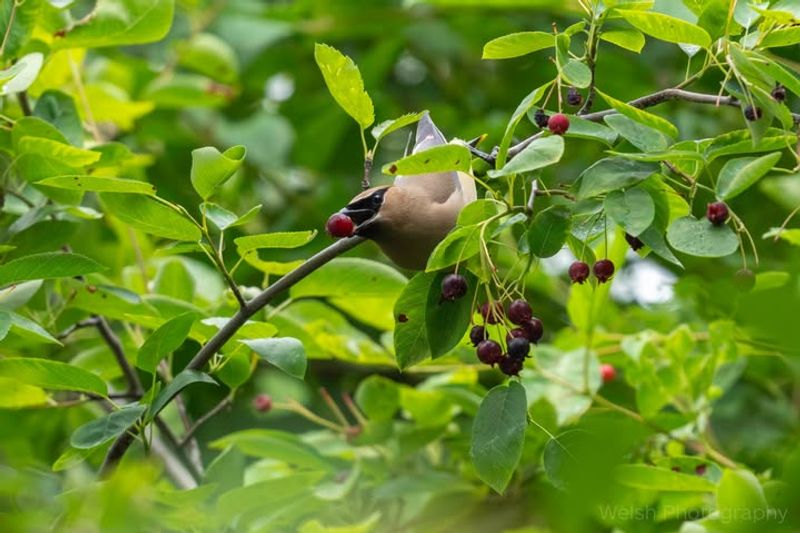
Right around the time robins return to Ohio neighborhoods, serviceberry bushes burst into delicate white blooms that signal the start of something essential. Those early flowers attract the season’s first wave of insects, which in turn bring hungry warblers, chickadees, and other insect-eating birds to your yard.
This timing is not coincidental but perfectly synchronized with bird migration and nesting needs.
WBy early summer, serviceberry produces small purple-black fruits that ripen earlier than almost any other native option. Cedar waxwings, catbirds, orioles, and thrushes eagerly devour these berries, often stripping branches clean within days.
The fruit provides critical calories and nutrients for birds preparing to nest or continuing their northward journey.
Beyond food, serviceberry offers sturdy branching structure that many species use for early nest sites. The shrub or small tree form provides excellent cover and protection from spring storms.
In Ohio’s unpredictable late winter and early spring weather, this combination of food and shelter makes serviceberry indispensable.
Gardeners appreciate serviceberry’s adaptability to various soil conditions and its beautiful four-season interest. Wildlife experts widely consider it one of the most valuable native plants for supporting bird populations during the crucial early weeks after winter ends across the Midwest.
2. Red Osier Dogwood Brings Early Berries
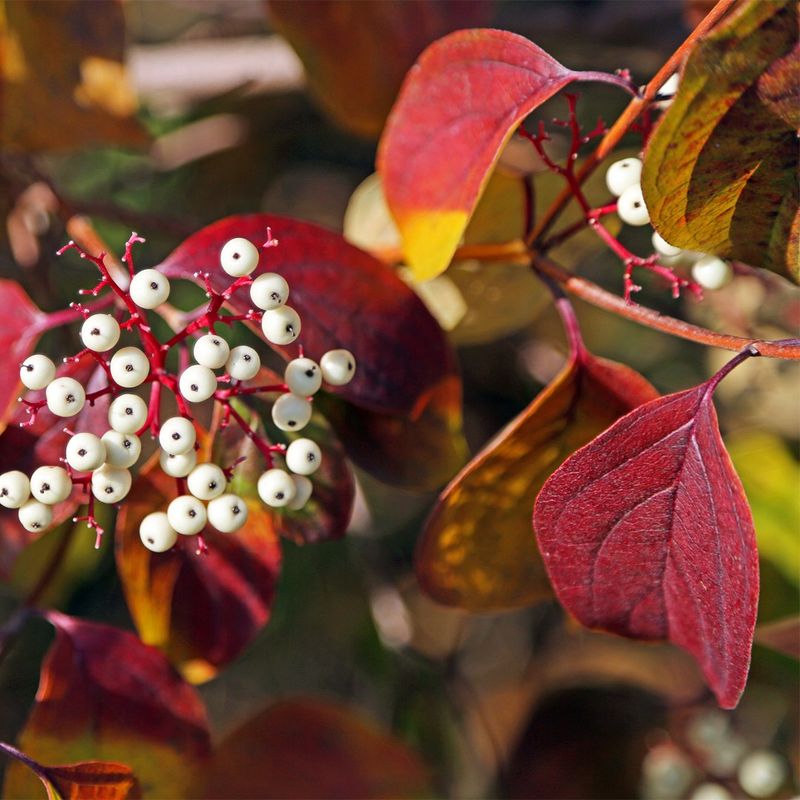
Bright red stems catch your eye first, glowing against Ohio’s gray late-winter landscape like natural beacons. But red osier dogwood offers birds something far more valuable than visual appeal.
Its white berries sometimes persist through winter into late winter or early spring, providing emergency rations when almost nothing else remains available.
Robins, bluebirds, and woodpeckers rely heavily on these leftover berries during March cold snaps that send temperatures plummeting. Dogwood berries provide valuable energy that helps birds maintain body heat during unpredictable spring weather.
This matters enormously when insects remain scarce and ground-feeding becomes impossible due to lingering snow or frozen soil.
The dense, multi-stemmed growth habit creates excellent shelter and future nesting sites. Cardinals, catbirds, and thrashers frequently build nests within the protective tangle of red osier branches.
The shrub’s tolerance for wet areas makes it perfect for low spots in yards where other plants struggle.
Your Ohio Garden Changes Every Week. Your Plan Should Too.
Gardening in Ohio changes quickly throughout the season. Every Friday you’ll receive a simple weekly plan showing exactly what to plant, prune, fertilize, harvest, and protect so you never miss the right timing.
Ohio gardeners value red osier dogwood’s extreme cold hardiness and its ability to spread and form thickets that benefit entire bird communities. When planted near water features or in rain gardens, it creates critical early-season habitat exactly where birds naturally congregate during spring’s unpredictable conditions.
3. Eastern Redbud Supports Early Insects
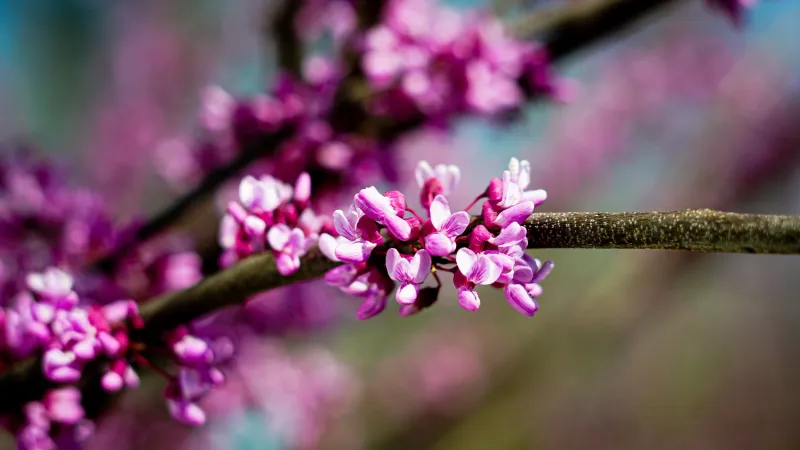
Before most trees even begin to leaf out, eastern redbud explodes with magenta-pink flowers that transform bare branches into spectacular displays. Those early blooms serve a purpose far beyond beauty.
They attract the season’s first emerging insects, including native bees, flies, and small beetles that become immediate food sources for arriving migrants.
Warblers, vireos, and tanagers actively forage among redbud flowers, gleaning tiny insects from petals and branches. This protein-rich food is absolutely essential for birds recovering from long migration journeys and preparing for the energy demands of nesting.
Spring insects provide nutrients that seeds and berries simply cannot match.
The broad, heart-shaped leaves that follow flowering create ideal surfaces for caterpillars and other insect larvae. These soft-bodied creatures become primary food for nestlings throughout late spring.
A single redbud tree can support hundreds of caterpillars, which in turn feed multiple broods of baby birds.
Eastern redbud’s understory growth habit makes it perfect for smaller Ohio yards where full-sized trees won’t fit. Its early bloom timing and long season of insect support make it irreplaceable in bird-friendly landscapes.
Ecologists recognize redbud as an important native species that supports early-season insects.
4. Wild Plum Offers Spring Food And Shelter
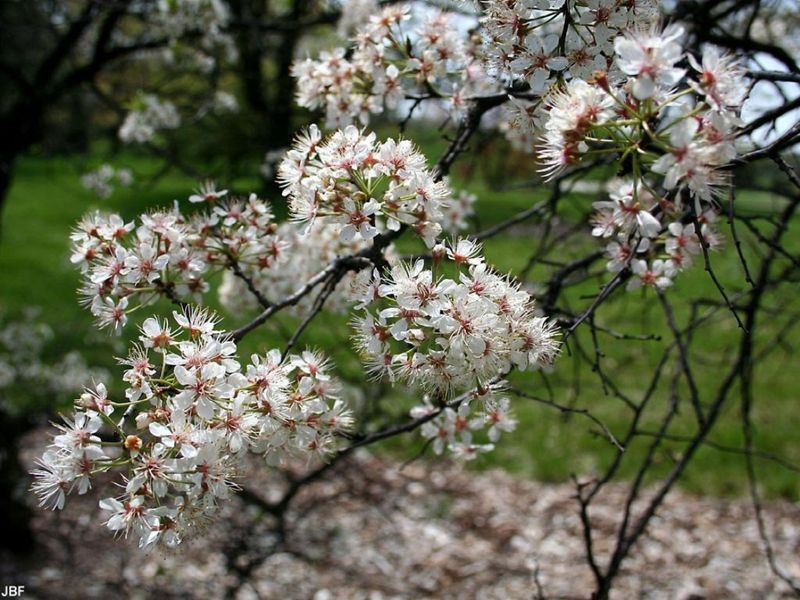
Dense tangles of wild plum create fortress-like shelter that birds instinctively seek when harsh spring winds whip through Ohio landscapes. The thorny, twisting branches form impenetrable barriers that protect nests from predators and shield birds from late-season storms.
Brown thrashers, mockingbirds, and cardinals particularly favor these secure nesting sites.
Early white blooms arrive just as temperatures begin stabilizing, attracting clouds of small insects that provide essential protein. Birds spend hours foraging among wild plum flowers, picking off tiny flies, beetles, and emerging native bees.
This early insect activity makes wild plum thickets hotspots for bird watching during April and early May.
Later in the season, the small red or yellow fruits ripen and attract entirely different bird species. Catbirds, robins, and waxwings gorge on ripe plums, often visiting repeatedly throughout the day.
The fruit provides important late-summer nutrition before fall migration begins.
Homeowners appreciate wild plum’s ability to spread and form naturalized hedgerows that require minimal maintenance. In backyard habitat projects, these thickets create the kind of dense, multi-layered cover that commercial landscapes lack but birds desperately need.
The combination of early flowers, protective structure, and later fruit makes wild plum a complete package for supporting Ohio bird populations through multiple seasons.
5. Chokeberry Fuels Birds After Winter
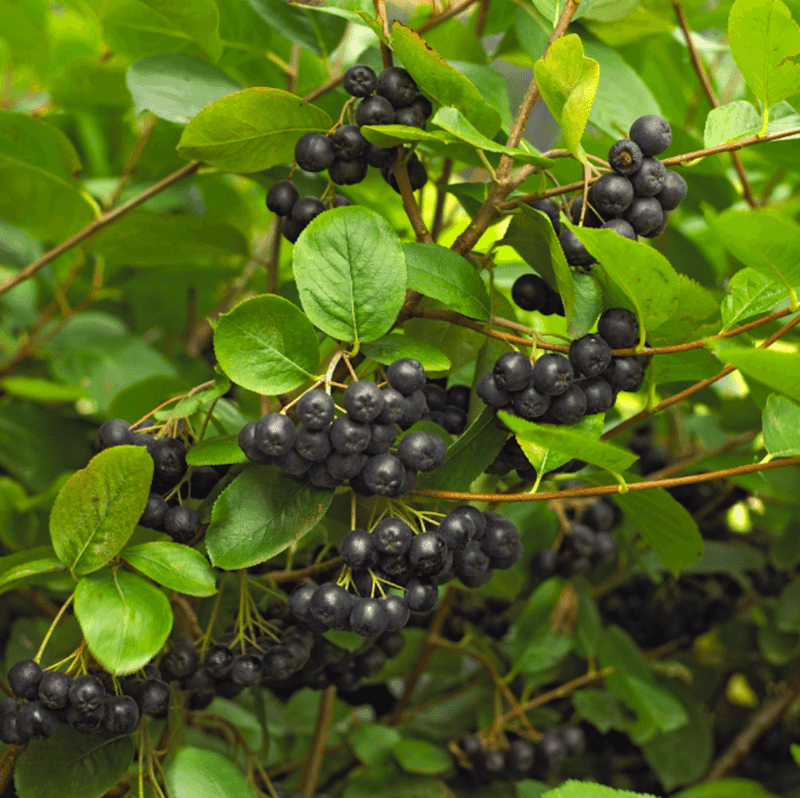
Long after most berries have vanished or rotted, chokeberry fruits cling stubbornly to bare branches through Ohio’s coldest months. These dark purple-black berries often last until March or even early April, providing literal lifesaving nutrition during the harshest stretch of late winter.
When unexpected snowstorms blanket the ground, chokeberries become emergency food supplies.
Bluebirds, robins, and cedar waxwings rely on these persistent fruits when insects remain dormant and other food sources stay buried. The berries’ natural sugars provide quick energy during late-winter cold.
During March’s notorious temperature swings, this reliable food source prevents starvation.
Chokeberry’s exceptional cold tolerance means it thrives throughout Ohio without winter damage or reduced fruit production. The shrub produces abundant annual berry crops that support large flocks rather than just individual birds.
When waxwing flocks descend on chokeberry plantings, they can number in the dozens, all feeding simultaneously.
Gardeners value chokeberry’s compact size, beautiful fall color, and complete lack of pest problems. Wildlife biologists recommend it specifically for early-spring bird support because its fruiting reliability never wavers.
In landscapes designed to help birds survive the critical late-winter period, chokeberry stands as one of the most dependable and valuable native plants available to Ohio homeowners.
6. Spicebush Hosts Early Caterpillars
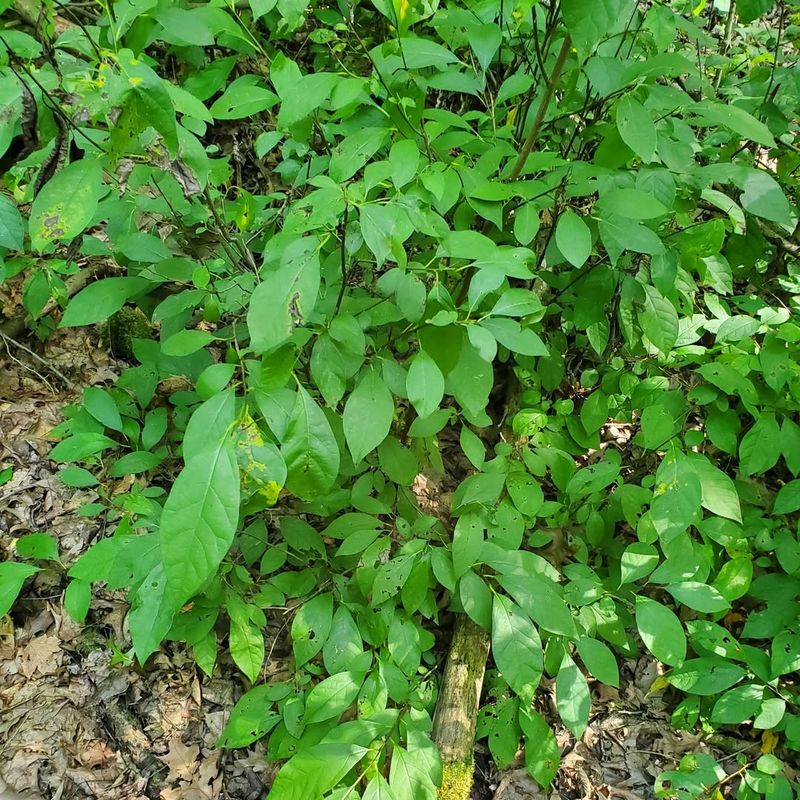
Tiny yellow flowers appear on spicebush branches before leaves even begin unfurling, releasing a subtle fragrance across Ohio woodlands. But the real magic happens a few weeks later when spicebush becomes a caterpillar factory.
This native shrub hosts the larvae of spicebush swallowtail butterflies and several moth species, creating concentrated protein sources exactly when parent birds need them most.
Chickadees, titmice, and warblers methodically search spicebush foliage for soft-bodied caterpillars to feed their nestlings. A single brood of baby birds can consume hundreds of caterpillars during the two weeks before fledging.
Many songbird species rely heavily on caterpillars to raise their young, making host plants like spicebush absolutely critical.
Later in summer, spicebush produces bright red berries that provide additional food value. Thrushes, vireos, and flycatchers eagerly consume these lipid-rich fruits before fall migration begins.
The shrub’s layered contributions across multiple seasons demonstrate why native plants outperform ornamental alternatives.
Spicebush thrives in shade and moist soils, making it perfect for challenging spots under mature trees where lawn grass fails. Its aromatic leaves deter deer browsing while remaining perfectly safe for beneficial insects and birds.
For Ohio gardeners committed to supporting complete ecosystems rather than just offering supplemental food, spicebush represents an essential foundation species.
7. Virginia Creeper Provides Leftover Winter Berries
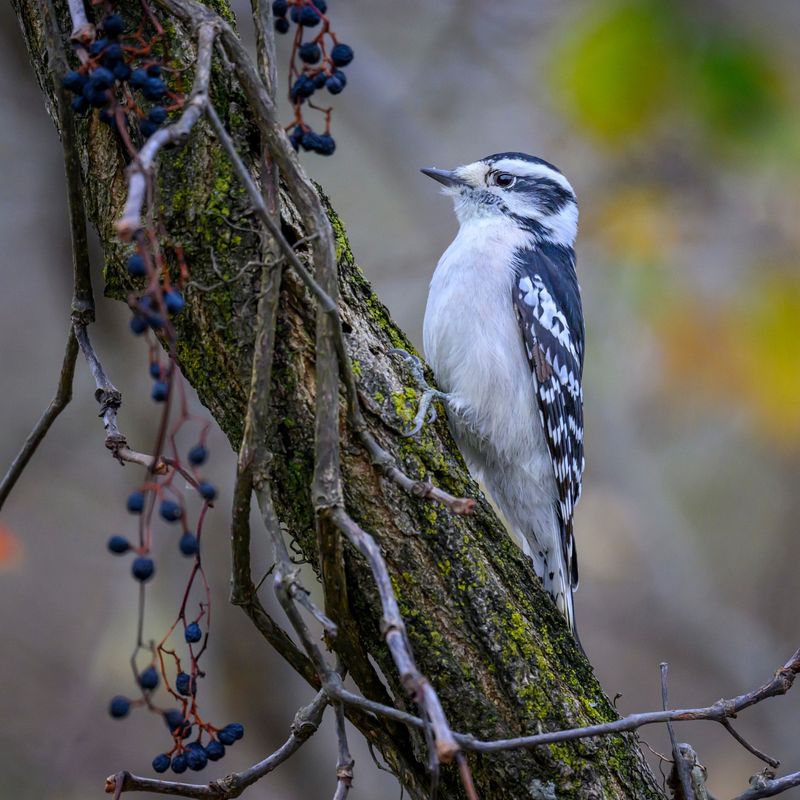
Climbing up tree trunks and fence lines, Virginia creeper produces clusters of dark blue berries that sometimes persist through much of winter. By late February and early March, when desperate birds have exhausted most other food sources, these remaining berries become precious discoveries.
Flickers, woodpeckers, and mockingbirds actively search vine-covered areas for leftover fruit.
The berries’ high fat content provides concentrated calories that help birds recover from overnight cold and fuel daytime activity. During late winter’s energy crunch, every berry matters.
Virginia creeper’s climbing habit also creates sheltered microclimates along trunk surfaces where temperatures stay slightly warmer and birds find protected roosting spots.
As spring arrives, the vine’s dense foliage offers excellent cover for nesting birds. Robins and mourning doves sometimes build nests within Virginia creeper tangles growing on buildings or trees.
The combination of leftover winter food and spring shelter makes this native vine doubly valuable.
Ohio homeowners sometimes view Virginia creeper as overly aggressive, but strategic placement on sturdy structures creates vertical habitat that benefits birds without causing problems. The spectacular red fall color adds ornamental value while the ecological contributions support bird populations during the most challenging seasonal transition.
For early-spring bird support, few native plants match Virginia creeper’s combination of persistent winter berries and immediate spring shelter.