The 10 Best Night-Blooming Flowers For California Gardens This Season
As the sun dips below the horizon and the air cools, a whole new side of your California garden begins to wake up.
Night blooming flowers bring mystery, fragrance, and soft beauty to outdoor spaces, turning ordinary evenings into something magical.
Pale petals seem to glow under moonlight, sweet scents drift through the air, and quiet pollinators like moths and bats come alive after dark. These nighttime stars thrive in California’s climate and add a fresh layer of interest long after daytime blooms close up.
Plant a few in the right spots and your garden can feel dreamy, peaceful, and full of life every evening.
Some open suddenly at dusk, others release their perfume slowly into the night, creating a relaxing backyard atmosphere perfect for warm evenings outdoors.
Get ready to discover stunning flowers that truly shine when the rest of the garden goes to sleep.
1. Moonflower (Ipomoea alba)
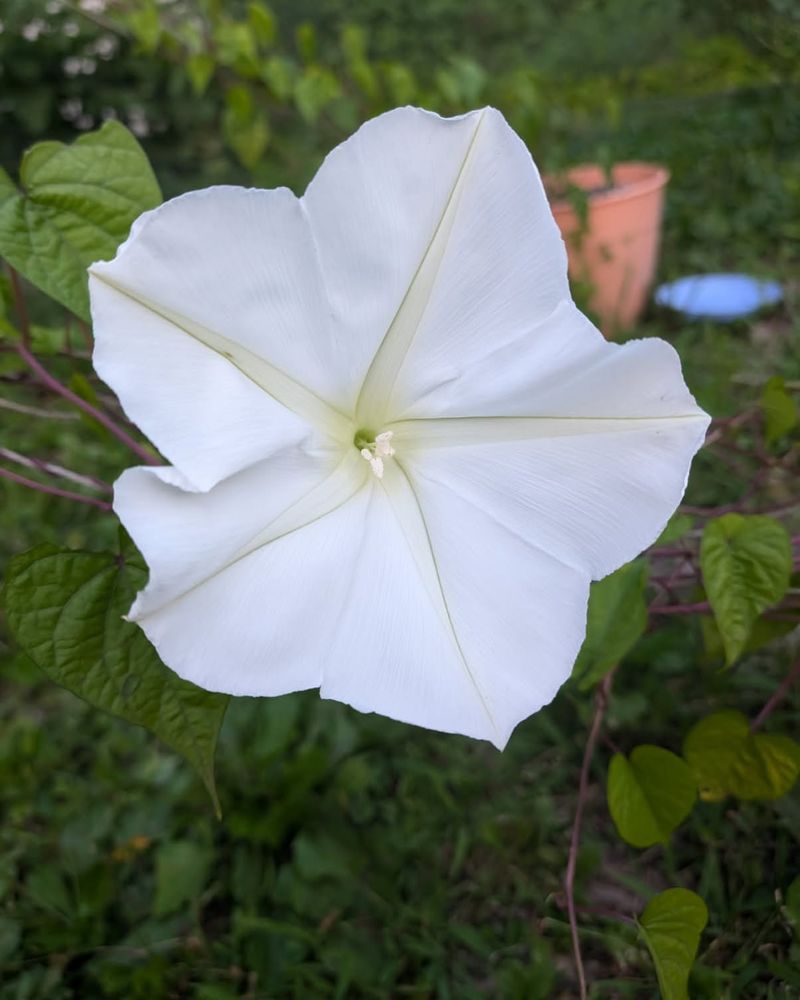
When summer heat finally breaks each evening, moonflowers begin their nightly ritual of unfurling massive white blooms that can span six inches across.
These fast-growing vines climb anything they touch, making them perfect for covering fences, arbors, or even that awkward shed you’ve been meaning to screen.
California’s long warm season gives moonflowers plenty of time to establish and bloom from June through October. They need full sun during the day but show their true beauty once darkness falls.
The flowers open so quickly you can actually watch them spiral open in real time, which never gets old no matter how many times you’ve seen it.
Plant seeds directly in the ground after your last frost date, or start them indoors if you want earlier blooms. They appreciate regular water but handle our dry summers better than you’d expect once established.
Just give them something sturdy to climb because these vines mean business and can reach fifteen feet in a single season.
The fragrance alone makes them worth growing, sweet and heady without being overwhelming, it drifts across your garden on warm nights and draws in sphinx moths that pollinate while they feed.
2. Night-Blooming Jasmine (Cestrum nocturnum)
Few plants announce themselves quite like night-blooming jasmine when it decides to perfume your entire neighborhood.
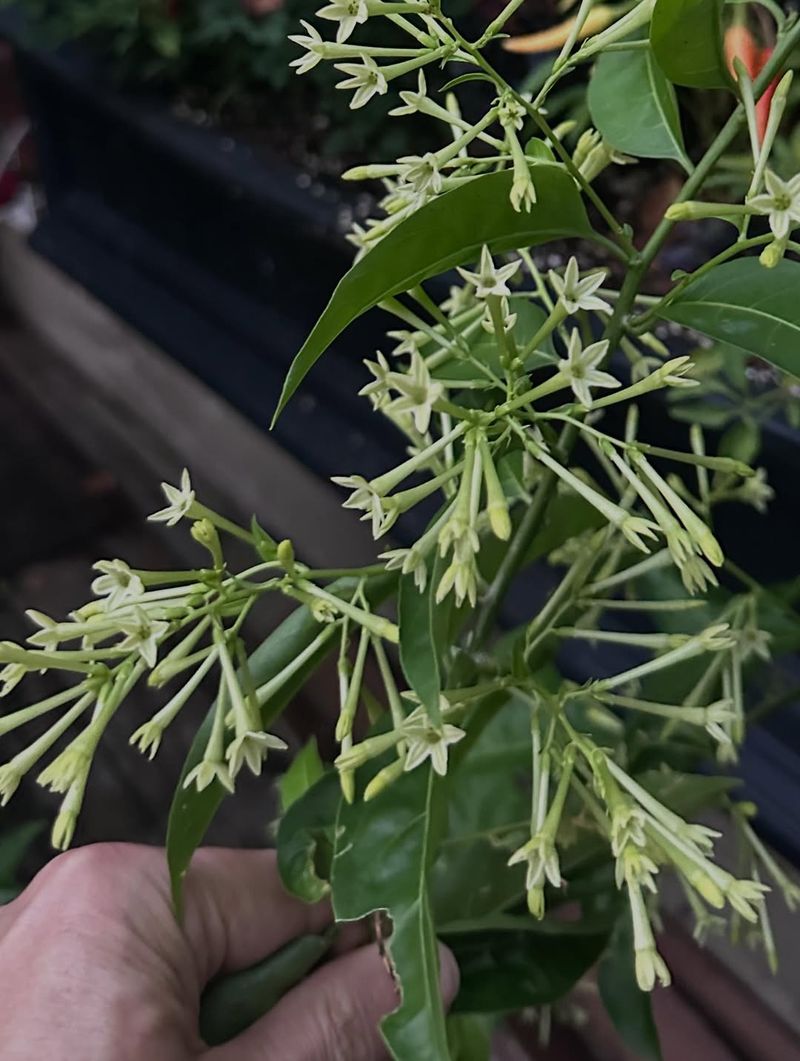
This evergreen shrub doesn’t look like much during daylight hours, just another green plant with small tubular flowers that seem unremarkable until the sun goes down.
Then everything changes. The fragrance releases in waves so powerful that one mature plant can scent an entire yard and then some.
Some people find it intoxicating while others think it’s too much, so plant it where the scent can drift without overwhelming your bedroom window.
In California’s mild climate, this shrub grows year-round and blooms in cycles throughout the warm months. It handles our Mediterranean conditions beautifully, needing only moderate water once established and tolerating both coastal fog and inland heat.
Prune it after flowering to keep it shaped and encourage bushier growth.
The flowers themselves are greenish-white and small, but what they lack in visual drama they make up for in sheer olfactory presence. Plant it near patios or along pathways where you’ll walk through the fragrance on summer evenings.
Your California Garden Changes Every Week. Your Plan Should Too.
Gardening in California changes quickly throughout the season. Every Friday you’ll receive a simple weekly plan showing exactly what to plant, prune, fertilize, harvest, and protect so you never miss the right timing.
Just remember that a little goes a long way with this powerful performer.
3. Evening Primrose (Oenothera)
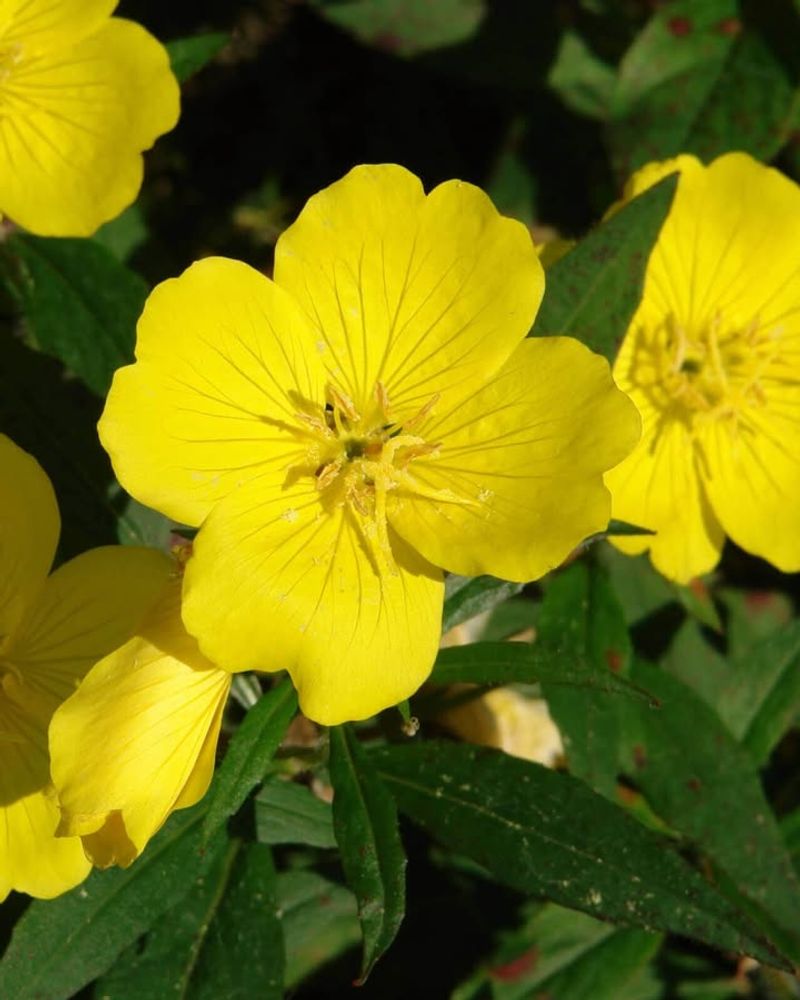
California native gardens benefit enormously from evening primrose, which opens cheerful yellow blooms right around dinnertime.
These tough perennials handle our climate like they were born for it, because many species actually were, thriving in everything from coastal bluffs to desert edges.
The flowers pop open quickly as light fades, transforming from tight buds to wide-open four-petaled blooms in minutes. They glow almost luminescent in twilight, creating bright spots of color that guide you along garden paths.
Each flower lasts only one night, but plants produce so many buds that you get continuous blooms throughout their season.
Water needs are minimal once these plants settle in, making them perfect for drought-conscious gardeners. They self-sow readily but not aggressively, gradually filling in bare spots without becoming weedy.
Different species offer varying heights from low groundcovers to three-foot specimens, so you can choose what works for your space.
Evening primrose attracts native bees during late afternoon and sphinx moths after dark, supporting pollinators that other plants miss. The fragrance is light and pleasant rather than overpowering.
Plant them in full sun with good drainage and they’ll reward you with reliable blooms year after year without much fussing.
4. Four O’Clock (Mirabilis jalapa)
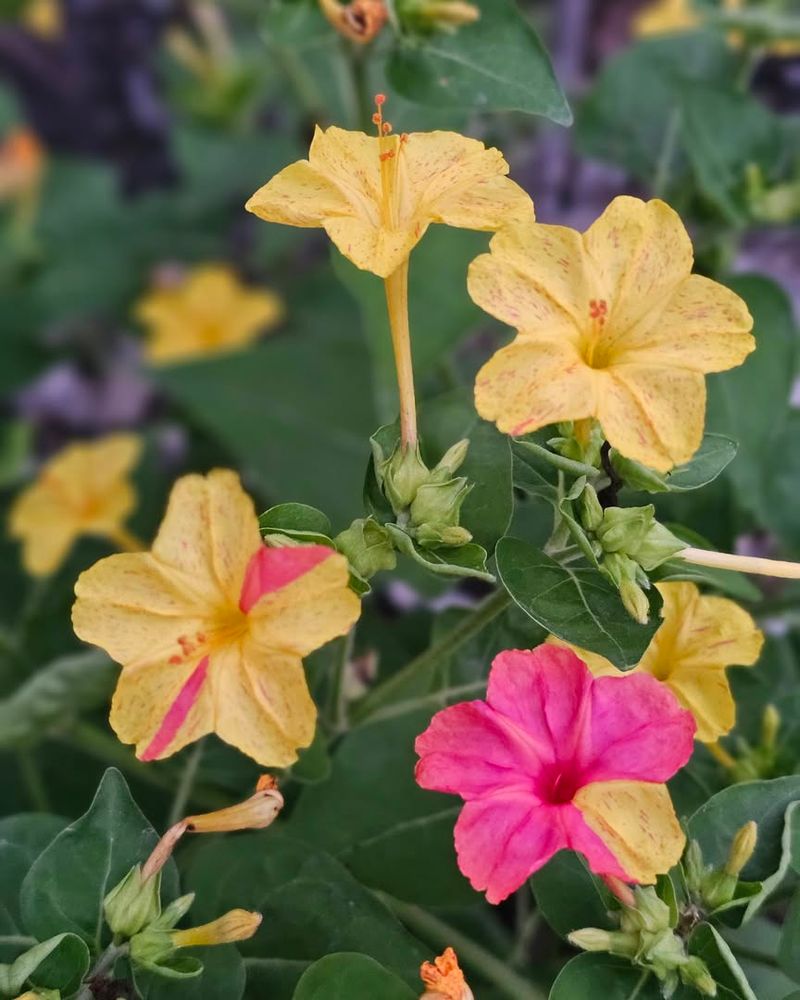
Right on schedule every afternoon, four o’clocks open their trumpet-shaped blooms in a riot of colors that seem almost too vibrant to be real.
These old-fashioned favorites grow from tuberous roots that get bigger each year, eventually forming substantial clumps that bloom reliably from summer into fall.
California’s climate suits them perfectly since they originated in similar conditions in Central and South America. They handle heat without complaint and need surprisingly little water once established.
The plants form bushy mounds two to three feet tall and equally wide, covered in flowers that might be pink, yellow, magenta, white, or even striped combinations on the same plant.
The “four o’clock” name isn’t just cute, these flowers really do open in late afternoon as temperatures drop. They stay open all night and into the next morning, closing again when the day heats up.
This timing makes them perfect for evening gardens and attracts hummingbirds during their opening hours plus moths after dark.
Seeds are easy to collect and save, or let plants self-sow for free replacements. The tuberous roots can be dug and stored over winter in colder areas, but in most California zones they’ll survive in the ground year-round, coming back bigger and better each spring.
5. Night-Blooming Cereus (Epiphyllum oxypetalum)
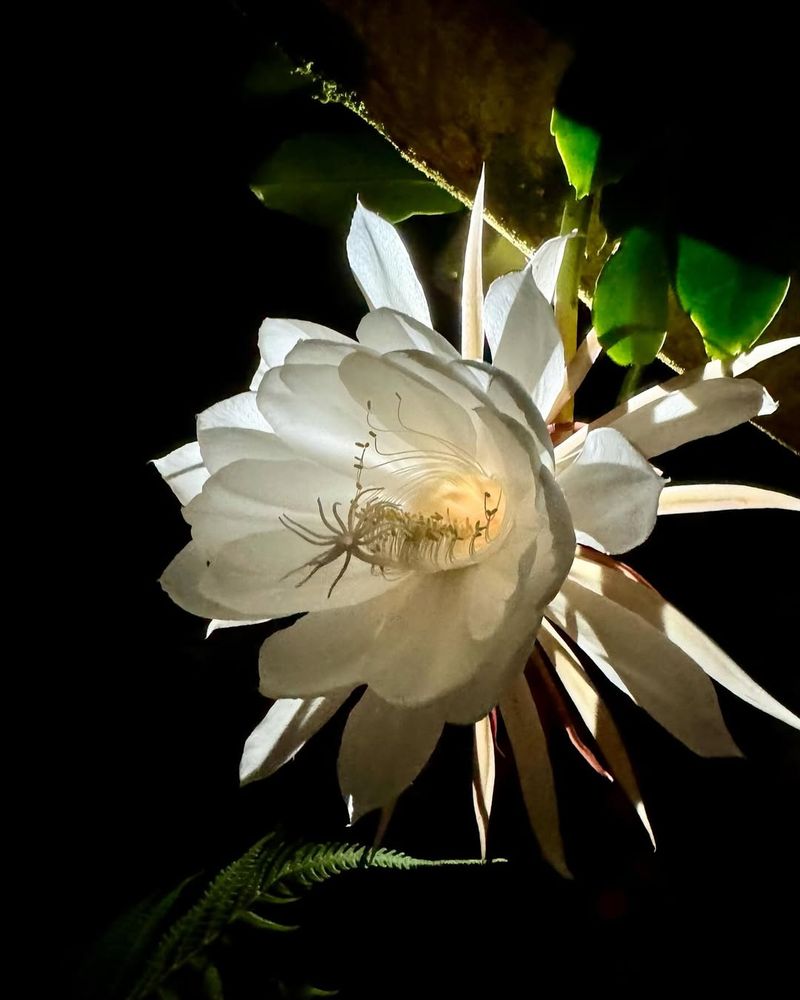
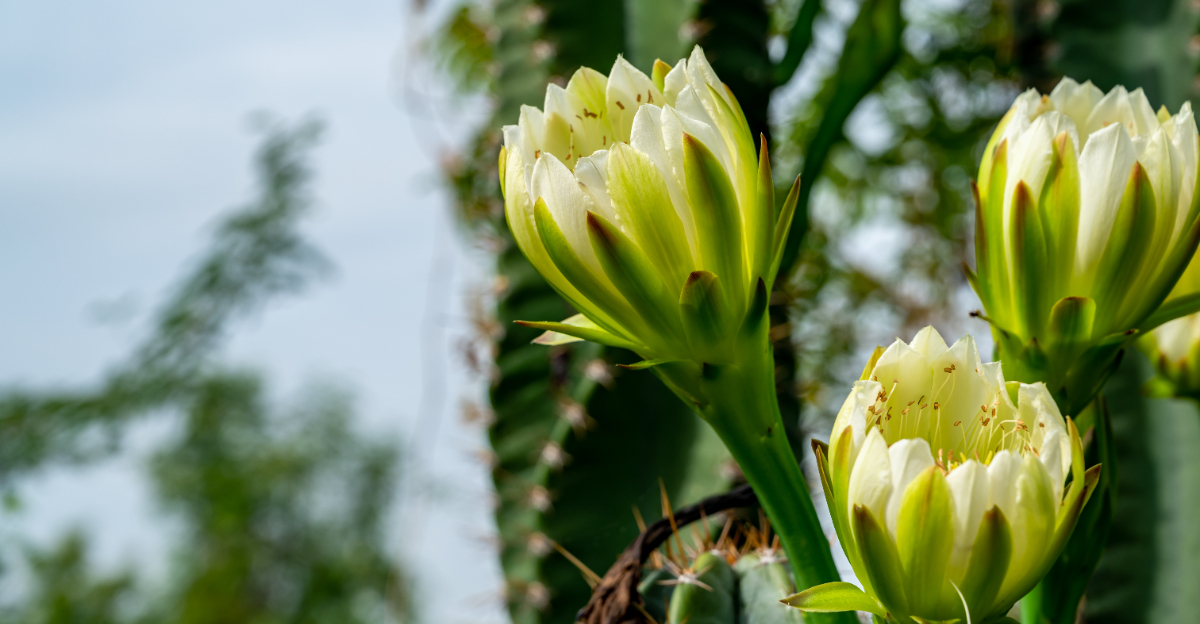
Watching a night-blooming cereus open is the kind of garden event that makes you call your neighbors over. These dramatic flowers can reach ten inches across with layers of pristine white petals and long spidery stamens that seem to float in the darkness.
The catch? Each bloom lasts only one night.
But what a night it is. The flowers begin opening around sunset and reach full glory by midnight, releasing an intense, sweet fragrance that fills the air.
By morning they’ve wilted, but the memory stays with you, and besides, mature plants produce multiple buds that open over several weeks.
Despite the spectacular flowers, the plant itself looks rather homely most of the time. It’s a jungle cactus with flat, leaf-like stems that sprawl awkwardly unless you give them support.
In California’s mild climate, they grow outdoors year-round in coastal areas and need only frost protection inland during winter.
Keep them in bright indirect light and water moderately during the growing season, cutting back in winter. They prefer being slightly pot-bound, which encourages blooming.
The wait between bloom events can feel long, but when those buds finally appear, you’ll understand why gardeners treasure these plants and eagerly anticipate each opening.
6. Angel’s Trumpet (Brugmansia)
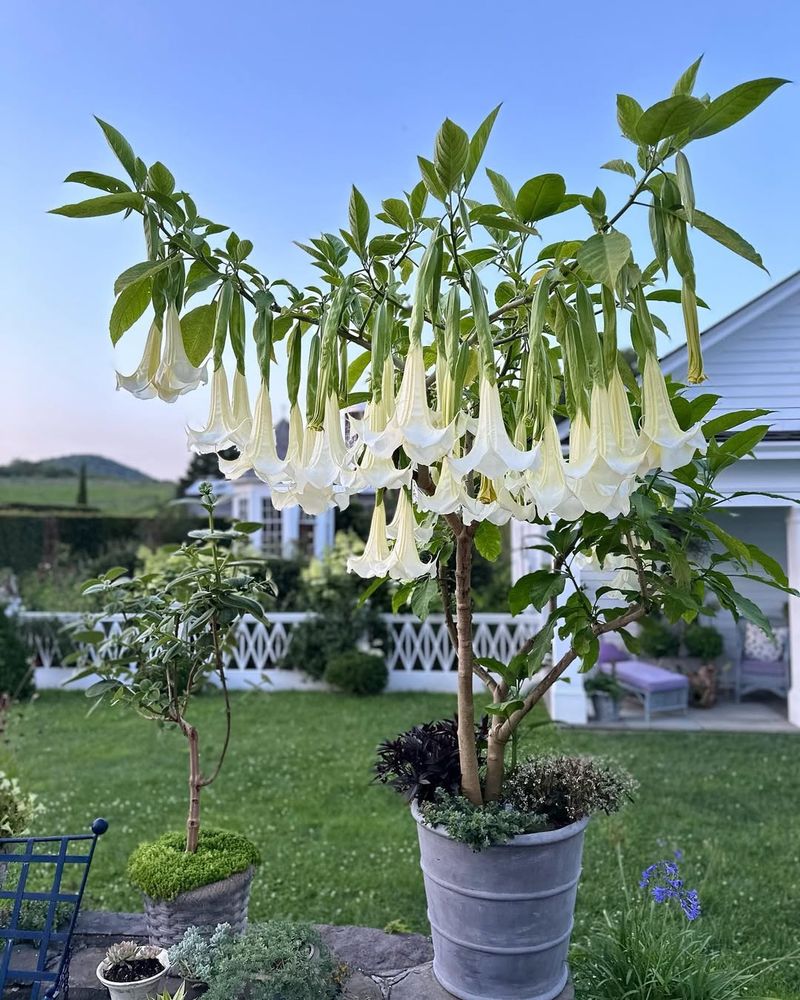
Angel’s trumpet earns its name with enormous pendulous flowers that hang like bells from a robust shrub or small tree. These showstoppers can reach ten inches long, filling your garden with their powerful sweet fragrance that intensifies after dark.
In California’s frost-free zones, brugmansia grows as a permanent landscape plant that can reach fifteen feet tall. Even in areas with light frost, it often survives by dying back and resprouting from the roots.
The plants grow quickly once established and bloom heavily from summer through fall, with sporadic flowers at other times in mild climates.
Colors range from pure white to yellow, peach, and pink, with some varieties offering double blooms that look almost too elaborate to be real. The fragrance varies by cultivar, some are intensely sweet while others smell more lemony.
All of them attract sphinx moths that hover like hummingbirds while feeding.
These plants need regular water and fertilizer during the growing season to support their vigorous growth and heavy blooming. They prefer afternoon shade in hot inland areas but can take full sun along the coast.
Important note: all parts of angel’s trumpet are highly toxic, so plant them away from areas where children or pets play and handle them with care during pruning.
7. Sacred Datura (Datura wrightii)
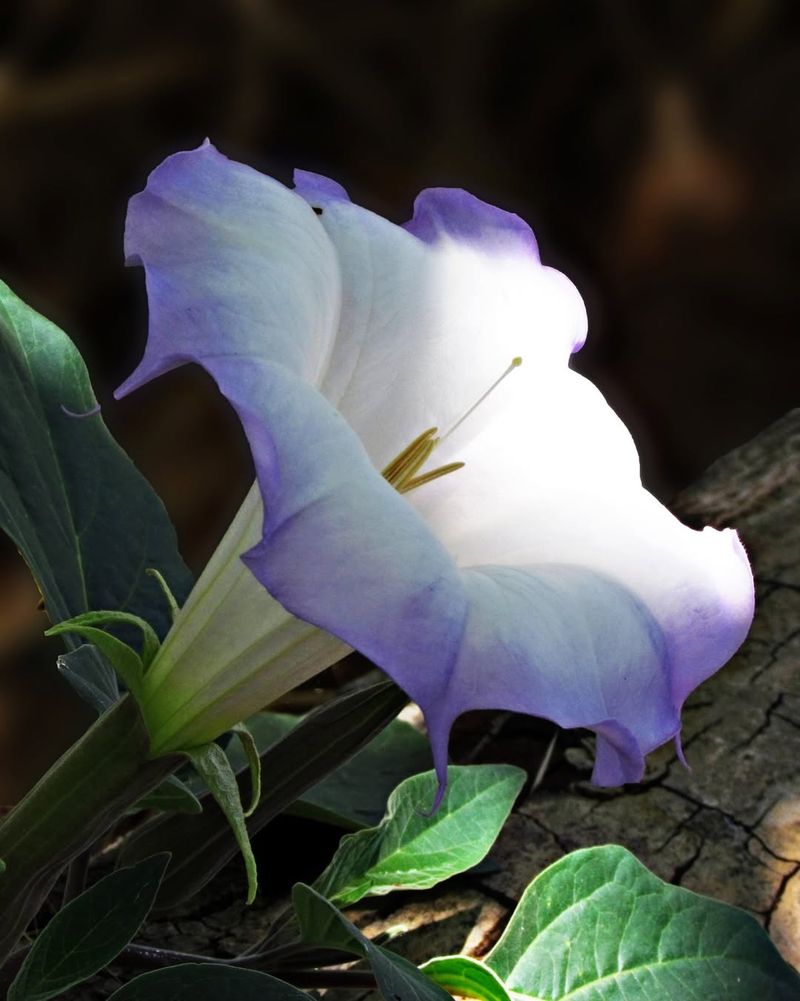
California’s native sacred datura brings desert magic to gardens with enormous white trumpets that unfurl as shadows lengthen.
These flowers can span eight inches across, emerging from gray-green foliage that looks perfectly at home in our dry summer landscape.
The plant grows as a sprawling perennial in most California zones, dying back partially in winter and surging back with warm weather.
It thrives in full sun and well-drained soil, asking for almost nothing once established except occasional deep watering during extended dry spells.
This makes it ideal for water-wise gardens and native plant landscapes.
Each flower opens in late afternoon and lasts through the night, attracting hawk moths that pollinate while hovering at the blooms. The fragrance is sweet and slightly intoxicating, drifting across the garden on warm evenings.
By midmorning the flowers have withered, but new buds continue opening throughout the summer months.
Sacred datura has deep cultural significance to California’s indigenous peoples and deserves respect both for that heritage and for its powerful alkaloids, all parts are extremely toxic.
Plant it where its beauty can be appreciated from a distance, especially if you have curious children or pets.
The spiny seed pods that follow the flowers add architectural interest but should also be handled carefully.
8. Tuberose (Agave amica / Polianthes tuberosa)
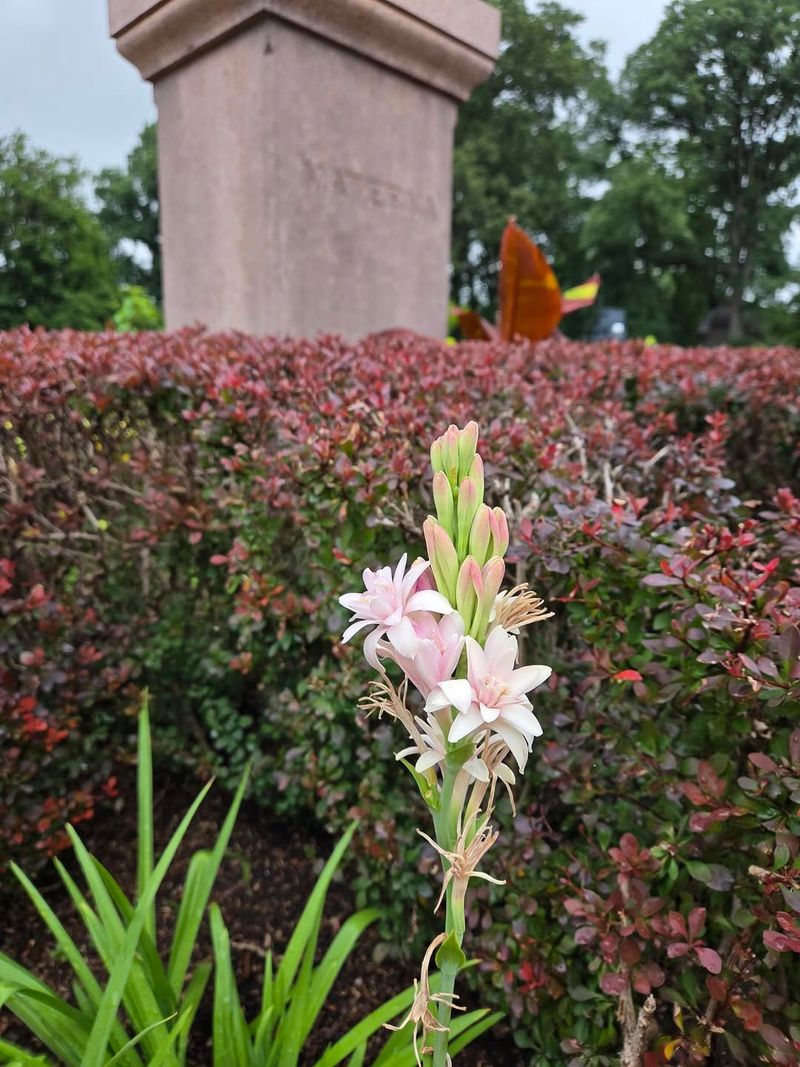
Tuberose fragrance has launched a thousand perfumes, and once you smell it in your own garden, you’ll understand why. These waxy white flowers bloom on tall spikes that rise above strappy foliage, releasing their legendary scent most powerfully during evening hours.
The fragrance is rich, sweet, and complex, almost creamy with hints of jasmine and orange blossom. It’s strong enough to perfume a large area but somehow never feels cloying.
In California’s climate, tuberoses bloom from mid-summer into fall, with each spike producing flowers that open progressively from bottom to top over several weeks.
Plant the elongated bulbs in spring after soil warms, choosing a spot with full sun and good drainage. They need regular water during the growing season and appreciate some fertilizer to support their bloom production.
Along the coast and in mild inland areas, you can leave bulbs in the ground year-round. In colder zones, dig them after foliage yellows and store indoors over winter.
Single-flowered varieties have the strongest fragrance, while double forms look more dramatic but smell slightly less intense. Either way, you’ll want to plant them near patios, pathways, or windows where their evening perfume can be fully appreciated.
Cut flowers last well in arrangements and will scent your entire house.
9. Flowering Tobacco (Nicotiana alata)
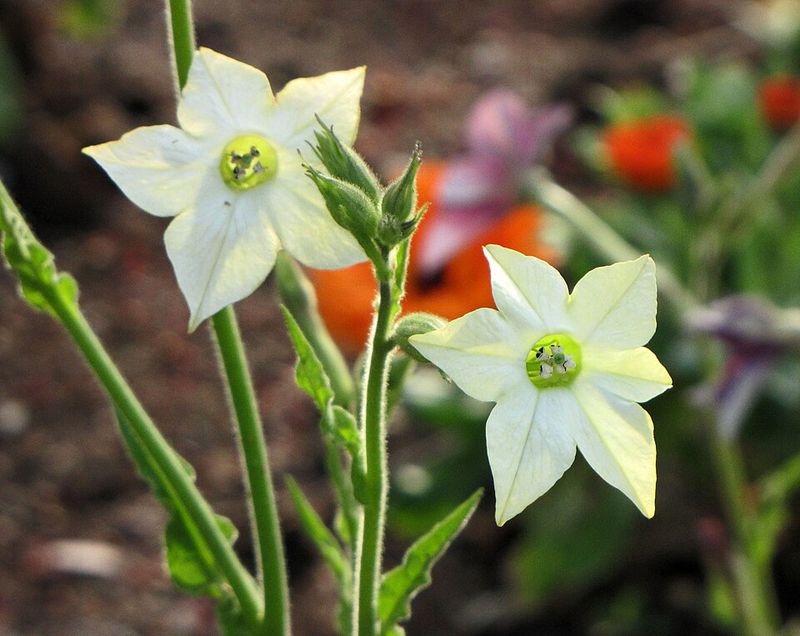
Flowering tobacco transforms from wallflower to star performer once evening arrives. During the day, the tubular flowers often droop and look half-asleep, but as light fades they perk up and open fully, releasing waves of sweet fragrance that rival any expensive perfume.
These easy annuals grow quickly from seed and bloom continuously from late spring through fall in California gardens. They self-sow reliably, often returning year after year without any effort on your part.
Heights vary from compact foot-tall varieties to statuesque four-foot specimens, so choose based on your space and design needs.
White-flowered varieties have the strongest evening fragrance, though pink, red, and lime-green forms add color interest during daylight hours. All of them attract sphinx moths and other nocturnal pollinators that hover at the flowers like tiny hummingbirds.
The plants tolerate both sun and partial shade, making them versatile for different garden spots.
Water needs are moderate, they appreciate consistent moisture but won’t sulk if you occasionally forget them. Deadheading spent blooms encourages more flowers, though if you want them to self-sow, leave some seed heads in place toward season’s end.
These plants handle California’s summer heat well and keep blooming reliably even during warm spells that stress other flowers.
10. Night Phlox (Zaluzianskya capensis)
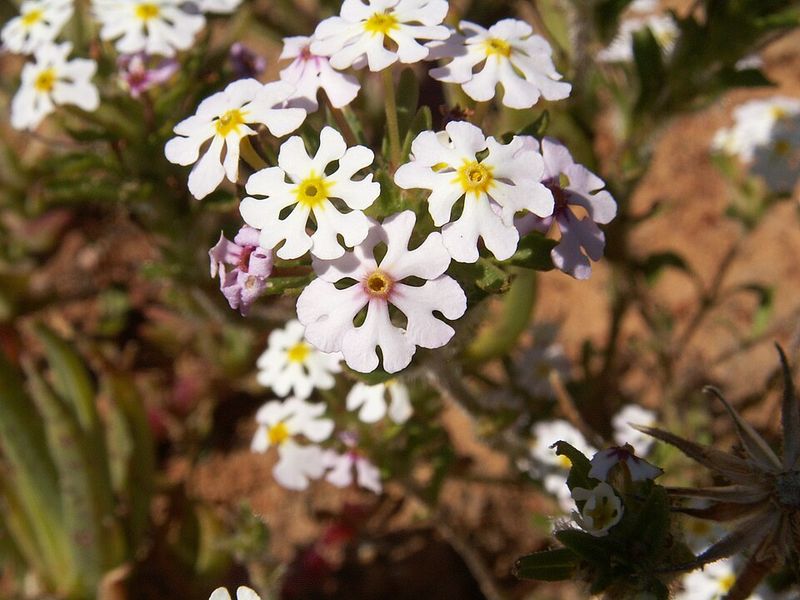
Don’t let the small flowers fool you, night phlox packs serious fragrance power into its dainty star-shaped blooms.
Each flower is white on the inside with maroon or burgundy on the back, creating a striking two-toned effect when they’re partially open during late afternoon.
This South African native adapts beautifully to California’s Mediterranean climate, thriving in conditions similar to its homeland.
Plants grow as low mounds perfect for edging paths, filling containers, or tucking into rock gardens where you’ll brush past them and release their honey-almond scent.
They bloom prolifically from spring through fall with occasional winter flowers in mild areas.
The fragrance intensifies dramatically after sunset, filling the air with sweetness that seems disproportionate to the plant’s modest size.
One small patch can perfume a surprising area, making night phlox a smart choice for small gardens where space is limited but you still want evening fragrance.
Plants prefer full sun to light shade and well-drained soil. Water regularly during establishment and then moderately once they’re settled in.
They tolerate our dry summers reasonably well but bloom more continuously with occasional deep watering. Shear plants lightly after heavy bloom cycles to encourage fresh growth and more flowers.
These tough little performers ask for very little while delivering outsized impact in your nighttime garden.