9 Native Plants That Thrive In Georgia Front Yards With Almost No Effort
Some front yards demand constant watering, trimming, and attention, but the right native plants can handle Georgia’s heat, humidity, and shifting seasons without turning into a full-time job.
If keeping up with plants has started to feel exhausting, choosing species that naturally belong in Georgia makes everything easier from the start. It also removes a lot of the guesswork.
Because these natives are already adapted to local soil, rainfall, and long summers, they settle in faster, resist common pests more naturally, and keep their shape without constant pruning or heavy feeding.
When you plant what already thrives here, the yard feels balanced and steady through spring growth, summer heat, and even mild winter swings.
If you want a front yard that looks strong, dependable without demanding your time every week, these native plants make that shift feel simple and realistic.
1. Coneflowers Burst With Color That Lasts All Season
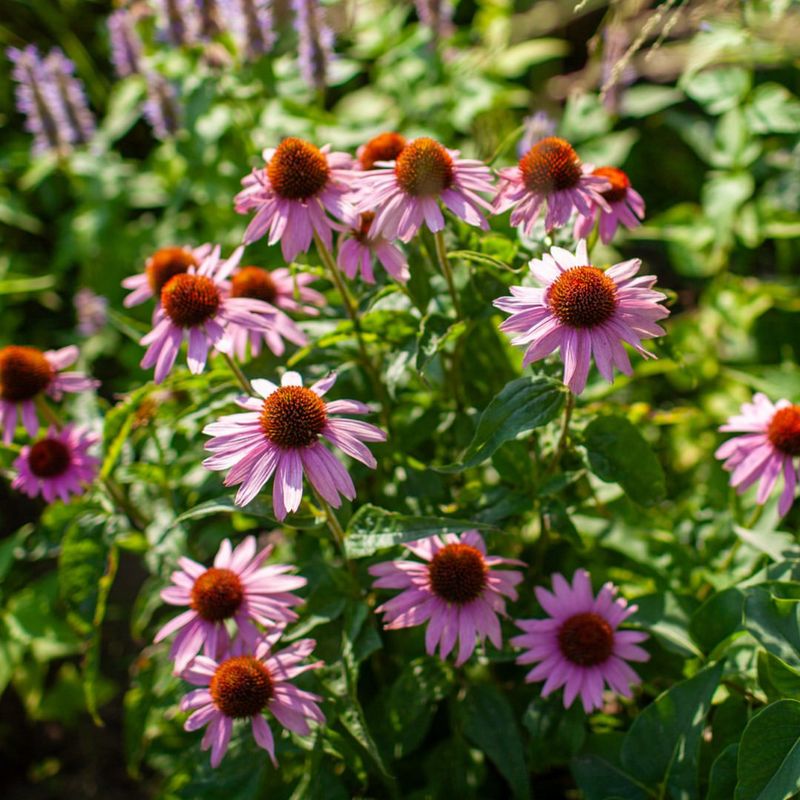
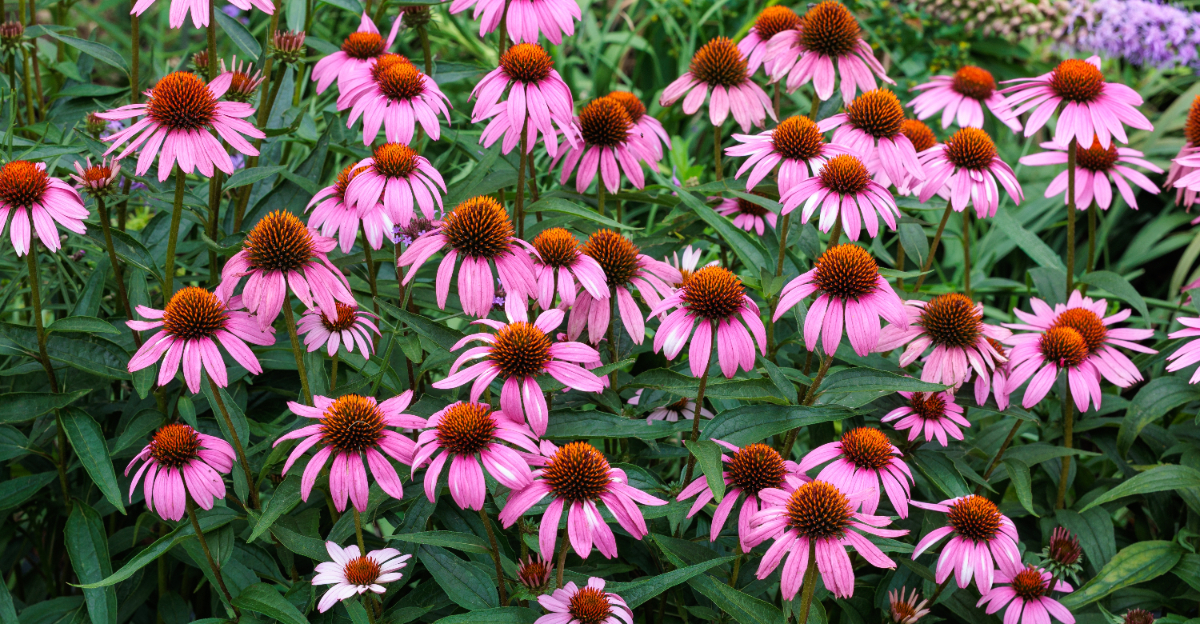
Purple coneflowers stand out as one of Georgia’s most reliable bloomers from early summer straight through fall. Their bold daisy-like petals surround distinctive orange centers that seem to glow in afternoon sunlight.
Pollinators absolutely swarm these flowers, making your front yard a buzzing hub of activity.
Georgia’s heat doesn’t faze coneflowers one bit. They actually prefer full sun and can handle dry spells once their roots establish.
Clay soil works fine for them, and they’ll spread gradually to fill in bare spots without becoming invasive.
Deadheading spent blooms encourages more flowers, but even if you forget, they’ll keep producing. The seed heads that form in late fall provide food for goldfinches and other songbirds throughout winter.
Many Georgia gardeners leave the stalks standing until spring for this reason.
Coneflowers reach about two to three feet tall and work beautifully in front of foundations or along walkways. They pair well with black-eyed Susans and ornamental grasses.
Dividing clumps every few years keeps them vigorous, though this is optional rather than necessary for survival.
They also tolerate Georgia’s humidity better than many other perennials, rarely struggling with disease in full sun. Once established, they return reliably each year with minimal care.
Over time, mature clumps create a fuller, more natural look that strengthens the overall planting.
2. Black-Eyed Susans Turn Any Front Yard Into A Sunny Spotlight
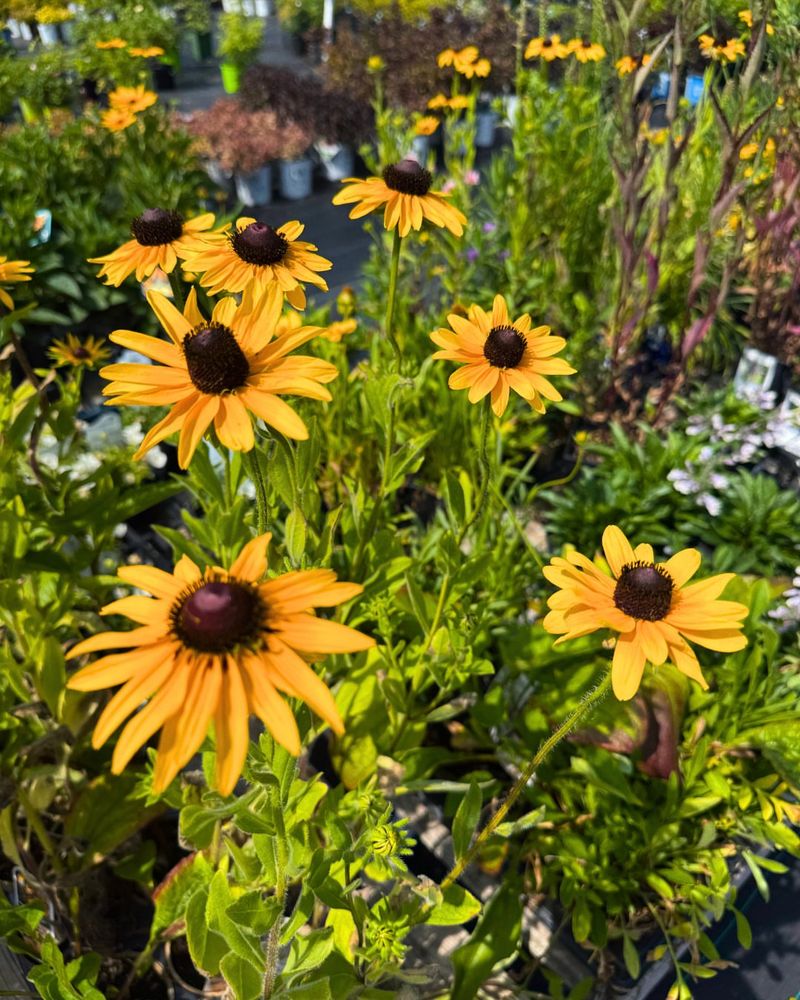
Bright golden petals radiating from chocolate-brown centers make black-eyed Susans impossible to miss. These cheerful bloomers light up Georgia front yards from June through September without demanding constant care.
Their sunny disposition matches their carefree growing habits perfectly.
Drought tolerance ranks high among their best qualities. Once established, black-eyed Susans sail through Georgia’s dry summer weeks without wilting or losing their vibrant color.
They’ll grow in almost any soil type and actually prefer lean conditions over rich, amended beds.
Full sun brings out their best performance, though they’ll tolerate partial shade in hotter parts of Georgia. Plants self-seed moderately, filling in gaps naturally without overwhelming nearby plants.
Pulling unwanted seedlings takes just seconds if they pop up where you don’t want them.
Your Georgia Garden Changes Every Week. Your Plan Should Too.
Gardening in Georgia changes quickly throughout the season. Every Friday you’ll receive a simple weekly plan showing exactly what to plant, prune, fertilize, harvest, and protect so you never miss the right timing.
Height varies from one to three feet depending on the variety. Shorter types work great along front walkways, while taller ones create stunning backdrops for lower-growing perennials.
Cutting flowers for indoor arrangements doesn’t hurt the plants and actually encourages more blooms to form throughout the season.
Deer tend to leave them alone, which makes them especially useful in areas where browsing is a problem. Their sturdy stems rarely flop, even after heavy summer rainstorms.
As fall approaches, the dark seed heads continue adding texture long after the bright petals fade
3. Eastern Redbud Announces Spring With Stunning Blooms
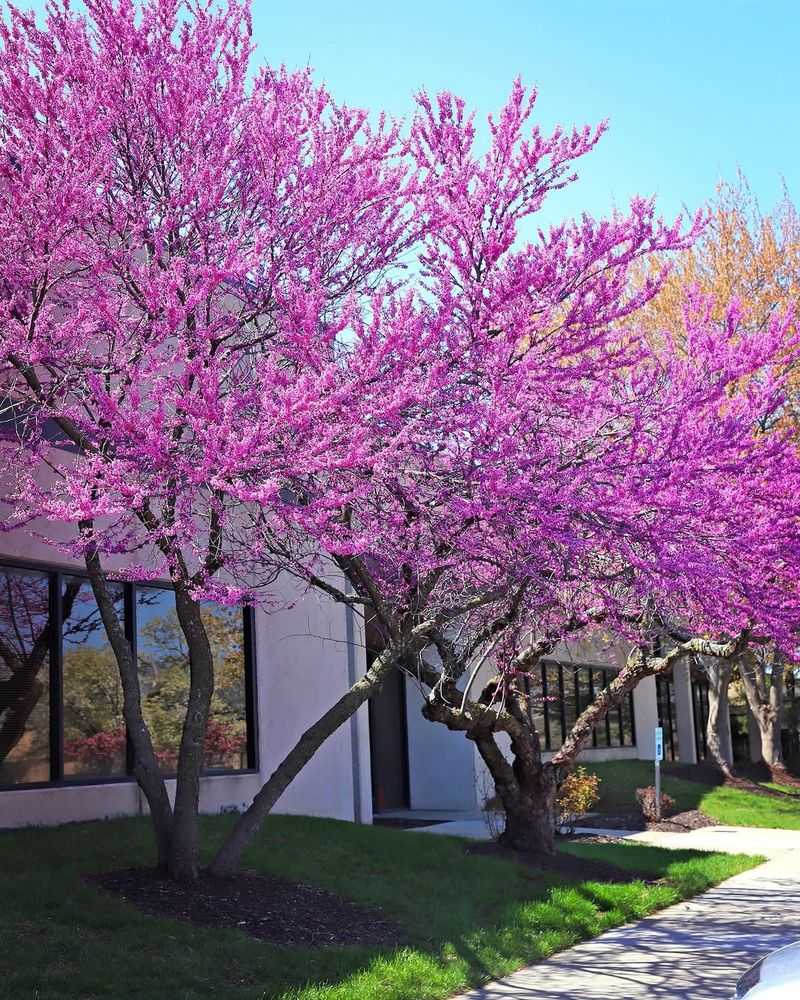
Branches absolutely covered in magenta-pink flowers before leaves even appear signal redbud season across Georgia. This small native tree creates an unforgettable spring display that neighbors will ask about year after year.
The show typically starts in late March or early April depending on your location in the state.
Redbuds stay manageable in size, usually topping out around 20 to 30 feet tall with a similar spread. This makes them perfect for front yards where you need impact without blocking windows or overwhelming the space.
Their rounded shape provides nice shade in summer after heart-shaped leaves fill in.
Georgia’s native soil suits redbuds just fine. They adapt to both sun and partial shade, though flowering is heavier with more light exposure.
Established trees handle dry periods well and rarely need supplemental watering except during extreme droughts.
Fall brings another color change when leaves turn bright yellow before dropping. The interesting branching structure looks attractive even in winter.
Redbuds live for decades with essentially zero maintenance beyond occasional light pruning to maintain shape.
In early spring, small native bees rely on redbud blossoms as one of their first nectar sources of the season. The smooth gray bark adds subtle texture to the landscape even when the tree is not in bloom.
4. Coral Honeysuckle Draws Hummingbirds Right To Your Door
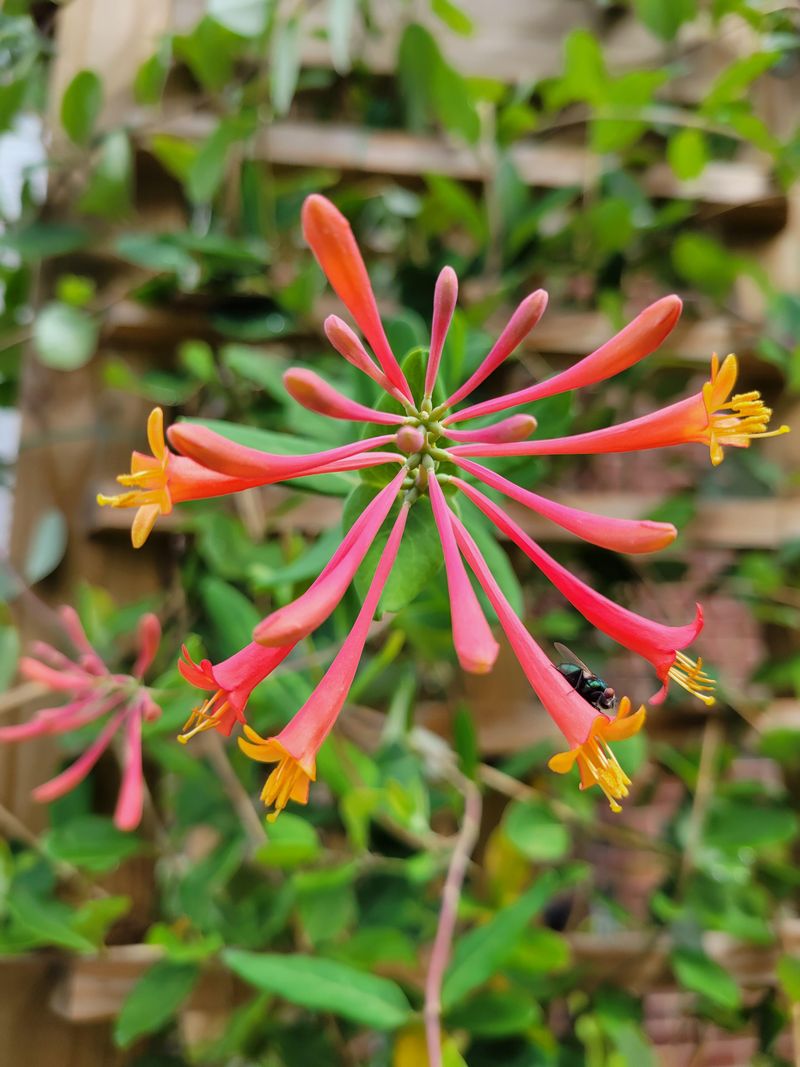
Tubular red-orange flowers dangle in clusters from this well-behaved native vine throughout spring and summer. Unlike its invasive cousin Japanese honeysuckle, coral honeysuckle stays under control while providing incredible wildlife value.
Hummingbirds visit these blooms constantly from their spring arrival through fall migration.
Training this vine up a mailbox post, lamppost, or small trellis near your front entrance creates an instant focal point. It climbs by twining rather than clinging, so it won’t damage surfaces.
Growth stays moderate, reaching about 10 to 15 feet at most, and you can easily prune it to keep desired dimensions.
Georgia’s summer heat doesn’t slow coral honeysuckle down. It actually thrives in full sun to partial shade and handles drought remarkably well once roots establish.
The semi-evergreen foliage looks attractive even when flowers aren’t present, and some leaves persist through mild Georgia winters.
Bright red berries follow the flowers in late summer and fall, providing food for songbirds.
Planting coral honeysuckle near a front window lets you watch hummingbird activity from inside your home, turning your front yard into a personal nature observation station.
New growth emerges quickly each spring, filling in supports with fresh green foliage before the first blooms open. Occasional light pruning after flowering keeps the vine tidy and encourages fuller branching.
Because it is native to the Southeast, it blends naturally into Georgia landscapes without looking forced or overly formal.
5. Milkweed Brings Monarchs And Magic To Your Garden
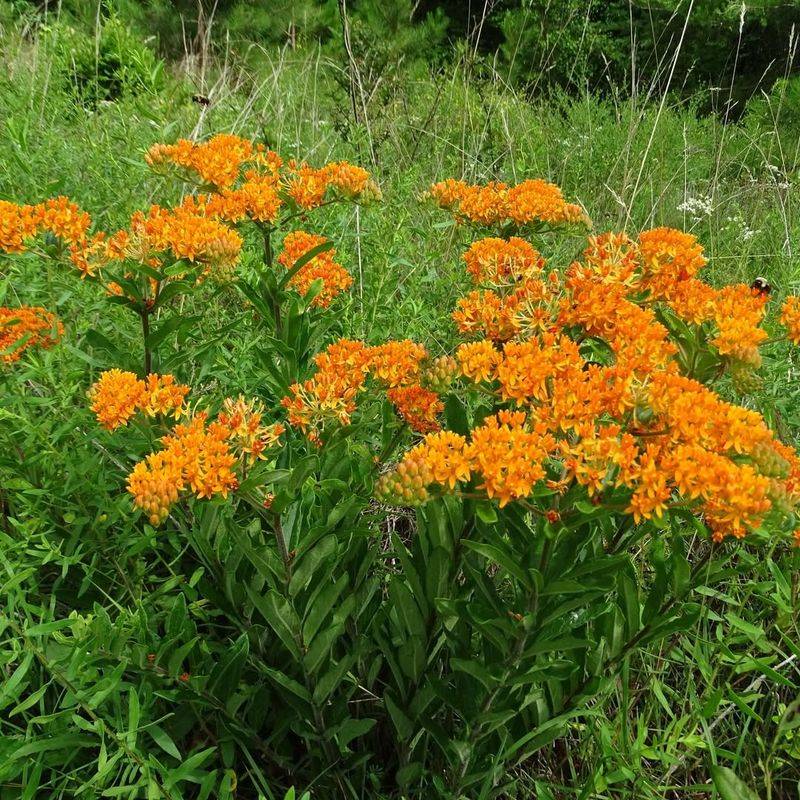
Clusters of bright orange flowers top butterfly weed stems from late spring through summer, creating fiery patches of color that seem to glow.
This milkweed species serves as the exclusive host plant for monarch butterflies, meaning monarchs lay eggs only on milkweed leaves.
Watching caterpillars munch leaves and then form chrysalises becomes addictive entertainment.
Georgia gardeners will find butterfly weed incredibly easy to grow. It loves full sun and actually prefers poor, dry soil over rich, moist conditions.
Clay doesn’t bother it, and established plants laugh at drought. Zero fertilizer needed.
Plants grow about one to two feet tall and spread slowly into neat clumps. They’re perfect for front yard borders or mixed into perennial beds.
The deep taproot makes them nearly impossible to eliminate once established, which is exactly what you want in a low-maintenance plant.
Monarch populations need all the help they can get, and planting milkweed in Georgia front yards creates crucial habitat along their migration route. Other butterflies, bees, and beneficial insects also visit the flowers constantly.
Seedpods that form in fall split open dramatically to release silky seeds that float away on the breeze.
6. Blue Wild Indigo Stands Tall With Bold, Effortless Flowers
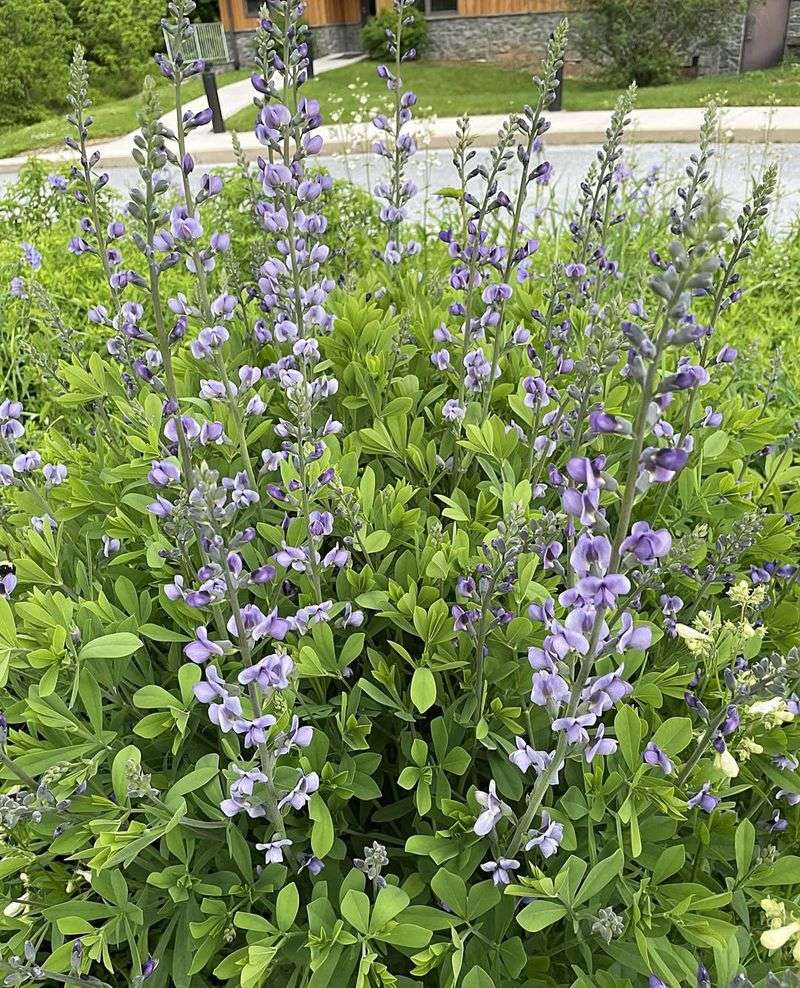
Tall spikes of blue-purple flowers rise above bushy mounds of blue-green foliage in late spring. Wild indigo creates an architectural presence in Georgia front yards that few other perennials can match.
The pea-like flowers give way to interesting black seedpods that rattle in the breeze and look great in dried arrangements.
Longevity sets wild indigo apart from short-lived perennials. These plants can thrive in the same spot for 20 years or more without division or special care.
They actually resent being moved once established, so choose your planting location carefully from the start.
Georgia’s challenging clay soil doesn’t faze wild indigo at all. The plant fixes nitrogen from the air, meaning it fertilizes itself naturally and never needs feeding.
Drought tolerance is excellent once roots establish during the first year. Full sun to light shade both work fine across different parts of Georgia.
Plants eventually reach three to four feet tall and equally wide, forming substantial shrub-like clumps. They’re substantial enough to anchor a front yard bed but never require staking or support.
Deer typically leave them alone, which is a huge bonus for Georgia homeowners dealing with browsing wildlife.
7. Columbine Adds Whimsical Color Even In Shady Spots
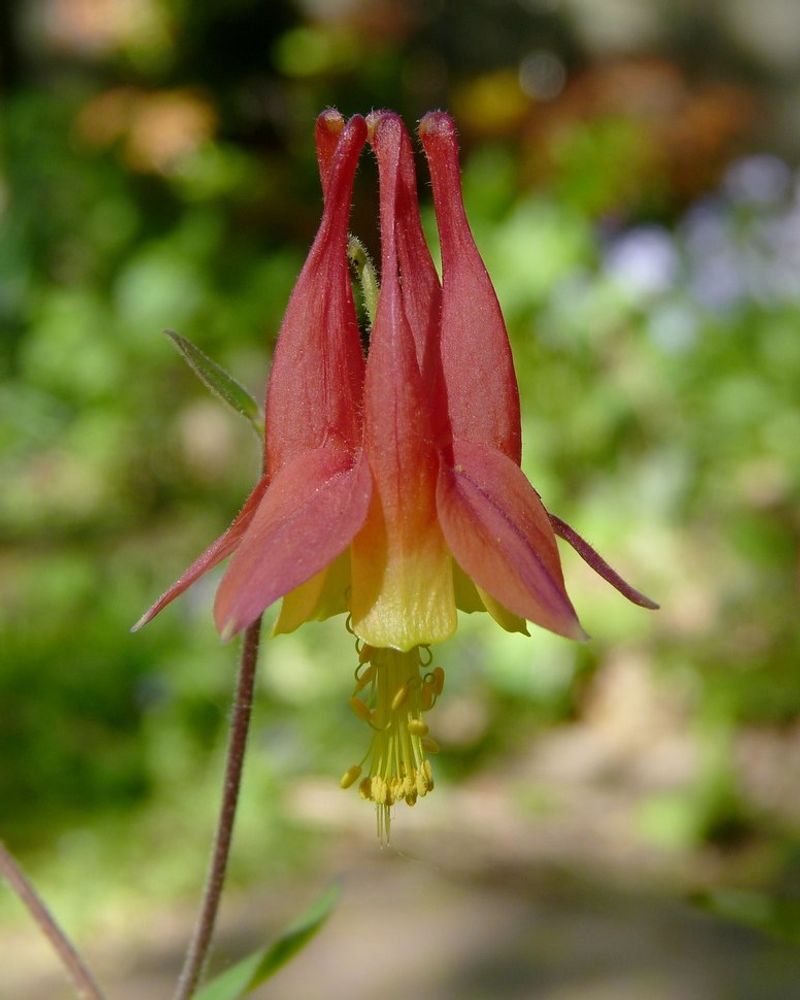
Delicate red and yellow flowers dangle like tiny lanterns from slender stems in mid to late spring. Columbine’s unique flower shape with backward-pointing spurs catches everyone’s attention.
The airy, fernlike foliage stays attractive even after blooms fade, providing texture in Georgia front yards through summer.
Shade-loving natives are precious commodities, and columbine fills that niche beautifully. It thrives under trees, along north-facing foundations, or anywhere dappled light filters through.
This makes it perfect for those tricky front yard spots where most flowering plants struggle.
Hummingbirds absolutely adore columbine’s nectar-rich flowers. Planting it near a front window gives you prime viewing opportunities when hummers visit.
The plants self-seed gently, creating natural drifts over time without becoming weedy or invasive.
Height stays modest at one to two feet, making columbine ideal for front-of-border positions or edging shaded walkways. Georgia’s heat can cause foliage to look tired by late summer, but plants bounce back vigorously the following spring.
They’re surprisingly drought-tolerant for a shade plant once established, needing water only during extended dry spells in Georgia’s hotter months.
8. Christmas Fern Keeps Your Yard Green Year-Round With Zero Fuss
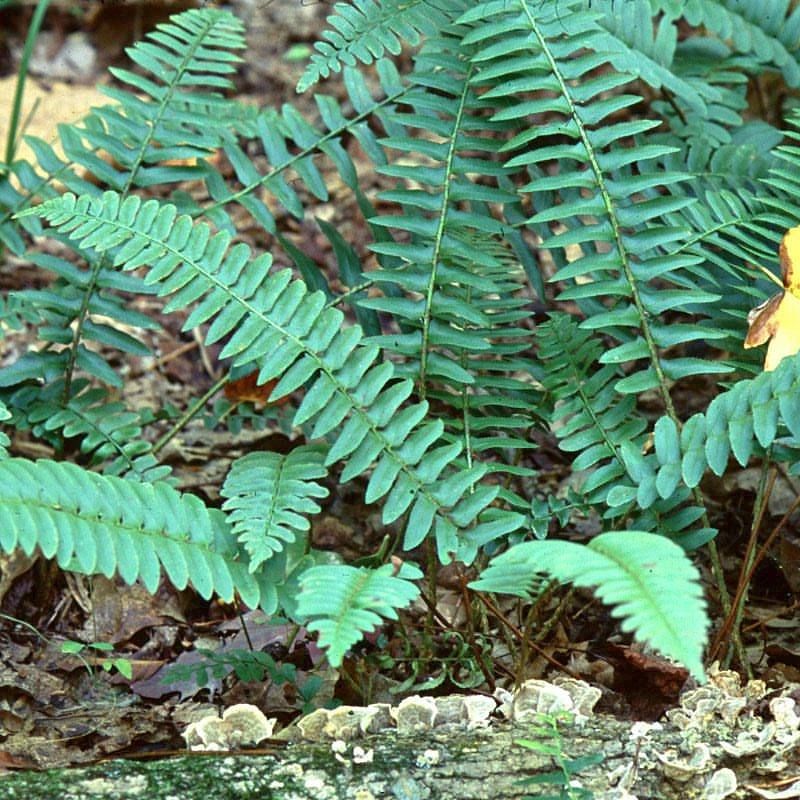
Dark green fronds arch gracefully from central crowns, staying vibrant green through every Georgia season including winter. Christmas fern earned its name because colonists used the evergreen fronds in holiday decorations.
That same year-round color makes it invaluable for keeping Georgia front yards looking alive even in January.
Shaded areas under trees or along foundations become lush green carpets when planted with Christmas fern. These native ferns handle Georgia’s clay soil without complaint and actually prefer the moisture retention clay provides.
They spread slowly by creeping rhizomes, filling in spaces naturally over several years.
Maintenance requirements basically don’t exist. No deadheading, no dividing, no fertilizing needed ever.
Simply cut back any fronds that look weathered in early spring before new growth emerges. That’s the entire care routine for the year.
Height reaches about one to two feet, creating substantial groundcover without overwhelming smaller spaces. Christmas fern tolerates deep shade better than almost any other evergreen plant suitable for Georgia landscapes.
Pairing it with spring bulbs, hostas, or columbine creates layered interest in shaded front yard beds that look intentionally designed while requiring almost zero effort to maintain.
9. Virginia Sweetspire Fills Front Yards With Fragrance And Flair
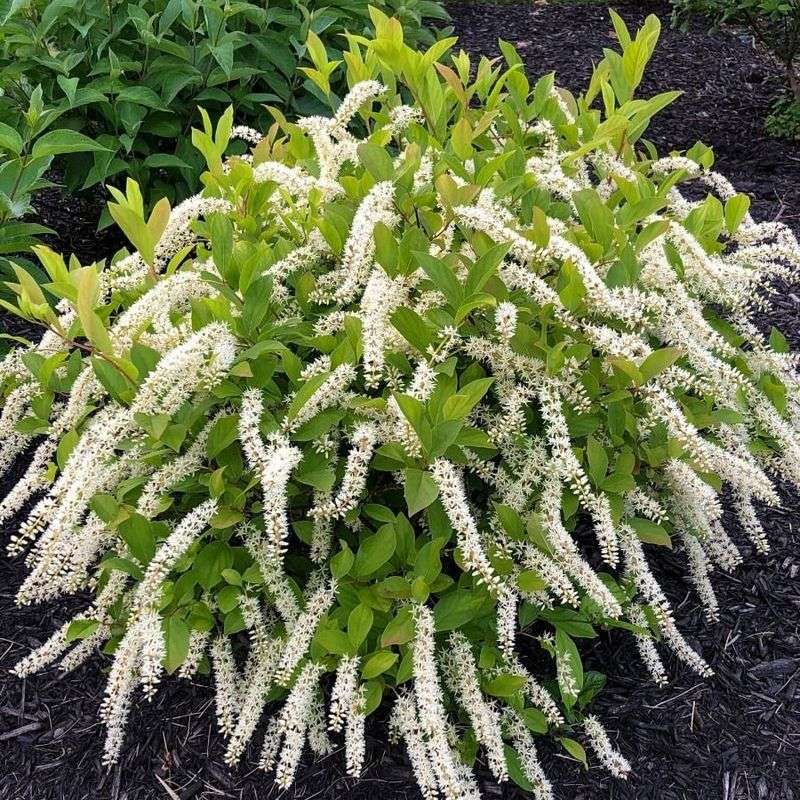
Drooping white flower spikes cover this arching shrub in late spring, releasing a sweet fragrance that drifts across Georgia front yards on warm breezes.
Virginia sweetspire offers a rare combination of beautiful blooms, amazing fall color, and virtually foolproof growing requirements.
Butterflies and bees visit the flowers in droves throughout the bloom period.
Adaptability makes sweetspire a landscaping superstar. It grows equally well in full sun or partial shade, handles both dry and moist soil, and tolerates Georgia’s heavy clay without missing a beat.
Plants sucker gently to form broad colonies, making them perfect for filling larger areas or creating informal hedges along property lines.
Fall transforms the foliage into brilliant shades of red, orange, and purple that rival any burning bush. This autumn display lasts for weeks across Georgia’s extended fall season.
Even the reddish winter stems provide subtle color during dormant months.
Height ranges from three to five feet with a similar or greater spread. Sweetspire works beautifully as a foundation plant, mixed border specimen, or massed for impact.
Pruning is optional and can be done right after flowering if you want to control size, but plants look great even when completely ignored year after year.