9 Native Perennials That Bring Early Color To Your Georgia Yard In February
February in Georgia can feel gray and slow, but your yard does not have to wait for March to start showing off color.
While most plants are still waking up, a handful of native perennials are already stepping forward, pushing out blooms that handle cool nights and unpredictable swings without hesitation.
Built for Georgia’s soil and climate, these early bloomers handle brief cold snaps and return each year with little effort. Instead of bare beds and muted greens, you get the first real signs of life while winter is barely finished.
With the right native perennials in place, February stops feeling like the end of winter and starts looking like the beginning of something brighter.
1. Carolina Jessamine Bursts Into Yellow Before Spring
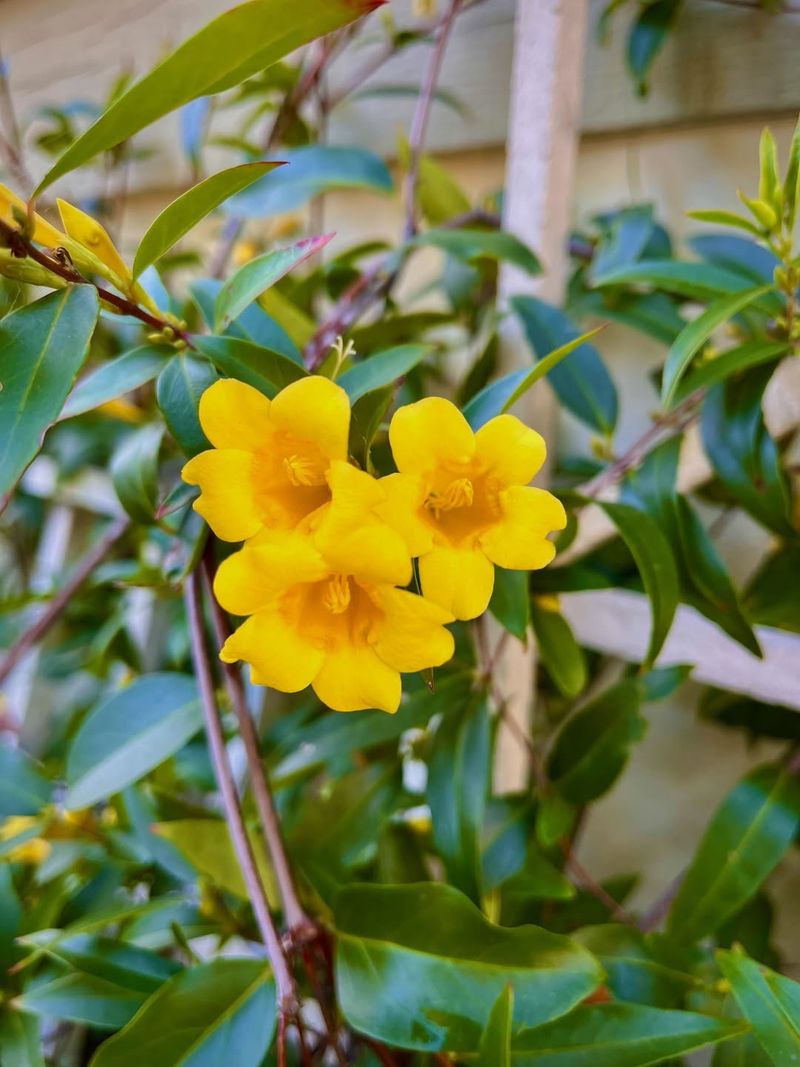
Bright yellow trumpets cover this evergreen vine when most of Georgia is still shaking off winter. Carolina Jessamine doesn’t wait for permission to bloom.
It starts opening flowers in late January and keeps going strong through March, creating cascades of sunshine against fences, arbors, or tree trunks.
This native climber thrives in full sun to partial shade and tolerates the clay soils common across Georgia without fuss. It twines naturally, so give it something sturdy to climb.
Once established, it handles dry spells well and asks for very little maintenance beyond occasional trimming to keep it in bounds.
Hummingbirds arrive early in Georgia, and this plant offers them one of the first reliable nectar sources of the season. The glossy evergreen foliage stays attractive year-round, providing structure even when flowers fade.
Butterflies also visit, making your February garden buzz with life when neighbors’ yards sit silent.
Plant it near a mailbox, porch column, or old stump where you’ll see it from indoors during chilly mornings. Pair it with spring bulbs or early ferns for layered interest.
Carolina Jessamine brings hope and energy exactly when Georgia gardeners need it most.
2. Bloodroot Breaks Dormancy With Early White Blooms
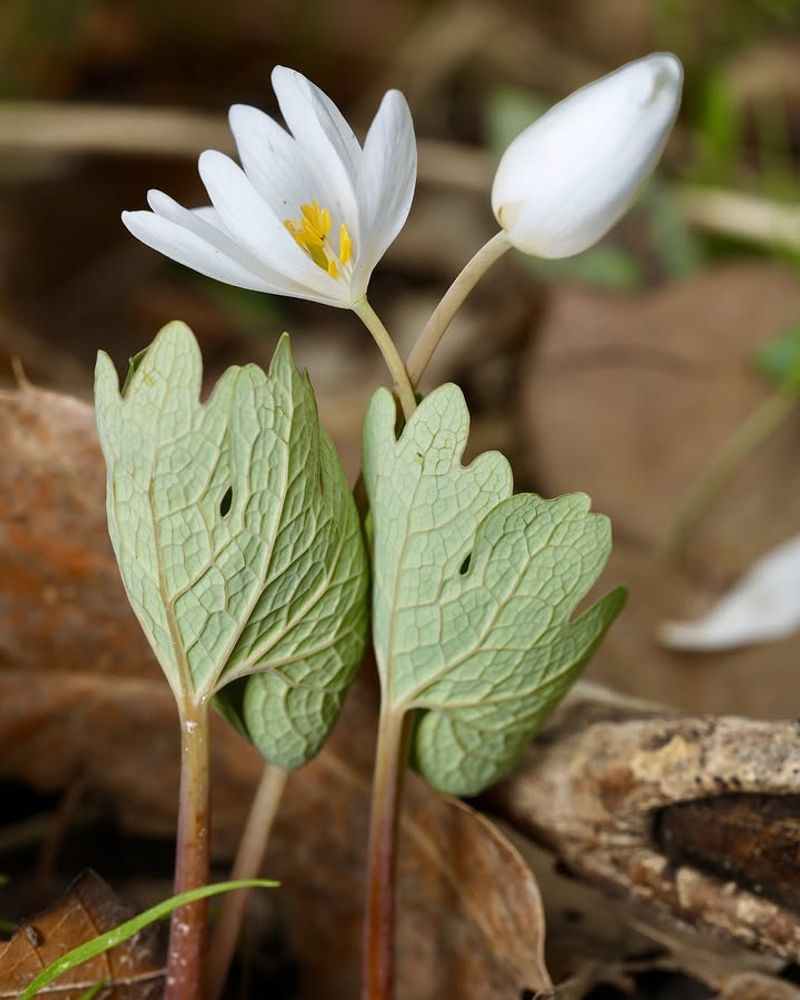
Pure white petals unfold like stars just above the leaf litter, often before the last frost has passed. Bloodroot earns its name from the bright orange-red sap in its rhizomes, but the flowers themselves are pristine and delicate.
Each bloom lasts only a day or two, but the plant produces them in succession, extending the show through late February and into early March across Georgia’s woodlands.
Shade is this perennial’s best friend. Plant it under deciduous trees where dappled light filters through bare branches in late winter.
The soil should stay moist but well-drained, mimicking the forest floor conditions where Bloodroot naturally thrives. It spreads slowly through rhizomes, forming charming colonies over time without becoming aggressive.
After flowering, the large lobed leaves emerge and remain attractive through spring before going dormant in summer heat. This ephemeral habit makes Bloodroot perfect for layering with hostas or ferns that fill in later.
Native bees and small pollinators appreciate the early pollen source when few other options exist.
Pair it with trout lilies or hepatica for a woodland garden that celebrates Georgia’s native plant heritage. Bloodroot rewards patient gardeners who value quiet beauty over flashy displays.
Your Georgia Garden Changes Every Week. Your Plan Should Too.
Gardening in Georgia changes quickly throughout the season. Every Friday you’ll receive a simple weekly plan showing exactly what to plant, prune, fertilize, harvest, and protect so you never miss the right timing.
3. Hepatica Emerges With Soft Cool-Toned Flowers
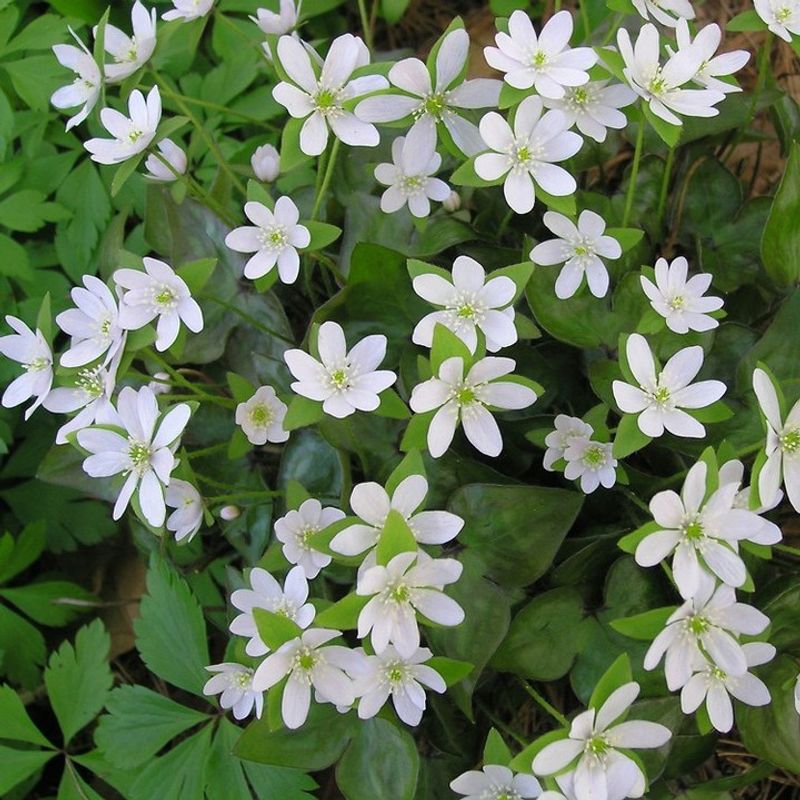
Fuzzy stems push up through old leaves, topped with flowers in shades of lavender, pink, white, or pale blue. Hepatica blooms feel almost fragile, yet they endure late winter cold snaps without complaint.
The flowers open on sunny February afternoons and close at night or during cloudy spells, creating a dynamic display that changes with Georgia’s unpredictable late winter weather.
This low-growing perennial prefers rich, slightly acidic soil in partial to full shade. It’s perfect for the north side of your house or beneath mature oaks and maples.
The three-lobed evergreen leaves persist through winter, providing ground cover even when nothing else is green. Hepatica doesn’t spread aggressively, making it ideal for small woodland gardens or naturalized areas.
Early bees and flies visit the flowers for pollen since nectar production is minimal. The plant self-seeds modestly, and seedlings take a few years to reach blooming size, rewarding long-term planning.
Hepatica pairs beautifully with native ferns and wildflowers that emerge later in spring.
Mulch lightly with shredded leaves to mimic forest conditions. Avoid heavy wood chips that can smother the shallow roots.
In Georgia gardens, Hepatica brings a touch of mountain woodland charm to shady corners that often get overlooked.
4. Trout Lily Nods In Shady Woodland Corners
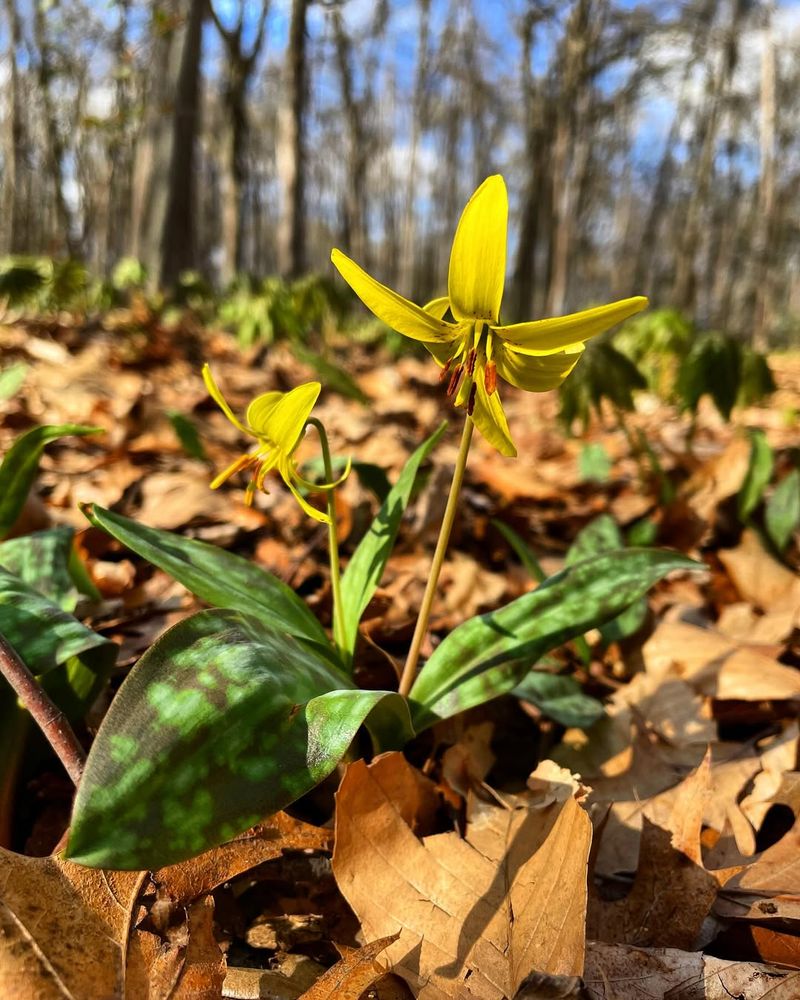
Nodding yellow blooms dangle above mottled leaves that look like they’ve been speckled with brown trout markings. Trout Lily brings a woodland elegance to shaded Georgia gardens in late February and early March.
The flowers hang downward, forcing you to stoop and look up into them, revealing intricate details most gardeners miss from a standing position.
Moist, humus-rich soil in deep shade suits this native perfectly. It thrives along stream banks, in ravines, or under dense canopy where little else will grow.
The leaves emerge first, followed by flower stalks that rise six to eight inches tall. Only mature bulbs produce flowers, so young colonies may show mostly foliage for several years before blooming heavily.
Trout Lily goes dormant by late spring, disappearing completely by summer. This makes it excellent for planting with hostas, astilbes, or other shade lovers that fill in after the ephemerals retreat.
The bulbs spread slowly through offsets, gradually forming drifts that naturalize beautifully over time.
Pair it with bloodroot and hepatica for an early woodland succession that celebrates Georgia’s native flora. Leave the leaf litter in place to nourish the soil and protect emerging shoots.
Trout Lily rewards gardeners who embrace the quiet beauty of fleeting woodland moments.
5. Rue Anemone Signals The Shift From Winter
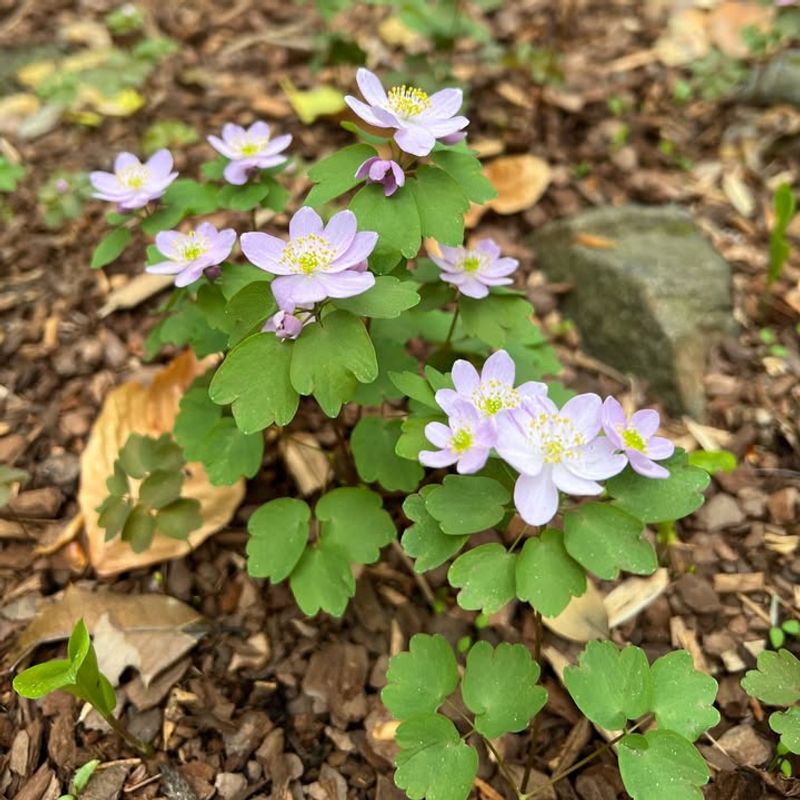
Delicate white or pale pink flowers cluster on wiry stems, creating airy clouds of color above finely divided foliage. Rue Anemone blooms in late February across Georgia, often appearing right as winter begins loosening its grip.
Each flower has five to ten petal-like sepals that flutter in the slightest breeze, giving the plant an almost ethereal quality.
Partial shade and well-drained soil keep this native happy. It tolerates more sun than many woodland wildflowers but appreciates afternoon shade during Georgia’s intense late spring heat.
The tuberous roots are easy to establish and require minimal care once settled. Rue Anemone self-seeds lightly, filling in gaps without becoming weedy.
The blooming period extends for several weeks, especially if temperatures stay cool. As with other spring ephemerals, the foliage goes dormant by early summer, making it perfect for layering with later-emerging perennials.
Small bees and flies visit the flowers for pollen.
Plant it in drifts of a dozen or more for maximum impact. Single plants get lost in the landscape, but groups create soft, romantic displays that feel like something from a fairy tale.
Rue Anemone pairs well with ferns, wild ginger, and other native groundcovers that appreciate similar conditions throughout Georgia’s wooded gardens.
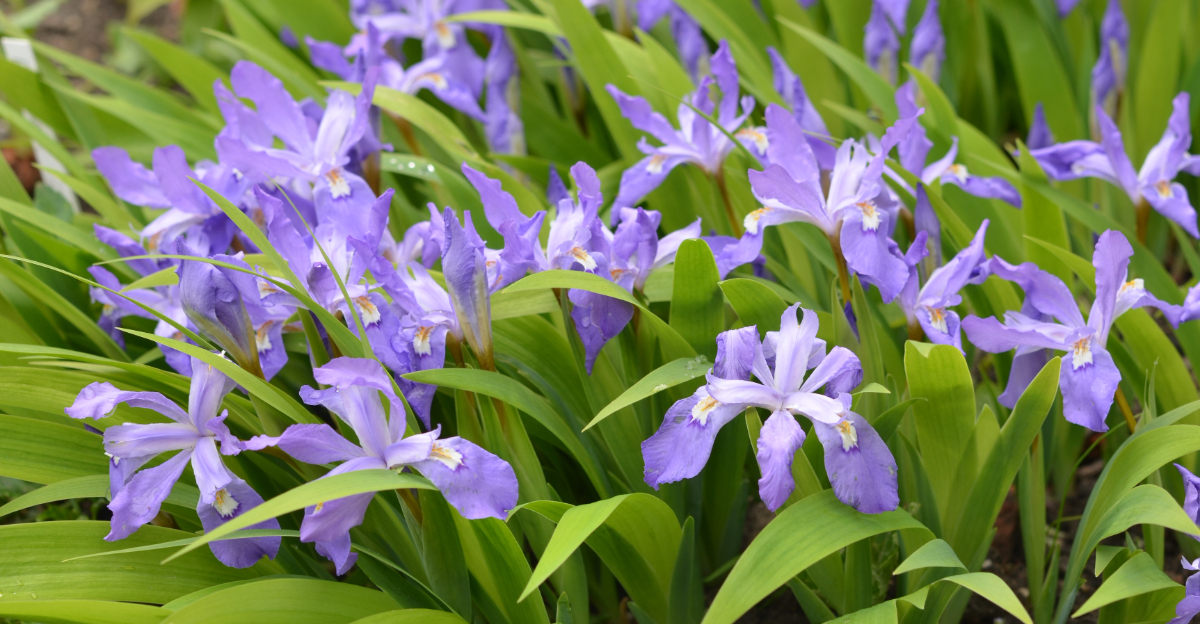
6. Dwarf Crested Iris Colors The Forest Floor
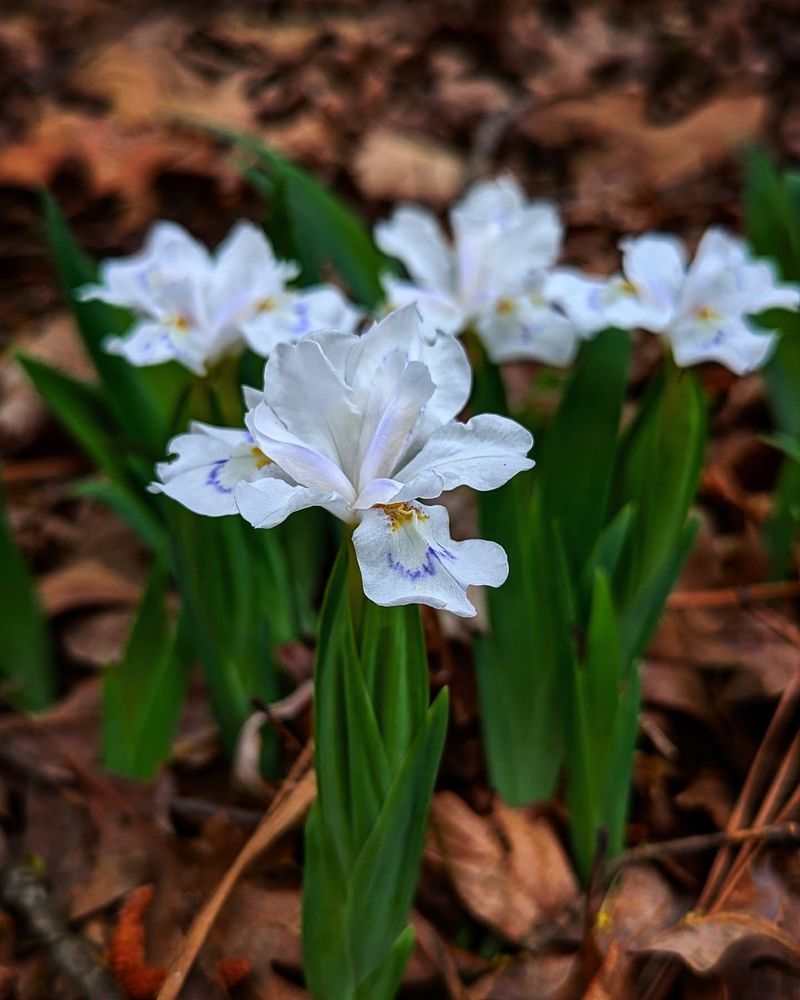
Lavender-blue flowers with bright yellow and white crests emerge close to the ground, transforming shaded Georgia woodlands into tapestries of color.
Dwarf Crested Iris blooms in late February and early March, often while patches of old leaves still litter the forest floor.
Each flower lasts only a day, but the plant produces multiple buds that open in succession, extending the display for two to three weeks.
This low-growing iris spreads through rhizomes, forming dense colonies in partial to full shade. It handles Georgia’s clay soil better than many woodland natives, though it prefers consistent moisture without standing water.
The sword-shaped leaves remain semi-evergreen through mild winters, providing texture even when the plant isn’t flowering.
Butterflies and native bees visit the blooms, attracted by the bright crests that serve as landing guides. After flowering, the foliage continues growing and stays attractive through summer if moisture remains adequate.
During dry spells, the leaves may yellow and retreat, but the rhizomes persist underground.
Plant Dwarf Crested Iris in sweeping drifts under deciduous trees or along shaded pathways where its early color can be appreciated up close.
It pairs beautifully with ferns, trilliums, and other natives that bloom later in spring, creating a succession of interest in Georgia’s woodland gardens.
7. Bellwort Dangles Golden Bells Above Fresh Foliage
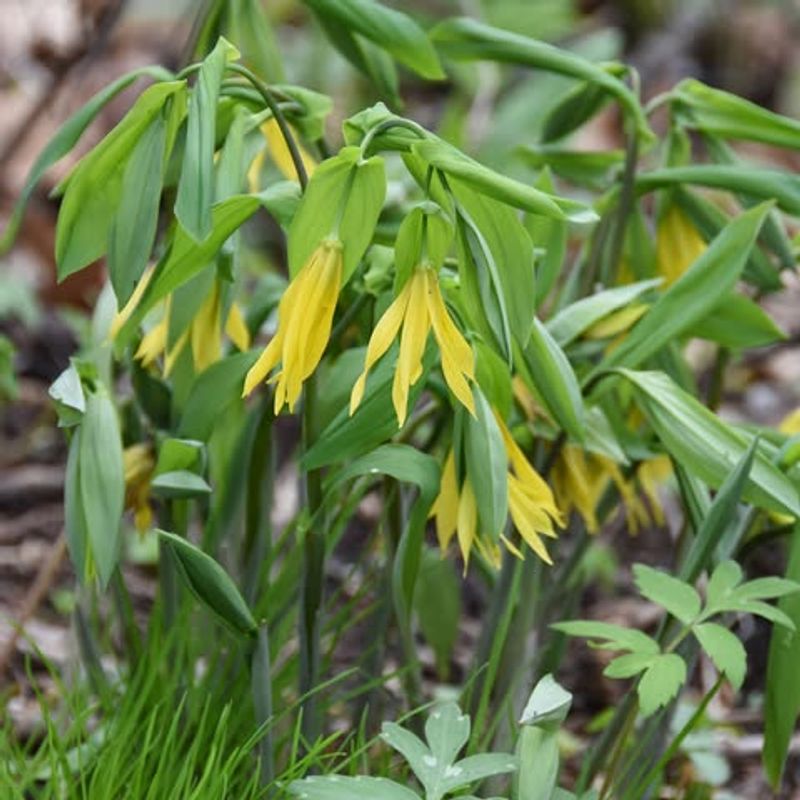
Pale yellow bells hang beneath fresh green leaves that seem to be pierced by the stem itself. Bellwort blooms in late February and into March across Georgia’s woodlands, offering a subtle beauty that rewards close observation.
The twisted petals and nodding habit give the flowers a shy, almost secretive appearance that contrasts with showier spring bulbs.
Rich, moist soil in partial to full shade creates ideal conditions for this native perennial. It spreads slowly through rhizomes, never becoming aggressive but gradually forming attractive colonies under trees and shrubs.
The perfoliate leaves, where the stem appears to grow through the leaf blade, remain ornamental long after the flowers fade.
Bellwort goes dormant by midsummer, making it perfect for planting with hostas, astilbes, or other shade lovers that peak later in the season. The flowers attract small native bees and flies seeking early pollen sources.
Deer generally leave Bellwort alone, making it a good choice for Georgia gardens where browsing pressure is high.
Pair it with trilliums, bloodroot, and ferns for a layered woodland garden that celebrates native plant diversity. Mulch with shredded leaves rather than wood chips to mimic natural forest conditions.
Bellwort brings quiet elegance to shaded corners that often get overlooked in the rush toward flashier spring displays.
8. Foamflower Pushes Up Delicate Flower Spikes
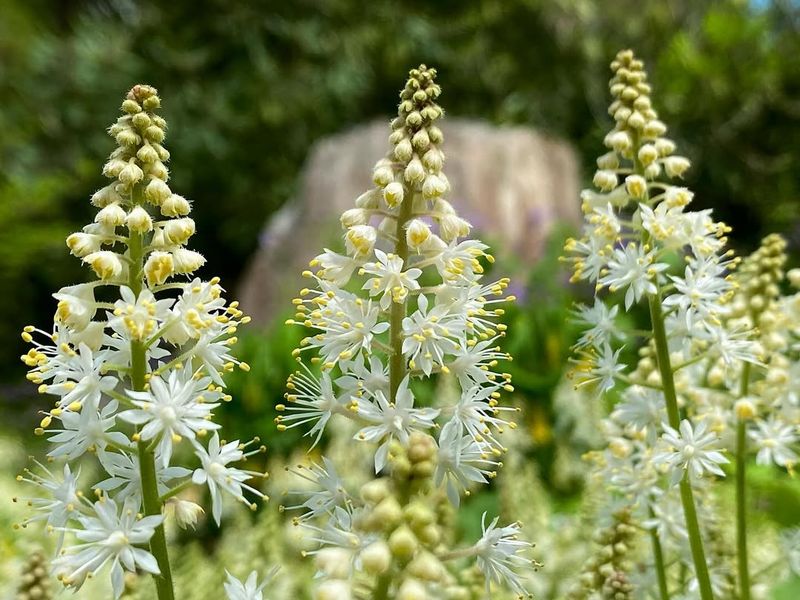
White flower spikes rise like tiny foam fountains above mounds of lobed evergreen leaves. Foamflower begins blooming in late February across Georgia, especially in areas with consistent moisture and dappled shade.
The individual flowers are small, but they cluster densely on upright stalks, creating a frothy appearance that explains the common name perfectly.
Partial to full shade and rich, acidic soil suit this native groundcover best. It spreads through stolons, forming attractive mats that suppress weeds while remaining easy to control.
The evergreen foliage often develops burgundy tints in winter, adding color even before flowers appear. Foamflower tolerates Georgia’s summer heat better than many woodland plants if moisture stays adequate.
Bees and small pollinators visit the flowers enthusiastically, making this plant valuable for early-season pollinator support. The blooming period extends for several weeks, especially if temperatures remain cool.
After flowering, the foliage continues providing textured groundcover through summer and fall.
Plant Foamflower in sweeping drifts under azaleas, rhododendrons, or native trees where its low habit won’t compete with taller plants. It pairs beautifully with ferns, hostas, and other shade lovers that appreciate similar conditions.
In Georgia gardens, Foamflower offers reliable beauty with minimal maintenance, making it perfect for busy gardeners who want native plant success without constant fussing.
9. Woodland Phlox Spreads Low With Early Lavender Hues
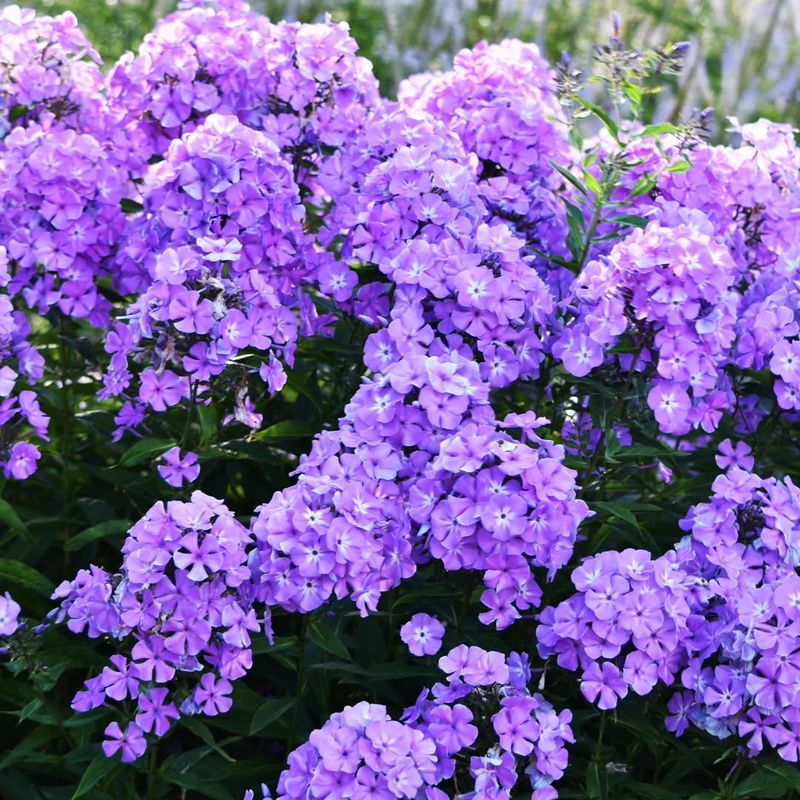
Lavender-blue flowers blanket low mounds of semi-evergreen foliage, creating carpets of color in shaded Georgia gardens. Woodland Phlox blooms from late February through March, often continuing into April if temperatures stay moderate.
The five-petaled flowers have a sweet fragrance that attracts early butterflies and native bees desperately seeking nectar after winter.
Partial shade and well-drained soil keep this native phlox thriving. It tolerates more sun than many woodland wildflowers but appreciates afternoon shade during Georgia’s hot summers.
The plant spreads through rhizomes and self-seeding, gradually filling in gaps without becoming invasive. Woodland Phlox handles dry shade better than most spring ephemerals, making it valuable for challenging spots under mature trees.
The foliage remains attractive through most of the growing season, providing groundcover even after flowers fade.
During extreme summer heat, the plant may go semi-dormant, but it rebounds quickly with fall rains.
Deer occasionally browse the foliage but rarely cause significant damage.
Plant Woodland Phlox in drifts along shaded pathways or under flowering trees where its early color can be appreciated from indoors. It pairs beautifully with ferns, native azaleas, and other shade lovers that bloom later in spring.
In Georgia gardens, this tough native delivers reliable beauty with minimal care, making it perfect for naturalized woodland settings.