The 9 Native Butterflies You’ll See In Oregon Gardens
Butterflies make a garden feel lively in the sweetest way. Little wings flutter, colors flicker in the sunlight, and suddenly the flowers seem to have company.
Gardeners often notice them drifting through warm afternoon air, pausing here and there like tiny guests enjoying the space. It’s always a pleasant surprise when one appears and lingers for a moment.
Oregon is home to many beautiful native butterflies, and quite a few enjoy visiting backyard gardens. Their patterns, colors, and gentle movement bring a playful, natural charm that’s hard not to enjoy.
Below are some native butterflies you might spot adding a touch of life and color around your garden.
1. Western Tiger Swallowtail (Papilio rutulus)
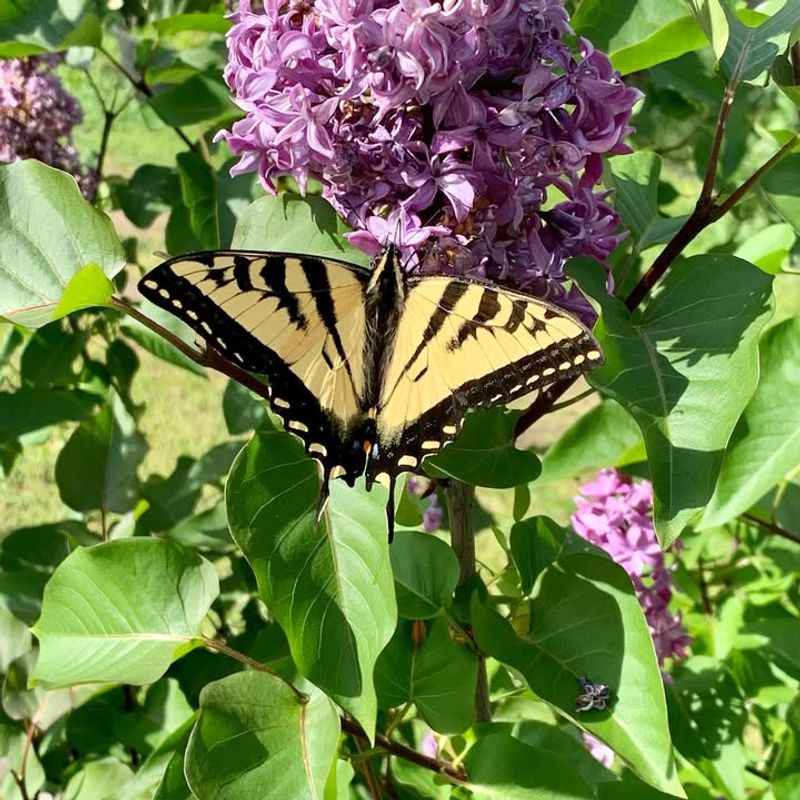
Few butterflies command attention quite like the Western Tiger Swallowtail gliding through your garden on wings that can span four inches.
The bold black stripes against bright yellow make them impossible to miss, and they move with an unhurried grace that invites you to pause and watch.
These butterflies absolutely love riparian areas, so if you have a water feature or live near a creek, you’re likely to see them regularly. Males gather at puddles and damp soil to drink, a behavior called “puddling” that helps them get minerals.
The caterpillars feed on willow, cottonwood, and alder, trees that grow naturally along Oregon’s waterways. Young caterpillars look like bird droppings (excellent camouflage), while older ones turn green with false eyespots that make them look like tiny snakes.
Western Tiger Swallowtails visit a huge variety of garden flowers, but they particularly love lilac, mock orange, and butterfly bush. Plant these shrubs in sunny spots, and you’ll create reliable feeding stations.
One common mistake is assuming all large yellow butterflies are the same species. Western Tigers have those distinctive black “tiger stripes” running vertically down their wings, setting them apart from other swallowtails you might see.
2. Oregon Swallowtail (Papilio oregonius)
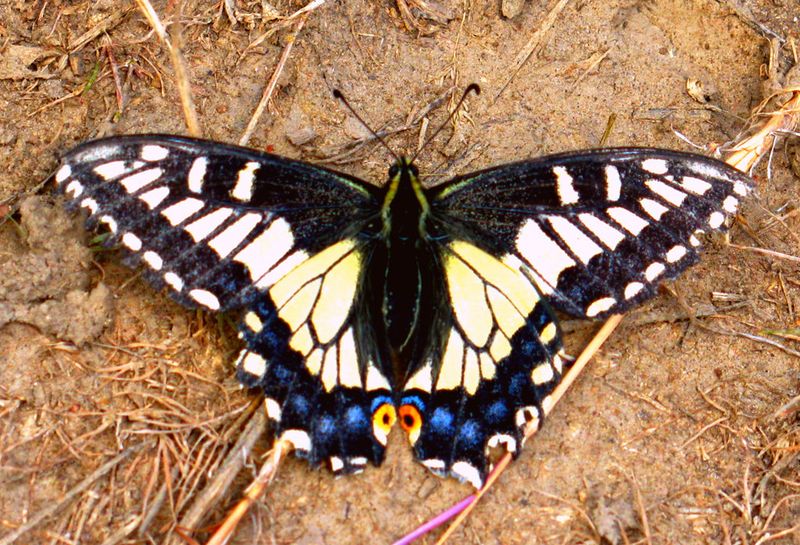
Spotting your first Oregon Swallowtail feels like discovering a secret your garden has been keeping. This is Oregon’s official state insect, and it’s found almost nowhere else in the world, making every sighting genuinely special.
The butterfly shows off bold yellow wings striped with black, and if you look closely, you’ll see delicate blue spots near the tail and a splash of orange on the hindwings.
Males patrol sunny hillsides and canyon edges looking for females, flying in that distinctive looping pattern swallowtails are known for.
What many gardeners don’t realize is that Oregon Swallowtails need tarragon or other native desert parsley plants to lay their eggs. The caterpillars are picky eaters and won’t survive on just any plant.
You’ll most likely see these butterflies in drier areas east of the Cascades, especially along the Columbia River Gorge. They prefer hot, open spaces rather than the cool, shady gardens common in western Oregon.
If you want to attract them, plant native wildflowers like penstemon and balsamroot in sunny spots with excellent drainage. Standing water and heavy clay soil won’t work for these desert-adapted beauties.
Your Oregon Garden Changes Every Week. Your Plan Should Too.
Gardening in Oregon changes quickly throughout the season. Every Friday you’ll receive a simple weekly plan showing exactly what to plant, prune, fertilize, harvest, and protect so you never miss the right timing.
3. Anise Swallowtail (Papilio zelicaon)
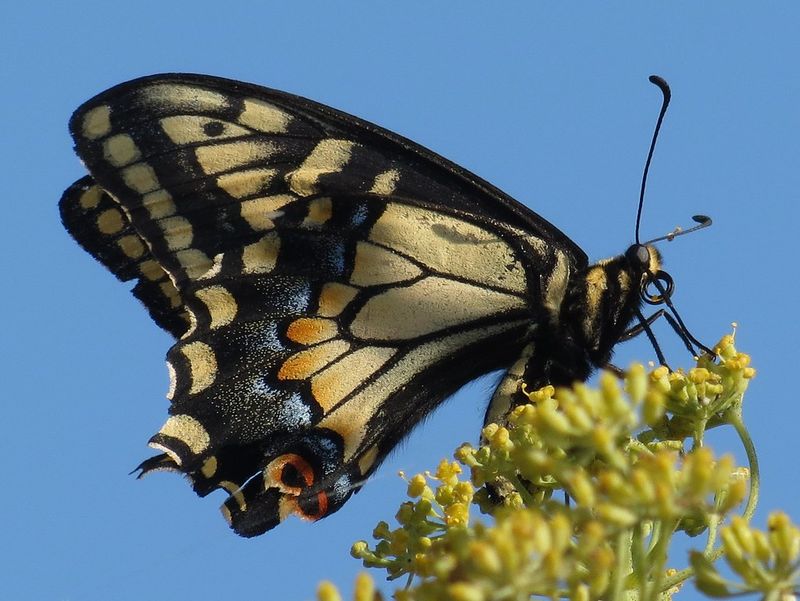
When you plant fennel, dill, or parsley in your vegetable garden, you’re rolling out the welcome mat for Anise Swallowtails. These butterflies show up reliably wherever their favorite host plants grow, and they’re not shy about laying eggs right in your herb beds.
The adults look remarkably similar to Oregon Swallowtails, with yellow wings marked by black stripes and blue eyespots.
The easiest way to tell them apart is by location, Anise Swallowtails thrive throughout western Oregon’s wetter climate, while Oregon Swallowtails prefer the dry east side.
Their caterpillars are chunky green creatures with black bands and orange spots. If you touch one, it’ll stick out orange “horns” that smell strange but won’t hurt you, it’s just a defense mechanism to scare off predators.
Many gardeners panic when they see these caterpillars munching their herbs, but the butterflies are worth sharing a few leaves. Plant extra parsley or fennel specifically for the caterpillars, and you’ll have plenty left for your kitchen.
Anise Swallowtails fly from early spring through fall in Oregon, with multiple generations each year. You’ll see them nectaring on lavender, zinnia, and butterfly bush throughout the growing season.
4. Mourning Cloak (Nymphalis antiopa)
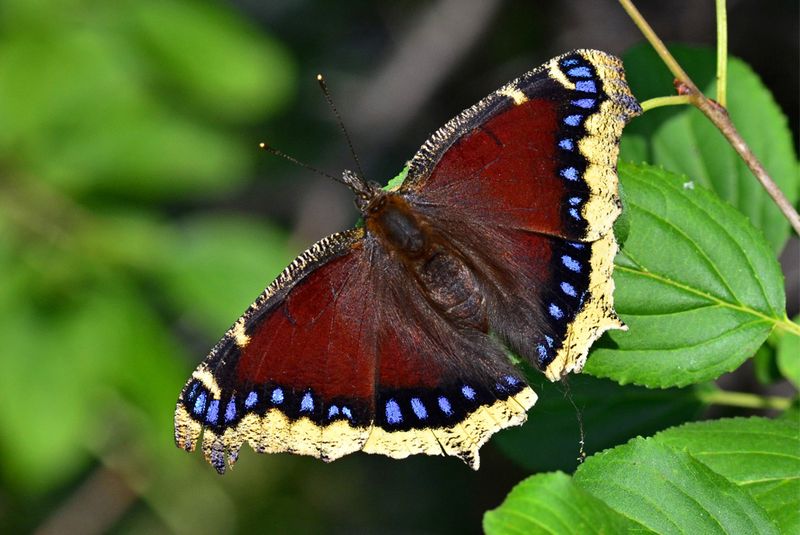
On a sunny February day when most butterflies are still dormant, you might spot a Mourning Cloak basking on your fence or a south-facing wall.
These butterflies overwinter as adults, tucked into bark crevices or woodpiles, making them one of the first butterflies you’ll see each year.
Their wings are deep maroon, almost black, with a bright yellow border and a row of iridescent blue spots. When they close their wings, the mottled gray undersides blend perfectly with tree bark.
Mourning Cloaks live surprisingly long for butterflies, up to ten months. The adults you see in early spring actually hatched the previous summer, survived the winter, and will lay eggs on willow, elm, or birch before dying.
Unlike most butterflies that feed on flower nectar, Mourning Cloaks prefer tree sap, rotting fruit, and occasionally animal droppings. Setting out overripe bananas or apples attracts them better than any flower.
These butterflies are territorial, and males will chase away other butterflies (and even birds) from their chosen sunny spots. If you see one returning repeatedly to the same perch, that’s a male defending his territory and waiting for females.
Oregon’s cool, moist climate suits them perfectly, especially in areas with plenty of native trees.
5. Painted Lady (Vanessa cardui)
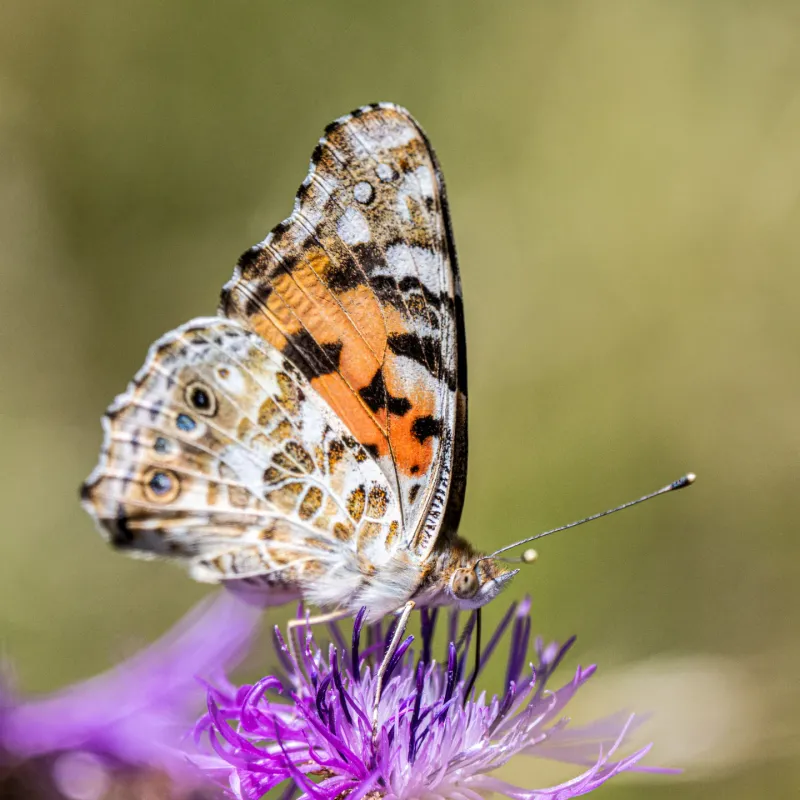
Some years, Painted Ladies seem to be everywhere at once, covering gardens in fluttering orange and black.
Other years, you’ll barely see any, these butterflies migrate in huge numbers, and their populations fluctuate dramatically depending on conditions in the desert Southwest where they overwinter.
During big migration years, you might see hundreds passing through your garden in a single day, all heading north. They’re not stopping to settle, they’re on a mission, traveling from Mexico to Canada in one of nature’s most impressive journeys.
Painted Ladies have salmon-orange wings marked with black and white spots, and they’re smaller and more delicate-looking than Monarchs. They visit practically any flower that produces nectar, making them easy to attract with a diverse garden.
Their caterpillars feed on thistles, which is why you’ll often see adults around weedy areas. If you’re willing to let a patch of native thistles grow, you’re providing crucial habitat.
What surprises many Oregon gardeners is that Painted Ladies don’t survive our winters. Every butterfly you see in spring and summer either migrated here or descended from migrants, they recolonize Oregon annually.
Plant zinnias, cosmos, and asters for late-season nectar when these butterflies are building energy for their southward journey.
6. Red Admiral (Vanessa atalanta)
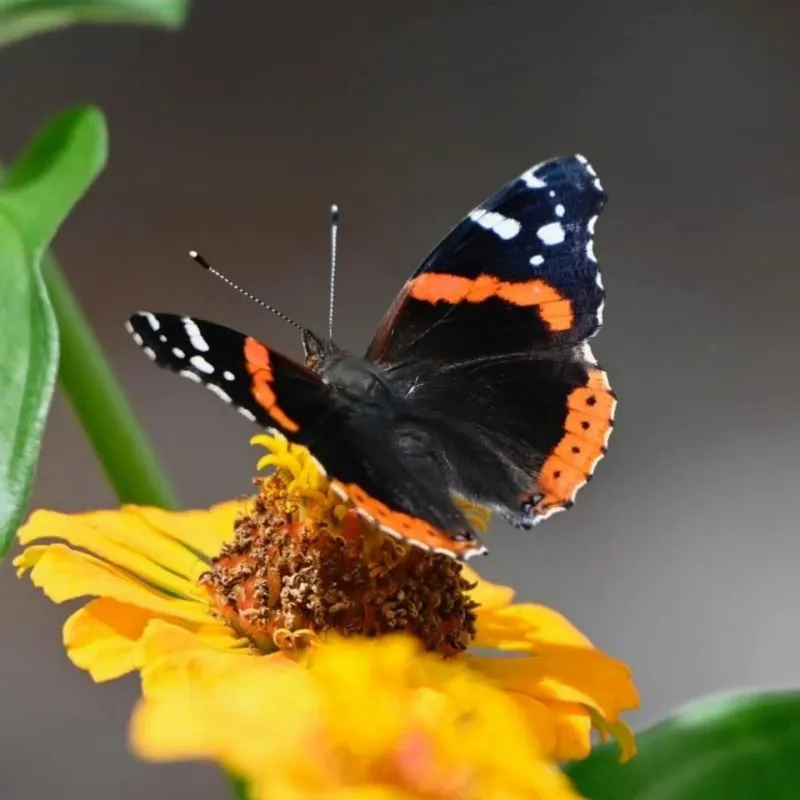
These butterflies are territorial and surprisingly aggressive for their size. Males stake out sunny clearings and will investigate anything that moves through their space, including you.
They’ll even land on people occasionally, especially if you’re wearing bright colors.
Red Admirals are closely related to Painted Ladies, and they share similar migration patterns, though Red Admirals are more likely to overwinter in Oregon’s milder areas. Some survive our winters as adults by finding protected spots in garages, sheds, or dense vegetation.
Their caterpillars feed exclusively on nettles, which most gardeners consider weeds. If you can tolerate a nettle patch in an out-of-the-way corner, you’ll be supporting these beautiful butterflies.
Adults prefer tree sap and fermenting fruit over flower nectar, though they’ll visit flowers when other food isn’t available. Rotting apples in fall become butterfly magnets.
Oregon’s western valleys provide ideal habitat, plenty of moisture for nettles to thrive, mild winters for potential overwintering, and abundant flowering plants for backup nectar sources.
7. Lorquin’s Admiral (Limenitis lorquini)
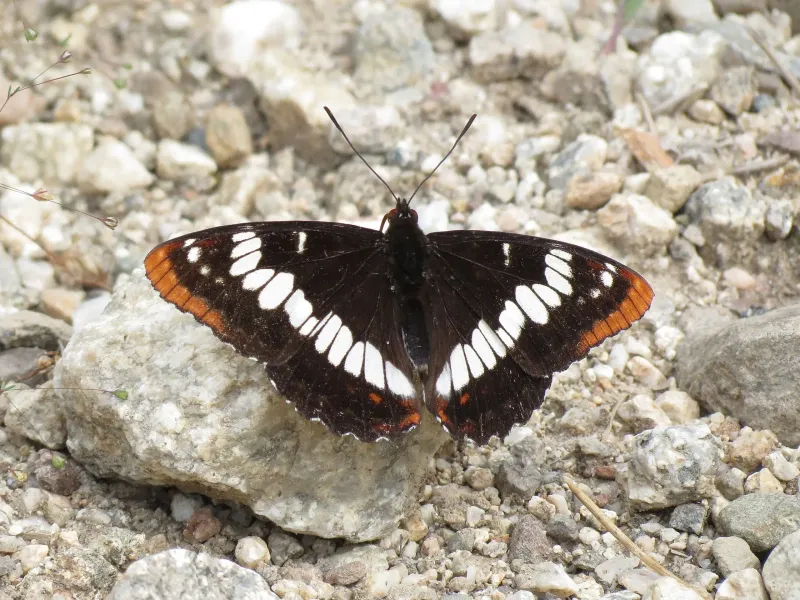
Watch a Lorquin’s Admiral fly past, and you’ll notice something different about its movement. These butterflies glide more than they flap, sailing through the air with their wings held flat in a distinctive pattern that helps identify them even from a distance.
They’re mostly black with white bands running across both wings and bright orange tips on the forewings. The combination is striking and unlike any other butterfly commonly seen in Oregon gardens.
Lorquin’s Admirals are western specialists found mainly in the Pacific states, and Oregon sits right in the heart of their range. They prefer areas near water where willow and poplar trees grow—their caterpillar host plants.
These butterflies love muddy puddles and wet gravel, where males gather in groups to drink. If you have a birdbath or pond, leaving a shallow muddy edge gives them a perfect drinking spot.
One behavior that catches gardeners off guard is how these butterflies bask. They’ll land on leaves or fences with wings spread completely flat, soaking up sunshine even on cool mornings when other butterflies are still inactive.
Oregon’s riparian corridors provide natural habitat, but suburban gardens with flowering shrubs and a water source work well too. They particularly enjoy spiraea, California lilac, and blackberry flowers.
8. Great Spangled Fritillary (Speyeria cybele)
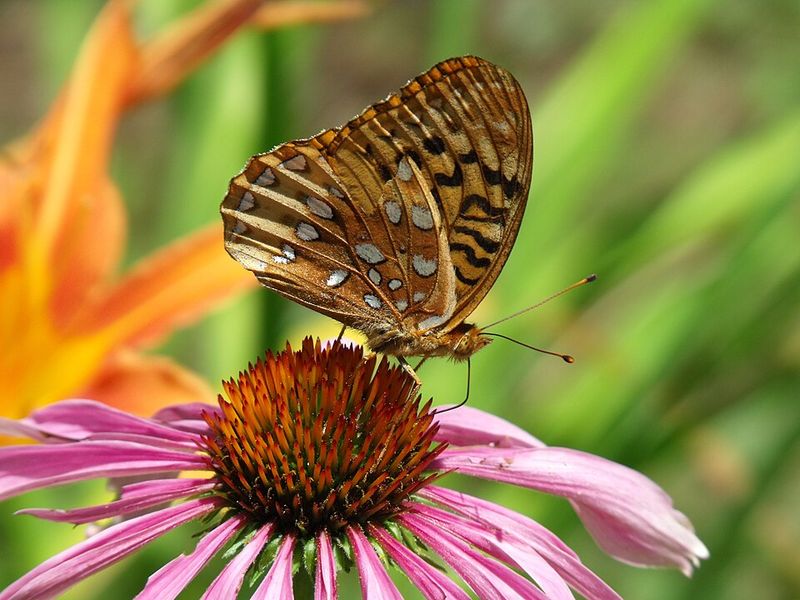
Great Spangled Fritillaries are the large, bright orange butterflies that appear in midsummer, their wings decorated with black spots above and stunning silver spots below.
When they land and fold their wings, those metallic silver markings catch the light like jewelry.
These are powerful fliers that can cover considerable distances searching for flowers. They’re especially fond of purple and pink blooms, plant coneflowers, blazing star, or verbena, and they’ll find you.
What many Oregon gardeners don’t know is that fritillary caterpillars feed only on violets. The butterflies lay eggs near violet plants in late summer, and the tiny caterpillars hatch but immediately go dormant for winter without eating.
In spring, when violets leaf out, the caterpillars wake up and feed until they’re ready to pupate. This means you need violets growing somewhere in your yard or neighborhood for these butterflies to complete their life cycle.
Great Spangled Fritillaries are most common in Oregon’s mountain meadows and forest clearings, but they’ll visit valley gardens if violets and nectar sources are available. They fly from June through August, with peak numbers in July.
Don’t pull out those wild violets spreading through your lawn, they’re supporting these magnificent butterflies and many other native species.
9. Gray Hairstreak (Strymon melinus)
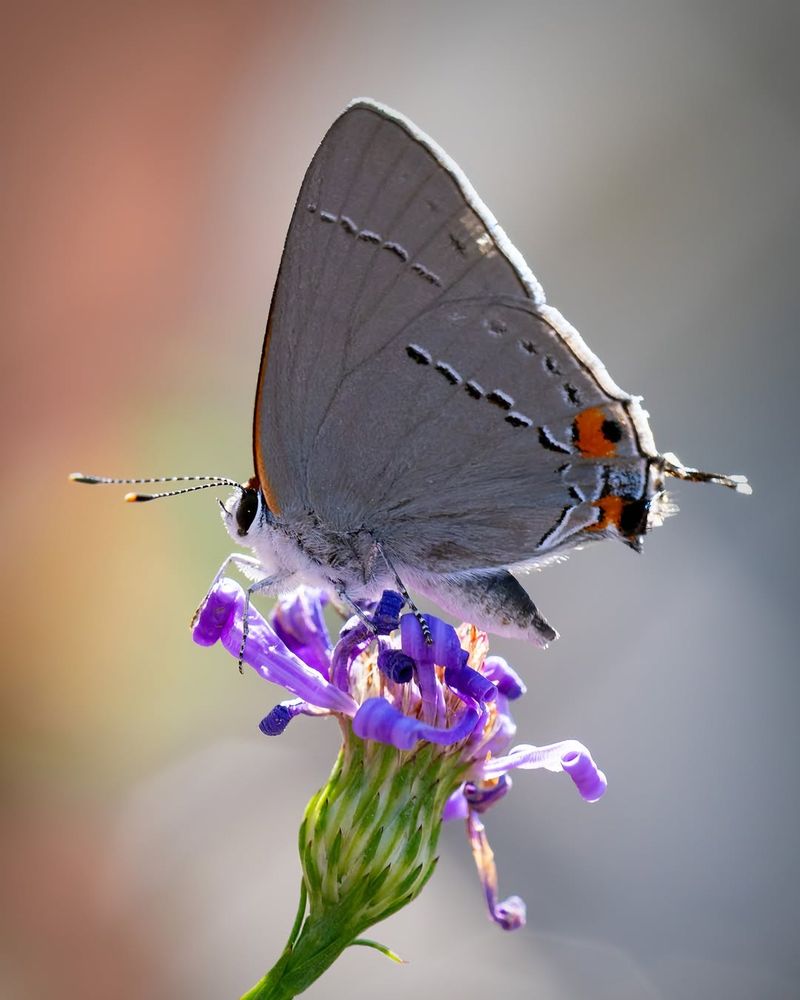
These butterflies are easy to overlook because they’re small and stay low in the vegetation, but once you start noticing them, you’ll realize they’re everywhere.
Gray Hairstreak butterflies rarely exceed an inch across, and their soft gray wings blend into shadows and leaves.
Look closely at a perched hairstreak, and you’ll see the delicate “tails” on the hindwings and false eyespots that make the rear of the butterfly look like a head. This tricks predators into attacking the wrong end, giving the butterfly a chance to escape.
Gray Hairstreaks are among the most adaptable butterflies in North America. Their caterpillars feed on dozens of different plant families, from beans and peas in your vegetable garden to mallow, buckwheat, and clover in wild areas.
This adaptability means you’ll find them in practically any Oregon habitat, urban gardens, farms, meadows, and forest edges. They’re active from spring through fall, with multiple generations each year.
Adults visit tiny flowers that larger butterflies ignore, including oregano, thyme, and yarrow. If you grow herbs, you’re probably already supporting these little butterflies without realizing it.
Their small size and quiet behavior make them less dramatic than swallowtails, but they’re just as valuable as pollinators and add subtle beauty to any garden willing to look closely.