5 Popular Perennials That Cause Trouble In Arizona Gardens (And What To Grow Instead)
That once-reliable plant suddenly looks tired, patchy, and far less impressive than it did a few months ago.
You gave it space, water, and attention, yet it still struggles to handle Arizona’s intense heat, dry soil, and seasonal shifts.
The first instinct is to fertilize more, prune harder, or assume something went wrong with your care routine. Acting too quickly can make the stress worse, especially if the real issue is that the plant simply does not suit Arizona’s conditions.
Some perennials fade because they were never truly comfortable where they were planted. Others still have life left in their roots and just need the right adjustments.
Before replacing everything or doubling your efforts, it helps to know which plants tend to disappoint in Arizona and which alternatives actually hold up. The right swap can change the entire feel of your garden.
1. Russian Sage Struggles In Reflected Desert Heat
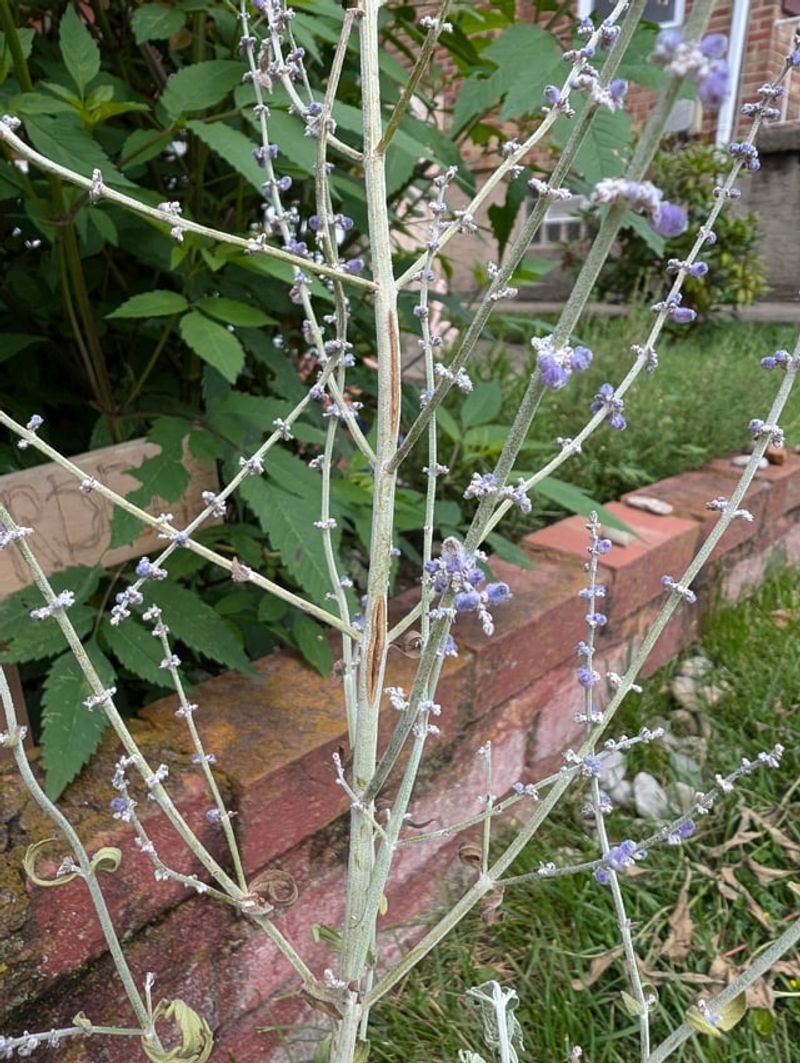
Russian sage is widely grown for its silvery foliage and purple blooms and is often labeled as drought tolerant.
Many nurseries recommend it as a low-water choice for hot climates, and it can perform reasonably well in parts of Arizona when planted in the right location.
Problems usually begin when it is placed near south or west-facing walls, driveways, or gravel beds that reflect and store heat.
These surfaces can become significantly hotter than the surrounding air, increasing stress on the plant during Arizona’s long summers.
Native to central Asian steppes, Russian sage tolerates heat but benefits from cooler nighttime temperatures and good air circulation. In dense urban settings where heat lingers after sunset, growth may become sparse and flowering less impressive.
The plant also prefers sharply drained soil. In areas where caliche restricts drainage or where irrigation is frequent, roots can struggle more from excess moisture and trapped heat than from alkalinity itself.
When planted in open, well-drained areas away from intense reflected heat, Russian sage can still provide soft texture and seasonal color.
However, in tightly landscaped urban settings, it often fails to achieve the full, billowy look seen in cooler regions.
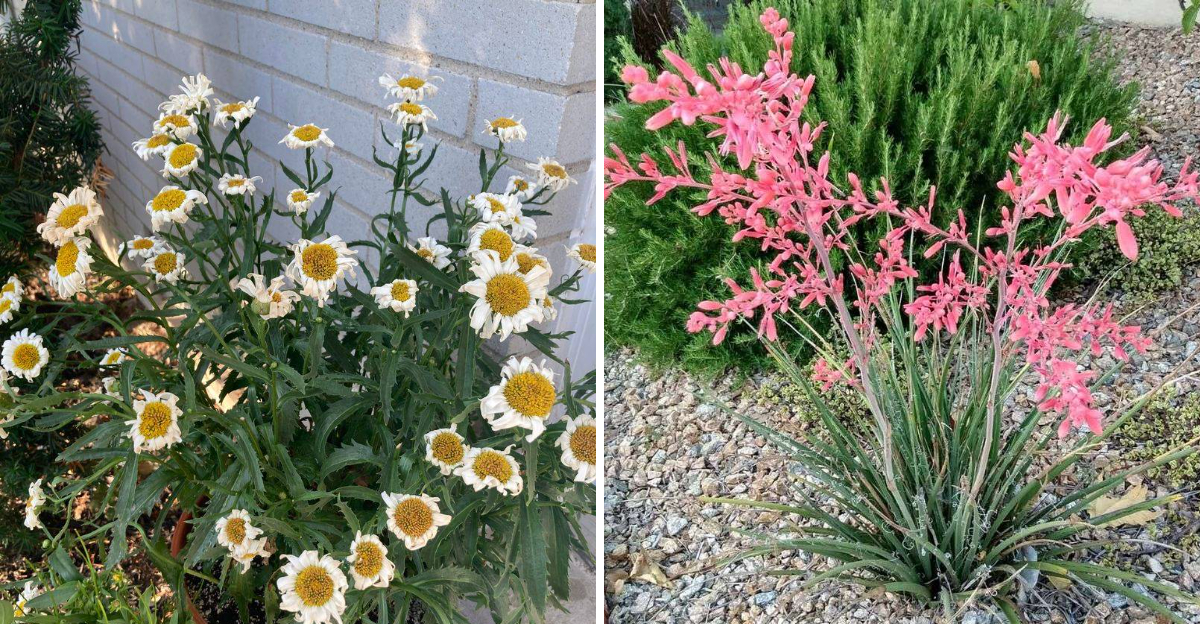
2. Shasta Daisy Fades Fast Once Arizona Summer Hits
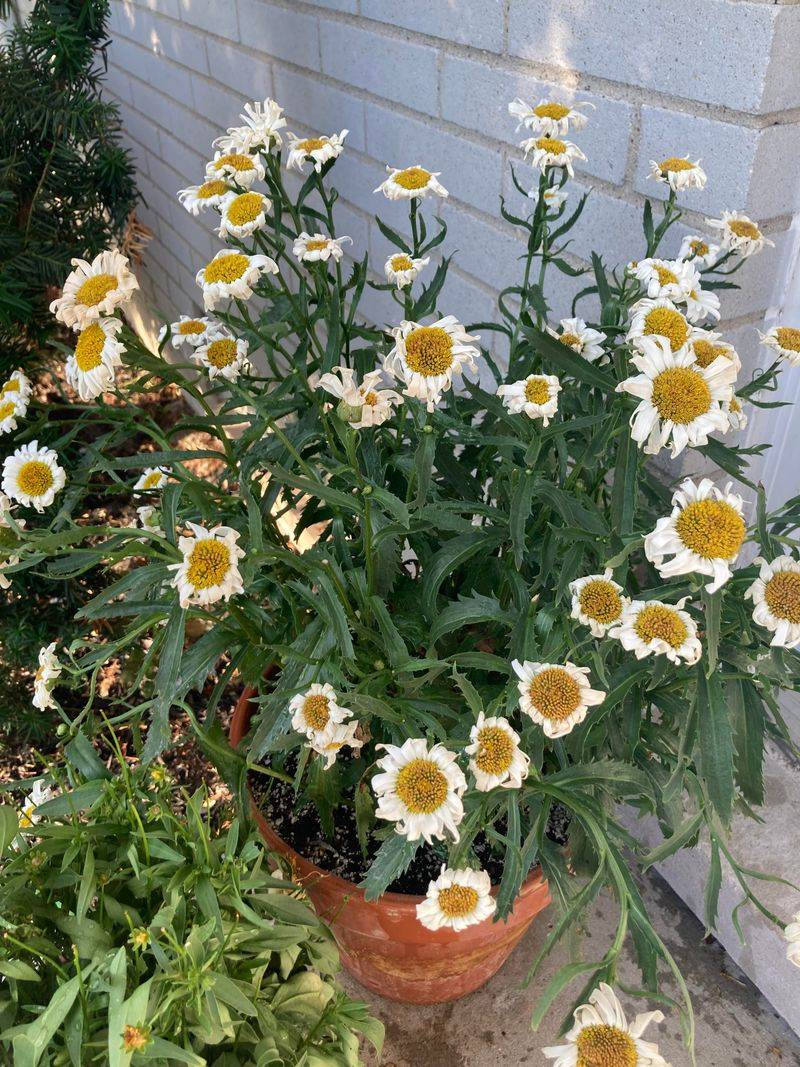
Few perennials look as cheerful as Shasta daisies with their crisp white petals and sunny yellow centers. Gardeners across cooler states enjoy months of reliable blooms from these classic flowers.
Arizona gardeners, however, watch them struggle and fade as soon as May temperatures climb.
Shasta daisies were developed for temperate climates with moderate summers and regular rainfall. They demand consistent moisture and can’t handle the combination of 110-degree days and single-digit humidity.
The broad, thin petals literally crisp up in Arizona’s intense ultraviolet radiation.
Even with afternoon shade and frequent watering, Shasta daisies look ratty by mid-June. The foliage yellows, flowers become sparse and stunted, and the whole plant often gives up completely before monsoon season arrives.
They’re simply not adapted for the extreme conditions found throughout Phoenix, Tucson, and other Arizona communities.
Warm desert nights offer no relief after long days of intense sun, leaving the plants under constant stress. Rapid moisture loss from both soil and foliage weakens the root system over time.
Your Arizona Garden Changes Every Week. Your Plan Should Too.
Gardening in Arizona changes quickly throughout the season. Every Friday you’ll receive a simple weekly plan showing exactly what to plant, prune, fertilize, harvest, and protect so you never miss the right timing.
Flower production declines quickly once prolonged heat settles across the landscape. Stems lose firmness as internal hydration drops, causing blooms to tilt and collapse.
Continued exposure to harsh ultraviolet light accelerates fading and petal damage. Instead of delivering months of cheerful color, the plants fade early and struggle to maintain even a modest display in Arizona gardens.
3. Hostas Burn And Demand Too Much Water
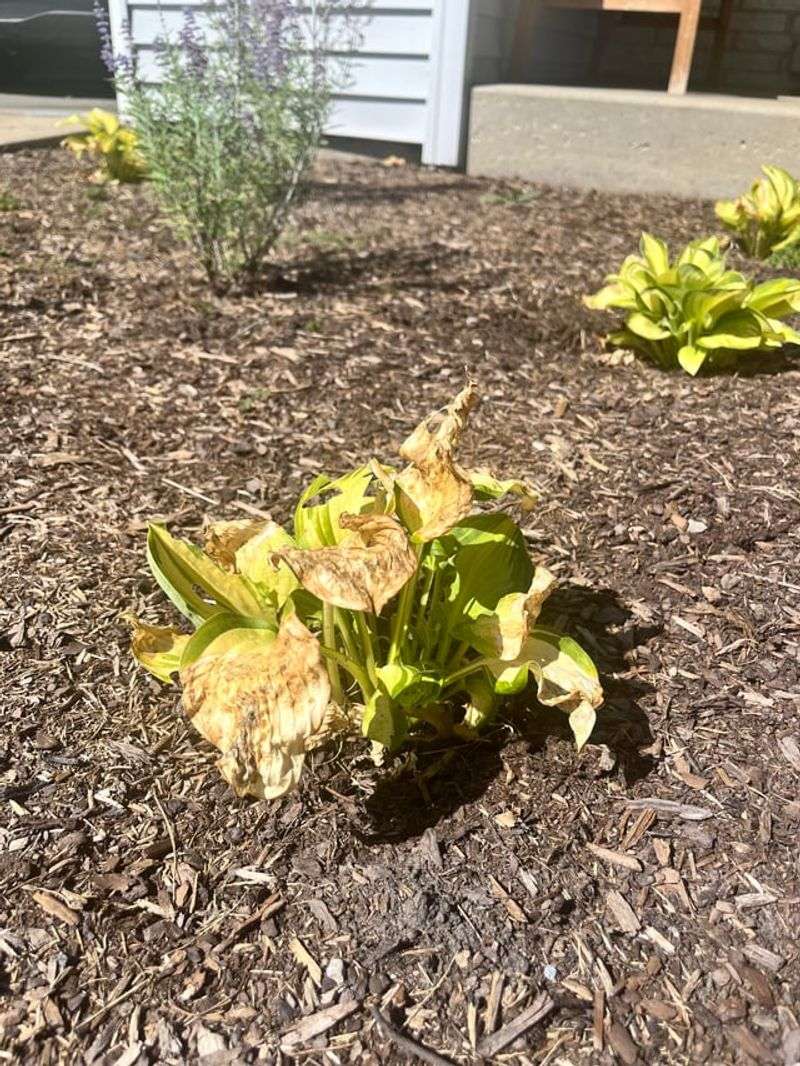
Walk through any Midwestern shade garden and you’ll find hostas thriving with lush, architectural foliage. Their bold leaves and shade tolerance make them beloved perennials across much of America.
Arizona gardeners who try growing hostas quickly discover these plants are completely wrong for desert conditions.
Hostas evolved in the moist forests of Asia where humidity stays high and temperatures remain moderate. Arizona’s combination of low humidity, alkaline water, and intense heat creates impossible growing conditions.
Even in full shade, hostas develop brown, crispy leaf edges and require daily watering to survive.
The water demands alone make hostas impractical for Arizona landscapes. A single hosta can need several gallons daily during summer, and they still look terrible despite all that irrigation.
Their shallow root systems can’t cope with the dry air pulling moisture from leaves faster than roots can replace it.
Even with attentive care, the soil never stays evenly moist enough to satisfy their constant need for hydration. Mineral heavy irrigation water gradually builds up around the roots, interfering with nutrient absorption.
Reflected heat from surrounding gravel and masonry pushes temperatures far beyond what these woodland plants can handle. Foliage loses its deep green color and turns dull as stress intensifies.
Dry winds shred the broad leaves, leaving ragged edges that never recover. Growth slows dramatically once summer settles in, preventing the plants from reaching their typical size.
By the height of the season, they look worn out and depleted instead of full and architectural.
4. Delphinium Collapses When Temperatures Climb
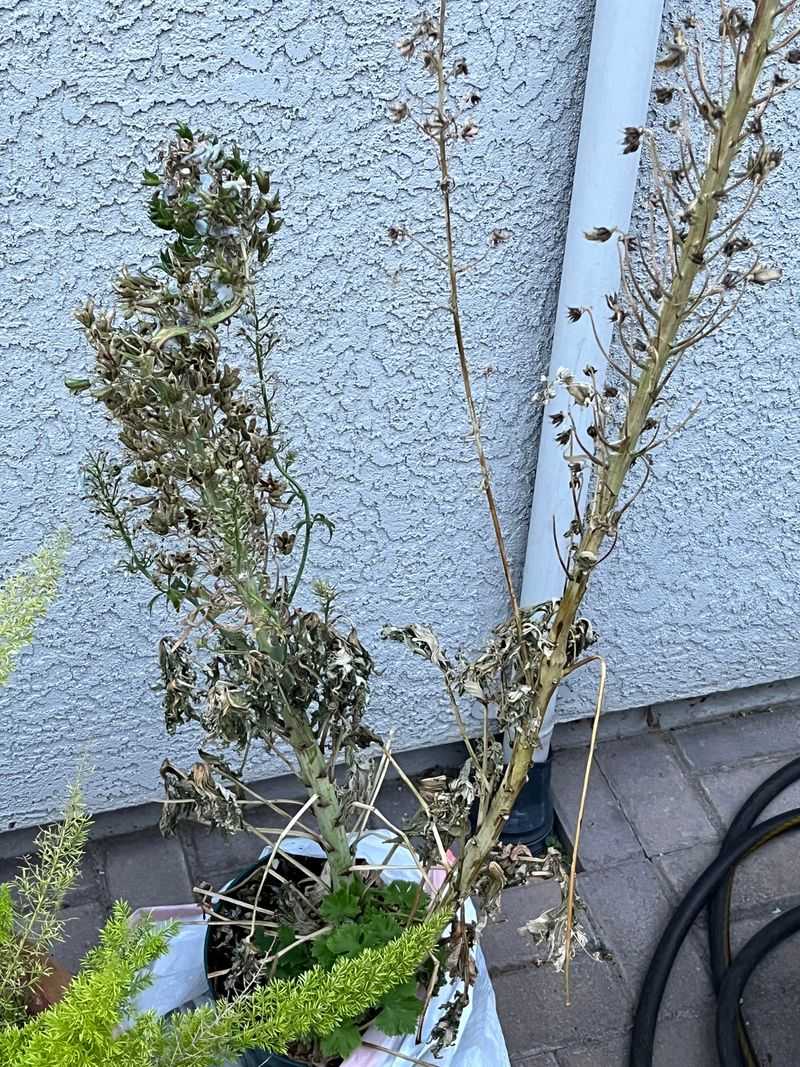
Towering spikes of blue, purple, and white flowers make delphiniums stars of cottage gardens in cool climates. These dramatic perennials create stunning vertical accents that gardeners treasure.
Arizona’s soaring temperatures and intense sun cause delphiniums to collapse and fail spectacularly.
Delphiniums require cool nights and moderate daytime temperatures to produce their signature tall flower spikes. Once temperatures consistently exceed 85 degrees, delphiniums stop blooming and begin declining rapidly.
Arizona’s spring temperatures climb too quickly for delphiniums to establish properly, and summer heat finishes them off.
Attempts to grow delphiniums in Arizona usually result in stunted plants with short, sparse flower spikes that flop over. The thick, hollow stems can’t support growth in hot, dry conditions.
Even with heavy feeding and constant watering, delphiniums never achieve the majestic appearance they display in Pacific Northwest or New England gardens.
Strong desert sun scorches their tender foliage and leaves brown patches that spread quickly across the leaves. Dry air accelerates moisture loss through the stems, weakening the plant before it can fully form proper flower spikes.
Sudden temperature swings between warm days and cooler desert nights add more stress and interrupt steady development. By early summer many plants already look exhausted, with limp stems and faded blooms that never reach their expected height.
What should be a bold architectural statement in the garden instead turns into a fragile, short lived planting that struggles almost from the beginning.
5. Astilbe Can’t Handle Dry Desert Conditions
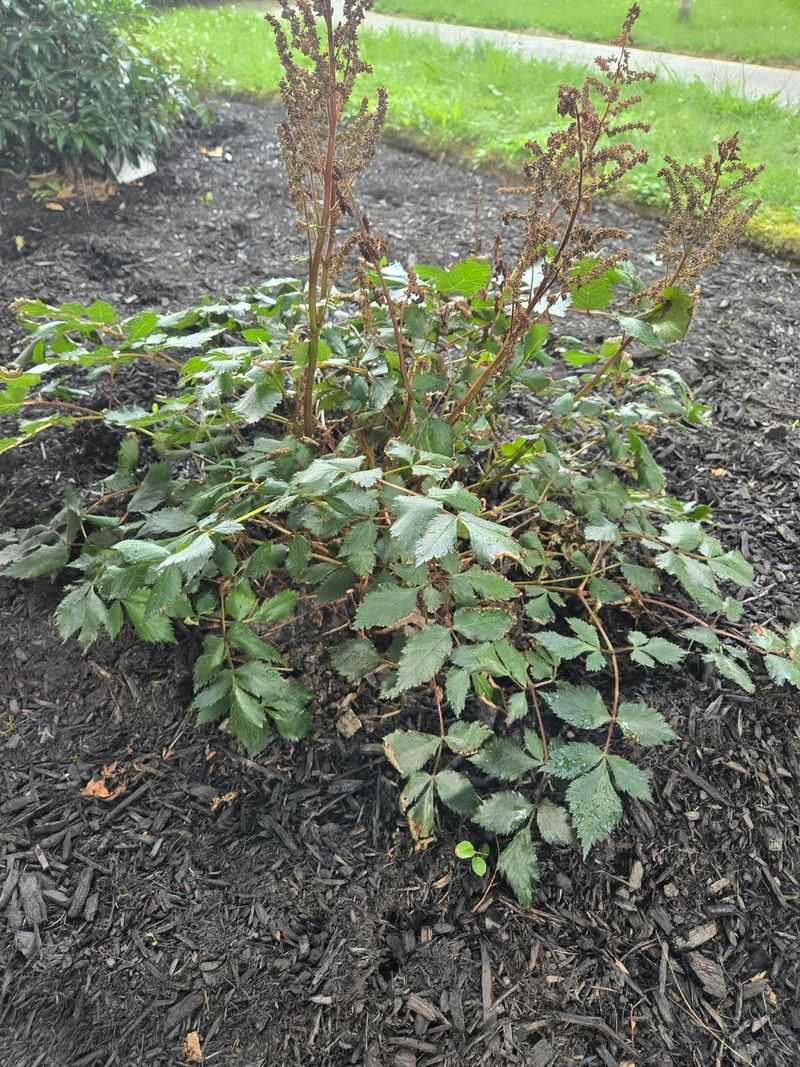
Feathery plumes in shades of pink, red, and white make astilbes favorites for shady gardens in humid climates. Their lacy foliage and airy flowers add softness to woodland settings.
Arizona’s bone-dry air and alkaline soil create conditions where astilbes simply cannot survive no matter how much gardeners coddle them.
Astilbes are moisture-loving plants that naturally grow along stream banks in cool, humid regions. They require consistently damp soil and high atmospheric humidity to prevent their delicate foliage from crisping.
Arizona’s typical 10 to 15 percent humidity during summer is absolutely fatal to these water-dependent perennials.
Even planted in deep shade with drip irrigation running constantly, astilbes struggle in Arizona. Their roots rot in alkaline soil, leaves burn despite shade, and the characteristic fluffy flower plumes never develop properly.
The plants languish, looking increasingly pathetic despite receiving more water and attention than any other perennials in the garden.
Gardeners often assume that extra watering will solve the problem, but even constant moisture cannot recreate the cool, humid environment astilbes depend on.
Hot desert winds pull moisture from the foliage faster than the roots can replace it, leaving leaves scorched and brittle within days.
Alkaline soil interferes with nutrient uptake, causing weak growth and pale, unhealthy stems.
By midsummer, most plants are reduced to stunted clumps with little resemblance to the lush specimens seen in cooler regions. No amount of attentive care can override the fundamental mismatch between astilbes and Arizona’s extreme climate.
6. Parry’s Penstemon Thrives Where Delicate Perennials Fail
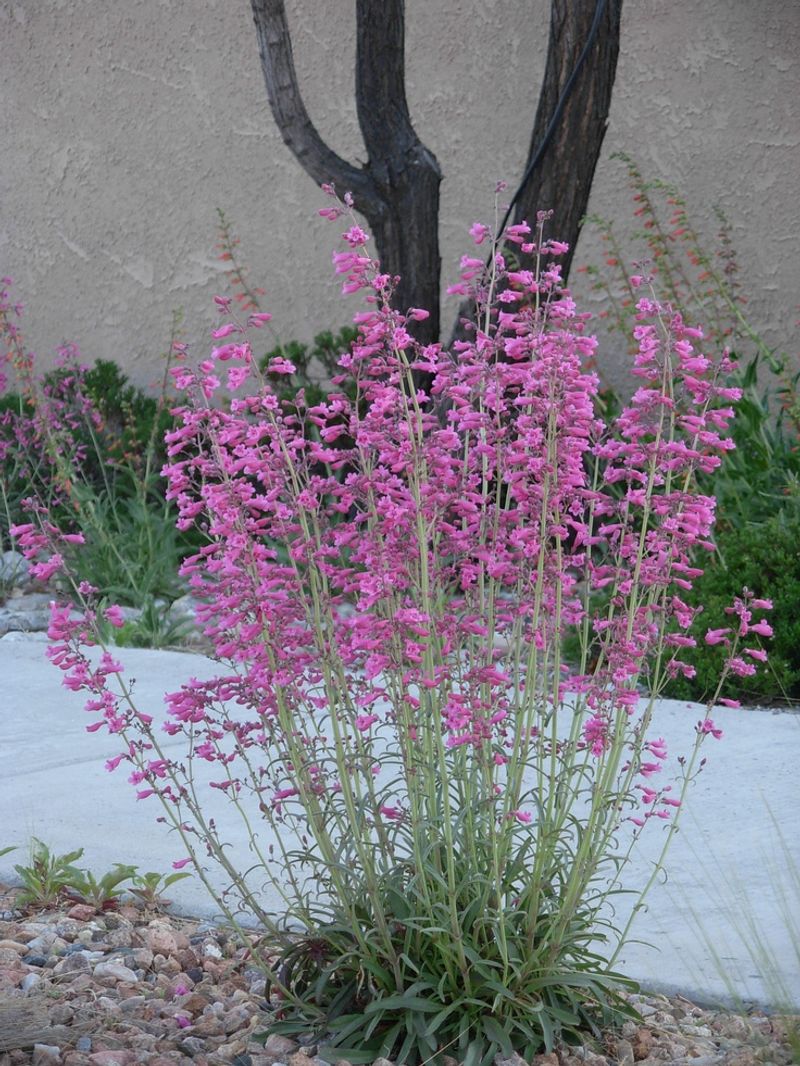
Parry’s penstemon succeeds in Arizona gardens because it evolved to handle the exact conditions that cause many traditional perennials to fail.
Native to the Sonoran Desert, this plant expects intense sun, rocky soil, low humidity, and wide temperature swings between day and night.
Instead of collapsing under reflected heat, it performs beautifully in it.
In late winter and early spring, tall stems rise above blue-green foliage and carry vivid pink tubular flowers that seem almost too bright for the desert landscape. Hummingbirds rely on these blooms as one of their earliest nectar sources of the season.
While imported perennials struggle to establish before temperatures spike, Parry’s penstemon completes its main bloom cycle before extreme summer heat arrives.
This plant prefers well-drained soil and full sun exposure, conditions found throughout Phoenix, Tucson, and surrounding communities. Once established, it requires only occasional deep watering and no heavy fertilizing.
It also handles poor, gravelly soil without complaint, making it a reliable choice for low-maintenance desert landscapes. Even after blooming finishes, its tidy foliage continues to blend naturally with native plantings and desert-inspired designs.
7. Red Yucca Handles Heat Without Extra Water
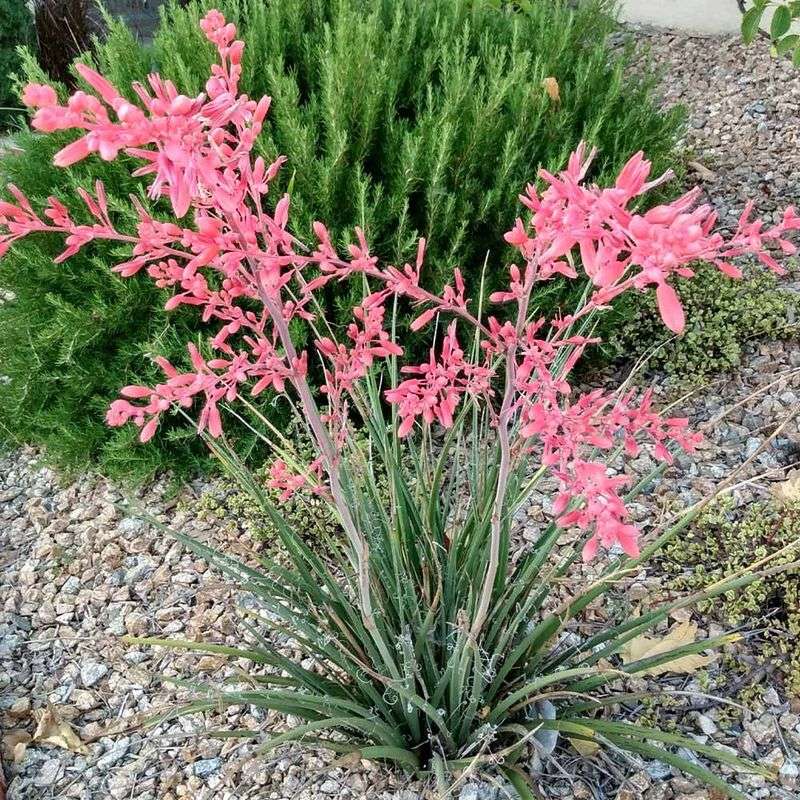
Red yucca stands firm when Arizona summers push everything else to the limit. While many perennials wilt under relentless sun and reflected heat, this desert-adapted plant keeps its structure and color without demanding constant irrigation.
Extreme temperatures do not intimidate it.
Instead of soft foliage that burns easily, red yucca forms tough, arching leaves that create a sculptural base in the landscape. The clump stays neat and upright through wind, heat, and dry air.
As spring progresses, tall stalks emerge and carry coral or reddish tubular flowers that hummingbirds eagerly visit for months.
Full sun is not just tolerated, it is preferred. Gravel, decomposed granite, and alkaline soil suit this plant far better than rich, heavily amended beds.
Once roots settle in, watering can be reduced significantly, making it practical for low-water desert designs. Too much moisture causes more problems than too little.
Maintenance remains minimal throughout the year. Removing spent bloom spikes improves appearance, but the plant does not require shaping or frequent trimming.
In high-heat neighborhoods across Arizona, red yucca delivers dependable color, strong form, and wildlife appeal without the constant stress seen in temperate-climate perennials that never truly adapt.
Its evergreen foliage provides structure even when flowering pauses.
The plant tolerates reflected heat from driveways and stone pathways with little decline. Mature clumps expand gradually without becoming invasive.
Winter cold rarely causes lasting damage in lower desert areas. For long-term reliability, few flowering perennials match its endurance in Arizona landscapes.
8. Damianita Blooms Through Tough Conditions
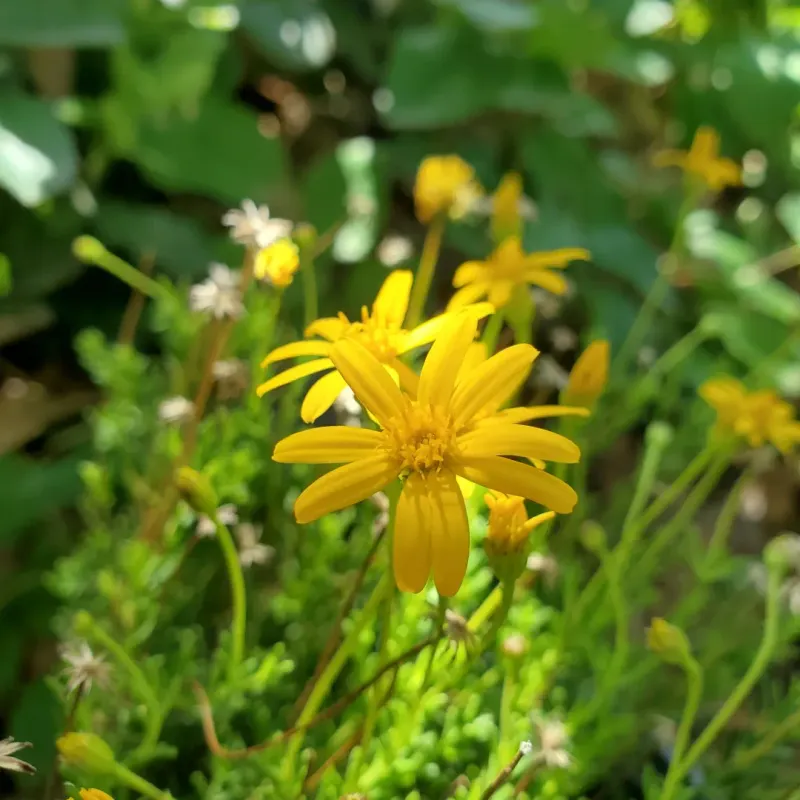
Damianita proves that reliable color does not require constant pampering in Arizona landscapes. When other perennials fade under dry air and relentless sun, this compact plant holds its shape and keeps blooming.
Harsh soil and reflected heat rarely slow it down.
Fine, aromatic foliage forms a dense, rounded mound that stays tidy without frequent trimming. In spring, the plant covers itself in bright yellow daisy-like flowers that nearly hide the greenery beneath.
A lighter second flush often follows monsoon moisture, extending color without demanding extra work.
Lean, well-drained soil suits damianita far better than rich garden beds. Too much fertilizer or heavy irrigation can weaken growth and reduce flowering.
Full sun encourages the strongest bloom display and keeps the plant compact instead of leggy.
Arizona’s alkaline soil does not interfere with its performance. The roots handle heat and dryness with ease, needing only occasional deep watering once established.
Even during summer storms, the plant rarely flops or opens up at the center.
Throughout the year, its neat mounding habit adds structure between bloom cycles. Minimal pruning maintains the rounded form without constant shaping.
For gardeners replacing short-lived perennials, damianita delivers steady brightness that fits the desert climate naturally.
Its compact size works well in borders, rock gardens, and narrow planting strips, while gravel mulch around the base improves drainage and reinforces its desert character.
Mature plants stay controlled without spreading aggressively, and even in extreme heat waves, the foliage remains firm and intentional.