9 Reliable Container Plants For Ohio’s Cool Nights And Unpredictable Spring Weather
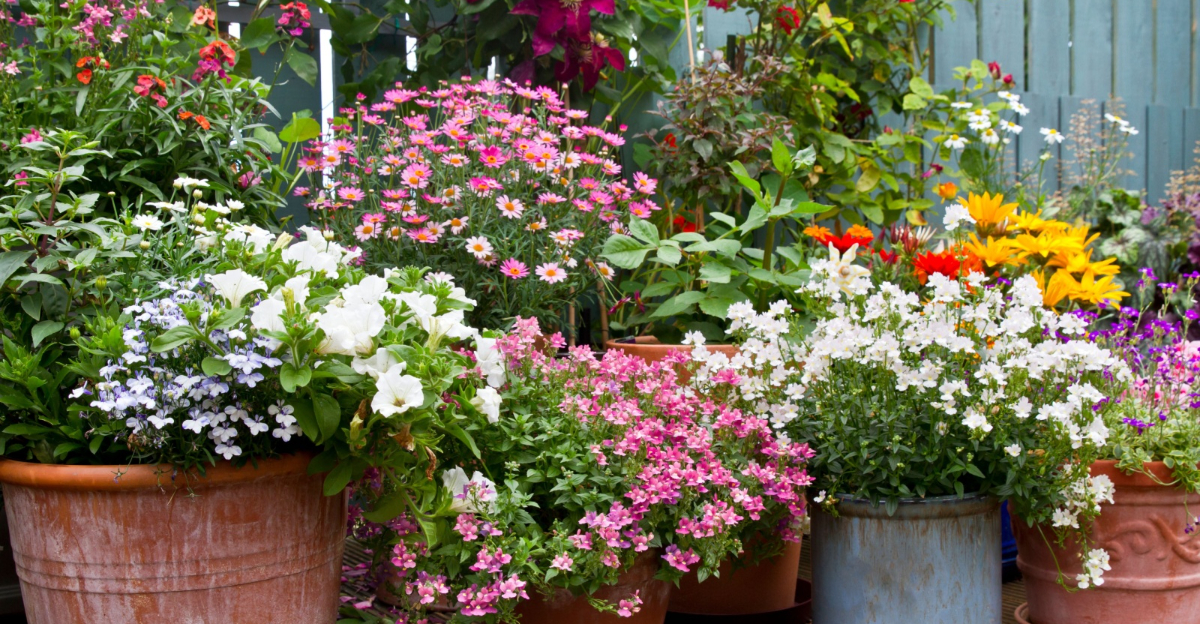
You set out your containers, ready for spring, and then Ohio reminds you who is in charge. A mild afternoon, a cold night, and suddenly the plants you trusted begin to struggle.
Early season container gardening can feel unpredictable, especially when temperatures swing without warning. Roots in pots feel every chill first, and not every plant can handle that stress.
Some slow down, some fade, and some fail to recover after repeated cold exposure. Choosing dependable varieties changes the outcome.
Certain container plants tolerate cool nights, adjust to shifting weather, and continue growing without constant moving or protection. Instead of guessing and worrying, your containers remain steady, colorful, and resilient while spring gradually stabilizes across Ohio.
1. Pansies Bloom Brightly Even Through Cold Snaps
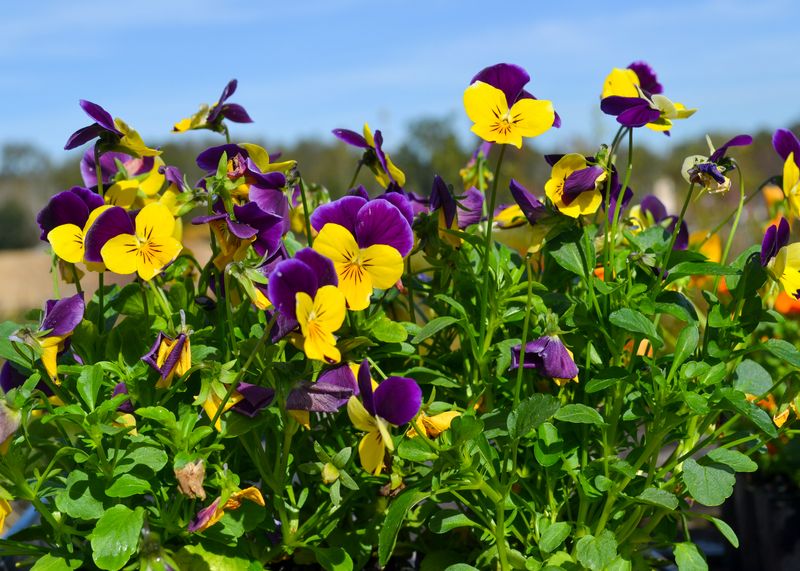
Frost on the petals barely fazes these cheerful faces. Pansies rank among the toughest annuals for Ohio spring containers, shrugging off temperatures that dip into the low twenties without missing a beat.
Their ability to keep blooming through cold snaps makes them the go-to choice for gardeners eager to add color weeks before it’s safe to plant tender annuals.
Plant them as soon as garden centers stock them in March or early April. Pansies actually slow down and stop flowering once summer heat arrives, so their peak performance window aligns perfectly with Ohio’s unpredictable spring.
Choose a container with good drainage and use quality potting mix to prevent waterlogged roots during rainy stretches.
The color range runs from deep purples and rich yellows to soft pastels and dramatic bicolors with dark faces. Deadheading spent blooms encourages fresh flowers, though pansies will keep producing even without regular grooming.
Combine them with trailing ivy or upright grasses for a layered look that holds up through temperature swings.
Morning sun and afternoon shade work well, though pansies tolerate full sun in cool weather. Water when the top inch of soil feels dry, and feed every two weeks with diluted liquid fertilizer.
Their compact growth habit and weather resilience make them reliable anchors for mixed spring containers throughout northern and central Ohio.
2. Violas Keep Flowering Through Chilly Spring Weather
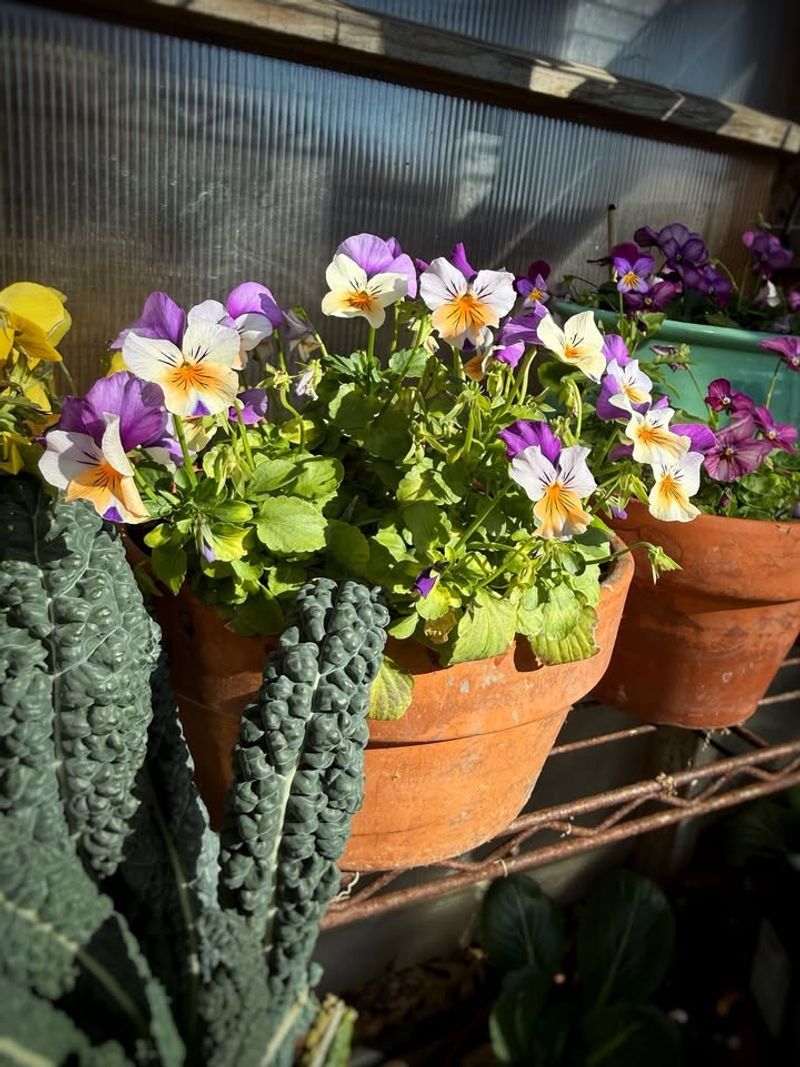
Smaller cousins to pansies pack just as much cold tolerance into a more delicate package. Violas produce abundant blooms on compact plants that fill containers with continuous color from early spring through late May.
Their petite flowers create a softer, more refined look than their larger pansy relatives while matching the same impressive ability to handle frost and cold nights.
Set them out in containers as soon as temperatures stay above freezing during the day. Violas excel in window boxes, hanging baskets, and mixed planters where their mounding habit spills gently over edges.
They bloom prolifically without much fussing, making them perfect for gardeners who want results without constant maintenance.
The flower colors lean toward jewel tones with plenty of purples, blues, and golden yellows, often with subtle whisker markings that add character. Unlike some spring annuals that pause blooming after a hard frost, violas bounce back quickly and resume flowering within days.
Your Ohio Garden Changes Every Week. Your Plan Should Too.
Gardening in Ohio changes quickly throughout the season. Every Friday you’ll receive a simple weekly plan showing exactly what to plant, prune, fertilize, harvest, and protect so you never miss the right timing.
This resilience matters during April when Ohio weather can shift dramatically overnight.
Plant them in quality potting soil with good drainage, spacing them about six inches apart for full coverage. They prefer consistent moisture but tolerate brief dry spells better than soggy conditions.
Feed monthly with balanced fertilizer to support their generous blooming habit throughout the cool season.
3. Snapdragons Thrive In Cool Air And Early Season Light
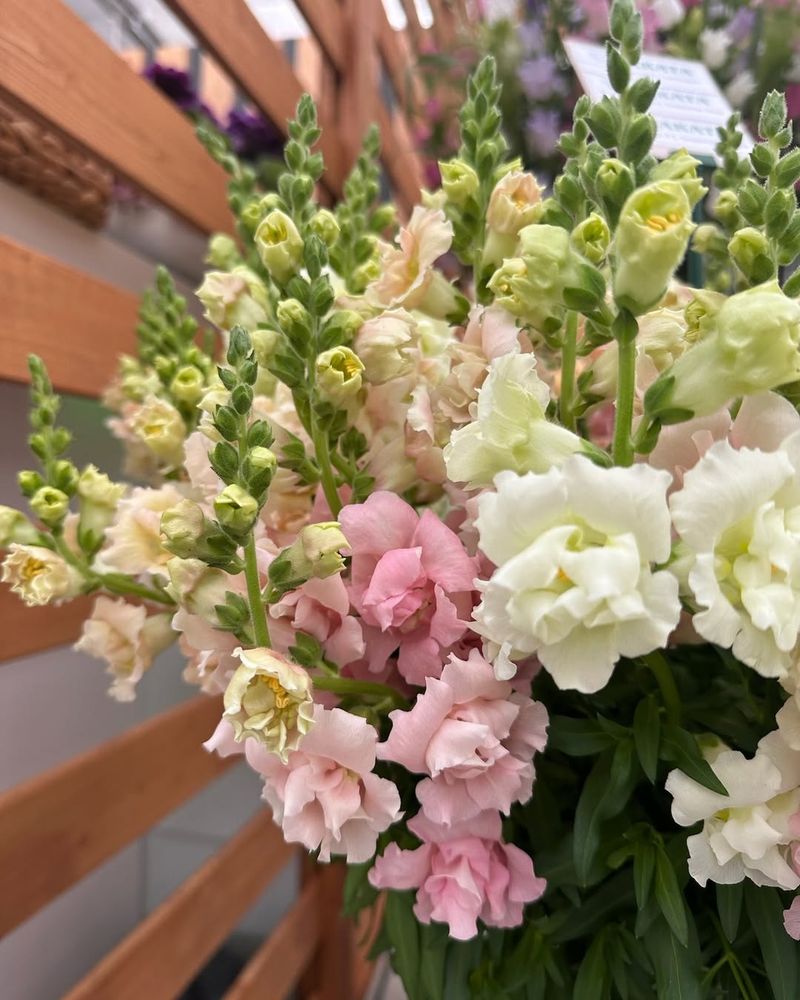
Vertical flower spikes rise above spring containers with architectural presence that few other cool-season annuals can match. Snapdragons prefer the crisp temperatures of Ohio spring, producing their best growth and most vibrant blooms when nights stay cool and days remain mild.
Heat makes them stretch and weaken, but the comfortable fifties and sixties of April and May bring out their strongest performance.
Choose dwarf or intermediate varieties for containers rather than tall cutting types. These shorter forms stay compact and proportional without staking, typically reaching twelve to eighteen inches.
Their upright growth habit provides structure in mixed planters, offering a nice contrast to mounding or trailing companions.
Colors span the spectrum from pure whites and soft pastels to bold reds, oranges, and burgundies. The tubular flowers cluster densely along sturdy stems, and children love pinching the sides to make the dragon mouths open and close.
Snapdragons can handle light frost, though a hard freeze below twenty-five degrees may damage the growing tips.
Plant them in full sun to partial shade using well-draining potting mix. Water regularly to keep soil evenly moist, especially as plants establish and begin blooming.
Pinch back the main stem when plants reach about four inches tall to encourage bushier growth with multiple flower spikes. Feed every two weeks with diluted fertilizer to support continuous blooming through late spring.
4. Dusty Miller Adds Frost Tolerant Silvery Contrast
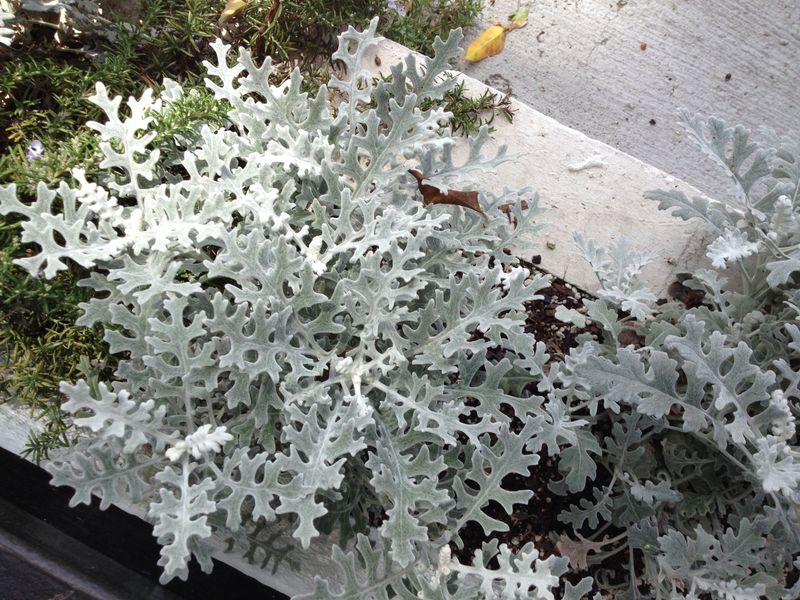
Soft silver foliage brings textural interest and visual breathing room to spring containers packed with bright blooms. Dusty miller grows for its felted gray leaves rather than flowers, providing a neutral backdrop that makes neighboring colors pop while adding sophistication to the overall design.
The fuzzy leaf surface helps it tolerate cold better than many foliage plants, handling frosts that would damage other tender options.
Set plants out in early April across most of Ohio without worry. Dusty miller can take temperatures down into the mid-twenties, and even if leaf tips show minor damage after an unusually hard freeze, the plant quickly recovers as conditions moderate.
Its mounding to slightly trailing habit works well along container edges where the silvery foliage can spill gracefully.
Several varieties offer different leaf shapes from deeply lobed and lacy to broader and more rounded. All share that distinctive gray color that coordinates beautifully with purples, pinks, blues, and yellows.
The plant grows slowly and steadily through spring, maintaining its compact form without aggressive spreading or frequent trimming.
Plant in well-draining potting mix and position containers where they’ll receive full sun to partial shade. Dusty miller tolerates dry conditions better than soggy soil, so let the surface dry slightly between waterings.
It needs little fertilizer compared to flowering annuals. Remove any flower stalks that develop since the blooms are insignificant and removing them keeps the plant focused on producing attractive foliage.
5. Ornamental Kale And Cabbage Shine In Cold Containers
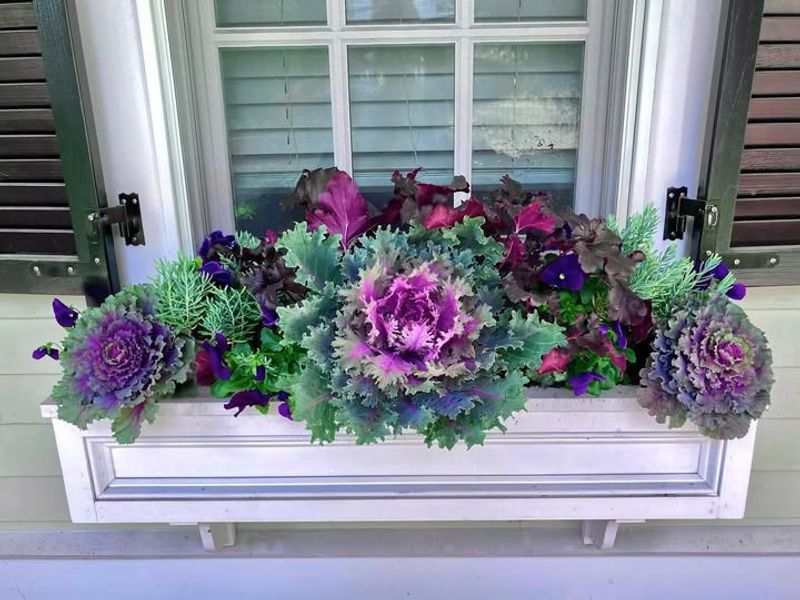
Bold rosettes of ruffled leaves in purple, pink, and cream bring unexpected drama to spring containers. Ornamental kale and cabbage actually improve in color as temperatures drop, with their most vibrant hues developing during the cold nights of early spring.
These plants laugh at frost, continuing to look spectacular even after temperatures plunge well below freezing overnight.
Garden centers typically stock them in fall, but they also appear in spring for gardeners who want immediate impact in containers. The low, rounded form works beautifully as a centerpiece in large pots or as a bold accent in mixed planters.
Their substantial presence and striking colors create instant focal points on porches and patios.
Colors intensify in cool weather, with outer leaves often displaying deep purple or rose tones while centers remain creamy white or soft pink. The heavily textured, ruffled leaves add dimension that flat-leaved plants can’t match.
Both kale and cabbage types perform similarly, with kale offering slightly more frilly, deeply cut leaves and cabbage showing smoother, more rounded foliage.
Plant in rich, well-draining potting soil and position containers in full sun for best color development. Water regularly to maintain even moisture, though these tough plants tolerate brief dry periods.
They need minimal fertilizing compared to flowering annuals. As spring progresses into summer heat, ornamental kale and cabbage eventually decline, making them perfect for seasonal rotation when you’re ready to swap in heat-loving plants.
6. Primrose Brings Early Color To Spring Planters
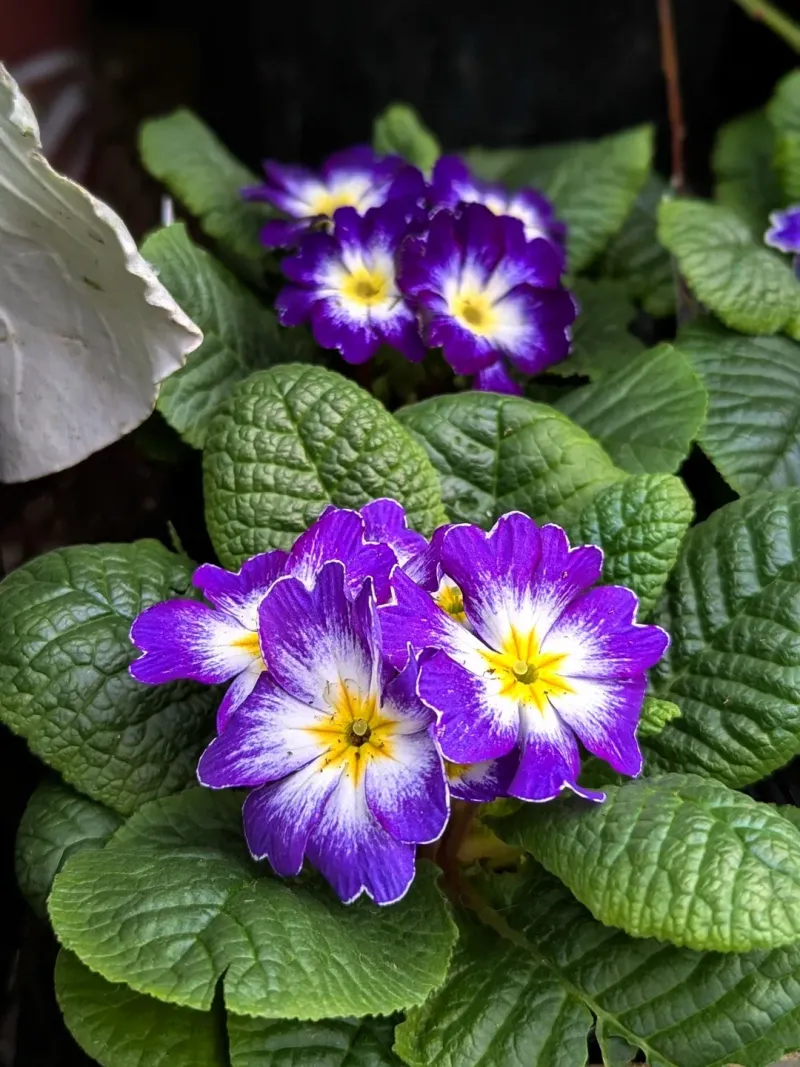
Clusters of cheerful blooms appear when little else is flowering, making primroses treasured harbingers of spring in Ohio gardens. These cool-season performers prefer the mild temperatures and gentle light of early spring, producing their best display before summer heat arrives.
Their ability to bloom prolifically in partial shade makes them valuable for containers on north-facing porches or under tree canopies where sun-loving annuals would struggle.
Set them out as soon as they appear at garden centers in March or early April. Primroses handle frost without complaint and actually prefer cool nights in the forties and fifties.
Their low, mounding habit and dense flower clusters create substantial color impact despite their compact size, typically staying under eight inches tall.
Colors range from soft pastels to jewel tones, often with contrasting yellow centers that brighten each bloom. The flowers rise just above the foliage on short stems, creating rounded domes of color that last for weeks.
Deadheading spent blooms encourages fresh flowers, though primroses will continue blooming even without regular grooming.
Plant in moisture-retentive potting mix and keep soil consistently damp but not waterlogged. Primroses appreciate more water than drought-tolerant spring annuals, so check containers regularly during dry spells.
Position them where they’ll receive morning sun and afternoon shade, or in bright indirect light throughout the day. Feed every two weeks with diluted fertilizer to support their generous blooming habit through late spring.
7. Sweet Alyssum Spreads Soft Blooms In Cool Weather
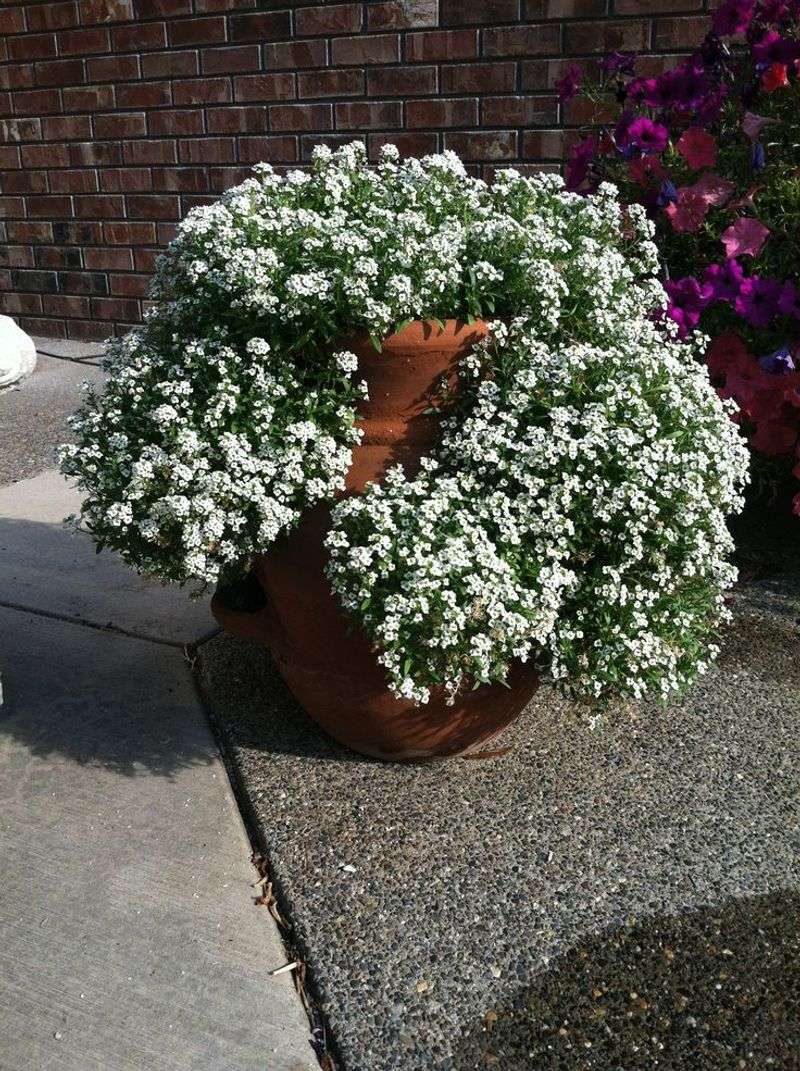
Tiny flowers blanket trailing stems in clouds of white, pink, or purple that spill beautifully over container edges. Sweet alyssum performs best during the cool temperatures of spring, producing its most abundant blooms and strongest honey fragrance when nights stay comfortably mild.
The delicate appearance belies surprising toughness, with plants tolerating light frosts and bouncing back quickly from cold snaps.
Plant it in early spring as soon as soil can be worked. Sweet alyssum grows quickly from small transplants, spreading to fill space within weeks.
Its low, spreading habit makes it perfect for the edges of mixed containers where it can cascade downward, softening hard container rims with gentle waves of bloom.
The flower clusters consist of countless tiny blooms that create a fine-textured, almost frothy appearance. White varieties offer classic appeal and show up beautifully in evening light, while purple and pink selections add soft color without overwhelming companion plants.
The sweet honey scent attracts beneficial insects and adds another sensory dimension to container plantings.
Use well-draining potting mix and position containers in full sun to partial shade. Sweet alyssum tolerates brief dry spells but blooms most prolifically with consistent moisture.
It needs little fertilizer and actually performs better with modest feeding. Shear plants back by one-third if they become leggy or slow their blooming in late spring, and they’ll quickly regrow with fresh flowers for several more weeks of cool-weather color.
8. Nemesia Performs Best In Crisp Spring Temperatures
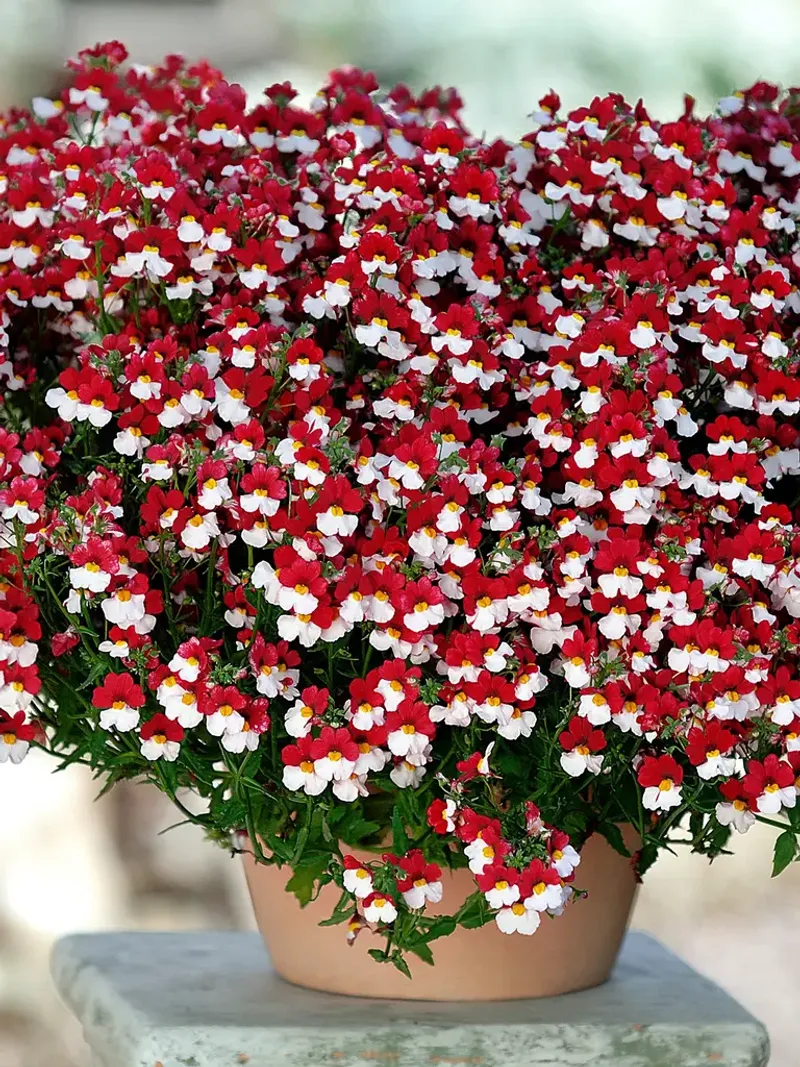
Small orchid-shaped blooms in vibrant colors pack containers with cheerful spring color that peaks during Ohio’s coolest months. Nemesia absolutely thrives when temperatures hover between forty-five and sixty-five degrees, producing abundant flowers that cover compact plants.
Unlike many annuals that tolerate cool weather, nemesia actually prefers it, slowing down or stopping bloom production once summer heat settles in.
Garden centers stock nemesia in spring specifically for cool-season containers. Plant it as soon as nighttime temperatures stay above freezing, knowing that light frosts won’t damage these tough little performers.
The mounding to slightly trailing growth habit works well in mixed containers, window boxes, and small pots where space is limited.
Colors include bright oranges, hot pinks, soft yellows, pure whites, and bicolors with contrasting throats. The flowers resemble tiny snapdragons or miniature orchids, creating visual interest up close while blending into masses of color from a distance.
Nemesia blooms prolifically without deadheading, though removing spent flower stems keeps plants looking tidy.
Plant in quality potting soil with good drainage and position containers in full sun to light shade. Water regularly to maintain even moisture, as nemesia dislikes both drought and soggy conditions.
Feed every two weeks with diluted fertilizer to support continuous blooming. As temperatures climb into the eighties, nemesia typically fades, making it an ideal choice for seasonal rotation when you’re ready to transition containers to heat-tolerant summer annuals.
9. English Daisy Delivers Classic Cool Season Charm
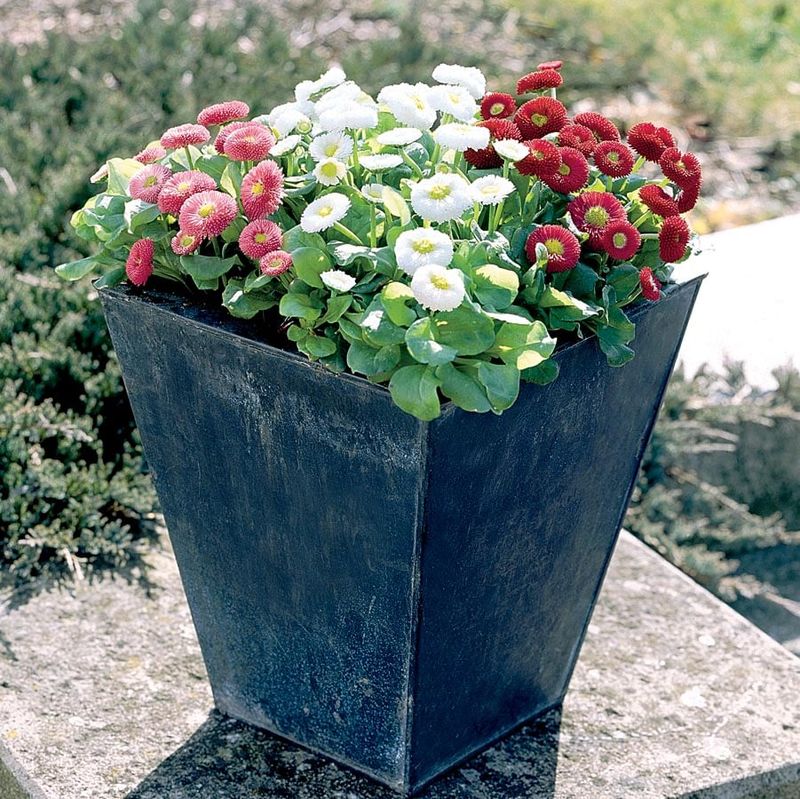
Cheerful pompom blooms on slender stems bring cottage garden charm to spring containers with old-fashioned appeal. English daisies prefer the cool, mild conditions of Ohio spring, producing their most abundant flowers when temperatures stay comfortable and nights remain crisp.
These perky little plants can handle frost without flinching, continuing to bloom through cold snaps that would sideline less hardy options.
Set them out in containers as early as late March across most of Ohio. English daisies form low rosettes of spoon-shaped leaves with flowers rising on thin stems above the foliage.
The compact growth habit and continuous blooming make them perfect for the front edges of mixed containers or as solo plantings in small pots.
Flowers come in white or shades of pink and red, typically with bright yellow centers that add a sunny note. The double-flowered forms resemble tiny pompoms, while single types show classic daisy form with petals radiating from central disks.
They bloom prolifically through spring and often into early summer if temperatures stay moderate.
Plant in well-draining potting mix and position containers where they’ll receive full sun to partial shade. English daisies prefer consistent moisture, so water regularly and don’t let soil dry out completely between waterings.
Feed monthly with balanced fertilizer to support their generous blooming habit. Deadhead spent flowers to encourage fresh blooms, though plants will continue flowering even without regular grooming throughout the cool season.