The Simple Steps That Help Young Trees Grow Stronger In Oregon
Planting a young tree in Oregon feels like making a promise to the future. With all that rain, rich soil, and dramatic seasons, it seems like trees should just take off on their own.
But any gardener or property owner knows that those first few years can make or break a tree’s life. A little extra care early on leads to deeper roots, sturdier trunks, and leafy canopies that can handle our wet winters and dry late summers.
The good news is that helping young trees thrive does not require fancy tools or a landscaping degree. Simple habits like proper watering, smart mulching, and gentle pruning can make a huge difference.
When you understand what Oregon’s climate throws at young trees, you can set them up to grow tall, strong, and beautiful for decades to come. Let’s dig into the easy steps that truly pay off.
1. Plant At The Right Depth
Getting the planting depth correct sets your tree up for success from day one. Many people bury trees too deep, which suffocates the roots and weakens the trunk over time.
The root flare, where the trunk widens at the base, should sit right at ground level or slightly above it.
Oregon’s wet climate makes proper depth even more important because buried trunks can rot in our moist soil. When you dig your planting hole, make it two to three times wider than the root ball but no deeper.
The tree should rest on solid, undisturbed soil at the bottom of the hole.
Before backfilling, check that the top of the root ball sits level with the surrounding ground. Remove any burlap, wire baskets, or containers completely.
Fill the hole halfway with native soil, water thoroughly to settle it, then finish filling to ground level.
After planting, pull back any mulch or soil from directly touching the trunk. This small detail prevents moisture from sitting against the bark and causing damage.
Trees planted at the correct depth establish faster and develop stronger root systems that anchor them through Oregon’s winter storms.
2. Water Deep, Not Often
Frequent shallow watering creates weak, surface-level roots that can’t support a growing tree. Instead, water deeply but less often to encourage roots to grow down into the soil where they find stability and moisture year-round.
Oregon summers can surprise new tree owners with dry spells that stress young trees.
During the first growing season, water your tree once or twice per week depending on rainfall and temperature. Apply water slowly at the base of the tree, letting it soak down 12 to 18 inches into the soil.
A slow trickle from a hose for 20 to 30 minutes works better than a quick spray.
Check soil moisture by digging down a few inches near the tree. If it feels damp, skip watering that day.
Sandy Oregon soils drain faster and need more frequent watering than clay soils, so adjust your schedule based on your yard.
By the second year, most trees need less supplemental water as their roots spread deeper. Continue monitoring during hot, dry periods though.
Your Oregon Garden Changes Every Week. Your Plan Should Too.
Gardening in Oregon changes quickly throughout the season. Every Friday you’ll receive a simple weekly plan showing exactly what to plant, prune, fertilize, harvest, and protect so you never miss the right timing.
Deep watering builds drought-resistant trees that thrive through Oregon’s changing seasons without constant attention from you.
3. Mulch To Protect Roots
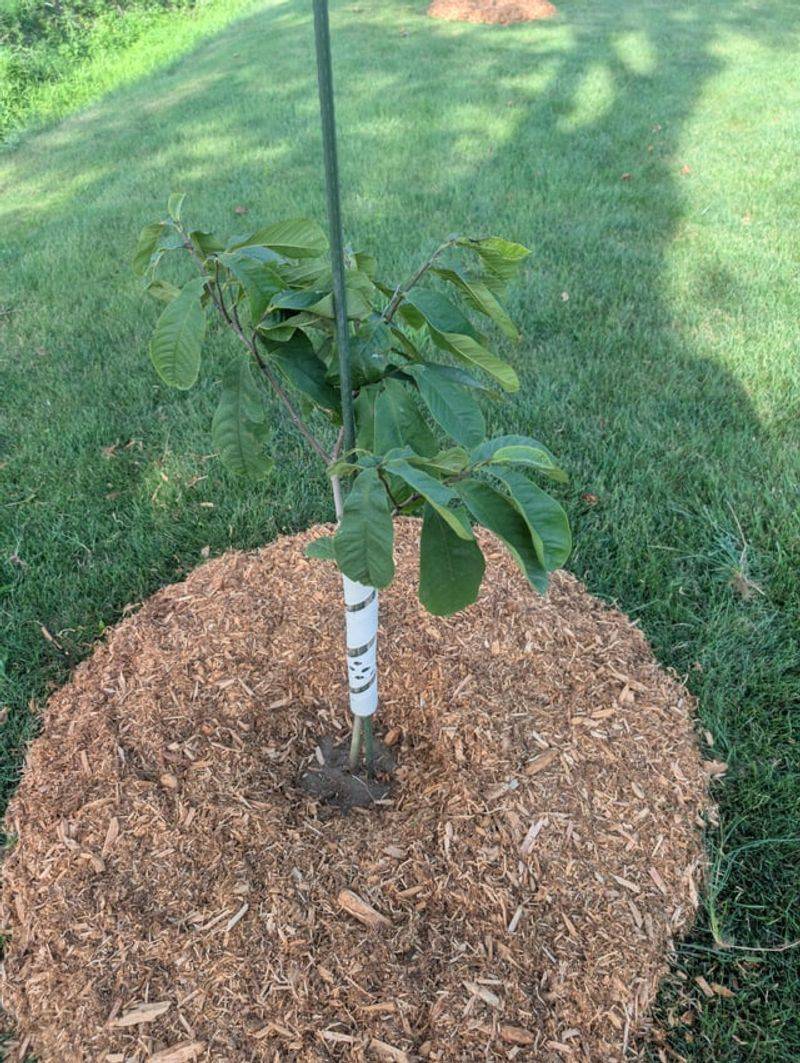
A layer of organic mulch around your tree acts like a protective blanket for the root system. Mulch keeps soil temperatures stable, holds in moisture, prevents weeds from competing with your tree, and slowly adds nutrients as it breaks down.
Oregon’s abundant rainfall works even better when mulch helps the soil retain that moisture.
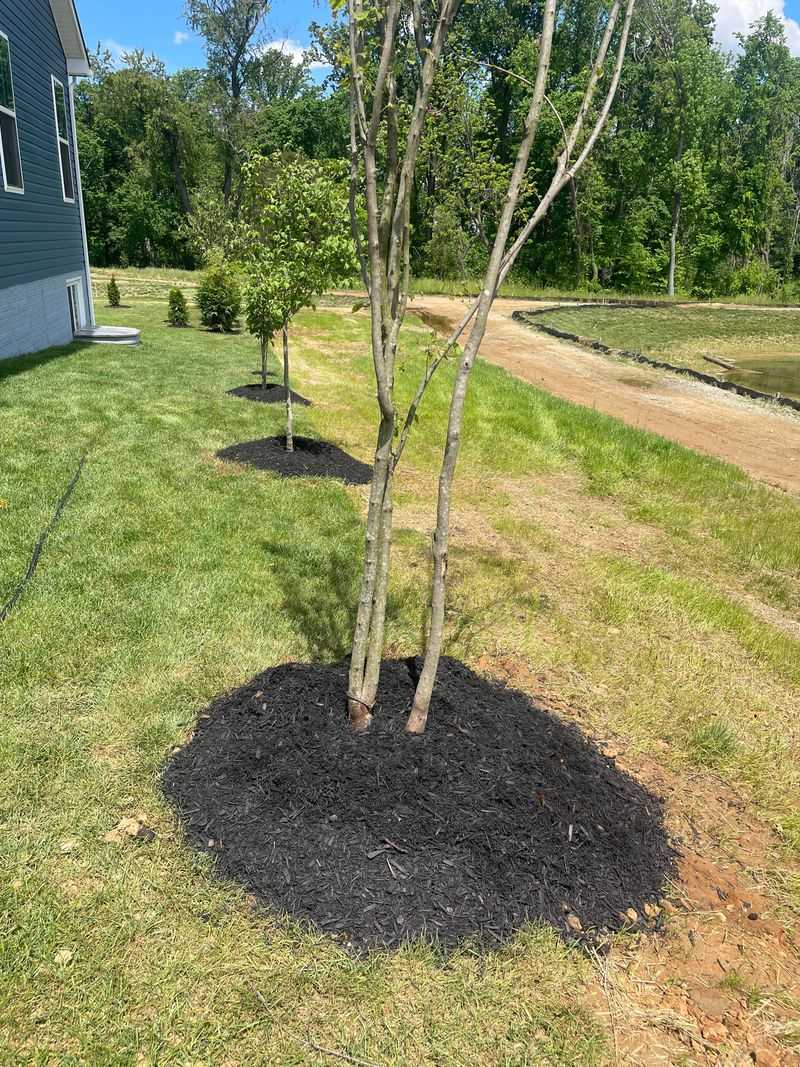
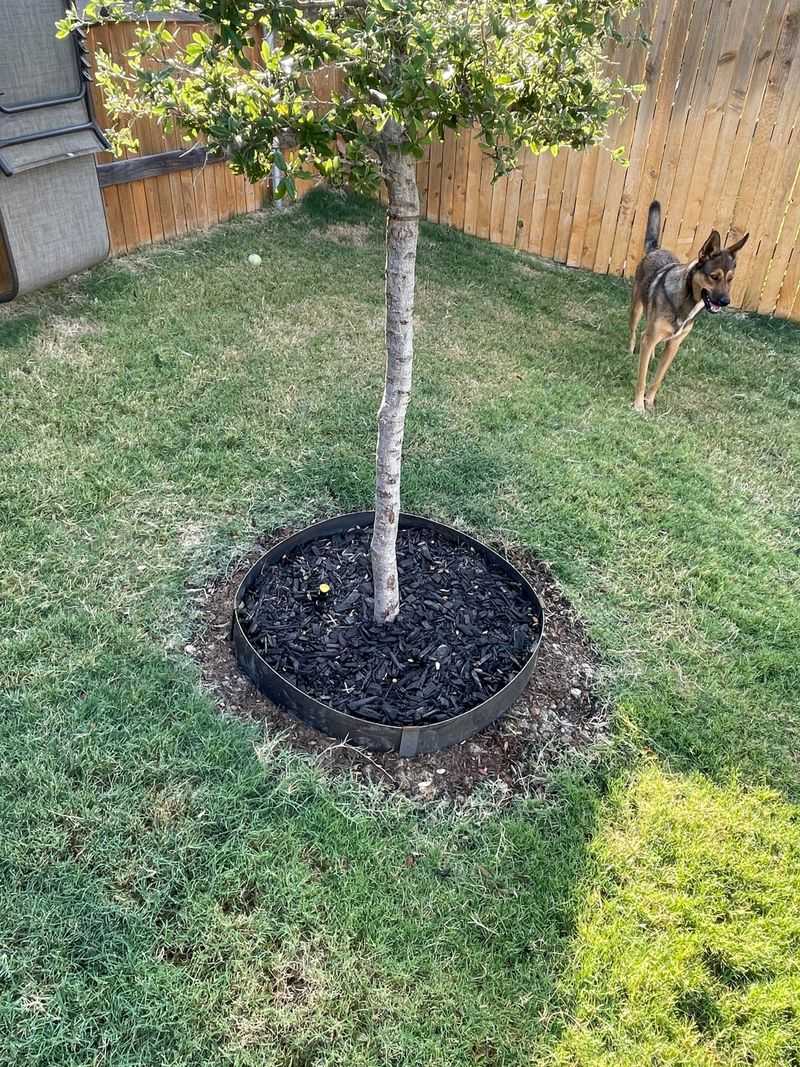
Spread a 2 to 4 inch layer of wood chips, shredded bark, or compost in a circle extending 3 feet out from the trunk. Keep the mulch pulled back 3 to 6 inches from the trunk itself to prevent rot and pest problems.
The mulch ring should look like a donut, not a volcano.
Refresh your mulch layer once or twice per year as it decomposes. Avoid piling on more than 4 inches total, which can suffocate roots.
Different mulch types work well in Oregon, from cedar chips to leaf mold.
Mulched trees grow faster because their roots stay cooler in summer and warmer in winter. Weeds can’t steal water and nutrients from the young tree.
This simple step saves you watering time and gives your tree a major advantage during its critical early years in Oregon soil.
4. Stake Only When Needed
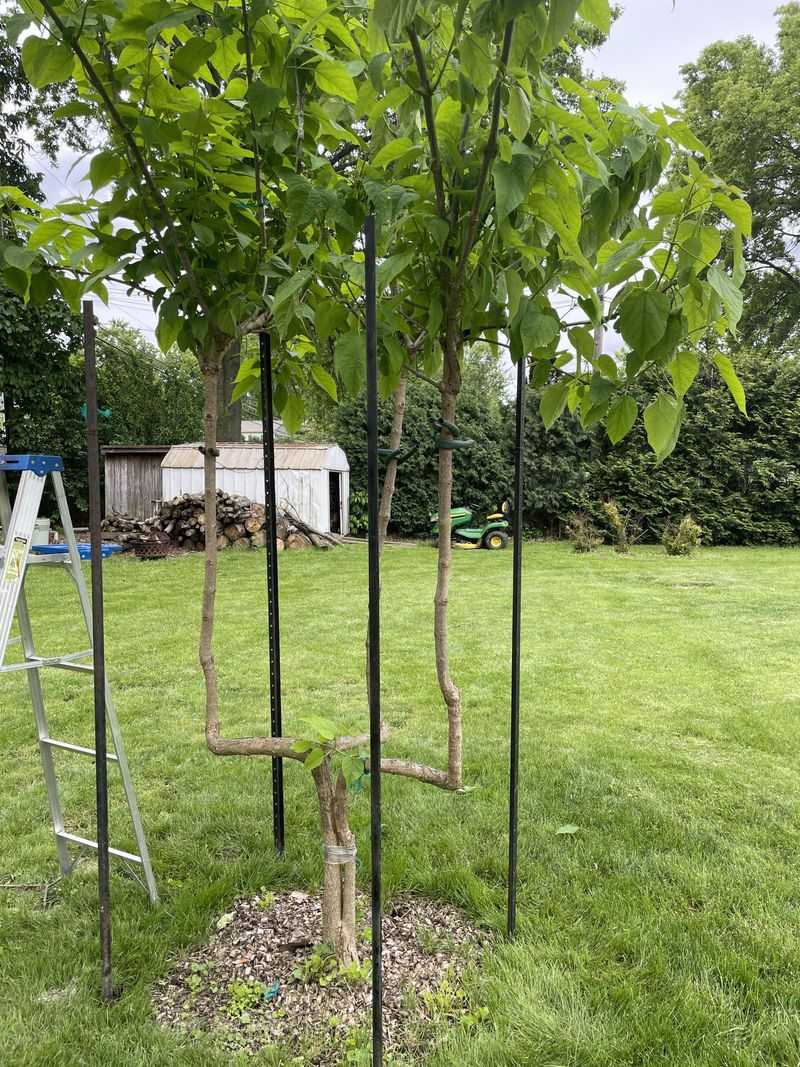
Most young trees don’t need staking at all, and unnecessary stakes can actually weaken trunk development. Trees grow stronger when they can sway slightly in the wind, building thicker, more flexible trunks.
Only stake trees in very windy Oregon locations or those with unusually small root balls compared to their canopy size.
If your tree does need support, use two or three stakes placed outside the root ball. Attach flexible ties or broad straps to the trunk at the lowest point that keeps the tree upright.
The ties should allow some movement, not hold the tree rigid.
Check your stakes and ties every few months to make sure they’re not rubbing bark or cutting into the growing trunk. Remove all staking materials after one year maximum.
Trees left staked too long develop weak trunks that can’t support themselves.
Oregon’s winter winds can topple unstaked trees in exposed areas, so use judgment based on your specific site. A properly staked tree stands upright while still flexing in the breeze.
This balance produces strong wood fibers and a trunk that tapers naturally from base to top, creating a resilient tree for your Oregon landscape.
5. Prune For Strong Structure
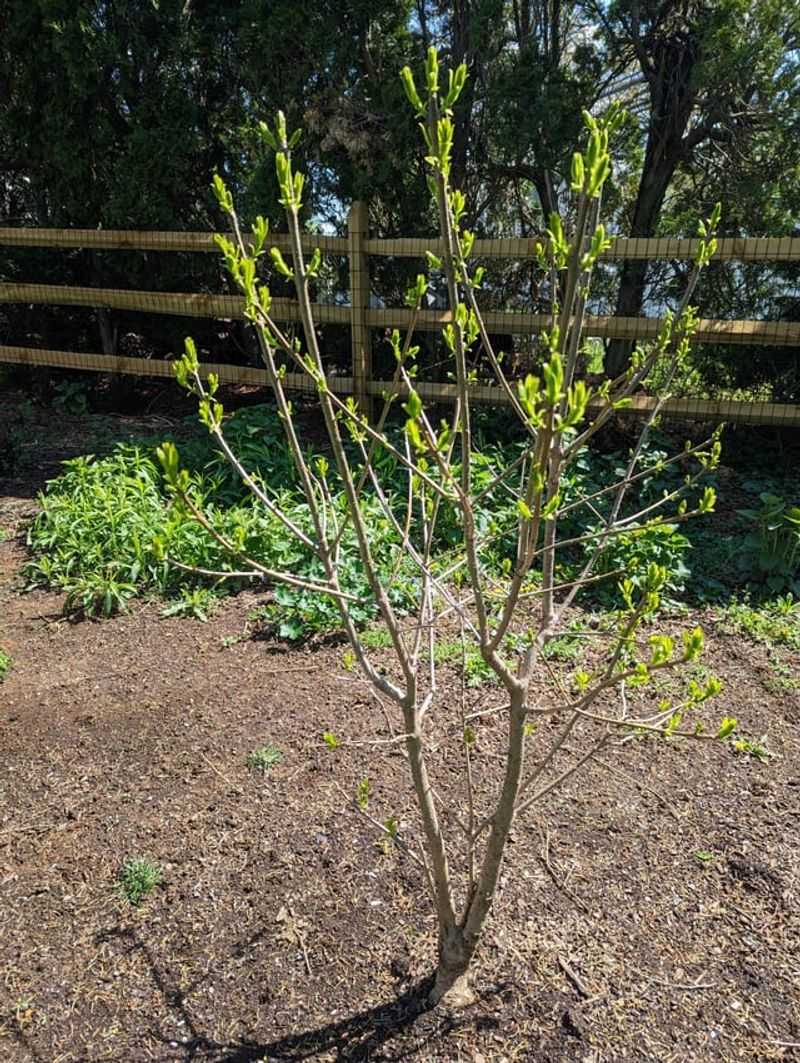
Smart pruning during the early years shapes your tree’s structure and prevents problems decades down the road. Focus on removing broken, crossing, or competing branches rather than shaping the tree extensively.
Young trees need their leaves to produce energy for root growth, so prune minimally in Oregon’s climate.
Late winter or early spring works best for most pruning in Oregon, when trees are dormant and disease pressure is low. Use clean, sharp tools to make smooth cuts just outside the branch collar.
Never remove more than 25 percent of the tree’s canopy in a single year.
Watch for branches growing at narrow angles from the trunk, which can split under weight as the tree matures. Remove these while they’re small.
Also take out any branches rubbing against each other or growing back toward the center of the tree.
Leave lower branches on young trees for the first few years even if you eventually want a high canopy. These branches help the trunk grow thicker and stronger.
Gradually remove them over several years as the tree establishes. Proper early pruning creates well-balanced Oregon trees with strong branch attachments that withstand our ice storms and heavy snow.
6. Protect From Wind And Damage
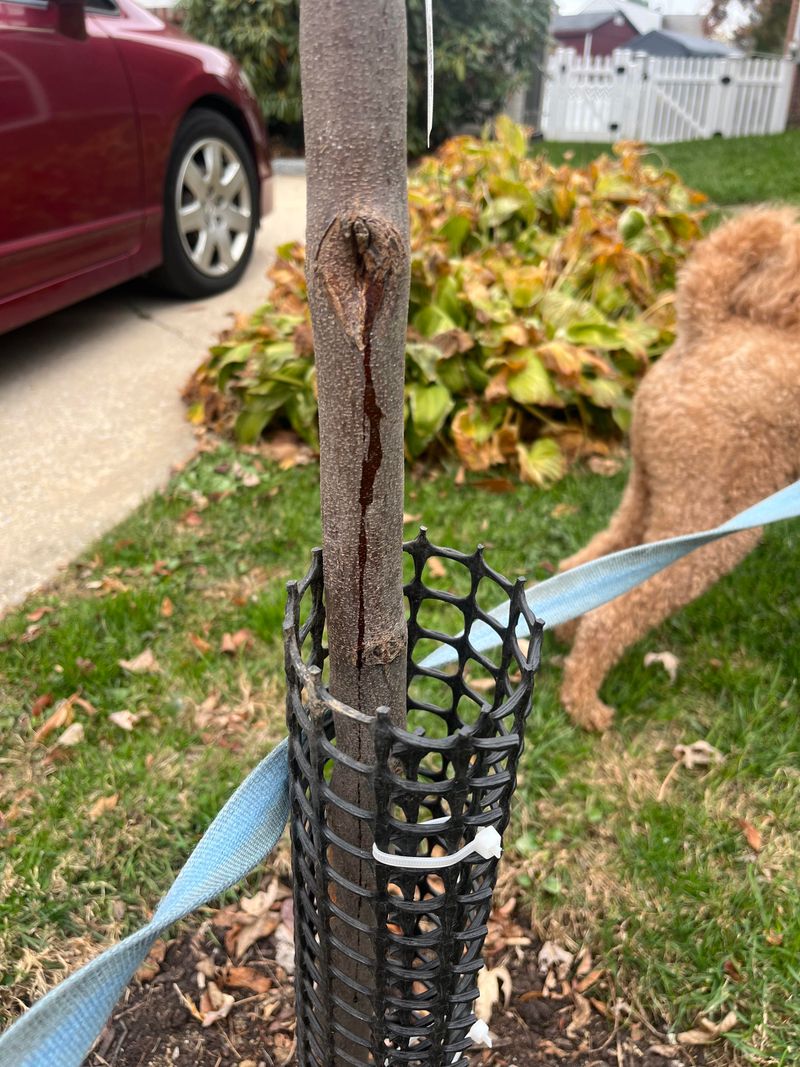
Young bark is tender and easily damaged by lawn equipment, animals, and harsh weather conditions common in Oregon.
A simple tree guard around the trunk prevents most mechanical damage from mowers and string trimmers that can girdle and severely harm your tree. Plastic or wire mesh guards work well and cost just a few dollars.
In windy Oregon locations, consider a temporary windbreak on the prevailing wind side of your tree. A burlap screen or snow fence reduces wind speed without completely blocking air circulation.
This protection helps newly planted trees keep their leaves and reduces water loss through wind stress.
Watch for deer, elk, and rabbits that browse on young trees in many Oregon areas. Fencing or repellents may be necessary to prevent damage.
Rodents sometimes chew bark in winter, so keep mulch from piling against the trunk where mice nest.
Remove tree guards after two or three years once the bark thickens and toughens. Check guards regularly to ensure they’re not constricting the growing trunk.
Protected trees focus their energy on growth rather than healing wounds. This simple defense against damage keeps your Oregon tree healthy and growing steadily toward maturity.
7. Build Healthy Soil Early
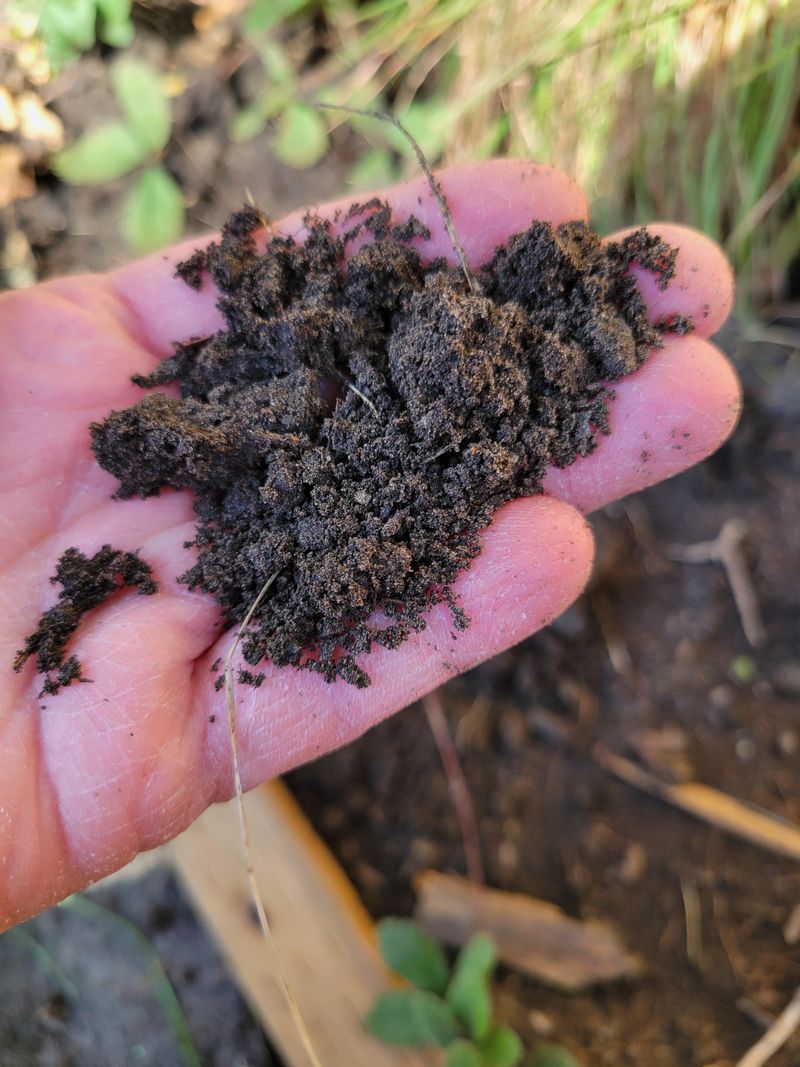
Healthy soil grows healthy trees, and Oregon’s diverse soil types benefit from different amendments. Test your soil before planting to understand its pH, nutrient levels, and texture.
Most Oregon soils lean acidic, which suits many trees perfectly, but some species prefer neutral conditions.
Add compost to improve any soil type, whether you have heavy clay in the Willamette Valley or sandy soil along the coast. Compost improves drainage in clay and increases water retention in sand.
Mix a 2 to 3 inch layer into the top 12 inches of soil across the entire planting area.
Avoid adding fertilizer at planting time, which can burn tender roots. Wait until the second growing season, then apply a balanced, slow-release fertilizer if your tree shows signs of nutrient deficiency like pale leaves or slow growth.
Many Oregon soils already contain adequate nutrients for young trees.
Encourage beneficial soil organisms by maintaining your mulch layer and avoiding compaction around the tree. Earthworms, beneficial fungi, and microorganisms help tree roots absorb nutrients and water.
Trees growing in living, fertile Oregon soil develop extensive root systems that support vigorous growth and long-term health in your landscape.