This Oregon Garden In Portland Is Now Considered One Of The Most Beautiful In The World
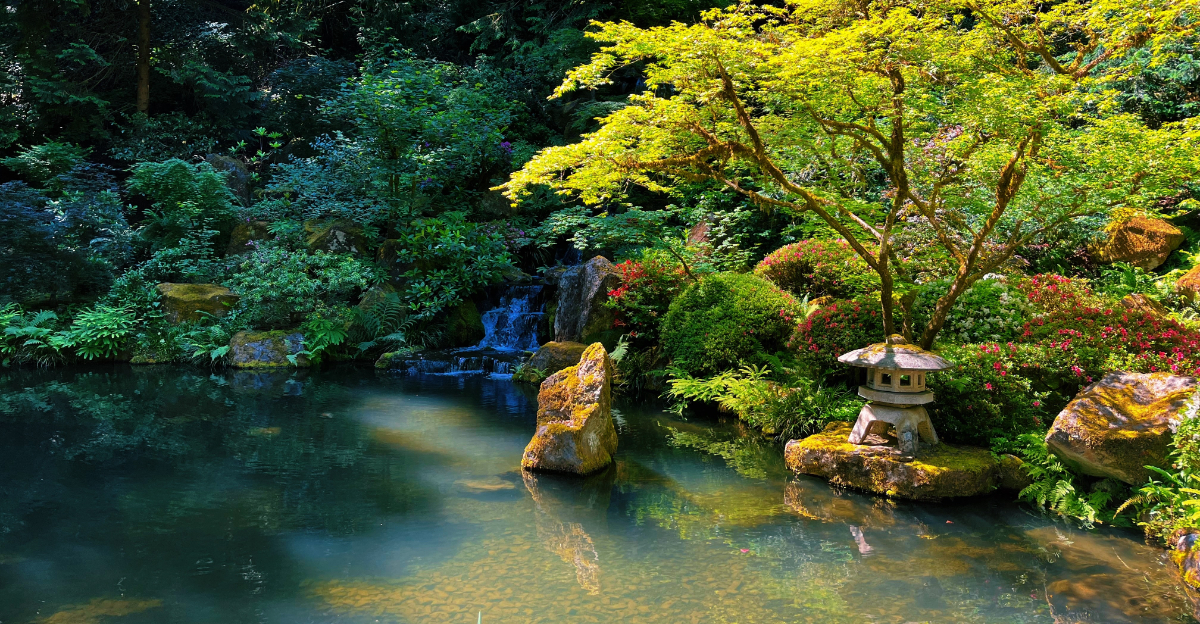
Tucked into the lush hills of Portland, the Portland Japanese Garden feels like a quiet world of its own.
Stone paths wind past koi ponds, maples glow in fiery fall color, and every lantern and bridge seems placed with thoughtful care. It is the kind of place that makes you slow your steps and take a deeper breath.
What started decades ago as a cultural exchange project has grown into an internationally admired garden, praised for its authenticity and peaceful design.
In fact, Homes & Gardens recently named it one of the most beautiful gardens in the world, adding to its long list of accolades.
Visitors often say it feels less like a city attraction and more like stepping straight into Japan. It is no wonder this Portland treasure continues to capture hearts across the globe.
A World-Renowned Garden In The Heart Of Portland
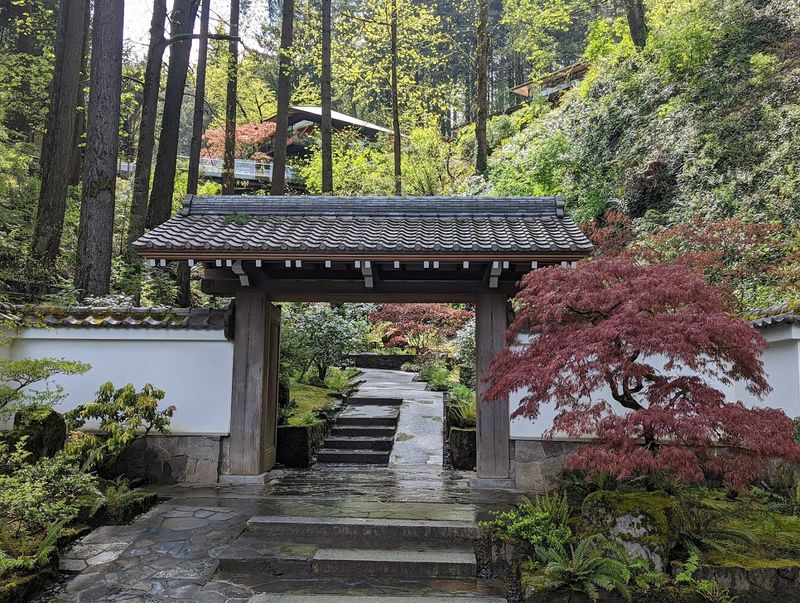
Nestled at 611 SW Kingston Ave, the Portland Japanese Garden sits high in the West Hills, offering sweeping views of the city and Mount Hood beyond. Opened in 1967, it was designed by Professor Takuma Tono, a renowned landscape architect from Tokyo.
His vision was to create an authentic Japanese garden that honored centuries-old traditions while embracing Oregon’s unique climate and terrain.
Covering 5.5 acres, the garden features eight distinct spaces, each representing different styles of Japanese garden design. From carefully pruned bonsai to cascading waterfalls, every element serves a purpose.
Gardeners love this place because it demonstrates how intentional design can transform any outdoor space into a living work of art.
Why gardeners love this place: Walking these paths offers endless inspiration for home landscapes. Notice how plants are layered by height and texture, creating depth and interest year-round.
Fun tip: Visit early in the morning during spring to see how dew enhances the moss and stone arrangements.
The garden is open Wednesday through Monday from 10 AM to 3:30 PM, with extended hours during peak seasons. Admission requires timed entry tickets, so booking ahead is essential, especially during fall foliage season.
Members enjoy early access starting at 8 AM, perfect for photographers seeking quiet moments.
The Strolling Pond Garden
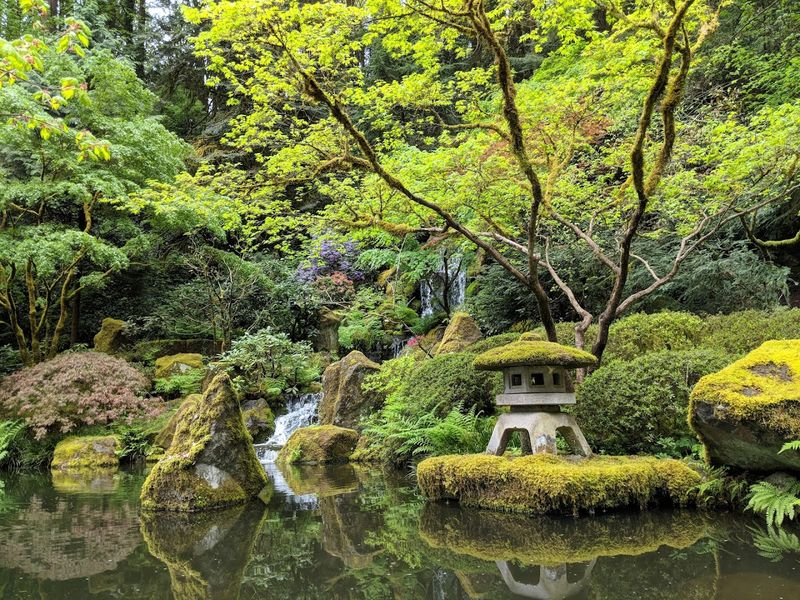
Have you ever noticed how water can change the entire mood of a garden? The Strolling Pond Garden showcases this beautifully.
Designed as a chisen-kaiyushiki garden, it invites visitors to walk along winding paths that reveal new scenes with every step. The central pond becomes a mirror, reflecting sky, trees, and traditional stone lanterns positioned along its banks.
Koi fish glide beneath the surface, their orange and white patterns adding movement and life. Strategically placed rocks break the water’s flow, creating gentle sounds that mask city noise.
Japanese maples arch over the water, their leaves turning brilliant crimson each autumn.
Why gardeners love this place: This garden teaches the principle of “borrowed scenery,” where distant mountains become part of the composition. Seasonal gardening tip: Notice how evergreens provide structure while deciduous plants offer seasonal drama.
Consider this balance when planning your own yard.
Your Oregon Garden Changes Every Week. Your Plan Should Too.
Gardening in Oregon changes quickly throughout the season. Every Friday you’ll receive a simple weekly plan showing exactly what to plant, prune, fertilize, harvest, and protect so you never miss the right timing.
The pathways are mostly flat and accessible, though the initial entrance involves a slight uphill walk. Benches are thoughtfully placed for rest and contemplation.
Many visitors spend over an hour here alone, photographing reflections and studying plant combinations. The pond garden demonstrates how water features don’t need to be large to create impact, even a small basin can transform a space.
The Tea House
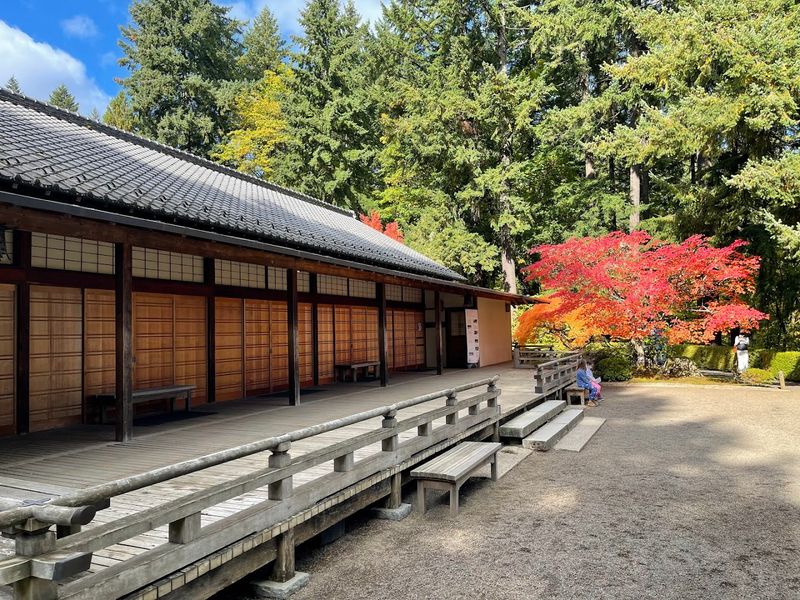
Perched on a hillside with views stretching toward Mount Hood, the Umami Café and adjacent tea house embody the Japanese philosophy of harmony between architecture and nature. The tea house follows traditional design principles, with clean lines, natural materials, and deliberate simplicity.
Visitors can participate in authentic tea ceremonies, learning the meditative practice of preparing and serving matcha.
The approach to the tea house matters as much as the structure itself. A stone pathway winds through carefully pruned shrubs and beneath low-hanging branches, symbolizing the transition from everyday life to a space of mindfulness.
Each stone is hand-selected for size, shape, and color, creating a rhythm underfoot.
Why gardeners love this place: The tea garden demonstrates restraint in planting, using fewer species but arranging them with maximum impact. Gardening insight: Notice how negative space (empty areas) gives plants room to breathe and allows each specimen to shine.
The café serves Japanese-inspired dishes and beverages, all sourced thoughtfully. Reviewers consistently praise the food quality and the peaceful atmosphere.
Eating here feels like an extension of the garden experience itself. For those interested in Japanese culture beyond gardening, the tea ceremonies offer deep insight into how gardens and traditions intertwine, creating experiences that engage all the senses.
Zen Beauty In The Flat Garden
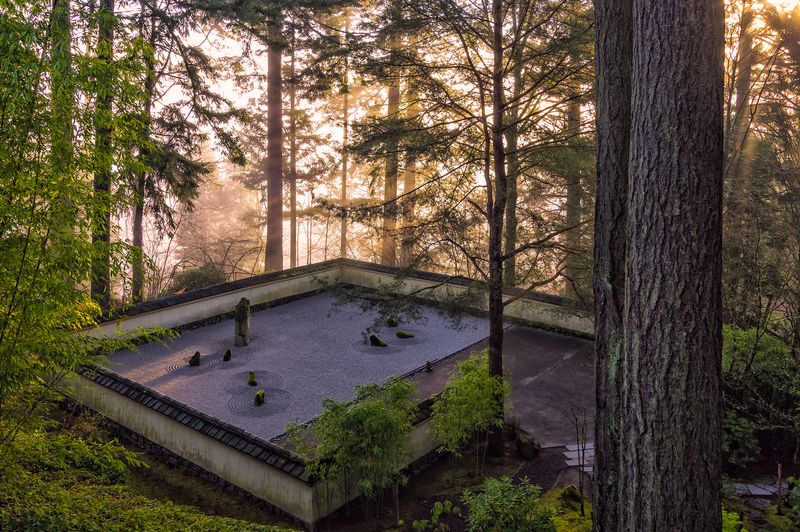
What happens when you remove almost everything from a garden? The Flat Garden answers this question with stunning clarity.
Based on the hiraniwa style, this space uses gravel, stone, and minimal planting to create a composition that invites deep contemplation. Parallel lines raked into the gravel represent water ripples, while carefully positioned rocks suggest islands or mountains rising from the sea.
From the viewing platform, visitors can observe the entire garden at once, appreciating how each element relates to the others. Low hedges define the space without blocking views.
The simplicity reveals subtle changes in light throughout the day, morning sun casts long shadows, while afternoon light softens everything.
Why gardeners love this place: This garden proves that beauty doesn’t require abundance. Sometimes less truly becomes more.
Design tip: In your own garden, try creating a small gravel area with one or two special rocks. Rake patterns weekly as a meditative practice.
The Flat Garden challenges Western gardening assumptions that equate more plants with more beauty. Instead, it demonstrates how texture, pattern, and space can create powerful visual impact.
Many visitors return repeatedly, finding something new each time. The garden changes dramatically with weather—rain darkens the gravel, snow emphasizes the rock shapes, and sunshine creates crisp shadows that enhance the raked patterns.
The Natural Garden Experience
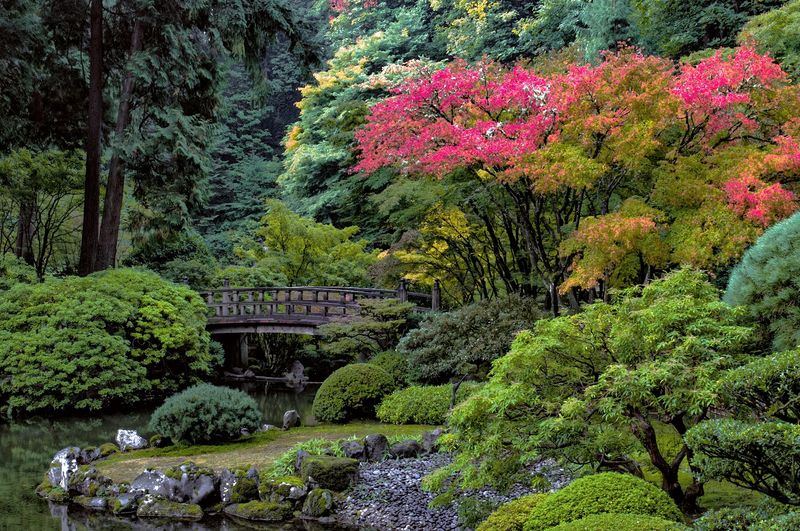
Unlike the highly manicured spaces elsewhere in the garden, the Natural Garden celebrates the wild beauty of the Pacific Northwest. Native ferns unfurl in spring, while moss carpets the ground beneath towering Douglas firs and Western red cedars.
A stream tumbles over rocks, creating the soothing soundtrack that makes this area feel miles from civilization.
This section demonstrates how Japanese garden principles can adapt to local ecology. Rather than importing only Asian species, the designers worked with Oregon’s native plants, arranging them in ways that honor both traditions.
Sword ferns, Oregon grape, and salal appear alongside Japanese maples and azaleas.
Why gardeners love this place: It shows how to blend formal design with natural landscaping. Seasonal advice: Visit in early spring when trilliums bloom on the forest floor, or in fall when vine maples turn golden yellow.
The Natural Garden offers lessons in sustainable landscaping. By working with existing terrain and native species, gardeners can create beauty while supporting local wildlife and reducing maintenance.
Notice how the paths follow the land’s natural contours rather than forcing straight lines. This approach prevents erosion and feels more organic.
The dappled shade created by tall trees protects understory plants while creating ever-changing light patterns that add visual interest throughout the day.
The Sand And Stone Garden
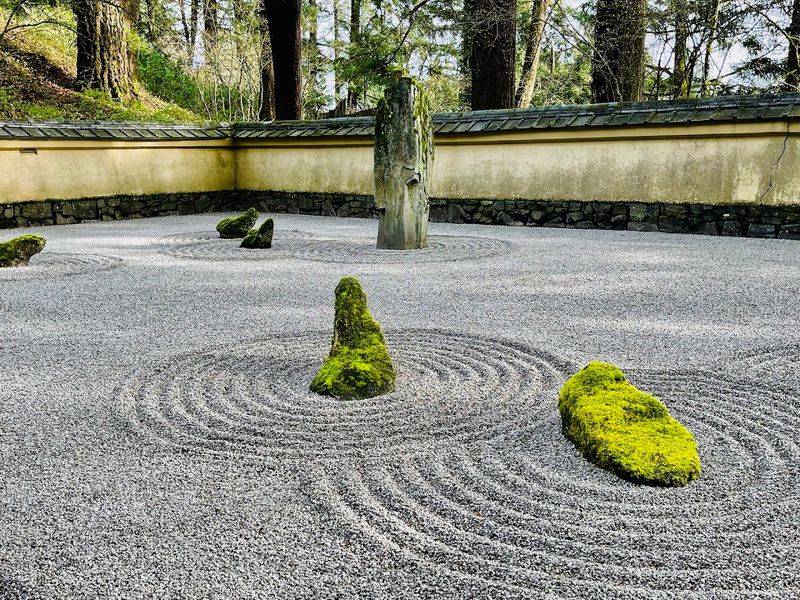
Prepare to be stopped in your tracks by the Sand and Stone Garden. This modern interpretation of the karesansui style makes a powerful visual statement.
Large, sculptural rocks rise from expanses of white sand, their placement suggesting movement frozen in time. The bold scale and dramatic contrasts create an almost theatrical effect.
Unlike traditional zen gardens that emphasize subtle tranquility, this space embraces energy and tension. The rocks seem to push upward, while the raked sand patterns swirl around them like currents.
This garden proves that Japanese design can be both contemporary and rooted in tradition.
Why gardeners love this place: It demonstrates courage in design, making bold choices and committing fully to a vision. Creative challenge: Try sketching different rock arrangements before placing stones in your own garden.
Composition matters enormously.
The Sand and Stone Garden particularly shines in bright sunlight when shadows become part of the composition. The white sand reflects light, making the space feel larger and more dramatic.
Maintenance here requires dedication, the sand must be raked regularly to maintain crisp patterns, and any debris must be removed immediately. For home gardeners working with gravel or sand, this garden offers a masterclass in how texture and pattern can compensate for the absence of color and bloom.
How The Garden Transforms Year-Round
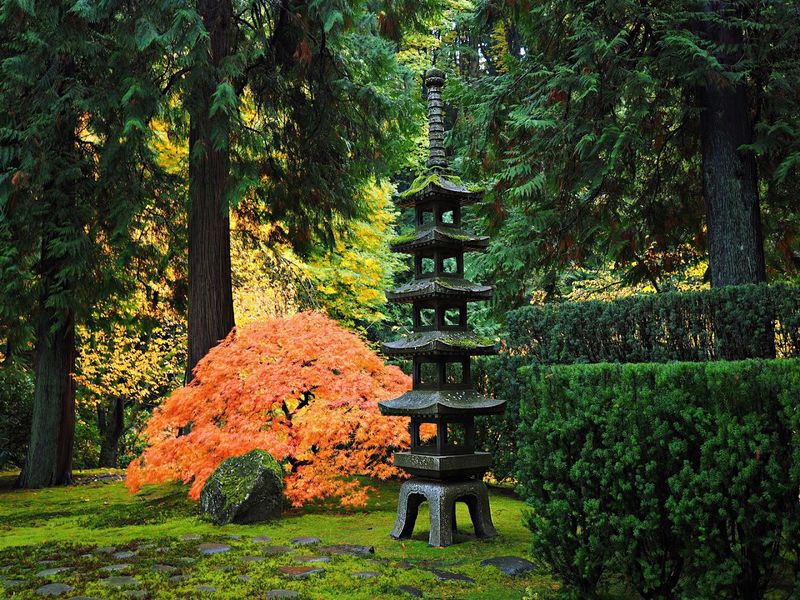
One visit to the Portland Japanese Garden simply isn’t enough. Each season brings dramatic transformations that reveal new aspects of the design.
Spring arrives with cherry blossoms and azaleas painting the landscape in soft pinks and purples. Summer brings lush green canopies and the sound of water features at their most active.
Fall steals the show with maples turning every shade of red, orange, and yellow. The contrast between evergreens and deciduous trees becomes most apparent, showing why both are essential.
Reviewers consistently mention fall as the most spectacular season, though crowds increase significantly.
Why gardeners love this place: It teaches the importance of planning for four-season interest. Gardening wisdom: Include plants that peak in different months so your garden never looks dormant.
Winter offers its own quiet beauty. Snow dusts the pine branches and collects on stone lanterns, creating scenes straight from Japanese woodblock prints.
The garden feels most peaceful during these months, with fewer visitors and a contemplative atmosphere. Membership holders who visit regularly throughout the year develop a deeper relationship with the space, noticing subtle changes that casual visitors miss.
This seasonal rhythm connects visitors to natural cycles and reminds us that gardens are never static, they’re living, breathing spaces that evolve constantly.