California Homeowners Are Replacing These Popular Plants For A Reason
For years, certain plants have been staples in California landscapes, lining walkways, filling hedges, and shaping front yards across the state. But lately, homeowners are making some surprising swaps, and not without good reason.
Rising water costs, longer dry seasons, fire concerns, and high maintenance headaches are pushing once popular choices out of the spotlight. What looked lush and dependable years ago can now feel thirsty, messy, or simply out of step with today’s climate smart approach.
Gardeners are rethinking their spaces and choosing plants that handle heat better, need less trimming, and thrive with less water. The result is yards that look just as beautiful, but feel more practical and easier to manage.
If you have noticed familiar plants quietly disappearing from neighborhoods, you are not imagining it.
There is a shift happening, and it is reshaping California landscapes in smart and surprisingly stylish ways.
1. Traditional Turf Lawn
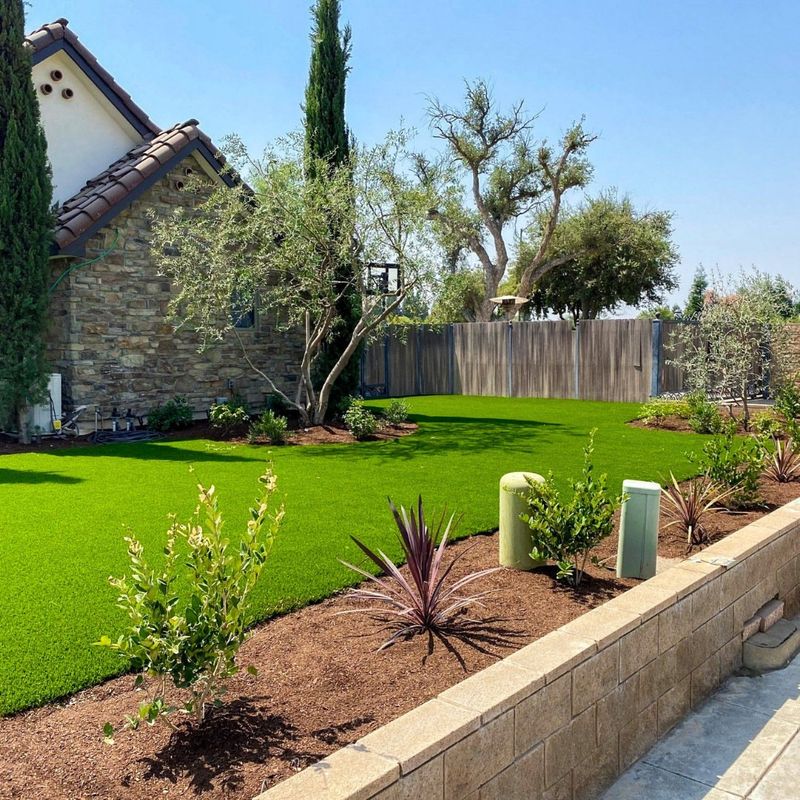
Lawns have been the gold standard of American landscaping for generations, but California homeowners are finally saying goodbye. The average lawn needs about 55 gallons of water per square foot every year, which adds up fast when drought conditions stretch for months.
Many neighborhoods now have brown, patchy yards because keeping grass green simply costs too much.
Maintenance demands go far beyond watering. Mowing, fertilizing, and edging take hours every week, not to mention the noise and air pollution from gas-powered equipment.
The chemicals used to keep lawns looking perfect often run off into storm drains and harm local waterways.
California cities are even offering cash rebates to homeowners who remove their grass. These programs provide hundreds or thousands of dollars to install drought-tolerant alternatives instead.
Native groundcovers, clover, and artificial turf are becoming popular replacements that look great year-round.
The environmental impact matters too. Traditional lawns support almost no wildlife compared to native plant gardens.
Birds, bees, and butterflies need diverse plants to thrive, and a monoculture of grass provides nothing for them. Making the switch helps local ecosystems recover while cutting water bills dramatically.
2. Pampas Grass (Cortaderia selloana)
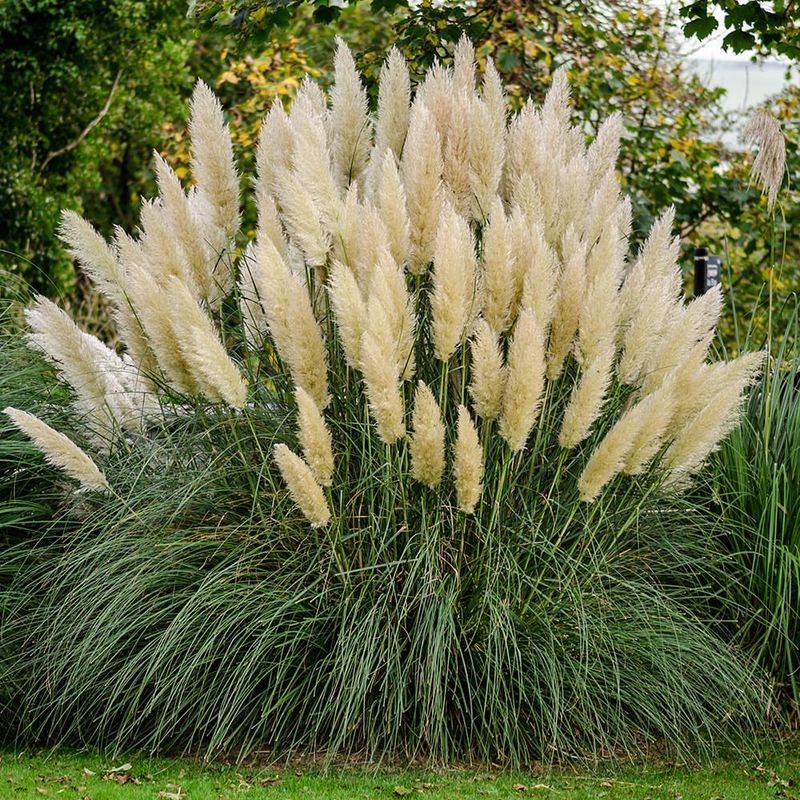
Those dramatic feathery plumes that sway in the breeze might look beautiful, but pampas grass has become a serious problem across California. Originally from South America, this ornamental plant spreads aggressively through wind-dispersed seeds.
A single plant can produce over a million seeds per year, and they travel for miles on coastal breezes.
Fire safety is a major concern with pampas grass. The dead leaves and stems create dense, dry fuel that ignites easily and burns intensely.
During wildfire season, having this plant near homes significantly increases risk. Many fire departments now recommend removing it from properties in fire-prone areas.
The plant also outcompetes native species wherever it establishes itself. California’s coastal ecosystems suffer when pampas grass takes over, crowding out plants that local wildlife depends on.
It forms thick stands that few animals can navigate or use for food or shelter.
Removing established pampas grass requires serious effort because the root systems grow deep and wide. Many homeowners need professional help to fully extract it.
Your California Garden Changes Every Week. Your Plan Should Too.
Gardening in California changes quickly throughout the season. Every Friday you’ll receive a simple weekly plan showing exactly what to plant, prune, fertilize, harvest, and protect so you never miss the right timing.
Better alternatives include native grasses like deergrass or pink muhly grass, which provide similar visual interest without the invasive behavior or fire risk.
3. Italian Cypress (Cupressus sempervirens)

Stately columns of Italian cypress have lined California driveways and property borders for decades. These tall, narrow evergreens create formal, Mediterranean-style landscapes that many people associate with elegance and privacy.
However, several serious problems are causing homeowners to reconsider these classic trees.
Water consumption is the first issue. While somewhat drought-tolerant once established, Italian cypress still needs regular watering to stay healthy and attractive in California’s climate.
During extended droughts, many of these trees turn brown and struggle to recover. Their shallow root systems make them vulnerable to stress during dry periods.
Disease susceptibility has increased dramatically in recent years. Cypress canker disease has spread throughout California, causing branches to turn brown and trees to decline rapidly.
There’s no cure for infected trees, and the disease spreads easily to neighboring plants. Entire rows of cypress have had to be removed from properties across the state.
Better alternatives include native options like California juniper or toyon, which provide vertical interest without the disease problems. These natives need far less water and support local wildlife.
For formal hedges, rosemary or manzanita varieties offer drought tolerance and year-round greenery without the height.
4. Oleander (Nerium oleander)
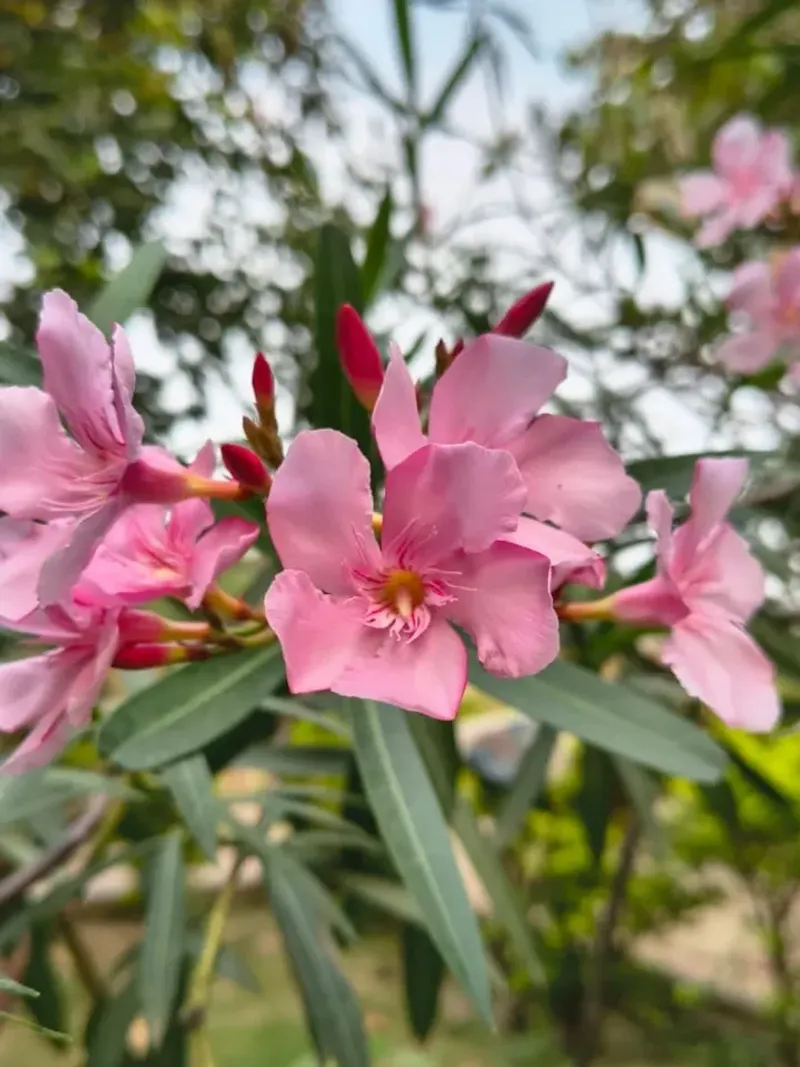
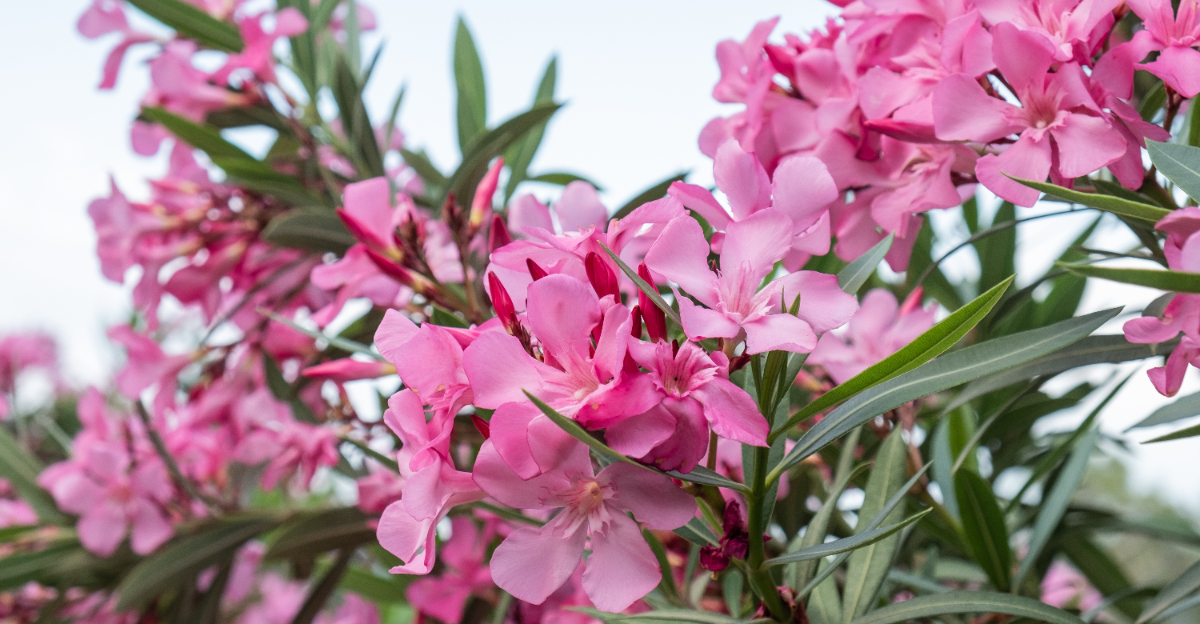
Highways and parking lots across California feature oleander shrubs with their clusters of pink, white, or red flowers. These tough plants handle heat, poor soil, and neglect better than almost anything else.
But their popularity is fading fast as people learn about the serious dangers they pose.
Every part of oleander is extremely toxic to people and pets. Even small amounts can cause severe illness, and there’s no safe way to handle or dispose of the plant without precautions.
Children playing near oleanders face real risks, and pets that chew on the leaves or flowers can become critically ill within hours.
Smoke from burning oleander is also poisonous. During wildfire season or when people trim and dispose of branches, toxic fumes can cause respiratory problems.
This makes oleander particularly dangerous in fire-prone areas where vegetation might burn.
Water usage is another concern. While oleanders tolerate drought, they look scraggly and unattractive without regular watering during California’s long dry seasons.
Many municipalities have stopped planting them in public spaces because of safety concerns and maintenance requirements.
Safer alternatives include California lilac, toyon, or flannel bush. These native shrubs provide similar toughness and year-round interest without the toxicity risks.
They also support local pollinators and wildlife better than non-native oleanders.
5. Juniper Shrubs (Juniperus spp.)
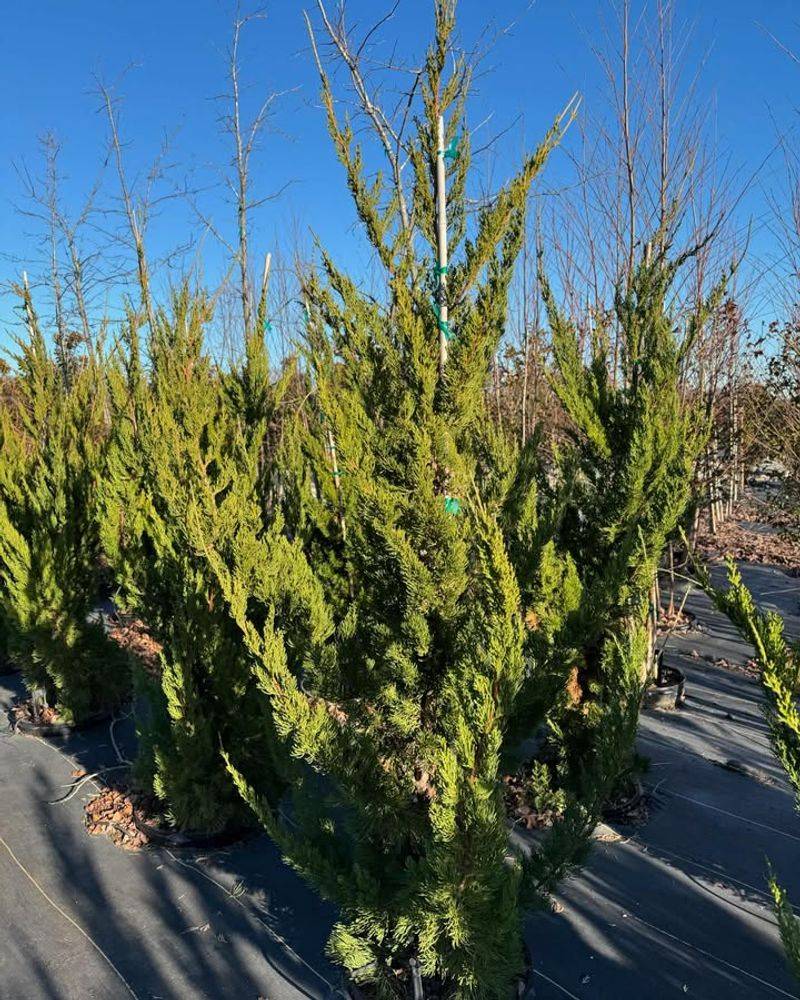
Foundation plantings of juniper shrubs surround countless California homes and commercial buildings. These evergreen shrubs were marketed as low-maintenance, drought-tolerant solutions that would look good forever.
Reality has proven quite different, and property owners are pulling them out in droves.
Spider mites love junipers and infest them regularly in California’s hot, dry climate. These tiny pests cause the foliage to turn brown and die back, leaving ugly bare patches.
Treating infestations requires repeated applications of pesticides, which defeats the whole low-maintenance promise.
Junipers also become overgrown and woody over time. Many varieties were planted too close to buildings or walkways, and they eventually block windows, cover vents, and crowd pathways.
Pruning them back hard just makes them look worse because they don’t regrow attractively from old wood.
Fire danger is significant with mature juniper plantings. The dense, resinous foliage burns hot and fast, making them risky near structures.
Many insurance companies now recommend removing junipers from areas within 30 feet of homes in fire-prone zones.
Native alternatives like coyote brush, California fuchsia, or sage varieties offer better pest resistance and fire safety. These plants stay more compact, need less water, and provide food and habitat for local wildlife throughout the year.
6. Ice Plant (Carpobrotus edulis)
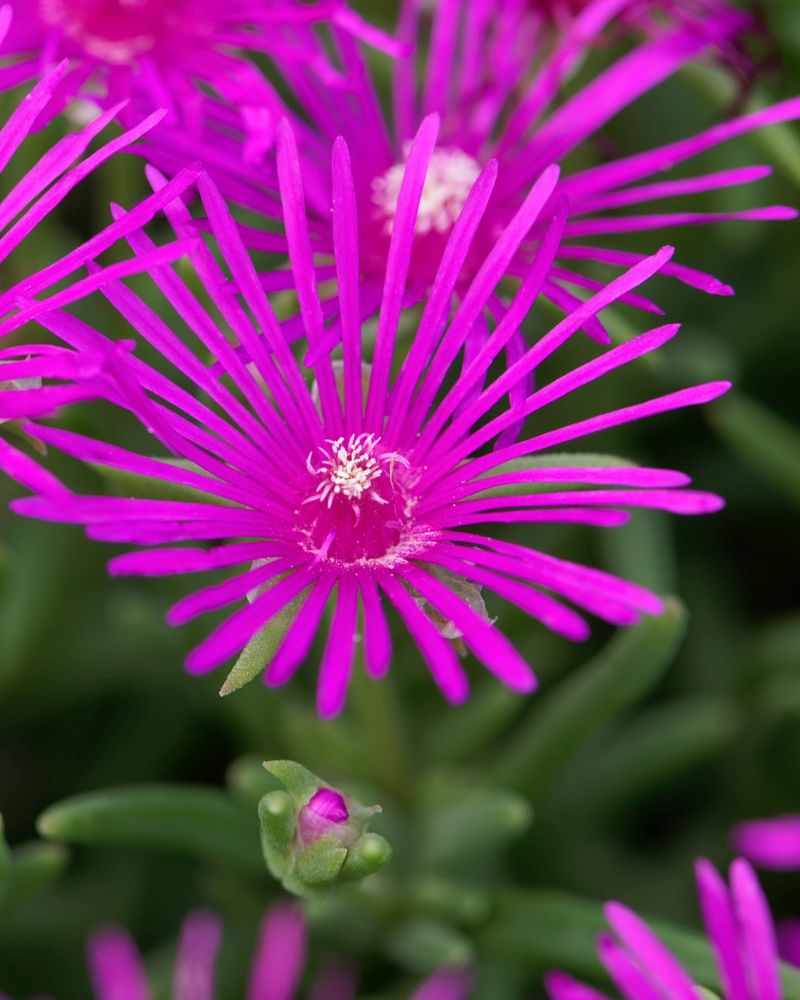
Coastal slopes and highway embankments throughout California were planted with ice plant for decades as erosion control. The succulent leaves and bright purple or yellow flowers create colorful mats that seem perfect for stabilizing soil.
Unfortunately, ice plant has become one of the state’s most problematic invasive species.
The plant spreads aggressively and smothers everything in its path. Native coastal vegetation gets completely covered and eliminated when ice plant takes over.
This destroys habitat for endangered species and disrupts entire ecosystems along California’s coastline.
Erosion control actually gets worse with ice plant over time. The shallow root systems don’t hold soil as well as native plants with deeper roots.
During heavy rains, entire mats of ice plant can slide downhill, taking topsoil with them. Many slopes have failed catastrophically after ice plant coverage became established.
Removal efforts are underway in many California parks and protected areas. Volunteers and land managers work to pull out ice plant and restore native vegetation.
The process takes years because ice plant regrows easily from small fragments left in the soil.
Better alternatives include native groundcovers like beach strawberry, seaside daisy, or yarrow. These plants provide superior erosion control with deep root systems while supporting local pollinators and wildlife.
They’re also more resilient during droughts and require no maintenance once established.
7. Eucalyptus (Eucalyptus spp.)
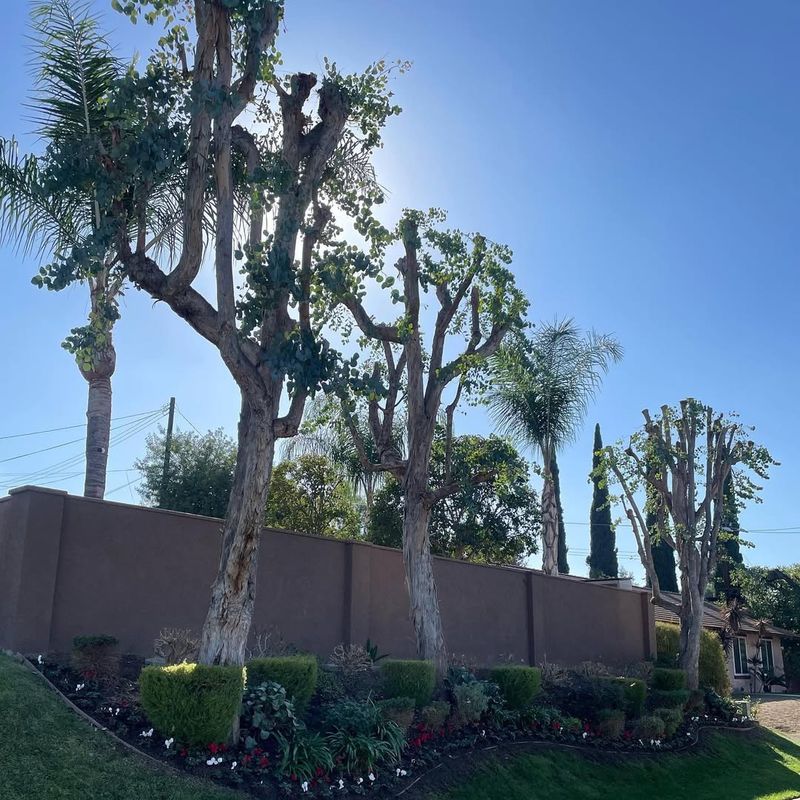
Towering eucalyptus trees have become iconic features of California landscapes, especially near the coast. Imported from Australia in the 1800s for timber and windbreaks, these fast-growing trees seemed like perfect additions to the state.
Now they’re recognized as problematic non-natives that create multiple hazards.
Fire danger tops the list of concerns. Eucalyptus bark sheds constantly, creating deep layers of highly flammable litter beneath the trees.
The oil-rich leaves burn explosively, and embers from eucalyptus fires travel for miles. Several devastating California wildfires have been intensified by eucalyptus groves.
The trees also drop massive branches without warning, a phenomenon called sudden branch drop. These limbs can weigh hundreds of pounds and fall on calm days with no apparent cause.
Parks and property owners face serious liability risks from eucalyptus trees near pathways, buildings, or gathering spaces.
Eucalyptus trees suppress other vegetation beneath them through allelopathy. Chemicals in their leaves prevent most other plants from growing nearby.
This creates biological deserts under eucalyptus groves where native plants and wildlife can’t survive.
Native alternatives like coast live oak, California sycamore, or bigleaf maple provide shade and beauty without the hazards. These trees support hundreds of native insect species, which in turn feed birds and other wildlife.
They’re also better adapted to California’s climate and require less water.
8. Heavenly Bamboo (Nandina domestica)
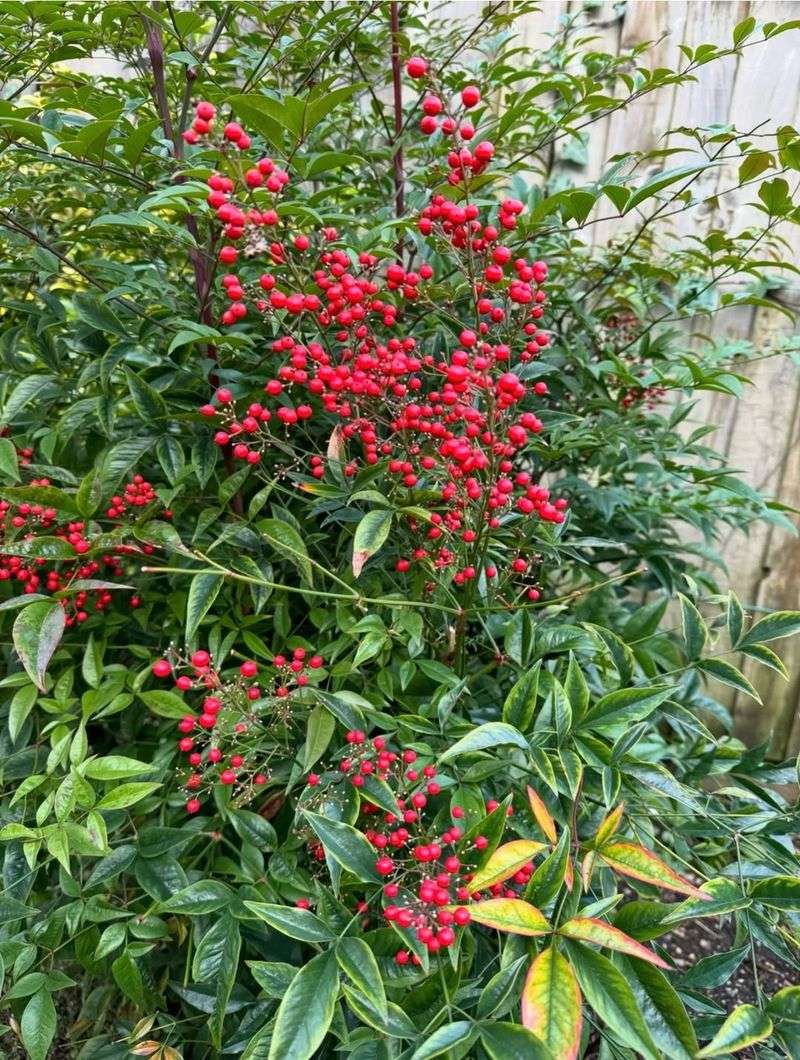
Garden centers have sold heavenly bamboo for years as an easy-care shrub with attractive foliage and bright red berries. The name is misleading because it’s not actually bamboo, but that hasn’t stopped it from becoming extremely common in California landscapes.
Several serious problems are causing homeowners to remove it.
The berries contain cyanide compounds that are highly toxic to birds. Cedar waxwings and other species have been found deceased in large numbers after eating nandina berries during winter when other food is scarce.
Wildlife organizations now actively campaign against planting this shrub anywhere birds might access it.
Nandina also spreads through bird-dispersed seeds, establishing itself in natural areas far from gardens. It’s becoming invasive in some California regions, crowding out native understory plants in forests and riparian areas.
Once established in wild areas, it’s difficult and expensive to remove.
The plant provides almost no ecological value despite its presence in yards. Native insects don’t eat it, which means it doesn’t support the food web that birds and other wildlife depend on.
It essentially creates dead space in gardens where beneficial plants could be growing instead.
Better choices include native shrubs like coffeeberry, toyon, or Oregon grape. These plants offer similar visual interest with berries and colorful foliage while supporting local ecosystems.
Their berries feed birds safely and their leaves host native insects that many species need.
9. Privet (Ligustrum spp.)
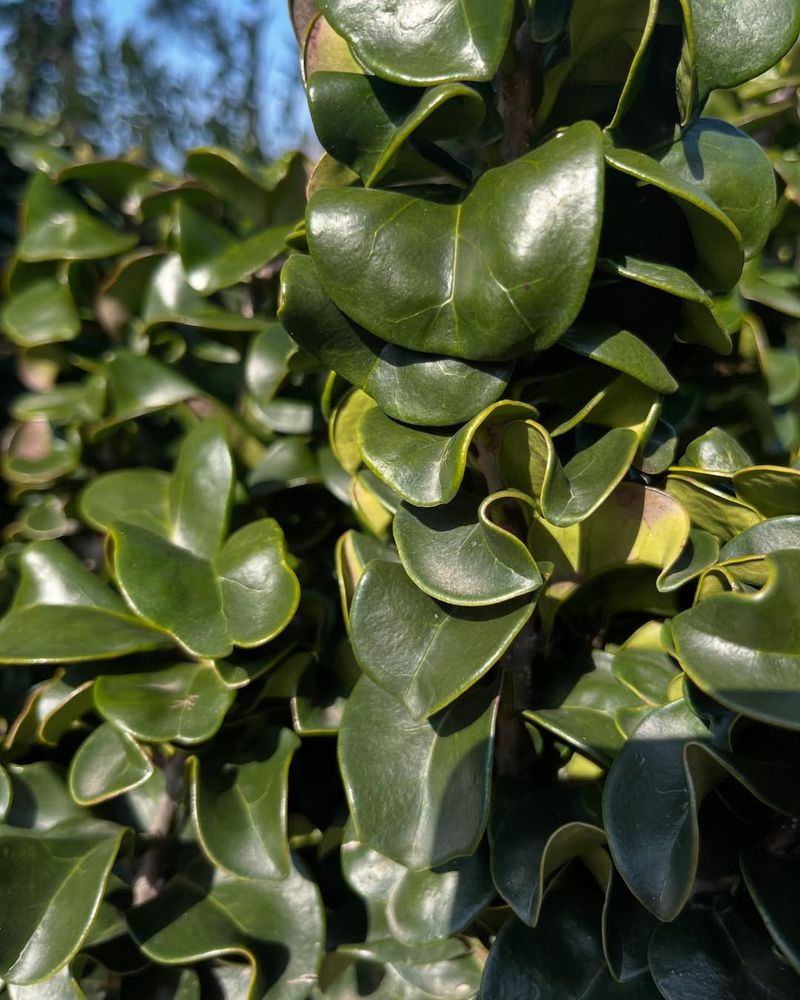
Formal hedges of privet have defined property boundaries and created privacy screens throughout California for generations. These fast-growing shrubs tolerate heavy pruning and quickly fill in to create dense barriers.
But several characteristics are making them increasingly unpopular among environmentally conscious homeowners.
Privet hedges require constant maintenance to look good. They grow aggressively and need trimming every few weeks during the growing season.
Missing even a few maintenance sessions results in leggy, overgrown hedges that look messy and unkempt. The time and effort required is more than many people want to invest.
Allergies are a significant problem with privet. The small white flowers produce copious amounts of pollen that triggers severe reactions in many people.
The blooms also have a strong, unpleasant odor that many find overwhelming. During flowering season, privet hedges can make outdoor spaces uncomfortable.
The plants also produce prolific berries that birds spread everywhere. Privet seedlings pop up in gardens, natural areas, and parks throughout California.
It’s considered invasive in many regions and is actively spreading into wildlands where it displaces native vegetation.
Native alternatives like coffeeberry, lemonadeberry, or sugarbush create excellent hedges without the maintenance demands or invasive tendencies. These shrubs provide privacy and screening while supporting local wildlife with flowers and berries that native species have evolved to use.
10. English Ivy (Hedera helix)
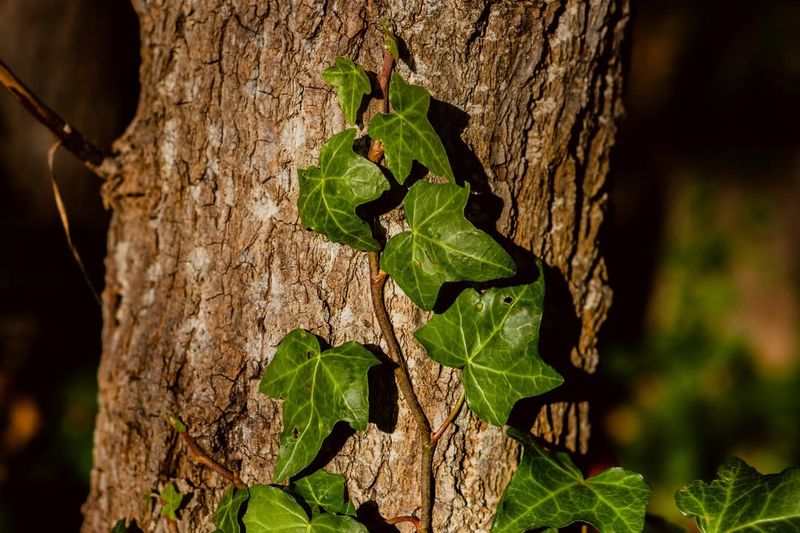
Walls, fences, and trees covered in English ivy create that romantic, old-world look that many people love. This vigorous vine grows quickly to cover unsightly structures and provides evergreen coverage year-round.
However, the problems it creates far outweigh any aesthetic benefits, and California homeowners are working hard to remove it.
Structural damage is inevitable with English ivy. The vine’s aerial roots burrow into mortar, wood, and stucco, causing expensive damage to buildings and fences.
It traps moisture against surfaces, promoting rot and mold growth. Many homeowners discover serious structural problems hiding beneath ivy coverage.
Trees suffer terribly when English ivy climbs them. The weight of mature vines can topple trees during storms, and the dense coverage prevents sunlight from reaching the tree’s leaves.
Ivy-covered trees decline slowly and become hazardous as their health deteriorates.
English ivy is highly invasive in California’s natural areas. It forms dense groundcover that excludes all native plants and creates biological deserts where nothing else can grow.
Wildlife that depends on native plants for food and shelter disappears from ivy-infested areas.
Removal requires persistence because ivy regrows from small root fragments. Many homeowners need professional help to fully eliminate established infestations.
Native alternatives like California pipevine or western virgin’s bower provide attractive vine coverage without the invasive behavior or structural damage. These natives also support local butterfly and moth species that depend on them.