These Host Plants Bring More Butterfly Species To California Gardens
If you want more butterflies fluttering through your California garden, nectar flowers are only part of the story. The real magic happens when you plant host plants, the ones butterflies rely on to lay eggs and raise their caterpillars.
These special plants turn your yard into a true butterfly nursery, inviting more species to stay, grow, and return year after year. Imagine spotting tiny caterpillars munching away, then watching them transform and take flight right outside your window.
It is like having a front row seat to one of nature’s most incredible makeovers. Even better, many host plants are hardy, drought tolerant, and perfectly suited to California’s climate.
By adding the right ones, you are not just decorating your garden, you are creating habitat, supporting local ecosystems, and filling your space with more color and movement than you ever thought possible.
1. California Pipevine (Aristolochia californica)
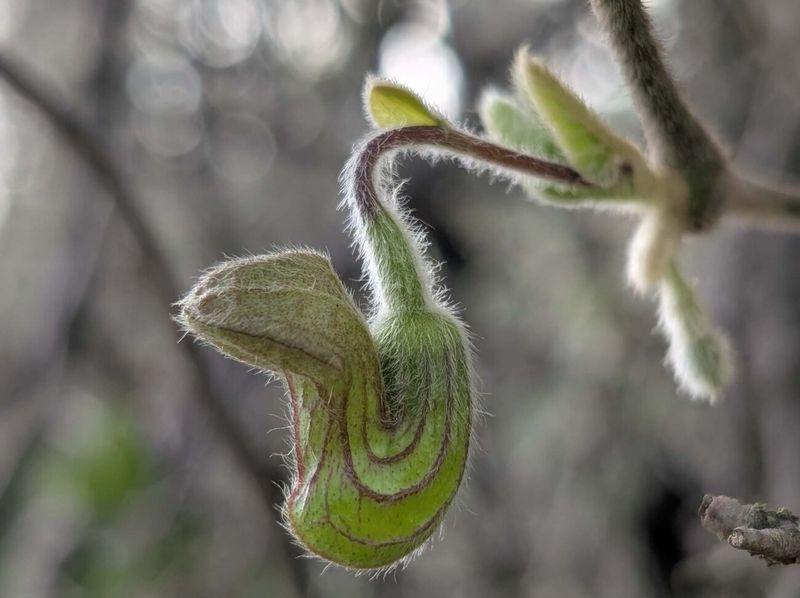
Unusual pipe-shaped flowers give this native vine its memorable name. The curved, purplish-brown blooms look like tiny tobacco pipes and appear in late winter to early spring.
California pipevine grows as a woody vine that climbs fences, trellises, or trees, providing vertical interest in gardens. The heart-shaped leaves create dense coverage that offers shelter for various garden creatures.
Pipevine swallowtail butterflies rely completely on this plant for their caterpillars. These stunning black butterflies with iridescent blue hindwings cannot survive without pipevine access.
Females carefully select healthy vines to lay their orange eggs on the underside of leaves. The caterpillars that hatch are dark with orange spikes, warning predators they contain toxins absorbed from the plant.
This deciduous vine loses its leaves in fall and regrows them in spring. It prefers partial shade and regular water, especially during establishment.
California pipevine works beautifully in woodland gardens or alongside streams and ponds. The vine can grow quite large, sometimes reaching fifteen to twenty feet, so it needs sturdy support.
Gardeners throughout California who plant pipevine often report seeing pipevine swallowtails within the first year. The butterflies seem to find the vines quickly, even in urban areas.
Watching these elegant butterflies float through your garden and lay eggs creates an exciting connection to California’s native ecosystems.
2. Narrowleaf Milkweed (Asclepias fascicularis)
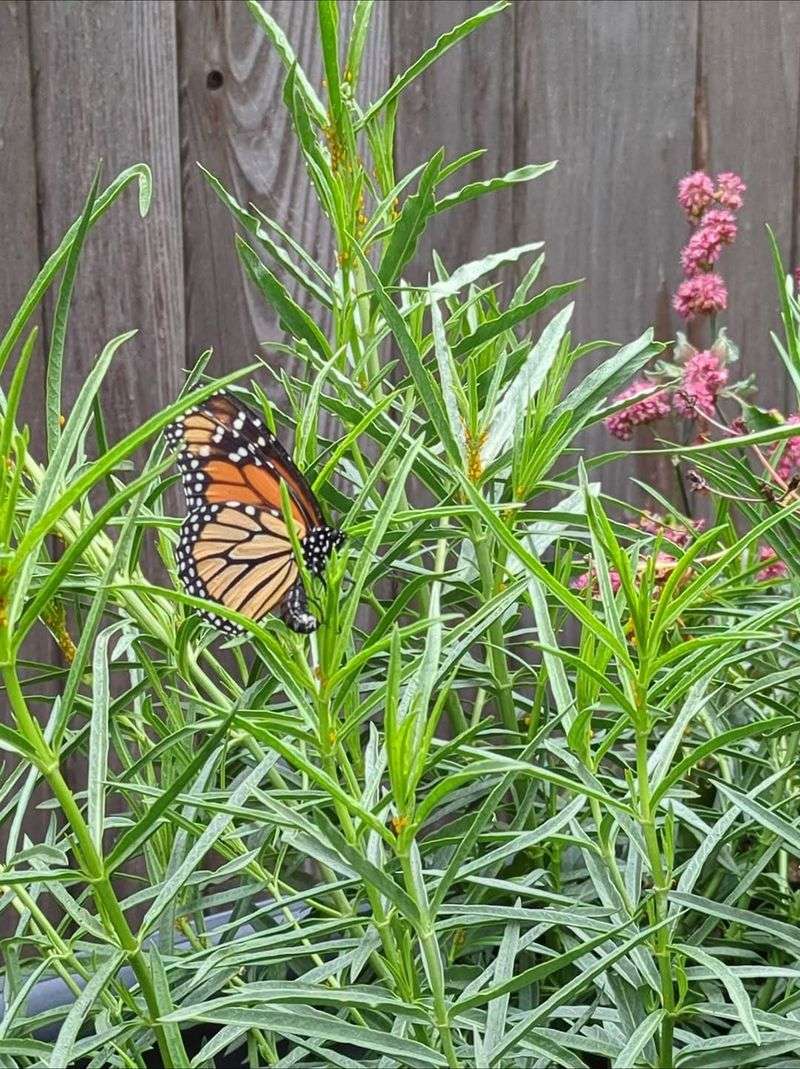
Monarch butterflies depend entirely on milkweed species for their survival. Female monarchs search specifically for milkweed plants to lay their eggs because the leaves provide the only food monarch caterpillars can eat.
Narrowleaf milkweed grows naturally throughout California and adapts well to different garden conditions.
This perennial plant produces clusters of small, fragrant flowers that range from white to pale pink. The blooms appear from late spring through summer, attracting adult butterflies for nectar.
Meanwhile, the narrow leaves serve as food for hungry caterpillars. The plant spreads through underground rhizomes, creating patches that support multiple caterpillars at once.
Narrowleaf milkweed thrives in full sun and tolerates drought once established. It grows two to three feet tall and works well in borders or wildflower gardens.
The plant goes dormant in winter, then returns each spring with fresh growth. Planting several milkweed plants ensures enough food for caterpillars throughout the season.
Your California Garden Changes Every Week. Your Plan Should Too.
Gardening in California changes quickly throughout the season. Every Friday you’ll receive a simple weekly plan showing exactly what to plant, prune, fertilize, harvest, and protect so you never miss the right timing.
California gardeners who add this plant often see monarch butterflies visiting regularly during migration and breeding seasons. The bright orange and black caterpillars are easy to spot munching on leaves.
Watching the complete transformation from caterpillar to chrysalis to butterfly makes this plant incredibly rewarding for families and nature enthusiasts alike.
3. Showy Milkweed (Asclepias speciosa)
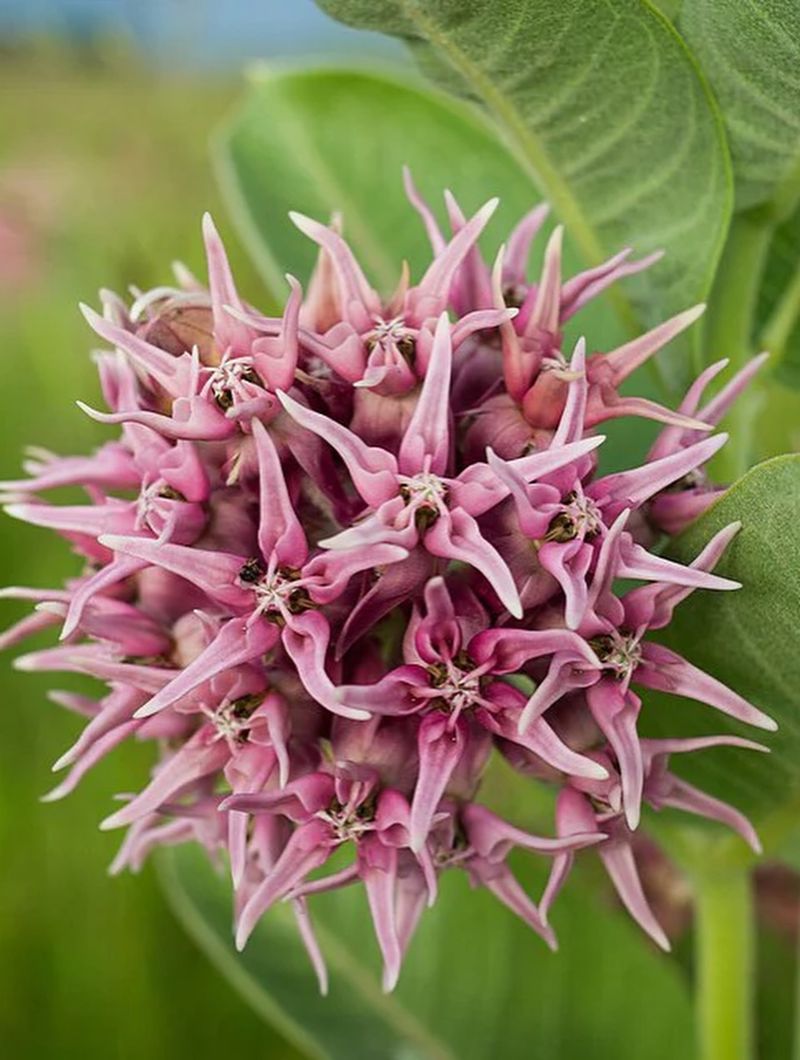
Large, showy pink flowers make this milkweed variety a stunning garden addition. The blooms form round clusters that smell sweet and attract numerous pollinators beyond just monarchs.
Showy milkweed grows taller than its narrowleaf cousin, reaching heights of three to four feet. The broad, gray-green leaves have a soft, velvety texture that caterpillars find irresistible.
Monarch butterflies use this plant just as readily as narrowleaf milkweed for laying eggs and feeding their young. The larger leaves can support more caterpillars, making it excellent for gardens aiming to help monarch populations.
Other butterfly species also visit the flowers for nectar, increasing overall garden diversity.
This California native prefers sunny locations and well-drained soil. It tolerates heat exceptionally well, making it perfect for inland gardens where temperatures soar in summer.
The plant spreads slowly through rhizomes but remains manageable with occasional thinning. After flowering, interesting seedpods develop that split open to release seeds attached to silky fluff.
Gardeners in Northern California particularly appreciate showy milkweed because it handles cooler temperatures better than some other milkweed species. The combination of beautiful flowers and important butterfly habitat makes this plant a practical choice.
Children enjoy watching caterpillars crawl across the large leaves and observing butterflies landing on the vibrant pink blooms.
4. Wild Buckwheat (Eriogonum spp.)
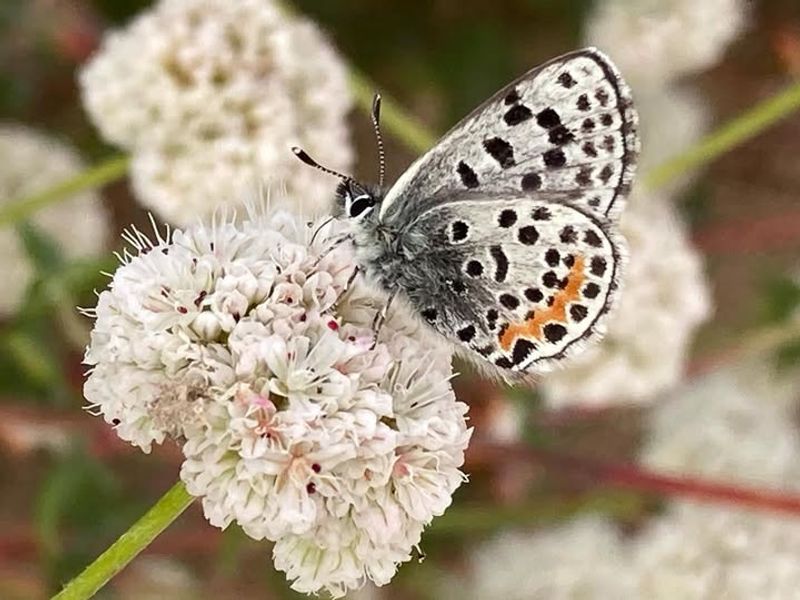
California has over a hundred wild buckwheat species, many of which support butterfly populations. These tough plants produce clusters of tiny flowers that change color as they age, often starting white or pink and turning rust-colored.
The flowers bloom for months, providing consistent nectar sources. Most buckwheat species form low mounds of gray-green leaves with flower stalks rising above.
Several butterfly species use buckwheat as host plants, including various blues, coppers, and hairstreaks. The small, delicate butterflies lay eggs on buckwheat leaves and flowers.
Caterpillars feed on the foliage, sometimes attended by ants that protect them in exchange for sweet secretions. This fascinating relationship adds another layer of interest to your garden ecosystem.
Wild buckwheat thrives in full sun and requires minimal water once established. These plants excel in rock gardens, slopes, or any dry area where other plants struggle.
Different species vary in size from groundcovers to two-foot-tall shrubs. California buckwheat (Eriogonum fasciculatum) is particularly popular and widely available at native plant nurseries.
Inland California gardens benefit especially from buckwheat because it handles heat and drought so well. The long bloom period means butterflies have food from spring through fall.
Birds also appreciate buckwheat seeds in late summer and fall, making these plants valuable for multiple wildlife groups throughout the year.
5. Deerweed (Acmispon glaber)
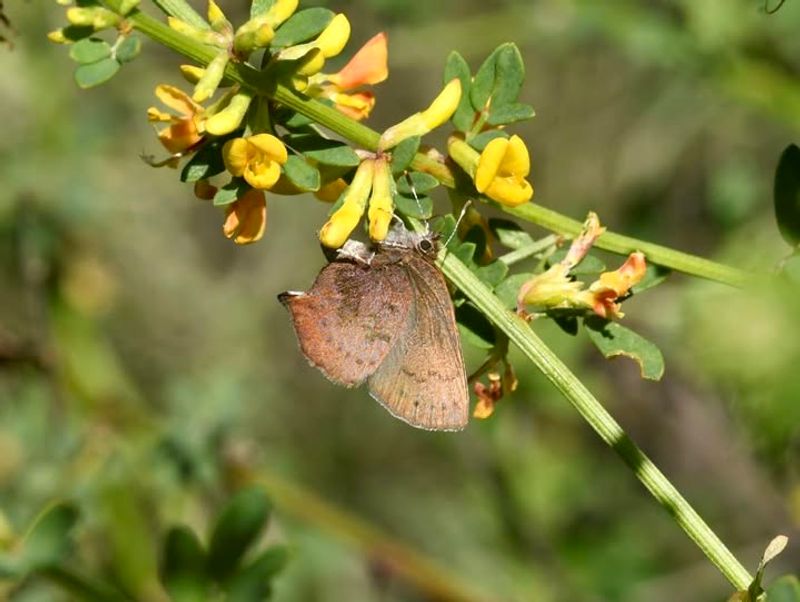
Bright yellow flowers cover this California native shrub from spring through fall. Each flower resembles a tiny pea blossom, which makes sense because deerweed belongs to the legume family.
The plant grows as a rounded shrub, typically two to three feet tall and wide. Thin, green leaves give the plant an airy appearance even when covered in blooms.
Multiple butterfly species depend on deerweed, including several types of blues and the endangered El Segundo blue butterfly. Gray hairstreaks, marine blues, and acmon blues all use deerweed as a host plant.
The small caterpillars blend in with the stems and leaves, making them hard to spot. Adult butterflies visit the flowers for nectar while females lay eggs on fresh growth.
This plant fixes nitrogen in the soil, actually improving garden soil quality over time. Deerweed tolerates poor soil, drought, and coastal conditions equally well.
It works perfectly in California gardens from the coast to inland valleys. The plant may look sparse in winter but rebounds quickly when warm weather returns.
Gardeners across California appreciate how easy deerweed is to grow and maintain. It requires no fertilizer, minimal water, and no pruning unless you want to shape it.
The constant supply of yellow flowers attracts bees and other pollinators alongside butterflies. Planting deerweed helps support rare butterfly species while adding cheerful color to your landscape.
6. California Lilac (Ceanothus spp.)
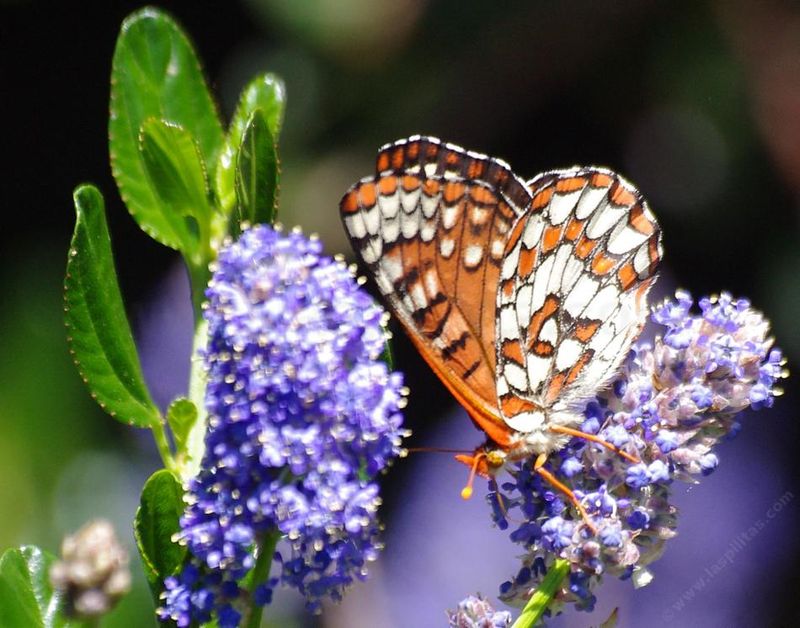
Spectacular blue flower clusters make California lilac one of the most beautiful native shrubs. Different species bloom from late winter through spring, creating clouds of blue, purple, or occasionally white flowers.
The sweet fragrance attracts butterflies, bees, and hummingbirds from considerable distances. California lilac species range from groundcovers to large shrubs, offering options for any garden size.
Pale swallowtail and California tortoiseshell butterflies use various ceanothus species as host plants. Echo blue butterflies also depend on California lilac for their caterpillars.
The glossy green leaves provide food for caterpillars while the abundant flowers feed adult butterflies. Some species have evergreen foliage, while others lose leaves in summer to conserve water.
These plants thrive in full sun with excellent drainage. Once established, California lilac needs no summer water in most regions, making it perfect for water-wise gardens.
The plants naturally grow in California’s chaparral and woodland areas, so they handle local conditions beautifully. Most species live ten to fifteen years, then naturally decline and need replacement.
Southern California gardeners particularly love California lilac because it provides color during the dry season. The flowers appear when many other plants look dormant or stressed.
Northern California gardens benefit from species that tolerate more moisture. Planting California lilac creates important habitat while reducing water use and maintenance time significantly.
7. Passionflower (Passiflora spp.)
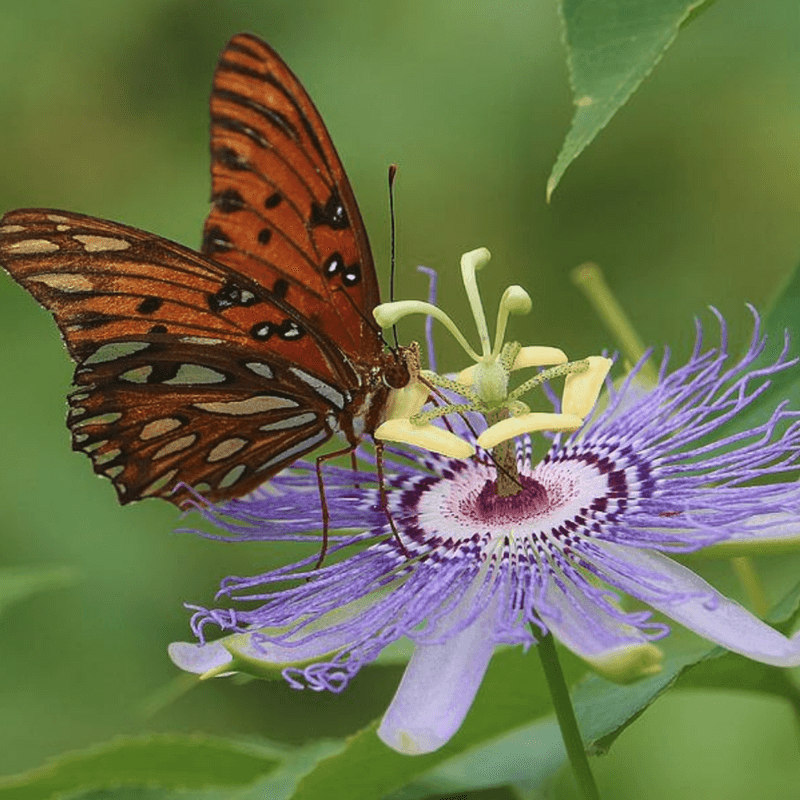
Exotic-looking flowers with intricate purple and white patterns make passionflower unforgettable. The complex blooms feature rings of colorful filaments surrounding central structures that look almost alien.
These perennial vines climb vigorously, covering fences, arbors, or walls with dense foliage. Many species produce edible fruits called passion fruits, adding another benefit to your garden.
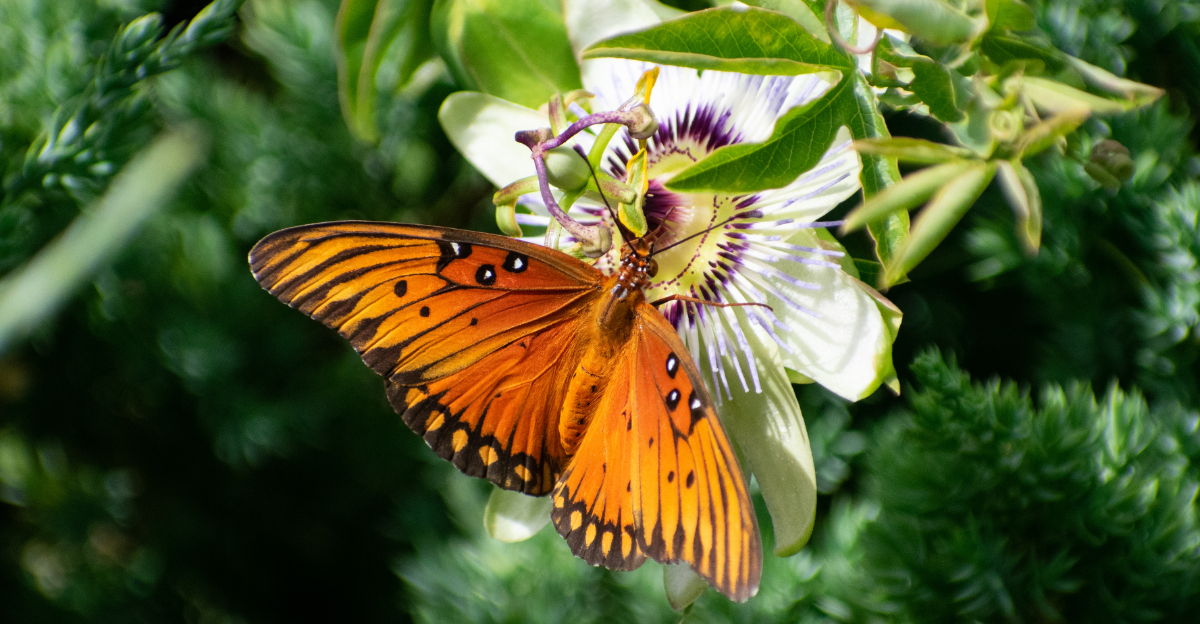
Gulf fritillary butterflies depend entirely on passionflower for their caterpillars. These bright orange butterflies with silver spots underneath visit California gardens regularly.
Females lay yellow eggs on passionflower leaves and tendrils. The spiny orange and black caterpillars feed on leaves before forming chrysalises that look like dried leaves.
Variegated fritillaries also use passionflower as a host plant in some California regions.
Passionflower prefers full sun to partial shade and regular water during the growing season. The vines grow quickly, sometimes covering large areas in a single season.
Some species are more cold-hardy than others, so choose varieties suited to your specific California location. The vines may look messy in winter but regrow vigorously each spring.
Coastal and Southern California gardens see the most gulf fritillary activity because these butterflies prefer warmer climates. The combination of spectacular flowers and beautiful butterflies makes passionflower worth any extra maintenance.
Children especially enjoy the unusual flowers and watching caterpillars transform into butterflies on the same vine.
8. Hollyleaf Cherry (Prunus ilicifolia)
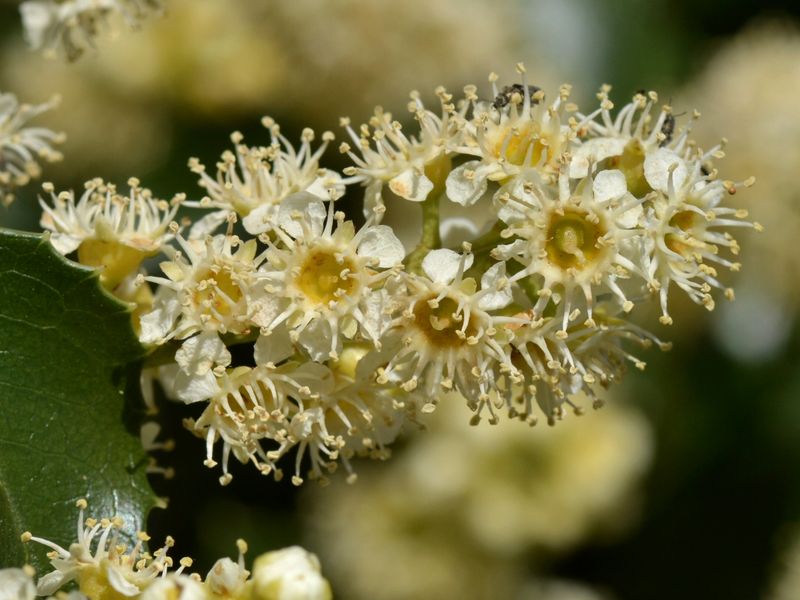
Glossy leaves with spiny edges resemble holly, giving this California native its common name. Small, creamy white flowers appear in spring, arranged in clusters along the branches.
The blooms smell sweet and attract numerous pollinators. By summer, small red cherries develop that eventually turn dark purple.
Birds love these fruits, adding wildlife value beyond butterflies.
Pale swallowtail butterflies use hollyleaf cherry as one of their primary host plants throughout California. The large yellow and black swallowtails lay eggs on the evergreen foliage.
Caterpillars feed on leaves, blending in remarkably well with their green coloration. Western tiger swallowtails occasionally use hollyleaf cherry too, especially in areas where other host plants are scarce.
This versatile shrub tolerates full sun to partial shade and needs minimal water once established. It naturally grows in California’s chaparral and oak woodland communities.
Hollyleaf cherry works well as a hedge, screen, or specimen plant. The evergreen foliage provides year-round structure and shelter for birds and beneficial insects.
Gardeners throughout California appreciate hollyleaf cherry because it handles various conditions from coast to inland valleys. The plant grows slowly but eventually reaches ten to twenty feet tall if unpruned.
Regular light pruning keeps it smaller and bushier. Watching large swallowtail butterflies glide through your garden and land on this handsome shrub creates memorable moments for the whole family.
9. Willow (Salix spp.)
Graceful branches and narrow leaves create the classic willow appearance that many people recognize. California has several native willow species that grow along streams, rivers, and wetland edges.
These fast-growing trees and shrubs provide important habitat for wildlife. The early spring catkins (flower clusters) appear before leaves emerge, offering food when few other plants are blooming.
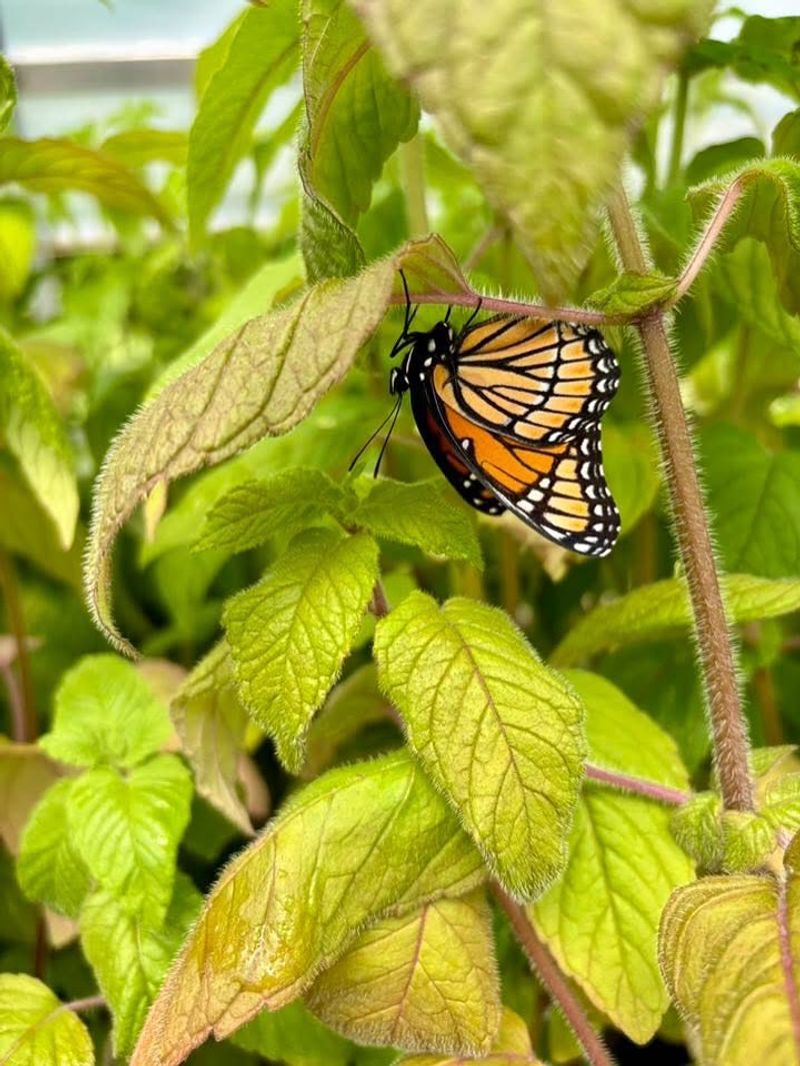
More butterfly species use willow as a host plant than almost any other tree. Western tiger swallowtails, Lorquin’s admirals, mourning cloaks, and viceroy butterflies all lay eggs on willow leaves.
The caterpillars vary in appearance, from the green tiger swallowtail larvae to the spiny black mourning cloak caterpillars. Multiple butterfly generations may use the same willow tree throughout the growing season.
Willows need consistent moisture, making them perfect for low spots, pond edges, or areas with irrigation. They grow quickly, providing shade and habitat within just a few years.
Different species range from small shrubs to large trees, so choose sizes appropriate for your space. The flexible branches move beautifully in the breeze, adding movement to your garden.
Northern California gardens with water features benefit especially from native willows. The trees create natural-looking landscapes while supporting diverse butterfly populations.
Coastal gardens can also grow willows successfully with adequate water. Planting willow establishes a butterfly nursery that produces multiple species year after year in your California garden.
10. Stinging Nettle (Urtica dioica)
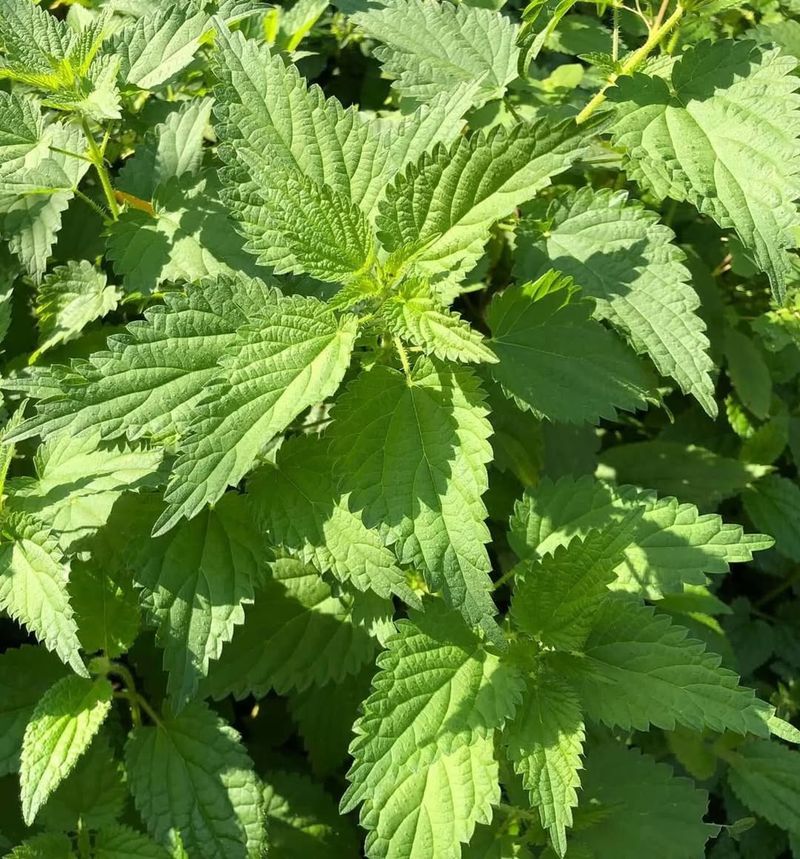
Most gardeners consider this plant a nuisance, but butterflies think otherwise. Stinging nettle has tiny hairs on leaves and stems that inject irritating chemicals when touched, causing temporary burning sensations.
Despite this defense, nettle serves as an important host plant for several beautiful butterfly species. The plant grows in moist, shady areas where few other plants thrive, often forming dense patches.
Red admiral, West Coast lady, and Milbert’s tortoiseshell butterflies all depend on nettle for their caterpillars. These colorful butterflies seek out nettle patches to lay eggs.
The spiny black caterpillars feed together in groups when young, then spread out as they grow. Adult butterflies are common in California gardens, especially where nettle grows nearby.
Nettle prefers partial shade and consistent moisture. It spreads through underground rhizomes and can become weedy if not contained.
Many gardeners plant nettle in a corner or behind other plants where accidental contact is unlikely. The plant goes dormant in winter, then returns vigorously each spring with fresh, tender growth that caterpillars prefer.
California gardeners willing to tolerate nettles are rewarded with frequent butterfly visits. The plant also has culinary and medicinal uses when harvested carefully with gloves.
Young spring leaves can be cooked like spinach, losing their sting with heat. Supporting butterfly populations while growing a useful plant makes nettle worth considering despite its prickly reputation.