California Native Flowers That Bring Hummingbirds To Your Garden
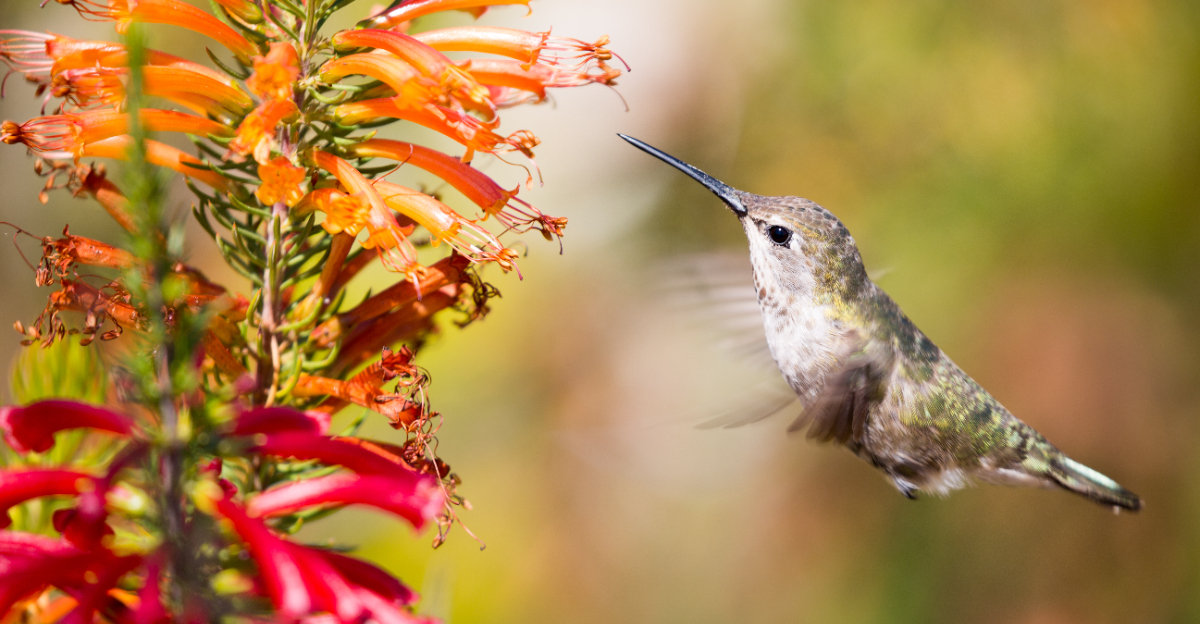
Few garden visitors are as delightful as hummingbirds, flashing jewel like colors and hovering with tiny wingbeats that feel almost magical.
California native flowers have a special way of calling them in, offering the bright blooms and sweet nectar these energetic flyers love.
Picture scarlet, coral, and golden blossoms glowing in the sun while hummingbirds zip, pause, and shimmer in midair right outside your window.
These native plants are not just beautiful, they are perfectly adapted to local soil, dry summers, and changing seasons, which makes them easy to grow and rewarding year after year.
Adding a handful of the right flowers can turn an ordinary yard into a lively hummingbird hangout filled with motion, sparkle, and natural charm. Every visit feels like a tiny show, bringing color, life, and a touch of wonder to your garden morning through evening.
1. California Fuchsia (Epilobium canum)
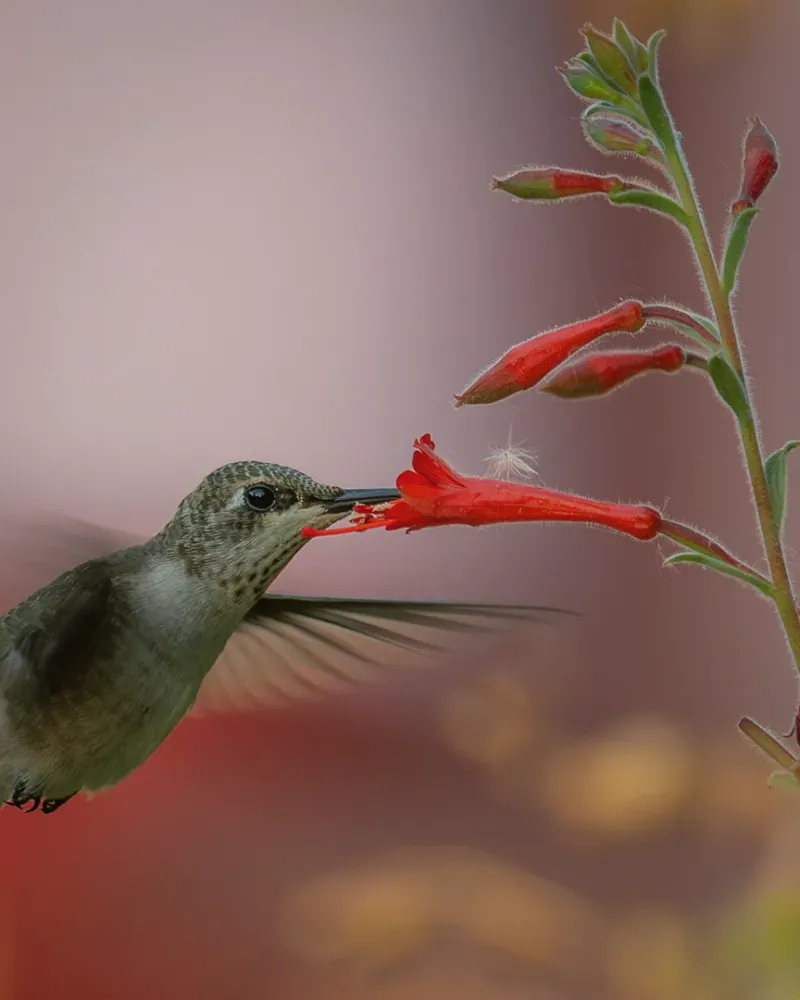
Bright red-orange blooms make this plant a hummingbird magnet during late summer and fall when many other flowers have faded. California Fuchsia thrives in dry, sunny spots throughout California, making it perfect for water-wise gardens.
The tubular flowers are perfectly shaped for hummingbird beaks, and these energetic birds can’t resist them.
This low-growing perennial spreads nicely to create colorful ground cover in your garden beds or along slopes. It handles poor soil without complaint and actually prefers less water once established.
Overwatering can cause problems, so let the soil dry out between waterings.
Native Californians have used this plant for centuries, and it remains a garden favorite today. The silvery-green foliage provides year-round interest even when the plant isn’t blooming.
Butterflies also visit these flowers, adding even more movement to your garden.
Plant California Fuchsia in full sun for the best flower production and watch it light up your late-season garden. It grows about one to three feet tall and spreads wider than it is tall.
Pruning back stems in early spring encourages bushier growth and more blooms come autumn.
2. Hummingbird Sage (Salvia spathacea)
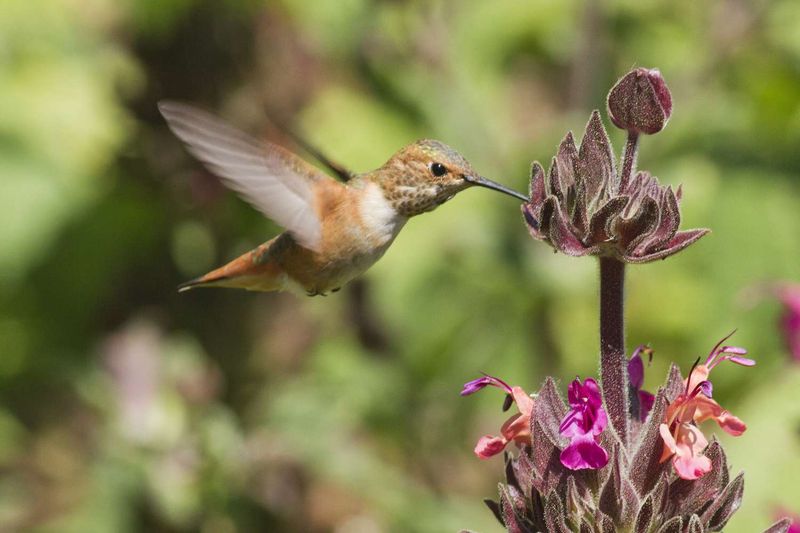
Magenta-pink flower spikes rise above large, aromatic leaves in spring, creating a stunning display that lives up to this plant’s common name. Hummingbirds flock to these tubular blooms, which provide abundant nectar during their peak feeding season.
The flowers emerge on tall stalks that make them easy for hummingbirds to spot from a distance.
Unlike many California natives that prefer full sun, Hummingbird Sage actually thrives in partial shade or dappled sunlight.
This makes it an excellent choice for those tricky spots under trees or along north-facing walls. The plant spreads by underground runners to form attractive patches over time.
The leaves release a pleasant fragrance when brushed or crushed, adding a sensory element to your garden walks. This sage is also quite drought-tolerant once established, though it appreciates occasional summer water in hotter inland areas of California.
The foliage stays green through winter in mild climates.
Growing two to three feet tall with an equal spread, Hummingbird Sage works beautifully as a woodland groundcover.
Pair it with ferns and other shade-loving California natives for a lush, layered look. Spent flower stalks can be trimmed after blooming to keep the plant tidy.
Your California Garden Changes Every Week. Your Plan Should Too.
Gardening in California changes quickly throughout the season. Every Friday you’ll receive a simple weekly plan showing exactly what to plant, prune, fertilize, harvest, and protect so you never miss the right timing.
3. Scarlet Larkspur (Delphinium cardinale)
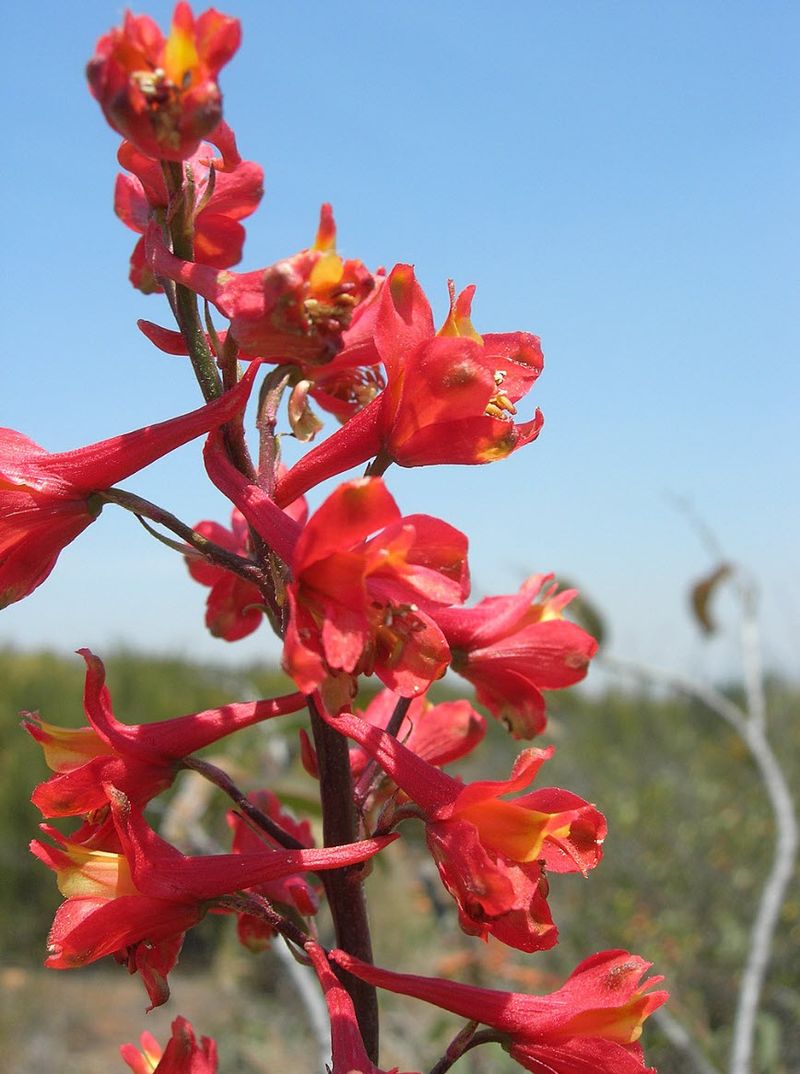
Towering spikes of brilliant red flowers create a dramatic vertical accent that hummingbirds simply cannot ignore. Scarlet Larkspur can reach heights of three to six feet, making it one of the tallest options for hummingbird gardens in California.
Each spike is packed with dozens of tubular blooms that open from bottom to top over several weeks.
This impressive native wildflower grows naturally in chaparral and woodland areas throughout California’s coastal and mountain regions.
It prefers well-drained soil and full sun to light shade, thriving in spots that mimic its natural habitat. The deeply lobed leaves add texture at the base of the plant.
Blooming from late spring through early summer, Scarlet Larkspur provides nectar when hummingbirds are actively nesting and raising young. The bright red color acts like a beacon, visible from far away and drawing birds into your garden.
Plant several together for maximum impact.
After flowering, the plant goes dormant during hot, dry summers, which is completely normal. The roots survive underground and send up fresh growth when cooler weather returns.
Give this plant space to shine as a statement piece in your California native garden, and stake tall stems if needed in windy locations.
4. Indian Paintbrush (Castilleja spp.)
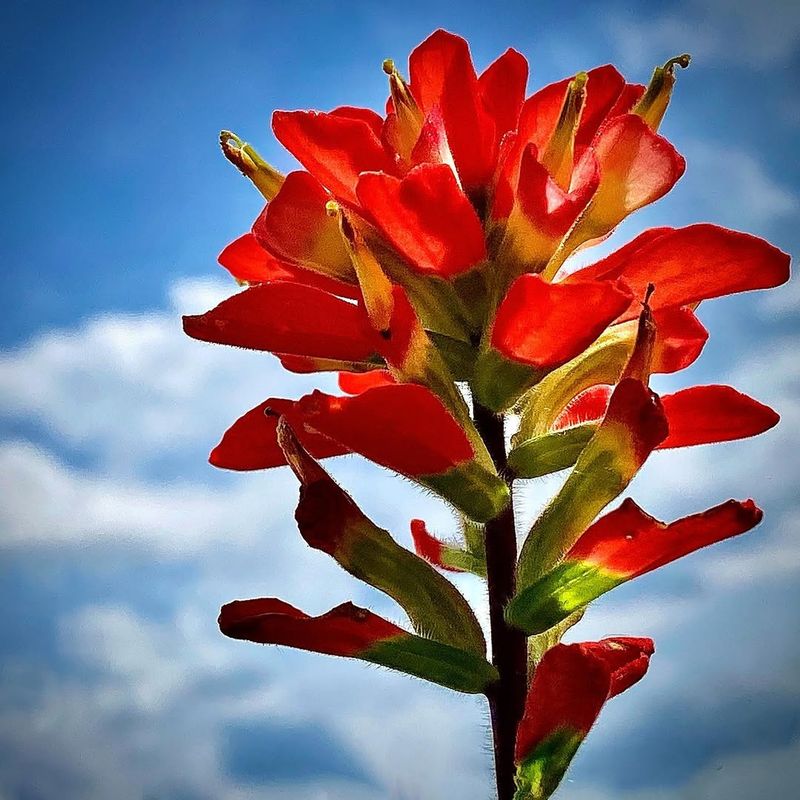
Flame-colored bracts create the appearance of paintbrushes dipped in vibrant red, orange, or yellow pigments across California’s wild landscapes. What looks like petals are actually modified leaves called bracts, while the true flowers hide inside.
Hummingbirds know exactly where to find the nectar tucked within these colorful displays.
Indian Paintbrush grows throughout California in various habitats, from coastal bluffs to mountain meadows. Different species thrive in different regions, so choose one native to your specific area for best results.
These plants have special relationships with neighboring plants, drawing some nutrients through their roots.
Growing Indian Paintbrush from seed can be challenging because of this unique root connection to other plants. Many gardeners find success planting them near established native grasses or other compatible companions.
Once settled, they reward your patience with stunning spring and summer blooms.
The flowers attract not only hummingbirds but also native bees and butterflies to your California garden. Plants typically reach six inches to two feet tall depending on the species.
They prefer full sun and well-drained soil, and most species are adapted to seasonal rainfall patterns with dry summers.
5. Sticky Monkeyflower (Diplacus aurantiacus)
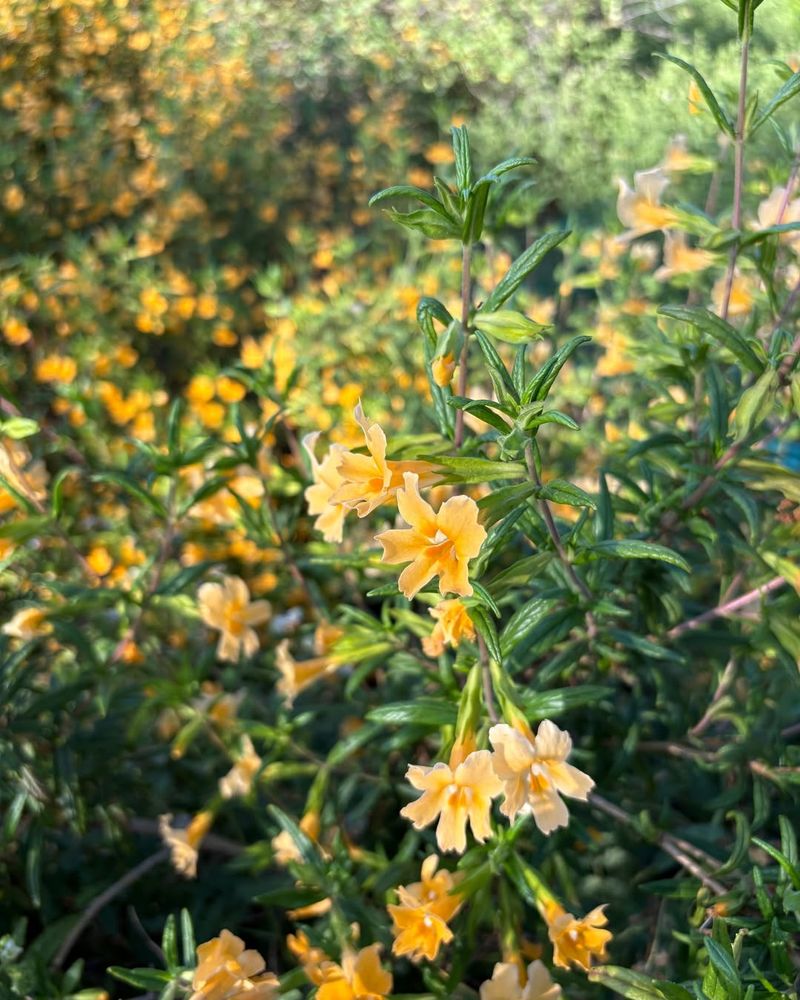
Cheerful orange blooms appear nearly year-round in mild California climates, providing reliable nectar for hummingbirds through multiple seasons. The trumpet-shaped flowers come in shades ranging from pale peach to deep burnt orange.
Sticky, resinous leaves give this plant its common name and release a pleasant fragrance on warm days.
This versatile shrub adapts well to various California garden conditions, from coastal areas to inland valleys. It handles both clay and sandy soils as long as drainage is adequate.
Sticky Monkeyflower grows naturally on hillsides and canyon walls throughout the state.
Reaching three to four feet tall and wide, this plant works perfectly as a mid-sized shrub in mixed borders or massed plantings. The glossy evergreen foliage provides structure even between bloom cycles.
Hummingbirds visit the flowers constantly, and you’ll often see them hovering and probing deep into the tubular blooms.
Pruning lightly after major bloom periods encourages bushier growth and more flowers. Sticky Monkeyflower tolerates drought once established but blooms more abundantly with occasional summer water.
It’s also deer-resistant, which is a bonus in many California neighborhoods where deer browse gardens regularly.
6. Red Columbine (Aquilegia formosa)
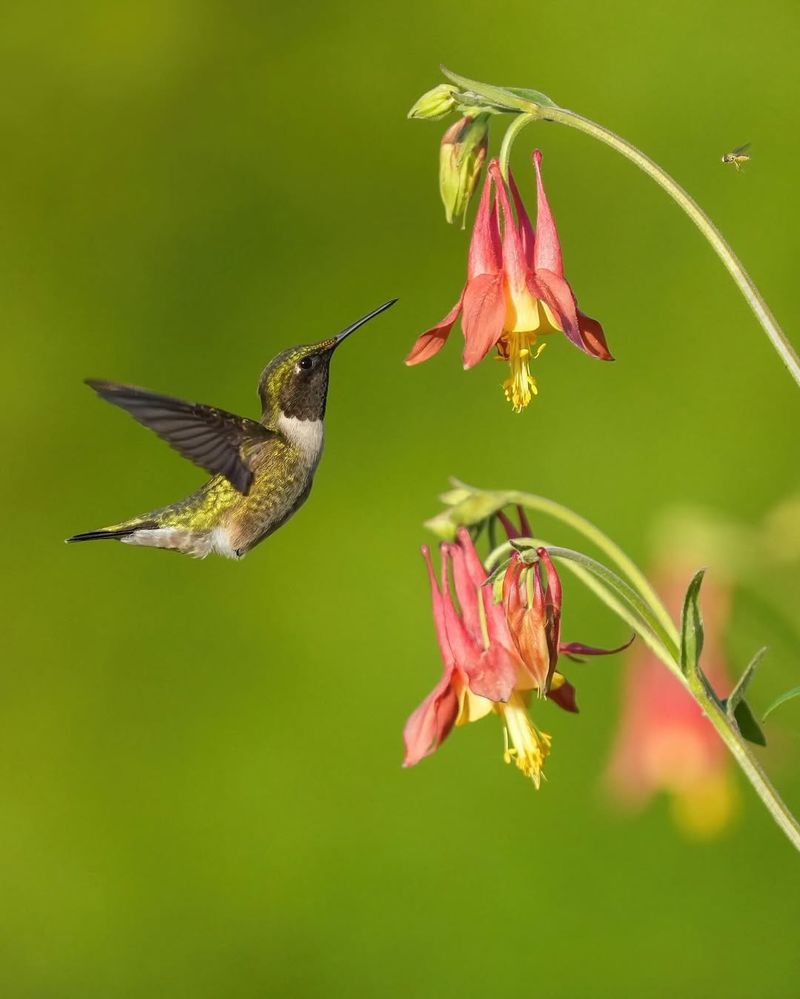
Delicate, nodding flowers with distinctive backward-pointing spurs dangle like little lanterns from slender stems. Red Columbine features red outer petals with yellow centers, creating a two-toned effect that catches both human and hummingbird attention.
The intricate flower structure evolved specifically to accommodate long hummingbird beaks.
This graceful perennial prefers the cooler, moister conditions found in shaded California woodlands and along stream banks.
It appreciates regular water, especially during the growing season, making it ideal for areas of your garden that receive supplemental irrigation.
The ferny foliage forms attractive mounds at the plant’s base.
Blooming in spring and early summer, Red Columbine provides nectar when many hummingbird species are migrating through or establishing territories in California.
The flowers seem to dance in even the slightest breeze, adding movement to shaded garden spots. Plants typically reach one to three feet tall.
Red Columbine self-seeds readily in favorable conditions, naturalizing to create drifts of color over time. The seeds are also enjoyed by small birds, adding another wildlife benefit.
Combine it with ferns, Hummingbird Sage, and other shade-loving California natives for a lush, layered woodland garden that hums with activity.
7. Penstemon (Penstemon spectabilis / native species)
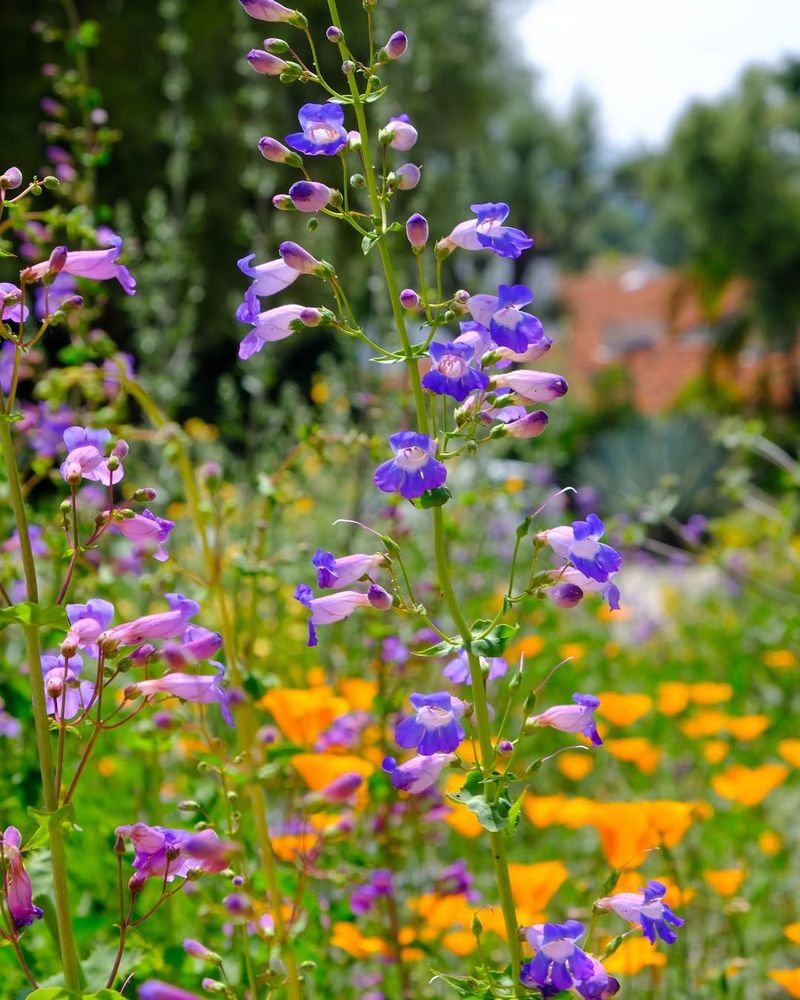
Tubular flowers in shades of purple, blue, pink, or red cluster along tall spikes that rise above lance-shaped leaves. California is home to numerous native Penstemon species, each adapted to specific regions and conditions throughout the state.
Showy Penstemon (Penstemon spectabilis) is particularly popular with its large purple-blue blooms.
These tough perennials thrive in full sun and well-drained soil, handling California’s dry summers with ease once established. Many species grow naturally in chaparral, coastal sage scrub, and foothill communities.
The flower spikes can reach two to four feet tall, creating dramatic vertical elements in your garden design.
Hummingbirds are especially drawn to the tubular flower shape, which fits their beaks perfectly and provides generous nectar rewards. Blooming primarily in late spring and early summer, Penstemons bridge the gap between early and late-season flowers.
The blooms also attract native bees and other beneficial pollinators.
Different Penstemon species offer varying heights, colors, and bloom times, so you can select several types to extend the flowering season. Deadheading spent flower spikes encourages additional blooming and keeps plants looking tidy.
These California natives are also relatively deer-resistant and require minimal maintenance once established in appropriate conditions.
8. Desert Globemallow (Sphaeralcea ambigua)
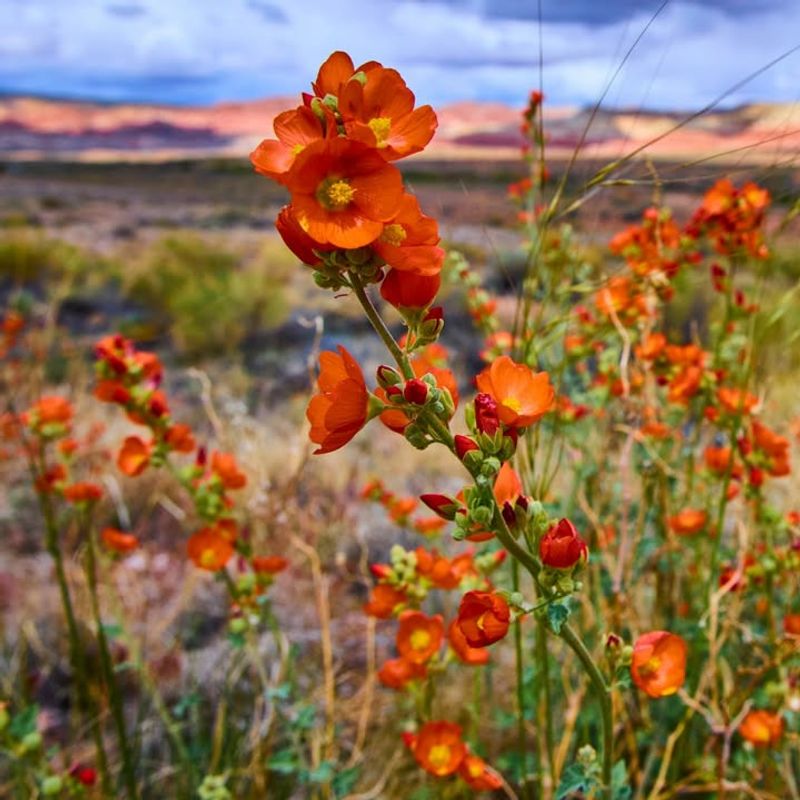
Brilliant orange cup-shaped flowers cover this tough desert native from early spring through fall in California’s warmer regions. The cheerful blooms appear in clusters along upright stems rising from gray-green foliage.
Desert Globemallow brings a splash of desert color to gardens throughout Southern California and the Central Valley.
This shrubby perennial thrives in hot, dry conditions that would stress many other flowering plants. It actually prefers minimal water once established and can struggle with overwatering or poor drainage.
The soft, fuzzy leaves have a silvery appearance that reflects sunlight and helps the plant conserve moisture.
Hummingbirds visit the flowers regularly, especially in desert and inland California gardens where native nectar sources may be scarce. The long blooming period provides consistent food for resident hummingbirds throughout the warm months.
Plants typically grow two to three feet tall and equally wide.
Desert Globemallow works beautifully in rock gardens, along sunny slopes, or mixed with other drought-tolerant California natives. The flowers also attract native bees and butterflies, creating a pollinator paradise in your yard.
Prune plants back by one-third in late winter to encourage bushier growth and abundant flowering as temperatures warm.
9. Chaparral Currant (Ribes malvaceum)
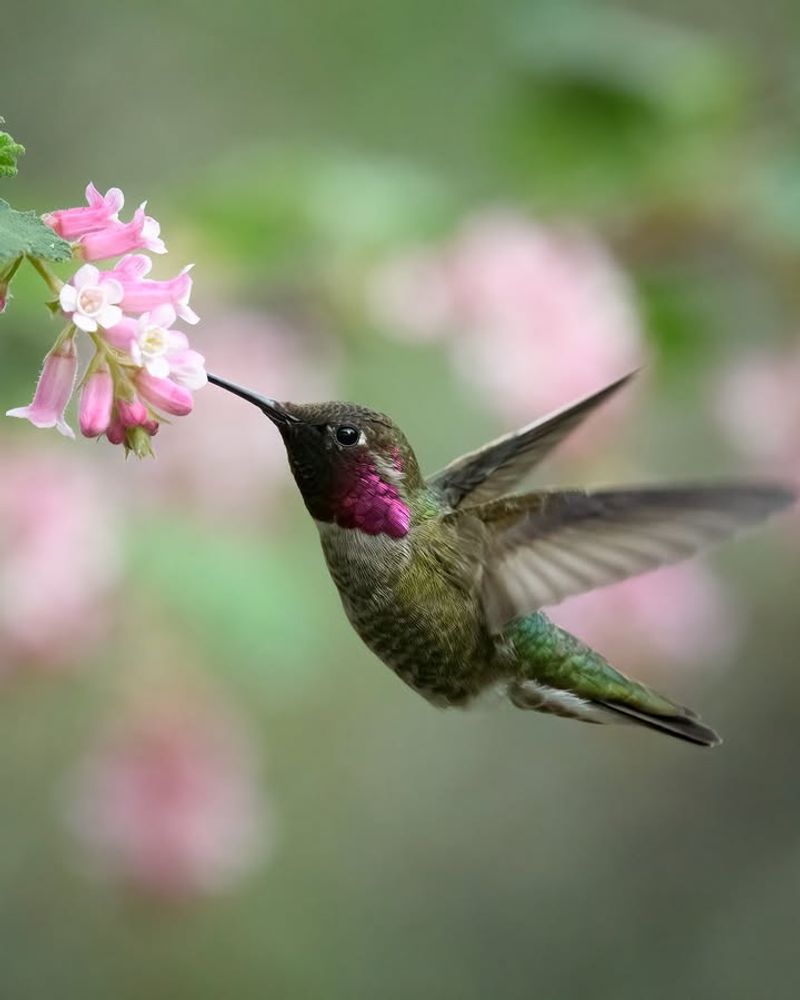
Dangling clusters of pink tubular flowers appear in winter and early spring when few other plants are blooming in California gardens.
This early flowering time makes Chaparral Currant especially valuable for hummingbirds returning from migration or overwintering in the state. The fragrant blossoms hang like little chandeliers from arching branches.
This deciduous shrub grows naturally in chaparral and woodland communities throughout much of California. It adapts well to garden conditions, preferring partial shade to full sun and well-drained soil.
The maple-like leaves emerge after flowering and provide attractive foliage through spring and summer.
Reaching four to six feet tall and wide, Chaparral Currant works well as a screening plant or mixed into shrub borders. The plant goes dormant in late summer and drops its leaves, which is normal for this California native.
Small, dark berries follow the flowers and attract birds to your garden.
Hummingbirds appreciate the early nectar source when other food may be limited, often visiting the same plants repeatedly throughout the day. The flowers are also visited by early-emerging native bees.
Plant Chaparral Currant where you can enjoy the sweet fragrance and watch hummingbirds feed during the cooler months in California.
10. California Buckeye (Aesculus californica)
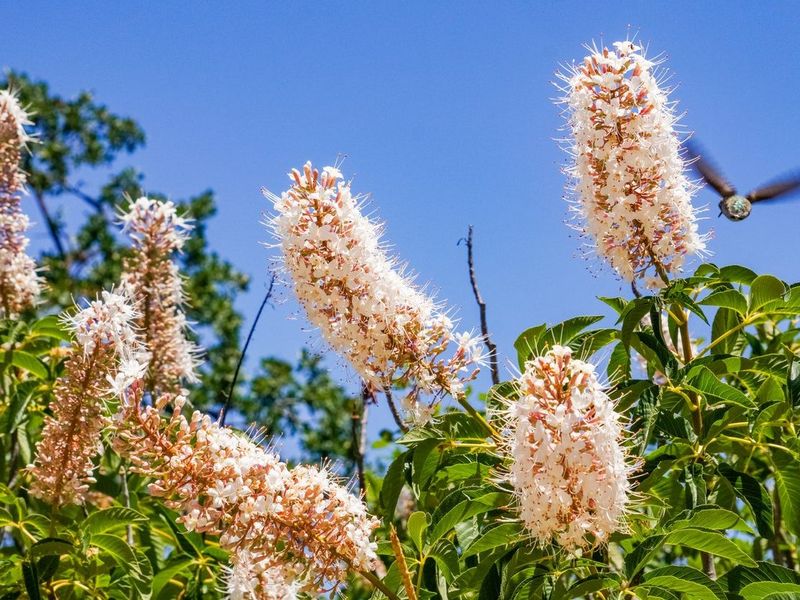
Spectacular white to pale pink flower spikes stand upright like candles across this small California native tree in late spring.
Each spike contains hundreds of individual tubular flowers packed tightly together, creating a stunning display that hummingbirds find irresistible.The sweet fragrance also fills the air around blooming trees.
California Buckeye grows naturally in foothill woodlands and canyon bottoms throughout much of the state.
As a deciduous tree, it has adapted an interesting strategy for California’s dry summers by dropping its leaves early. This summer dormancy helps the tree conserve water during the hottest, driest months.
The large, palmate leaves emerge in winter with the first rains and create dense shade through spring. During the May to June bloom period, the tree becomes a hub of activity with hummingbirds, bees, and butterflies visiting constantly.
Trees can reach 15 to 30 feet tall, making them suitable for larger California gardens.
Large, pear-shaped seed capsules develop after flowering and split open to reveal shiny brown seeds. While the seeds are toxic if eaten, they add ornamental interest to the tree.
Plant California Buckeye as a specimen tree where its seasonal changes can be appreciated, and enjoy watching hummingbirds feast on the abundant nectar each spring.