These 9 Big Leaf Caladiums Make A Bold Statement In Georgia Yards
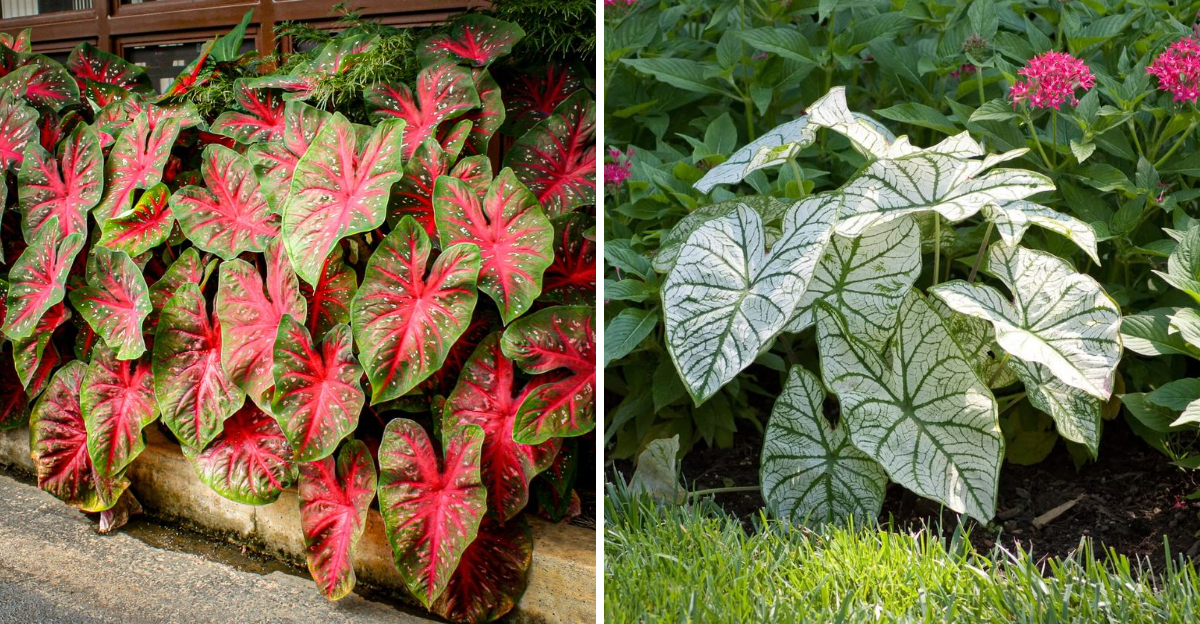
Big leaves change the entire mood of a yard, and few plants deliver that impact like caladiums.
Oversized foliage with bold veins and rich color draws the eye instantly, especially in Georgia where summer gardens can fade into predictable shades of green.
One well-placed caladium can shift the energy of a planting bed from ordinary to dramatic.
Georgia’s warm temperatures and humid air create the perfect setting for these tropical showstoppers to stretch out and show off. Large heart-shaped leaves thrive in partial shade and brighten darker corners where other plants struggle to stand out.
The result feels lush, layered, and intentionally designed.
Choose the right big leaf varieties, and your yard gains texture, contrast, and color that refuses to blend into the background.
1. Florida Sweetheart Delivers Heart-Shaped Leaves With Striking Colors
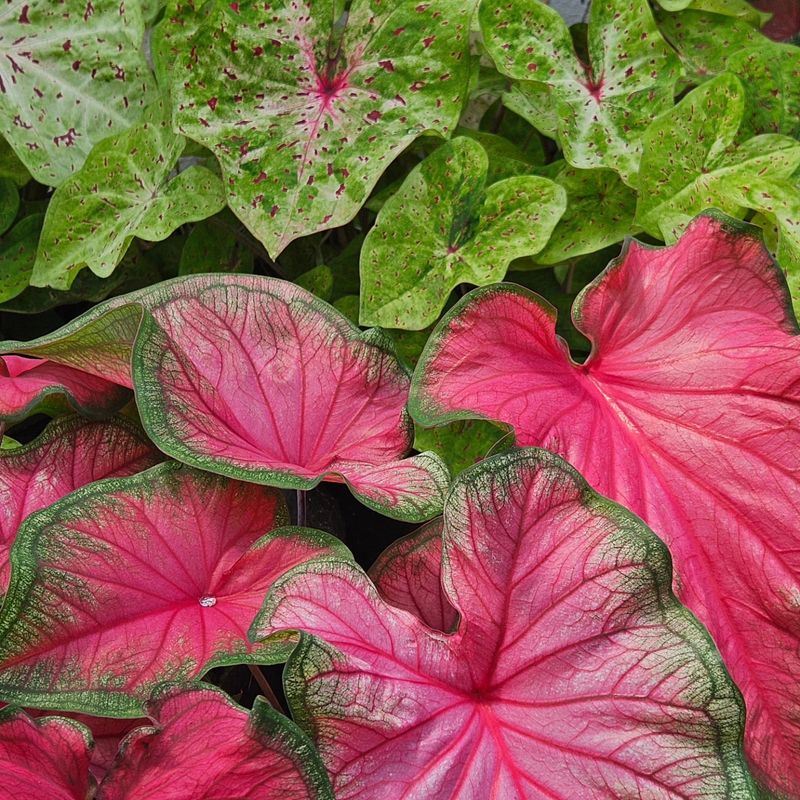
Rose-pink centers edged with deep green make Florida Sweetheart one of the most romantic caladium varieties for Georgia landscapes. Each leaf unfurls like a valentine, bringing soft color to areas where flowering plants struggle.
This variety performs exceptionally well in Georgia’s humid climate, especially in zones 7b through 9a. The leaves grow impressively large when given consistent moisture and protection from afternoon sun.
Morning light or dappled shade produces the most vibrant coloring.
Planting Florida Sweetheart under mature trees or along north-facing foundations creates stunning displays throughout summer. The pink intensifies in cooler morning temperatures, giving your garden extra appeal during early hours.
Pair these beauties with ferns or hostas for textural contrast.
Soil preparation matters significantly for maximum leaf size. Mix compost into planting beds before setting tubers two inches deep after soil temperatures reach 70 degrees.
Space bulbs 12 to 18 inches apart to accommodate their generous spread.
Georgia gardeners appreciate how this cultivar maintains color intensity even during August heat waves. Regular watering keeps leaves looking fresh, though caladiums naturally slow growth during extreme temperatures.
Mulching helps retain moisture while keeping roots cool through scorching afternoons.
2. Red Flash Creates Vibrant Splashes In Shady Corners
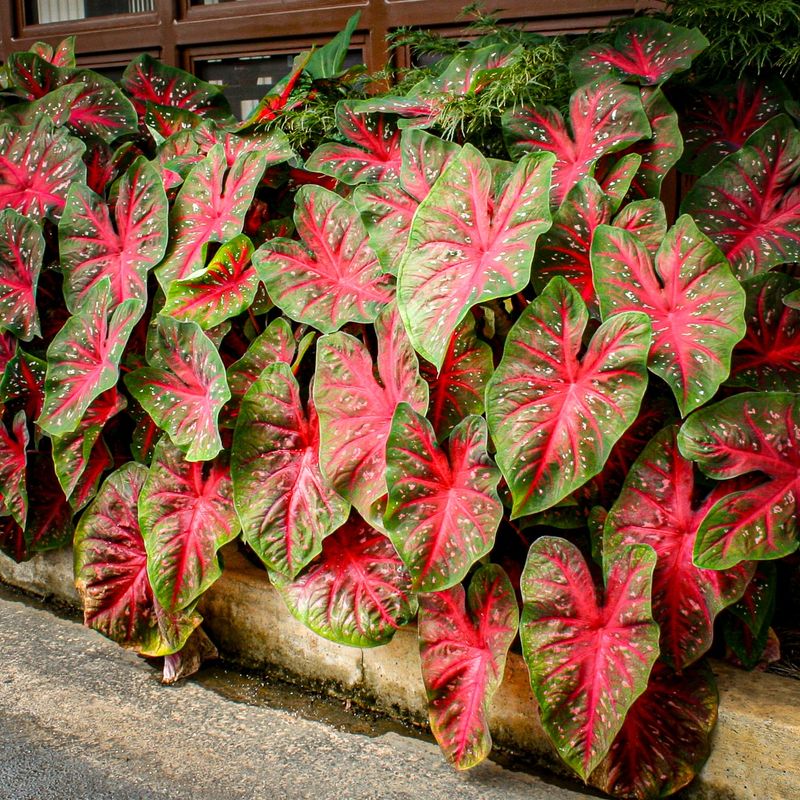
Crimson leaves splattered with darker pink freckles command attention wherever Red Flash appears in Georgia yards. Few shade plants deliver this level of drama without requiring constant maintenance or special care routines.
Red Flash thrives in Atlanta’s humid summers and Macon’s heat, staying vibrant when other plants fade. The burgundy-red centers contrast sharply with green margins, creating natural artwork in garden beds.
These caladiums grow 18 to 24 inches tall with leaves reaching impressive widths.
Positioning matters for color intensity. Too much sun bleaches the red tones, while deep shade reduces leaf size.
Filtered light through tree canopies or bright indirect light on covered patios produces ideal results throughout Georgia.
Companion planting amplifies Red Flash’s impact. White impatiens or light-colored coleus planted nearby make the red pop even more dramatically.
Groundcovers like creeping Jenny provide textural interest without competing visually.
Tuber quality directly affects performance, so choose firm, plump bulbs at planting time. Start them indoors six weeks before your last frost date, or wait until May when Georgia soil warms adequately.
Your Georgia Garden Changes Every Week. Your Plan Should Too.
Gardening in Georgia changes quickly throughout the season. Every Friday you’ll receive a simple weekly plan showing exactly what to plant, prune, fertilize, harvest, and protect so you never miss the right timing.
Feed monthly with balanced fertilizer diluted to half strength for sustained color production through September.
3. White Christmas Brightens Dark Spots With Creamy Foliage
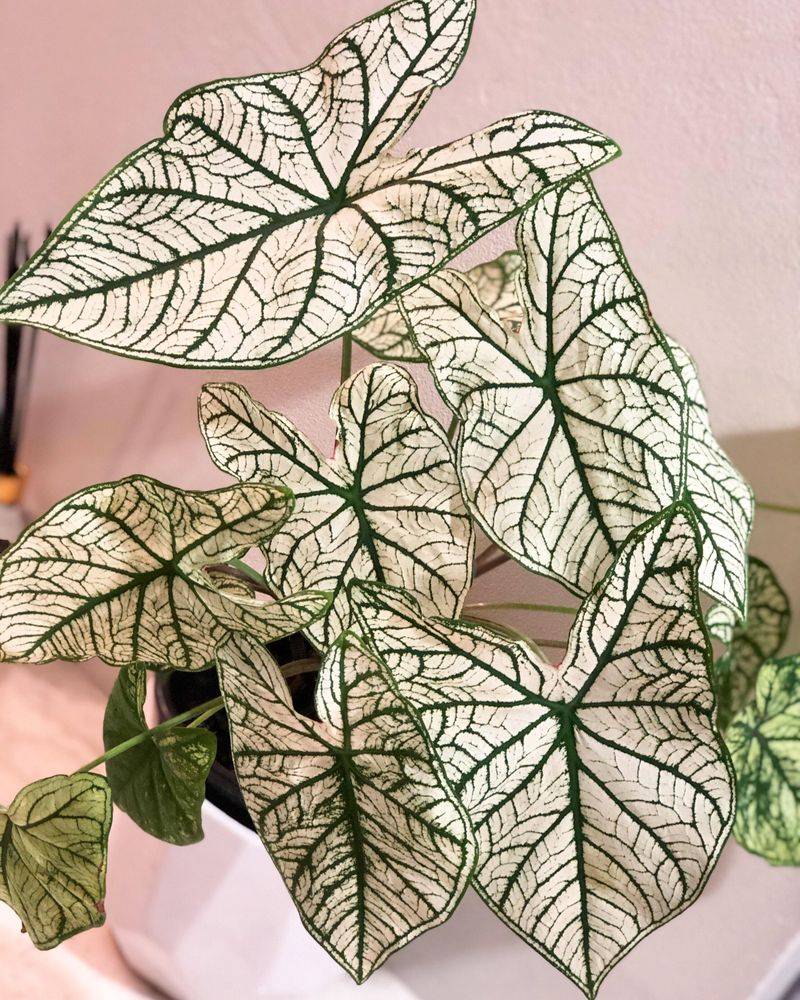
Creamy white leaves veined with green illuminate the darkest corners of Georgia properties like natural lanterns. White Christmas brings elegance to spaces where most colorful plants simply refuse to perform well.
This variety specializes in low-light situations that challenge typical garden plants. North-facing beds, areas beneath dense magnolia canopies, or shaded courtyards become showcases when planted with these luminous beauties.
The white reflects available light, brightening entire sections visually.
Savannah gardeners particularly value White Christmas for historic district gardens where mature trees create perpetual shade. The foliage stays clean-looking through summer storms, bouncing back quickly after heavy rainfall events common across Georgia.
Leaf size increases dramatically with proper fertilization schedules. Apply slow-release granules at planting, then supplement with liquid feed every three weeks during active growth.
Avoid high-nitrogen formulas that promote excessive green at the expense of white coloring.
Slugs sometimes target white-leafed varieties, so monitor plantings regularly during humid stretches. Organic controls work effectively without harming beneficial insects.
Mulch depth should stay around two inches to discourage pests while maintaining soil moisture levels caladiums prefer for optimal development throughout Georgia’s growing season.
4. Postman Joyner Combines Red And Green For Dramatic Impact
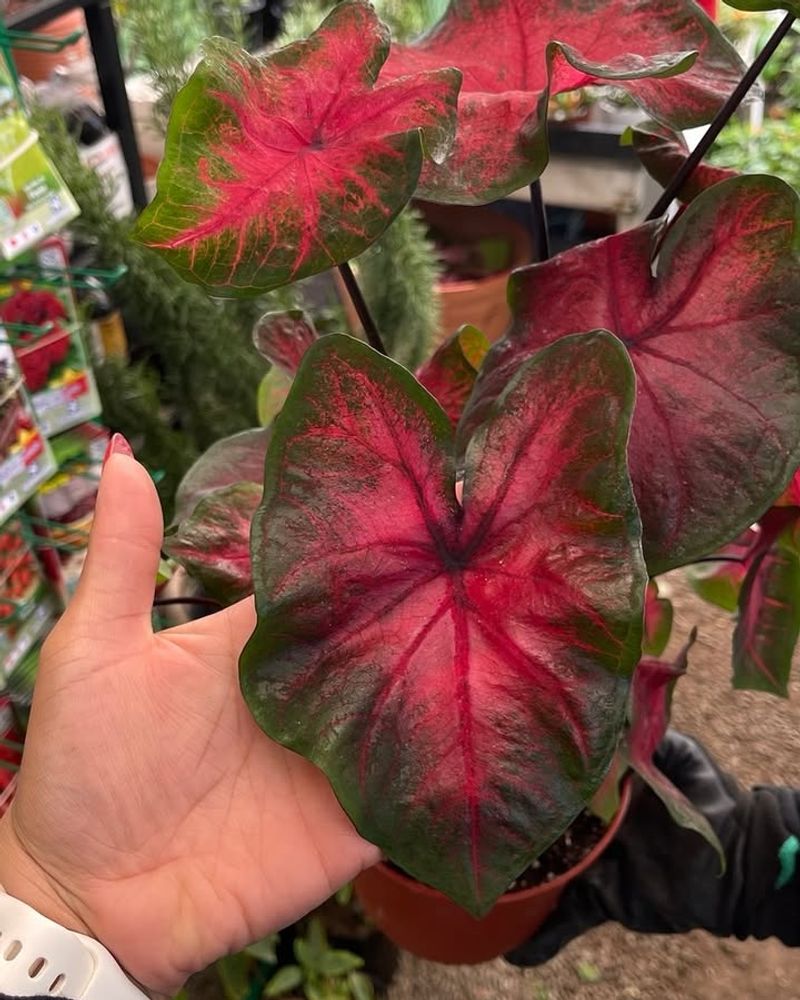
Bold scarlet leaves outlined in lime green create eye-catching contrast that stops visitors in their tracks. Postman Joyner ranks among the most dramatic caladiums available to Georgia gardeners seeking maximum visual punch.
Color combinations this vivid rarely occur in shade-tolerant plants, making this variety particularly valuable for problem areas. The green edges prevent the red from overwhelming smaller spaces while maintaining strong presence in larger beds.
Leaves develop full size within weeks of emerging.
Augusta and Columbus gardeners report excellent performance throughout typical Georgia summers. This cultivar handles temperature fluctuations better than more delicate varieties, maintaining leaf quality through weather changes.
Afternoon thunderstorms actually benefit plants by providing natural irrigation.
Strategic placement near entryways or along walkways showcases Postman Joyner’s theatrical coloring. Groupings of five or seven bulbs create more impact than single specimens scattered randomly.
Repetition of this variety through garden beds establishes visual rhythm that feels professionally designed.
Tubers multiply readily in Georgia conditions, providing divisions for expansion or sharing with neighbors. After foliage naturally declines in fall, carefully dig and store bulbs in peat moss at 50 to 60 degrees.
Proper storage ensures vigorous growth when replanting next spring after danger of frost passes completely across your region.
5. Freida Hemple Adds Deep Pink Highlights To Garden Beds
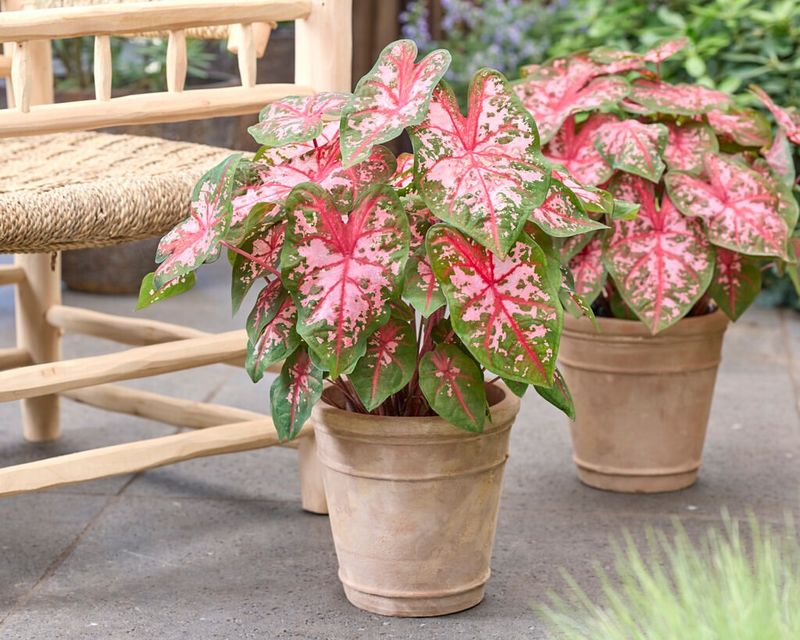
Rich rose-pink centers surrounded by substantial green borders give Freida Hemple a sophisticated appearance that elevates ordinary garden designs. This variety brings refinement without appearing fussy or high-maintenance in Georgia landscapes.
Leaf substance feels notably thicker than many caladium cultivars, helping plants withstand occasional wind gusts and accidental brushes from foot traffic. The sturdy foliage holds up remarkably well in Columbus and Albany gardens where summer conditions test plant durability.
Pink coloring intensifies as leaves mature.
Freida Hemple complements both traditional and contemporary landscape styles effectively. Formal garden rooms gain elegance from these pink accents, while cottage-style borders benefit from their romantic coloring.
Mass plantings create flowing drifts of color that feel naturalistic rather than regimented.
Combining this variety with chartreuse-leafed companions like sweet potato vine creates stunning color harmonies. Purple fountain grass adds vertical interest while echoing the pink tones beautifully.
White-flowering begonias or torenia provide seasonal blooms without competing for attention.
Georgia’s clay soils benefit from amendment before planting caladiums. Work in several inches of compost or aged pine bark to improve drainage and nutrient availability.
Raised beds solve drainage issues in low-lying areas while providing ideal growing conditions. Consistent moisture without waterlogging produces the healthiest, most colorful foliage throughout the entire growing season.
6. Gingerland Features Bold Green With Pink Veins
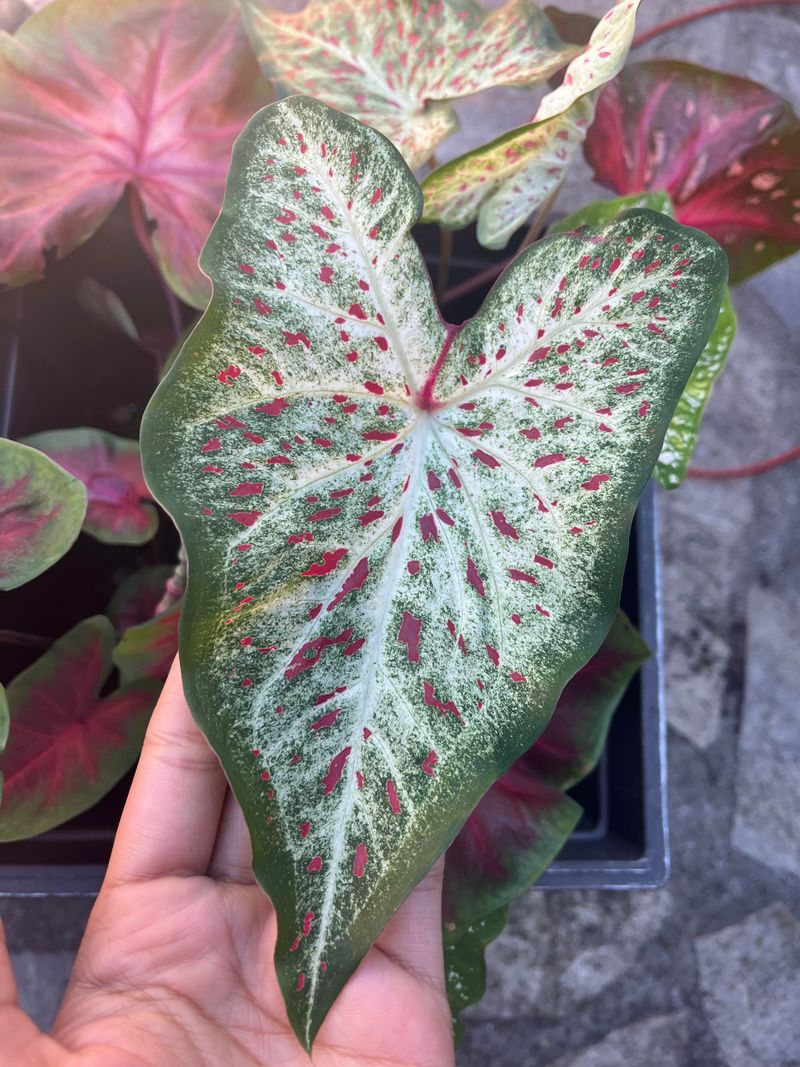
Chartreuse leaves splashed with hot pink freckles and veining create a playful, contemporary look that younger Georgia gardeners particularly appreciate.
Gingerland breaks away from traditional caladium color schemes while maintaining the same easy-care nature.
This variety injects energy into shaded areas that might otherwise feel dark and forgotten. The lime-green background reflects light effectively while pink markings add warmth and visual interest.
Leaves emerge compact then expand to full size within three weeks of sprouting.
Athens and Marietta landscapes benefit from Gingerland’s modern aesthetic, especially in urban gardens with limited space. Container plantings on shaded decks or balconies showcase this variety beautifully.
Group several pots together for layered impact using different container heights.
Color saturation depends partly on soil pH levels. Slightly acidic conditions common in Georgia naturally produce the most vibrant pink veining.
Testing soil before planting allows for amendments if needed, though most Georgia soils fall within acceptable ranges without adjustment.
Gingerland pairs wonderfully with burgundy-leafed plants like Persian shield or dark coleus varieties. The contrast between lime and deep purple creates sophisticated combinations that look professionally designed.
Add white caladiums or light-colored impatiens to brighten the overall composition. Water deeply but infrequently to encourage strong root development rather than shallow, frequent sprinkling that weakens plants over time.
7. White Wing Offers Elegant White And Green Contrast
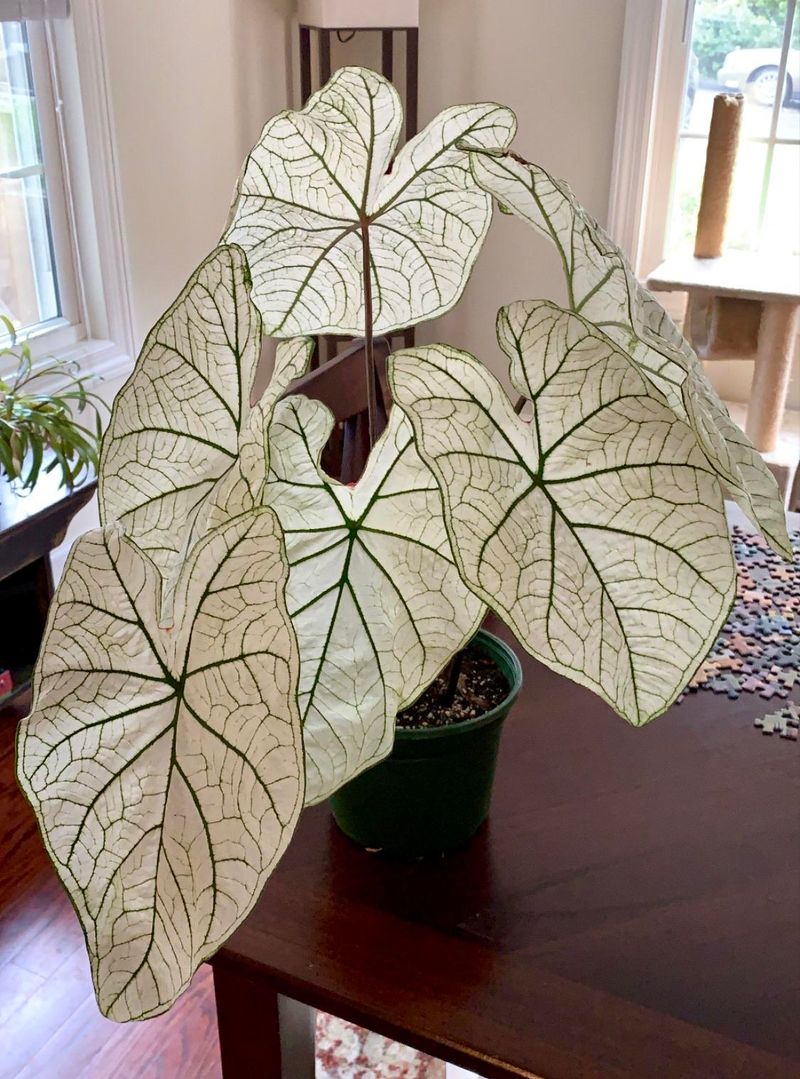
Pristine white leaves edged and veined with forest green deliver classic elegance that never goes out of style in Georgia gardens. White Wing brings timeless beauty to landscapes from Dalton to Brunswick without requiring trendy color schemes.
This variety particularly suits formal garden settings where restraint and sophistication matter more than bold statements. Historic properties, memorial gardens, or refined residential landscapes gain polish from these graceful plants.
The white-and-green palette coordinates effortlessly with any architectural style or existing plantings.
White Wing tolerates deeper shade than many caladium varieties, making it invaluable for challenging spots beneath dense tree canopies. The white coloring actually intensifies in lower light conditions rather than fading.
Georgia gardeners working with mature landscapes appreciate this adaptability.
Leaf edges sometimes develop brown tips if humidity drops too low, though this rarely occurs in Georgia’s naturally moist climate. Maintaining mulch layers and watering during dry spells prevents stress.
Damaged leaves can be removed at the base without harming overall plant health.
Combining White Wing with blue-flowering plants like browallia or lobelia creates cooling color schemes perfect for Georgia summers. Silver-leafed dusty miller or artemisia echo the white tones while adding textural variety.
These combinations work especially well in containers placed on covered porches where afternoon shade protects plants from intense sun exposure during peak summer months.
8. Candidum Brings Classic Large Green Leaves With Subtle Veining
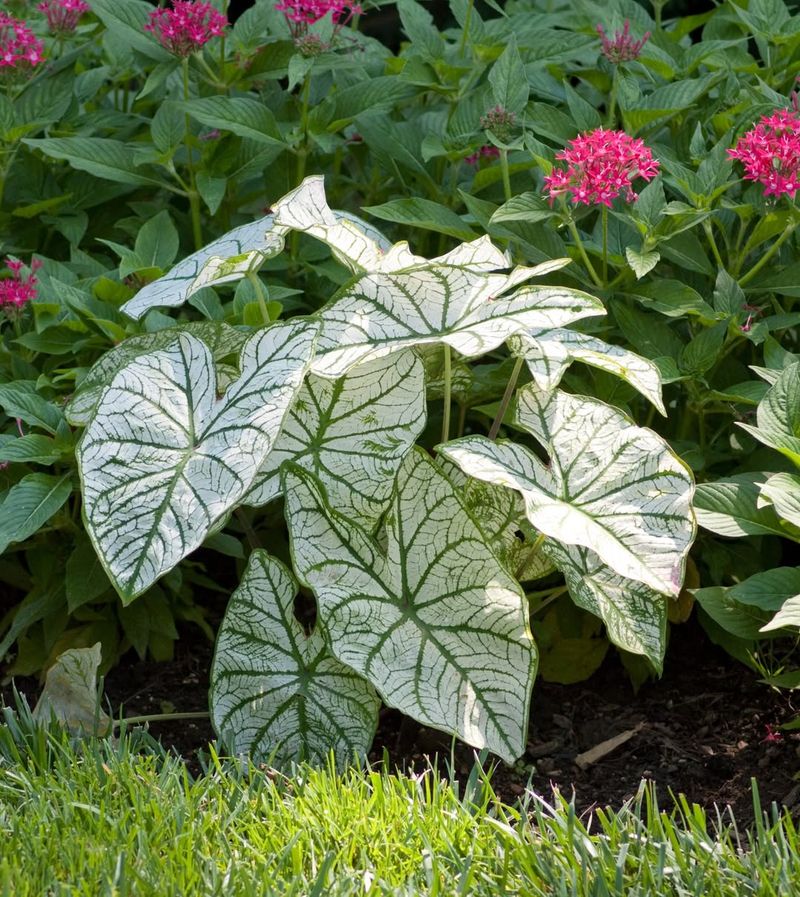
Soft white leaves traced with pale green veining create an heirloom appearance that feels right at home in traditional Georgia gardens. Candidum has been grown across the South for generations, proving its reliability and enduring appeal.
This variety represents old-fashioned garden charm without appearing dated or dull. The subtle coloring works beautifully in period landscapes around Savannah’s historic squares or Athens’ antebellum homes.
Modern gardens gain depth and sophistication from these understated beauties as well.
Candidum grows larger than many fancy-leafed varieties, with mature plants reaching 24 inches tall and equally wide. The substantial size makes bold statements in shaded borders or foundation plantings.
Single specimens serve as focal points, while groupings create impressive masses of luminous foliage.
Leaf production continues steadily throughout Georgia’s long growing season if plants receive adequate nutrition. Side-dress established plants with compost mid-season to sustain growth.
Avoid disturbing roots when applying amendments by keeping materials several inches away from stems.
In South and coastal Georgia, Candidum often returns each year if winters remain mild. In colder parts of the state, tubers should be lifted and stored for reliable performance.
Mark planting locations in fall before foliage disappears so you won’t accidentally dig into dormant tubers during spring cleanup.
Candidum’s adaptability and low-maintenance nature make it ideal for gardeners wanting beautiful results without constant attention to detail or complicated care requirements throughout the growing months.
9. Miss Muffet Combines Red And White For Maximum Drama
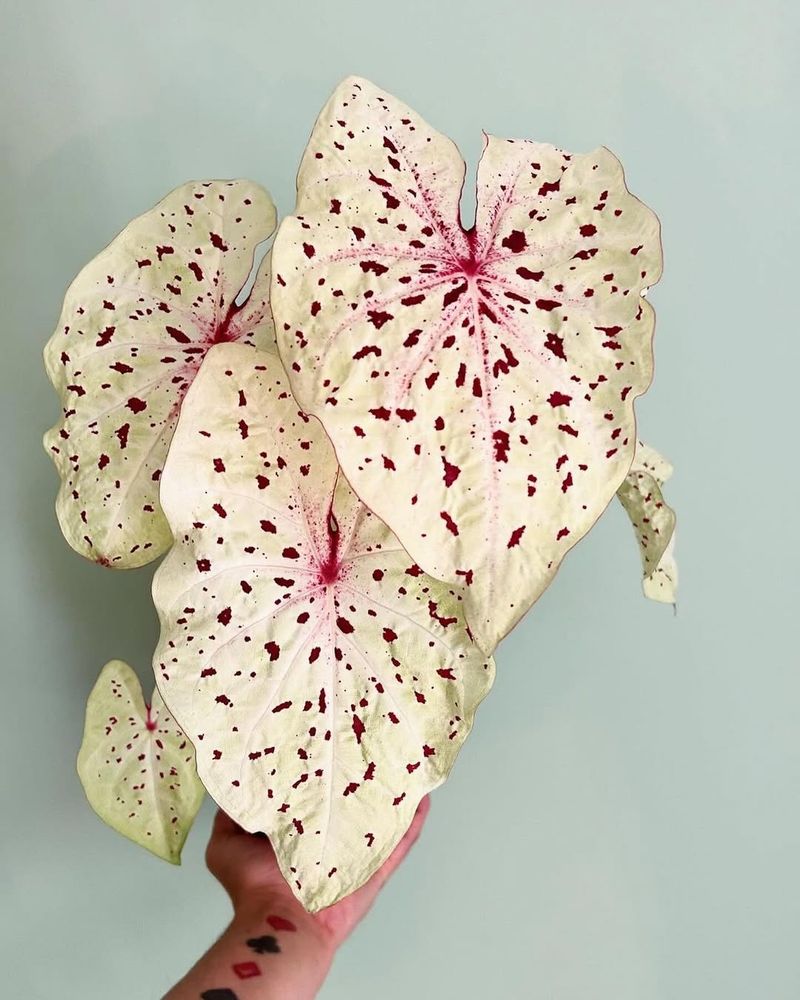
White leaves liberally freckled with burgundy spots and pink veining create a whimsical, almost polka-dotted effect that delights Georgia gardeners seeking something truly different.
Miss Muffet brings personality and playfulness to shaded areas that need visual excitement.
This compact variety stays smaller than many caladiums, making it perfect for front-of-border positions or container gardens. Plants typically reach 12 to 15 inches tall with proportionate spread.
The manageable size suits small urban gardens throughout Atlanta, Roswell, or Decatur where space comes at a premium.
Color intensity varies somewhat with growing conditions, adding natural variation that prevents monotony. Some leaves display heavy spotting while others show more white, creating organic diversity within plantings.
This natural variation actually enhances rather than detracts from overall appearance.
Miss Muffet works wonderfully in mixed containers combined with trailing plants like ivy or vinca vine. The caladium provides upright form and bold color while companions soften edges and add movement.
Choose container colors that complement rather than compete with the red-and-white foliage.
Georgia gardeners can extend the display season by starting tubers indoors under grow lights in March. Transplant to outdoor locations after nighttime temperatures consistently stay above 60 degrees.
This head start produces larger plants earlier in the season, maximizing enjoyment during prime outdoor living months when families spend more time appreciating their landscapes.