8 Water-Saving Groundcovers Arizona Homeowners Are Choosing Instead Of Grass
Grass struggles in Arizona for a reason. Keeping a traditional lawn alive under intense sun and strict watering schedules often means high bills, constant maintenance, and patches that never fully recover from heat.
That reality has pushed many homeowners to look for smarter alternatives that still provide coverage and visual appeal.
Water-saving groundcovers offer a practical shift without sacrificing structure or beauty. These plants spread efficiently, tolerate desert conditions, and reduce irrigation needs far more than thirsty turf ever could.
Many also handle reflected heat from gravel and hardscape better than lawn grass.
Arizona homeowners are increasingly replacing traditional lawns with resilient groundcovers that conserve water while maintaining curb appeal.
The result is a landscape that stays cohesive, manageable, and far more aligned with the realities of desert living.
1. Gray Ice Plant Spreads Fast And Handles Intense Desert Sun
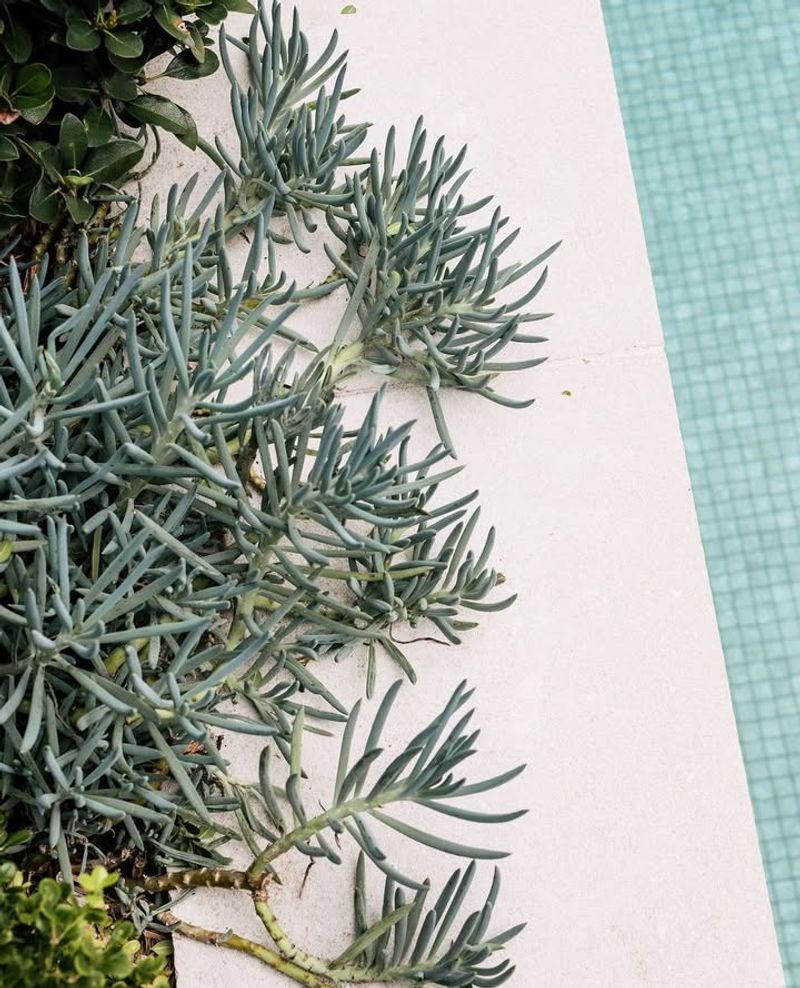
Water bills drop dramatically when gray ice plant replaces thirsty grass across Arizona yards. This succulent groundcover stores moisture in its thick, finger-shaped leaves, which means it survives weeks between waterings once established.
Phoenix and Tucson homeowners watch it spread 2 to 3 feet wide from a single plant, filling in bare spots faster than most alternatives.
Full sun doesn’t faze this tough plant. While grass browns and crisps under Arizona’s intense summer rays, gray ice plant actually thrives in the heat.
Its silvery-gray foliage reflects sunlight, keeping roots cooler and reducing water needs even further. Purple or yellow daisy-like flowers appear in spring, adding unexpected color to otherwise neutral landscapes.
Slopes and banks benefit most from this groundcover’s spreading habit. Roots grip soil firmly, preventing erosion during monsoon rains that wash away loose dirt.
Foot traffic tolerance stays moderate, so save it for areas where people look but don’t walk frequently.
Establishment takes just one growing season with weekly deep watering. After that, monthly irrigation keeps plants healthy through summer.
Trimming back leggy growth in fall maintains density and encourages fresh spring growth.
Arizona’s alkaline soil poses no problems, and pests rarely bother these resilient succulents, making maintenance almost effortless for busy homeowners seeking grass alternatives.
2. Trailing Lantana Covers Bare Soil With Long-Lasting Color
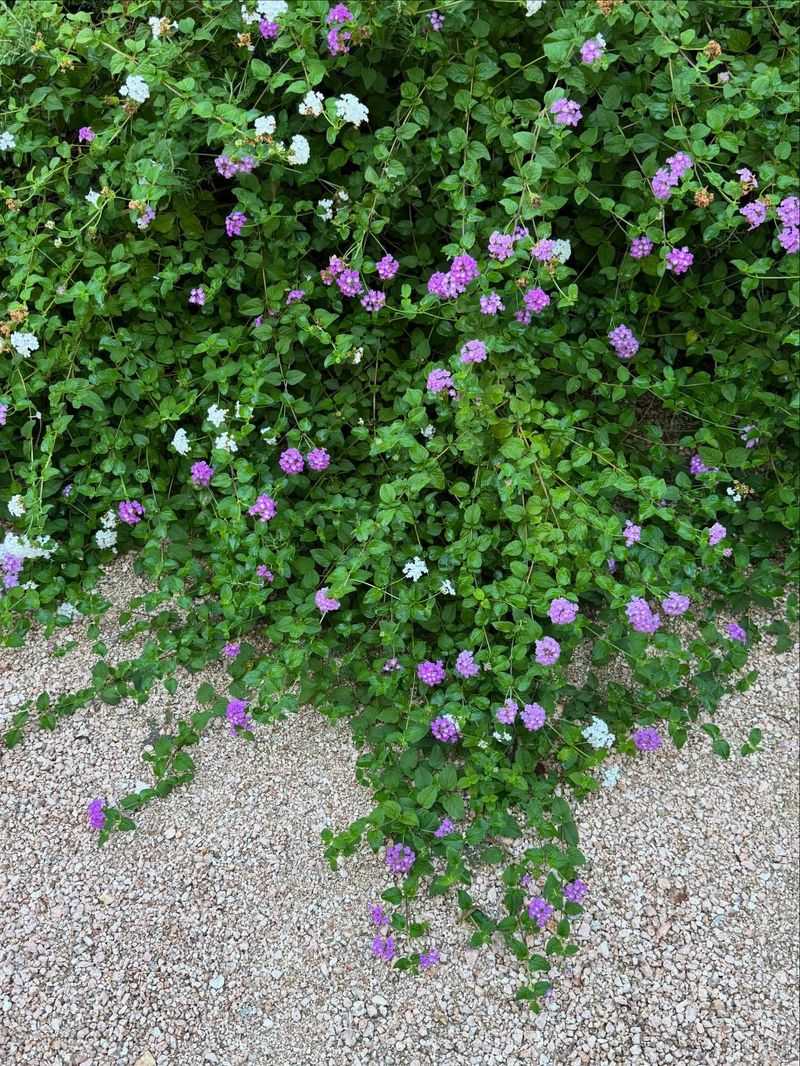
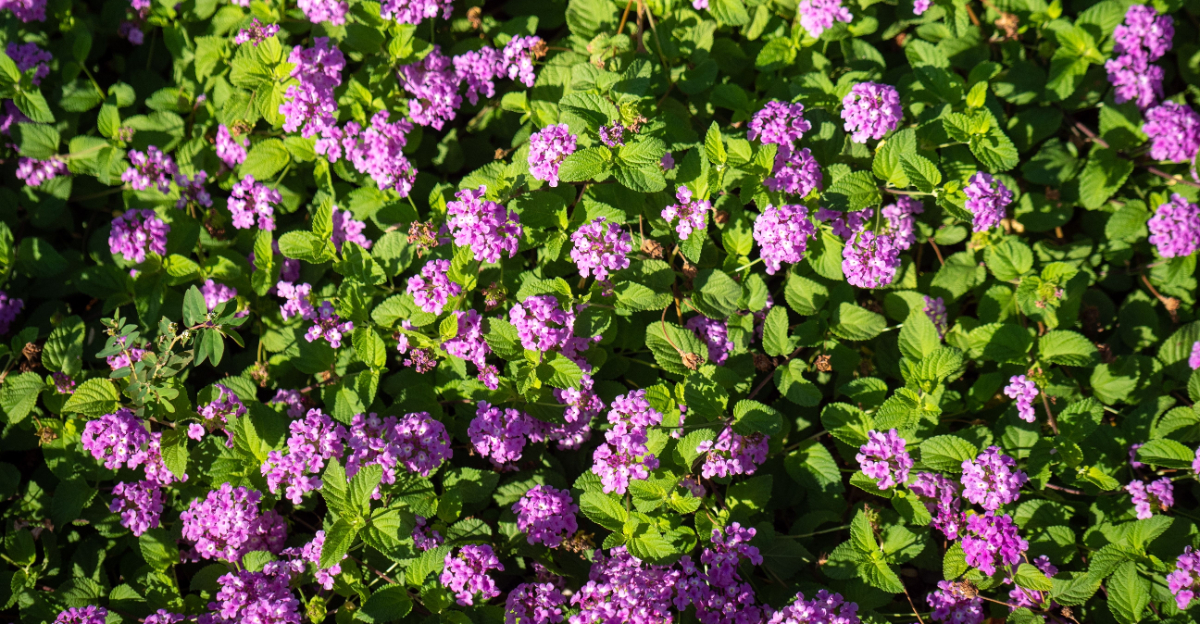
Bright flower clusters bloom nonstop from spring through fall on trailing lantana, giving Arizona landscapes constant color that grass never provides.
Each plant spreads 6 to 8 feet wide, creating a dense blanket that chokes out weeds and eliminates the need for mulch.
Butterflies and hummingbirds visit daily, turning ordinary yards into wildlife habitats.
Heat doesn’t slow this groundcover down. Temperatures above 100 degrees actually boost blooming, making it perfect for Arizona’s brutal summer months.
Orange, yellow, pink, and purple varieties let homeowners customize color schemes to match house exteriors or coordinate with existing plantings.
Flowers appear in rounded clusters that stand above dark green foliage, creating a layered look grass cannot achieve.
Watering requirements stay minimal once roots establish. Deep soaking every two weeks through summer keeps plants blooming strong, using far less water than any grass lawn.
Freezing temperatures in northern Arizona may damage foliage, but plants bounce back quickly when spring warmth returns.
Your Arizona Garden Changes Every Week. Your Plan Should Too.
Gardening in Arizona changes quickly throughout the season. Every Friday you’ll receive a simple weekly plan showing exactly what to plant, prune, fertilize, harvest, and protect so you never miss the right timing.
Pruning in late winter maintains compact growth and prevents woody stems from developing. Shearing plants back by one-third encourages fresh branching and heavier flowering.
Deer usually avoid lantana due to its slightly rough leaves, which means landscapes in rural areas stay intact without fencing or repellents.
3. Myoporum Forms A Dense Carpet Across Large Areas
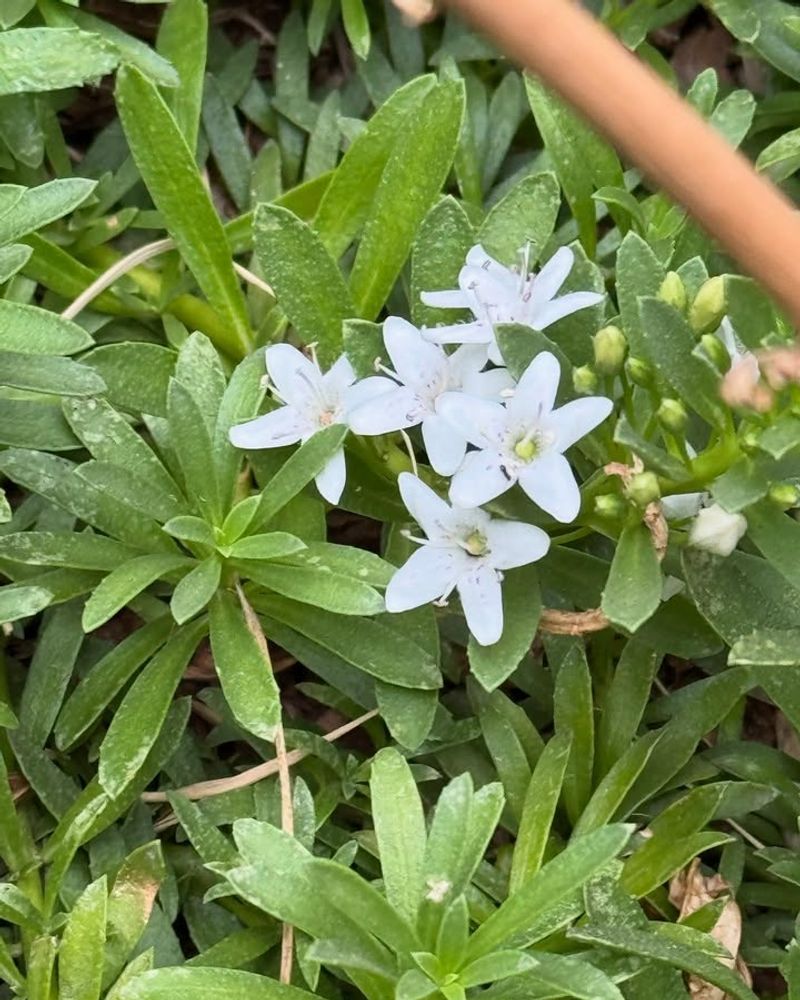
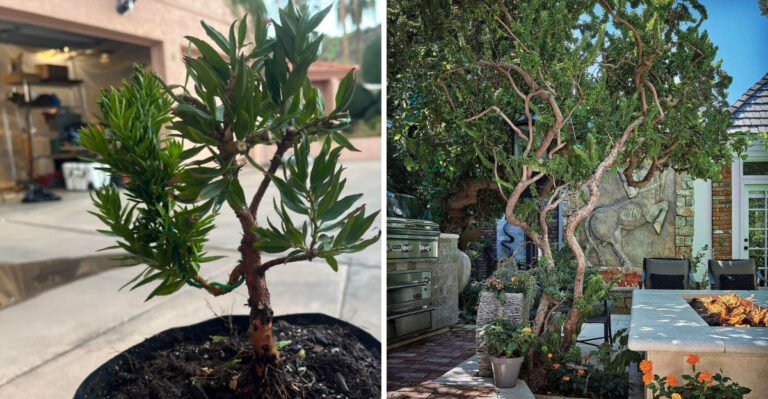
Large yards transform quickly when myoporum takes root. This fast-growing groundcover spreads up to 10 feet from a single plant, making it ideal for Arizona homeowners tackling extensive lawn removal projects.
Thick branches layer over each other, creating a solid mat that blocks sunlight and prevents weed growth completely.
Glossy green leaves stay attractive year-round without the seasonal browning grass experiences. Small white flowers appear in spring, though most people choose myoporum for its reliable foliage rather than blooms.
The plant tolerates Arizona’s caliche-heavy soil better than many alternatives, pushing roots through compacted layers that stop other groundcovers cold.
Once established, myoporum needs infrequent deep watering, though excellent drainage is essential in Arizona soils to prevent root problems.
During establishment, weekly irrigation helps roots spread quickly, but overwatering causes more problems than underwatering with this drought-adapted species.
Reflected heat from walls and pavement doesn’t stress myoporum, making it perfect for tight spaces between driveways and fences where grass struggles.
Height stays under 6 inches with occasional trimming. Some homeowners run lawn mowers over myoporum plantings once or twice yearly to maintain a neater appearance, though this isn’t necessary for plant health.
Freezing temperatures may damage exposed branches in northern Arizona, but established plants typically recover without intervention.
Pest problems remain rare, and the dense growth habit means bare spots almost never develop once coverage completes.
Slopes and berms benefit especially from its spreading habit, as the dense root system helps reduce soil erosion during heavy summer rains.
With minimal maintenance and dependable coverage, myoporum becomes a practical solution for large Arizona landscapes where traditional turf simply isn’t realistic.
4. Trailing Rosemary Adds Fragrance While Saving Water
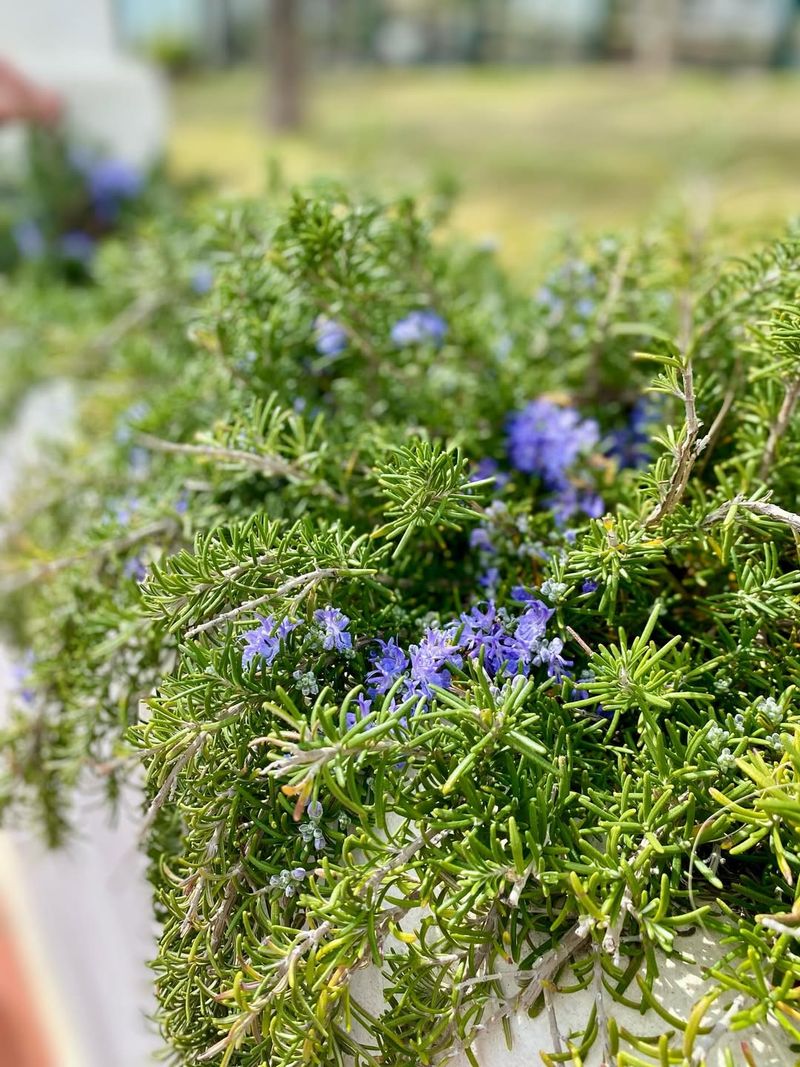
Stepping onto a pathway lined with trailing rosemary releases an instant burst of herbal fragrance that transforms Arizona landscapes into sensory experiences.
This Mediterranean native thrives in desert conditions, spreading 4 to 8 feet wide while staying under 2 feet tall.
Needle-like leaves contain aromatic oils that intensify in hot weather, perfuming entire yards during summer months.
Cooking herbs grow right in your landscape when you plant trailing rosemary. Snipping fresh sprigs for kitchen use actually improves plant shape and encourages bushier growth.
Blue-purple flowers appear in late winter and early spring, attracting bees when few other plants bloom in Arizona gardens.
Watering once every two weeks keeps established plants healthy through the hottest months. New plantings need weekly irrigation for the first season, but mature rosemary tolerates extended dry periods without wilting or losing color.
Rocky, well-drained soil suits this groundcover perfectly, which means it excels in areas where grass would require expensive soil amendments.
Slopes and banks stabilize quickly under trailing rosemary’s spreading branches. Roots grip firmly, preventing erosion while eliminating the need for dangerous slope mowing.
Deer and rabbits typically avoid rosemary due to its strong scent, protecting landscapes in rural Arizona areas. Pruning after flowering maintains compact growth, and the clippings dry beautifully for indoor use or gifting to neighbors.
5. Creeping Germander Stays Low And Neat In Hot Climates
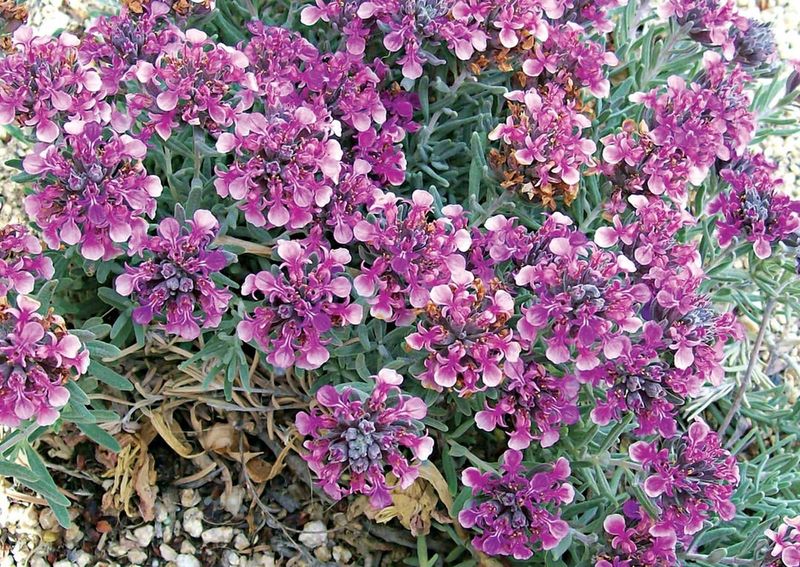
Formal landscapes find their perfect groundcover in creeping germander. This low-growing plant maintains a tidy 6-inch height without constant trimming, creating clean lines that grass lawns promise but rarely deliver in Arizona heat.
Small, glossy leaves form a dense carpet that looks intentionally manicured even when left alone for weeks.
Purple flower spikes emerge in summer, standing just above the foliage and attracting native bees. Unlike sprawling groundcovers that invade neighboring beds, creeping germander respects boundaries and stays where planted.
Its controlled growth habit makes it ideal for small courtyards, narrow side yards, and spaces between pavers where aggressive spreaders would cause problems.
Irrigation needs stay moderate compared to grass but higher than some desert-adapted alternatives.
Weekly watering through summer keeps foliage looking fresh, though established plants tolerate occasional missed waterings without significant damage.
Afternoon shade in low desert areas of Arizona helps prevent leaf scorch during peak summer months, though plants handle full sun in higher elevations.
Shearing plants lightly in early spring maintains uniformity across large plantings. Individual plants blend together within two growing seasons, creating a seamless groundcover that resembles a traditional lawn from a distance.
Foot traffic tolerance remains low, so reserve germander for visual areas rather than pathways.
Freezing temperatures may damage foliage in northern Arizona, but plants typically recover with spring warmth and resume their neat, compact growth pattern.
6. Frogfruit Creates A Lawn-Like Mat With Less Irrigation
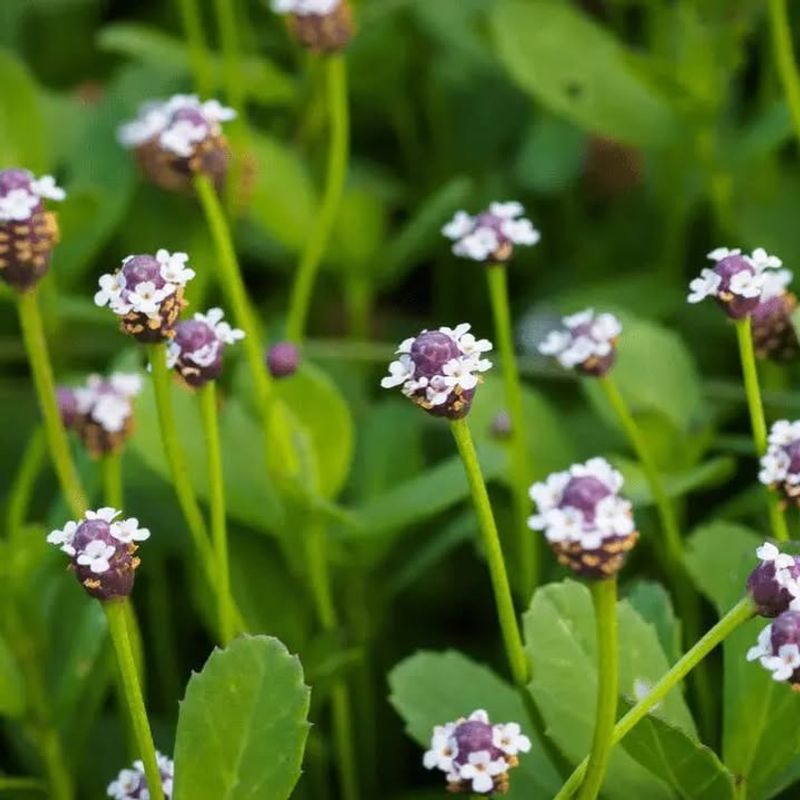
Kids and pets enjoy frogfruit’s soft, cushiony texture underfoot. This native groundcover mimics the feel of grass while using significantly less water once established.
Small, rounded leaves grow densely enough to create a uniform green surface that handles moderate foot traffic without wearing bare spots.
Tiny white flowers appear year-round in warm areas, attracting butterflies and beneficial insects that improve overall garden health. Unlike grass that requires weekly mowing, frogfruit stays naturally low at 2 to 3 inches tall.
Occasional trimming with a mower set on high keeps edges neat, but many homeowners skip this step entirely and let the plant maintain its own height.
Watering twice weekly through summer keeps frogfruit lush and green. This is significantly less than grass demands but more than some other groundcovers on this list.
The tradeoff comes in the lawn-like appearance and usability that makes outdoor spaces functional for families. Plants spread by runners, filling in gaps quickly and recovering from worn spots faster than grass.
Monsoon rains green up frogfruit dramatically, reducing irrigation needs during Arizona’s wettest season. Winter dormancy turns foliage bronze in northern parts of the state, but plants bounce back with spring warmth.
Fertilizing remains unnecessary, and pest problems are virtually nonexistent. Frogfruit works especially well in areas where complete lawn removal feels too drastic but water conservation remains a priority.
Planting plugs 12 to 18 inches apart speeds up full coverage without leaving gaps for weeds to sneak in. Well-drained soil improves performance, especially in areas that receive heavy irrigation runoff from nearby beds.
Once established, frogfruit creates a relaxed, meadow-like look that feels inviting without demanding constant upkeep.
7. Silver Ponyfoot Softens Landscapes With Heat-Tolerant Foliage
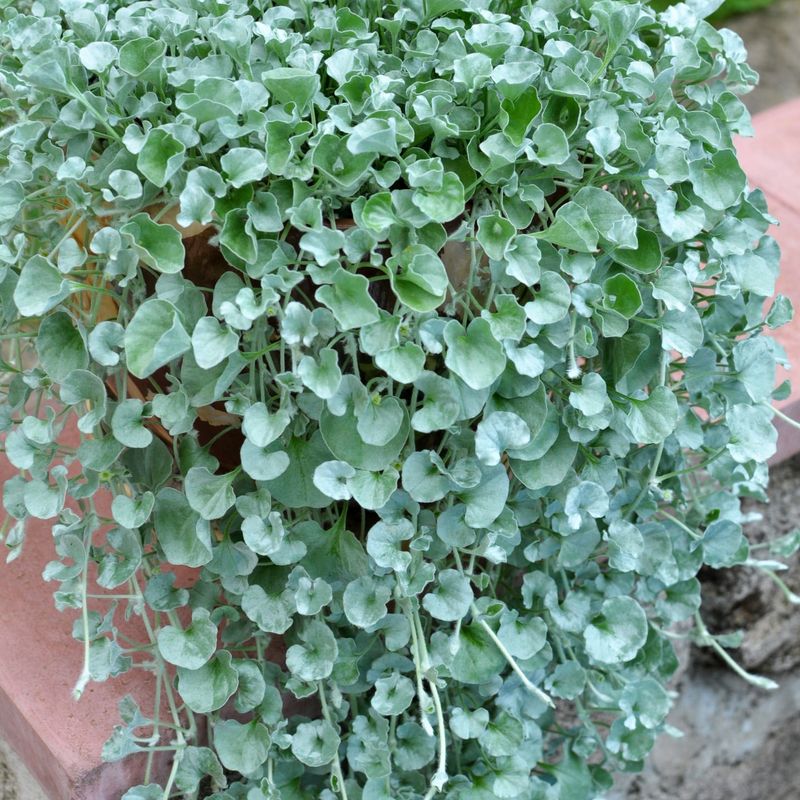
Silvery-gray foliage glows almost luminously in Arizona’s bright sunlight. Silver ponyfoot brings a cooling visual effect to landscapes, contrasting beautifully with darker plants and warm-toned hardscaping.
Round leaves grow on trailing stems that spread 2 to 3 feet wide, creating a soft, flowing groundcover that works especially well cascading over walls or spilling between stepping stones.
Reflected heat from pavement and walls doesn’t stress this tough plant. Silver ponyfoot thrives in the hottest spots of Arizona yards where grass turns brown and other plants struggle.
The light-colored foliage actually reflects sunlight, keeping soil temperatures lower and reducing overall water needs. Small yellow flowers appear sporadically through warm months, though the foliage remains the main attraction.
Established plants can survive on minimal supplemental water in some Arizona areas, though occasional deep irrigation keeps foliage looking its best. New plantings need weekly watering for the first season to develop deep root systems.
Well-drained soil is essential, as standing water causes root problems quickly.
Trimming back leggy growth in fall maintains compact form and encourages fresh spring growth. Silver ponyfoot tolerates light foot traffic, making it suitable for pathways that see occasional use.
Deer typically ignore this groundcover, and pests rarely cause problems. The silvery color coordinates beautifully with native stone, creating cohesive desert-style landscapes that feel intentional rather than neglected.
8. Prostrate Acacia Covers Slopes With Very Little Water
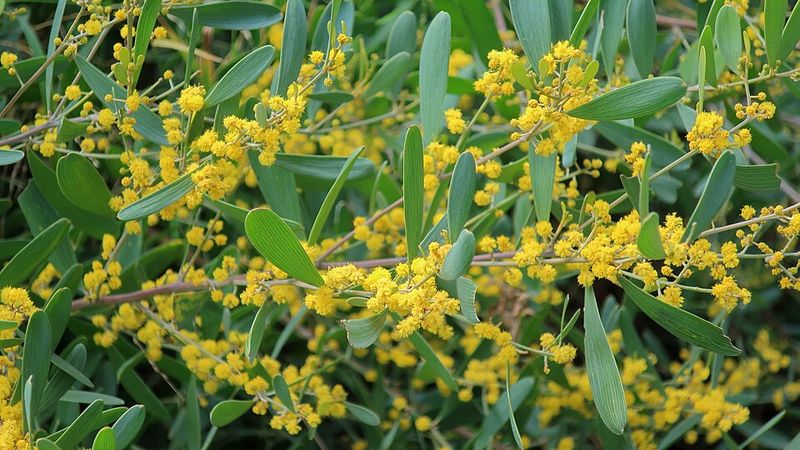
Steep slopes become manageable landscapes when prostrate acacia takes hold.
This extremely drought-tolerant groundcover spreads up to 15 feet wide while staying under 3 feet tall, making it ideal for banks and hillsides where grass mowing is dangerous or impossible.
Fine, feathery foliage creates a soft texture that contrasts with Arizona’s rocky terrain, and the plant’s extensive root system grips soil firmly to prevent erosion during monsoon storms.
Yellow puffball flowers appear in spring, covering plants in bright color that’s visible from a distance. Bees and other pollinators visit heavily during bloom time, supporting local ecosystems.
After establishment, prostrate acacia survives on natural rainfall in many Arizona areas, though monthly deep watering during extended droughts keeps foliage looking fresh.
Fast growth means slopes fill in within two seasons. Plants spread by layering branches that root where they touch soil, creating a self-propagating groundcover that requires minimal intervention.
The low-maintenance nature appeals to homeowners with large properties or difficult-to-access areas where regular care is impractical.
Trimming back overgrown branches keeps plants within bounds, though many people appreciate the wild, natural look of unpruned prostrate acacia. Freezing temperatures may damage foliage in northern Arizona, but established plants typically recover.
This drought-adapted groundcover attracts wildlife, provides year-round interest, and solves erosion problems that grass never could, making it a practical and beautiful choice for challenging Arizona landscapes.