If You Garden In California, These Water-Wise Plants Are A Must
Step into a California garden and you quickly notice one thing: the most beautiful spaces rarely rely on heavy watering. Smart plant choices make all the difference, especially in a climate shaped by sunshine, dry air, and unpredictable rain.
Water wise plants bring life and movement to the landscape with silvery leaves, aromatic foliage, and bursts of color that hold strong through heat waves. Many are surprisingly low effort, settling in with minimal care and staying attractive long after thirstier plants fade.
They also pair beautifully with gravel paths, natural stone, and relaxed outdoor living spaces that define the California style.
Choosing these resilient growers is not just practical, it is a creative opportunity to design a garden that feels fresh, modern, and perfectly in tune with its surroundings.
A well planned, low water landscape can look vibrant, textured, and full of personality every single day.
1. Lavender (Lavandula)
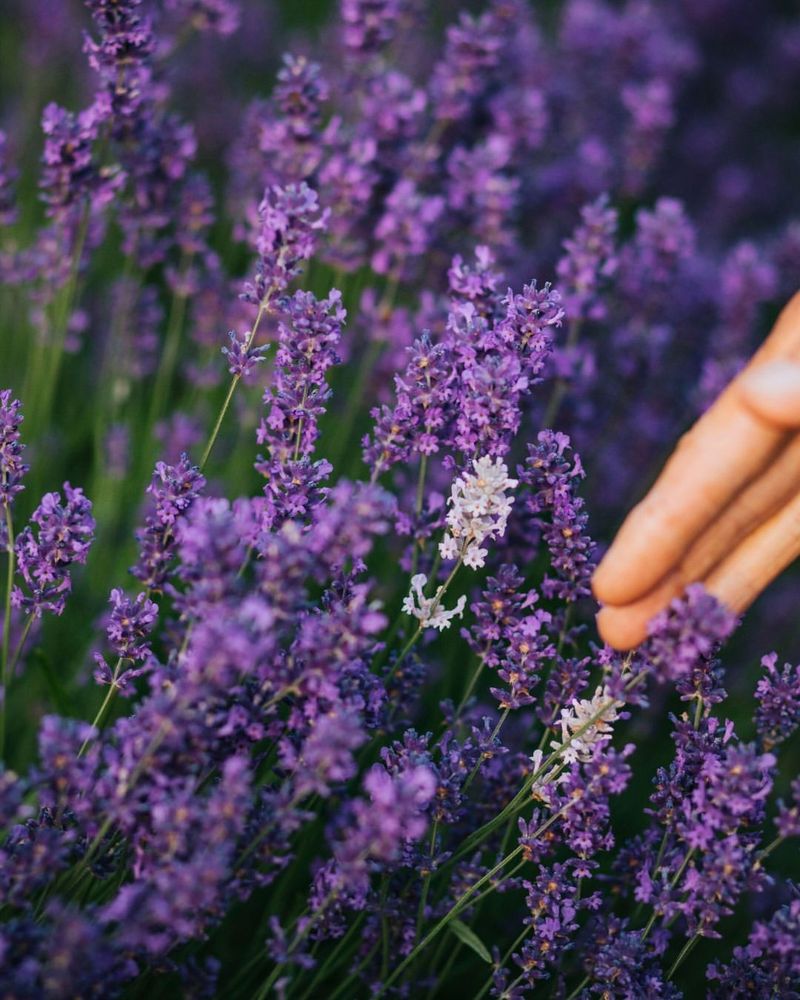
Walk past a lavender plant on a warm afternoon and you will instantly understand why so many California gardeners are obsessed with it. The scent alone is worth planting it.
Lavender is one of those rare plants that manages to be both beautiful and incredibly practical, working well in borders, containers, and herb gardens alike.
Lavender loves heat, sunshine, and well-drained soil. It is native to the Mediterranean, which means it is perfectly suited to California’s warm, dry climate.
Once established, it needs very little water and can handle long dry spells with ease. It is a smart choice for anyone trying to cut back on irrigation without sacrificing a gorgeous yard.
Beyond looking and smelling wonderful, lavender attracts bees and butterflies, which helps pollinate the rest of your garden. You can also harvest the stems to make sachets, dried arrangements, or even add them to cooking.
English Lavender and Spanish Lavender are both popular varieties that perform well throughout California. Trim it back after blooming to keep the plant tidy and encourage fresh growth.
It is simple, stunning, and built to last through California’s toughest dry spells.
2. Agave
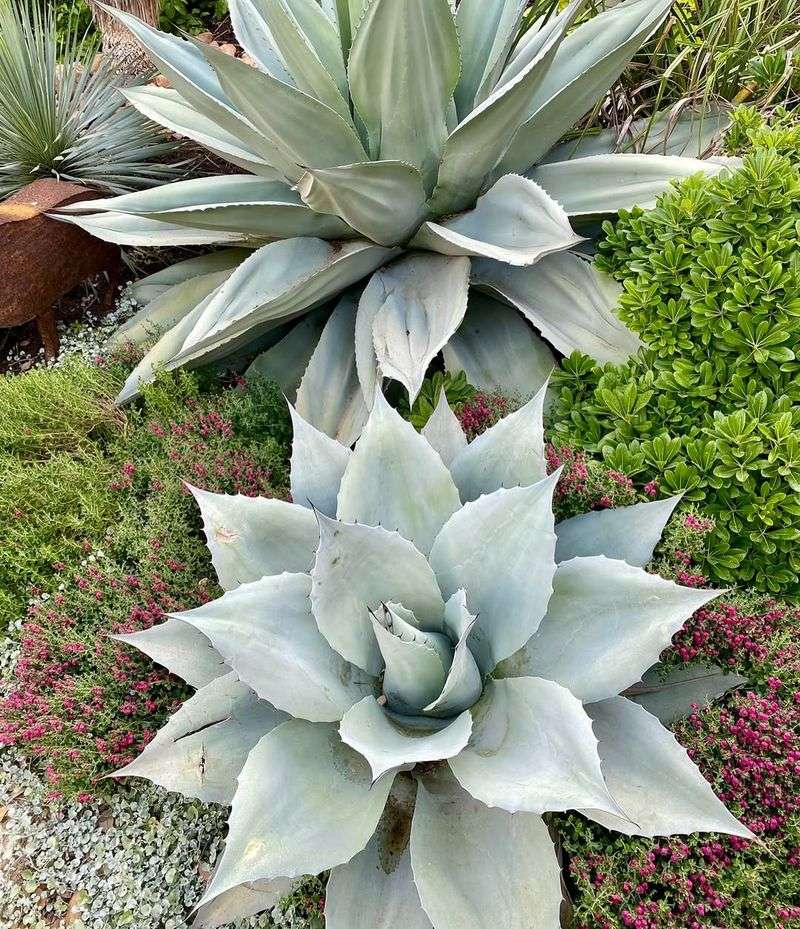
Bold, architectural, and nearly indestructible, Agave is the kind of plant that makes a statement without saying a word. Its thick, pointed leaves fan out in dramatic rosette shapes that look striking in any landscape.
Whether you are designing a modern garden or a desert-inspired backyard, Agave fits right in.
Native to arid regions of the Americas, Agave is built to handle drought. It stores water in its fleshy leaves, which means it can go weeks or even months without rainfall and still look great.
In California, where water restrictions are common, that kind of toughness is priceless. It thrives in sandy or rocky soil with excellent drainage and full sun exposure.
Agave comes in many sizes, from small tabletop varieties to giant plants that can reach several feet across. Some varieties produce a tall flower spike after many years of growth, which is a spectacular sight to see.
Keep in mind that the leaf tips can be sharp, so plant it away from walkways and play areas. Pair it with ornamental grasses or succulents for a low-maintenance, water-wise garden that looks like it belongs in a design magazine.
Your California Garden Changes Every Week. Your Plan Should Too.
Gardening in California changes quickly throughout the season. Every Friday you’ll receive a simple weekly plan showing exactly what to plant, prune, fertilize, harvest, and protect so you never miss the right timing.
3. Yarrow (Achillea Millefolium)
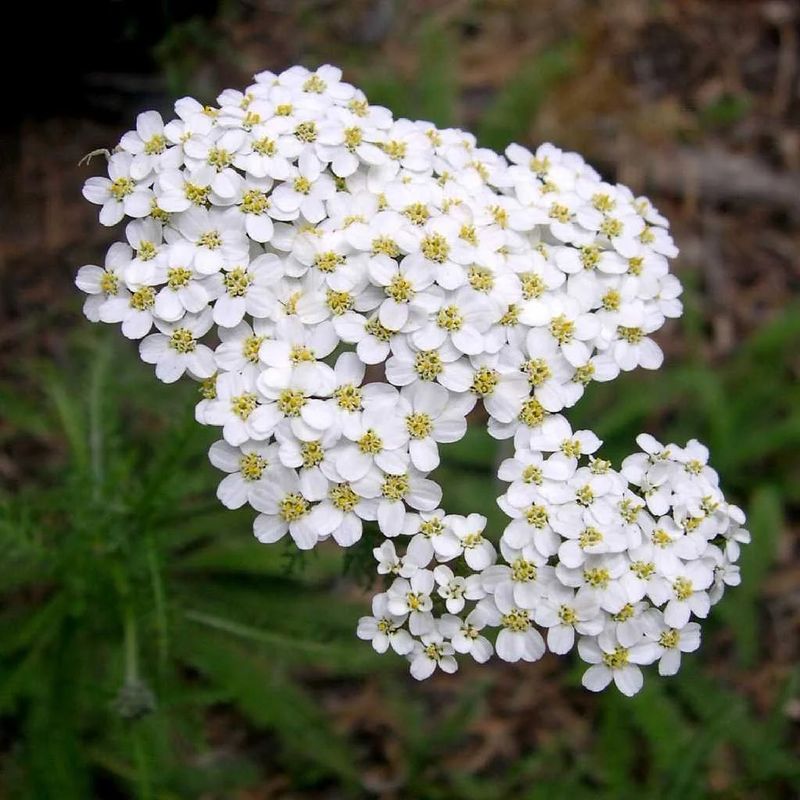
This well-known flower has been growing wild across California for thousands of years, and there is a reason it has stuck around so long. This tough little perennial knows how to survive with minimal water, poor soil, and intense summer heat.
It is practically designed for the California climate, and it brings a soft, cottage-garden feel wherever it grows.
The flat-topped flower clusters come in shades of white, yellow, pink, and red, depending on the variety. Native white Yarrow is especially well-suited to California conditions and supports a wide range of native pollinators.
It spreads gently over time, filling in bare spots and creating a lovely, meadow-like look without needing much from you.
Yarrow is also a fantastic companion plant. It attracts beneficial insects that help keep pest populations under control naturally, which means less work and fewer chemicals in your garden.
It grows well in full sun and thrives in dry, rocky, or sandy soils where other plants struggle. Cut the flowers for fresh or dried arrangements inside your home.
With its long history, easy care, and cheerful blooms, Yarrow is one of the most rewarding water-wise plants any California gardener can add to their landscape.
4. Aloe
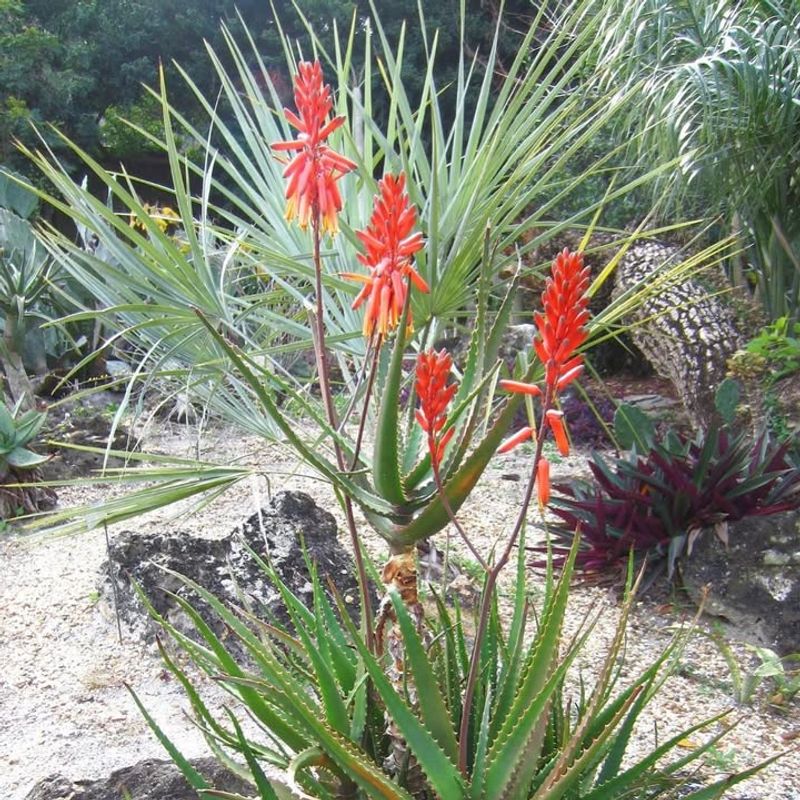
This is one of those plants that almost everyone recognizes, but not everyone realizes how well it thrives outdoors in California. Most people know it from little pots on kitchen windowsills, but in the right climate, Aloe grows into a stunning garden plant with tall, fiery flower spikes that hummingbirds absolutely love.
California’s warm, dry conditions are practically tailor-made for Aloe. It needs very little water once it is established, making it a top pick for anyone looking to reduce their irrigation use.
Plant it in well-drained soil with plenty of sun, and it will reward you with rich green foliage and seasonal blooms that add serious color to the yard.
There are hundreds of Aloe species to choose from. Aloe vera is the most familiar, but Aloe arborescens and Aloe ferox are also popular choices for California gardens because of their impressive size and vivid orange or red flowers.
The gel inside the leaves has long been used to soothe minor skin irritations, making it both a garden beauty and a handy household plant. Easy to grow, hard to ignore, and incredibly water-efficient, Aloe earns its place in any California garden.
5. Salvia (Especially Native Sages)
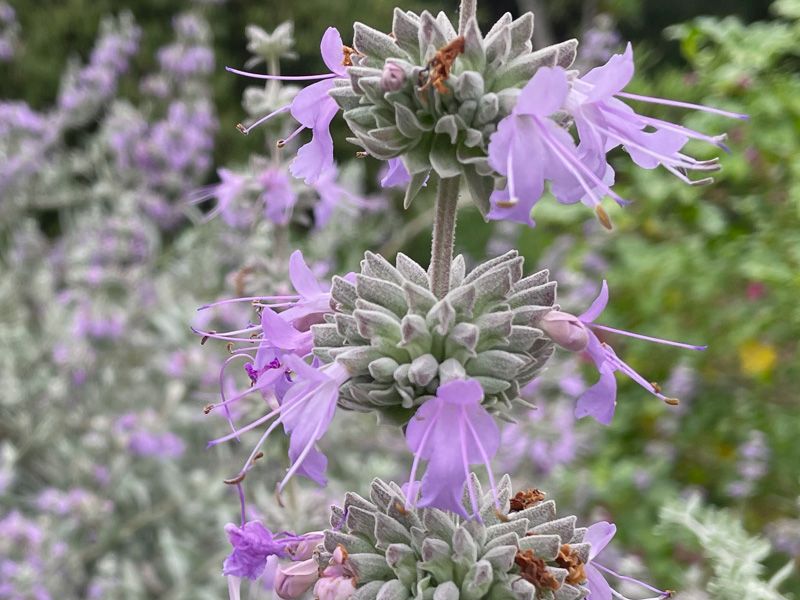
If there is one plant that California native plant enthusiasts rave about more than any other, it just might be Salvia. Native sages are among the most versatile, wildlife-friendly, and drought-tolerant plants you can grow across the state.
And they come in an incredible range of colors, shapes, and sizes.
Black Sage, White Sage, Cleveland Sage, and Hummingbird Sage are just a few of the native varieties that perform beautifully in California gardens. They are adapted to the state’s climate, which means they know exactly how to handle long, dry summers.
Most need little to no supplemental watering once they are settled into the ground. Their aromatic leaves also deter deer, which is a bonus for gardeners in foothill and mountain communities.
Salvia flowers are a magnet for hummingbirds, bees, and butterflies, making them one of the best plants you can add for supporting local wildlife. They bloom in shades of blue, purple, red, and white, and many varieties bloom for months at a time.
Trim them lightly after flowering to keep the plant looking tidy. Whether you have a small urban yard or a large suburban garden, native Salvia will thrive and impress.
6. California Lilac (Ceanothus)
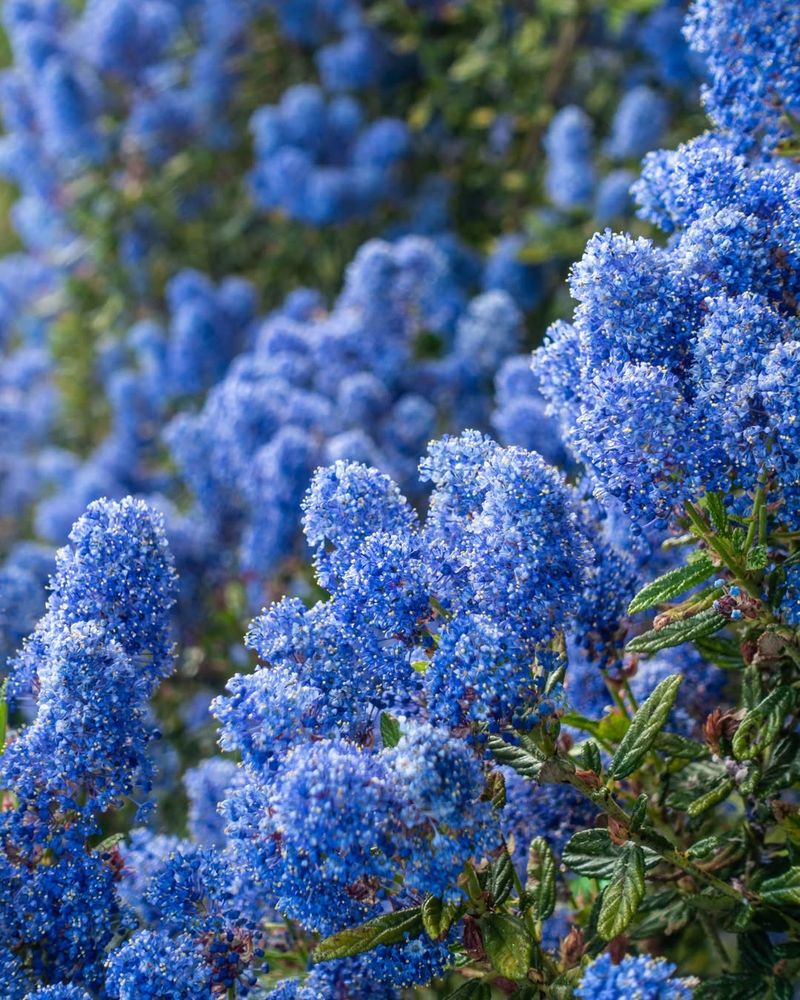
Few plants stop people in their tracks quite like a Ceanothus in full bloom. Known as California Lilac, this native shrub bursts into clusters of deep blue, lavender, or white flowers every spring, turning any yard into a showstopper.
It is one of the most beloved native plants across California, and for good reason.
Ceanothus thrives in well-drained soil and loves full sun. Once it is established, it barely needs any extra watering.
That makes it perfect for California gardens where water conservation is a priority. It can grow anywhere from a low ground cover to a tall, spreading shrub depending on the variety you choose.
Beyond its beauty, Ceanothus is a powerhouse for local wildlife. Bees, butterflies, and birds absolutely love it.
Planting it near a patio or walkway means you will enjoy both the color and the buzz of pollinators all season. It is tough, fast-growing, and built for California’s dry summers.
If you want a plant that gives a lot without asking for much, this one belongs in your garden.
7. Manzanita (Arctostaphylos)
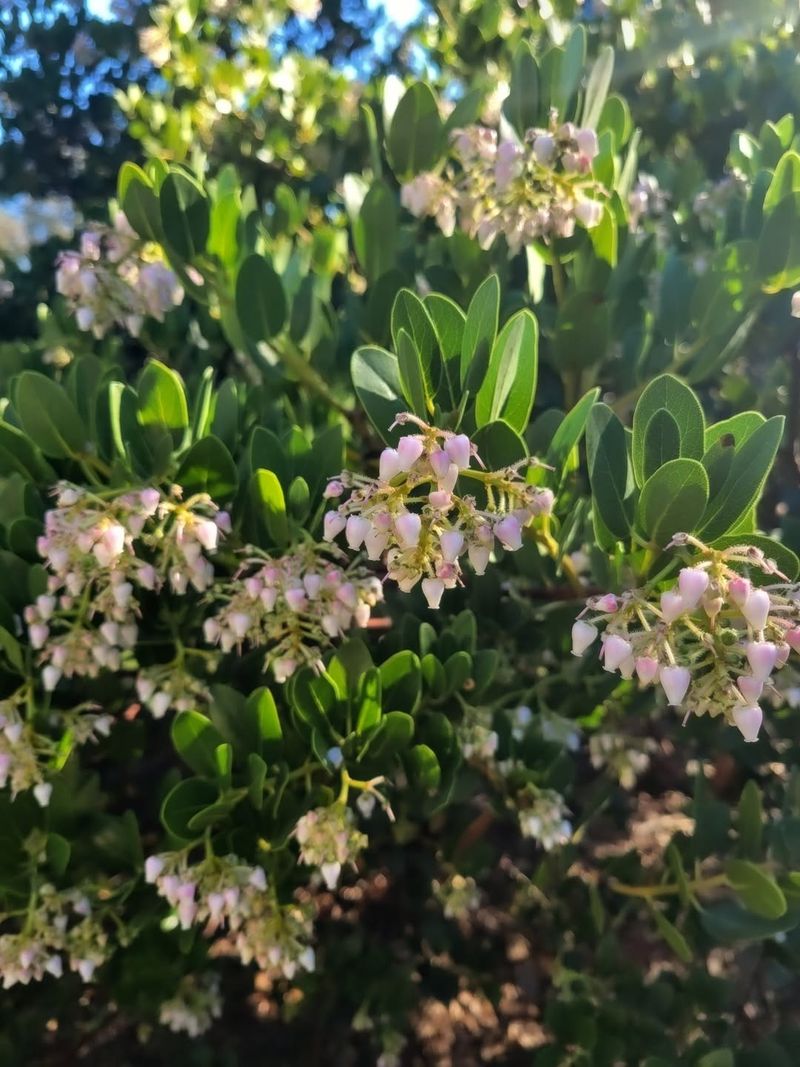
There is something almost sculptural about a Manzanita. Its smooth, reddish-brown bark twists and curves in ways that look like they were carved by an artist.
Even without flowers, Manzanita is one of the most visually interesting plants in the entire California native plant palette.
Manzanita is native to California and is found naturally across chaparral hillsides and mountain slopes throughout the state. That background means it is exceptionally well-adapted to dry conditions.
Once planted and established in your garden, it needs very little supplemental water. It actually prefers to be left alone during summer rather than fussed over with a hose.
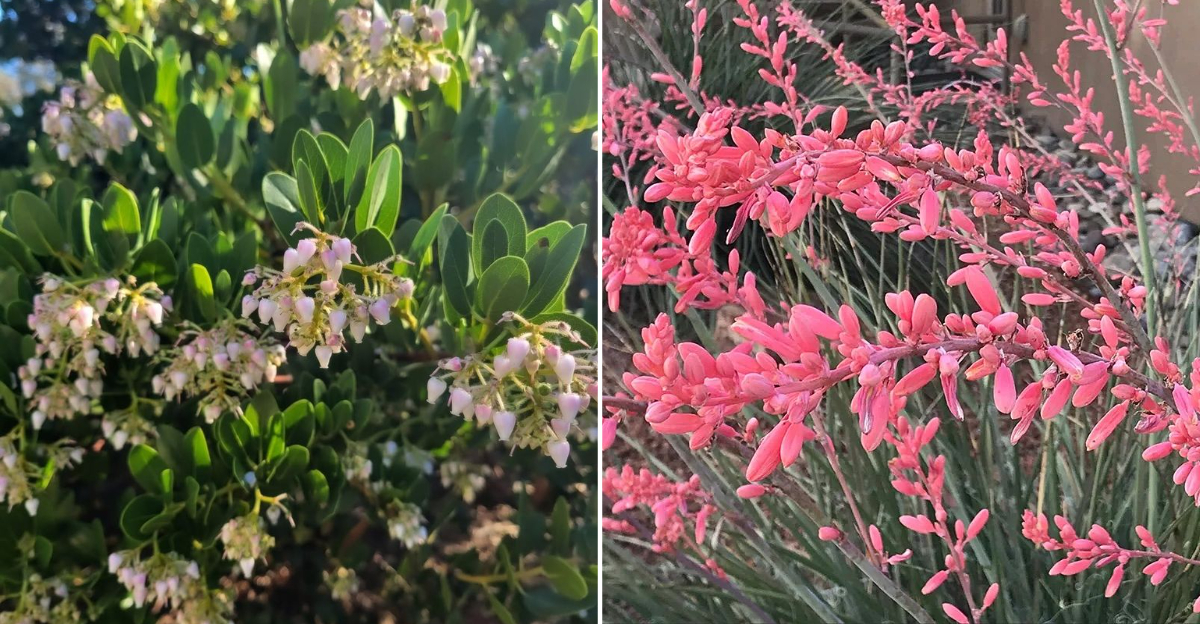
In late winter and early spring, Manzanita produces clusters of tiny, bell-shaped pink or white flowers that are a critical early food source for hummingbirds and native bees. After the flowers fade, small berry-like fruits appear, which birds eagerly eat.
There are dozens of species and cultivars available, ranging from low ground covers to large shrubs. Choose a variety that suits your garden’s size and sun exposure.
Manzanita is slow to establish but well worth the patience. It is one of those plants that makes your California garden feel genuinely connected to the land.
8. Red Yucca (Hesperaloe Parviflora)
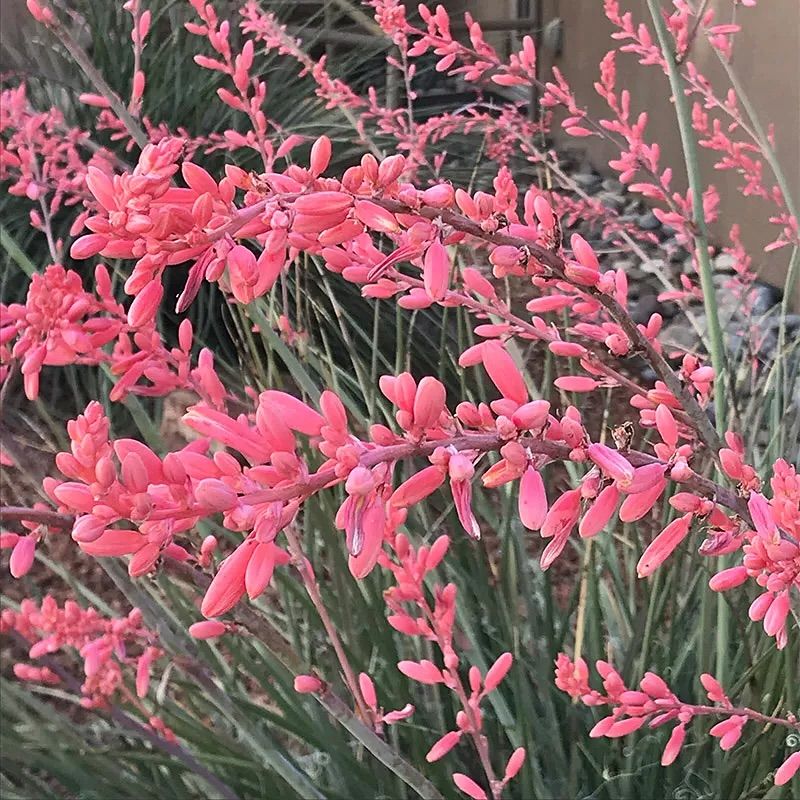
Do not let the name fool you. Red Yucca is not actually a true Yucca, but it is every bit as tough and eye-catching as one.
Native to the Chihuahuan Desert, it adapts beautifully to California’s dry, sunny conditions. Its graceful, grass-like leaves and tall flower spikes give it a look that feels both wild and refined at the same time.
The flower spikes shoot up several feet tall in late spring and summer, covered in coral-pink to red tubular blooms. Hummingbirds are absolutely drawn to these flowers, visiting them repeatedly throughout the blooming season.
That makes Red Yucca one of the best plants for adding movement and wildlife activity to a California garden without using much water at all.
Red Yucca is incredibly low-maintenance. It thrives in full sun and well-drained soil, and it handles heat, drought, and neglect without complaint.
Unlike many ornamental plants, it does not need regular fertilizing or pruning. Just plant it, water it while it settles in, and then step back and let it do its thing.
It pairs beautifully with boulders, ornamental grasses, and other succulents for a striking, water-wise California garden design.
9. California Poppy (Eschscholzia californica)
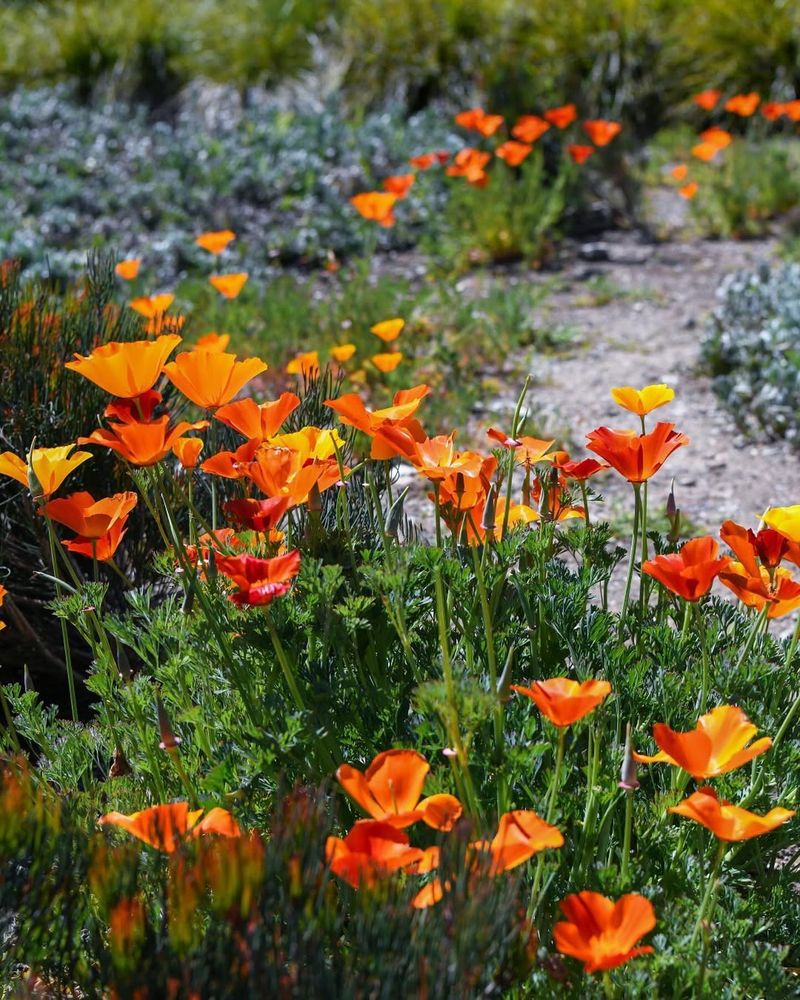
The California Poppy is the official state flower, and it has earned that title by being one of the most cheerful, resilient, and low-maintenance wildflowers you can grow. It practically takes care of itself once it gets going.
Scatter seeds in a sunny spot with sandy or rocky soil, and let nature do the rest. California Poppies actually prefer poor soil and very little water.
Overwatering or over-fertilizing can work against you here. They bloom from late winter through spring and sometimes into early summer, lighting up gardens across the state with warm shades of orange, yellow, and red.
One of the best things about this plant is that it reseeds itself every year. Plant it once, and it keeps coming back season after season without much effort from you.
Kids love watching the silky petals open in the morning sunlight and close at night. Whether you are in San Diego, Sacramento, or anywhere in between, the California Poppy is a reliable, water-wise gem that brings effortless charm to any outdoor space.
10. California Fuchsia (Epilobium Canum)
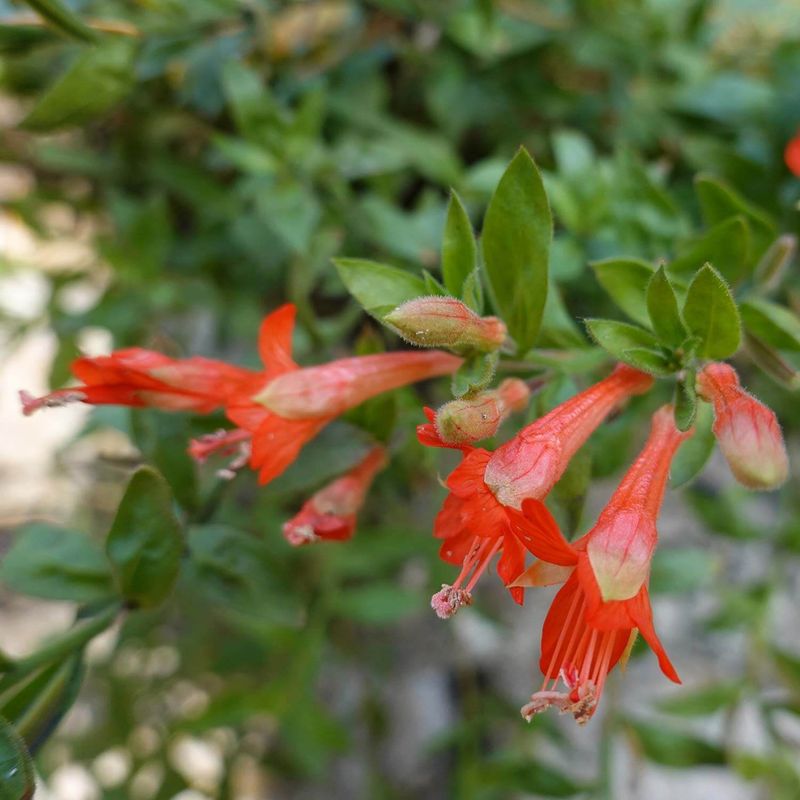
When most of the garden has gone quiet by late summer, California Fuchsia is just getting started.
This native perennial saves its best show for late summer and fall, producing a burst of bright red-orange tubular flowers right when hummingbirds need fuel the most before their seasonal migration.
It is one of the most valuable plants you can grow for local wildlife in California. California Fuchsia is incredibly drought-tolerant and thrives in the heat that typically marks California summers.
It grows naturally in dry, rocky slopes and coastal bluffs across the state, so it is perfectly at home in low-water garden beds.
Once established, it needs almost no supplemental irrigation, which is great news for anyone trying to keep their water bill in check.
The plant spreads steadily through underground runners, filling in bare spots and creating a colorful, flowing ground cover over time. Cut it back hard in late winter or early spring to encourage fresh, compact growth.
It works especially well along slopes, in mixed borders, or alongside boulders and native grasses. Few plants offer as much late-season color and wildlife value with as little effort as California Fuchsia, making it an essential addition to any water-wise California garden.