9 Spring Blooming Plants You Can Grow In Arizona For Lasting Color
Spring in Arizona does not last long, and once intense heat settles in, many flowers fade fast. That is why choosing the right spring bloomers makes such a difference if you want color that holds on beyond just a few weeks.
Some plants put on a quick show and disappear, while others are built to handle rising temperatures and keep performing well into early summer. In Arizona’s dry climate and strong sun, durability matters just as much as beauty.
The good news is that there are dependable bloomers that thrive in desert soil, tolerate heat, and still deliver bold, consistent color.
When you plant wisely in spring, your garden can stay vibrant longer without constant replacements or extra maintenance.
1. Desert Marigold Brings Bright Color Through Dry Spring Months
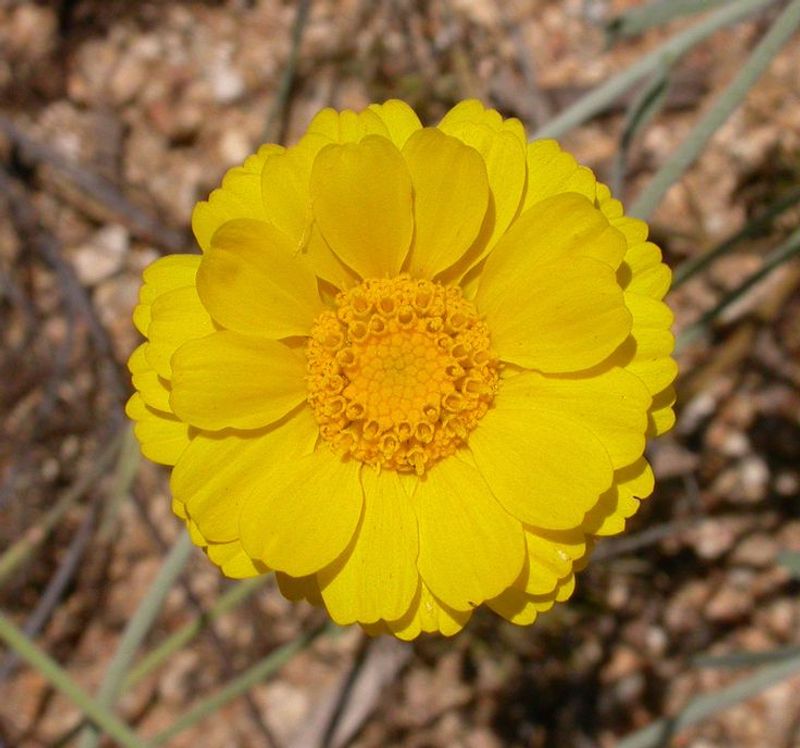
Few plants put on a show quite like Desert Marigold in an Arizona spring garden. Bold yellow blooms cover the plant from late winter through early summer, and they keep coming back even when rain is scarce.
Gardeners across Arizona have come to rely on this tough beauty for consistent, cheerful color.
Planting Desert Marigold is straightforward. Choose a spot with full sun and well-draining soil, since soggy roots are the one thing this plant truly dislikes.
Sandy or gravelly soil works perfectly, making it an ideal match for most Arizona landscapes without any soil amendment needed.
Once established, Desert Marigold needs almost no attention. Water it deeply once every week or two during its first season, then cut back significantly after that.
Deadheading spent flowers encourages fresh blooms to push through, extending the color display well into summer. Its silvery-green foliage also adds soft texture between bloom cycles, keeping the garden looking full and interesting even on off days.
In many parts of Arizona, it even reseeds gently, filling in open patches with new plants each spring without becoming aggressive. Pollinators flock to the bright blooms, making it a smart choice for anyone wanting more bees and butterflies in the yard.
With this level of resilience and color, Desert Marigold earns its place as a dependable staple in low-water landscapes across the state.
2. Parry Penstemon Thrives In Arizona’s Mild Spring Weather
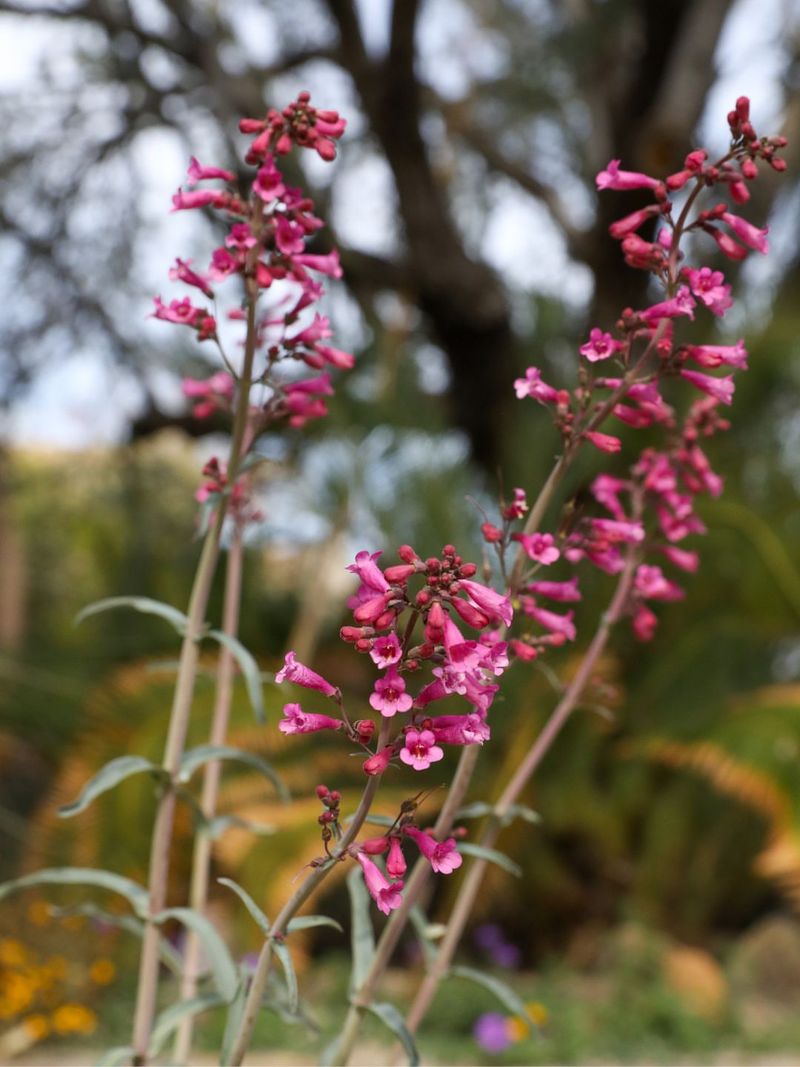
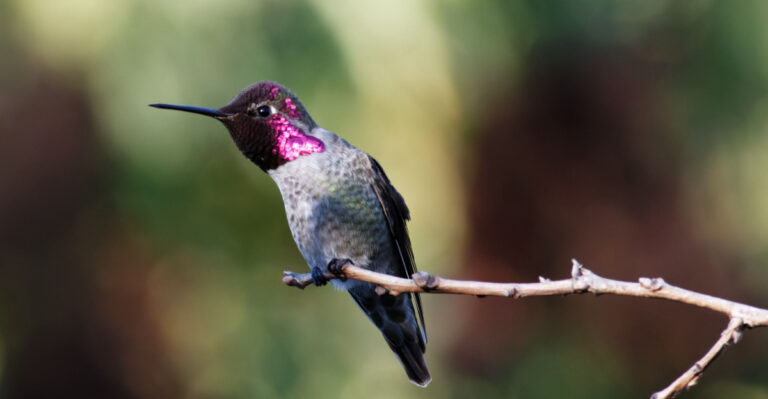
Hummingbirds found Parry Penstemon long before gardeners did. Tall, graceful spikes loaded with tubular pink-to-coral flowers rise up each spring, drawing pollinators from across the neighborhood.
Arizona gardeners who plant this native perennial quickly realize they have added something truly special to their outdoor space.
Parry Penstemon performs best in full sun with excellent drainage. Rocky slopes, raised beds, and native plant borders all work beautifully.
Avoid overwatering, because wet soil weakens the plant over time. During Arizona’s mild spring months, rainfall alone is often enough to keep established plants blooming without any supplemental irrigation.
Starting from seed takes patience but pays off with a strong, deeply rooted plant. Nursery transplants are a faster option and tend to bloom in their first season.
After flowering, seed heads form and naturally reseed into surrounding soil, creating new plants for next year. Cutting back spent stalks after bloom encourages a second flush of growth.
Your Arizona Garden Changes Every Week. Your Plan Should Too.
Gardening in Arizona changes quickly throughout the season. Every Friday you’ll receive a simple weekly plan showing exactly what to plant, prune, fertilize, harvest, and protect so you never miss the right timing.
For anyone building a pollinator-friendly Arizona garden, Parry Penstemon belongs at the top of the list.
Its upright form adds vertical interest among lower-growing desert plants without overwhelming nearby companions. With very little effort, Parry Penstemon rewards Arizona gardeners with reliable spring color year after year.
3. Desert Globemallow Blooms Reliably As Temperatures Rise
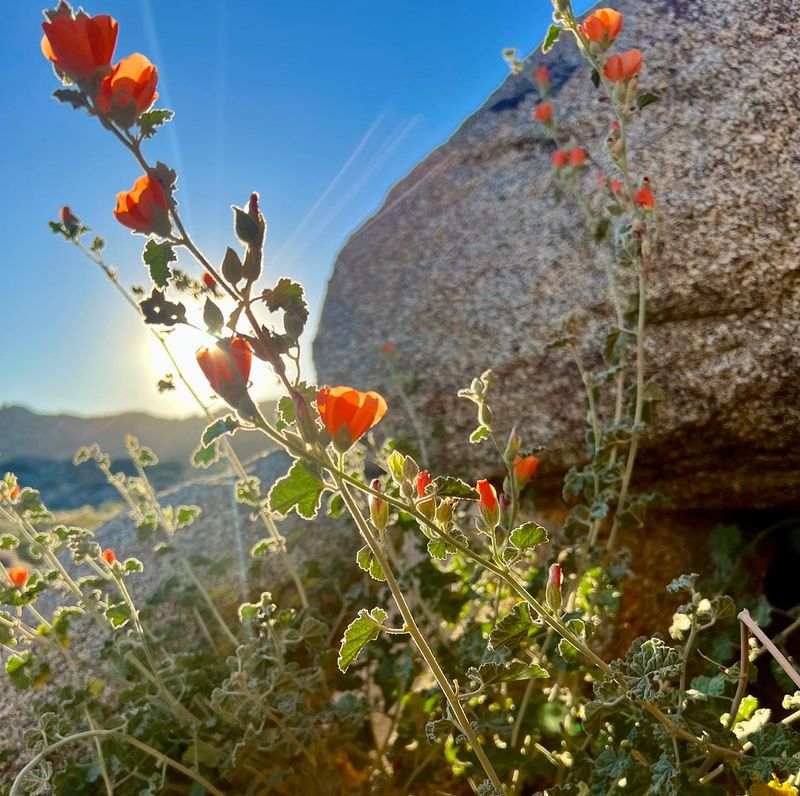
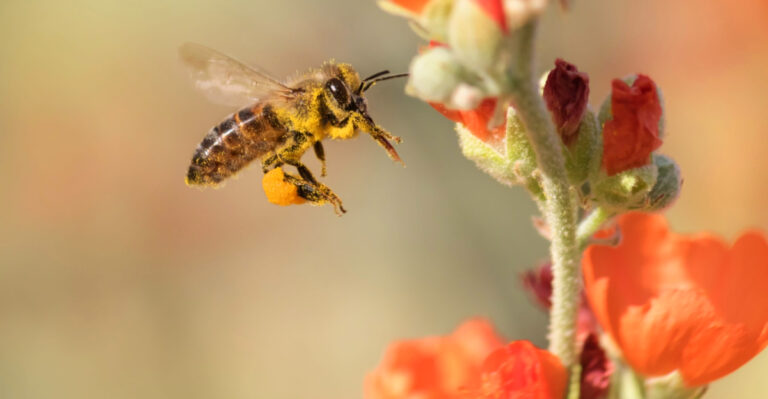
Orange never looked so wild and free as it does on a Desert Globemallow in full spring bloom. Cup-shaped flowers in shades of orange, coral, and occasionally pink blanket the plant just as Arizona temperatures begin to climb.
It is one of the most reliable native bloomers in the entire state.
Adaptability is this plant’s strongest quality. Desert Globemallow grows in poor, rocky soil without complaint and handles full sun without flinching.
Plant it along roadsides, in xeriscape beds, or tucked into any dry corner of your yard where other plants struggle. It fills those tough spots with unexpected beauty.
Watering needs are minimal once roots are established, usually within one growing season. A deep soak every couple of weeks during dry spells keeps plants looking their best.
Pruning back hard after the bloom cycle encourages dense regrowth and a fresh round of flowers. One small note worth knowing: the fine leaf hairs can irritate sensitive skin, so wearing gloves while handling is a smart habit.
Beyond that small detail, Desert Globemallow is an easy, rewarding plant for any Arizona garden.
4. Mexican Gold Poppy Creates Waves Of Spring Color
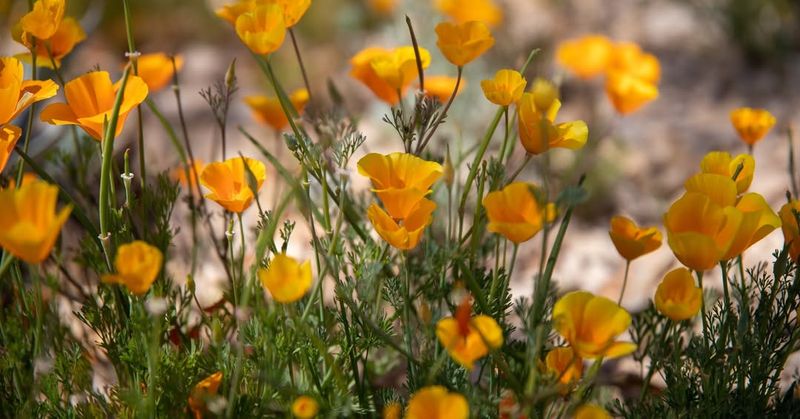
Nothing signals spring in Arizona quite like Mexican Gold Poppy sweeping across hillsides in brilliant waves of gold and orange. After a wet winter, entire desert slopes transform into seas of color that stop drivers on the highway.
Growing these poppies in your own yard brings that same magic right to your doorstep.
Scatter seeds directly onto bare, well-draining soil in fall or very early spring. No digging, no special preparation.
Just broadcast the seeds, press them lightly into the surface, and let Arizona’s natural rain cycles do the rest. Germination happens quickly when soil moisture and temperatures line up just right.
Mexican Gold Poppy is an annual, meaning it completes its life cycle in one season and then drops seeds that sprout the following year. Over time, a self-sustaining colony develops with almost zero effort from the gardener.
Mixing poppies with desert lupine or owl clover creates a layered wildflower display that looks intentional and spectacular.
For apartment dwellers with balcony containers or homeowners with large open beds, Mexican Gold Poppy delivers maximum visual impact with minimum investment of time, water, or money.
5. Lantana Delivers Continuous Blooms Into Early Summer
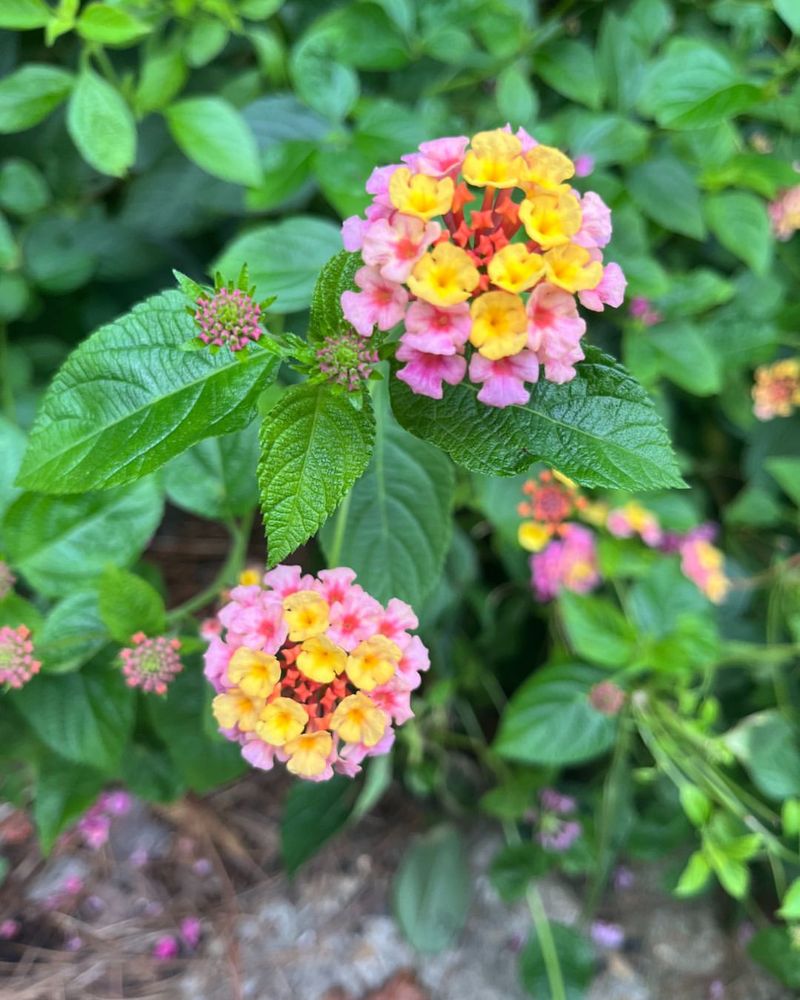
Ask any experienced Arizona gardener which plant refuses to quit, and Lantana will come up almost every time. Clusters of tiny flowers in sunset shades of orange, yellow, pink, and red cover the plant from spring well into early summer.
Even as heat builds across Arizona, Lantana just keeps going.
Plant Lantana in full sun for the strongest performance. It tolerates reflected heat from walls and pavement, which makes it a smart pick for patios, parking strips, and south-facing beds.
Water regularly during establishment, then reduce irrigation once roots take hold. Overwatering actually slows bloom production, so less is genuinely more with this plant.
Pruning Lantana back by about one-third in late winter encourages compact, bushy growth and a heavy spring flush of flowers. Without pruning, plants can get leggy and open in the center.
Butterflies and bees absolutely love the blooms, turning your garden into a lively outdoor scene throughout the season. One practical note: Lantana berries are toxic to pets and small children, so placement matters in family yards.
Beyond that consideration, Lantana is one of the most rewarding, colorful, and low-maintenance shrubs available to Arizona gardeners today.
In frost-free parts of Arizona, it can bloom nearly year-round with minimal care. Trailing varieties also work beautifully in containers or cascading over retaining walls.
With the right placement and light pruning, Lantana delivers reliable color long after many other plants fade.
6. Angelita Daisy Keeps Flowering With Minimal Water
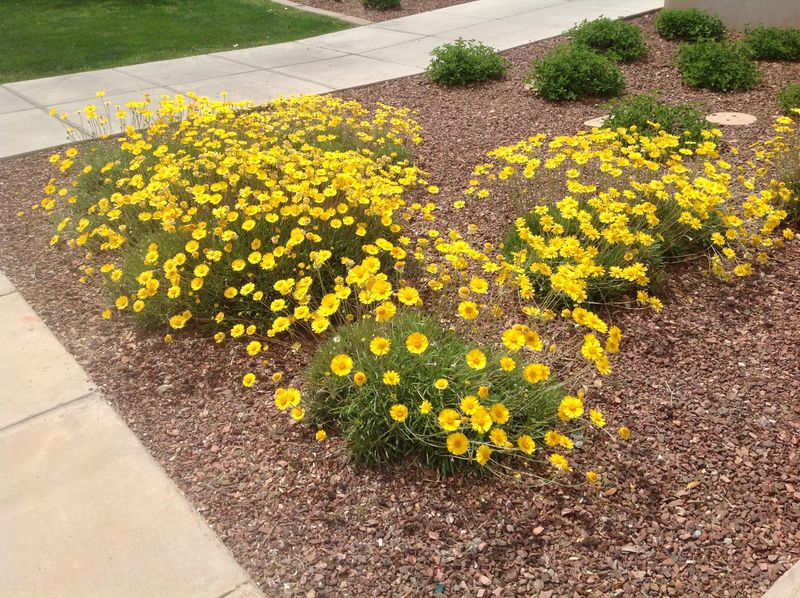
Bright yellow and relentlessly cheerful, Angelita Daisy earns its place in any Arizona garden by blooming almost year-round with very little help. Spring is when it truly shines, producing a thick blanket of small golden flowers over a mound of fine, thread-like foliage.
Few plants offer this level of return for so little investment.
Angelita Daisy loves full sun and fast-draining soil. Sandy, gravelly desert soil suits it perfectly, and it actually struggles in heavy clay where water pools.
Space plants about eighteen inches apart to allow air circulation and room to fill out naturally into rounded, attractive mounds over time.
Water every week or two during the first growing season while roots develop. After that, established plants survive on rainfall alone in most parts of Arizona.
Occasional deep watering during extended dry spells keeps plants looking lush and full rather than stressed. Deadheading is optional because plants naturally drop old flowers and push new ones forward continuously.
Fertilizer is rarely needed and can actually reduce blooming by pushing leafy growth instead of flowers.
For low-water Arizona landscapes, Angelita Daisy is one of the most dependable, long-blooming, and visually satisfying choices available in any nursery today.
7. Red Yucca Sends Up Long Lasting Flower Spikes
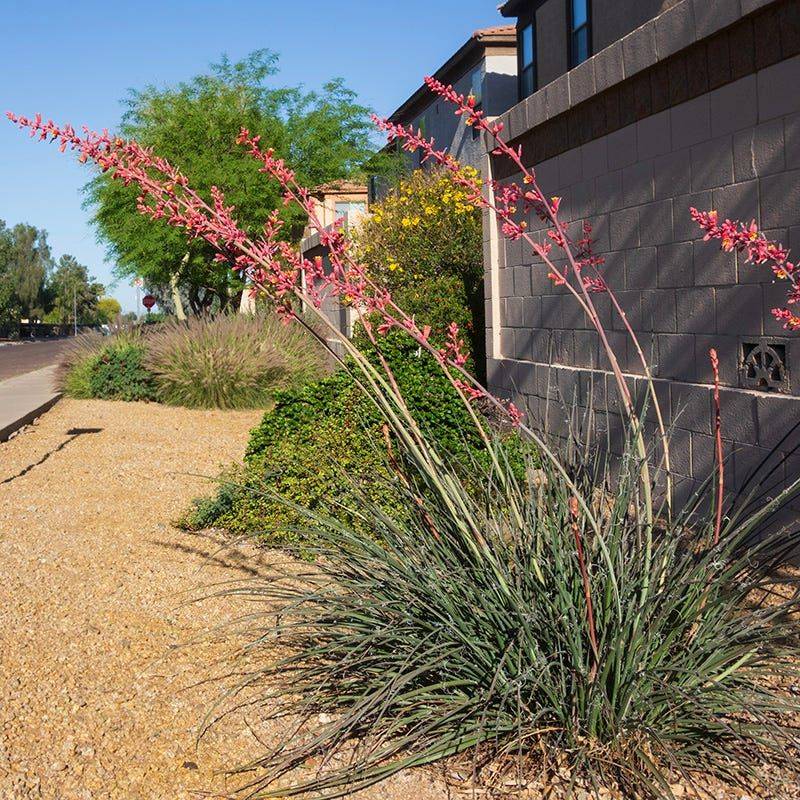
Dramatic is the only word that fully captures Red Yucca at peak bloom. Arching stems rise four to five feet above the plant, loaded with tubular coral-red flowers that hummingbirds visit from dawn to dusk.
Spring in Arizona becomes a completely different experience once you have Red Yucca growing in your yard.
Despite its bold appearance, Red Yucca is surprisingly easy to grow. Plant it in full sun to light shade with well-draining soil, and water sparingly.
Its grass-like foliage stays attractive year-round, providing structure in the garden even when other plants are resting between bloom cycles. No staking, no caging, no fuss.
Flower spikes emerge in mid-spring and can last for several weeks before fading. After blooming, seed pods develop along the stalks and add their own quiet visual interest through summer and fall.
Cutting spent stalks back to the base keeps the plant tidy if a cleaner look is preferred. Red Yucca spreads slowly by offsets, gradually forming a small, attractive cluster over several years.
It handles reflected heat, poor soil, and long dry stretches without losing its shape. Once established, it becomes one of the most dependable flowering accents you can plant in an Arizona yard.
8. Desert Ruellia Handles Heat Without Losing Color
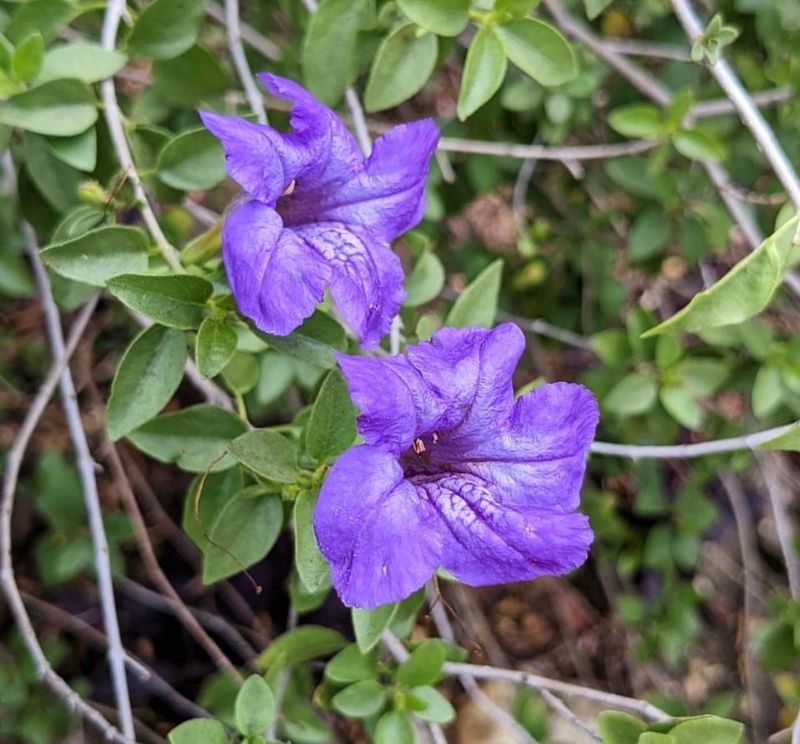
Purple flowers and blazing Arizona heat are not usually a combination that works, but Desert Ruellia breaks that rule completely.
Trumpet-shaped blooms in rich violet-purple appear from spring and continue pushing out fresh flowers even as summer temperatures climb past one hundred degrees.
Color that holds up under real desert conditions is rare, and this plant delivers it without hesitation.
Full sun suits Desert Ruellia best, though it also performs well in partial shade where afternoon sun is filtered. It spreads gradually by underground runners, filling in garden beds and slopes with a dense, weed-suppressing mat of foliage and flowers.
Space plants two to three feet apart and let them naturalize over time for a lush, low-maintenance ground cover effect.
Water needs are moderate during establishment and low once plants are rooted in. In Arizona’s low desert, watering once a week during the hottest months keeps plants blooming consistently.
Cutting back hard in late winter promotes fresh, vigorous spring growth and a stronger first flush of flowers. Desert Ruellia also works beautifully as a container plant on patios and courtyards where its purple flowers pop against warm stucco walls.
9. Trailing Verbena Spreads Vibrant Spring Blooms Across Beds
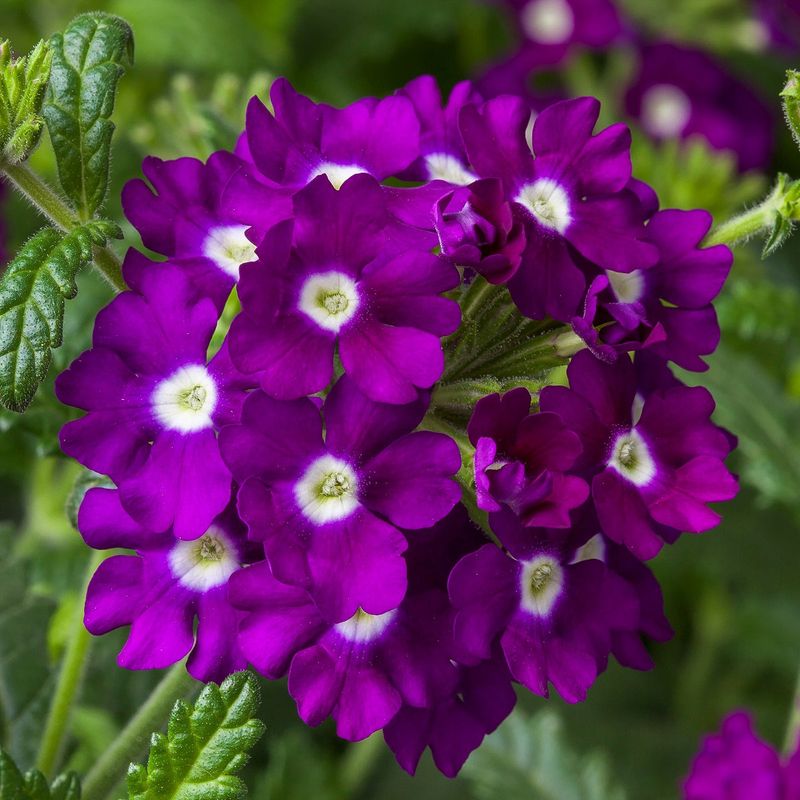
Color that spreads like a wave across a garden bed sounds almost too good to be true, but Trailing Verbena delivers exactly that every spring.
Low-growing stems reach outward in all directions, blanketing the ground in clusters of purple, pink, or red flowers that practically glow in full Arizona sun.
It is one of the fastest ways to fill empty space with vibrant, eye-catching color.
Plant Trailing Verbena in full sun for the densest coverage and most prolific blooming. It tolerates poor soil well, asking only for good drainage and a sunny spot.
Use it along walkway edges, in rock gardens, or cascading over retaining walls where its trailing habit becomes a genuine design feature rather than something to manage.
Watering consistently during the first few weeks helps roots establish quickly. Once settled in, Trailing Verbena is surprisingly drought-tolerant for a plant that looks so lush.
Shearing plants back by half after the main spring bloom encourages a strong second flush of flowers heading into early summer. Powdery mildew can occasionally appear in humid conditions, but Arizona’s dry air keeps this largely in check.
As summer temperatures climb into extreme triple digits, flowering may slow down, especially in full afternoon sun. In the hottest parts of Arizona, light afternoon shade can help plants hold their color longer and stay fuller through early summer.