These Are The 8 Fastest-Growing Native Privacy Trees For Ohio Landscapes
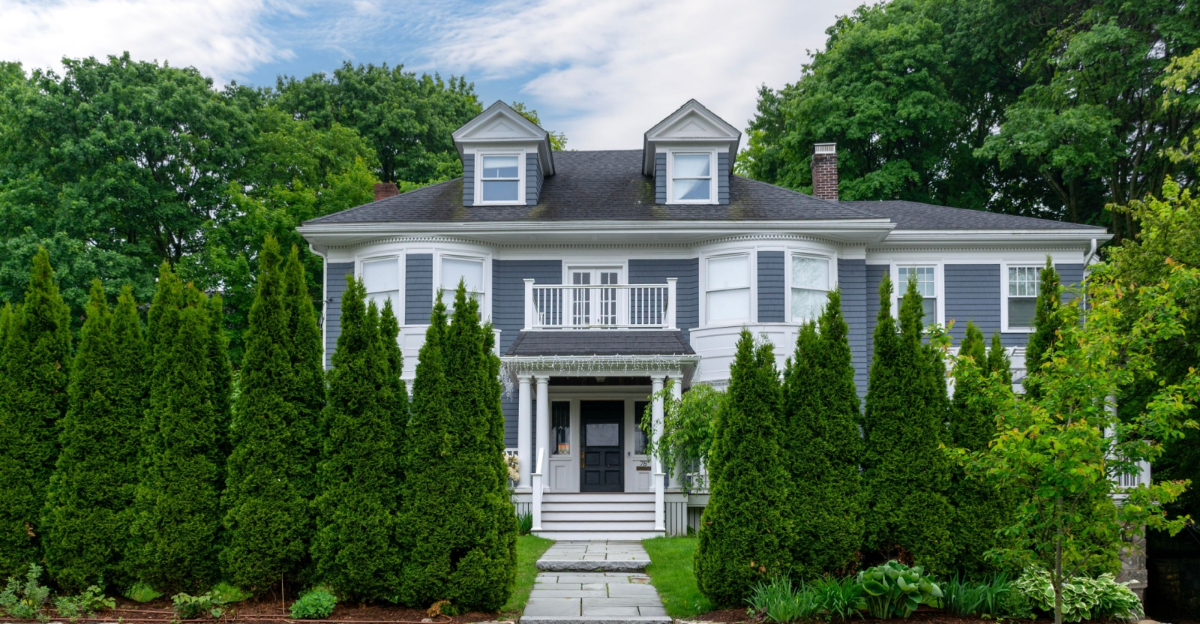
Privacy can feel hard to find, especially when neighboring houses seem closer every year. In Ohio landscapes, the right tree can transform an exposed yard into a peaceful retreat far faster than most homeowners expect.
While many trees take decades to create a true screen, certain native species grow with impressive speed while still supporting local wildlife, pollinators, and soil health. That means you gain privacy and strengthen the natural ecosystem at the same time.
Ohio’s cold winters, humid summers, and varied soil types demand trees that handle real seasonal shifts without constant worry. Planting the wrong variety can lead to slow growth, weak structure, or long term maintenance headaches.
Planting the right native tree can deliver dense coverage, strong structure, and dependable performance. If you want faster privacy without sacrificing resilience, these native trees stand out as the quickest growing options for Ohio landscapes.
1. Eastern Red Cedar Forms A Tough Year Round Screen
Evergreen coverage that never quits makes this native conifer a reliable choice for year-round privacy. The dense, scale-like foliage stays green through Ohio’s harshest winters, blocking views and wind even when deciduous trees stand bare.
Growth rates reach 1 to 2 feet per year once established, and the pyramidal shape naturally fills in without much pruning.
Drought tolerance sets this tree apart from many evergreens that struggle in dry spells. Once the root system develops, Eastern Red Cedar handles summer heat and periods without rain better than most screening options.
This toughness comes from its native range across Ohio, where it has adapted to variable conditions for thousands of years.
Wind resistance is another major advantage for exposed sites. The flexible branches and strong wood structure prevent the breakage common in ice storms and high winds.
Plant specimens 8 to 12 feet apart for a solid screen, or space them wider for individual accent trees.
Clay soils and rocky sites don’t discourage this adaptable native. It grows well in locations where other evergreens fail, making it ideal for challenging spots in your yard.
The only real requirement is decent drainage, as standing water causes root problems over time.
2. Eastern White Pine Builds Fast Evergreen Privacy
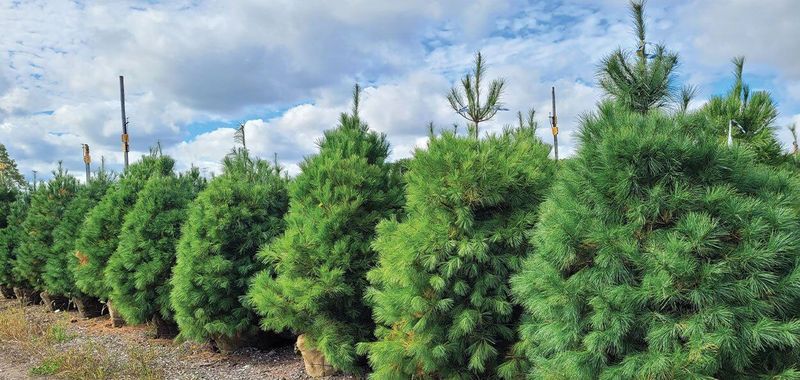
Rapid vertical growth makes this soft-needled evergreen one of the fastest privacy builders available. Annual growth often exceeds 2 feet in good conditions, with young trees sometimes adding 3 feet during peak growing seasons.
The long, soft needles grow in bundles of five and create a dense screen that blocks views effectively while filtering wind gently.
Spacing matters significantly with this species because mature specimens can spread 20 to 40 feet wide. Plan for at least 15 to 20 feet between trees if you want them to develop natural form.
Closer spacing works for tight hedges, but expect to remove every other tree eventually as crowding develops.
Larger properties benefit most from Eastern White Pine because it needs room to reach full potential. The graceful branching pattern and soft texture create an elegant backdrop that improves with age.
In smaller yards, consider planting just one or two as focal points rather than attempting a full screen.
Your Ohio Garden Changes Every Week. Your Plan Should Too.
Gardening in Ohio changes quickly throughout the season. Every Friday you’ll receive a simple weekly plan showing exactly what to plant, prune, fertilize, harvest, and protect so you never miss the right timing.
Ohio’s climate suits this native perfectly, especially in the northern and eastern regions where it grows naturally. Avoid planting in heavy clay that stays wet, as good drainage keeps the roots healthy.
The soft needles and attractive cones add seasonal interest beyond basic screening function.
3. Tulip Tree Grows Tall For Quick Backyard Cover
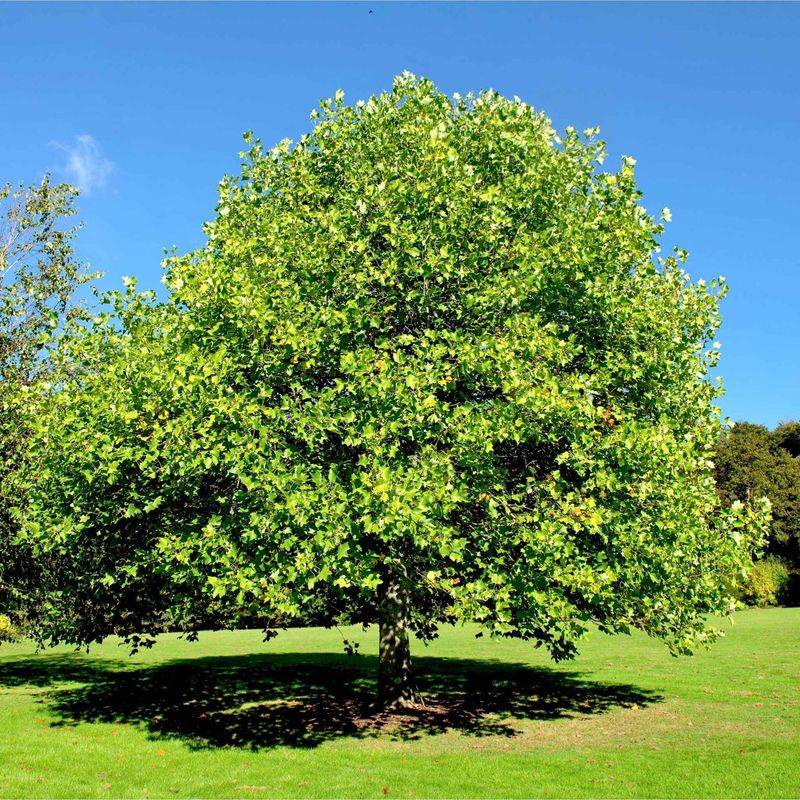
Vertical growth that outpaces nearly every other native hardwood makes this species exceptional for quick overhead screening. Young Tulip Trees commonly add 2 to 3 feet of height annually, with some vigorous specimens growing even faster in rich, moist soil.
The straight trunk and upward branching habit create a tall canopy that blocks upper-story views from neighboring windows or overlooking properties.
Canopy development happens relatively quickly as the tree matures. The large, uniquely shaped leaves create dense summer shade and visual screening that improves privacy at eye level and above.
By year ten, expect a substantial presence that transforms your backyard into a secluded retreat.
Soil preference leans toward moist, well-drained sites with good fertility. Tulip Trees struggle in compacted clay or dry, rocky ground where root development gets restricted.
Adding organic matter at planting time and maintaining moisture during establishment helps ensure strong early growth.
Long-term screening value increases as the tree reaches 60 to 90 feet tall over several decades. The investment pays off with a majestic specimen that provides privacy, shade, and wildlife habitat.
Consider the eventual size carefully and plant at least 30 feet from structures to allow proper development without future conflicts.
4. American Sycamore Creates Massive Natural Screening
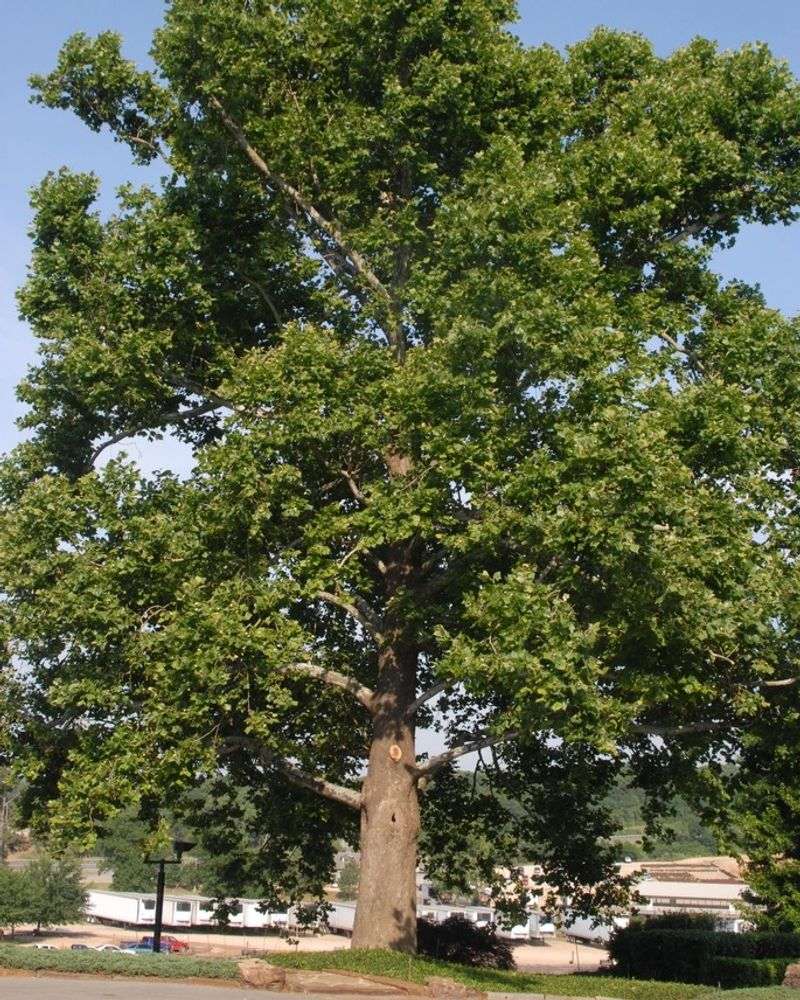
Few native trees match the sheer growth speed of this moisture-loving giant. Annual height increases of 2 to 3 feet combine with rapid branch spread to create substantial screening in just a few years.
The massive canopy develops quickly, with mature trees easily spanning 60 to 80 feet wide and providing coverage that blocks views from multiple angles.
Moisture tolerance makes American Sycamore perfect for low spots, stream banks, and areas with seasonal wetness. While it adapts to average soil moisture once established, it truly excels where water is abundant.
This characteristic solves privacy problems in locations too wet for most other fast-growing trees.
Larger lots accommodate this tree best because the eventual size demands significant space. Planting too close to structures, driveways, or utility lines creates maintenance headaches as the tree matures.
Allow at least 40 feet from buildings and other permanent features to prevent future issues.
The distinctive white and gray bark adds year-round visual interest beyond basic screening function. As the tree matures, the exfoliating bark creates attractive patterns that enhance winter landscapes.
Leaf drop in fall can be substantial, so consider placement relative to areas where cleanup matters. Ohio landscapes with room to spare gain a magnificent privacy solution that improves with every growing season.
5. River Birch Forms A Thick Multi Trunk Buffer
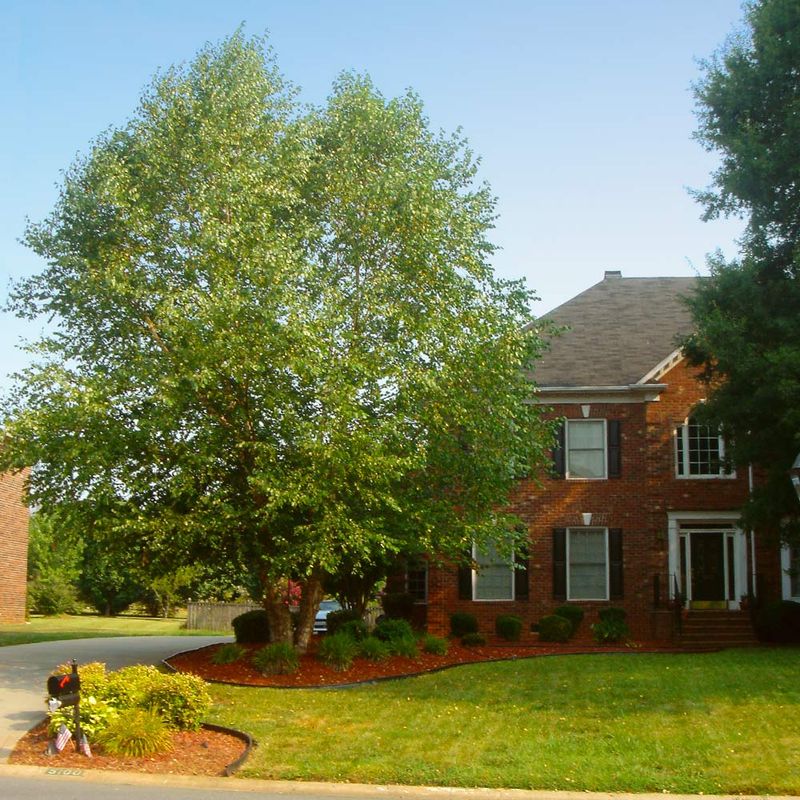
Dense branching from ground level up creates exceptional screening without waiting for canopy development high overhead. The naturally occurring multi-trunk growth habit produces several stems that branch repeatedly, forming a thick visual barrier that blocks views at all heights.
This structure develops quickly, with annual growth of 18 to 24 inches common in good conditions.
Multi-trunk form distinguishes this species from single-trunk trees that leave gaps near the ground. The clustered stems and abundant branching create privacy that starts immediately at eye level and extends upward.
This makes River Birch particularly effective for blocking views of patios, decks, and ground-floor windows.
Wet soil tolerance solves screening challenges in poorly drained areas where many trees fail. River Birch thrives in locations that stay moist or even occasionally flood, making it ideal for low spots, rain gardens, and areas near water features.
The extensive root system stabilizes soil while providing the dense growth needed for privacy.
Natural privacy effect improves as the tree matures and the canopy fills out. The peeling, cinnamon-colored bark adds textural interest that makes the screen visually appealing rather than just functional.
Plant specimens 10 to 15 feet apart for a continuous buffer, or use single trees as focal points that anchor privacy plantings in Ohio landscapes.
6. Red Maple Fills In With Dense Fast Growth
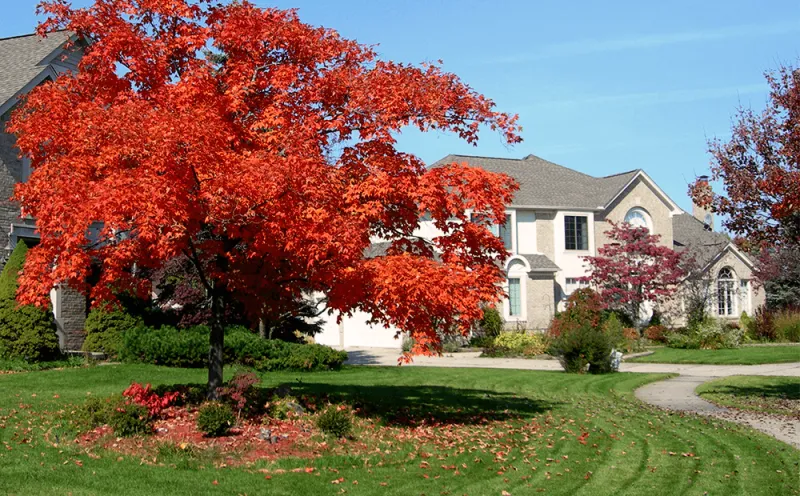
Adaptable soil tolerance from wet to moderately dry makes this native maple work in more locations than almost any other fast-growing tree. Red Maple handles clay, loam, and sandy soils with equal success, establishing quickly and growing steadily regardless of soil type.
This flexibility means you can create privacy screening across your entire property even where soil conditions vary significantly.
Branching density develops naturally without special pruning or training. The oval to rounded crown fills in thoroughly, with branches and foliage creating solid screening from spring through fall.
Growth rates of 18 to 24 inches annually build substantial size within just a few years after planting.
Reliable growth performance across Ohio makes Red Maple a safe bet for privacy projects. From the southern border to the Lake Erie shore, this species adapts to local conditions and delivers consistent results.
The brilliant red fall color adds seasonal appeal that makes your privacy screen a landscape highlight rather than just a functional element.
Landscape versatility extends beyond basic screening uses. Red Maple works as a specimen tree, in groupings, or planted in rows for living fences.
Space trees 20 to 30 feet apart for individual development, or closer for faster screening effect. The moderate size at maturity, typically 40 to 60 feet tall, fits well in most residential Ohio yards without overwhelming smaller properties.
7. American Arborvitae Becomes A Living Green Fence
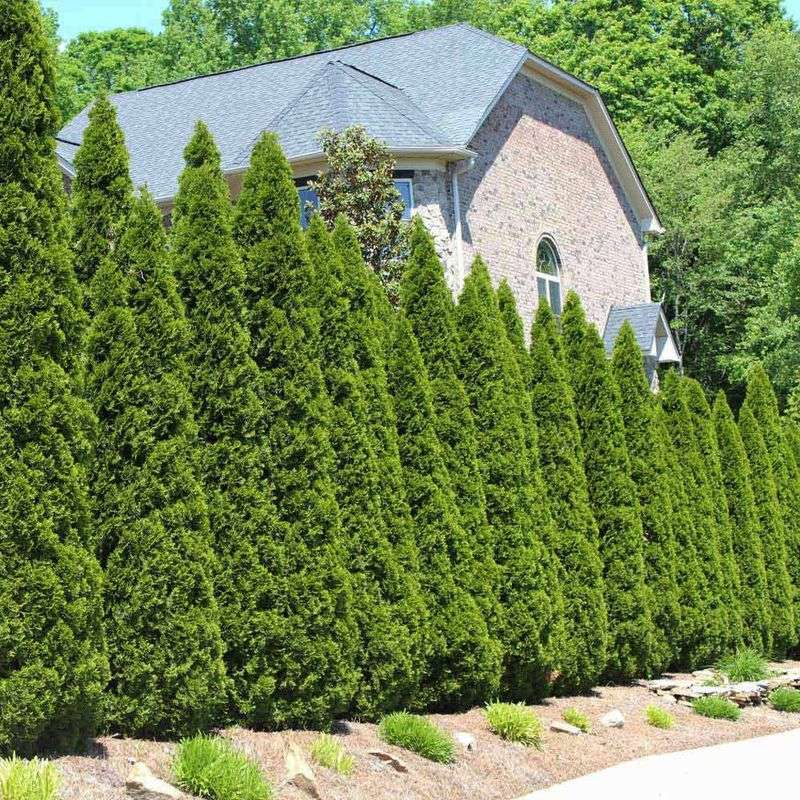
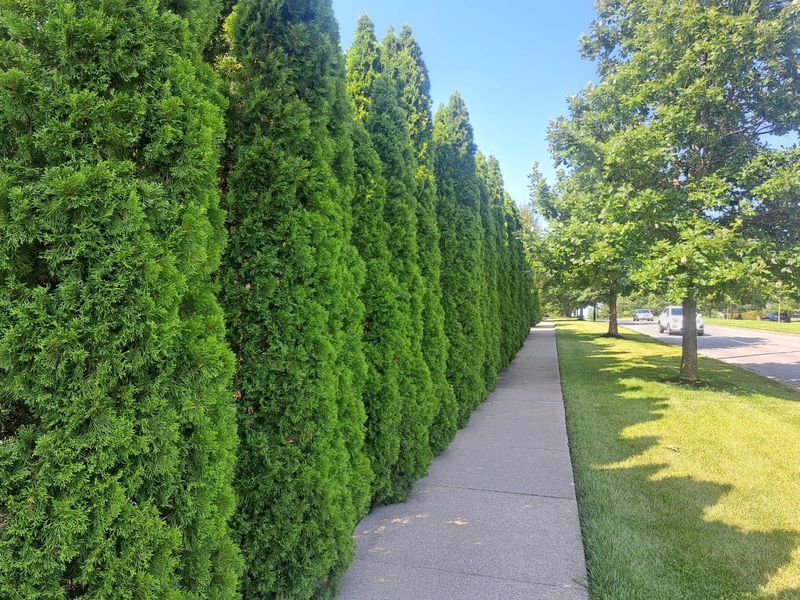
Evergreen screening that functions exactly like a fence makes this native conifer perfect for property lines and boundary plantings. The naturally columnar form grows straight up with minimal spread, creating a narrow footprint that works even in tight spaces.
Dense foliage from ground to top blocks views completely while taking up far less room than spreading trees.
Hedge use is the most common application because multiple plants merge into a continuous green wall. Space specimens 3 to 4 feet apart for quick screening, or 5 to 6 feet apart for a more open look that still provides privacy.
Annual growth of 12 to 18 inches builds the screen height steadily.
Winter performance stays strong throughout Ohio’s coldest months. The scale-like foliage remains green and dense even when temperatures drop below zero, maintaining privacy when you need it most.
Snow and ice load rarely cause damage thanks to the flexible branches and strong central leader.
Dense foliage composition creates excellent wind and noise buffering along with visual screening. The overlapping branches form such a tight barrier that wind speed drops noticeably on the protected side.
Plant American Arborvitae where you need maximum privacy in minimum space, and expect reliable evergreen performance that improves your Ohio landscape year-round without demanding excessive maintenance or room.
8. Sweetgum Grows Fast With Dense Upright Form
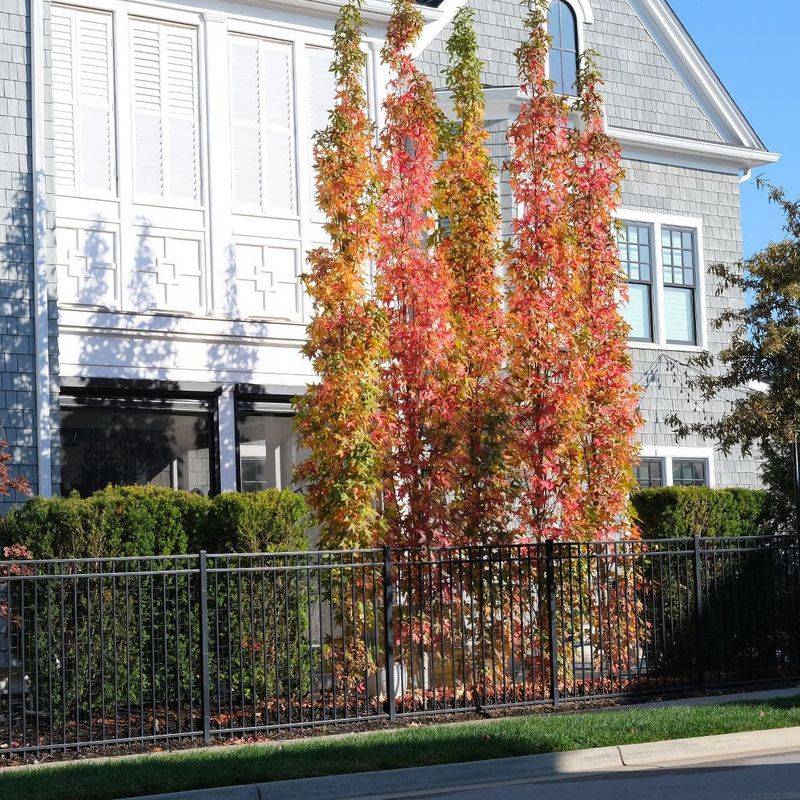
Pyramidal shape creates natural screening without pruning or training. The strong central leader and upward-angling branches form a neat, formal outline that looks intentional from the start.
This growth habit makes Sweetgum particularly effective where you want privacy that looks planned and maintained without constant trimming.
Steady growth of 2 to 3 feet annually builds impressive height quickly. Young trees establish fast and maintain consistent growth rates for years, reaching substantial screening size within a decade.
The star-shaped leaves create dense coverage during the growing season, with fall color ranging from yellow to deep purple adding seasonal interest.
Southern Ohio suitability makes this species most reliable in the warmer parts of the state. While Sweetgum grows throughout Ohio, it performs best and shows greatest cold hardiness in zones 6 and warmer.
Northern gardeners can still use it successfully with proper site selection, choosing protected locations away from harsh winter winds.
Strong seasonal coverage develops as the branching structure matures. Even without leaves, the dense twigs and branches provide some screening effect during winter months.
The spiky seed balls can be a maintenance consideration, though newer cultivars produce fewer fruits. Plant Sweetgum 20 to 30 feet apart for individual specimens or closer for faster privacy development in Ohio landscapes where its upright form and reliable growth solve screening challenges effectively.