These Are The 9 Best Native Groundcovers For Ohio Gardens
Look closer at the ground beneath your garden. Ohio landscapes come alive when the right native groundcovers take control, and weave color, texture, and life across soil once left bare.
These low profile powerhouses spread with purpose, crowd out weeds, protect moisture, and support local wildlife through every season.
Spring brings fresh green carpets and delicate blooms, summer adds dense shade that cools roots, fall paints warm tones, winter reveals quiet structure that still guards the earth. Tough roots handle clay, rain, heat, and cold without constant care, while pollinators, birds, and beneficial insects find food and shelter at every step.
Gardeners across Ohio now replace thirsty lawns and patchy mulch with vibrant layers that feel natural and resilient. Stick around, the ground level stars ahead might completely change how your garden grows.
1. Wild Ginger Brings Lush Shade Loving Coverage
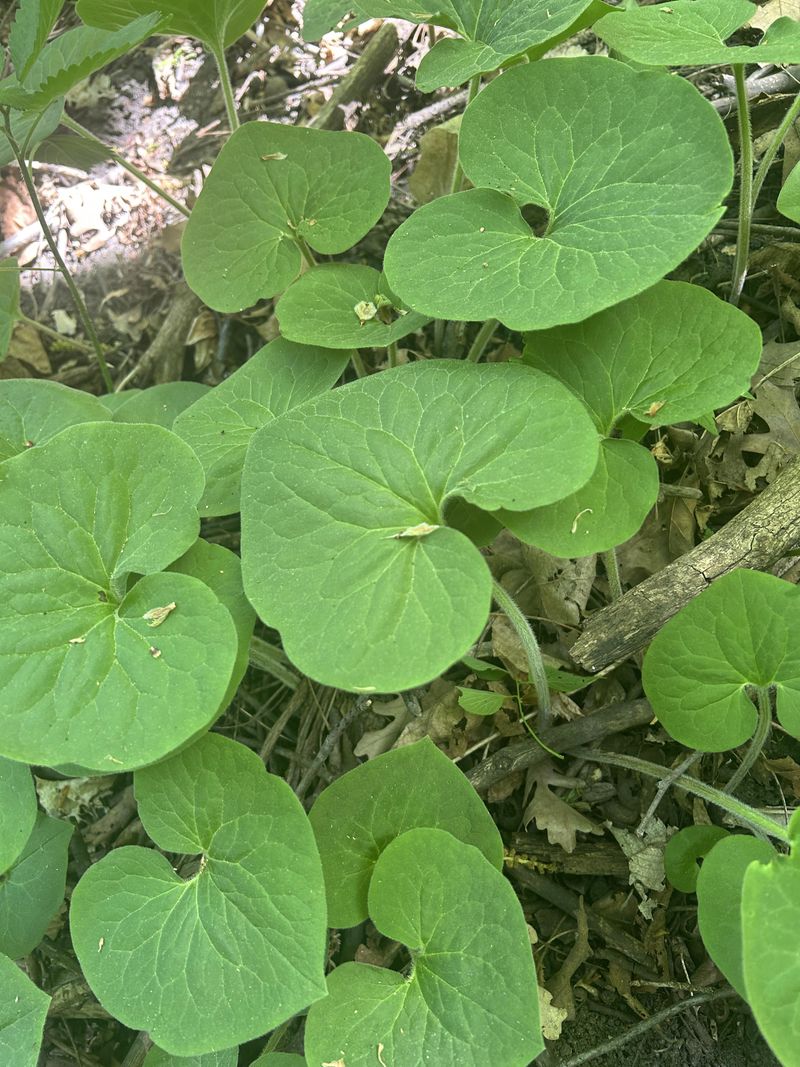
Picture a shaded corner of your Ohio backyard transformed into a lush, velvety carpet of deep green leaves so dense that weeds simply cannot push through. That is exactly what wild ginger (Asarum canadense) delivers in woodland settings.
Its large, heart-shaped leaves grow so close together that they form a nearly solid mat, making it one of the most effective weed-suppressing groundcovers available to Ohio gardeners.
Wild ginger thrives in moist, humus-rich soil and tolerates average woodland conditions. It performs best in full to partial shade, which makes it ideal under mature trees where grass always struggles.
It spreads slowly by rhizome, gradually filling in areas without becoming invasive. Ohio State University Extension recognizes it as a reliable native for shaded landscapes.
The plant stays low, typically reaching only six to eight inches tall, and its foliage remains attractive from spring through fall. It also produces small, hidden reddish-brown flowers at soil level in spring, though they are rarely noticed beneath the canopy of leaves.
Wild ginger pairs beautifully with ferns, trillium, and other woodland natives. Once established, it requires almost no maintenance beyond occasional watering during dry summer stretches in Ohio.
2. Pennsylvania Sedge Replaces Lawn In Dry Shade
Grass under a big oak tree is a losing battle for most Ohio homeowners. The roots compete, the shade deepens every year, and eventually you are left with bare, compacted soil.
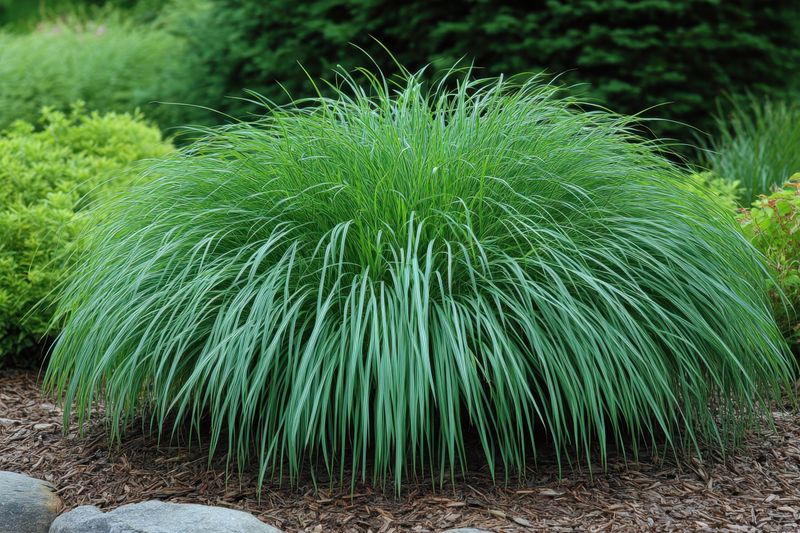
Pennsylvania sedge (Carex pensylvanica) steps in where lawn turf gives up, thriving in exactly the dry, shaded conditions that defeat traditional grass.
This native sedge forms a soft, fine-textured mat that looks surprisingly similar to a well-kept lawn from a distance, yet it requires a fraction of the maintenance. It rarely needs mowing, tolerates drought once established, and handles the dry shade beneath large trees with ease.
Many Ohio gardeners who have made the switch report that it transformed their problem areas into genuinely attractive spaces.
Pennsylvania sedge spreads steadily through underground rhizomes, slowly knitting together to form a seamless groundcover over two to three growing seasons. It works well on slopes, in woodland gardens, or as a transition planting between a lawn and a natural area.
Plant it in fall or early spring for best establishment results. According to the Ohio Native Plant Society, this sedge is one of the most practical lawn alternatives available for shaded Ohio landscapes.
Your Ohio Garden Changes Every Week. Your Plan Should Too.
Gardening in Ohio changes quickly throughout the season. Every Friday you’ll receive a simple weekly plan showing exactly what to plant, prune, fertilize, harvest, and protect so you never miss the right timing.
3. Creeping Phlox Delivers A Spring Color Explosion
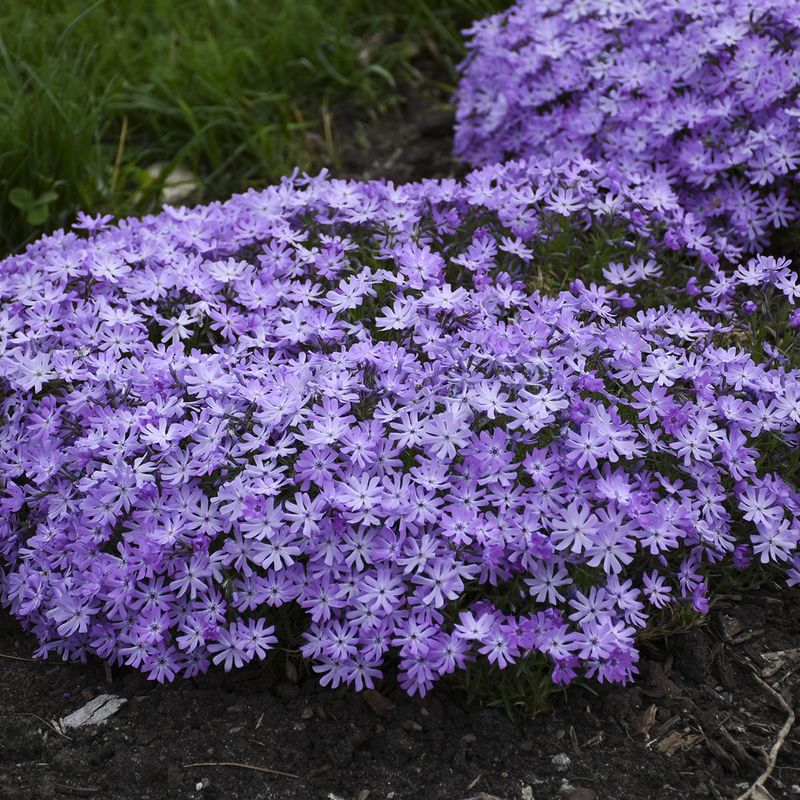
Few sights in an Ohio garden match the moment creeping phlox bursts into full bloom in April and May. The plant practically disappears under a wave of flowers in shades of pink, purple, white, and lavender, covering every inch of foliage with color that stops people in their tracks.
It is one of the most dramatic spring displays you can achieve with a native groundcover.
Creeping phlox (Phlox subulata) is a sun-lover, performing best in full sun to light shade with well-drained soil. It is especially valuable on slopes and embankments where erosion is a concern, since its dense mat of roots and stems holds soil firmly even during heavy Ohio spring rains.
Placing it along rock walls, at the top of raised beds, or on sunny slopes gives it room to cascade beautifully.
After flowering, the semi-evergreen foliage often remains through winter, depending on conditions, giving the garden structure even in the coldest Ohio months. It needs very little care beyond a light trim after blooming to keep it compact and encourage fresh growth.
Avoid planting in poorly drained spots, as standing water can cause root issues. This plant is a favorite among Ohio Master Gardeners for good reason.
4. Green And Gold Lights Up Part Shade Spaces
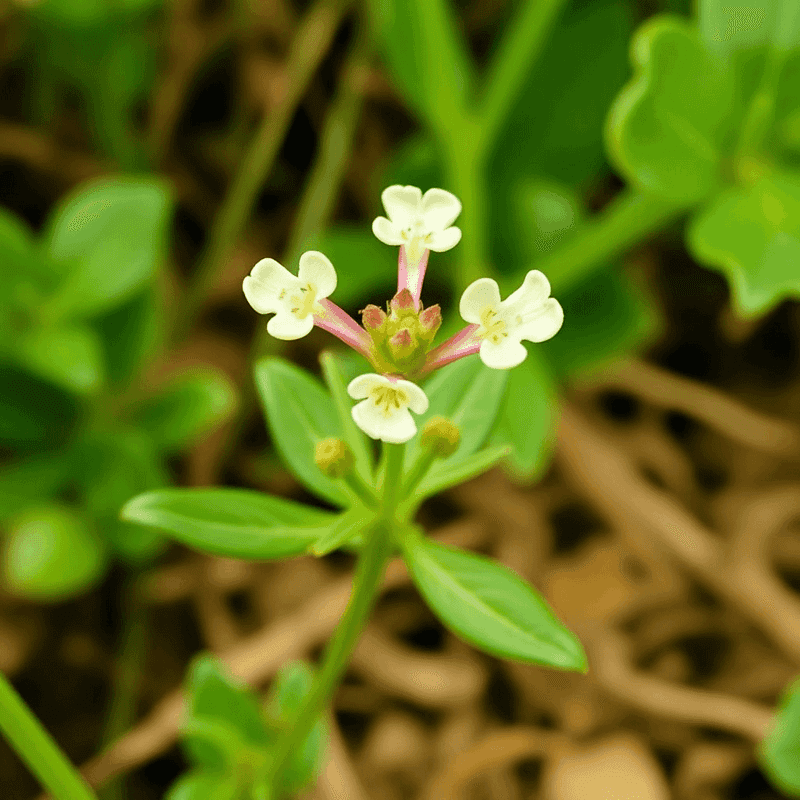
Some plants earn their name honestly, and green and gold (Chrysogonum virginianum) is one of them. The cheerful yellow flowers pop against the dark green foliage like little stars scattered across the garden floor, and unlike many flowering groundcovers, this one blooms heavily in spring and may produce scattered flowers into early summer, with occasional rebloom in favorable conditions.
That extended bloom season makes it especially valuable for Ohio gardeners who want color without constant replanting.
Green and gold adapts comfortably to woodland edge conditions, performing well in part shade to light shade with average to slightly moist soil. It grows about six to nine inches tall and spreads at a moderate pace, eventually forming attractive colonies that fill in bare spots under trees and along shaded borders.
Ohio gardeners often use it at the transition between a lawn and a wooded area.
Beyond its looks, green and gold supports native bees during its long bloom period, making it a smart choice for anyone trying to build a more pollinator-friendly yard. It is also notably deer-resistant, which matters in many Ohio suburbs and rural areas where deer pressure is high.
Once established, it handles dry spells reasonably well and requires almost no fertilizing or special care to stay healthy and attractive season after season.
5. Wild Strawberry Spreads Fast And Feeds Pollinators
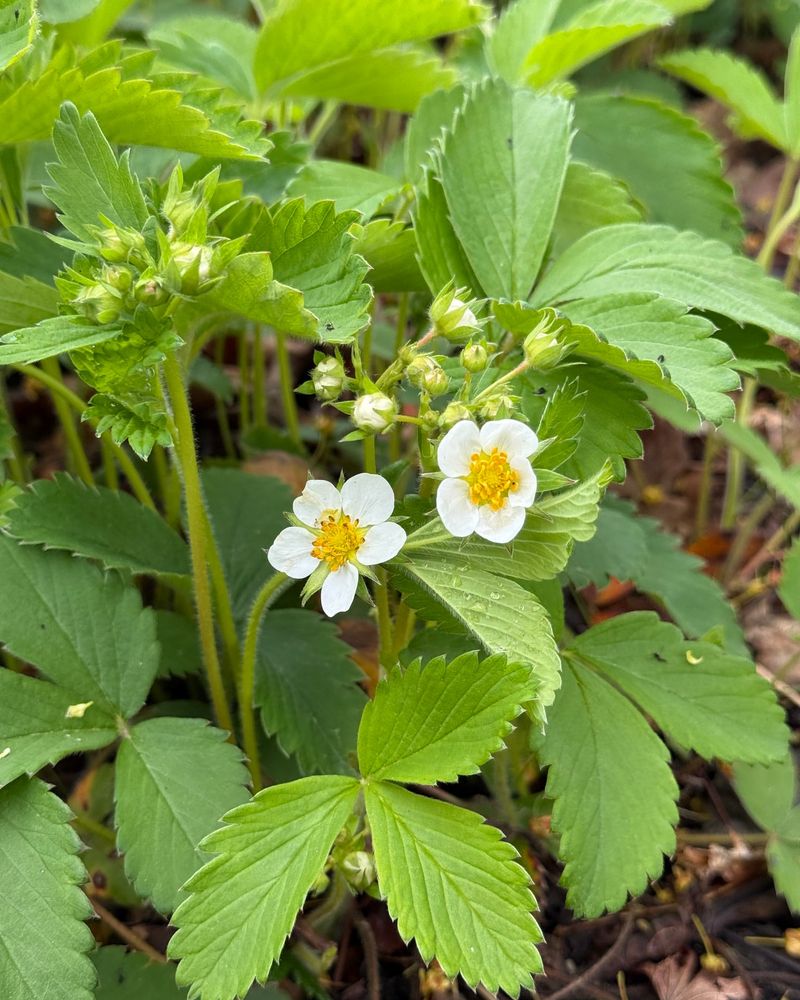
If you want a groundcover that earns its keep in multiple ways, wild strawberry (Fragaria virginiana) is hard to beat. It can spread quickly and begin filling in bare ground within a growing season, and along the way it produces white spring flowers that bees absolutely love, followed by small, intensely sweet red berries that birds and other wildlife eagerly snack on throughout summer.
For Ohio gardeners focused on ecological value, this plant delivers on every front.
Wild strawberry grows well in full sun to part shade and tolerates a fairly wide range of Ohio soil conditions, from average garden soil to slightly dry or slightly moist ground. It stays low, typically under six inches, making it a tidy and attractive option along pathways, at garden edges, or on gentle slopes where erosion control is needed.
The leaves turn attractive shades of red and bronze in fall, adding seasonal color before winter sets in. Unlike its cultivated cousins, wild strawberry is genuinely tough and rarely suffers from the disease issues that plague garden strawberries.
Ohio State University Extension highlights native strawberry as a valuable wildlife plant. Plant it where it has room to roam, because once it finds its footing, it will spread enthusiastically and fill in bare areas with impressive speed.
6. Barren Strawberry Thrives Where Other Plants Struggle
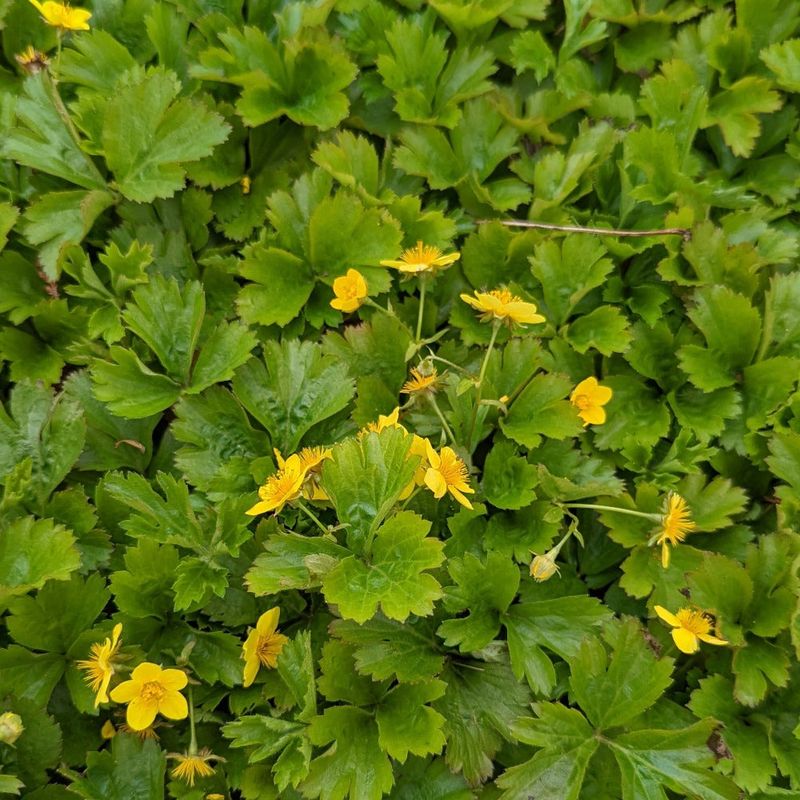
There are spots in every Ohio garden that seem to defeat everything you plant there. Dry shade under shallow-rooted trees, compacted soil along a north-facing foundation, or a slope that bakes in reflected heat all summer are the kinds of situations where barren strawberry (Geum fragarioides, formerly Waldsteinia fragarioides) quietly proves its worth.
This plant does not just survive in difficult spots; it genuinely thrives there.
Barren strawberry forms a dense, semi-evergreen mat of glossy, dark green leaves that often remains attractive through mild Ohio winters. In spring, it produces small bright yellow flowers that add a cheerful note before most other garden plants have woken up.
The foliage stays attractive through the growing season and holds its color well into late fall and early winter.
It spreads at a moderate pace through rhizomes, gradually covering problem areas without becoming aggressive or invasive. Dry shade adaptability is its real superpower, since most groundcovers struggle or fail in those conditions.
It pairs well with hellebores, epimedium, and native ferns in shaded borders. Minimal watering, no fertilizing, and very little pruning are all it needs once established.
For Ohio gardeners dealing with genuinely difficult sites, barren strawberry is one of the most dependable and underused native options available.
7. Golden Ragwort Forms Bold Blooming Colonies
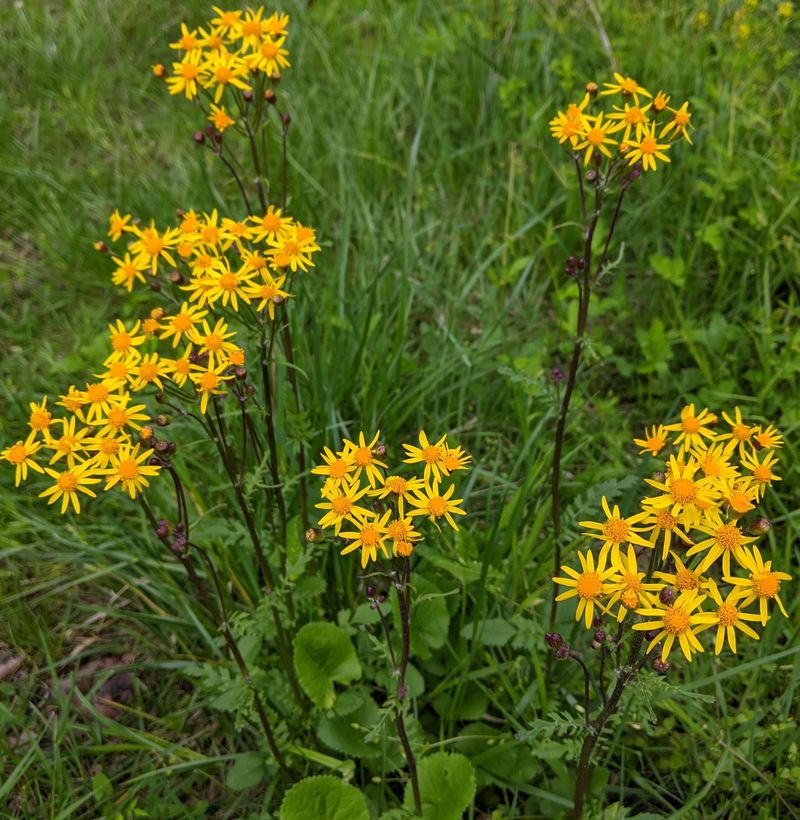
Walk past a colony of golden ragwort (Packera aurea) in full spring bloom and you will immediately understand why Ohio native plant enthusiasts get so excited about it. The bright yellow, daisy-like flowers rise above a dense carpet of dark green, heart-shaped leaves in April and May, creating a bold, cheerful display that covers large areas with impressive visual impact.
Few native groundcovers bloom this prolifically or this early in the season.
Golden ragwort naturalizes readily in moist to average soil and handles both part shade and full sun, making it unusually flexible. It is especially at home along stream banks, in rain gardens, or in low spots in Ohio yards where moisture collects.
The plant spreads primarily by rhizomes and can also self-seed in favorable conditions, forming expanding colonies that gradually crowd out weeds and stabilize soil.
Early-emerging native bees depend heavily on golden ragwort as one of the first pollen and nectar sources of the Ohio spring season. After flowering, the basal foliage remains attractive through summer and into fall, keeping the area looking tidy.
It can be aggressive in ideal conditions, so give it room to spread rather than planting it next to delicate perennials. In naturalized areas or larger rain garden designs, it is truly outstanding and nearly effortless to maintain.
8. Partridgeberry Creates Evergreen Woodland Carpets
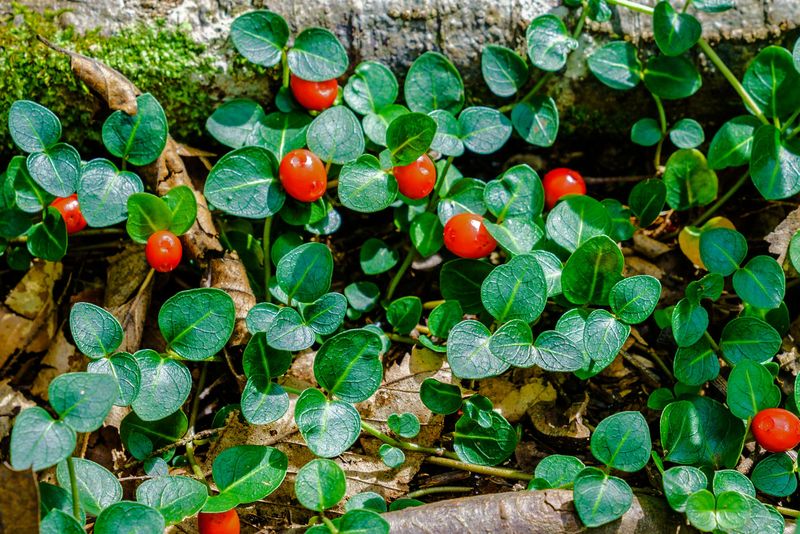
There is something almost magical about coming across a patch of partridgeberry (Mitchella repens) on a winter walk through an Ohio woodland. The tiny, glossy, dark green leaves stay vibrant even under snow, and the bright red berries that appear in late summer persist through the coldest months, adding a pop of color when almost nothing else is growing.
It is one of the few truly evergreen native groundcovers suited to Ohio woodland gardens.
Partridgeberry grows extremely low, typically one to two inches tall, and spreads slowly by trailing stems that root at their nodes. It is best suited to moist, acidic, humus-rich soil in full to deep shade, making it ideal under rhododendrons, in woodland gardens, or along shaded paths where foot traffic is minimal.
Patience is required, since this plant establishes slowly, but the result is a refined, carpet-like ground layer that looks genuinely beautiful.
The paired white flowers that appear in late spring are delicate and fragrant, attracting small native bees. Birds, including ruffed grouse and wild turkeys, eat the berries during winter, adding wildlife value to its ornamental appeal.
Ohio woodland garden designers often use partridgeberry as a finishing layer beneath taller native shrubs and ferns, where it adds year-round texture and quiet, elegant beauty without ever demanding much attention.
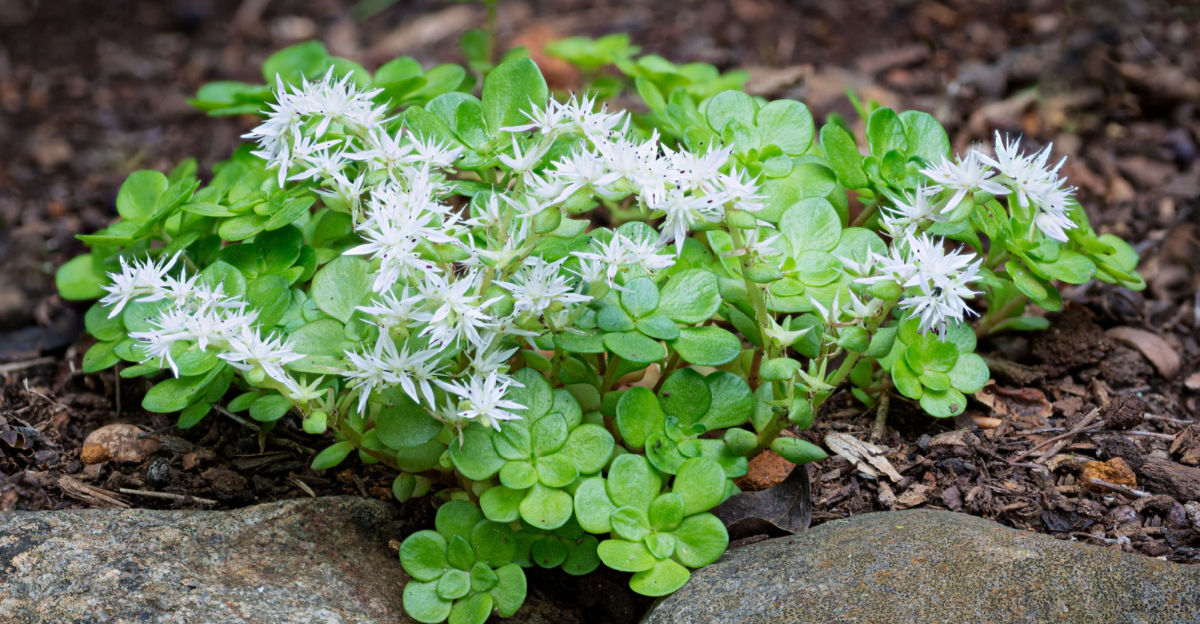
9. Wild Stonecrop Handles Tough Rocky Spots
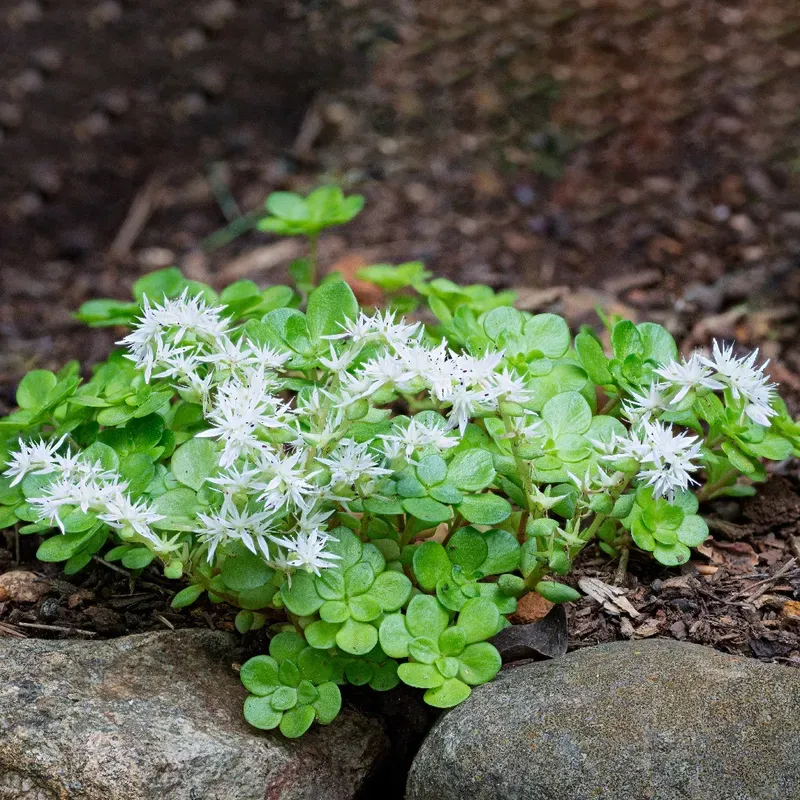
Rocky outcroppings, thin soil along a stone wall, or a dry woodland edge where the ground is more gravel than loam are exactly the situations wild stonecrop (Sedum ternatum) was built for. This native succulent stores water in its fleshy leaves, which allows it to handle drought conditions that would stress most other groundcovers.
For Ohio gardeners dealing with challenging, rocky, or shallow-soil sites, it is a genuinely practical solution.
Wild stonecrop blooms in spring with clusters of small, bright white star-shaped flowers that cover the plant and attract early pollinators. The succulent foliage is a fresh, light green that looks attractive before, during, and after the bloom period.
Unlike many sedums sold in garden centers, this one actually prefers part shade but tolerates light shade with good drainage, making it useful in woodland edge situations where full-sun sedums would struggle.
It stays low, typically three to six inches tall, and spreads gradually to form loose, natural-looking colonies. Excellent drainage is the one non-negotiable requirement, since wild stonecrop will not tolerate wet feet.
Planting it among rocks, along dry stone walls, or on slopes with fast-draining soil gives it the conditions it needs to thrive. Ohio native plant gardens frequently feature this underappreciated little plant as a textural accent in difficult spots that other groundcovers simply cannot handle.